
As per case facts, the appellant, Rohini Sudarshan Gangurde, was accused of abetting her husband's suicide by allegedly harassing him for money and property transfer. The deceased, Sudarshan Gangurde, died ...

2024 INSC 519 SLP(Crl.) No. 13246 of 2023 Page 1 of 12
Reportable
IN THE SUPREME COURT OF INDIA
CRIMINAL APPELLATE JURISDICTION
CRIMINAL APPEAL NO. OF 2024
(@ SLP (Crl.) No.13246 OF 2023)
ROHINI SUDARSHAN GANGURDE …APPELLANT
VERSUS
THE STATE OF MAHARASHTRA
& ANR. …RESPONDENTS
J U D G M E N T
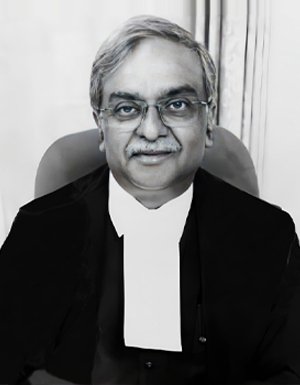
VIKRAM NATH, J.
1. Leave granted.
2. This appeal is preferred by the accused
Appellant-Rohini Sudarshan Gangurde
challenging the impugned order of Bombay High
Court dated 05.09.2023 in Criminal Revision
Application No. 410 of 2022. By this order the
High Court has dismissed the Revision
Application filed by the Appellant against the
order of the Trial Court dated 24.02.2022. The
Trial Court had rejected the discharge
application of Appellant for her discharge from
SLP(Crl.) No. 13246 of 2023 Page 2 of 12
the offence under Section 306 of Indian Penal
Code, 1860
1.
3. Facts of the case are summarised as follows:
3.1 Appellant is the wife of deceased Sudarshan
Gangurde, who hanged himself to death on
17.02.2020 in his house. The appellant wife
is accused of abetment to suicide and was
thus charged under Section 306 of IPC. The
complaint was filed by Smt. Usha
Gangurde, mother of deceased alleging
physical and mental harassment by the
accused.
3.2 Appellant Rohini and deceased Sudarshan
had a love affair which turned into marriage
on 09.03.2015 against the will of family
members of both of them. The couple
started residing separately at Shingnapur
in Kolhapur. From the wedlock one male
child Shoren was born on 27.05.2017. The
couple had jointly purchased a Row House
flat at Shingnapur where they were residing
when the incident took place. The parents
and family members of the deceased were
residing at Mumbai. The deceased was
serving in CPR Hospital at Kolhapur as
1
In short, ‘IPC’
SLP(Crl.) No. 13246 of 2023 Page 3 of 12
Social Service Superintendent. He was on
visiting terms with his parents.
3.3 On 17.02.2020, the deceased aged 38
years, was found in hanging position by the
accused wife in the balcony of common
house they were residing at in Shingnapur.
The neighbors informed the police. No
suicide note was found. The post mortem
report found no signs of injuries on the body
of deceased. The cause of death is noted to
be ‘due to hanging’.
3.4 On the same day, First Information Report
bearing No. 74/2020 was lodged by the
mother of deceased- Smt. Usha Gangurde
against the appellant under Section 306 of
IPC, alleging that her son committed suicide
due to harassment and beating by his wife
Rohini on account of demand of money and
for transfer of the dwelling house at
Shingapur in her name. She further stated
that when her son visited her, he also told
her that his wife was abusing and beating
him, insisting on him not to visit his parents
and not to give them money. When her
husband-Ashok Gangurde stayed at the
house of deceased in May 2019, he told her
SLP(Crl.) No. 13246 of 2023 Page 4 of 12
that accused Rohni was beating and
abusing her son for money and transfer of
house in her name. Due to these disputes,
Rohini was residing separately from the
deceased in her parent’s house at Sangali.
The complainant further stated that
accused was sending vulgar messages on
mobile phone of the deceased. All this
allegedly resulted in commission of suicide
by the deceased.
3.5 Apart from the complainant, statement of
one of the colleagues of the deceased Ujwala
Sawant was also recorded. She referred to
an incident dated 17.10.2019 when the
appellant visited deceased and created a
ruckus in the office by rushing towards him
on being abusive. The incidence was
corroborated by another colleague Mr.
Bajirao Apte.
3.6 On the other hand, as per the statement of
Appellant Rohini, her husband was
addicted to liquor and there were quarrels
between them on that ground. They tried to
patch up as the deceased had assured to
give up his habit to consume liquor. On this
condition they resumed co -habitation.
SLP(Crl.) No. 13246 of 2023 Page 5 of 12
However, the deceased could not overcome
the habit and started to drink more. It is
argued by the counsel for Appellant that the
deceased may have committed suicide out
of frustration.
3.7 On 04.11.2020, the police filed the Charge-
sheet against appellant under section 306
of IPC. As per the Charge-sheet, the offence
took place on 17.02.2020 between 7.00 to
7.30 AM at the dwelling house in
Shinganapur, where the accused harassed
the deceased on account of money and for
transfer of house in her name, inducing the
deceased for attempt of suicide.
4. Based on the charge-sheet, the Sessions Case
No. 100 of 2021 is registered and pending for
adjudication before the Sessions Court at
Kolhapur. On 02.12.2021, the Appellant -
accused preferred a discharge application before
Trial Court. On 24.02.2022, the Trial Court
rejected the application. Aggrieved, the appellant
preferred Criminal Revision Application before
the High Court. The High Court, by the impugned
order, has dismissed the Revision and thus
effectively dismissed the discharge application.
SLP(Crl.) No. 13246 of 2023 Page 6 of 12
Therefore, the Appellant has challenged it before
us.
5. The appellant has filed the present appeal on
several grounds inter alia, that there is no
evidence showing an active role played by
Appellant which has abated the commission of
suicide. Further, the dwelling house was jointly
purchased by the Appellant and the deceased
and therefore there was no question of insisting
to transfer the house in the name of Appellant.
Neither the deceased, nor his family members
have raised the grievance against alleged
harassment before the authorities, until the
suicide. Thus, the appellant states that all
allegations are fake and frivolous.
6. On the other hand, learned counsel for the
respondent submitted that the ingredients
essential for the offence under Section 306 IPC
were clearly made out from the evidence collected
during the investigation and as such the High
Court has rightly dismissed the petition.
7. Having heard the arguments of both the counsels
and after perusing the record, we find that the
only question that needs to be determined in the
instant case is whether the alleged conduct of the
appellant-accused prima facie attracts Section
SLP(Crl.) No. 13246 of 2023 Page 7 of 12
306 of IPC, to continue the proceedings of Trial
Court against the appellant.
Section 306 and Section 107 of IPC read as:
“306. Abetment of suicide-
If any person commits suicide, whoever
abets the commission of such suicide,
shall be punished with imprisonment of
either description for a term which may
extend to ten years, and shall also be
liable to fine.
It must be read with Section 107 of IPC
which explains the meaning of
Abetment, which reads as:
107. Abetment of a thing-
A person abets the doing of a thing,
who—
First.—Instigates any person to do that
thing; or
Secondly.—Engages with one or more
other person or persons in any conspiracy
for the doing of that thing, if an act or
illegal omission takes place in pursuance
of that conspiracy, and in order to the
doing of that thing; or
Thirdly.—Intentionally aids, by any act or
illegal omission, the doing of that thing.
Explanation 1.—A person who, by wilful
misrepresentation, or by wilful
concealment of a material fact which he is
bound to disclose, voluntarily causes or
procures, or attempts to cause or procure,
SLP(Crl.) No. 13246 of 2023 Page 8 of 12
a thing to be done, is said to instigate the
doing of that thing.
Explanation 2.—Whoever, either prior to
or at the time of the commission of an act,
does anything in order to facilitate the
commission of that act, and thereby
facilitates the commission thereof, is said
to aid the doing of that act.”
8. Reading these sections together would indicate
that there must be either an instigation, or an
engagement or intentional aid to ‘doing of a
thing’. When we apply these three criteria to
Section 306, it means that the accused must
have encouraged the person to commit suicide or
engaged in conspiracy with others to encourage
the person to commit suicide or acted (or failed
to act) intentionally to aid the person to commit
suicide.
9. In S.S. Chheena v. Vijay Kumar Mahajan
2, this
court explained the concept of abetment along
with necessary ingredient for offence under
Section 306 of IPC as under:
“25. Abetment involves a mental process
of instigating a person or intentionally
aiding a person in doing of a thing.
Without a positive act on the part of the
2
(2010) 12 SCC 190
SLP(Crl.) No. 13246 of 2023 Page 9 of 12
accused to instigate or aid in committing
suicide, conviction cannot be sustained.
The intention of the legislature and the
ratio of the cases decided by this Court
is clear that in order to convict a person
under Section 306 IPC there has to be a
clear mens rea to commit the offence. It
also requires an active act or direct act
which led the deceased to commit
suicide seeing no option and that act
must have been intended to push the
deceased into such a position that he
committed suicide.”
10. In Amalendu Pal v. State of W.B .
3, this court
explained the parameters of Section 306 in
following words:
“12. Thus, this Court has consistently
taken the view that before holding an
accused guilty of an offence under
Section 306 IPC, the court must
scrupulously examine the facts and
circumstances of the case and also
assess the evidence adduced before it in
order to find out whether the cruelty and
harassment meted out to the victim had
left the victim with no other alternative
but to put an end to her life. It is also to
be borne in mind that in cases of alleged
abetment of suicide there must be proof
of direct or indirect acts of incitement to
the commission of suicide. Merely on the
allegation of harassment without there
being any positive action proximate to
the time of occurrence on the part of the
3
(2010) 1 SCC 707
SLP(Crl.) No. 13246 of 2023 Page 10 of 12
accused which led or compelled the
person to commit suicide, conviction in
terms of Section 306 IPC is not
sustainable.
13. In order to bring a case within the
purview of Section 306 IPC there must
be a case of suicide and in the
commission of the said offence, the
person who is said to have abetted the
commission of suicide must have played
an active role by an act of instigation or
by doing certain act to facilitate the
commission of suicide. Therefore, the act
of abetment by the person charged with
the said offence must be proved and
established by the prosecution before he
could be convicted under Section 306
IPC.”
11. In Ramesh Kumar v. State of Chhattisgarh
4,
while explaining the meaning of ‘Instigation’, this
court stated that:
“20. Instigation is to goad, urge forward,
provoke, incite or encourage to do “an
act”. To satisfy the requirement of
“instigation”, though it is not necessary
that actual words must be used to that
effect or what constitutes “instigation”
must necessarily and specifically be
suggestive of the consequence. Yet a
reasonable certainty to incite the
consequence must be capable of being
spelt out. Where the accused had, by his
acts or omission or by a continued
4
(2001) 9 SCC 618.
SLP(Crl.) No. 13246 of 2023 Page 11 of 12
course of conduct, created such
circumstances that the deceased was left
with no other option except to commit
suicide, in which case, an “instigation”
may have to be inferred. A word uttered
in a fit of anger or emotion without
intending the consequences to actually
follow, cannot be said to be instigation.”
12. These principles and necessary ingredients of
Section 306 and 107 of Indian Penal Code were
reiterated and summarized by this court in
recent case of Gurucharan Singh vs State of
Punjab
5.
13. After carefully considering the facts and evidence
recorded by the courts below and the legal
position established through statutory and
judicial pronouncements, we are of the view that
there is no proximate link between the marital
dispute in the marriage of deceased with
appellant and the commission of suicide. The
prosecution has failed to collect any evidence to
substantiate the allegations against the
appellant. The appellant has not played any
active role or any positive or direct act to instigate
or aid the deceased in committing suicide.
Neither the statement of the complainant nor
5
(2020) 10 SCC 200.
SLP(Crl.) No. 13246 of 2023 Page 12 of 12
that of the colleagues of the deceased as recorded
by the Investigating Officer during investigation
suggest any kind of instigation by the appellant
to abet the commission of suicide. There is no
allegation against the appellant of suggesting the
deceased to commit suicide at any time prior to
the commission of suicide by her husband.
14. Thus, none of the three essentials of Section 107
read with Section 306 IPC are existing.
15. Accordingly, the appeal is allowed. Impugned
order of the High Court is set aside. The
application for discharge is allowed.
………………………………..……J
(VIKRAM NATH)
………………………………..……J
(SATISH CHANDRA SHARMA)
NEW DELHI
JULY 10, 2024

Legal Notes
Add a Note....