
A First Information Report was registered against the appellant, based on police documents. The Regional Manager dismissed the appellant without reason, considering his contentions, including his discharge from the criminal ...
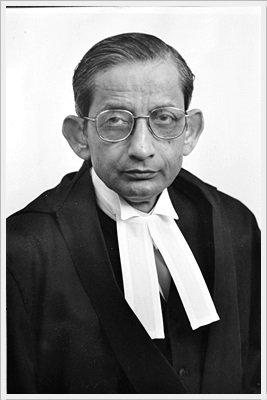

No Acts & Articles mentioned in this case
REPORTABLE
IN THE SUPREME COURT OF INDIA
CIVIL APPELLATE JURISDICTION
CIVIL APPEAL NO. 7431 OF 2008
(Arising out of SLP (C) No. 14429 of 2007)
ROOP SINGH NEGI … APPELLANT
Versus
PUNJAB NATIONAL BANK & ORS. … RESPONDENTS
J U D G M E N T
S.B. SINHA, J.
1.Leave granted.
2.Appellant was working as a peon in the respondent – Bank.
On or about 24.11.1993, a complaint was lodged by the Manager of
the Bank alleging that some drafts which were presented for encashment
by M/s Anil Trader and some other persons and purported to have been
issued from the Mall Road Branch of the Bank had in fact not been issued
therefrom.
A First Information Report (for short, “FIR”) under Section
380/120B of the Indian Penal Code was registered. The investigation of
the said case was assigned to one Shri Janardhan Singh, Senior Inspector.
He submitted a report on 11.12.1993, inter alia, opining that the integrity
of the appellant who had been transferred to Rampur, Shimla was
doubtful. It was concluded:
“In view of the facts stated above we are of the
view that both the joint custodian i.e. Shri H.C.
Grover – Manager, presently posted at BO
Chandni Chowk, Delhi and Shri P.C. Gupta –
AM are responsible for the loss of the drawing
book since either of the two have remained one
of the custodians from 1.6.93 to 24.8.93. The
loss of drawing book could have been avoided
had they taken due care and precaution.
Further, Shri Sharad Narain, Sr. Manager is also
responsible as he has failed to ensure
compliance of laid down instructions in respect
of monthly checking of security forms and also
for non-submission of M.C. after 31.5.93.”
In the said report, various procedural lapses on the part of some
officers of the Bank were also pointed out.
3.After five years of the said incidence, a disciplinary proceeding
was initiated against the appellant stating that during the period
18.11.1991 and 9.10.1993, he had taken away one blank draft issue book
bearing No. 626401 to 626425. A show-cause notice was issued. Cause
2
was shown by him. He was found guilty by the Enquiry Officer. In the
said proceeding, reliance was placed on the purported confession of the
appellant before the police authorities in the year 1993. It was marked as
Exhibit PE-3.
4.Indisputably, the forms and other important books and documents
belonging to a Bank never remain in the custody of a peon. It was
accepted that documentary evidences were collected by the police
officers. Those documents were simply produced; they were not proved.
The purported confession by the appellant was also not proved. Only
because the said confession was made before the police authorities, the
enquiry officer inferred on the basis thereof that the appellant had
connection with those persons who had used those bank drafts, stating:
“….Therefore, the undersigned is of the opinion
that PE-4 proves that Shri Roop Singh Negi has
connections with the said culprits. On
examination of witness MDW-1 on 20/7/99, he
has said that according to the statement of Shri
Roop Singh Negi, he has confessed that on the
instructions/saying of Rajbir, Devinder alias
Mental, Asif and Brahmpal, who are the
residents of trans-Yamuna area he had stolen the
draft book…..”
It was, inter alia, concluded:
“In view of the above details/proceedings it is
proved that the delinquent employee has
admitted that drafts being no. QWA-626401 to
626425 have been stolen from Branch office
3
Mall Road Delhi Branch vide page no. 25057
and has caused financial loss to the bank but he
has not admitted that he has stolen the said
drafts.
As the main charge on the delinquent employee
is of stealing the draft books and other
documents, therefore, in such matters direct
proof/evidence are not available generally and
the conclusion has been arrived at on the basis
of assumptions….”
Assumption of certain factual foundation was drawn on the basis of
the documents supplied by the police as would appear from the following
findings of the Enquiry Officer.
“1.Efforts were made to through Lost Draft
book no. 626404 dated 6.9.93 for Rs. 6,90,000/-
was prepared the fake draft and encashed
through OBC Farukabad prepared through PNB
Branch Farukabad and again draft drawn on
OBC Delhi and encashed through CBI Narain
branch.
2.From this draft no. 626402 dated 24.8.93
for Rs. 5,40,000/- made in the name of M/s Ajay
Sales and encashed from Farukabad Branch.
3.From the pages, draft no. 626415 dated
27.9.93 for Rs. 7,35,000/- and draft no.
626423dated 1.10.95 for Rs. 8,65,000/- drawn
on branch Saharanpur and encashed on branch
Khalsi Lines Saharanpur.
4.Arresting of culprits namely K.K. Gupta,
Rajbir, Ashok Kumar, Ravinder Pal Singh,
Kante Gupta and Harvinder alias Billa with the
remaining pages of the draft book by the Thane
Mysori (Ghaziabad) police.
4
5.Stealing of draft book bearing no. 626401
to 626425 and other documents from branch
Mall Road Delhi.
6.First draft was issued on 24.8.93 from the
stolen draft book which fact came to the
knowledge of Mall Road Delhi Branch from the
Central Bank of India Branch Officer.
7.Before 9.10.1993 Shri Roop Singh Negi
was posted in the Mall Road Delhi Branch.
8.Bank Security Form Department is out of
reach of non-bank employees/outsiders.”
It was purported to have been found:
“1.Stealing of drawing book and specimen
signatures of officers happened before 24.8.93.
2.The factum of stealing the drafts came to
the knowledge on 24.11.93 while the same was
done on 24.8.93. Draft book has been stolen
from Security Form Department in such a
manner which fact has come to the knowledge
very late. Possibly this draft book has been
taken away available at the last serial nos. of the
draft books.
3.From the whole embezzlement it is clear
that the gang had full knowledge of the banking
working or any employee was involved in this
embezzlement/fraud.
4.That fraud has been committed so
cleverly so that there is no direct proof or
evidence available.”
Conclusion was drawn up on the basis of the above facts by the
Enquiry Officer as under:
5
“That Shri Roop Singh has direct or indirect
links with the culprits who were arrested by the
Thane Mysori (Ghaziabad) along with pages of
drafts and on the basis of whose statement Shri
Roop Singh Negi was arrested by the Delhi
Police on 9.12.93 from Rampur Bushahar
Himachal Pradesh and taken to Delhi. Having
links with the aforesaid accused, it is proved
that Shri Roop Singh Negi has stolen the draft
book no. 626401 to 626425 from the Security
Form Department.”
5.Before the disciplinary authority, the appellant contended that there
was no evidence against him. The attention of the disciplinary authority
was furthermore drawn to the fact that by an order dated 9.5.2000, the
Criminal Court passed an order of his discharge. Only charges under
Section 411 of the Indian Penal Code were framed against one Rajbir.
Neither the State nor the Bank preferred any revision petition
thereagainst. The same attained finality. The Regional Manager acting
as a disciplinary authority by an order dated 24.1.2001 without assigning
any reason and without considering the contentions raised by the
appellant including the fact that he had been discharged by the criminal
court, directed the appellant to be dismissed from services, stating:
“That I have again gone through the facts
carefully and I hold you responsible for gross
misconduct in terms of Bipartite Settlement
clause 19.5 (amended from time to time) and
there is no justification to reduce the proposed
punishment. Therefore, in terms of the Bipartite
6
Settlement clause 19.6, I confirm the proposed
punishment “Dismissal from Bank Service”. As
you are under suspension, therefore, I order that
in terms of Bipartite Settlement Provisions you
will be eligible for subsistence allowance only
till your dismissal from bank service.”
6.Appellant made a representation against the said order before the
appellate authority. The appellate authority noticing his contentions in
details. Inter alia, on the premise that appellant had been given an
opportunity of personal hearing, the appeal was dismissed, opining:
“In view of the above, the submissions made by
the appellant in his appeal dated 23.02.2001 and
his verbal submissions made during personal
hearing are devoid of merits. As such I find no
reasons to interfere or alter the order of
Disciplinary Authority.
Thus keeping in view the nature and gravity of
the proven charges, punishment of “Dismissal
from Bank Service”, imposed upon Shri Negi by
Disciplinary Authority vide its order dated
24.01.2001 is hereby confirmed and appeal of
Shri Negi is rejected.”
7.The appellate authority also did not apply his mind to the
contentions raised by the appellant; no reason was assigned in support of
his conclusion.
On what evidence, the appellant was found guilty was not stated.
7
8.Aggrieved by and dissatisfied with the said orders, the appellant
filed a Writ Petition. The same by reason of the impugned judgment has
been dismissed, stating:
“…The writ jurisdiction can be exercised by this
court only in exceptional circumstances which
have not been mentioned by the petitioner in the
petition. However, once the petition was
admitted for hearing in exercise of the writ
jurisdiction after a lapse of so many years since
the writ petition was admitted in the year 2001,
it may not be appropriate for this Court to pass
an order now that the petitioner should make out
a case for reference to the industrial tribunal
and therefore the petition filed by the petitioner
is being considered.”
9.The High Court noticed the decision of this Court in Kuldeep
Singh vs. Commissioner of Police & ors. [(1999) 2 SCC 10], Narinder
Mohan Arya vs. United India Insurance Co. Ltd. & ors. [(2006) 4 SCC
713] and Bhagwati Prasad Dubey vs. The Food Corporation of India [AIR
1988 SC 434] whereupon reliance has been placed by the learned counsel
appearing on behalf of the appellant, and held:
“ All the aforesaid decisions are not
directly attracted to the present facts though the
law laid down applies to the present facts. But
in the facts of the case it is not a case of no
evidence but only in regard to the conclusions
drawn based upon the evidence which
reappraisal cannot be done by this Court.
Coming to the arguments that there can
be no reappraisal of the evidence by this Court
once the findings have been given by the
Enquiry Officer considering the evidence, it is
8
not the case of the petitioner that there was no
evidence at all as against him led before the
Enquiry Officer, but the dispute is in regard to
the conclusion drawn by the enquiry Officer
based upon evidence. According to law even if
two views are possible to be drawn against the
petitioner on the basis of the Enquiry Report
one which has been drawn by the Enquiry
Officer cannot be held to be wrong taking the
plea that the second view was also possible to
be drawn based upon evidence.
The decision of Hon’ble Apex Court in
Narinder Mohan Arya’s case (supra) clearly lays
down that the proceedings of departmental
enquiry report are quasi criminal in nature.
Therefore the guilt of the delinquent official is
not required to be proved beyond any
reasonable doubt as in a criminal case.
We have considered the report of the
Enquiry Officer and the penalty imposed by the
Bank is based upon evidence as such it is not
open to this Court to consider that some other
view was also possible and since it was not a
case of no evidence therefore there cannot be
reappraisal of evidence or draw its own
conclusion by this Court based upon evidence.
The findings recorded by the Enquiry Officer
and the punishment imposed by the respondent
Bank or its officers call for no interference by
this court and as such there is no merit in the
petition which is dismissed accordingly.”
10.Indisputably, a departmental proceeding is a quasi judicial
proceeding. The Enquiry Officer performs a quasi judicial function. The
charges leveled against the delinquent officer must be found to have been
proved. The enquiry officer has a duty to arrive at a finding upon taking
into consideration the materials brought on record by the parties. The
9
purported evidence collected during investigation by the Investigating
Officer against all the accused by itself could not be treated to be
evidence in the disciplinary proceeding. No witness was examined to
prove the said documents. The management witnesses merely tendered
the documents and did not prove the contents thereof. Reliance, inter
alia, was placed by the Enquiry Officer on the FIR which could not have
been treated as evidence. We have noticed hereinbefore that the only
basic evidence whereupon reliance has been placed by the Enquiry
Officer was the purported confession made by the appellant before the
police. According to the appellant, he was forced to sign on the said
confession, as he was tortured in the police station. Appellant being an
employee of the bank, the said confession should have been proved.
Some evidence should have been brought on record to show that he had
indulged in stealing the bank draft book. Admittedly, there was no direct
evidence. Even there was no indirect evidence. The tenor of the report
demonstrates that the Enquiry Officer had made up his mind to find him
guilty as otherwise he would not have proceeded on the basis that the
offence was committed in such a manner that no evidence was left.
11.In Union of India vs. H.S. Goel [(1964) 4 SCR 718, it was held:
“….The two infirmities are separate and distinct
though, conceivably, in some cases, both may
be present. There may be cases of no evidence
even where the Government is acting bona fide;
10
the said infirmity may also exist where the
Government is acting mala fide and in that case,
the conclusion of the Government not supported
by any evidence may be the result of mala fides,
but that does not mean that if it is proved that
there is no evidence to support the conclusion of
the Government, a writ of certiorari will not
issued without further proof of mala fides. That
is why we are not prepared to accept the learned
Attorney-General's argument that sine no mala
fides are alleged against the appellant in the
present case, no writ of certiorari can be issued
in favour of the respondent.
That takes us to the merits of the
respondent's contention that the conclusion of
the appellant that the third charged framed
against the respondent has been proved, is based
on no evidence. The learned Attorney-General
has stressed before us that in dealing with this
question, we ought to bear in mind the fact that
the appellant is acting with the determination to
root out corruption, and so, if it is shown that
the view taken by he appellant is a reasonably
possible view, this Court should not sit in
appeal over that decision and seek to decide
whether this Court would have taken the same
view or not. This contention is no doubt
absolutely sound. The only test which we can
legitimately apply in dealing with this part of
the respondents case is, is there any evidence on
which a finding can be made against the
respondent that charge No. 3 was proved against
him ? In exercising its jurisdiction under Art.
226 on such a plea, the High Court cannot
consider the question about the sufficiency or
adequacy of evidence in support of a particular
conclusion. That is a matter which is within the
competence of the authority which dealt with
the question; but the High Court can and must
enquire whether there is any evidence at all in
support of the impugned conclusion. In other
words, if the whole of the evidence led in the
enquiry is accepted as true, does the conclusion
follow that the charges in question is proved
11
against the respondent ? This approach will
avoid weighing the evidence. It will take the
evidence as it stands and only examine whether
on that evidence legally the impugned
conclusion follows or not. Applying this test,
we are inclined to hold that the respondent's
grievance is well-founded because, in our
opinion, the finding which is implicit in the
appellant's order dismissing the respondent that
charge number 3 is proved against him is based
on no evidence.
12.In Moni Shankar v. Union of India and Anr. [(2008) 3 SCC 484],
this Court held:
17.The departmental proceeding is a quasi
judicial one. Although the provisions of the
Evidence Act are not applicable in the said
proceeding, principles of natural justice are
required to be complied with. The Court
exercising power of judicial review are entitled
to consider as to whether while inferring
commission of misconduct on the part of a
delinquent officer relevant piece of evidence has
been taken into consideration and irrelevant
facts have been excluded therefrom. Inference
on facts must be based on evidence which meet
the requirements of legal principles. The
Tribunal was, thus, entitled to arrive at its own
conclusion on the premise that the evidence
adduced by the department, even if it is taken on
its face value to be correct in its entirety, meet
the requirements of burden of proof, namely -
preponderance of probability. If on such
evidences, the test of the doctrine of
proportionality has not been satisfied, the
Tribunal was within its domain to interfere. We
must place on record that the doctrine of
unreasonableness is giving way to the doctrine
of proportionality.”
12
13.In Narinder Mohan Arya vs. United India Insurance Co. Ltd. & ors.
(supra), whereupon both the learned counsel relied upon, this Court held:
“26. In our opinion the learned Single Judge and
consequently the Division Bench of the High
Court did not pose unto themselves the correct
question. The matter can be viewed from two
angles. Despite limited jurisdiction a civil court,
it was entitled to interfere in a case where the
report of the Enquiry Officer is based on no
evidence. In a suit filed by a delinquent
employee in a civil court as also a writ court, in
the event the findings arrived at in the
departmental proceedings are questioned before
it should keep in mind the following: (1) the
enquiry officer is not permitted to collect any
material from outside sources during the
conduct of the enquiry. [See State of Assam and
Anr. v. Mahendra Kumar Das and Ors. [(1970)
1 SCC 709] (2) In a domestic enquiry fairness in
the procedure is a part of the principles of
natural justice [See Khem Chand v. Union of
India and Ors. (1958 SCR 1080) and State of
Uttar Pradesh v. Om Prakash Gupta (1969) 3
SCC 775]. (3) Exercise of discretionary power
involve two elements (i) Objective and (ii)
subjective and existence of the exercise of an
objective element is a condition precedent for
exercise of the subjective element. [See K.L.
Tripathi v. State of Bank of India and Ors.
(1984) 1 SCC 43]. (4) It is not possible to lay
down any rigid rules of the principles of natural
justice which depends on the facts and
circumstances of each case but the concept of
fair play in action is the basis. [See Sawai Singh
v. State of Rajasthan (1986) 3 SCC 454] (5) The
enquiry officer is not permitted to travel beyond
the charges and any punishment imposed on the
basis of a finding which was not the subject
matter of the charges is wholly illegal. [See
Director (Inspection & quality Control) Export
Inspection Council of India and Ors. v. Kalyan
Kumar Mitra and Ors. 1987 (2) Cal. LJ 344. (6)
13
Suspicion or presumption cannot take the place
of proof even in a domestic enquiry. The writ
court is entitled to interfere with the findings of
the fact of any tribunal or authority in certain
circumstances. [See Central Bank of India Ltd.
v. Prakash Chand Jain (1969) 1 SCR 735,
Kuldeep Singh v. Commissioner of Police and
Ors. (1999) 2 SCC 10].”
The judgment and decree passed against the respondent therein had
attained finality.
In the said suit, the enquiry report in the disciplinary proceeding
was considered, the same was held to have been based on no evidence.
Appellant therein in the aforementioned situation filed a Writ Petition
questioning the validity of the disciplinary proceeding, the same was
dismissed. This Court held that when a crucial finding like forgery was
arrived at on an evidence which is non est in the eye of the law, the civil
court would have jurisdiction to interfere in the matter. This Court
emphasized that a finding can be arrived at by the Enquiry Officer if there
is some evidence on record. It was furthermore found that the order of
the appellate authority suffered from non application of mind. This Court
referred to its earlier decision in Capt. M. Paul Anthony v. Bharat Gold
Mines Ltd. [(1999) 3 SCC 679] to opine:
“41. We may not be understood to have laid
down a law that in all such circumstances the
decision of the civil court or the criminal court
14
would be binding on the disciplinary authorities
as this Court in a large number of decisions
points point that the same would depend upon
other factors as well. See e.g. Krishnakali Tea
Estate v. Akhil Bharatiya Chah Mazdoor Sangh
and Anr. (2004) 8 SCC 200 and Manager,
Reserve Bank of India Bangalore v. S. Mani and
Ors. (2005) 5 SCC 100. Each case is, therefore,
required to be considered on its own facts.
42. It is equally well settled that the power of
judicial review would not be refused to be
exercised by the High Court, although despite it
would be lawful to do so. In Manager, Reserve
Bank of India Bangalore (supra) this Court
observed:
‘39. The findings of the learned
Tribunal, as noticed hereinbefore,
are wholly perverse. It apparently
posed unto itself wrong questions.
It placed onus of proof wrongly
upon the appellant. Its decision is
based upon irrelevant factors not
germane for the purpose of arriving
at a correct finding of fact. It has
also failed to take into
consideration the relevant factors.
A case for judicial review, thus,
was made out.”
14.In that case also, the learned single judge proceeded on the basis
that the disadvantages of an employer is that such acts are committed in
secrecy and in conspiracy with the person affected by the accident,
stating:
“….No such finding has been arrived at even in
the disciplinary proceedings nor any charge was
made out as against the appellant in that behalf.
He had no occasion to have his say thereupon.
Indisputably, the writ court will bear in mind the
15
distinction between some evidence or no
evidence but the question which was required to
be posed and necessary should have been as to
whether some evidence adduced would lead to
the conclusion as regard the guilt of the
delinquent officer or not. The evidence adduced
on behalf of the management must have nexus
with the charges. The Enquiry Officer cannot
base his findings on mere hypothesis. Mere ipso
dixit on his part cannot be a substitute of
evidence.
45. The findings of the learned Single Judge to
the effect that 'it is established with the
conscience (sic) of the Court reasonably
formulated by an Enquiry Officer then in the
eventuality' may not be fully correct inasmuch
as the Court while exercising its power of
judicial review should also apply its mind as to
whether sufficient material had been brought on
record to sustain the findings. The conscience of
a court may not have much role to play. It is
unfortunate that the learned Single Judge did
not at all deliberate on the contentions raised by
the appellant. Discussion on the materials
available on record for the purpose of applying
the legal principles was imperative. The
Division Bench of the High Court also
committed the same error.”
15.Yet again in M.V. Bijlani vs. Union of India & ors. (2006) 5 SCC
88, this Court held:
“….Although the charges in a departmental
proceedings are not required to be proved like a
criminal trial, i.e., beyond all reasonable doubts,
we cannot lose sight of the fact that the Enquiry
Officer performs a quasi-judicial function, who
upon analysing the documents must arrive at a
conclusion that there had been a preponderance
of probability to prove the charges on the basis
16
of materials on record. While doing so, he
cannot take into consideration any irrelevant
fact. He cannot refuse to consider the relevant
facts. He cannot shift the burden of proof. He
cannot reject the relevant testimony of the
witnesses only on the basis of surmises and
conjectures. He cannot enquire into the
allegations with which the delinquent officer
had not been charged with.”
16.Yet again in Jasbir Singh vs. Punjab & Sind Bank & ors. [(2007) 1
SCC 566], this court followed Narinder Mohan Arya vs. United India
Insurance Co. Ltd. & ors. (supra), stating:
“12. In a case of this nature, therefore, the
High Court should have applied its mind to the
fact of the matter with reference to the materials
brought on records. It failed so to do.”
17.Furthermore, the order of the disciplinary authority as also the
appellate authority are not supported by any reason. As the orders passed
by them have severe civil consequences, appropriate reasons should have
been assigned. If the enquiry officer had relied upon the confession made
by the appellant, there was no reason as to why the order of discharge
passed by the Criminal Court on the basis of self-same evidence should
not have been taken into consideration. The materials brought on record
pointing out the guilt are required to be proved. A decision must be
arrived at on some evidence, which is legally admissible. The provisions
of the Evidence Act may not be applicable in a departmental proceeding
17
but the principles of natural justice are. As the report of the Enquiry
Officer was based on merely ipse dixit as also surmises and conjectures,
the same could not have been sustained. The inferences drawn by the
Enquiry Officer apparently were not supported by any evidence.
Suspicion, as is well known, however high may be, can under no
circumstances be held to be a substitute for legal proof.
18.For the aforementioned reasons, the judgment of the High Court is
set aside. The appeal is allowed with costs and appellant is directed to be
reinstated with full back wages. Counsel’s fee assessed at Rs.25,000/-.
……………….…..………….J.
[S.B. Sinha]
..………………..……………J.
[Cyriac Joseph]
New Delhi;
December 19, 2008
18

Legal Notes
Add a Note....