
2025 INSC 404 1
REPORTABLE
IN THE SUPREME COURT OF INDIA
CIVIL APPELLATE JURISDICTION
CIVIL APPEAL NO. OF 2025
(Arising out of S.L.P. (C) No. 26651 of 2023)
SAMTOLA DEVI …APPELLANT(S)
VERSUS
STATE OF UTTAR PRADESH & ORS. …RESPONDENT(S)
J U D G M E N T
PANKAJ MITHAL, J.
1. Leave granted.
2. In India we believe in “Vasudhaiva Kutumbakam” i.e. the
earth, as a whole, is one family. However, today we are not
even able to retain the unity in the immediate family, what
to say of building one family for the world. The very concept
of ‘family’ is being eroded and we are on the brink of one
person one family.
2
3. This is an unfortunate case where parents are in litigation
with their children (sons) and the children (sons) are in
litigation with their parents.
4. One Kallu Mal (dead) aged about 75 years and his wife
Samtola Devi aged about 68 years had three sons and two
daughters namely Krishna Kumar, Janardan Kumar,
Rajender Kumar, Sushila Gupta and Anjali Kumari
respectively. Out of the two daughters, Sushila Gupta is
married to Suresh Narottam Das Gupta whereas Anjali
Kumari is unmarried. The said Kallu Mal has a house
bearing No. 778 in Khairabad, Sultanpur and various
shops therein, precisely three shops in the lower part of
the house. One of the shops is occupied by the elder son
Krishna Kumar who is presently carrying on the utensil
business from the said shop which he had taken over from
his father. The other son Janardan is doing electrical
business from the other shop. The third son Rajender
Kumar is dead and his wife has remarried whereas his son
is living with the eldest son Krishna Kumar. The third shop
has been gifted by Kallu Mal to the younger daughter
Anjali Kumari, who has rented it out at the rate of
3
Rs. 26,500/- per month. Apart from the above house and
three shops, late Kallu Mal had certain other properties as
well.
5. It appears that the relations of Kallu Mal and his wife
Samtola Devi were not cordial with their sons.
Consequently, on 04.08.2014, Kallu Mal made an
application to the SDM, Sadar of District Sultanpur
alleging that his eldest son Krishna Kumar often beats him
and tortures him mentally and physically. He has
friendship with people having criminal antecedents. He
often abuses him. His behaviour resultantly deteriorated
his position in the society. Therefore, requesting the SDM
to take appropriate action against him in accordance with
law.
6. In 2017, Kallu Mal along with his wife Samtola Devi
initiated proceedings for grant of maintenance against
their two sons which came to be registered as Criminal
Case No.828 of 2017 before the Principal Judge, Family
Court, Sultanpur. The Family Court vide order dated
04.12.2018 awarded maintenance of Rs 4,000/- to Kallu
Mal and his wife Samtola Devi each, total Rs.8,000/- per
4
month payable equally by two sons Krishna Kumar and
Janardan Kumar by the 7
th day of each calendar month.
Aforesaid order is final and conclusive as it has not been
challenged till date by any party in any higher forum.
7. It appears that the two daughters of Kallu Mal started
interfering in the family matters concerning him, his wife
Samtola Devi and his two sons. The eldest daughter
Sushila Gupta got a gift deed of the lower part of northern
portion of the aforesaid House No.778 in her favour. She
even got the sale deed executed of the southern part of the
house in a favour of her husband Suresh Narottam Das
Gupta.
8. Apart from the above, the two daughters managed for the
transfer of a residential plot by their father Kallu Mal in
favour of one Amrita Singh vide sale deed dated
14.12.2017. Another plot of 121 sq. meter was transferred
vide sale deed dated 20.03.2019 in favour of Suresh
Narottam Das Gupta, the husband of the eldest daughter.
9. It also appears that the eldest son Krishna Kumar married
in 2018 to a girl from another caste/clan, as such Kallu
Mal and his wife got annoyed with him.
5
10. In the light of the aforesaid background, Kallu Mal and his
wife Samtola Devi initiated proceedings under the
Maintenance and Welfare of Parents and Senior Citizens
Act, 2007
1 on 29.04.2019 before the Maintenance
Tribunal, Sub-Division Tehsil Sadar District Sultanpur.
The Tribunal registered it as Case No.2527 of 2019
2. The
Tribunal referred the matter to the Conciliation Officer but
the conciliation was unsuccessful.
11. Kallu Mal in the said case alleged that House No.778
Khairabad, Sultanpur is his self-acquired property which
has shops in the lower part. In one of the shops, he was
operating his utensil business since 1971 till 2010. Taking
advantage of his illness, the business of the said shop was
taken over by his eldest son Krishna Kumar who later
started pressurizing him to sell out the house. He further
alleged that Krishna Kumar was not looking after his daily
needs, not even his medical expenditure, rather was
torturing him mentally and physically. Therefore, he
requested the Tribunal to evict him from the house so that
he could make his own arrangements for peaceful living.
1
Hereinafter referred to as ‘the Senior Citizens Act’
2
Kallumal etc vs. Krishna Kumar
6
12. The Tribunal, upon consideration of the entire evidence on
record and noting the submission of the parties vide order
dated 08.07.2019, directed Krishna Kumar not to
encroach upon any part of the house without the
permission of his parents except the shop in which he is
carrying utensil business and the room with a bathroom
occupied by him in which he resides with his wife and
children. It was also provided that if he humiliates his
parents then eviction proceedings would be initiated
against him. The two sons Krishna Kumar and Janardan
Kumar were directed to continue to pay maintenance to
the parents, as directed by the Family Court. The Incharge
of Police Station Kotwali Nagar was directed to visit the
house of Kallu Mal either himself or through regional Sub-
Inspector every 10 days so as to enquire if they are living
peacefully and that no humiliation or harassment is
caused to the parents by Krishna Kumar.
13. Kallu Mal and his wife Samtola Devi were not satisfied by
the above decision and as such they preferred appeal
before the Appellate Tribunal , District Magistrate
Sultanpur. The Appellate Tribunal set aside the order
7
passed by the SDM and directed for the eviction of Krishna
Kumar.
14. Aggrieved by the aforesaid decision, Krishna Kumar
invoked Writ Jurisdiction of High Court by filing Writ-C
No.35884 of 2009
3. The High Court partly allowed the said
writ petition by setting aside the order of eviction passed
against Krishna Kumar but maintained the other
directions given by the Tribunal.
15. During the pendency of the above proceedings, Kallu Mal
died and the litigation is being pursued by his wife Samtola
Devi since then. Thus, Samtola Devi has filed this appeal
seeking eviction of her son Krishna Kumar from the house
in question after setting aside the order of the High Court.
16. We have heard Shri Pallav Shisodiya, learned senior
counsel for the appellant and Shri SK Saxena, learned
senior counsel for the respondents.
17. Shri Pallav Shisodiya, learned senior counsel on behalf of
the appellant-Samtola Devi contended that since the
house-in-dispute/property is the self-acquired property of
her husband late Kallu Mal, the respondent No.4 Krishna
3
Krishna Kumar vs. State of UP and Ors
8
Kumar, the eldest son of the appellant, had no authority
of law to stay and reside in the said house against the
wishes of his parents, more particularly, when he had been
mentally and physically torturing them and was not caring
to the day-to-day needs and the maintenance of the
parents. He relied upon the recent decision of this Court
in Urmila Dixit vs. Sunil Sharan Dixit & Ors.
4 to
contend that in proceedings under the Senior Citizens Act,
the Tribunal is empowered, if necessary, to order the
eviction of the son/relative if found expedient to ensure the
protection of the senior citizens.
18. Shri SK Saxena, learned senior counsel appearing for the
respondent No.4-Krishna Kumar submitted that the entire
story, as alleged by the appellant/parents, is concocted
and is not true. Krishna Kumar is living only in a one room
portion with attached bathroom and is not occupying any
other place in the house except one shop on the ground
floor wherein he is continuing with the utensil business of
his father who was unable to carry on the same on account
of his infirm and ill-health. He had been maintaining the
4
(2025) 2 SCC 787
9
parents and is even paying the maintenance as awarded
by the Family Court. The said Krishna Kumar has a share
in the said house and it does not exclusively belong to his
father. He has not only filed a Suit No.944/2019 for the
cancellation of the gift deed executed by his father in
favour of the unmarried daughter but has also filed
another Suit No.140/2019 to declare him to be the co-
owner of the said property to the extent of 1/6
th share in
it. Therefore, it is not correct to allege that the property
exclusively belongs to Kallu Mal and that he has no legal
right to reside therein.
19. Kallu Mal has brought on record the copy of the sale deed
dated 16.07.1971 by which he had purchased the
property/house-in-dispute. Krishna Kumar, on the other
hand, had brought on record the copy of the gift deed
executed by Kallu Mal in favour of her younger daughter
Anjali in respect of one of the shops as also the rent
agreement executed by Anjali letting out the shop in favour
of Mohd. Ijhar and Mohd. Shadab on 03.11.2017. A copy
of the sale deed executed by Kallu Mal in favour of his son-
in-law in respect of Plot No.179 was also placed on record.
10
The copy of the order of the Family Court fixing
maintenance under Section 125 was also adduced in
evidence as also the copy of the Suit No.140/2019.
20. It is also part of the record that Kallu Mal had transferred
a plot of land in favour of one Amrita Singh, wife of Manoj
Kumar vide sale deed dated 14.12.2017. Another plot
measuring about 121 sq. mt. was sold by him in favour of
his son-in-law Suresh Narottam Das Gupta on
20.03.2019.
21. It has come in the evidence on record as admitted by the
younger daughter Anjali that one shop has been given by
Kallu Mal to her which she has let out and that the house
has also been gifted partly to her and partly to her elder
sister Sushila. She also admitted that her father had sold
a plot of land to Amrita Singh and to his son-in-law Suresh
Narottam Das Gupta.
22. Janardan Kumar, the other son of Kallu Mal, in his
statement before the Tribunal admits that his father had
filed a suit for maintenance against both the sons and that
they are paying maintenance according to the order passed
by the Family Court. He even stated that he would not
11
claim any right or share in the property in future. He
admits that since Krishna Kumar abuses the parents, the
entire dispute would be resolved if he vacates the property.
23. A similar statement was made by Anupriya, the wife of
Janardan Kumar.
24. The aforesaid documents prima facie indicate that the
property was purchased by Kallu Mal in 1971. He had
transferred the same partly in favour of his elder daughter
and partly in favour of his son-in-law whereas one shop in
the ground floor has been gifted to the younger daughter.
That apart, institution of the two suits by Krishna Kumar
for cancellation of the gift deed/sale deed and the suit for
declaration of his 1/6
th share in the property indicates that
there is a contest between the parents and Krishna Kumar
as to whether the father could have executed a gift and sale
deed as alleged or if the son had 1/6
th share therein. So,
unless the aforesaid dispute culminates, it cannot be said
that the father was the exclusive owner of the property and
that the son had no right/share in it.
25. Additionally, if the contention of the parents is accepted
that the house-in-dispute/property is the self-acquired
12
property of Kallu Mal and belongs exclusively to him, since
he has transferred the property in favour of his daughters
and the son-in-law Suresh Narottam Das Gupta, he has
ceased to be the owner of the property. Therefore, in such
a situation neither Kallu Mal nor his wife retains any right
to seek eviction of any person occupying any part of it.
26. In view of the facts as revealed from the pleadings and the
evidence adduced by the parties, it is apparent that Kallu
Mal had transferred the house in favour of his two
daughters and the two plots, one in favour of his son-in-
law and the other to stranger Amrita Singh. He had gifted
one shop to the younger daughter Anjali. Therefore, ex-
facie he ceases to be the owner of the property and it is up
to the purchasers to initiate eviction proceedings, if any,
against the occupants of any part of it.
27. It is in this background coupled with the fact that under
the Senior Citizens Act, senior citizens are simply entitled
to maintenance rather than eviction of their son/relatives
that the Tribunal disposed of the matter with the
categorical direction that Krishna Kumar would continue
to occupy and carry on business from the shop in question
13
and at the same time would reside only in a one room
portion with attached bathroom without encroaching upon
any other part of the house.
28. It was only in the contingency of Krishna Kumar not
behaving properly or continuing to humiliate or torture the
parents that the eviction proceedings would be necessary
against him.
29. There is no complaint or any material on record to indicate
that after the aforesaid order Krishna Kumar has in any
way humiliated his parents especially the appellant or has
interfered with her living. It is not in dispute that he has
been paying maintenance as directed by the Family Court.
Therefore, in the facts and circumstances, if he has been
living in a small portion of the house, may be of his father,
in which he has no share and is continuing with the family
business from the shop on the ground flo or without
interfering with the life of others, it does not appear to be
prudent to order for his eviction as after all being a son he
also has an implied license to live therein. Therefore, the
Tribunal appears to be justified in permitting him to
continue living therein with the rider of drawing eviction
14
proceedings if he indulges in any untoward behavior or
interferes with the life of others.
30. The Senior Citizens Act vide Chapter-II provides for
maintenance of parents and senior citizens. It inter alia
provides a senior citizen or a parent who is unable to
maintain himself from his own earning or the property
owned by him shall be entitled to make an application
against his parent or grand parent or against one or more
of his children (not a minor) or where the senior citizen is
issueless against specified relatives to fulfil his needs to
enable him to lead a normal life. The Tribunal constituted
under the Act on such an application may provide for the
monthly allowance for the maintenance and expenses and
in the event they fail to comply with the order, the Tribunal
may for breach of the order issue a warrant for levying fines
and may sentence such person to imprisonment for a term
which may extend to one month or until payment is made
whichever is earlier.
31. The provisions of the Senior Citizens Act, nowhere
specifically provides for drawing proceedings for eviction of
persons from any premises owned or belonging to such a
15
senior person. It is only on account of the observations
made by this Court in S. Vanitha vs. Commissioner,
Bengaluru Urban District & Ors
5 that the Tribunal
under the Senior Citizens Act may also order eviction if it
is necessary and expedient to ensure the protection of the
senior citizens. The Tribunal thus had acquired
jurisdiction to pass orders of eviction while exercising
jurisdiction under Section 23 of the Senior Citizen Act
which otherwise provide for treating the sale of the
property to be void if it is against the interest of the senior
citizen.
32. The aforesaid decision was followed by this Court in
Urmila Dixit (supra). However, even in the aforesaid case
the court has only held that in a given case, the Tribunal
‘‘may order’’ eviction but it is not necessary and mandatory
to pass an order of eviction in every case. The Appellate
Tribunal has not recorded any reason necessitating the
eviction of Krishna Kumar or that in the facts and
circumstances of the case, it is expedient to order eviction
so as to ensure the protection of the senior citizen.
5
(2021) 15 SCC 730
16
33. In our opinion, the Appellate Tribunal was, therefore, not
justified in ordering for his eviction merely for the reason
that the property belongs to Kallu Mal, completely ignoring
the fact that the claim of Krishna Kumar regarding 1/6
th
share and the cancellation of gifts and sale deeds is
pending adjudication before the civil court.
34. In our opinion, in the facts and circumstances of the case,
there was no necessity for the extreme step for ordering
the eviction of Krishna Kumar from a portion of the house
rather the purpose could have been served by ordering
maintenance as provided under Section 4/5 of the Senior
Citizens Act and by restraining him from harassing the
parents and interfering in their day-to-day life.
35. In the light of the above situation, the High Court appears
to be well within its jurisdiction to set aside the eviction
order passed by the Tribunal and to maintain the other
conditions imposed by the Tribunal.
36. The judgment and order of the High Court dated
18.08.2023 is well considered, equitable and justified. It
17
has rightly set aside the appellate order passed by the
Tribunal.
37. The civil appeal is accordingly dismissed.
.............……………………………….. J.
(PANKAJ MITHAL)
.............……………………………….. J.
(S.V.N. BHATTI)
NEW DELHI;
MARCH 27, 2025
In a significant ruling, the Supreme Court of India recently clarified the scope of eviction orders under the Maintenance and Welfare of Parents and Senior Citizens Act, 2007, particularly concerning the contentious issue of eviction of son from self-acquired property. This judgment, Samtola Devi vs. State of Uttar Pradesh & Ors. (2025 INSC 404), provides crucial insights into the judiciary's approach, emphasizing protection while considering the complexities of family disputes. Stay informed on this and similar groundbreaking decisions, now easily accessible with comprehensive summaries and detailed analyses on CaseOn.
The core legal question before the Supreme Court was whether a senior citizen could seek the eviction of their son from a self-acquired property under the Maintenance and Welfare of Parents and Senior Citizens Act, 2007, particularly when there were ongoing civil disputes concerning the property's ownership and the validity of prior transfers.
The legal framework for this case primarily revolves around the **Maintenance and Welfare of Parents and Senior Citizens Act, 2007**. Chapter II of this Act focuses on providing maintenance to parents and senior citizens who are unable to support themselves. While the Act doesn't explicitly mention eviction, previous Supreme Court judgments have expanded the Tribunal's powers in specific circumstances:
The Act aims to provide a speedy and inexpensive remedy for the maintenance and welfare of senior citizens, ensuring they live with dignity and security.
The present case, initiated by Samtola Devi following the death of her husband Kallu Mal, presented a complex web of family discord and property disputes. The Supreme Court meticulously examined the evidence and arguments, arriving at a reasoned decision.
A crucial aspect of the Court's analysis was the ongoing civil litigation. Krishna Kumar, the son, had filed two separate suits: one challenging the gift/sale deeds executed by his father Kallu Mal in favour of his sisters and son-in-law, and another claiming a 1/6th share in the property. The Court noted that these pending suits indicated a significant contest over the exclusive ownership of Kallu Mal's property.
Furthermore, Kallu Mal himself had transferred substantial portions of the property: the house partly to his daughters, two plots to his son-in-law and a stranger, and one shop to his younger daughter. The Court highlighted that if these transfers were valid, Kallu Mal (and subsequently Samtola Devi) would no longer be the exclusive owner, and the right to initiate eviction proceedings would logically rest with the new transferees.
The Court observed that Krishna Kumar was consistently paying the maintenance of Rs. 4,000/- per month as ordered by the Family Court, an order that remained unchallenged. Moreover, there was no fresh complaint or material on record to indicate that Krishna Kumar had humiliated or interfered with his parents' living *after* the initial order by the Maintenance Tribunal (SDM).
While acknowledging the precedents of S. Vanitha and Urmila Dixit, which empower Tribunals to order eviction, the Supreme Court stressed that this power is discretionary and not mandatory. It emphasized that the primary objective of the Senior Citizens Act is to ensure the protection and welfare of senior citizens, which can often be achieved through measures less extreme than outright eviction.
The Court found that the Appellate Tribunal had failed to provide adequate reasons necessitating eviction, especially given the existing civil disputes over ownership and the fact that Krishna Kumar was occupying only a small portion of the house and running a business from a shop without apparent interference with others. For legal professionals looking to understand the nuances of such rulings, CaseOn.in 2-minute audio briefs offer an invaluable resource, breaking down complex judgments like this into digestible, actionable insights.
Considering these factors, the Supreme Court concluded that ordering Krishna Kumar's eviction would be an 'extreme step' and that the High Court was justified in setting aside the Appellate Tribunal's eviction order. The High Court's decision to uphold the original Tribunal's directions – allowing Krishna Kumar to reside in a specific portion while continuing maintenance and refraining from harassment – was deemed well-considered, equitable, and justified.
The Supreme Court ultimately dismissed Samtola Devi's appeal, affirming the High Court's judgment. The ruling underscores that while the Maintenance and Welfare of Parents and Senior Citizens Act, 2007, empowers Tribunals to protect senior citizens, including through eviction orders, such powers must be exercised judiciously and not as a default measure. The Court highlighted the importance of considering alternative remedies like maintenance and restraining orders, especially when property ownership is disputed and no fresh instances of harassment are reported.
This judgment serves as a critical reference for legal professionals and students alike for several reasons:
All information provided in this article is for informational purposes only and does not constitute legal advice. While efforts have been made to ensure accuracy, readers are advised to consult with a qualified legal professional for advice pertaining to their specific circumstances.

 Login with google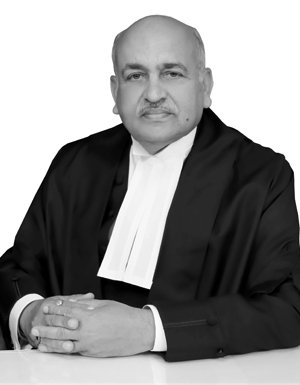

Legal Notes
Add a Note....