
The Archaeological Survey of India is a department of the Government of India. The post of Superintending Archaeologist was vacant. For which Applicant Sanjay Kumar Manjul interviewed. The appellant was ...
No Acts & Articles mentioned in this case
http://JUDIS.NIC.IN SUPREME COURT OF INDIA Page 1 of 7
CASE NO.:
Appeal (civil) 4098 of 2006
PETITIONER:
Sanjay Kumar Manjul
RESPONDENT:
The Chairman, UPSC and Ors.
DATE OF JUDGMENT: 13/09/2006
BENCH:
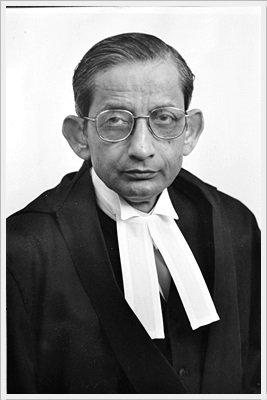
S.B. Sinha & Dalveer Bhandari
JUDGMENT:
J U D G M E N T
[Arising out of SLP (Civil) No.26297 of 2005]
W I T H
CIVIL APPEAL NO. 4099 OF 2006
[Arising out of SLP (Civil) No.4976 of 2006]
S.B. SINHA, J :
Leave granted.
The Archaeological Survey of India is a department of Archaeology
of the Government of India. The post of Superintending Archaeologist fell
vacant. Sanjay Kumar Manjul (Appellant) and Dr. S. Rajavelu, Respondent
No.4 herein applied therefor. An advertisement was issued for direct
recruitment to the said post. 169 applications were received therefor. 16
applicants including that of Sanjay Kumar Manjul were interviewed. Four
of them had been selected on 04.08.2004. Indisputably, the case of Dr. S.
Rajavelu was not considered by the Union Public Service Commission (for
short, 'the Commission) on the premise that he did not fulfill the essential
qualifications requisite therefor.
An original application was filed by some candidates before the
Central Administrative Tribunal, Principal Bench, New Delhi, marked as
O.A. No. 1899 of 2004, which was dismissed by an order dated 15.07.2005.
Dr. S. Rajavelu also filed an original application before the Central
Administrative Tribunal, Madras, which was marked as O.A. No.720 of
2004. By an order dated 28.04.2005, the said original application was also
dismissed.
Being aggrieved by and dissatisfied therewith, he filed a writ petition
before the High Court of Madras. Even till the time of filing of the said
original applications and writ petition, selection process of the candidates
was not finalized and by an order dated 21.07.2005, the High Court passed
an interim order on the following terms :
"\005.if any appointment is made in the meantime, such
appointment shall be subject to result of the present writ
petition and it shall be so indicated clearly in the
appointment order that if ultimately the petitioner
succeeds in the present writ petition, such appointment
shall be liable to be quashed, returnable within three
weeks. Private notice is also permitted."
The Archaeological Survey of India, however, issued unconditional
http://JUDIS.NIC.IN SUPREME COURT OF INDIA Page 2 of 7
offer of appointment to the selected candidates, inter alia, stating :
"I am directed to inform that on the
recommendations of the Union Public Service
Commission, the President is pleased to offer you the
post of Superintending Archaeologist (G.C.S. Group 'A'
Gazetted) in the pay scale of Rs.10,000-15200/- in the
Archaeological Survey of India. Your pay will be fixed
in accordance with the normal rules or instructions issued
by the Government and you will also be entitled to draw
dearness and other allowances at the rates admissible and
subject to the rules and orders governing the grant of
such allowances, in force, from time to time."
The Appellant herein was not impleaded as a party in the said writ
petition. By reason of the impugned judgment, the writ petition of the
Fourth Respondent was allowed.
Before the High Court as also before us, the question raised was as to
whether experience in Epigraphy may be considered to be 'field experience
in Archaeology'.
Mr. Ranjit Kumar, the learned Senior Counsel and Mr. Vikas Singh,
the learned Additional Solicitor General of India, appearing on behalf of the
Appellants, in the respective appeals, submitted that having regard to the
extant rules, field experience in Epigraphy would not satisfy the test of
essential qualifications for appointment to the post of the Superintending
Archaeologist. The expressions 'Archaeology' and 'Epigraphy', it was
urged, mean two different disciplines and in fact not only the scope of study
thereof are different, their cadres are also distinct and different.
It was submitted that the Commission as also the Archaeological
Survey of India being experts bodies, the High Court should not have
ordinarily interfered with the decision taken by the department as
'Archaeology' and 'Epigraphy' constitute two different disciplines.
In any event, the Commission having short-listed the candidates
providing for better meritorious candidates, the writ petition of the Fourth
Respondent should not have been allowed. It was also urged that the
Appellant having not been impleaded in the writ petition, the same was not
maintainable.
Mr. K.V. Viswanathan, the learned counsel appearing on behalf of the
Fourth Respondent, on the other hand, would submit that :
(i) The Appellant having not been appointed on the date of filing of
the writ petition and the High Court having directed that his appointment
would be subject to the result of the writ petition, he was not a necessary
party.
(ii) The Commission undoubtedly had the jurisdiction to shortlist the
candidates; but the same was required to be done in terms of the rules.
(iii) Eligible candidates in the name of short-listing could not have
been made ineligible and, thus, non-consideration of the case of the Fourth
Respondent herein by the Commission violates his fundamental right under
Article 16 of the Constitution of India.
(iv) Study of Epigraphy being a part of study of Archaeology,
experience gained therein would amount to experience in Archaeology. By
way of an example, it was contended that cardiology although is a speciality,
the same has been held to be a part of medicine by this Court in Dr. M.C.
Gupta and Others v. Dr. Arun Kumar Gupta and Others [(1979) 2 SCC
339].
The requisite essential qualifications for recruitment to the post of
Superintending Archaeologist are as under :
http://JUDIS.NIC.IN SUPREME COURT OF INDIA Page 3 of 7
"(i) At least a second class Master's Degree of a
recognized University or equivalent in Indian
History/Archaeology/Anthropology with
knowledge of Stone Age Archaeology Geology
with knowledge of Pleistocene Geology;
(ii) Diploma in Archaeology from the Archaeological
Survey of India with three years field experience;
OR
Field experience of at least five years in
Archaeology and knowledge of Monuments and
Antiquities.
(iii) Doctorate Degree in any of the above subjects or
equivalent published research work (evidence to be
furnished).
Desirable Qualifications :
Knowledge of Sanskrit, Pali, Prakrit, Persian or
Arabic upto degree level.
Age prescribed for the post not exceeding 40 years
on normal closing date relaxable for other Backward
Classes candidates upto 3 years in respect of the
vacancies reserved for them. Relaxable for Employees of
Government of India and Union Territories upto 5 years."
Entitlement of the Appellant herein for consideration of the
recruitment to the said post is not in dispute. Archaeological Survey of India
is a multi-faceted organization. Its technical officers fall under the
following separate cadres :
(a) Archaeological cadre
(b) Conservation cadre
(c) Science cadre
(d) Epigraphy cadre
(e) Horticulture cadre.
We are concerned with the essential qualifications of EQ-II, namely,
a diploma in Archaeology with three years' field experience or field
experience of at least five years in Archaeology and knowledge of
monuments and antiquities. In the Post-Graduate Diploma in Archaeology,
there are thirteen subjects, twelve being theory papers and one practical.
Out of total 2000 marks, Epigraph and Numismatics carries only 100 marks
i.e. 50 marks for Epigraph and 50 marks for Numismatics. The Post
Graduate Diploma Course, therefore, provides that Epigraphy forms only
2.5% of Archaeology.
So far as PGDA Course is concerned, the qualifications therefor are as
under :
"The qualification for admission are Master's
Degree in Ancient or Medieval Indian
History/Archaeology/Anthropology from a recognized
University or equivalent including Indian Classical
languages such as Sanskrit, Pali, Prakrit, Tamil, Arabic
or Persian or Geology with knowledge of Pleistocene age
with a minimum of 55% marks in aggregate, relaxable by
5% in the case of SC/ST/OBC candidates and candidates
working in the Archaeological organization,
http://JUDIS.NIC.IN SUPREME COURT OF INDIA Page 4 of 7
Central/State Government and University Departments."
We may for the sake of clarity refer to the dictionary meanings of the
said terms :
Webster American Dictionary :
"Archaeology is the study of human history and pre-
history through the excavation of sites and the analysis of
artifacts and other physical remains."
Oxford Dictionary :
"It is the study of human history and prehistory through
the excavation of sites and analysis of physical remains."
Webster American Dictionary :
"Epigraphy is the study and interpretation of ancient
inscription; epigraphs collectively. It is an inscription on
a building, statue or coin; a short quotation or saying at
the beginning of a book or chapter, intended to suggest
its theme."
We may usefully notice that in Advanced Law Lexicon, 3rd Edn., the
term 'Archaeology' has been defined to mean : "A systematic description or
study of antiquities", whereas the term "Epigraph" has been defined to mean
"An old inscription of a durable material".
It is also significant to notice that in 'The New Encyclopaedia of
Britannica in 'The Study of History', 'Archaeology' and 'Epigraphy' have
been discussed separately; both the subjects although have been put under a
common heading, namely, 'Ancillary Fields'. They have been dealt with
separately. 'Epigraphy' has been stated to be the study of written matter
recorded on hard or durable materials and is the prime tool in recovering
much of the firsthand record of antiquity.
It is interesting to note therein that 'Archaeology' and 'Epigraphy'
have been distinguished, stating :
"Strictly speaking, archaeology is not concerned
with the analysis and interpretation of the bones of
ancient man himself \026 whether fossilized or not. The
study of the skulls and skeletons of ancient man is the
concern of the physical anthropologist or human
paleontologist. Neither is the archaeologist normally
prepared to decipher or interpret the writings of ancient
man \026 this is the specialty of the epigraphist and
philologist."
The question as to whether Archaeology is a compendious expression,
as was urged by Mr. Viswanathan, has to be considered in the
aforementioned backdrop.
'Epigraphy' is a study of inscription is not denied or disputed. There
are persons who have expertise in different parts of Epigraphy. Persons may
acquire expertise in the study of inscription in different languages. The
Fourth Respondent is an expert in respect of inscription only in the language
of Tamil.
The qualifications for recruitment to a post are laid down in terms of
the statutory rules. The Fourth Respondent raised a contention before the
Tribunal that several persons named in Ground 'G' of the writ petition had
occupied the very post in the Archaeological Department, although they
http://JUDIS.NIC.IN SUPREME COURT OF INDIA Page 5 of 7
were experts in Epigraphy.
The aforementioned contention of the Fourth Respondent herein has
specifically been denied and disputed. It has been contended that
recruitment rules of the Deputy Superintending Archaeologist are different
from the Superintending Archaeologist. Whereas in the case of the former,
two years' research experience in various subjects including Epigraphy was
considered to be sufficient, in the case of latter, what was necessary was
field experience of five years in Archaeology and knowledge of monuments
and antiquities.
The statutory authority is entitled to frame statutory rules laying down
terms and conditions of service as also the qualifications essential for
holding a particular post. It is only the authority concerned who can take
ultimate decision therefor.
The jurisdiction of the superior courts, it is a trite law, would be to
interpret the rule and not to supplant or supplement the same.
It is well-settled that the superior courts while exercising their
jurisdiction under Articles 226 or 32 of the Constitution of India ordinarily
do not direct an employer to prescribe a qualification for holding a particular
post.
What was, therefore, permissible for recruitment to the post of Deputy
Superintending Archaeologist need not necessarily be held to be permissible
for recruitment of Superintending Archaeologist. Once a person holds the
post of Deputy Superintending Archaeologist, keeping in view the decision
of this Court in Roshan Lal Tandon v. Union of India [(1968) 1 SCR 185],
he may be treated identically; but then it would not mean that while making
a direct recruitment to a higher post, the Commission must have jurisdiction
to relax the rules The power of relaxation, it is well-settled, must also be
expressly conferred.
In this case both the Commission as also the Archaeological Survey of
India categorically opined that the requirements for both the posts are
different. The Commission categorically stated :
"\005The experience in Epigraphy cannot be construed as
experience in Archaeology. Similarly his experience as
Sub Editor cannot be considered as field experience in
Archaeology. Hence, he does not possess the required
experience under educational qualification (ii) and hence
he is ineligible for the post."
Archaeological Survey of India in its Counter Affidavit also took the
same plea, stating :
"Epigraphy is a separate Branch of Archaeology
Survey of India and constitutes a separate cadre, which is
distinct and different from that of the archaeological
cadre."
Strong reliance, as noticed hereinbefore, has been placed by Mr.
Viswanathan on Dr. M.C. Gupta (supra). Therein, this Court was
considering the definition of the word 'medicine' contained in Section 2(f)
of the Indian Medical Council Act, 1956. It was held to mean modern
scientific medicine in all its branches and includes surgery and obstetrics,
but does not include veterinary medicine and surgery. The Court although
opined that it was too wide a definition, but proceeded to consider the
question having regard to the regulations operating in the field. While
holding that teaching experience in the subject forms part of general
medicine, it was opined that keeping in view the regulations operating in the
field, the Commission was amply justified in reaching at the conclusion that
http://JUDIS.NIC.IN SUPREME COURT OF INDIA Page 6 of 7
the Appellant therein possessed the requisite teaching qualification.
We may, however, notice that the aforementioned opinion was arrived
at keeping in view the expert opinion as also the opinion of the Medical
Council of India in that behalf in the following terms :
"\005An extreme argument was urged that in adopting this
approach it may be that somebody may be working in
different specialist branches such as neurology,
gastroenterology, psychiatry, etc. and each one would
qualify for being appointed as Professor of Medicine
without having even a tickle of experience on the subject
of general medicine. This wild apprehension need not
deter us because it should be first remembered that any
one going into specialist branch under medicine has to be
M.D. (Medicine). Thereafter, if he wants to become a
professor in the specialist branch such as cardiology, the
academic qualification required is to hold a degree of
D.M. in the specialist branch. This becomes clear from a
perusal of the regulations. It is not necessary, therefore,
to go into the dictionary meaning of the expression
"medicine" to determine whether it includes cardiology.
The Medical Council of India, a body composed of
experts have in the regulations clearly manifested their
approach when they said that cardiology is a specialist
branch under medicine. Ipso facto, medicine includes
cardiology. It was not disputed that one qualifying for
M.D. (Medicine) has to learn the subject of cardiology.
And it must be remembered that the four experts aiding
and advising the commission have considered teaching
experience in cardiology as teaching experience in
medicine. The counter-affidavit on behalf of the
Commission in terms states that medicine is a wide and
general subject and includes cardiology whereas for the
post of Professor of Cardiology a further two years'
special training in cardiology or D.M. in cardiology after
M.D. in medicine has been laid down as a requisite
qualification by the Medical Council. It is further stated
that teaching experience in cardiology will make the
person eligible for the post of Professor of Medicine.
That was the view of the experts who assisted the
Commission\005"
The opinion of experts in this case is just the converse. In an
academic field, apart from Dr. M.C. Gupta (supra), the court would normally
be governed by the opinion of the experts in the field particularly in the
academic field.
The said decision does not help the case of the Fourth Respondent.
The situation therein was entirely different. Opinions of the experts were
duly considered in arriving at the decision.
In Tariq Islam v. Aligarh Muslim University and Others [(2001) 8
SCC 546], this Court stated the law thus :
"\005This Court stated that normally, it is wise and safe for
the courts to leave the decision of academic matters to
experts who are more familiar with the problems they
face than the courts generally are. Area of interference by
courts would be limited to whether the appointment made
by the academic body had contravened any statutory or
binding rule and while doing so, the court should show
due regard to the opinion expressed by the experts and on
whose recommendations the academic body had acted
http://JUDIS.NIC.IN SUPREME COURT OF INDIA Page 7 of 7
and not to treat such expert body as a quasi-judicial
tribunal, deciding disputes referred to it for decision.
Equivalence of a qualification pertains purely to an
academic matter and courts would naturally hesitate to
express a definite opinion, particularly, when it appears
that the experts were satisfied that the equivalence has
already been considered and declared by it\005"
Mr. Viswanathan relied on N. Suresh Nathan and Another v. Union of
India and Others [(1992) Supp. 1 SCC 584] for the proposition that
construction in consonance with the long standing practice is permissible.
There is no dispute with regard to the aforementioned proposition of law.
What, however, is necessary for applying the principle of interpretation of
statute is to take recourse to the literal interpretation and only when the same
would result in absurdity or anomaly, other principles, depending upon the
nature of the statute, may be applied. It is not a case where the terms are
statutorily defined. The dictionary meaning or the meaning attached to the
expression in the context of the rules, therefore, must be given effect to not
only having regard to the purport and object thereof but also the opinion of
the experts in the field.
We have noticed hereinbefore that even in common parlance
Archaeology and Epigraphy contain two different disciplines. It is used
both in the broader and narrower sense. Although the term 'Archaeology'
may include a science of Epigraphy, for the purpose of the Ancient
Monuments and Archaeological Sites and Remains Act, 1958 and the
regulations framed thereunder, essential qualifications required for holding
the post may have to be construed differently.
Upon interpretation of the terms, this Court is satisfied that the Fourth
Respondent did not hold the requisite essential qualifications and, thus, was
not eligible to hold the post. Furthermore, we do not have sufficient
materials to hold as to on what basis, the Archaeological Survey of India
opined differently in the cases of persons named in Ground 'G' of the writ
petition of the First Respondent. We may, however, notice that the same has
been explained. Mr. Viswanathan submitted that no explanation has been
offered in respect of Dr. Ramesh. We refrain ourselves from going into the
said question, simply on the proposition that Article 14 of the Constitution
of India carries with it a positive concept and the equality clause contained
therein cannot be said to have any application in a case of illegality.
For the views we have taken, we are of the opinion that it is not
necessary for us to advert to the other contentions raised by the learned
counsel.
For the reasons aforementioned, the impugned judgment of the High
Court cannot be sustained, which is set aside accordingly. The appeals are
allowed. No costs.

 Login with google
Legal Notes
Add a Note....