
The case Shridmani Gurudwara Prabandhak Committee, Amritsar v. Shri Som Nath Dass & Ors. (2000) concerns a dispute as to the ownership and control of a property that is alleged ...

No Acts & Articles mentioned in this case
http://JUDIS.NIC.IN SUPREME COURT OF INDIA Page 1 of 18
PETITIONER:
SHRIOMANI GURUDWARA PRABANDHAK COMMITTEE, AMRITSAR
Vs.
RESPONDENT:
SHRI SOM NATH DASS & ORS.
DATE OF JUDGMENT: 29/03/2000
BENCH:
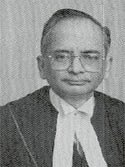
A.P.Misra, M.Jagannadha Rao
JUDGMENT:
MISRA, J.
The question raised in this appeal is of far reaching
consequences and is of great significance to one of the
major religious followers of this country. The question is:
whether the Guru Granth Sahib could be treated as a
juristic person or not? If it is, then it can hold and use
the gifted properties given to it by its followers out of
their love, in charity. This is by creation of an endowment
like others for public good, for enhancing the religious
fervour, including feeding the poor etc.. Sikhism grew
because of the vibrating divinity of Guru Nanakji and the 10
succeeding gurus, and the wealth of all their teachings is
contained in Guru Granth Sahib. The last of the living
guru was Guru Gobind Singhji who recorded the sanctity of
Guru Granth Sahib and gave it the recognition of a living
Guru. Thereafter, it remained not only a sacred book but is
reckoned as a living guru. The deep faith of every earnest
follower, when his pure conscience meets the divine
under-current emanating from their Guru, produces a feeling
of sacrifice and surrender and impels him to part with or
gift out his wealth to any charity may be for gurdwaras,
dharamshalas etc.. Such parting spiritualises such follower
for his spiritual upliftment, peace, tranquility and
enlightens him with resultant love and universalism. Such
donors in the past, raised number of Gurdwaras. They gave
their wealth in trust for its management to the trustees to
subserve their desire. They expected trustees to faithfully
implement the objectives for which the wealth was entrusted.
When selfishness invades any trustee, the core of trust
starts leaking out. To stop such leakage, legislature and
courts step in. This is what was happening in the absence
of any organised management of Gurudwaras, when trustees
were either mismanaging or attempting to usurp such trusts.
The Sikh Gurdwaras and Shrines Act 1922 (VI of 1922) was
enacted to meet the situation. It seems, even this failed
to satisfy the aspirations of the Sikhs. The main reason
being that it did not establish any permanent committee of
management for Sikh gurdwaras and did not provide for the
speedy confirmation by judicial sanction of changes already
introduced by the reforming party in the management of
places of worship. This was replaced by the Sikh Gurdwaras
Act, 1925 (Punjab Act No. 8 of 1925) under which the
present case arises. This Act provided a legal procedure
http://JUDIS.NIC.IN SUPREME COURT OF INDIA Page 2 of 18
through which gurdwaras and shrines regarded by Sikhs as
essential places of Sikh worship to be effectively and
permanently brought under Sikh control and management, so as
to make it consistent with the religious followings of this
community.
About 56 persons of villages Bilaspur, Ghodani,
Dhamot, Lapran and Buani situated in the Village Bilaspur,
District Patiala moved petition under Section 7(1) of the
said Act for declartion that the disputed property is a Sikh
Gurdwara. The State Government through Notification No.
1702 G.P. dated 14th September, 1962 published the
aforesaid petition in the Gazette including the boundaries
of the said gurdwaras which were to be declared as Sikh
Gurdwaras. Thereafter, a composite petition under Sections
8 and 10 of the said Act was filed by Som Dass son of Bhagat
Ram, Sant Ram son of Narain Dass and Anant Ram son of Sham
Dass of Village Bilaspur, District Patiala, challenging the
same. They claimed it to be a dharamshala and Dera of
Udasian being owned and managed by the petitioners and their
predecessors since the time of their forefathers and that
they being the holders of the same, received the said Dera
in succession, in accordance with their ancestral share.
They also claimed to be in possession of the land attached
to the said Dera. They denied it to be a Sikh Gurdwara.
This petition was forwarded by the Government to the Sikh
Gurdwara Tribunal, hereinafter referred to as the
Tribunal. In reply to the notice, the Shiromani Gurdwara
Parbandhak Committee, hereinafter referred to as the SGPC
(appellant), claimed it to be a Sikh Gurdwara, having been
established by the Sikhs for their worship, wherein Guru
Granth Sahib was the only object of worship and it was the
sole owner of the gurdwara property. It denied this
institution to be an Udasi Dera. However, appellant
Committee challenged the locus standi of the respondent to
file this objection to the notification. The appellants
case was under Section 8 and objection could only be filed
by any hereditary office-holders or by 20 or more
worshippers of the gurdwara, which they were not. The
Tribunal held that the petitioners before it (respondents
here), admitted in their cross- examination that the
disputed premises was being used by them as their
residential house that there was no object of worship in the
premises, neither they were performing any public worship
nor they were managing it. So it held they were not
hereditary office holders, as they neither managed it nor
performed any public worship. Thus, their petition under
Section 8 was rejected on 9th February, 1965 by holding that
they have no locus standi. Aggrieved by this they filed
first appeal being FAO No. 40 of 1965 which was also
dismissed by the High Court on 24th March, 1976, which
became final. Thereafter, the Tribunal took the petition
under Section 10 in which the stand of SGPC was that the
land and the buildings were the properties of Gurdwara
Sahib Dharamshala Guru Granth Sahib at Bilaspur. The
respondents and their predecessors along with their family
members had all along been its managers and they had no
personal rights in it. The Tribunal framed two issues:
(1) What right, title or interest have the
petitioners in the property in dispute?
(2) What right, title or interest has the notified
http://JUDIS.NIC.IN SUPREME COURT OF INDIA Page 3 of 18
Sikh Gurdwara in the property in dispute.
The Tribunal decided both issue No. 1 and issue No.
2 in favour of present appellants and held that the disputed
property belonged to the SGPC. Thus respondents petition
under Section 10 was also rejected on 4th September 1978.
Tribunals conclusion is reproduced hereinbelow:
The above discussion shows that the
respondent-Committee has been successful in bringing its
case rightly in Clauses 18 (1)(a) and 18(1)(d) of the Act
and has been successful in discharging its onus as regards
issue no. 2 and the issue is, iala is the owner of the
property in dispute consisting of Gurdwara building, the pla
of which is given in the Notification No. 1702 G.P.
dated 14.9.68 at page 2527 and the agricultural land
measuring 115 Bighas 12 Biswas the detail of which are given
in the copy of Jamabandi for the year 1955-56 A.D. attached
to the above-said Notification at page 2529 and is comprised
of Khasra Nos. 456 min, 457, 451, 644 and 452 bearing
Khawat No. 276 Khatauni nos. 524 to 527.
Aggrieved by this, respondents filed first appeal
being FAO No. 449 of 1978. During its pendency, the SGPC
on the basis of final order passed by the High Court in FAO
No. 40 of 1965 against the order of the Tribunal rejecting
Section 8 application, filed suit No. 94 of 1979 against
the respondents under Section 25-A of the Act for the
possession of the building and the land. The respondents
contested the suit by raising objection about
mis-description of the property in the plaint and also
raising an is
e about jurisdiction since the income from the
gurdwara was more than Rs. 3,000/- per annum for which a
committee was to be constituted before any suit could be
filed. On contest, the said suit of SGPC was decreed and
respondents objections were rejected, against which the
respondents filed FAO No. 2 of 1980. The High Court vide
its order dated 11th February, 1980 directed this FAO No. 2
of 1980 to be listed for hearing along with FAO No. 449 of
1978. It is also relevant to refer to, which was also
stated by the respondents in their petition before the
Tribunal, that a notification under Section 9 of the Act was
published declaring the disputed gurdwara to be a Sikh
Gurdwara.
It is necessary to give some more facts to appreciate
the contentions raised by the respective parties. In
jamabandi Ex. P-1 of 1961-62 BK, (which would be 1904 AD)
Mangal Dass and Sunder Dass, Bhagat Ram sons of Gopi Ram
Faqir Udasi were mentioned as owners in possession of the
land. They had also mortgaged part of this land to some
other persons. This village Bilaspur where the disputed
gurdwara exists formed part of the erstwhile Patiala Estate.
The then ruler of the Patiala Estate issued Farman-
Shahi dated 18th April, 1921. Its contents are quoted
hereunder:
In future, instructions be issued that so long the
appointment of a Mahant is not approved by Ijlas-I-khas
through Deori Mulla, until the time, the Mahant is entitled
to receive turban, shawl or Bandhan or Muafi etc. from the
http://JUDIS.NIC.IN SUPREME COURT OF INDIA Page 4 of 18
Government, no property or Muafi shall be entered in his
name in the revenue papers.
It should also be mentioned that the land which
pertains to any Dera should not be considered as the
property of any Mahant, nor the same should be shown in the
revenue papaers as the prope
y of the Mahant, but these should be entered as
belonging to the Dera under the management of the Mahant and
that the Mahants shall not be entitled to sell or mortgage
the land of the Dera. Revenue Department be also informed
about it and the order be gazetted.
On Maghar 10, 1985 BK (1920 AD) at the insta
e of Rulia Singh and others the patwari made a report
in compliance with the aforesaid Farman-e- Shahi for the
change of the entries in favour of Guru Granth Sahib
Barajman Dharamshala Deh. This was based on the enquiry
and evidence produced before him. In this mutation
proceeding which led to the mutation viz., Ex. P8, Narain
Dass, Bhagat Ram and Atma Ram Sadh appeared before the
Revenue Officer and stated that their ancestors got this
land which was gift
in charity (Punnarth) by the then proprietors of the
village. This land was given to the ancestors of the
respondent for the purpose that they should provide food and
comfort to the travellers passing through this village. In
the same proceeding Kapur Singh, Inder Singh Lambardars and
other right- holders of the said village also stated that
their fore-fathers had given this land in the name of Guru
Granth Sahib Barajman Dharamshala Deh under the charge of
these persons for providing food and comfort to the
travellers. But Atma Ram and otherietors of the village.
This land was given to the ancestors of the respondent for
the purpose that they should provide food and comfort to the
travellers passing through this village. In the same
proceeding Kapur Singh, Inder Singh Lambardars and other
right-holders of the said village also stated that their
fore-fathers had given this land in the name of Guru Granth
Sahib Barajman Dharamshala Deh under the charge of these
persons for providing food and comfort to the travellers.
But Atma Ram and others, ancestors of respondents were not
performing their duties. This default was for a purpose,
which is revealed through the last settlement that they got
this land entered in their personal names, in the revenue
records against which a matter was pending before Deori
Mualla in the mutation proceedings. Based on the evidence,
the Revenue Officer after enquiry recorded the finding that
Atma Ram and others admitted that this land had been given
to them without any compensation for providing food and
shelter to the travellers which they were not performing.
He further held that Atma Ram and others could not
controvert the aforesaid assertion made by the villagers.
So, based on this enquiry and evidence on record, he ordered
the mutation, in the name of Guru Granth Sahib Barajman
Dharamshala Deh by deleting the name of Atma Ram and others
from the column of ownership of the land. He further
observed, so far as the question of appoinment of Manager or
Mohatmim was concerned that it was to be decided by the
Deori Mualla as the case about this was pending before the
Deori Mualla. Similarly, in the other mutation No,. 693
which is Ex. 9 in 27th Maghar 1983 (1926 AD) also, mutation
http://JUDIS.NIC.IN SUPREME COURT OF INDIA Page 5 of 18
was ordered by removal of the name of Narain Dass, Bhagat
Ram sons of Gopi Ram in favour of Guru Granth Sahib
Barajman Dharamshala Deh. Since that date till the filing
of the petitions by the respondents under Sections 8 and 10
of the Act entries in the ownership column of the land
continued in the name of "Guru Granth Sahib Barajman
Dharamshala Deh and no objection was filed either by the
ancestors of respondents or respondents themselves.
It was for the first time objection was raised by
respondents through their counsel before the High Court in
FAO No. 449 of 1978 regarding validity of Ex. P 8-9
contending that the entry in the revenue records in the name
of Guru Granth Sahib was void as Guru Granth Sahib was not a
juristic person. The case of the respondents was that the
Guru Granth Sahib was only a sacred book of the Sikhs and it
would not fall within the scope of the word, juristic
person. On the other hand, with vehemence and force
learned counsel for the appellant, SGPC submits that Guru
Granth Sahib is a juristic person and hence it can hold
property, can sue and be sued. On this question, whether
Guru Granth Sahib is a juristic person, a difference arose
between the two learned judges of the Bench of the High
Court. Mr. Justice Tiwana held, it to be a juristic person
and dismissed both the FAOs, namely, FAO No. 449 of 1978
and 2 of 1980 upholding the judgment of the Tribunal. On
the other hand Mr. Justice Punchhi, (as he then was)
recorded dissent and held, the Guru Granth Sahib not to be a
juristic person, but did not decide the issue on merits.
The case was then referred to a third judge, namely, Mr.
Justice Tiwatia who agreed with the view of Mr. Justice
Punchhi and held the Guru Granth Sahib not to be a juristic
person. After recording this finding the learned judge
directed that the FAO may be placed before the Division
Bench for final disposal of the appeal on merits.
The question, whether Guru Granth Sahib is a juristic
person is the main point which is argued in the present
appeal to which we are called upon to adjudicate. It is
relevant to mention here that after adjudication of the
question whether the Guru Granth Sahib is a juristic person,
the matter again went back to the same Bench which again
gave rise to another conflict between Justice Tiwana and Mr.
Justice Punchhi. Justice Tiwana held on merits that
mutations were valid and respondents had no right to this
property. But Mr. Justice Punchhi held to the contrary
that the mutation was invalid and this property was the
private property of the respondents. Thereafter, the said
FAO No. 449 of 1978 and FAO No. 2 of 1980 were placed
before the third judge, namely, Justice J.B.Gupta, who
concurred with the view taken by Mr. Justice Punchhi, as he
then was. He recorded the following conclusion:
in view of the findings that Guru Granth Sahib is
not a juristic person, and that the notification issued
under section 9 was not conclusive, in view of the Full
Bench Judgment of this Court in Mahant Lachhman Dass Chela
Mahant Moti Rams case (supra), the findings of the Tribunal
are liable to be set aside. The Tribunal mainly based its
findings on the mutations, Exhibits P.8 and P.9, which are
in the name of Guru Granth Sahib, since Guru Granth Sahib is
not a juristic person, any mutation a sanctioned in its name
in the present case was of no consequence. There is no
other cogent evidence except the said mutations relied upon
by the Tribunal in that behalf. Similar was the position as
http://JUDIS.NIC.IN SUPREME COURT OF INDIA Page 6 of 18
regards the building. In that behalf, the Tribunal relied
upon the notification issued earlier. The same being not
conclusive, there was not other reliable evidence to
conclude that the building formed part of the Sikh Gurdwara,
notified under Section. In these circumstances, I concur
with the view taken by M.M.Punchhi, J. in the order dated
December 16, 1986.
The foundation of his decision on merits is based on
the finding that Guru Granth Sahib is not a juristic person
and hence Exs. P8 and P9, the mutations in its name were
not sustainable. The present appellants preferred Special
Leave Petition No. 7803 of 1988 in this Court, which was
dismissed in default on 16th November, 1995 and its
restoration application was also dismissed on 19th August,
1996. In this petition it was specifically stated that the
present Civil Appeal No. 3968 of 1987 is pending in this
Court. However, it is significant as we have said above,
the judgment of Mr. Justice Gupta concurring the judgment
of Mr. Justice Punchhi, as he then was, was mainly on the
basis that the mutation in the name in favour of Guru
Granth Sahib Barajman Dharamshala Deh was void in as much
as Guru Granth Sahib was not a juristic person. Thus the
foundation of that decision rests on the question which we
are considering.
The crux of the litigation now rests on the question,
whether Guru Granth Sahib is a juristic person or not. Now,
we proceed to consider this issue.
The very words Juristic Person connote recognition
of an entity to be in law a person which otherwise it is
not. In other words, it is not an individual natural person
but an artificially created person which is to be recognised
to be in law as such. When a person is ordinarily
understood to be a natural person, it only means a human
person. Essentially, every human person is a person. If we
trace the history of a Person in the various countries we
find surprisingly it has projected differently at different
times. In some countries even human beings were not treated
to be as persons in law. Under the Roman Law a Slave was
not a person. He had no right to a family. He was treated
like an animal or chattel. In French Colonies also, before
slavery was abolished, the slaves were not treated to be
legal persons. They were later given recognition as legal
persons only through a statute. Similarly, in the U.S. the
African-Americans had no legal rights though they were not
treated as chattel.
In Roscoe Pounds Jurisprudence Part IV, 1959 Ed. at
pages 192-193, it is stated as follows:-
In civilized lands even in the modern world it has
happened that all human beings were not legal persons. In
Roman law down to the constitution of Antoninus Pius the
slave was not a person. He enjoyed neither rights of
family nor rights of patrimony. He was a thing, and as
such, like animals, could be the object of rights of
property..In the French colonies, before slavery was there
abolished, slaves were put in the class of legal persons by
the statute of April 23, 1833 and obtained a somewhat
extended juridical capacity by a statute of 1845. In the
United States down to the Civil War, the free negroes in
many of the states were free human beings with no legal
rights.
http://JUDIS.NIC.IN SUPREME COURT OF INDIA Page 7 of 18
With the development of society, where an individuals
interaction fell short, to upsurge social developments,
cooperation of a larger circle of individuals was
necessitated. Thus, institutions like corporations and
companies were created, to help the society in achieving the
desired result. The very constitution of State, municipal
corporation, company etc. are all creations of the law and
these Juristic Persons arose out of necessities in the
human development. In other words, they were dressed in a
cloak to be recognised in law to be a legal unit.
Corpus Juris Secundum, Vol. LXV, page 40 says:
Natural person. A natural person is a human being;
a man, woman, or child, as opposed to a corporation, which
has a certain personality impressed on it by law and is
called an artificial person. In the C.J.S. definition
Person it is stated that the word person, in its primary
sense, means natural person, but that the generally accepted
meaning of the word as used in law includes natural persons
and artificial, conventional, or juristic persons.
Corpus Juris Secundum, Vol. VI, page 778 says:
Artificial persons. Such as are created and devised
by human laws for the purposes of society and government,
which are called corporations or bodies politic.
Salmond on Jurisprudence, 12th Edn., 305 says:
A legal person is any subject-matter other than a
human being to which the law attributes personality. This
extension, for good and sufficient reasons, of the
conception of personality beyond the class of human beings
is one of the most noteworthy feats of the legal
imagination.
Legal persons, being the arbitrary creations of the
law, may be of as many kinds as the law pleases. Those
which are actually recognised by our own system, however,
are of comparatively few types. Corporations are
undoubtedly legal persons, and the better view is that
registered trade unions and friendly societies are also
legal persons though not verbally regarded as
corporations..If, however, we take account of other systems
than our own, we find that the conception of legal
personality is not so limited in its application, and that
there are several distinct varieties, of which three may be
selected for special mention.
1. The first class of legal persons consists of
corporations, as already defined, namely, those which are
constituted by the personification of groups or series of
individuals. The dividuals who thus form the corpus of the
legal person are termed its members
http://JUDIS.NIC.IN SUPREME COURT OF INDIA Page 8 of 18
2. The second class is that in which the corpus, or
object selected for personification, is not a group or
series of persons, but an institution. The law may, if it
pleases, regard a church or a hospital, or a university, or
a library, as a person. That is to say, it may attribute
personality, not to any group of persons connected with the
institution, but to the institution itself.
3. The third kind of legal person is that in which
the corpus is some fund or estate devoted to special uses
a charitable fund, for example or a trust estate.
Jurisprudence by Paton, 3rd Edn., page 349 and 350
says:
It has already been asserted that legal personality
is an artificial creation of the law. Legal persons are all
entities capable of being right-and-duty- bearing units-all
entities recognised by the law as capable of being parties
to a legal relationship. Salmond said: So far as legal
theory is concerned, a person is any being whom the law
regards as capable of rights and duties.
Legal personality may be granted to entities other
than individual human beings, e.g. a group of human beings,
a fund, an idol. Twenty men may form a corporation which
may sue and be sued in the corporate name. An idol may be
regarded as a legal persona in itself, or a particular fund
may be incorporated. It is clear that neither the idol nor
the fund can carry out the activities incidental to
litigation or other activities incidental to the carrying on
of legal relationships, e.g., the signing of a contract;
and, of necessity, the law recognises certain human agents
as representatives of the idol or of the fund. The acts of
such agents, however (within limits set by the law and when
they are acting as such), are imputed to the legal persona
of the idol and are not the juristic acts of the human
agents themselves. This is no mere academic distinction,
for it is the legal persona of the idol that is bound to the
legal relationships created, not that of the agent. Legal
personality then refers to the particular device by which
the law creates or recognizes units to which it ascribes
certain powers and capacities.
Analytical and Historical Jurisprudence, 3rd Edn. At
page 357 describes
person:
We may, therefore, define a person for the purpose of
jurisprudence as any entity (not necessarily a human being)
to which rights or duties may be attributed.
Thus, it is well settled and confirmed by the
authorities on jurisprudence and courts of various countries
that for a bigger thrust of socio-political-scientific
development evolution of a fictional personality to be a
juristic person became inevitable. This may be any entity,
living, inanimate, objects or things. It may be a religious
http://JUDIS.NIC.IN SUPREME COURT OF INDIA Page 9 of 18
institution or any such useful unit which may impel the
courts to recognise it. This recognition is for subserving
the needs and faith of the society. A juristic person, like
any other natural person is in law also conferred with
rights and obligations and is dealt with in accordance with
law. In other words, the entity acts like a natural person
but only through a designated person, whose acts are
processed within the ambit of law. When an idol was
recognised as a juristic person, it was known it could not
act by itself. As in the case of minor a guardian is
appointed, so in the case of idol, a Shebait or manager is
appointed to act on its behalf. In that sense, relation
between an idol and Shebait is akin to that of a minor and a
guardian. As a minor cannot express himself, so the idol,
but like a guardian, the Shebait and manager have
limitations under which they have to act. Similarly, where
there is any endowment for charitable purpose it can create
institutions like a church, hospital, gurudwara etc. The
entrustment of an endowed fund for a purpose can only be
used by the person so entrusted for that purpose in as much
as he receives it for that purpose alone in trust. When the
donor endows for an idol or for a mosque or for any
institution, it necessitates the creation of a juristic
person. The law also circumscribes the rights of any person
receiving such entrustment to use it only for the purpose of
such a juristic person. The endowment may be given for
various purposes, may be for a church, idol, gurdwara or
such other things that the human faculty may conceive of,
out of faith and conscience but it gains the status of
juristic person when it is recognised by the society as
such.
In this background, we find that this Court in
Sarangadeva Periya Matam & Anr. Vs. Ramaswami Goundar
(dead) by legal representatives, AIR 1966 SC 1603, held that
a Mutt was the owner of the endowed property and that like
an idol the Mutt was a juristic person and thus could own,
acquire or possess any property. In Masjid Shahid Ganj &
Ors. Vs. Shiromani Gurdwara Parbandhak Committee,
Amritsar, AIR 1938 Lahore 369, a Full Bench of that High
Court held that a mosque was a juristic person. This
decision was taken in appeal to the Privy Council which
confirmed the said judgment. Sir George Rankin observed:
In none of these cases was a mosque party to the
suit, and in none except perhaps the last is the fictitious
personality attributed to the mosque as a matter of
decision. But so far as they go these cases support the
recognition as a fictitious person of a mosque as an
institution-apparently hypostatizing an abstration. This,
as the learned Chief Justice in the present case has pointed
out, is very different from conferring personality upon a
building so as to deprive it of its character as immovable
property.
There may be an endowment for a pious or religious
purpose. It may be for an idol, mosque, church etc.. Such
endowed property has to be used for that purpose. The
installation and adoration of an idol or any image by a
Hindu denoting any god is merely a mode through which his
faith and belief is satisfied. This has led to the
recognition of an idol as a juristic person.
In Deoki Nandan Vs. Murlidhar & Ors, AIR 1957 SC 137,
http://JUDIS.NIC.IN SUPREME COURT OF INDIA Page 10 of 18
this Court held:
In Bhupati Nath Smrititirtha Vs. Ram Lal Maitra,
ILR 37 Cal 128 (F), it was held on a consideration of these
and other text that a gift to an idol was not to be judged
by the rules applicable to a transfer to a sentient being,
and that dedication of properties to an idol consisted in
the abandonment by the owner of his demoinion over them for
the purpoe of their being appropriated for the purposes
which he intends. Thus, it was observed by Sir Lawrence
Jenkins C.J. at p. 138 that the pious purpose is still
the legatee, the establishment of the image is merely the
mode in which the pious purpose is to be effected and that
the dedication to a deity may be a compendious expression
of the pious purposes for which the deciation is designed.
Vide also the observations of Sir Ashutosh Mookerjee at p.
155. In Hindu Relgious Endowments Board V.
Veeraraghavacharlu, AIR 1937 Mad 750 (G), Varadachariar J.
dealing with this question, referred to the decision in ILR
37 Cal 128 (F), and observed:
As explained in the case, that purpose of making a
gift to a temple is not to confer a benefit on God but to
confer a benefit on those who worship in that temple, by
making it possible for them to have the worship conducted in
a proper and impressive manner. This is the sense in which
a temple and its endowments are regarded as a public
trust.
In Som Prakash Rekhi Vs. Union of India & Anr., 1981
(1) SCC 449, this Court held that a legal person is any
entity other than a human being to which the law attributes
personality. It was stated: Let us be clear that the
jurisprudence bearing on corporations is not myth but
reality. What we mean is that corporate personality is a
reality and not an illusion or fictitious construction of
the law. It is a legal person. Indeed, a legal person is
any subject-matter other than a human being to which the law
attributes personality. This extension, for good and
sufficient reasons, of the conception of personalityis one
of the most noteworthy feats of the legal imagination.
Corporations are one species of legal persons invented by
the law and invested with a variety of attributes so as to
achieve certain purposes sanctioned by the law.
This Court in Yogendra Nath Naskar Vs. Commissioner
of Income Tax, Calcutta, 1969 (1) SCC 555, held that the
consecrated idol in a Hindu temple is a juristic person and
approved the observation of West J. in the following
passage made in Manohar Ganesh Vs. Lakshmiram, ILR 12 Bom
247;
The Hindu Law, like the Roman Law and those dervied
from it, recognises not only incorporate bodies with rights
of property vested in the Corporation apart from its
individual members but also juridical persons called
foundations. A Hindu who wishes to establish a religious or
charitable institution may according to his law express his
purpose and endow it and the ruler will give effect to the
bounty or at least, protect it so far at any rate as is
consistent with his own Dharma or conception or morality. A
trust is not required for the purpose; the necessity of a
http://JUDIS.NIC.IN SUPREME COURT OF INDIA Page 11 of 18
trust in such a case is indeed a peculiarity and a modern
peculiarity of the English Law. In early law a gift placed
as it was expressed on the altar of God, sufficed it to
convey to the Church the lands thus dedicated. It is
consistent with the grants having been made to the juridical
person symbolised or personified in the idol. {Emphasis
supplied}
Thus, a trust is not necessary in Hindu Law though it
may be required under English Law.
In fact, there is a direct ruling of this Court on the
crucial point. In Pritam Dass Mahant Vs. Shiromani
Gurdwara Prabandhak Committee, 1984 (2) SCC 600, with
reference to a case under Sikh Gurdwara Act, 1925 this Court
held that the central body of worship in a Gurdwara is Guru
Granth Sahib, the holy book, is a Juristic entity. It was
held:
From the foregoing discussion it is evident that the
sine qua non for an institution being a Sikh gurdwara is
that there should be established Guru Granth Sahib and the
worship of the same by the congregation, and a Nishan Sahib
as indicated in the earlier part of the judgment. There may
be other rooms of the institution meant for other purposes
but the crucial test is the existence of Guru Granth sahib
and the worship thereof by the congregation and Nishan
Sahib.
Tracing the ten Sikh gurus it records:
They were ten in number each remaining faithful to
the teachings of Guru Nanak, the first Guru and when their
line was ended by a conscious decision of Guru Gobind Singh,
the last Guru, succession was invested in a collection of
teachings which was given the title of Guru Granth Sahib.
This is now the Guru of the Sikhs.
xx xx
The holiest book of the Sikhs is Guru Granth Sahib
compiled by the Fifth Master, Guru Arjan. It is the Bible
of Sikhs. After giving his followers a central place of
worship, Hari-Mandir, he wanted to give them a holy book.
So he collected the hymns of the first four Gurus and to
these he added his own. Now this Sri Guru Granth Sahib is a
living Guru of the Sikhs. Guru means the guide. Guru
Granth Sahib gives light and shows the path to the suffering
humanity. Where a believer in Sikhism is in trouble or is
depressed he reads hymns from the Granth.
When Guru Gobind Singh felt that his wordly sojourn
was near, he made the fact known to his disciples. The
disciples asked him as to who would be their Guru in future.
The Guru immediately placed five pies and a coconut before
the holy Granth, bowed his head before it and said:
The Eternal Father Willed, and I raised the Panth.
All my Sikhs are ordained to believe the Granth as their
preceptor. Have faith in the holy Granth as your Master and
consider it The visible manifestation of the Gurus. He who
hath a pure heart will seek guidance from its holy words.
The Guru repeated these words and told the disciple
not to grieve at his departure. It was true that they would
http://JUDIS.NIC.IN SUPREME COURT OF INDIA Page 12 of 18
not see his body in its physical manifestation but he would
be ever present among the Khalsas. Whenever the Sikhs
needed guidance or counsel, they should assemble before the
Granth in all sincerity and decide their future line of
action in the light of teachings of the Master, as embodied
in the Granth. The noble ideas embodied in the Granth would
live for ever and show people the path to bliss and
happiness. (Emphasis supplied) The aforesaid conspectus
visualises how Juristic Person was coined to subserve to
the needs of the society. With the passage of time and the
changes in the socio-political scenario, collective working
instead of individualised working became inevitable for the
growth of the organised society. This gave manifestation to
the concept of Juristic Person as an unit in various forms
and for various purposes and this is now a well recognised
phenomena. This collective working, for a greater thrust
and unity gave birth to cooperative societies, for the
success and implementation of public endowment it gave rise
to public trusts and for purpose of commercial enterprises
the juristic person of companies were created, so on and so
forth. Such creations and many others were either statutory
or through recognition by the courts. Different religions
of the world have different nuclei and different
institutitonalised places for adoration, with varying
conceptual beliefs and faith but all with the same end.
Each may have differences in the perceptive conceptual
recognition of god but each religion highlights love,
compassion, tolerance, sacrifice as a hallmark for attaining
divinity. When one reaches this divine empire, he is
beholden, through a feeling of universal brotherhood and
love which impels him to sacrifice his wealth and
belongings, both for his own bliss and for its being useful
to a large section of the society. This sprouts charity,
for public endowment. It is really the religious faith that
leads to the installation of an idol in a temple. Once
installed, it is recognised as a juristic person. The idol
may be revered in homes but its juristic personality is only
when it is installed in a public temple.
Faith and belief cannot be judged through any judicial
scrutiny. It is a fact accomplished and accepted by its
followers. This faith necessitated the creation of a unit
to be recognised as a Juristic Person. All this shows
that a Juristic Person is not roped in any defined circle.
With the changing thoughts, changing needs of the society,
fresh juristic personalities were created from time to time.
It is submitted for the respondent that decisions of
courts recognised an idol to be a as juristic person but
they did not recognise a temple to be so. So, on the same
parity, a gurdwara cannot be a juristic person and Guru
Granth Sahib can only a sacred book. It cannot be equated
with an idol nor does Sikhism believe in worshiping any
idol. Hence Guru Granth Sahib cannot be treated as a
juristic person. This submission in our view is based on a
misconception. It is not necessary for Guru Granth Sahib
to be declared as a juristic person that it should be
equated with an idol. When belief and faith of two
different religions are different, there is no question of
equating one with the other. If Guru Granth Sahib by
itself could stand the test of its being declared as such,
it can be declared to be so.
An idol is a Juristic Person because it is adored
after its consecration, in a temple. The offerings are made
http://JUDIS.NIC.IN SUPREME COURT OF INDIA Page 13 of 18
to an idol. The followers recognise an idol to be symbol
for God. Without the idol, the temple is only a building of
mortar, cement and bricks which has no sacredness or
sanctity for adoration. Once recognised as a Juristic
Person, the idol can hold property and gainfully enlarge
its coffers to maintain itself and use it for the benefit of
its followers. On the other hand in the case of mosque
there can be no idol or any images of worship, yet the
mosque itself is conferred with the same sacredness as
temples with idol, based on faith and belief of its
followers. Thus the case of a temple without idol may be
only brick, mortar and cement but not the mosque. Similar
is the case with the Chruch. As we have said, each religion
have different nuclei, as per their faith and belief for
treating any entity as a unit.
Now returning to the question, whether Guru Granth
Sahib could be a Juristic Person or not, or whether it
could be placed on the same pedestal, we may first have a
glance at the Sikh religion. To comprehend any religion
fully may indeed be beyond the comprehension of any one and
also beyond any judicial scrutiny for it has its own
limitations. But its silver lining could easily be picked
up. In the Sikh religion, Guru is revered as the highest
reverential person. The first of such most revered Gurus
was Guru Nanak Dev, followed by succeeding Gurus, the Tenth
being the last living, viz., Guru Gobind Singh Ji. It is
said that Adi Granth or Guru Granth Sahib was compiled by
the Fifth Guru Arjun and it is this book that is worshiped
in all the gurudwaras. While it is being read, people go
down their knees to make reverential obeisance and place
their offerings of cash and kind on it, as it is treated and
equated to a living Guru. In the Book A History of the
Sikhs by Kushwant Singh, Vol. I, page 307:
The compositions of the gurus were always considered
sacred by their followers. Guru Nanak said that in his
hymns the true Guru manifested Himself, because they were
composed at His orders and heard by Him (Var Asa). The
fourth guru, Ram Das said: Look upon the words of the True
Guru as the supreme truth, for God and the Creator hath made
him utter the words: (Var Gauri). When Arjun formally
installed the Granth in the Harimandir, he ordered his
followers to treat it with the same reverence as they
treated their gurus. By the time of Guru Gobind Singh,
copies of the Granth had been installed in most Gurdwaras.
Quite naturally, when he declared the line of succession of
gurus ended, he asked his followers to turn to the Granth
for guidance and look upon it as the symbolic representation
of the ten gurus.
The Grant Sahib is the central object of worship in
all Gurdwaras.
It is usually draped in silks and placed on a cot. It
has an awning over it and, while it is being read, one of
the congregations stands behind and waves a flywhisk made of
Yaks hair. Worshippers go down on their knees to make
obeisance and place offerings of cash or kind before it as
they would before a king: for the Granth is to them what
the gurus were to their ancestors the Saca Padsah (the
true Emperor).
http://JUDIS.NIC.IN SUPREME COURT OF INDIA Page 14 of 18
The very first verse of the Guru Granth Sahib reveals
the infinite wisdom and wealth that it contains, as to its
legitimacy for being revered as guru:-
The First verse states: The creator of all is One,
the only One. Truth is his name. He is doer of everything.
He is without fear and without enmity. His form is
immortal. He is unborn and self-illumined. He is realized
by Gurus grace.
The last living guru, Guru Gobind Singh, expressed in
no uncertain terms that henceforth there would not be any
living guru. The Guru Granth Sahib would be the vibrating
Guru. He declared that henceforth it would be your Guru
from which you will get all your guidance and answer. It
is with this faith that it is worshiped like a living guru.
It is with this faith and conviction, when it is installed
in any gurudwara it becomes a sacred place of worship.
Sacredness of Gurudwara is only because of placement of Guru
Granth Sahib in it. This reverential recognition of Guru
Granth Sahib also opens the hearts of its followers to pour
their money and wealth for it. It is not that it needs it,
but when it is installed, it grows for its followers, who
through their obeisance to it, sanctify themselves and also
for running the langer which is an inherent part of a
Gurdwara.
In this background, and on over all considerations, we
have no hesitation to hold that Guru Granth Sahib is a
Juristic Person. It cannot be equated with an Idol as
idol worship is contrary to Sikhism. As a concept or a
visionary for obeisance, the two religions are different.
Yet, for its legal recognition as a juristic person, the
followers of both the religions give them respectively the
same reverential value. Thus the Guru Granth Sahib it has
all the qualities to be recognised as such. Holding
otherwise would mean giving too restrictive a meaning of a
juristic person, and that would erase the very
jurisprudence which gave birth to it.
Now, we proceed to examine the judgment of the High
Court which had held to the contrary. There was difference
of opinion between the two Judges and finally the third
Judge agreed with one of the differing Judges, who held Guru
Granth Sahib to be not a Juristic Person. Now, we proceed
to examine the reasonings for their holding so. They first
erred, in holding that such an endowment is void as there
could not be such a juristic person without appointment of a
Manager. In other words, they held that a juristic person
could only act through some one, a human agency and as in
the case of an Idol, the Guru Granth Sahib also could not
act without a manager. In our view, no endowment or a
juristic person depends on the appointment of a Manager. It
may be proper or advisable to appoint such a manager while
making any endowment but in its absence, it may be done
either by the trustees or courts in accordance with law.
Mere absence of a manager negative the existence of a
juristic person. As pointed out in Manohar Ganesh Vs.
Lakshmiram, ILR 12 Bom 247, (approved in Yogendra Nath
Naskars case, 1969 (1) SCC 555) referred to above, if no
manager is appointed by the founder, the ruler would give
effect to the bounty. As pointed in Vidyapurna Tirtha swami
http://JUDIS.NIC.IN SUPREME COURT OF INDIA Page 15 of 18
Vs. Vidyanidhi Tirtha Swami & Ors., ILR 27 Mad. 435 (at
457), by Bhashyam Ayyangar, J. (approved in Yogendra Nath
Naskars case, 1969 (1) SCC 555) the property given in trust
becomes irrevocable and is none was appointed to manage, it
will be managed by the court as representing the
sovereign. This can be done by the Court in several ways
under Section 92, CPC or by handing over management to any
specific body recognised by law. But the trust will not be
allowed by the Court to fail. Endowment is when donor parts
with his property for it being used for a public purpose and
its entrustment is to a person or group of person in trust
for carrying out the objective of such entrustment. Once
endowment is made, it is final and it is irrevocable. It is
the onerous duty of the persons entrusted with such
endowment, to carry out the objectives of this entrustment.
They may appoint a manager in the absence of any indication
in the trust or get it appointed through Court. So, if
entrustment is to any juristic person, mere absence of
manager would not negate the existence a juristic person.
We, therefore, disagree with the High Court on this crucial
aspect.
In Words and Phrases Permanent Edition, Vol. 14A,
at page 167:-
Endowment means property or pecuniary means bestowed
as a permanent fund, as endowment of a college, hospital or
library, and is understood in common acceptance as a fund
yielding income for support of an institution.
The further difficulty the learned Judges of the High
Court felt was that there could not be two Juristic
Persons in the same building. This they considered would
lead to two juristic persons in one place viz., gurudwara
and Guru Grant Sahib. This again, in our opinion, is a
misconceived notion. They are no two Juristic Persons at
all. In fact both are so interwoven that they cannot be
separated as pointed by Tiwana, J. in his separate
judgment. The installation of Guru Granth Sahib is the
nucleus or nectar of any gurudwara. If there is no Guru
Granth Sahib in a Gurdwara it cannot be termed as gurudwara.
When one refers a building to be a gurudwara, he refers it
so only because Guru Granth Sahib is installed therein.
Even if one holds a Gurdwara to be a juristic person, it is
because it holds the Guru Granth Sahib. So, there do not
exist two separate juristic persons, they are one integrated
whole. Even otherwise in Ram Jankijee Deities and Ors. Vs.
State of Bihar and Ors., 1999 [5] SCC 50, this Court while
considering two separate deities, of Ram Jankijee and Thakur
Raja they were held to be separate Juristic Persons. So,
in the same precincts, as a matter of law, existence of two
separate juristic persons were held to be valid.
Next it was the reason of the learned Judges that, if
Guru Granth Sahib is a Juristic Person then every copy of
Guru Granth Sahib would be a Juristic Person. This again
in our considered opinion is based on erroneous approach.
On this reasoning it could be argued that every idol at
private places, or carrying it with one self each would
become a Juristic Person. This is a misconception. An
idol becomes a juristic person only when it is consecrated
and installed at a public place for public at large. Every
idol is not a juristic person. So every Guru Granth Sahib
http://JUDIS.NIC.IN SUPREME COURT OF INDIA Page 16 of 18
cannot be a juristic person unless it takes juristic role
through its installation in a gurudwara or at such other
recognised public place.
Next submission for the respondent is that Guru Grant
Sahib is like any other sacred book, like Bible for
Christians, Bhagwat Geeta and Ramayana for Hindus and Quran
for Islamic followers and cannot be a Juristic Person.
This submission also has no merit. Though it is true Guru
Granth Sahib is a sacred book like others but it cannot be
equated with these other sacred books in that sense. As we
have said above, Guru Granth Sahib is revered in gurudwara,
like a Guru which projects a different perception. It is
the very heart and spirit of gurudwara. The reverence of
Guru Granth on the one hand and other sacred books on the
other hand is based on different conceptual faith, belief
and application.
One other reason given by the High Court is that Sikh
religion does not accept idolatry and hence Guru Granth
Sahib cannot be a juristic person. It is true that the Sikh
religion does not accept idolatry but, at the same time when
the tenth guru declared that after him, the Guru Granth will
be the Guru, that does not amount to idolatry. The Granth
replaces the guru henceforward, after the tenth Guru.
For all these reasons, we do not find any strength in
the reasoning of High Court in recording a finding that the
Guru Grant Sahib not a Juristic Person. The said
finding is not sustainable both on fact and law.
Thus, we unhesitantly hold Guru Granth Sahib to be a
Juristic Person.
Next challenge is that the basis for mutating of the
name of Guru Granth Sahib Birajman Dharamshala Deh, by
deleting the name of the ancestors of the respondents, based
on Faraman-I-shahi issued by the then ruler of the Patiala
State dated 18.4.1921 is liable to be set aside, as this
Faraman-i-Shahi did not direct the recording of the name of
Guru Granth Sahib. For ready reference the said
Faraman-i-Shahi is again quoted hereunder:-
In future, instructions be issued that so long the
appointment of a Mahant is not approved by Ijlas-I-Khas
through Deori Mualla, until the time, the Mahant is entitled
to receive turban, shawl or Bandhan or Muafi etc. from the
Government, no property or Muafi shall be entered in his
name in the revenue papers.
It should also be mentioned that the land which
pertains to any Dera should not be considered as the
property of any Mahant, nor the same should be shown in the
revenue papers as the property of the Mahant, but these
should be entered as belonging to the Dera under the
management of the Mahant and that the Mahants shall not be
entitled to sell or mortgage the land of the Dera. Revenue
Department be also informed about it and the order be
gazetted.
It was also submitted that it was not known whether
this Faraman-i- Shahi was administrative in nature or was
issued as a sovereign. If it was administrative it could
not have the same force of law.
http://JUDIS.NIC.IN SUPREME COURT OF INDIA Page 17 of 18
We have examined this Faraman-i-Shahi. It does not
direct the authorities to mutate the name of Guru Granth
Sahib. It merely directed, the revenue authority that till
Mahants appointment is approved by Deors Mulla, no
property or Muafi received by a Mahant should be entered in
his name, in the revenue papers. Further the land of any
Dera should not be considered to be that of Mahant. This
was only a directive which is protective in nature. In
other words it only directed that they should be done after
ascertaining the fact and if the land was of the Dera it
should not be put in the name of Mahant. In other words, it
stated - enquire, find out the facts and do the needful.
The mutation in the case before us was not on account of
this Farman-I-Shahi but was made because of the application
made by one Rulia Singh and others of village Bilaspur to
the Patwari, and mutation was done only after a detailed
enquiry, after examining witnesses and other evidence on the
record, which resulted into Ex.8 and Ex. 9. In the said
proceedings number of witnesses appeared before the Revenue
Officer and stated that their ancestors gifted this disputed
land for charity (Punnarth) for the benefit of public, who
were the proprietors and was merely entrusted to the
ancestors of the respondents for management. The claimants
had no rights over it. Admittedly they did not receive this
land for any payment nor for any service rendered by them to
such donors. Their statement was that this land was given
to them with clear direction that they should use it for
providing food and comfort to the travellers (Musafran)
passing through the village. They further gave evidence
that their forefathers gave it in the name of Guru Granth
Sahib Birajman Dharamshala Deh. In spite of this, Atma
Ram and others and their predecessors did not perform their
obligations. On the contrary, with oblique motives they got
this disputed land entered in their name in the revenue
records which was an attempt to usurp the property. The
Revenue Officer after enquiry held that Atma Ram and other
ancestors of respondents admitted that this land was given
without making any payment and was specifically meant for
providing food and shelter to the travellers which function
they were not performing. It was only after such an
enquiry, he ordered the mutation by ordering deleting of the
name of Atma Ram and others. With reference to the question
of appointment of a manager, he recorded that this had to be
decided by Deori Mualla, where such a case about this was
pending. Similar was the position in the other mutation
proceedings about which an application was also made to the
Revenue Officer, where the names of Narain Dass, Bhagat Ram
sons of Gopi Ram were deleted and aforesaid name was mutated
resulting into Ex. 9. So, the mutation of name was not
because of direction issued by the Farman-I-Shahi. So no
error could be said to have been committed, when Ex.8 and
Ex.9, viz., mutations were recorded. Faraman-I-Shahi if at
all may be said to have led to the enquiry but it was not
the basis.
This takes us to the last point for our consideration.
After the said difference of opinion between two learned
Judges, Mr. Justice M.M. Punchhi did not decide the case
on merits though the other Judge Mr. Justice Tiwana, held
on merits in favour of the appellants, i.e., that the
property belonged to Gurdwara. When the case again returned
to the same bench for decision on merits there was again
difference of opinion. It was again referred to the third
judge who concurred with Mr. Justice Punchhi. Against this
http://JUDIS.NIC.IN SUPREME COURT OF INDIA Page 18 of 18
the appellants filed special leave petition in this court
which was dismissed for default as aforesaid. However, we
find that the third Judge who concurred with Mr. Justice
Punchhi based his finding on the ground that Guru Granth
Sahib was not a juristic person hence entry Ex. 8 and 9
was invalid. But once the very foundation falls, and Guru
Granth Sahib is held to be a juristic person, the said
finding cannot stand. Thus, in our considered opinion there
would not be any useful purpose to remand the case. That
apart since this litigation stood for a long time, we think
it proper to examine it ourself.
Learned senior counsel for the respondents who argued
with ability and fairness said that in fact the only
question which arises in this case is whether Guru Granth
Sahib is a juristic person. Examining the merits we find
that the mutation in the revenue papers in the name of Guru
Granth Sahib was made as far back as in the year 1928, in
the presence of the ancestors of respondents and no
objection was raised by anybody till the filing of the
present objection by the respondents as aforesaid under
Section 8/10 of the 1925 Act. This is after a long gap of
about forty years. Further, this property was given in
trust to the ancestors of respondents for a specified
purpose but they did not perform their obligation. It is
also settled, once an endowment, it never reverts even to
the donor. Then no part of these rights could be claimed or
usurped by the respondents ancestors who in fact were
trustees. Hence for these reasons and for the reasons
recorded by Mr. Justice Tiwana, even on merits, any claim
to the disputed land by the respondents has no merit. Thus
any, claim over this disputed property by the respondents
fails and is hereby rejected. We uphold the findings and
orders passed by the Tribunal against which FAO No. 449 of
1978 and FAO No. 2 of 1980 was filed.
For the aforesaid reasons and in view of the findings
which we have recorded, we hold that High Court committed a
serious mistake of law in holding that the Guru Granth Sahib
was not a juristic person and in allowing the claim over
this property in favour of respondents. Accordingly, this
appeal is allowed and the judgment and decree passed by the
High Court dated 19-4-1985 and in FAO No. 449 of 1978 and
FAO No. 2 of 1980 are hereby set aside. We uphold the
orders passed by the Tribunal both under Section 10 of the
said Act in Suit No. 449 of 1978. Appeal is, accordingly,
allowed. Costs on the parties.
S.L.P. (Civil) Nos. 2735-36 of 1989:
The main question raised in these special leave
petitions is the same as has been raised in Civil Appeal
No.3968 of 1987, which we have disposed of today. In view
of this, the point raised by the petitioners in this
petition is unsustainable for the same reasons and is
therefore dismissed.

 Login with google
Legal Notes
Add a Note....