
This appeal arises out of judgment and order dated23rd February 2021/16th March, 2021 passed in MiscellaneousFirst Appeal No.7055/2013(CPC) by the High Court ofKarnataka at Bengaluru, whereby the respondents before theHigh ...
No Acts & Articles mentioned in this case
2025 INSC 325 CA 13999/2024 Page 1 of 22
REPORTABLE
IN THE SUPREME COURT OF INDIA
CIVIL APPELLATE JURISDICTION
CIVIL APPEAL NO. 13999 OF 2024
(Arising out of SLP(C) No.13875 OF 2021)
SMT. LAVANYA C & ANR. … APPELLANT(S)
VERSUS
VITTAL GURUDAS PAI
SINCE DESEASED BY LRS.
& ORS. … RESPONDENT(S)
J U D G M E N T
SANJAY KAROL J.
1. This appeal arises out of judgment and order dated
23
rd
February 2021/16
th
March, 2021 passed in Miscellaneous
First Appeal No.7055/2013(CPC) by the High Court of
Karnataka at Bengaluru, whereby the respondents before the
High Court, appellants herein (defendants in Trial Court), were
held guilty of disobedience of their undertaking before the Trial
Court of not alienating the property, subject matter of the suit.
CA 13999/2024 Page 2 of 22
The original defendants in the Trial Court through their
counsel gave an undertaking which was allegedly disobeyed.
The plaintiffs aggrieved thereby filed the case, which was
dismissed, and they appealed to the High Court, ultimately
resulting in a favourable order. The original defendants now
aggrieved by being held in contempt, are appellants herein.
2. A brief resume of facts leading to the appeal are :
2.1 The respondents herein were the original plaintiffs
in Original Suit No.4191 of 2007 seeking a declaration to
the effect that agreement between the parties dated
30
th
April 2004, i.e., ‘Joint Development Agreement’
1
to be
“revoked rescinded and terminated.” The JDA was entered
into regarding the construction of residential apartments
within a period of 24 months, on a turnkey basis.
2.2 Said construction was to be completed by
31
st
October 2006. However, the same could not be done.
Legal notice intimating the cancellation of the JDA was
issued on 23
rd
March 2007, and eventually, the subject
Original Suit came to be filed.
2.3 The learned Trial Court eventually concluded vide
judgment and order dated 2
nd
January 2017 that the plaintiffs
could not prove that the construction made was in violation
of the JDA and instead, the defendants proved that the
1
‘JDA’, for short
CA 13999/2024 Page 3 of 22
construction made by them was in accordance thereof. It
was held that the plaintiffs were not entitled to the
declaration and permanent injunction, as prayed for.
2.4 In the pendency of the above proceedings, record
reveals that the counsel for the defendants undertook, on
two occasions, i.e., 11
th
July 2007 and 13
th
August 2007 that
they will not alienate the subject property to any third
person. Allegedly, however, such undertaking was not
abided by, which led to the filing of Interlocutory
Application No.3 that came to be registered as Civil Misc.
Application No.38 of 2011 under Order XXXIX Rule 2A of
the Civil Procedure Code, 1908
2
.
2.5 The concerned Court framed the following issues :
“1) Whether the petitioners have made out a case of
breach or willful disobedience by the
respondents of order passed by this court in
pursuance of undertaking given by the
defendant and order of injunction dated
17.11.2007 beyond all reasonable doubts?
2) What order?”
2.6 The Court considered the jurisdiction which has
been agitated, observing that the said power is punitive in
nature and akin to imposing punishment for civil contempt
under the Contempt of Courts Act, 1971. It was concluded
as under :
2
Hereafter ‘CPC’
CA 13999/2024 Page 4 of 22
“38. It is significant to note that advocate for
petitioners have produced 10 photos of suit property,
which depict that suit property is still vacant and
foundation is lying. But, here in this case, the
petitioners have contended that the flats were sold by
the respondents inspite of Court Order. Moreover,,
the description of the suit property is incomplete and
ambiguous. Therefore, the averment/contention of
the petitioners is not believable.
39. In view of aforesaid reasons and observations
made, I can safely conclude that the petitioners are failed
to prove their case beyond all reasonable doubt that the
respondents are knowingly and willfully disobeyed the
injunction order of this Court. : There is no sufficient and
satisfactory materials on record to come to conclusion
that the respondents have knowingly and willfully
disobeyed and committed the breach of order of this
Court. Hence, respondents are entitled for benefit of
doubt. Therefore, I answer aforesaid point No.1 in
Negative.
40. Point No.2 : For the foregoing reasons and in
view of my findings and discussions, I proceed to pas the
following :
ORDER
In the result, therefore this Civil Misc.
petition (I.A. No.3) filed by the petitioners U/o
XXXIX Rule 2A and U/s.151 of CPC against the
respondents is liable to be rejected. Accordingly,
it is dismissed.
Parties shall bear their own costs.”
2.7 Aggrieved by this order, the High Court was
approached by way of Misc. First Appeal No.7055 of 2013
(CPC) under Order XLIII Rule 1(r) read with 104(i) of CPC.
CA 13999/2024 Page 5 of 22
The question to be considered was whether the lower
Court’s order is sustainable in law.
Impugned Judgment
3. A question of maintainability of the application under
Order XXXIX Rule 2A was raised. With reference to Samee
Khan v. Bindu Khan
3
, it was held that even if the injunction
order was subsequently set aside, the disobedience thereof is not
erased. The subsequent dismissal of a suit does not absolve the
party of liability of breach of injunction order. That apart, it was
observed that an appeal against the Trial Court’s dismissal of the
Original Suit was also pending before the High Court bearing
R.F.A.No.592/2017.
3.1 The substance of the dispute is that on 11
th
July
2007, the counsel for the appellants herein filed memo as
follows :
“The undersigned counsel undertake that the
defendants have not alienate the suit schedule
property to any third person”
3.2 Subsequently, on two dates 13
th
August and 17
th
November, 2007 the proceedings of the Trial Court have
been taken note of by the Trial Court in paras 26 to 28,
which read as follows :
3
(1998) 7 SCC 59
CA 13999/2024 Page 6 of 22
“26. Then the matter was adjourned to 13.08.2007. On
13.08.2007, the advocate for the defendants filed another
memo which reads as follows :
“The undersigned counsel undertake that they
have not alienate the suit schedule property in
the above case.”
27. Then the trial Court ordered to list the matter on
17.11.2007. On 17.11.2007, the defendants’ Counsel
failed to appear before the Court. The plaintiffs’
Counsel submitted to the Court about the undertaking
given by the defendants’ Counsel. Under such
circumstances, the trial Court passed the following
order:
“Parties to the suit called out. Absent.
Learned Counsel for the plaintiff is present.
Learned Counsel for the defendant is absent.
On the last date the learned Counsel for the
defendants had undertaken that the
defendants will not alienate suit property.
Today neither defendants nor learned Counsel
for the defendants are present. I.A. I & II
cannot be heard as the defendants and learned
Counsel for defendant Nos.1 to 3 are absent.
Hence, it is hereby ordered that defendants 1
to 3 shall not alienate the suit property till
next date. For hearing of IA I & II and to call
the parties under Section 89 of CPC. Call on
08.12.2007.”
28. That order was extended from time to time.
Subsequent to 17.11.2007, the defendants executed the
sale deeds under Exs.P3 to P5, Ex.P7 to P13, the dates
of which are as follows :
Ex.P3–19.11.2007 Ex.P4-03.12.2008
Ex.P5–01.07.2008 Ex.P7-15.06.2009
Ex.P8–06.08.2008 Ex.P9-13.12.2011
Ex.P10–19.11.2007Ex.P11-01.07.2008
Ex.P12-03.12.2008 Ex.P13-15.06.2009”
CA 13999/2024 Page 7 of 22
3.3 The Court citing various judicial pronouncements
observed that there was no merit in the contention that
injunction order is invalid. The order of the lower Court was
set aside, and the appellants herein were held guilty of
disobedience of their undertaking made before the Trial
Court.
3.4 Vide order dated 16
th
March 2021 the appellants
were held guilty of contempt of Court. Contemnor No.3,
namely, Chalsani R.B. who is the second appellant herein,
was directed to be detained in a civil prison for a period of
three months and his property, subject matter of suit, to be
attached for a period of one year. Contemnor No.2, namely,
Smt. Lavanya C., the first appellant herein, qua her it was
directed that the subject matter property be attached for a
period of one year. It was further directed that both the
contemnors shall pay a sum of Rs.10 lakhs within four
weeks, as compensation for the hardship caused to the
respondents herein. The part of the order directing
attachment was stayed for a period of 60 days.
Our Consideration
4. It is this order of the High Court which is sought to be
challenged in this appeal. By way of the special leave petition, it
has been urged, inter alia :
CA 13999/2024 Page 8 of 22
a) In the prayers made in the application under Order
XXXIX Rule 1 and 2, no specific prayer, restraining the
parties from creating third party rights, has been made. The
Trial Court has observed that the description of property is
ambiguous, incomplete and that no satisfactory material has
been brought on record to show wilful disobedience on the
part of the appellants, hence, they are entitled to the benefit
of doubt.
b) There has been deliberate suppression of facts on
the part of the respondents herein regarding construction of
apartments and selling off a part thereof, even prior to filing
of the original Suit.
c) An unconditional apology has been tendered before
the Court and the appellants herein have no intent or desire
to disrespect any order passed by a competent Court.
d) The sentence imposed, in the attending facts and
circumstances, is unjustified given that the second appellant
is a person of advanced years and suffers from various
ailments.
5. We have heard learned counsel for the parties and perused
the record. The question to be considered is whether the High
Court was correct in setting aside the order of the Court below,
holding the appellants herein not guilty of wilful disobedience of
their undertaking given to the Court.
CA 13999/2024 Page 9 of 22
6. A few dates require immediate recall. The undertaking
subject matter of controversy was given by the counsel on 11
th
July 2007 and reiterated on 13
th
August 2007. The Trial Court
made such an undertaking into an order of the Court on 17
th
November 2007. The same was extended at regular intervals.
The application for violation of the undertaking/order of the
Court under Order XXXIX Rule 2A was made in 2011. An order
was made dismissing the application on 2
nd
August 2013.
Immediately thereafter, an appeal was filed before the High
Court. In the pendency of this appeal, the Original Suit came to
be decided on 2
nd
January 2017. An appeal against such
dismissal of the Original Suit was pending before the High Court
on the date that the impugned judgment came to be passed.
7. Although of primary concern, in this appeal is the sentence
of imprisonment and compensation to be paid by the appellants
herein, it would be apposite to take note of the contours of Order
XXXIX Rule 1, Rule 2 and Rule 2A.
7.1 A Three-Judge Bench in Wander Limited & Anr. v.
Antox India Pvt. Ltd.
4
observed as follows :
“9. .....
“...is to protect the plaintiff against injury by
violation of his rights for which he could not
adequately be compensated in damages
recoverable in the action if the uncertainty were
resolved in his favour at the trial. The need for
4
1990 (Suppl) SCC 727
CA 13999/2024 Page 10 of 22
such protection must be weighed against the
corresponding need of the defendant to be
protected against injury resulting from his
having been prevented from exercising his own
legal rights for which he could not be
adequately compensated. The court must weigh
one need against another and determine where
the ‘balance of convenience’ lies.”
x x x x
14. The appeals before the Division Bench were against
the exercise of discretion by the Single Judge. In such
appeals, the appellate court will not interfere with the
exercise of discretion of the court of first instance and
substitute its own discretion except where the discretion
has been shown to have been exercised arbitrarily, or
capriciously or perversely or where the court had ignored
the settled principles of law regulating grant or refusal of
interlocutory injunctions. An appeal against exercise of
discretion is said to be an appeal on principle. Appellate
court will not reassess the material and seek to reach a
conclusion different from the one reached by the court
below if the one reached by that court was reasonably
possible on the material. The appellate court would
normally not be justified in interfering with the exercise
of discretion under appeal solely on the ground that if it
had considered the matter at the trial stage it would have
come to a contrary conclusion. If the discretion has been
exercised by the trial court reasonably and in a judicial
manner the fact that the appellate court would have taken
a different view may not justify interference with the
trial court's exercise of discretion. After referring to
these principles Gajendragadkar, J. in Printers (Mysore)
Private Ltd. v. Pothan Joseph [(1960) 3 SCR 713 : AIR
1960 SC 1156] : (SCR 721)
“... These principles are well established, but as
has been observed by Viscount Simon
in Charles Osenton & Co. v. Jhanaton [1942
AC 130] ‘...the law as to the reversal by a court
of appeal of an order made by a judge below in
the exercise of his discretion is well established,
and any difficulty that arises is due only to the
CA 13999/2024 Page 11 of 22
application of well settled principles in an
individual case’.”
The appellate judgment does not seem to defer to this
principle.”
(Emphasis supplied)
7.2 A recent judgment of this Court in Ramakant
Ambalal Choksi v. Harish Ambalal Choksi
5
, referring to
Dalpat Kumar v. Prahlad Singh
6
has reiterated the
principles governing the grant of temporary injunction.
7.3 The aspect of disobedience of an order of temporary
injunction has been discussed in detail in Kanwar Singh
Saini v. High Court of Delhi
7
, in the following terms :
“17. Application under Order 39 Rule 2-A CPC lies
only where disobedience/breach of an injunction granted
or order complained of was one that is granted by the
court under Order 39 Rules 1 and 2 CPC, which is
naturally to enure during the pendency of the suit.
However, once a suit is decreed, the interim order, if any,
merges into the final order. No litigant can derive any
benefit from mere pendency of case in a court of law, as
the interim order always merges in the final order to be
passed in the case and if the case is ultimately dismissed,
the interim order stands nullified automatically.
(Vide A.R. Sircar v. State of U.P. [1993 Supp (2) SCC
734 : 1993 SCC (L&S) 896 : (1993) 24 ATC 832], Shiv
Shanker v. U.P. SRTC [1995 Supp (2) SCC 726 : 1995
SCC (L&S) 1018 : (1995) 30 ATC 317], Arya Nagar
Inter College v. Sree Kumar Tiwary [(1997) 4 SCC 388
: 1997 SCC (L&S) 967 : AIR 1997 SC 3071], GTC
5
2024 SCC OnLine 3538
6
(1992) 1 SCC 719
7
(2012) 4 SCC 307
CA 13999/2024 Page 12 of 22
Industries Ltd. v. Union of India [(1998) 3 SCC 376 :
AIR 1998 SC 1566] and Jaipur Municipal
Corpn. v. C.L. Mishra [(2005) 8 SCC 423] .)
18. In case there is a grievance of non-compliance with
the terms of the decree passed in the civil suit, the
remedy available to the aggrieved person is to approach
the execution court under Order 21 Rule 32 CPC which
provides for elaborate proceedings in which the parties
can adduce their evidence and can examine and cross-
examine the witnesses as opposed to the proceedings in
contempt which are summary in nature. Application
under Order 39 Rule 2-A CPC is not maintainable once
the suit stood decreed. Law does not permit to skip the
remedies available under Order 21 Rule 32 CPC and
resort to the contempt proceedings for the reason that the
court has to exercise its discretion under the 1971 Act
when an effective and alternative remedy is not available
to the person concerned. Thus, when the matter relates
to the infringement of a decree or decretal order
embodies rights, as between the parties, it is not
expedient to invoke and exercise contempt jurisdiction,
in essence, as a mode of executing the decree or merely
because other remedies may take time or are more
circumlocutory in character. Thus, the violation of
permanent injunction can be set right in executing the
proceedings and not the contempt proceedings. There is
a complete fallacy in the argument that the provisions of
Order 39 Rule 2-A CPC would also include the case of
violation or breach of permanent injunction granted at
the time of passing of the decree.”
7.4 In Samee Khan (supra), it was observed that :
“12. But the position under Rule 2-A of Order 39 is
different. Even if the injunction order was subsequently
set aside, the disobedience does not get erased. It may be
a different matter that the rigour of such disobedience
may be toned down if the order is subsequently set aside.
For what purpose is the property to be attached in the
case of disobedience of the order of injunction? Sub-rule
(2) provides that if the disobedience or breach continues
CA 13999/2024 Page 13 of 22
beyond one year from the date of attachment, the court
is empowered to sell the property under attachment and
compensate the affected party from such sale proceeds.”
8. There is no question as to the maintainability of the
application before this Court. It is also true that the order, in the
challenge against which the impugned judgment was passed, was
made in the pendency of the original suit and, therefore, it is
saved from that bar as well. No error, therefore, can be found on
the exercise of such jurisdiction.
9. The next point which needs consideration is the
relationship between an advocate and his client. The appellants
have cast certain aspersions on their counsel to the effect that he,
allegedly, gave the undertaking, germane to the instant
controversy, without express authorization. This Court has, time
and again, taken note of the fiduciary relationship between an
advocate and his client. We may notice a few decisions as
follows:
9.1 In Kokkanda B. Poondacha v. K.D. Ganapathi
8
, it
was held :
“12. At this stage, we may also advert to the nature of
relationship between a lawyer and his client, which is
solely founded on trust and confidence. A lawyer cannot
pass on the confidential information to anyone else. This
is so because he is a fiduciary of his client, who reposes
trust and confidence in the lawyer. Therefore, he has a
duty to fulfil all his obligations towards his client with
8
(2011) 12 SCC 600
CA 13999/2024 Page 14 of 22
care and act in good faith. Since the client entrusts the
whole obligation of handling legal proceedings to an
advocate, he has to act according to the principles of
uberrima fides i.e. the utmost good faith, integrity,
fairness and loyalty.
x x x
14. An analysis of the above reproduced Rules shows
that one of the most important duties imposed upon an
advocate is to uphold the interest of the client fearlessly
by all fair and honourable means. An advocate cannot
ordinarily withdraw from engagement without sufficient
cause and without giving reasonable and sufficient
notice to the client. If he has reason to believe that he
will be a witness in the case, the advocate should not
accept a brief or appear in the case.”
9.2 The nature of the profession was highlighted by a
Bench of this Court in State of U.P. v. U.P. State Law
Officers' Assn.
9
, in the following terms :
“14. Legal profession is essentially a service-oriented
profession. The ancestor of today's lawyer was no more
than a spokesman who rendered his services to the needy
members of the society by articulating their case before
the authorities that be. The services were rendered
without regard to the remuneration received or to be
received. With the growth of litigation, lawyering
became a full-time occupation and most of the lawyers
came to depend upon it as the sole source of livelihood.
The nature of the service rendered by the lawyers was
private till the Government and the public bodies started
engaging them to conduct cases on their behalf. The
Government and the public bodies engaged the services
of the lawyers purely on a contractual basis either for a
specified case or for a specified or an unspecified period.
Although the contract in some cases prohibited the
lawyers from accepting private briefs, the nature of the
contract did not alter from one of professional
engagement to that of employment. The lawyer of the
9
1994 (2) SCC 204
CA 13999/2024 Page 15 of 22
Government or a public body was not its employee but
was a professional practitioner engaged to do the
specified work. This is so even today, though the lawyers
on the full-time rolls of the Government and the public
bodies are described as their law officers. It is precisely
for this reason that in the case of such law officers, the
saving clause of Rule 49 of the Bar Council of India
Rules waives the prohibition imposed by the said rule
against the acceptance by a lawyer of a full-time
employment.
15. The relationship between the lawyer and his client is
one of trust and confidence. The client engages a lawyer
for personal reasons and is at liberty to leave him also,
for the same reasons. He is under no obligation to give
reasons for withdrawing his brief from his lawyer. The
lawyer in turn is not an agent of his client but his
dignified, responsible spokesman. He is not bound to tell
the court every fact or urge every proposition of law
which his client wants him to do, however irrelevant it
may be. He is essentially an adviser to his client and is
rightly called a counsel in some jurisdictions. Once
acquainted with the facts of the case, it is the lawyer's
discretion to choose the facts and the points of law which
he would advance. Being a responsible officer of the
court and an important adjunct of the administration of
justice, the lawyer also owes a duty to the court as well
as to the opposite side. He has to be fair to ensure that
justice is done. He demeans himself if he acts merely as
a mouthpiece of his client. This relationship between the
lawyer and the private client is equally valid between
him and the public bodies.”
9.3 Observations made in Himalayan Coop. Group
Housing Society v. Balwan Singh
10
, by a Bench of three
Judges are also instructive for our purposes presently :
“22. Apart from the above, in our view lawyers are
perceived to be their client's agents. The law of agency
10
(2015) 7 SCC 373
CA 13999/2024 Page 16 of 22
may not strictly apply to the client-lawyer's relationship
as lawyers or agents, lawyers have certain authority and
certain duties. Because lawyers are also fiduciaries, their
duties will sometimes be more demanding than those
imposed on other agents. The authority-agency status
affords the lawyers to act for the client on the subject-
matter of the retainer. One of the most basic principles
of the lawyer-client relationship is that lawyers owe
fiduciary duties to their clients. As part of those duties,
lawyers assume all the traditional duties that agents owe
to their principals and, thus, have to respect the client's
autonomy to make decisions at a minimum, as to the
objectives of the representation. Thus, according to
generally accepted notions of professional
responsibility, lawyers should follow the client's
instructions rather than substitute their judgment for that
of the client. The law is now well settled that a lawyer
must be specifically authorised to settle and compromise
a claim, that merely on the basis of his employment he
has no implied or ostensible authority to bind his client
to a compromise/settlement. To put it alternatively that a
lawyer by virtue of retention, has the authority to choose
the means for achieving the client's legal goal, while the
client has the right to decide on what the goal will be. If
the decision in question falls within those that clearly
belong to the client, the lawyer's conduct in failing to
consult the client or in making the decision for the client,
is more likely to constitute ineffective assistance of
counsel.
x x x
30. The Privy Council in Sourendra Nath
Mitra v. Tarubala Dasi [(1929-30) 57 IA 133 : (1930) 31
LW 803 : AIR 1930 PC 158] , has made the following
two observations which hold relevance to the present
discussion : (IA pp. 140-41)
“Two observations may be added. First, the
implied authority of counsel is not an
appendage of office, a dignity added by the
courts to the status of barrister or advocate at
law. It is implied in the interests of the client,
to give the fullest beneficial effect to his
CA 13999/2024 Page 17 of 22
employment of the advocate. Secondly, the
implied authority can always be
countermanded by the express directions of
the client. No advocate has actual authority
to settle a case against the express
instructions of his client. If he considers such
express instructions contrary to the interests
of his client, his remedy is to return his
brief.”
(See: Jamilabai Abdul Kadar v. Shankarlal
Gulabchand [(1975) 2 SCC 609] and Svenska
Handelsbanken v. Indian Charge Chrome Ltd. [(1994) 2
SCC 155] )
31. Therefore, it is the solemn duty of an advocate not
to transgress the authority conferred on him by the client.
It is always better to seek appropriate instructions from
the client or his authorised agent before making any
concession which may, directly or remotely, affect the
rightful legal right of the client. The advocate represents
the client before the court and conducts proceedings on
behalf of the client. He is the only link between the court
and the client. Therefore his responsibility is onerous. He
is expected to follow the instructions of his client rather
than substitute his judgment.
32. Generally, admissions of fact made by a counsel are
binding upon their principals as long as they are
unequivocal; where, however, doubt exists as to a
purported admission, the court should be wary to accept
such admissions until and unless the counsel or the
advocate is authorised by his principal to make such
admissions. Furthermore, a client is not bound by a
statement or admission which he or his lawyer was not
authorised to make. A lawyer generally has no implied
or apparent authority to make an admission or statement
which would directly surrender or conclude the
substantial legal rights of the client unless such an
admission or statement is clearly a proper step in
accomplishing the purpose for which the lawyer was
employed. We hasten to add neither the client nor the
court is bound by the lawyer's statements or admissions
as to matters of law or legal conclusions. Thus, according
CA 13999/2024 Page 18 of 22
to generally accepted notions of professional
responsibility, lawyers should follow the client's
instructions rather than substitute their judgment for that
of the client. We may add that in some cases, lawyers can
make decisions without consulting the client. While in
others, the decision is reserved for the client. It is often
said that the lawyer can make decisions as to tactics
without consulting the client, while the client has a right
to make decisions that can affect his rights.”
(Emphasis supplied)
9.4 Recently, a coordinate Bench of this Court in Bar of
Indian Lawyers v. National Institute of Communicable
Diseases
11
, which also comprised one of us (Mithal J.)
speaking through Trivedi J., observed :
“51. When we examine the relationship between an
advocate and his client from this point of view, the
following unique attributes become clear:
51.1. Advocates are generally perceived to be their
client's agents and owe fiduciary duties to their clients.
51.2. Advocates are fastened with all the traditional
duties that agents owe to their principals. For example,
advocates have to respect the client's autonomy to make
decisions at a minimum, as to the objectives of the
representation.
51.3. Advocates are not entitled to make concessions or
give any undertaking to the court without express
instructions from the client.
51.4. It is the solemn duty of an advocate not to
transgress the authority conferred on him by his client.
51.5. An advocate is bound to seek appropriate
instructions from the client or his authorised agent before
taking any action or making any statement or concession
11
(2024) 8 SCC 430
CA 13999/2024 Page 19 of 22
which may, directly or remotely, affect the legal rights of
the client.
51.6. The Advocate represents the client before the court
and conducts proceedings on behalf of the client. He is
the only link between the court and the client. Therefore,
his responsibility is onerous. He is expected to follow the
instructions of his client rather than substitute his
judgment.”
(Emphasis supplied)
10. The above judgments make clear that a lawyer-client
relationship is fiduciary in nature and the former is cast in terms
of agency of the latter. It is also clear that the lawyer is to respect
the decision-making right of the client. It flows from this that any
undertaking given to a Court cannot be without requisite
authority from the client.
11. The appellants herein would have us believe that the
undertaking to not alienate the subject matter property, which,
undoubtedly, has far-reaching implications, extending over a
large period of time. We find such a situation difficult to accept.
The undertaking, subject matter of controversy, was given in July
2007 and the miscellaneous application was filed in the year
2011, i.e., after a period of four and a half years. Had the situation
been that the said undertaking was without requisite authority, the
clients were perfectly within their rights to seek discharge of that
order, however, no such step was taken.
CA 13999/2024 Page 20 of 22
12. The same undertaking was re-emphasized a month later,
on 13
th
August 2007 and was later made into an order of the Court
which, as already observed supra, was extended from time to
time. Alienation of the subject matter property despite express
orders of the Court, in our view, entirely justify the stand taken
by the High Court in punishing the appellants for contempt of
Court.
13. The powers of contempt of Court have been provided for
the purposes of ensuring that the dignity and majesty of law is
always maintained. Such purpose is aptly captured in the words
of the Constitution Bench in Supreme Court Bar Assn. v. Union
of India
12
, as follows:
“42. The contempt of court is a special jurisdiction to be
exercised sparingly and with caution whenever an act
adversely affects the administration of justice or which
tends to impede its course or tends to shake public
confidence in the judicial institutions. This jurisdiction
may also be exercised when the act complained of
adversely affects the majesty of law or dignity of the
courts. The purpose of contempt jurisdiction is to uphold
the majesty and dignity of the courts of law. It is an
unusual type of jurisdiction combining “the jury, the
judge and the hangman” and it is so because the court is
not adjudicating upon any claim between litigating
parties. This jurisdiction is not exercised to protect the
dignity of an individual judge but to protect the
administration of justice from being maligned. In the
general interest of the community it is imperative that the
authority of courts should not be imperilled and there
should be no unjustifiable interference in the
12
(1998) 4 SCC 409
CA 13999/2024 Page 21 of 22
administration of justice. It is a matter between the court
and the contemner and third parties cannot intervene. It
is exercised in a summary manner in aid of the
administration of justice, the majesty of law and the
dignity of the courts. No such act can be permitted which
may have the tendency to shake the public confidence in
the fairness and impartiality of the administration of
justice.”
When there has been an express violation of an order of a Court,
as is in the present case, the exercise of contempt jurisdiction
cannot be faulted with. The judgment of the High Court is,
therefore, confirmed.
14. In the attending facts and circumstances, keeping in view
the fact that at the time of filing of this appeal, the appellant No.1
herein, who was the contemnor No.3 before the High Court, was
63 years of age and today must approximately be of 68 years of
age, we modify the impugned order to the extent that the three
months confinement in civil prison shall stand deleted. The rest
of the order regarding attachment of property remains
undisturbed. Additionally, the amount of compensation payable
by the appellants herein shall stand enhanced from a sum of Rs.10
lakhs to Rs.13 lakhs.
15. The appeal is partly allowed and disposed of with the
above modification to the impugned order. The amount of
compensation shall also carry simple interest @6% from the date
of the judgment of the lower Court, i.e., 2
nd
August 2013.
CA 13999/2024 Page 22 of 22
Pending application, if any, shall stand disposed of.
..................................J.
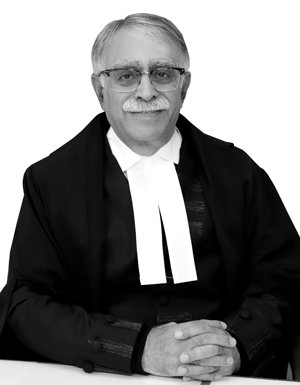
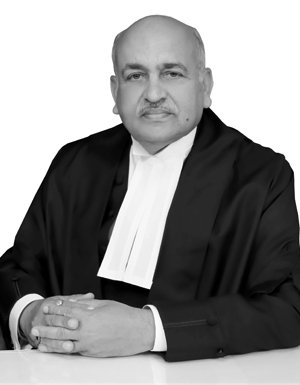
(PANKAJ MITHAL)
.................................J.
(SANJAY KAROL)
New Delhi;
March 5, 2025.
The recent Supreme Court ruling in Smt. Lavanya C. & Anr. v. Vittal Gurudas Pai (Civil Appeal No. 13999 of 2024, arising out of SLP(C) No. 13875 of 2021) delivers a crucial clarification on **Contempt of Court India** and the intricate facets of the **Advocate Client Relationship Supreme Court**, now comprehensively documented and analyzed on CaseOn. This landmark decision reinforces the judiciary's stance on maintaining the sanctity of court undertakings and the grave consequences of their deliberate disobedience, providing vital insights for legal practitioners and students alike.
This appeal originates from a dispute concerning a Joint Development Agreement (JDA) for residential apartments. The original plaintiffs (respondents herein) initiated a suit in 2007 seeking termination of the JDA, alleging that the defendants (appellants herein) failed to complete construction within the agreed timeframe. During the pendency of this suit, the defendants' counsel provided an undertaking to the Trial Court on two occasions (July and August 2007) that they would not alienate the suit property to any third person. This undertaking was subsequently formalized into a court order in November 2007 and extended periodically.
However, the plaintiffs later alleged that the defendants violated this undertaking by executing multiple sale deeds after the court's order. This led to the filing of an Interlocutory Application under Order XXXIX Rule 2A of the Civil Procedure Code, 1908 (CPC), seeking action for willful disobedience. While the Trial Court dismissed this application, the High Court of Karnataka reversed the decision, holding the defendants guilty of contempt. Aggrieved by the High Court's judgment, the defendants approached the Supreme Court.
The primary issue before the Supreme Court was whether the High Court was correct in setting aside the Trial Court’s order and finding the appellants guilty of willful disobedience of their undertaking given to the Court, and whether the imposed sentence was justified.
The Supreme Court relied on several foundational legal principles and precedents:
The Supreme Court carefully considered the facts and the legal principles. The core of the appellants' argument was that their counsel had given the undertaking without express authorization. However, the Court found this argument unconvincing for several reasons:
Legal professionals often grapple with the nuances of such rulings. For quick and insightful understanding, CaseOn.in offers 2-minute audio briefs that distill complex judgments like this one, providing essential takeaways for busy practitioners.
The Supreme Court confirmed the High Court's judgment, upholding the finding that the appellants were guilty of contempt of court for willfully disobeying the undertaking not to alienate the suit property. However, considering the first appellant's advanced age (63 at the time of filing, approximately 68 now), the Court modified the sentence. The three months' civil imprisonment for the second appellant was deleted. The rest of the order, including the attachment of property for one year, remained undisturbed. Additionally, the compensation payable by the appellants to the respondents was enhanced from Rs. 10 lakhs to Rs. 13 lakhs, with simple interest at 6% from the date of the lower court's judgment (2nd August 2013).
This Supreme Court ruling serves as a vital reminder of several critical aspects of legal practice and judicial process:
For law students, understanding this case is crucial for grasping principles of civil procedure, professional ethics, and the enforcement mechanisms available to courts.
All information provided in this analysis is for informational purposes only and does not constitute legal advice. While efforts have been made to ensure accuracy, readers should consult with a qualified legal professional for advice on any specific legal matter. CaseOn.in and the authors are not liable for any actions taken or not taken based on the information presented herein.

 Login with google
Legal Notes
Add a Note....