
street trading, hawkers, fundamental rights, As per case facts, petitioners, including Sodan Singh, claimed a fundamental right to engage in trading business on Delhi pavements, alleging past permission via Tehbazari ...
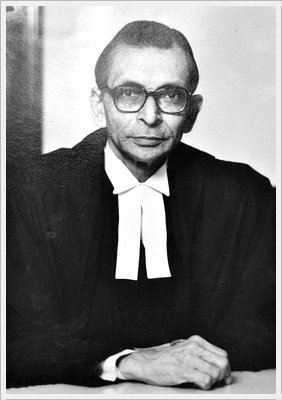
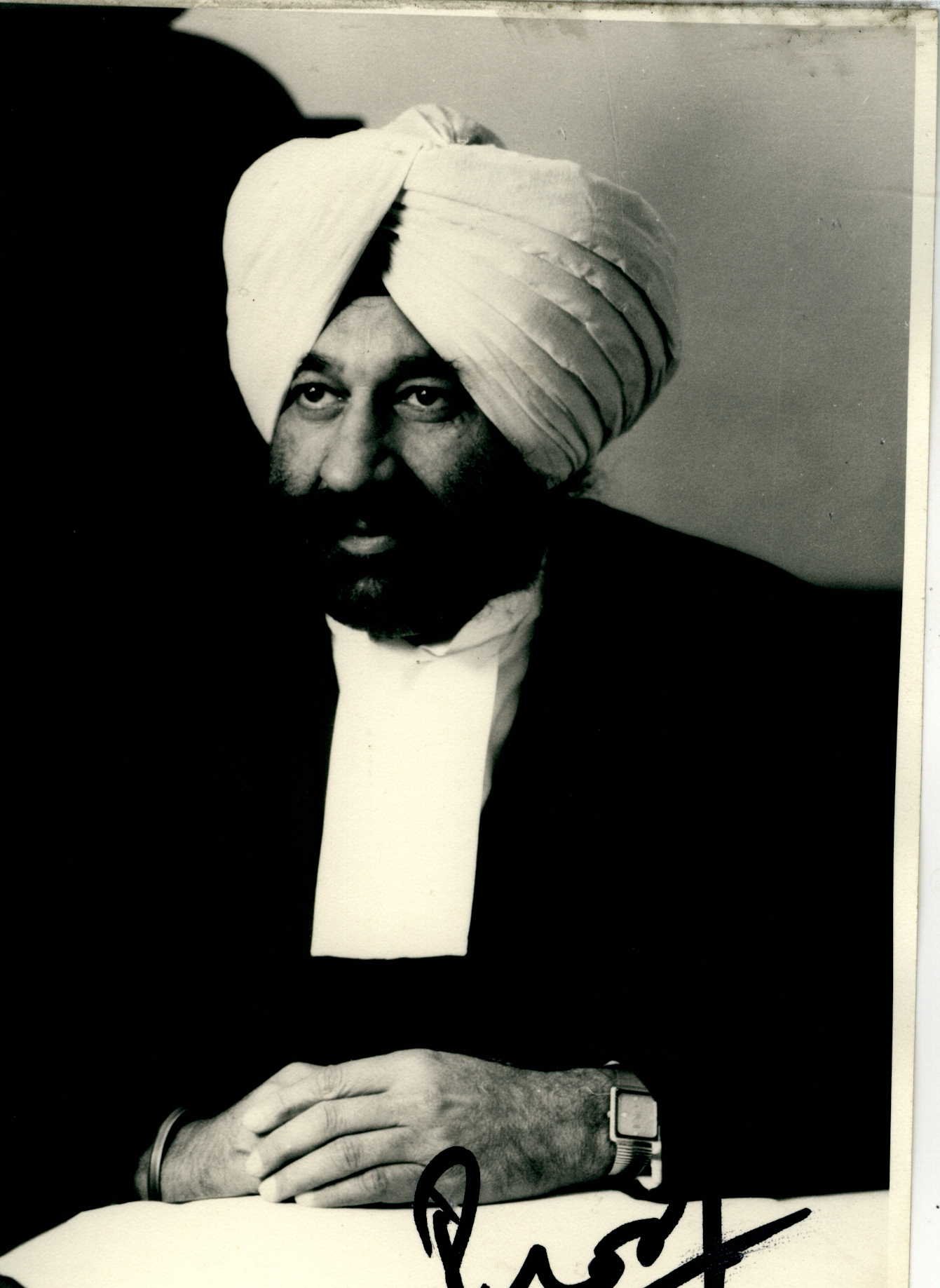
No Acts & Articles mentioned in this case
http://JUDIS.NIC.IN SUPREME COURT OF INDIA Page 1 of 20
PETITIONER:
SODAN SINGH ETC. ETC.
Vs.
RESPONDENT:
NEW DELHI MUNICIPAL COMMITTEE & ANR. ETC.
DATE OF JUDGMENT30/08/1989
BENCH:
SHARMA, L.M. (J)
BENCH:
SHARMA, L.M. (J)
VENKATARAMIAH, E.S. (CJ)
NATRAJAN, S. (J)
OJHA, N.D. (J)
KULDIP SINGH (J)
CITATION:
1989 AIR 1988 1989 SCR (3)1038
1989 SCC (4) 155 JT 1989 (3) 553
1989 SCALE (2)430
CITATOR INFO :
R 1992 SC1153 (1,3)
ACT:
Constitution of India, 1950: Article 19(1)(g)--Street
trading-An age old vocation adopted by human beings to earn
living--No justification to deny citizens right to earn
livelihood using public streets for trade or
business--Regulatory measures and reasonable restrictions
can be imposed.
Delhi Municipal Corporation Act, 1957: Street
trading--Necessity to provide regulatory measures--Empha-
sised.
Punjab Municipal Act, 1911: Street trading--Necessity to
provide regulatory measures--Emphasised.
HEADNOTE:
The petitioners in these special leave petitions and
writ petitions claim the right to engage in trading business
on the pavements of roads of the city of Delhi. The special
leave petitions are against the judgments of the Delhi High
Court dismissing their claim.
It is contended on behalf of the petitioners that (i)
they were allowed by the respondents to transact their
business by occupying a particular area on the pavements on
payment of certain charges described as Tehbazari and the
refusal by the municipal authorities to permit them to
continue with their trade is violative of their fundamental
right guaranteed under Article 19(1)(g) of the Constitution;
and (ii) the petitioners are poor people and depend on their
business for their livelihood and if they are not allowed to
occupy some specific places demarcated on the pavements on a
permanent basis for conducting their business they may
starve which will lead to violation of their fundamental
right under Article 21 of the Constitution.
The respondents, on the other hand, contend that nobody
has got a legal right to occupy exclusively a particular
area on the road-pavement for pursuing a trading business
and nobody can claim any fundamental right in this regard
http://JUDIS.NIC.IN SUPREME COURT OF INDIA Page 2 of 20
whatsoever.
1039
Disposing of the petitions and remitting the cases to
the appropriate Division Bench for final disposal in accord-
ance with this judgment, this Court,
HELD: E.S. Venkataramiah, C J, S. Natarajan, L.M. Sharma
and N.D. Ojha ,JJ.]
Per L.M. Sharma, J.
(1) A member of the public is entitled to legitimate
user of the road other than actually passing or re-passing
through it, provided that he does not create an unreasonable
obstruction which may inconvenience other persons having
similar right to pass and does not make excessive use of the
road to the prejudice of the others. Liberty of an individu-
al comes to an end where the liberty of another commences.
[1050C, A-B]
(2) What will constitute public nuisance and what can be
included in the legitimate user can be ascertained only by
taking into account all the relevant circumstances including
the size of the road, the amount of traffic and the nature
of the additional use one wants to make of the public
streets. This has to be judged objectively and here comes
the role of public authorities. [1051E]
(3) The right to carry on trade or business mentioned in
Article 19(1)(g) of the Constitution, on street pavements,
if properly regulated, cannot be denied on the ground that
the streets are meant exclusively for passing or re-passing
and for no other use. Proper regulation is, however, a
necessary condition as otherwise the very object of laying
out roads--to facilitate traffic--may be defeated. Allowing
the right to trade without appropriate control is likely to
lead to unhealthy competition and quarrel between traders
and traveling public and sometimes amongst the traders
themselves resulting in chaos. The right is subject to
reasonable restrictions under clause (6) of Article 19.
[1052C-D]
(4) The proposition that all public streets and roads in
India vest in the State but that the State holds them as
trustee on behalf of the public and the members of the
public are entitled as beneficiaries to use them as a matter
of right, and that this right is limited only by the similar
rights possessed by every other citizens to use the pathways
and further that the State as trustee is entitled to impose
all necessary limitations on the character and extent of the
user, should be treated as of universal application. The
provisions of the Municipal Acts should be
1040
construed in the light of the above proposition and they
should receive a beneficent interpretation. [1052E-G]
M.A. Pal Mohd. v. R.K. Sadarangani, A.I.R. (1985) Mad
23; C.S.S. Motor Service v. Madras State, A.I.R. 1953 Mad.
279; Saghir Ahmad v. The State of U.P. & Ors., [1955] 1 SCR
707; liarper v. G.N. Haden & Sons Ltd., [1933] 1 Ch. 298;
Bombay Hawkers Union & Ors. v. Bombay Municipal Corporation
JUDGMENT:
(5) The petitioners do have the fundamental right to
carry on a trade or business of their choice, but not to do
so on a particular place, as circumstances are likely to
change from time to time. But that does not mean that the
licence has to be granted on a daily basis; that arrangement
cannot be convenient to anybody, except in special circum-
stances. [1053F, 1057F]
Fertilizer Corporation Kamgar Union v. Union of India,
[1981] 2 SCR 52; K. Rajendran v. State of Tamil Nadu, [1982]
3 SCR 628, referred to.
http://JUDIS.NIC.IN SUPREME COURT OF INDIA Page 3 of 20
(6) Article 21 is not attracted in the case of trade or
business-either big or small. The right to carry on any
trade or business and the concept of life and personal
liberty within Article 21 are too remote to be connected
together. [1054G]
Olga Tellis & Ors.v. Bombay Municipal Corporation &
Ors., [1985] 3 SCC 545, distinguished.
(7) The provisions of the Delhi Municipal Corporation
Act, 1957, are clear and the Municipal Corporation of Delhi
has full authority to permit hawkers and squatters on the
side walks where they consider it practical and convenient.
[1052G-H]
(8) The provisions of the Punjab Municipal Act, 1911, as
applicable to New Delhi area, should receive a liberal
construction so that the New Delhi Municipal Committee may
be in a position to exercise full authority to permit hawk-
ers and squatters on pavements in certain areas. [1053A-C]
Pyarelal v. N.D.M.C., [1967] 3 SCR 747 overruled.
(9) A scheme should be drawn up as soon as possible contain-
ing
1041
detailed necessary provisions dealing with all relevant
aspects, and capable of solving the problems arising in the
situation in a fair and equitable manner. [1057B-C]
(10) The demand of the petitioners that hawkers must be
permitted on every road in the city cannot be allowed. If a
road is not wide enough to conveniently manage the traffic
on it, no hawking may be permitted at all, or may be sanc-
tioned only once a week, say on Sundays when the rush con-
siderably thins out. Hawking may also be justifiably prohib-
ited near hospitals or where necessity of security measures
so demands. There may still be other circumstances justify-
ing refusal to permit any kind of business on a particular
road. [1057E]
(11) Some of the hawkers in big cities are selling very
costly luxury articles including sophisticated electronic
goods, sometimes imported or smuggled. The authorities will
be fully justified to deny to such hawkers any facility.
They may frame rules in such manner that it may benefit only
the poor hawkers incapable of investing a substantial amount
for starting the business. Attempt should be made to make
the scheme comprehensive, dealing with every relevant as-
pect, for example, the charges to be levied, the procedure
for grant and revocation of the licences, etc. [1057H-1058B]
Per Kuldip Singh, J.
(1) The guarantee under Article 19(1)(g) extends to
practice any profession, or to carry on any occupation,
trade or business. The object of using four analogous and
overlapping words in Article 19(1)(g) is to make the guaran-
teed right as comprehensive as possible to include all the
avenues and modes through which a man may earn his liveli-
hood. In a nut-shell the guarantee takes into its fold any
activity carried on by a citizen of India to earn his liv-
ing. The activity must of course be legitimate and no anti-
social like gambling, trafficking in women and the like.
[1058H-1059C]
(2) Once street-trading is accepted as legitimate trade,
business or occupation it automatically comes within the
protection guaranteed under Article 19(1)(g) of the Consti-
tution of India. [1062E]
(3) Street trading is an age-old vocation adopted by
human beings to earn living. It is one of the traditionally
recognised business or trade in England. This is so in spite
of the fact that there is a complete social security in that
country and as such no compulsion on the citizens to be
http://JUDIS.NIC.IN SUPREME COURT OF INDIA Page 4 of 20
1042
driven to street trading out of poverty or unemployment. On
the other hand, abysmal poverty in India warrants outright
rejection of the argument that nobody has a right to engage
himself in 'street trading'. [1059D,1062A-B]
(4) There is no justification to deny the citizens of
their right to earn livelihood by using the public streets
for the purpose of trade and business. [1063B]
Saghir Ahmad v. The State of U.P. & Ors., [1955] 1 SCR
707; Manjur Hasan v. Mohammed Zaman, 52 I.A. 61; Himat Lal
K. Shah v. Commissioner of Police Ahmedabad & Anr., [1973] 2
SCR 266, referred to.
(5) Street trading being a fundamental right has to be
made available to the citizens subject to Article 19(6) of
the constitution. It is within the domain of the State to
make any law imposing reasonable restrictions in the inter-
est of general public. This can be done by an enactment on
the same lines as in England or by any other law permissible
under Article 19(6) of the Constitution. [1064B]
Bombay Hawkers Union & Ors. v. Bombay Municipal Corpora-
tion & Ors., [1985] 3 SCR 528; Municipal Corporation of
Delhi v. Gurnam Kaur, A.I.R. 1989 S.C. 38, referred to.
(6) The skeletal provisions in the Delhi Municipal
Corporation Act, 1957 and the Punjab Municipal Act, 1911 can
hardly provide any regulatory measures to the enormous and
complicated problems of street trading in these areas.
[1063D]
&
CIVIL APPELLATE/ORIGINAL JURISDICTION: Special Leave
Petition (C) No. 15257 of 1987. etc. etc.
From the Judgment and Order dated 23.4.1987 of the Delhi
High Court in CMP No. 268 of 1987.
V.M. Tarkunde, D.D. Thakur, Govinda Mukhoty, A.P. Singh,
K.N. Rai, S. Balakrishnan, R.N. Keswani, R.F. Nariman, P.H.
Parekh, D.Y. Chanderchud, J.P. Pathak, Shishir Sharma, Ms.
Gitanjali, Mrs. Biraj Tiwari, Ms. Sunita Sharma, N.K. Sahoo,
Arun Jaitley, Ms. Bina Gupta, Ms. Madhu Khatri, L.K. Gupta,
R.C. Kaushik, Rajiv Sharma, B.S. Bali, M.C. Dhingra, A.S.
Bawa, V.K. Verma, Kirpal Singh, A.S. Pundir, S. Srinivasan,
Mrs. Sushadra, B.B.
1043
Tawakley, S.K. Mehta, Dhruv Mehta, Atul Nanda, Ms. Mridula
Ray, R.M. Tewari, Ms. Rani Jethmalani, Ajit Singh Bawa and
Vijay Verma for the Petitioners.
G. Ramaswamy, Additional Solicitor General, R.B. Datar,
O.P. Sharma, Dr. L.M. Singhvi, A.K. Sen, Ranjit Kumar, R.C.
Gubrele, R.K. Maheshwari, Mensoor Ali, A.M. Singhvi, D.
Bhandari, N. Waziri, Mrs. Madhu Bhandari, K.B. Rohtagi, S.K.
Dhingra, Baldev Atreya, S.B. Saharya, V.B. Saharya, K.R.
Gupta, R.K. Sharrna, Vimal Sharda, Vivek Sharda, Mrs. Nanita
Shanaa, Aruneshwar Gupta, Inderbir Singh Alag and Sushil
Kumar for the Respondents.
Mrs. Sushma Suri, B.B. Sawhney, P.K. Manohar, Mrs. Indra
Sawhney, Mrs. Abha Jain, P.K. Jain, S.S. Hussain, Amlan
Ghosh, Jitendra Sharma, R.D. Upadhyay, Y.K. Jain, D.D.
Shanaa, Rajesh, Naresh Kabkshi, Mrs. Urmila Kapur, M.M.
Kashyap, Anis Ahmad Khan, Manjeet Chawla, S.N. Bhatt, N.
Ganpathy, P. Parmeshwaran, A.S. Pundir, Pandey Associate,
Arun K. Sinha, M.B. Lal, A.K. Sanghi and S.M. Ashri for the
appearing parties.
The following Judgments of the Court were delivered:
SHARMA, J. The petitioners in all these cases claim the
http://JUDIS.NIC.IN SUPREME COURT OF INDIA Page 5 of 20
right to engage in trading business on the pavements of
roads of the city of Delhi. They have asserted that they
have been pursuing their trade with the permission of the
municipal authorities for some time, but recently there has
been illegal interference by them. Some of the petitioners
have moved this Court under Article 32 of the Constitution
and others impugn adverse judgments of the Delhi High Court
dismissing their claim.
2. As the petitioners have challenged the correctness of
the decision of a Division Bench of this Court in Pyarelal
v. N.D.M.C and another, (1967) 3 SCR page 747, these cases
were placed for hearing before a larger Bench.
3. The petitioners, in their applications before this
Court, have alleged that they were allowed by the respond-
ents to transact their business by occupying a particular
area on the pavements, on payment of certain charges de-
scribed as Tehbazari. It is contended that the municipal
authorities by their refusal to permit the petitioners to
continue with their trade are violating their fundamental
right guaranteed under Article 19(1)(g) and 21 of the Con-
stitution. They have also
1044
complained of mala fides, arbitrariness and discriminatory
conduct attracting Article 14 of the Constitution.
4. The respondents, besides denying the facts alleged by
the petitioners, contended that nobody has got a legal right
to occupy exclusively a particular area on the road-pave-
ments for pursuing a trading business, and nobody can claim
any fundamental right in this regard whatsoever. It has been
strenuously urged that the roads are meant for the use of
general public for passing and re-passing and they are not
laid to facilitate the carrying on of private business.
5. The main argument on behalf of the petitioners was
addressed by Mr. Tarkunde, who appeared for petitioner Sodan
Singh in S.L.P. No. 15257 of 1987. Several learned advocates
representing the other petitioners, besides adopting the
main argument, made brief supplementary submissions. The
place where petitioner Sodan Singh claims to have the right
to squat for soiling ready-made garments is within New
Delhi. Several other petitioners have similar claims against
the New Delhi Municipal Committee. The remaining petitioners
allege that they have been pursuing their squatting business
within Delhi, as defined in the Delhi Municipal Corporation
Act, which is administered by the respondent Municipal
Corporation of Delhi. Separate arguments have been made on
behalf of the New Delhi Municipal Committee and the Munici-
pal Corporation of Delhi.
6. Mr. Tarkunde urged that petitioner Sodan Singh is a
poor hawker making his both ends meet by selling ready-made
garments on an area of 8' x 24' near Electric Pole No. 12,
Janpath Lane, New Delhi as illustrated in the attached map
Annexure--'A' to the petition. Earlier he was permitted to
hawk from time to time by the respondent under licences as
per Annexure 'A-2', but now the privilege is being denied to
him and his goods were removed forcibly from the pavement
and were later released only on payment of cost of removal
charges. In the counter affidavit of the respondent the
allegations have been denied and it has been pointed out
that the photo copy of the licence Annexure 'A-2' itself
shows that the petitioner was permitted to sell 'Channa' and
'Moongphali' on a 'Vehngi' on and around Bus-stop No. 430 on
Pt. Pant Marg; and he was at no point of time allowed to
occupy a fixed place for carrying on business in ready-made
garments. We do not propose to go into the facts of this or
the other petitions and would leave the individual cases to
http://JUDIS.NIC.IN SUPREME COURT OF INDIA Page 6 of 20
be dealt with by the Division Bench in the light of the
general principle which will be discussed in this judgment.
1045
7. The Municipal Corporation of Delhi was established by
a notification issued under s. 3 of the Delhi Municipal
Corporation Act, 1957, and the provisions of that Act are
relevant for the majority of the present cases. The other
cases relate to the other areas forming part of the Union
Territory of Delhi governed by the provisions of the Punjab
Municipal Act, 1911. However, the main submissions in all
these cases made on behalf of both sides have been with
respect to the general principles applicable in India about
the right to carry on business by squatting on pavements of
public streets.
8. Mr. Tarkunde contended that the petitioners are poor
people and depend on their business for their livelihood. If
they are not allowed to occupy some specific place for
conducting their business, they may starve. This will lead
to violation of their fundamental right under Article 21 of
the Constitution. Reliance was placed on the decision in
Olga Tellis and others v. Bombay Municipal Corporation and
others, [1985] 3 SCC 545. The learned counsel further said
that the two respondents have been in the past allowing
squatter traders on the pavements on payment of Tehbazari
charges. He drew our attention to the counter affidavit of
the respondent in S.L.P. Nos. 4519-23 of 1986 at page 146
where a resolution by the New Delhi Municipal Committee has
been mentioned in paragraph III. In the case of Delhi Munic-
ipal Corporation also several documents have been relied
upon for showing that specific areas have been allowed to be
occupied for the purpose of trading business from time to
time. The learned counsel argued that since the two munici-
palities have been settling specific areas for the purpose
of squatting, it is not open to them to deny squatting
rights to the petitioners and other persons situated in
similar circumstances.
9. In Pyare Lal etc. v. N.D.M.C., [1967] 3 SCR 747 the
New Delhi Municipal Committee banned the sale of cooked
edibles on public streets, and prevented the petitioners,
licensed vendors of potato chops and other edibles, from
continuing with their business. After unsuccessfully moving
the Punjab High Court, they came to this Court. The appeals
were dismissed holding that persons in India cannot claim a
lawful right to pursue street trading, and the N.D.M.C. was
perfectly authorised to take steps under s. 173 of the
Punjab Municipal Act for stopping the business. It was also
observed that the N.D.M.C. was not empowered under the Act
to allow trade on public streets on a permanent basis and
that permission for sale of goods could be granted only on
special occasions on temporary basis as in the case of
festivals etc. Reliance had been placed on behalf of the
1046
petitioners on certain passages from Halsbury's Laws of
England, which the Court distinguished on the ground that
street trading was regulated by certain statutes in England,
and there were no such provisions applicable in the cases
before this Court. The right to pursue street trading in
India was thus negatived. Mr. Tarkunde contended that it is
not correct to deny the members of the public their right to
engage in business on the public streets in the country. He
said that this is one of the fundamental rights guaranteed
both, under Article 19(1)(g) and Article 21. According to
the learned counsel, the practice of the street trading is
well established for a considerable time in all the civi-
lised countries of the world including India, England and
http://JUDIS.NIC.IN SUPREME COURT OF INDIA Page 7 of 20
United States of America. Refuting the suggestion made on
behalf of the respondents that it was only a hawker who
sells his goods while moving from door to door and place to
place who is allowed on the public streets, Mr. Tarkunde
referred to Halsbury's Laws of England, Vol. 40, paragraphs
431 to 446 under the heading 'Street Trading in Greater
London'. It was suggested that the right of the members of
the public in this regard was rounded on the common law
right. The learned counsel further relied on the third
paragraph of s. 253 of the Chapter 'Highways, Streets, and
Bridges' of 39 American Jurisprudence (2nd Edition) which
reads as follows:
"A municipality's power to regulate the use of
streets for private gain is to be liberally
construed. The purpose of such regulations is
to promote public safety, and not to regulate
and control indirectly the user's business as
such. There is no authority in a municipality
to prohibit the use of the street by any
citizen or corporation in the carrying on of a
legitimate business, harmless in itself and
useful to the community, which is independent
of the police power under which reasonable
regulations in the promotion of the public
order, safety, health, and welfare are
proper."
10. In his reply Mr. Singhvi, the learned counsel for
N.D.M.C. pointed out that the first two paragraphs of the
aforementioned s. 253 which are quoted' below negative the
right asserted on behalf of the petitioners and paragraph 3
mentioned above has to be read in that light.
"S. 253. Business purposes:
Individuals do not have the inherent
right to conduct their private business in the
streets, nor can they acquire a
1047
vested right to use the streets for carrying
on a commercial business. However, individuals
do have the right to use the streets to some
extent for the purpose of bartering or trading
with each other, or for prosecuting a busi-
ness, trade, or calling, although they cannot
legally carry on any part of their business in
the public streets to the annoyance of the
public, or supply the deficiencies in their
own premises by monopolizing the street or
walk.
The use of public streets as a place
for the prosecution of a private business for
gain is generally recognised as a special or
extraordinary use which the controlling public
authority may prohibit or regulate as it deems
proper. When a municipality does permit pri-
vate individuals to have exclusive possession
of the street surface for a private business
use, such permit is so unusual, and beyond the
ordinary authority and power of a municipali-
ty, that it may not issue such a permit in the
absence of special enabling state legislation.
Assuming that such power exists, the granting
of permission to a private person to so use
the streets is totally within the discretion
of the municipality."
The learned counsel contended that the grant of exclusive
right to occupy any part of the road amounts to the negation
http://JUDIS.NIC.IN SUPREME COURT OF INDIA Page 8 of 20
of the Common Law theory of dedication of a road for public
use.
11. Reference was also made on behalf of the petitioners
to the judgment in M.A. Pal Mohd. v. R.K. Sadarangani,
A.I.R. 1985 Madras 23, wherein it was observed that hawker
trade so long as it is properly regulated by public authori-
ties could never be a public nuisance; rather it serves the
convenience of the public. and is found not only in India
but also in other countries.
12. The question of applicability of the English and
American laws on the present aspect was considered by a
Division Bench of the Madras High Court in C.S.S. Motor
Service v. Madras State, A.I.R. 1953 Madras 279 and the
decision was later approved by this Court in Saghir Ahmad v.
The State of U.P. and others, [1955] 1 SCR 707. After a
thorough consideration of the relevant materials Venkatarama
Aiyar, J. who delivered the judgment pointed out some of the
basic differences in the law of this country on the present
subject from the American and English laws, which render the
American decisions inapplicable on certain aspects. The
right to carry on business,
1048
although recognised as one of the liberties protected by the
American Constitution, did not acquire the full status of
the freedoms expressly mentioned in the Constitution, such
as, the freedom of speech, of person, and of religion; and
was viewed somewhat in the light of an interloper or parvenu
among them. The freedoms expressly mentioned in the American
Constitution occupy an exalted position which was denied to
the unexpressed freedoms including the right to carry on
business. Under the Indian Constitution this right is one of
the freedoms expressly protected under Article 19(1)(g) and
is placed on the same footing as freedom of speech, etc.
Further only some trades could be carried on by the American
citizens as a matter of right and the others including the
transport business on public roads only if the State permit-
ted. The learned Judge observed that this is called a 'fra-
nchise' or a 'privilege' and has an English origin. That is
not the case in this country, inasmuch as Article 19(1)(g)
does not make any distinction from trade to trade. So far
England is concerned, the rights of citizens to public
pathways originated in feudal times when the lands were
owned by individuals. The public highways generally pass
through these lands and since the citizens were using these
roads the law inferred a dedication of the pathways by the
owners for user by the public, but the extent of this user
was limited to the passing and re-passing on the road. The
position in India has always remained somewhat different and
has been summarized in paragraph 24 of the judgment of
Venkatarama Aiyar J., in the following terms, which has been
quoted with approval by this Court in Saghir Ahmad's case.
"The true position then is that all
public streets and roads vest in the State but
that the State holds them as trustee on behalf
of the public. The members of the public are
entitled as beneficiaries to use them as a
matter of right and this right is limited only
by the similar rights possessed by every other
citizen to use the pathways. The State as
trustees on behalf of the public is entitled
to impose all such limitations on the charac-
ter and extent of the user as may be requisite
for protecting the rights of the public gener-
ally. Thus the nature of the road may be such
that it may not be suitable for heavy traffic
http://JUDIS.NIC.IN SUPREME COURT OF INDIA Page 9 of 20
and it will be within the competence of the
legislature to limit the use of the streets to
vehicles which do not exceed specified size or
weight. Such regulations have been held to be
valid as within the police power of the State
in America. Vide 'Morris v. Budy', [1927] 71
Law Ed. 968, Sproles v. Bindford', [1932] 76
Law Ed. 1167, and--South Carolina State v.
Barnwell
1049
Bros.'[1938] 82 Law Ed. 734. For the same
reason the State might even prohibit the
running of transport buses and lorries
on particular streets or roads if such running
would interfere with the rights of pedestrians
to pass and re-pass as it might if the street
is narrow or conjested but subject to such
limitations the right of a citizen to carry on
business in transport vehicles on public
pathways cannot be denied to him on the ground
that the State owns the highways."
13. Mr. Singhvi is correct in pointing out that the
passages of the American and English laws, as relied upon on
behalf of the petitioners, do not establish their right to
carry on trading business on public streets, but for that
reason their claim cannot be rejected either. The question
requires to be examined further. The observations in the
judgment of Venkatarama Aiyer, J. quoted above prima facie
support the petitioners. They received express approval of
this Court in Saghir Ahmad's case, but there is an important
distinction between those cases and the present matter which
cannot be ignored. In both the above cases the petitioners
were claiming the right to ply transport vehicles for hire
on public streets; in other words, they wanted to use the
roads for transport, for which the roads were primarily laid
out and while so doing attempted to earn money. In the
present cases before us the petitioners are desirous of
conducting their trade business by sale of goods on the
roads from stationary points; they do not want to make use
of the roads for movement of persons or goods. The question
is whether this makes a material difference.
14. The primary object of building roads is undoubtedly
to facilitate people to travel from one point to another.
Quoting several authorities Byron K. Elliott and William F.
Elliott in their treatise on the Law of Roads and Streets
have defined a street as a road or public way in a city,
town or village. A way over land set apart for public travel
in a town or city is a street, no matter by what name it may
be called. If a way is free to all people it is a highway.
P. Duraiswami Aiyangar in his book dealing with the Law of
Municipal Corporation in British India (1914 Edn.) has
observed that the primary and paramount use of the street is
public travel for man, beast and carriage for goods. On
behalf of the respondents reliance has been placed on the
oft-repeated adage that public have a right of passing and
repassing through a street but have no right "to be on it",
which Sri Aiyangar also has mentioned at page 542 of his
book. Halsbury, relied upon by both sides, has stated (Vol.
21 paragraph 107) that the right of
1050
the public is a right to pass alone a highway for the pur-
pose of legitimate travel, not to be on it, except so far as
the public's presence is attributable to a reasonable and
proper user of the highway as such. These statements cer-
tainly do not mean that a traveler has to be in perpetual
http://JUDIS.NIC.IN SUPREME COURT OF INDIA Page 10 of 20
motion when he is in a public street. It may be essential
for him to stop sometime for various reasons--he may have to
alight from a vehicle or pick up a friend, collect certain
articles or unload goods or has to take some rest after a
long and strenuous journey, What is, required of him is that
he should not create an unreasonable obstruction which may
inconvenience other persons having similar right to pass; he
should not make excessive use of the road to the prejudice
of the others. Liberty of an individual comes to an end
where the liberty of another commences. Subject to this, a
member of the public is entitled to legitimate user of the
road other than actually passing or re-passing through it.
15. It has been sometimes argued that since a person is
entitled to the user of every part of a public street, he
cannot be deprived of the use of any portion thereof by
putting up of any obstruction. This proposition in its
extreme form cannot be accepted without subjecting it to
several restrictions. A similar argument was pressed before
the Madras High Court in the case of M.A. Pal Mohd. v. R.K.
Sadarangani, (supra) based on the provisions of the Madras
City Municipal Corporation Act, 1919, and was rightly re-
pelled by pointing out that since the pavement is also
included within the expression 'street', a member of the
public relying upon the aforesaid proposition can insist on
his right to walk over a flower-bed or structure erected by
the public authorities for regulating traffic which will be
wholly unpractical. The authorities are duty bound to locate
post boxes, fire hydrants with water tanks, milk booths, bus
or jutka stands, rubbish bine etc., in appropriate places in
a public street and it would be preposterous to hold that
this cannot be done as somebody may insist on keeping every
inch of the street available for actual passage. Winfield
and Jolowicz in their book on Tort (12th Edn.) have said
that nuisance may be defined, with reference to highways, as
any wrongful act or omission upon or near a highway, whereby
the public are prevented from freely, safely, and conven-
iently passing along the highway and that the law requires
of users of the highway a certain amount of "give and take".
The case of Harper v. G.N. Maden and Sons, Limited, [1933] 1
Ch. 298 illustrates this point. The defendants there who had
their house abutting the road decided to add another floor
to their existing premises. Before starting construction
they erected "scaffolding" resting On the footpath, and put
up a wooden hoarding
1051
next door to the plaintiff's shop for the purpose of enclos-
ing a space to be used, during the alterations to their
building, for depositing bricks and other materials. In an
action by the plaintiff, for injunction and damages, the
trial Judge held that although the scaffolding and hoarding
were reasonably necessary for the construction and they did
not cause any greater obstruction or remain for any longer
period than was reasonably necessary, the obstruction was
illegal and that the plaintiff was entitled to damages. On
appeal the judgment Was reversed holding that the obstruc-
tion to the highway and to the enjoyment by the plaintiff of
his adjoining premises being of temporary character and
being reasonable in quantum and in duration did not give
rise to a legal remedy. It was very well said that:
"The law relating to the user of highways is
in truth the law of give and take. Those who
use them must in doing so have reasonable
regard to the convenience and comfort of
others, and must not themselves expect a
degree of convenience and comfort only obtain-
http://JUDIS.NIC.IN SUPREME COURT OF INDIA Page 11 of 20
able by disregarding that of other people.
They must expect to be obstructed occasional-
ly. It is the price they pay for the privilege
of obstructing others."
As to what will constitute public nuisance and what can
be included in the legitimate user can be ascertained only
by taking into account all the relevant circumstances in-
cluding the size of the road, the amount of traffic and the
nature of the additional use one wants to make of the public
streets. This has to be judged objectively and here comes
the role of public authorities.
16. So far as right of a hawker to transact business
while going from place to place is concerned, it has been
admittedly recognised for a long period. Of course, that
also is subject to proper regulation in the interest of
general convenience of the public including health and
security considerations. What about the right to squat on
the road side for engaging in trading business? As was
stated by this Court in Bombay Hawkers Union and others v.
Bombay Municipal Corporation and others, [1985] 3 SCR 528,
the public streets by their nomenclature and definition are
meant for the use of the general public: they are not laid
to facilitate the carrying on of private business. If hawk-
ers were to be conceded the right claimed by them, they
could hold the society to ransom by squatting on the busy
thoroughfares, thereby paralysing all civic life. This is
one side of the picture. On the other hand, if properly
regulated according to the exigency of the circumstances,
the small
1052
traders on the said walks can considerably add to the com-
fort and convenience of general public, by making available
ordinary articles of every day use for a comparatively
lesser price. An ordinary person, not very affluent, while
hurrying towards his home after day's work can pick up these
articles without going out of his way to find a regular
market. If the circumstances are appropriate and a small
trader can do some business for personal gain on the pave-
ment to the advantage of the general public and without any
discomfort or annoyance to the others, we do not see any
objection to his carrying on the business. Appreciating this
analogy the municipalities of different cities and towns in
the country have been allowing such traders. The right to
carry on trade or business mentioned in Article 19(1)(g) of
the Constitution, on street pavements, if properly regulated
cannot be denied on the ground that the streets are meant
exclusively for passing or re-passing and for no other use.
Proper regulation is, however, a necessary condition as
otherwise the very object of laying out roads-to facilitate
traffic--may be defeated. Allowing the right to trade with-
out appropriate control is likely to lead to unhealthy
competition and quarrel between traders and travelling
public and sometimes amongst the traders themselves result-
ing in chaos. The right is subject to reasonable restric-
tions under clause (6) of Article 19. If the matter is
examined in this light it will appear that the principle
stated in Saghir Ahmad's case in connection with transport
business applies to the hawkers' case also. The proposition
that all public streets and roads in India vest in the State
but that the State holds them as trustee on behalf of the
public, and the members of the public are entitled as bene-
ficiaries to use them as a matter of right, and that this
right is limited only by the similar fights possessed by
every other citizen to use the pathways, and further that
the State as trustee is entitled to impose all necessary
http://JUDIS.NIC.IN SUPREME COURT OF INDIA Page 12 of 20
limitations on the character and extent of the user, should
be treated as of universal application.
17. The provisions of the Municipal Acts should be
construed in the light of the above proposition. In case of
ambiguity, they should receive a beneficial interpretation,
which may enable the municipalities to liberally exercise
their authority both, in granting permission to individuals
for making other uses of the pavements, and, for removal of
any encroachment which may, in their opinion, be constitut-
ing undesirable obstruction to the travelling public. The
provisions of the Delhi Municipal Corporation Act, 1957, are
clear and nobody disputes before us that the Municipal
Corporation of Delhi has full authority to permit hawkers
and squatters on the side walks where they consider it
practical and convenient. In so far the Punjab Municipal Act
1911
1053
applying to the New Delhi area is concerned, the Bench
constituted by three learned Judges observed in Pyare Lal's
case [1967] 3 SCR 747 that the provisions did not authorise
the municipality to permit stalls to be set up in the
streets except temporarily on special occasions, like festi-
vals, etc. and that the permission to the petitioner in that
case had been wrongly granted initially. We do not agree
with these observations, although it appears that in the
light of the other circumstances, indicated in the judgment,
the decision was a correct one. The provisions of both ss.
173 and 188 should receive liberal construction, so that the
New Delhi Municipal Committee may be in a position to exer-
cise full authority. Indeed some of the documents on the
records before us indicate that the Committee had been in
the past actually permitting hawkers and squatters on pave-
ments in certain areas.
18. The controversy in the present cases, however,
cannot be settled by what has been said earlier. The claim
of the petitioners before us is much higher. They assert the
right to occupy specific places on road pavements alleging
that they have been so doing in the past. As has been stated
earlier, the facts have been disputed and individual cases
will be considered separately in the light of the present
judgment. The argument, however, which has been pressed on
behalf of the petitioners is that they have their fundamen-
tal rights guaranteed by Articles 19 and 21 of the Constitu-
tion to occupy specific places demarcated on the pavements
on a permanent basis for running their business. We do not
think there is any question of application of Article 21 and
we will be briefly indicating our reasons therefore later.
But can there be at all a fundamental right of a citizen to
occupy a particular place on the pavement where he can squat
and engage in trading business? We have no hesitation in
answering the issue against the petitioners. The petitioners
do have the fundamental right to carry on a trade or busi-
ness of their choice, but not to do so on a particular
place. The position can be appreciated better in the light
of two decisions of this Court in Fertilizer Corporation
Kamgar Union v. Union of India, [1981] 2 SCR 52, and K.
Rajendran v. State of Tamil Nadu, [1982] 3 SCR 628.
19. In the Fertilizer Corporation case the workmen of
the respondent Corporation challenged the legality of the
sale of certain plants and equipments of the Sindri Ferti-
lizer Factory inter alia on the ground that a large number
of workers would be retrenched as a result of the sale. They
argued that the sale would deprive them of their fundamental
right under Article 19(1)(g) to carry on their occupation as
industrial workers. A Bench of five Judges of this Court
http://JUDIS.NIC.IN SUPREME COURT OF INDIA Page 13 of 20
rejected the
1054
plea holding that Article 19(1)(g) confers a broad and
general right which is available to all persons to do work
of a particular kind and of their choice, but it does not
confer the right to hold a particular job or to occupy a
particular post of one's choice. The right to pursue a
calling or to carry on an occupation is not the same thing
as the right to work in a particular post. If the workers
were retrenched consequent upon and on account of the sale
it would be open to them to pursue their rights and remedies
under the labour laws. But the closure of an establishment
in which a workman for the time being was employed did not
by itself infringe his fundamental right to carry on an
occupation which is guaranteed by Article 19(1)(g). "The
choice and freedom of the workers to work as industrial
workers is not affected by the sale. The sale may at the
highest affect their locum, but it does not affect their
locus, to work as industrial worker" This decision was
followed in K. Rajendran v. State of Tamil Nadu, which arose
out of a policy decision taken by the State of Tamil Nadu to
abolish all the posts of part-time Village Officers. An
Ordinance was promulgated for this purpose and was later
replaced by an Act. Rejecting the appeal of the appellants
this Court held that the impugned Act did not violate Arti-
cle 19(1)(g) as it did not affect the right of the incum-
bents of posts to carry on any occupation of their choice,
even though they may not be able to stick on to the post
which they were holding. The ratio of these decisions apply
with full force to the cases where the right to pursue a
trade or business is involved. If the opposite view is taken
and the plea of the petitioners is allowed a chaotic situa-
tion may follow. They may be entitled to insist that they
would carry on their business anywhere they like, either on
the roads or in the government schools or hospitals or other
public buildings. They may like to enter the class-rooms or
the patient wards or any public office to advance their
prospects. As was observed in the Bombay Hawkers case [1985]
3 SCC 528, they can hold the society to ransom by squatting
on the busy thoroughfare, thereby paralysing all civic life.
20. We do not find any merit in the argument rounded on
Article 21 of the Constitution. In our opinion Article 21 is
not attracted in a case of trade or business--either big or
small. The right to carry on any trade or business and the
concept of life and personal liberty within Article 21 are
too remote to be connected together. The case of Olga Tellis
and others v. Bombay Municipal Corporation and others,
[1985] 3 SCC 545, heavily relied upon on behalf of the
petitioners, is clearly distinguishable. The petitioners in
that case were very poor persons who had made pavements
their homes existing in the midst of filth and squalor,
which had to be seen to be believed. Rabid dogs in search of
1055
stinking meat and cats in search of hungry rats kept them
company. They cooked and slept where they cased, for no
conveniences were available to them. Their daughters, coming
of age, bathed under the nosy gaze of passers-by, unmindful
of the feminine sense of bashfulness. They had to stay on
the pavements, so that they could get odd jobs in the city.
It was not a case .of a business of selling articles after
investing some capital, howsoever meagre. It is significant
to note that the judgment in Bombay Hawkers Union and others
v. Bombay Municipal Corporation and Others, [1985] 3 SCR
528, and that in Olga Telils were delivered within a week,
both by Y.V. Chandrachud, C.J. and some of the counsel
http://JUDIS.NIC.IN SUPREME COURT OF INDIA Page 14 of 20
appearing m two cases were common, and that while dealing
with the rights of the squatting hawkers in the former case
the learned Chief Justice confined the consideration of the
right under Article 19(1)(g) of the Constitution. Besides,
the Court in the Olga Tellis affirmed the validity of s. 314
of the Bombay Municipal Corporation Act on the ground that
"Removal of encroachments on the footpaths or
pavements over which the public has the right
of passage or access, cannot be regarded as
unreasonable, unfair or unjust."
In this connection the Court further proceeded to say,
"Footpaths or pavements are public properties
which are intended to serve the convenience of
the general public. They are not laid for
private use and indeed, their use for a pri-
vate purpose frustrates the very object for
which they are carved out from portions of
public streets. The main reason for laying out
pavements is to ensure that the pedestrians
are able to go about their daily affairs with
a reasonable measure of safety and security.
That facility, which has matured into a right
of the pedestrians, cannot be set at naught by
allowing encroachments to be made on the
pavements. There is no substance in the argu-
ment advanced on behalf of the petitioners
that the claim of the pavement dwellers to put
up constructions on pavements and that of the
pedestrians to make use of the pavements
for passing repassing, are competing claims
and that the former should be preferred to the
latter. No one has the right to make use of a
public property for a private purpose without
the requisite authorisation and, therefore, it
is erroneous to contend that the pavement
dwellers have the
1056
right to encroach upon pavements by construct-
ing dwellings thereon. Public streets, of
which pavements form a part, are primarily
dedicated for the purpose of passage and, even
the pedestrians have but the limited right of
using pavements for the purpose of passing and
repassing. So long as a person does not trans-
gress the limited purpose for which the pave-
ments are made, his use thereof is legitimate
and lawful. But, if a person puts any public
property to a use for which it is not intended
and is not authorised to use it, he becomes a
trespasser. The common example which is cited
in some of the English cases (see, for exam-
ple, Hicknan v. Maisey, ) is that if a person,
while using a highway for passage, sits down
for a time to rest himself by the side of the
road, he does not commit a trespass. But, if a
person puts up a dwelling on the pavement,
whatever may be the economic compulsions
behind such an act, his user of the pavement
would become unauthorised."
It is also worth noting that assurances had been given on
behalf of the State Government in its pleading before this
Court which was repeatedly mentioned in the judgment.
21. On behalf of some of the petitioners it was contend-
ed that in view of the inclusion of the word "socialist" in
the Preamble of the Constitution by the 42nd Amendment
http://JUDIS.NIC.IN SUPREME COURT OF INDIA Page 15 of 20
greater concern must be shown to improve the condition of
the poor population in the country, and every effort should
be made to allow them as much benefit as may be possible.
There cannot be any quarrel with this proposition, but that
by itself cannot remedy all the problems arising from pover-
ty. Even the Constitution as it stood originally was commit-
ted to economic justice and welfare of the needy. But for
that reason either then or now the other provisions of the
Constitution and the laws cannot be ignored. It is, there-
fore, not possible to interpret the decision in Olga Tellis
in the manner to interpret the decision in Olga Tellis in
the manner suggested on behalf of the petitioners to bolster
their case with the aid of Article 21.
22. During his argument Mr. Tarkunde fairly stated that
the Municipal Committee may be entitled to regulate the
squatting business of the petitioners, but they must make
detailed schemes in this regard. A serious concern was shown
in the argument of the other learned advocates also alleging
that corruption at large scale was
1057
rampant and huge amounts of money were being realised ille-
gally by some of the servants of the Municipalities from the
poor hawkers. No rules have been framed with respect to the
choice of the persons, the area to be allowed to them or the
rate of Tehbazari charges. The permission to squat was being
granted on daily basis or for very short periods to the
great inconvenience to the hawkers and no machinery was
available to hear their grievances. A draft scheme has been
prepared and filed on behalf of the petitioners with a
suggestion that the respondents may be directed to adopt it.
On behalf of the respondents it was said that statutory
provisions are already there in this regard, but they had to
concede that they are too sketchy and incapable of meeting
the need. We are, in the circumstances, of the view that
detailed necessary provisions, dealing with all relevant
aspects, and capable of solving the problems arising in the
situation in a fair and equitable manner, should be made;
and, the respondents should proceed as soon as may be possi-
ble. They will be well advised to consider the suggestions
of the petitioners while finalising the schemes. Due regard
to the requirements of the relevant laws, e.g., Delhi Police
Act, 1978 and the Delhi Control of Vehicular and other
Traffic on Roads and Streets Regulation, 1980 will have to
be given.
23. We would, however, make'it clear that the demand of
the petitioners that the hawkers must be permitted on every
road in the city cannot be allowed. If a road is not wide
enough to conveniently manage the traffic on it, no hawking
may be permitted at all, or may be sanctioned only once a
week, say on Sundays when the rush considerably thins out.
Hawking may also be justifiably prohibited near hospitals or
where necessity of security measures so demands. There may
still be other circumstances justifying refusal to permit
any kind of business on a particular road. The demand on
behalf of the petitioners that permission to squat on a
particular place must be on a permanent basis also has to be
rejected as circumstances are likely to change from time to
time. But this does not mean that the licence has to be
granted on the daily basis; that arrangement cannot be
convenient to anybody, except in special circumstances.
24. The authorities, while adopting a scheme, should
also consider the question as to which portions of the
pavements should be left free for pedestrians and the number
of the squatters to be allowed on a particular road. There
should be rational basis for the choice of the licensees. A
http://JUDIS.NIC.IN SUPREME COURT OF INDIA Page 16 of 20
policy decision should be taken in regard to the articles
which should be permitted to be sold on the pavements. It is
common knowledge (as was taken note of in Bombay Hawkers
case) that some
1058
of the hawkers in big cities are selling very costly luxury
articles including sophisticated electronic goods, sometimes
imported or smuggled. The authorities will be fully justi-
fied to deny to such hawkers any facility. They may frame
rules in such a manner that it may benefit only the poor
hawkers incapable of investing a substantial amount for
starting the business. Attempt should be made to make the
scheme comprehensive, dealing with every relevant aspect,
for example, the charges to be levied, the procedure for
grant and revocation of the licences, et cetera.
25. We as a Court in a welfare State do realise the
hardship to which many of the petitioners may be exposed if
they are prevented from carrying on the business. The only
solution for this is the adoption of the policy of full
employment, which even according to leading economists like
Keynes will alleviate the problems of the unemployed to some
extent. But as students of economics we also realise that
every human activity has the 'optimum point' beyond which it
becomes wholly unproductive. It is for the Government to
take reasonable steps to prevent movement of people from
rural areas to urban areas. That can be done by the develop-
ment of urban centers in rural areas removed from each other
at least by one hundred miles. This is more a matter of
executive policy than for judicial fiat. We hope and trust
that in administering the laws in force the authorities will
keep in view humane considerations. With these observations
we dispose of these petitions and remit them to the appro-
priate Division Bench for final disposal in accordance with
this judgment.
KULDIP SINGH, J. I have read the erudite judgment of
L.M. Sharma, J, wherein it has been held that street trad-
ing, whether as an itinerant vendor/hawker or from a sta-
tionary position/receptacle/ kiosk/foot-path, is a fundamen-
tal right guaranteed under Article 19(1)(g) of the Constitu-
tion of India. The said right is obviously subject to rea-
sonable restrictions imposed by the State under Article
19(6) of the Constitution. It has further been held that
there is no fundamental right of a citizen to occupy a
particular place in any street for the purpose of engaging
himself in 'street trading.' I respectfully agree with these
findings arrived at by Sharma, J. I may, however, add few
words to support these findings.
The guarantee under Article 19(1)(g) extends to practice
any profession, or to carry on any occupation, trade or
business. 'Profession' means an occupation carried on by a
person by virtue of his personal and specialised qualifica-
tions, training or skill. The word
1059
'ocCupation' has a wide meaning such as any regular work,
profession, job, principal activity, employment, business or
a calling in which an individual is engaged. 'Trade' in its
wider sense includes any bargain or sale, any occupation or
business carried on for subsistence or profit, it is an act
of buying and selling of goods and services. It may inclUde
any business carried on with a view to profit whether manual
or mercantile. 'Business' is a very wide term and would
include anything which occupies the time, attention and
labour of a man for the purpose of profit. It may include in
its form trade, profession, industrial and commercial opera-
tions, purchase and sale of goods, and would include any-
http://JUDIS.NIC.IN SUPREME COURT OF INDIA Page 17 of 20
thing which is an occupation as distinguished from pleasure.
The object of using four analogous and overlapping words in
Article 19(l)(g) is to make the guaranteed right as compre-
hensive as possible to include all the avenues and modes
through which a man may earn his livelihood. In a nut-shell
the guarantee takes into fold any activity carried on by a
citizen of India to earn his living. The activity must of
course be legitimate and not anti-social like gambling,
trafficking in women and the like.
Street trading is an age-old vocation adopted by human
beings to earn living. In the olden days the venue of trad-
ing and business has always been the public streets but, in
the course of time fairs, markets, bazars and more recently
big shopping complexes and fashionable plazas have come up.
In spite of this evolution in business and trade patterns
the 'street trading' is accepted as one of the legitimate
modes of earning livelihood even in the most affluent coun-
tries of the world. In England 'street trading' has been
regulated by various Acts of Parliament. Paras 425 to 448 of
Halsbury's Laws of England, Fourth edition, Volume 40 deal
with this subject. Paras 427 to 430 pertain to 'street
trading' in districts as regulated by the provisions of
Local Government (Miscellaneous Provisions) Act, 1982. Paras
427 and 428 are reproduced as under:
"427-- Adoption of street trading code and
designation of streets. A district council may
resolve that the street trading code is to
apply to its district as from a specified day.
Where it has done so, it may by
resolution designate any street in its dis-
trict as a 'prohibited street' in which street
trading is prohibited, a 'licence street' in
which steet trading is prohibited without a
licence granted by the district council, or a
'consent street' in which street trading is
prohibited without its consent."
1060
"428.--Street trading licences. Application for the grant or
renewal of a street trading licence under the street trading
code may be made by any person aged seventeen or over in
writing to the district council. The council is under a duty
to grant the application unless it considers that it ought
to be refused on one or more of the following grounds:
(1) that there is not enough space for the applicant to
trade without causing undue interference or inconvenience to
street users;
(2) that there are already enough traders trading in the
street from shops or otherwise in the particular goods;
(3) that the applicant desires to trade on fewer than the
minimum number of days resolved on by the council;
(4) that by reason of some conviction or otherwise he is
unsuitable;
(5) that he has been licensed by the council but has per-
sistently refused or neglected to pay its fees or charges;
(6) that he has been granted a street trading consent by the
council but has refused or neglected to pay its fees;
(7) that he has without reasonable excuse failed to avail
himself to a reasonable extent of a previous licence.
The licence specifies the street in which, days on
which and times between which, and describes the articles in
which, the licence holder is permitted to trade, and may
contain such subsidiary terms as the council thinks reasona-
ble. Unless previously revoked or surrendered, it remains
valid for twelve months or such period as is specified in
it, although if the council resolves that the street be
http://JUDIS.NIC.IN SUPREME COURT OF INDIA Page 18 of 20
designated a prohibited street the licence ceases to be
valid when the resolution takes affect. The council may at
any time revoke a licence on grounds similar to heads (1),
(4), (5) and (7) above, and the licence holder may at any
time surrender his licence to the council.
On receiving an application for the grant or renewal of a
1061
licence, the council must within a reasonable
time either grant the licence as applied for,
or serve on the applicant a notice specifying,
with its grounds, its proposal to refuse the
application, to grant a licence on different
principal terms, to grant a licence limited to
a particular place in a street, to vary the
principal terms or to revoke a licence, and
stating that within seven days of receiving
the notice the applicant may by written notice
require the council to give him the opportuni-
ty of making representations. In this case the
council may not determine the matter until
either the applicant has made representations,
or the time for doing so has elapsed, or the
applicant has failed to make the representa-
tions which he required the council to allow
him to make.
A person aggrieved by certain refus-
als or decisions of a council may appeal to a
magistrates' court, and appeal from the magis-
trates' decision lies to the Crown Court. The
council must give effect to the court's deci-
sion.
If a licence holder applies for the
renewal of a licence before it expires, the
old licence remains valid until a new licence
is granted or during the time for appealing or
whilst an appeal is pending, and where a
council decides to vary the principal terms of
a licence or to revoke it, the variation or
revocation does not take effect during the
time for appealing or whilst an appeal is
pending.
A licence holder may employ assist-
ance without any further licence being re-
quired."
Paras 431 to 448 relate to 'street trading' in Greater
London and in the city of London. London Country Council
(General Powers) Act, 1947 and City of London (Various
Powers) Act, 1965 provide for designation of streets by the
London Borough Council in respect of which applications for
grant of 'street trading' licences are entertained. There
are provisions for the registration of street traders. The
procedure, for grant of Annual licences and the grounds on
which such licences may be refused, has been laid-down.
There is a complete code, in the shape of various statutes,
which regulates the business of 'street trading' in England.
Trading in the streets of London from a stationary position
is a common sight. Even in the famous Oxford street which is
always over-crowded, there are kiosks, receptacles and
1062
stalls at every street-junction from where fruits, confec-
tionary, soft drinks, souvenirs, newspapers and various
other articles are sold. 'Street trading' is thus one of the
traditionally recognised business or trade in England. This
is so in spite of the fact that there is a complete social
security in that country and as such no compulsion on the
http://JUDIS.NIC.IN SUPREME COURT OF INDIA Page 19 of 20
citizens to be driven to street trading out of poverty or
unemployment. On the other hand abysmal poverty in India
warrants outright rejection of the argument that nobody has
a right to engage himself in 'street trading'. "Justice,
social, economic and political" and "citizens, men and women
equally, have the right to an adequate means to livelihood"
which the Constitution of India promises is still a distinct
dream. This Court, in various judgments, has reminded the
Government of its constitutional obligations to ameliorate
the lot of the poor in India. Nothing much has been
achieved. An alarming percentage of population in India is
still living below poverty-line. There are millions of
registered unemployed. The Government, in spite of constitu-
tional mandate is unable to provide them with employment.
But when, by gathering meagre resources, they try to employ
themselves as hawkers or street-traders, they cannot be
stopped on the pretext that they have no right, rather the
Government should render all help to rehabilitate them.
Mr. Tarkunde contended that street-trading, being a
common law right, has to be treated as a fundamental right
under Article 19(l)(g) of the Constitution of India. It is
not necessary to examine the matter from this aspect. Once
street-trading is accepted as legitimate trade, business or
occupation it automatically comes within the protection
guaranteed under Article 19(1)(g) of the Constitution of
India. There is no dispute that public streets are primarily
to be used by the public generally as pathways for passing
and repassing but there are other ancillary purposes for
which the public streets can be used as of right. In Manzur
Hasan v. Muhammed Zaman, 52 I.A. 61 the Privy Council held
as under:
"In India, there is a right to conduct a
religious processionwith its appropriate
observances through a public street so that it
does not interfere with the ordinary use of
the street by the public, and subject to
lawful directions by the magistrates. A civil
suit for a declaration lies against those who
interfere with a religious procession or its
appropriate observance."
In Saghir Ahmed v. The State of U. P. and others, [1955] 1
S.C.R.
1063
707, this Court held that a business of transporting passen-
gers with the aid of vehicles was a trade or business and as
such was guaranteed under Article 19(1)(g) of the Constitu-
tion of India. In Himat Lal K. Shah v. Commissioner of
Police, Ahmedabad and another, [1973] 2 S.C.R. 266, this
Court held that right to hold a public meeting on a public
street is a fundamental right under Article 19(1)(a) and (b)
of the Constitution of India and the same cannot be arbi-
trarily denied. There is thus no justification to deny the
citizens of their right to earn livelihood by using the
public streets for the purpose of trade and business.
In India there are large number of people who are en-
gaged in the business of 'street trading'. There is hardly a
household where hawkers do not reach. The house-wives wait
for a vegetable vendor or a fruit seller who conveniently
delivers the daily-needs at the door-step. The petitioners
before us are street-traders of Delhi and New Delhi areas.
Some of them have licences/Tehbazari from Municipal Corpora-
tion of Delhi/New Delhi Municipal Committee but most of them
are squatters. There is practically no law regulating street
trading in Delhi/New Delhi. The skeletal provisions in the
Delhi Municipal Corporation Act, 1957 and the Punjab Munici-
http://JUDIS.NIC.IN SUPREME COURT OF INDIA Page 20 of 20
pal Act, 1911 can hardly provide any regulatory measures to
the enormous and complicated problem of street trading in
these areas.
In Bombay Hawkers' Union and others v. Bombay Municipal
Corporation and others, [1985] 3 S.C.C. 525 this Court
suggested that schemes be framed to regulate the hawking
business by creating hawking and non-hawking zones. Again in
Municipal Corporation of Delhi v. Gumam Kaur, A.I.R. 1989
S.C. 38 this Court observed as under:
" ...... We feel that the Municipal Corpora-
tion authorities in consultation with the
Delhi Development Authority should endeavour
to find a solution on the lines as suggested
in Bombay Hawkers' Union i.e. by creating
Hawking and Non-Hawking Zones and shifting the
pavement squatters to Areas other than Non-
Hawking Zones. The authorities in devising a
scheme must endeavour to achieve a twin object
viz., to preserve and maintain the beauty and
the grandeur of this great historic city of
Delhi from an aesthetic point of view, by
reducing congestion on the public streets and
removing all encroachments which cause ob-
structions to the free flow of traffic, and-
rehabilitate those unfortunate persons who by
force or circumstances,
1064
are made to ply their trade or business on
pavements or public streets."
Street Trading being a fundamental right has to be made
available to the citizens subject to Article 19(6) of the
Constitution. It is within the domain of the State to make
any law imposing reasonable restrictions in the interest of
general public. This can be done by an enactment on the same
lines as in England or by any other law permissible under
Article 19(6) of the Constitution. In spite of repeated
suggestions by this Court nothing has been done in this
respect. Since a citizen has no right to choose a particular
place in any street for trading, it is for the State to
designate the streets and earmark the places from where
street trading can be done. In-action on the part of the
State would result in negating the fundamental right of the
citizens. It is expected that the State will do the needful
in this respect within a reasonable time failing which it
would be left to the courts to protect the rights of the
citizens.
R.S.S. Petitions dis-
posed of.
1065

 Login with google
Legal Notes
Add a Note....