
As per case facts, the deceased was fatally assaulted in his sleep by accused persons, allegedly due to an inter-community marriage. His wife, the sole eye-witness, saw the incident. The ...
1
REPORTABLE
IN THE SUPREME COURT OF INDIA
CRIMINAL APPELLATE JURISDICTION
CRIMINAL APPEAL NO.1418 of 2014
Soyebbhai Yusufbhai Bharania & Ors. ...Appellant(s)
:VERSUS:
State of Gujarat ...Respondent(s)
J U D G M E N T
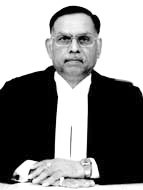
Pinaki Chandra Ghose, J.
1.This appeal is directed against the judgment and order
dated 29.11.2013 passed by the High Court of Gujarat at
Ahmedabad in Criminal Appeal No.1747 of 2010 with Criminal
Appeal Nos.2223 & 2224 of 2010, whereby the High Court
dismissed the appeal of the appellants herein and confirmed their
conviction and sentence for various offences punishable under
Sections 302, 147, 148 read with Section 149 of the Indian Penal
Code, 1860 (hereinafter referred to as “IPC”).
2.The brief facts necessary to dispose of these appeals are that
on 04.07.2009, at about 3:00 a.m., while one Rameshbhai
Prajapati (since deceased), who was the Taluka President of
Shivsena, his wife Bhavnaben and their children were sleeping,
2
the accused persons assaulted the deceased in sleeping condition
with a large knife because even after protest of the accused
persons, younger brother of the deceased got married with a
woman hailing from the community of the accused. Rameshbhai
died on the spot and the whole incident was seen by his wife
Bhavnaben (PW1) as she woke up. The accused after killing the
deceased escaped from there.
3.The law was set into motion upon lodging of FIR by PW1
(complainant) on 04.07.2009 at 06:15 a.m., at Vagdod Police
Station. The FIR was registered as C.R.No.69 of 2009. The
post-mortem of the deceased was performed by Dr. Mayankbhai
Vrajlal Sheth (PW2). As per the deposition of PW-2 with regard to
post-mortem of the deceased, marked Exh. 25, there were
injuries on artery, veins and windpipe due to injury caused on
the throat by large knife.
4.Upon completion of investigation, charge-sheet under
Sections 147, 148, 149, 302 and 120-B of the IPC was filed on
29.09.2009 in the Court of Judicial Magistrate, First Class,
Patan, which was registered vide Criminal case No.4108 of 2009.
However, the case being exclusively triable by the Court of
Sessions, Surat, the same was committed to the Sessions Court
under Section 209 of the Cr.P.C. Accordingly, a Sessions Case
3
No.72 of 2009 was registered against the accused. Thereafter,
upon the case being transferred to the Court of Additional
Sessions Judge, (FTC-2), Patan, charges were framed against the
accused persons vide Exh.8, for the offences punishable under
Sections 147, 148, 149, 302 and 120-B of IPC. After the accused
persons denied the said charges in their statements vide Exhibit
Nos.9 to 13, the evidence of prosecution witnesses was recorded.
5.Upon recording the evidence of the prosecution witnesses
and after considering all the relevant facts, the Trial Court vide
its judgment and order dated 16.08.2010 convicted accused
Nos.1 to 4 for the offences punishable under Sections 302, 147
and 148 read with 149 of IPC and sentenced them to
imprisonment for life and to pay a fine of Rs. 2,000/- and, in case
of default to pay fine, to undergo further simple imprisonment for
six months. However, the Trial Court acquitted accused No.5 -
Umarbhai for the offences punishable under Sections 147, 148,
149, 302 and 120-B of the IPC, and acquitted rest of the accused
for the offences punishable under Section 120-B of the IPC. It
was further ordered that if the accused Nos.1 to 4 pay the
amount of fine, then an amount of Rs.8,000/- be paid as
compensation to the complainant on behalf of all the dependants.
Being aggrieved by the aforesaid judgment and order of the Trial
4
Court, the accused persons filed an appeal before the High Court.
While accused preferred Criminal Appeal No.1747 of 2010
against order of their conviction and sentence, Criminal Appeal
Nos.2223 & 2224 of 2010 were preferred by the State for
enhancement of the sentence and against the acquittal of
accused No.5, respectively.
6.The High Court vide its judgment and order dated
29.11.2013, dismissed the aforesaid appeals filed by the State.
The High Court partly allowed Criminal Appeal No.1747 of 2010
filed by the accused persons and thereby quashed and set-aside
the judgment and order of conviction and sentence passed by the
Trial Court qua accused No.4 and he was acquitted. However, the
judgment and order of conviction and sentence passed by the
Trial Court qua accused Nos.1, 2 & 3 was confirmed. Aggrieved
by the aforesaid judgment and order passed by the High Court,
the accused persons have sought to challenge the same before us
in this appeal.
7.We have heard the learned counsel appearing for the
accused appellants as also the learned counsel appearing for the
respondent and have perused the oral and documentary evidence
on record.
5
8.A two-Judge Bench of this Court has formulated the
principles for the exercise of jurisdiction in a petition under
Article 136 of the Constitution of India in Ganga Kumar
Srivastava Vs. State of Bihar, (2005) 6 SCC 211, in the
following terms:
i.“The powers of this Court under Article 136 of the
Constitution are very wide but in criminal appeals
this Court does not interfere with the concurrent
findings of the fact save in exceptional
circumstances.
ii.It is open to this Court to interfere with the
findings of fact given by the High Court, if the
High Court has acted perversely or otherwise
improperly.
iii.It is open to this Court to invoke the power under
Article 136 only in very exceptional circumstances
as and when a question of law of general public
importance arises or a decision shocks the
conscience of the Court.
iv.When the evidence adduced by the prosecution
fell short of the test of reliability and acceptability
and as such it is highly unsafe to act upon it.
v.Where the appreciation of evidence and finding is
vitiated by any error of law of procedure or found
contrary to the principles of natural justice, errors
of record and misreading of the evidence, or where
the conclusions of the High Court are manifestly
perverse and unsupportable from the evidence on
record.”
9.Keeping in mind the above position of law as enunciated
and settled by a series of decisions of this Court, we shall now
examine the evidence adduced by the parties and the materials
6
on record and see that in view of the nature of offence alleged to
have been committed by the appellants, whether the concurrent
findings of fact call for interference in the facts and
circumstances of the case.
10.In the present case, there have been concurrent findings as
to the guilt of the accused persons by both the Courts below. In
upholding the judgment and order of conviction of the Trial
Court, the High Court had primarily relied upon the evidence of
eye-witnesses, namely, PW1 who was found to be trustworthy.
The weapon, being knife, was recovered and Panchnama was also
proved. The High Court held that the accused were sharing the
common object of causing injuries to the deceased.
11.Further, looking to the evidence given by PW5, one
Dahyabhai Dalabhai Patel and PW6, Kurashibhai Jivabhai Desai,
recovery of the weapon, being large knife with plastic handle, was
corroborated. However it is also true that PW5 was declared
hostile who had stated that appellant No.1 had taken out the
large knife from the dump heap. It was further stated that no
blood stains were found on the knife.
12.The High Court relied upon the judgment of this Court in
Mookkiah & Anr. Vs. State, represented by Inspector of
Police, Tamil Nadu, (2013) 2 SCC 89, in support of the
7
aforesaid conclusion, wherein this Court held:
“9. It is not in dispute that the trial court, on
appreciation of oral and documentary evidence led in
by the prosecution and defence, acquitted the accused
in respect of the charges levelled against them. On
appeal by the State, the High Court, by the impugned
order, reversed the said decision and convicted the
accused under Section 302 read with Section 34 IPC
and awarded RI for life. Since the counsel for the
appellants very much emphasized that the High Court
has exceeded its jurisdiction in upsetting the order of
acquittal into conviction, let us analyse the scope and
power of the High Court in an appeal filed against the
order of acquittal.
10. This Court in a series of decisions has repeatedly
laid down that
‘3…as the first appellate court the High Court,
even while dealing with an appeal against acquittal,
was also entitled, and obliged as well, to scan through
and if need be reappreciate the entire evidence, though
while choosing to interfere only the court should find
an absolute assurance of the guilt on the basis of the
evidence on record and not merely because the High
Court could take one more possible or a different view
only. Except the above, where the matter of the extent
and depth of consideration of the appeal is concerned,
no distinctions or differences in approach are envisaged
in dealing with an appeal as such merely because one
was against conviction or the other against an
acquittal.
[Vide State of Rajasthan Vs. Sohan Lal & Ors. ,
(2004) 5 SCC 573]”.
Thus, looking to the deposition of the prosecution witnesses, the
offence of murder of the Rameshbhai Prajapati has been proved
beyond all reasonable doubt against the accused.
8
13.Mr. Huzefa Ahmadi, learned senior counsel appearing on
behalf of the appellants contended that both the Courts below
have committed an error in convicting the appellants for the
offence punishable under Section 302 IPC along with two other
accused. When the High Court had acquitted accused No.4 and
confirmed the acquittal of accused No.5, no conviction could have
been recorded of the remaining three accused for an offence
punishable under Section 302 IPC.
14.Learned senior counsel further submitted that the
proposition submitted by the State are incorrect in view of the
fact that Section 149 is not attracted in the absence of the overt
act being attributed to each accused, since there is no finding to
the effect that five or more persons were involved in the act. In
support of this submission, he relied on Manmeet Singh alias
Goldie Vs. State of Punjab, (2015) 7 SCC 167, wherein this
Court observed as under:-
“With reference to the offence of dacoity under Section
391 IPC in particular and the import of Section 149
IPC, this Court in Raj Kumar vs. State of Uttaranchal
(2008) 11 SCC 709 had propounded that in the
absence of a finding about the involvement of five or
more persons, an accused cannot be convicted for such
an offence. Their Lordships, however, clarified that in a
given case it could happen that there might be five or
more persons and the factum of their presence either is
not disputed or is clearly established, but the court
may not be able to record a finding as to their identity
resulting in their acquittal as a result thereof. It was
9
held that in such a case, conviction of less than five
persons or even one can stand, but in the absence of a
finding about the presence or participation of five or
more persons, less than five persons cannot be
convicted for an offence of dacoity.”
PW1 in her deposition vide Exhibit No.20 had identified the
accused. However, she had not attributed any specific act to any
of the accused.
15.It has been contented by the learned senior counsel for the
appellants that the evidence of PW1 is vague and not reliable.
About motive, she vaguely states that the deceased was Taluka
President of the Shivsena and had a precarious relationship with
all local Memons. Five accused had also been wrongly identified.
16.It is further submitted that there was no need to conduct
test identification parade (TIP) considering the fact that
conviction of all accused is based on the sole testimony of the
widow (who at best had a fleeting glimpse of the accused under
cover of darkness) since life of the appellants hang in a delicate
balance. He thus relied upon Dana Yadav alias Dahu & Ors.
Vs. State of Bihar, (2002) 7 SCC 295; Kanan & Ors. Vs. State
of Kerala, (1979) 3 SCC 319 and Mulla & Anr. Vs. State of
Uttar Pradesh, (2010) 3 SCC 508.
17.On the other hand, Mr. D. N. Ray, learned counsel
appearing on behalf of the respondent supported the order of
10
conviction and sentence passed by both the Courts below. He
submitted that it is true that accused No.5 and accused No.4
were acquitted by the Trial Court and High Court, respectively,
from all the offences charged against them for want of evidence.
It is equally true that out of five accused, two accused were
acquitted by the Courts below by giving benefit of doubt and
hence there were less than five accused before the High Court.
He has specifically submitted that no point of perversity has been
taken by the appellants or pleaded in their appeals and instead,
asked for re-appreciation of the evidence. According to him,
without showing any perversity committed by the Trial Court as
well as by the High Court, there can be no ground to interfere
with the findings of the High Court. He submitted that this
appeal should be dismissed on this ground.
18.He further pointed out that the prosecution case is based on
an unshakeable eye-witnesses’ account. Therefore, motive
becomes immaterial and question of proving the motive by the
prosecution does not arise, since it is not a case based on
circumstantial evidence. (See Arjun Malik & Ors. Vs. State of
Bihar, 1994 Supp. (2) SCC 372, Para 10). He also drew our
attention to a decision of this Court in Kuriya & Anr. Vs. State
of Rajasthan, (2012) 10 SCC 433, wherein it was held that
11
“Once the principal eye-witness(es) have proved their credentials
on the whole, it can be said to be believable that the prosecution
can rest even on the testimony of a single eyewitness.”
19.Learned counsel appearing on behalf of the respondent
further contended that many questions were tried to be raised in
respect of the deposition/testimony of PW1, but from the
evidence of PW1 - widow of the deceased, it would appear that
there is no improvement regarding visibility of the crime as
sought to be made out by the defence. So far the recovery of the
knife is in question, although PW5 has turned hostile, even
though on cross-examination, he has categorically stated that the
recovery of a large sharp knife was made at the instance of
accused No.1. He further pointed out that the deceased was
running a Shivsena magazine in the heart of a Memon Village.
Except a handful of Hindus, the entire village comprised Muslims
who were on inimical terms. It has come on record that the
relationship of the deceased with the local Muslim villagers was
so bad that in the past the police had to be called and the
deceased had to be given police protection and the police had to
resort to firing to save the deceased. He also took us through the
evidence of PW3 and submitted that PW3 had married a Muslim
12
lady from the same village, which aggravated the enmity between
the deceased and the accused persons.
20.He further pointed out that although it is not seriously
urged that since five persons could not be identified and/or only
three has been convicted, therefore, Section 149 IPC cannot be
attributed to convict anybody other than the accused No.1. Such
submission cannot be accepted by the Court since PW1 clearly
deposed in her testimony that she had seen five persons fatally
assaulting her husband. She has categorically named five
persons assaulting her husband with big knives. Therefore, the
fact of the five persons, who were present cannot be doubted.
Doubt is with regard to the exact identification of one or two
accused.
21.We have meticulously perused the oral evidence of PW1 who
is the only eye witness in the present case and that of PW3 who
was the fort to know about the incident, as PW1 had called her. It
was admitted that day before the incident of murder one
Nageshbhai had a private conversation with the deceased outside
their house and thereafter deceased was feeling very much grief
and his face was looking pale and during evening hours many
phone calls were received on telephone. No independent act or
overt act was attributed to each accused, albeit it was stated that
13
she had seen the clothes of the assaulter stained with her
husband’s blood during occurrence.
22.In our view, albeit the murder is proved but the ingredients
of the unlawful assembly remained elusive, as pre-requisite
condition for an unlawful assembly i.e., minimum five persons,
has not been met. Nevertheless, the common object has been
proved by the prosecution.
23.Moreover, when the appeal was preferred before the High
Court, acquittal of the accused No.5 was not rebutted and further
finding of the High Court whereby accused No.4 has also been
acquitted for reasonable doubts, leaves a well-set doubt that
prosecution has not proved its case beyond reasonable doubt. We
are constrained to have this opinion that trial court was vitiated
by some manifest illegality or that the decision is perverse.
PW9/Circle Officer has also stated that PW2, brother of deceased,
influenced him into adding of cots, whereas they were not
actually there. No zero watt bulb is shown in the Panchnama
(site plan) as well, which efficaciously gives rise to doubt of the
role attributed to the appellants.
24.Finally, it has been argued by the learned senior counsel for
the appellants that a reference was also made to a previous
incident of 2001, where deceased had to be given police
14
protection during some altercation with people of the other
community. However, the accused in that case were admittedly
different and there is nothing to connect the appellants in the
present case, except the fact that they belong to the same
community.
25.On the other hand, it has been submitted by the learned
counsel for the State that the incident actually did happen due to
the fact that the brother of the deceased had got married with a
girl of the community of the appellants. Had this marriage was
not solemnized or as per present situation not registered in
Court, then the deceased might not have been murdered.
26.After considering the present facts and circumstances, we
are of the considered opinion that for furtherance of the common
intention namely to do away the deceased, appellants had
entered into the house of the deceased and were seen by PW1.
They then started beating the deceased and after causing injuries
on his neck with a sharp knife, they ran away. The homicidal
death was proved beyond all reasonable doubts. The High court
has thus rightly relied on the judgment of this Court in the case
of Pulukuru Kottaya & Ors. Vs. Emperor, reported in AIR (34)
1947 PC 67, wherein it was held that “The improper admission or
rejection of evidence shall not be ground of itself for a new trial or
15
reversal of any decision in any case, if it shall appear to the Court
before which such objection is raised that, independently of the
evidence objected to and admitted, there was sufficient evidence to
justify the decision, or that, if the rejected evidence had been
received, it ought not to have varied the decision”.
27.Above all, the fact that accused had been identified and
recovery made from accused No.1 has left no room for doubt that
all the appellants were involved in the commission of the murder
with common object to do away the deceased with sharp knife.
28.Thus, in the light of the above discussion, we are of the view
that the present appeal is devoid of merits and we, therefore, do
not find any reason to interfere with the order of the High Court.
Hence, the appeal is dismissed.
. . . . . . . . . . . . . . . . . . . . .J
(Pinaki Chandra Ghose)
. . . . . . . . . . . . . . . . . . . . J
(Ashok Bhushan)
New Delhi;
March 23, 2017.
16
ITEM NO.1-A COURT NO.6 SECTION IIB
(For judgment)
S U P R E M E C O U R T O F I N D I A
RECORD OF PROCEEDINGS
Criminal Appeal No(s). 1418/2014
SOYEBBHAI YUSUFBHAI BHARANIA & ORS. Appellant(s)
VERSUS
STATE OF GUJARAT Respondent(s)
Date : 23/03/2017 This appeal was called on for pronouncement of
Judgment today.
For Appellant(s)
Mr. Kaustubh Anshuraj, AOR
For Respondent(s)
Ms. Hemantika Wahi, AOR
–-
Hon'ble Mr. Justice Pinkai Chandra Ghose pronounced the
Reportable Judgment of the Bench comprising His Lordship and
Hon'ble Mr. Justice Ashok Bhushan.
The Criminal Appeal is dismissed in terms of the signed
Reportable Judgment.
(VISHAL ANAND) (SUMAN JAIN)
COURT MASTER COURT MASTER
(Signed Reportable Judgment is placed on the file)
17
REVISED
ITEM NO.1-A COURT NO.6 SECTION IIB
(For judgment)
S U P R E M E C O U R T O F I N D I A
RECORD OF PROCEEDINGS
Criminal Appeal No(s). 1418/2014
SOYEBBHAI YUSUFBHAI BHARANIA & ORS. Appellant(s)
VERSUS
STATE OF GUJARAT Respondent(s)
Date : 23/03/2017 This appeal was called on for pronouncement of
Judgment today.
For Appellant(s)
Mr. Kaustubh Anshuraj, AOR
For Respondent(s)
Ms. Hemantika Wahi, AOR
–-
Hon'ble Mr. Justice Pinaki Chandra Ghose pronounced the
Reportable Judgment of the Bench comprising His Lordship and
Hon'ble Mr. Justice Ashok Bhushan.
The Criminal Appeal is dismissed in terms of the signed
Reportable Judgment.
(VISHAL ANAND) (SUMAN JAIN)
COURT MASTER COURT MASTER
(Signed Reportable Judgment is placed on the file)

 Login with google
Legal Notes
Add a Note....