
As per case facts, sixteen accused faced trial for unlawful assembly, murder, grievous hurt, and outraging modesty of the deceased's wife. The Trial Court acquitted all, but the High Court, ...
2025 INSC 1213 Criminal Appeal Nos.541-543 of 2015 Etc.
Page 1 of 29
REPORTABLE
IN THE SUPREME COURT OF INDIA
CRIMINAL APPELLATE JURISDICTION
CRIMINAL APPEAL NOS.541 -543 OF 2015
SRI CHIKKEGOWDA & ORS. ...APPELLANTS
VS.
STATE OF KARNATAKA ETC. ...RESPONDENTS
WITH
CRIMINAL APPEAL NOS. 1509 -1510 OF 2015
NEELAKANTAPPA ...APPELLANT
VS.
STATE OF KARNATAKA ETC. ...RESPONDENTS
J U D G M E N T
VIKRAM NATH, J.
1. Sixteen (16) accused were put to trial for the
charges of unlawful assembly and culpable homicide
amounting to murder of one Mohan Kumar (deceased)
and for the charges of causing grievous hurt and
outraging modesty of the injured Smt. Annapurna
(PW-1), the wife of the deceased. During trial,
Criminal Appeal Nos.541-543 of 2015 Etc.
Page 2 of 29
accused no.10 died, as such, proceedings against him
were abated. The trial proceeded against the surviving
fifteen (15) accused being accused nos.1 to 9 and 11 to
16. The Trial Court vide judgment dated 13.09.2010
acquitted all the accused of all the charges framed
against them in Sessions Case Nos.144 of 2003 and 196
of 2003. It would be relevant to note that Session Case
No.144 of 2003 proceeded against accused nos.2 to 16
as accused no.1 had been absconding, however, later on,
when he was arrested his trial was also committed and
was registered as Session Case No.196 of 2003.
2. Aggrieved by the judgment of the Trial Court, the State
preferred Criminal Appeal No.161 of 2011 against all the
surviving fifteen (15) accused, whereas the
informant/injured preferred Criminal Appeal No.335 of
2011 against accused nos.2 to 9 and 11 to 16 and
further preferred Criminal Appeal No.345 of 2011
against accused no.1. All the three appeals were clubbed
together and vide common judgment dated 29.10.2014,
the appeals were partly allowed. The High Court
confirmed the acquittal of accused nos.7, 8, 9, 12, 13,
14, 15 and 16 of all the charges and at the same time
convicted the accused Nos.1 to 6 and 11 for offences
Criminal Appeal Nos.541-543 of 2015 Etc.
Page 3 of 29
punishable under Sections 143, 147, 148, 324, 302 read
with Section 149 of the Indian Penal Code, 1860
1 and
awarded them life sentence under Section 302 read with
Section 149 IPC and further lesser punishment under
the other offences. The sentences were ordered to run
concurrently. The High Court acquitted the above
convicted accused from the offences under Sections 326,
354, 341, 307 read with Section 149 IPC. Aggrieved by
their conviction, Appeal Nos.541 and 543 of 2015 has
been preferred by the convicted accused nos.1 to 6.
Further, Appeal Nos.1509-1510 of 2015 has been
preferred by the accused no.11.
3. On the fateful day, i.e., 16.03.2003, at about 06:00 a.m.,
when the deceased came out of his house in the village
carrying milk to the dairy, the sixteen (16) accused
persons, who bore previous enmity with the deceased
and the prosecution witnesses, blocked his way and
assaulted him with dangerous weapons, causing fifteen
(15) injuries as per the post-mortem report. They further
1
IPC.
Criminal Appeal Nos.541-543 of 2015 Etc.
Page 4 of 29
inflicted life-threatening injuries on the wife of the
deceased (PW-1), who had tried to save and shield her
husband and stop the accused from assaulting him.
Thereafter, upon the arrival of other residents of the
village, the accused persons fled the scene of crime.
4. The deceased and the injured (PW-1) were taken to the
Primary Health Centre (PHC) at Gandasi. Dr. Sunil
Kumar (PW-18) posted at the Primary Health Centre
referred them to the District Hospital as he did not have
sufficient facilities to treat the deceased who was still
alive at that time. Both the injured i.e. the deceased and
his wife (PW1) were then taken to J.C. Hospital at
Hassan, where after examining them, the doctors
declared that Mohan Kumar had been brought dead and
further started the treatment o f his wife, the
injured(PW1). While the injured were still at the Primary
Health Centre at Gandasi, the police had reached there,
and PW-1 had narrated the entire incident. On the
written complaint prepared by the police at her dictation,
she affixed her signatures. On the basis of the said
complaint, a First Information Report was registered and
investigation commenced. The Investigating Officer
conducted the necessary inspections, prepared the site
Criminal Appeal Nos.541-543 of 2015 Etc.
Page 5 of 29
plan and the inquest, collected blood-stained and plain
earth from the place of occurrence, and took into
possession the weapons used in the crime, which had
been discarded by the accused while leaving the scene.
Upon the arrest of the accused, the Investigating Officer
further recovered certain other weapons at their pointing
out, recorded statements, and, being prima facie
satisfied with the evidence collected that it was a triable
case, submitted a police report under Section 173(2) of
the Code of Criminal Procedure, 1973
2. The Magistrate
concerned, after taking cognizance, committed the case
to the Sessions Court. The Trial Court thereafter framed
charges and read them out to the accused, who pleaded
not guilty and claimed to be tried.
5. The prosecution examined in all twenty -three (23)
witnesses and also filed 33 documentary evidence,
which were duly proved and marked as Exts.P-1 to P-33
and further produced 13 material objects, which were
duly proved and marked as MO-1 to MO-13. On behalf
of the defense, two witnesses were examined –accused
2
Cr.P.C..
Criminal Appeal Nos.541-543 of 2015 Etc.
Page 6 of 29
no.1, Chikkegowda entered the witness box as DW -1
and one Dr. Kumar was produced as DW -2. The details
of the evidence led is as under:
Witnesses:
• PW-1 (Smt. Annapurna), informant/injured,
eyewitness,
• PW-2 (Suresh Babu), eyewitness,
• PW-3 (Jayaprakash), eyewitness,
• PW-4 (Omkaramurthy), eyewitness,
• PW-5 (Raghupathi), eyewitness,
• PW-6 (Basavaraju), eyewitness,
• PW-7 (Manjula), eyewitness,
• PW-8 (Lohith), eyewitness,
• PW-9 (Shankarappa), eyewitness,
• PW-10 (Virupakshappa), witness of recovery,
• PW-11, Revenue Inspector, witness proved the
removal of encroachment/obstruction,
• PW-12 (Nandish), witness of spot inspection,
recovery of weapons and articles from place of
incident,
• PW-13 (Dharnish), witness of recovery of weapons
at the instance of accused nos.2, 3 and 4,
Criminal Appeal Nos.541-543 of 2015 Etc.
Page 7 of 29
• PW-14 (Manju Nath), Surveyor, had made the
measurements of the disputed land.
• PW-15 (Yogish), witness of recovery of sickle from
the house of Chikkegowda,
• PW-16 (Kantharaja), witness of the recovery of
sickle from the house of Chikkegowda,
• PW-17 (Dr. K.K. Hebbar), Medical Officer, who
conducted the autopsy.
• PW-18 (Dr. Sunil Kumar), the Medical Officer at the
Primary Health Centre, Gandasi,
• PW-19 (Shiva Kumar), part of the team which
arrested accused no.8-9.
• PW-20 (K.L. Ganesh), the 1
st Investigating Officer,
• PW-21 (H.N. Panchaksharappa), 3
rd Investigating
Officer.
• PW-22 (H.G. Somashekar), produced the FIR before
the Magistrate,
• PW-23 (A. Nagappa), 2
nd Investigating officer who
submitted the chargesheet.
Documents produced on behalf of the prosecution.
Ex.P1 Complaint
Ex.P1(a) Signature of PW-1
Ex.P1(b) Signature of PW-18, Dr. Sunil Kumar
Criminal Appeal Nos.541-543 of 2015 Etc.
Page 8 of 29
Ex.P1(c) Signature of PW-20 and endorsement
Ex.P2 Inquest Report
Ex.P2(a) Signature of PW-4
Ex.P3 Spot Mahazar
Ex.P3(a) Signature of PW-9
Ex.P3(b) Signature of PW-12
Ex.P4 Seizure Mahazar
Ex.P4(a) Signature of PW-10
Ex.P4(b) Signature of PW-13
Ex.P5 Seizure Mahazar
Ex.P5(a) Signature of PW-10
Ex.P5(b) Signature of PW-13
Ex.P6 Seizure Mahazar
Ex.P6(a) Signature of PW-10
Ex.P6(b) Signature of PW-13
Ex.P7 Seizure Mahazar
Ex.P7(a) Signature of PW-10
Ex.P7(b) Signature of PW-13
Ex.P8 Seizure Mahazar
Ex.P8(a) Signature of PW-10
Ex.P8(b) Signature of PW-13
Ex.P9 Seizure Mahazar
Ex.P9(a) Signature of PW-10
Ex.P9(b) Signature of PW-13
Ex.P10 Seizure Mahazar
Ex.P10(a) Signature of PW-15
Criminal Appeal Nos.541-543 of 2015 Etc.
Page 9 of 29
Ex.P10(b) Signature of PW-16
Ex.P10(c) Signature of PW-17
Ex.P11 Post Mortem Report
Ex.P11(a) Signature of PW-17
Ex.P12 Wound Certificate of Smt.
Annapoorna
Ex.P12(a) Signature of PW-18
Ex.P13 Photocopy of Page No.76 of the MLC
Book
Ex.P14 Photocopy of the statement of Smt.
Annapoorna
Ex.P15 Hospital Memo Dt. 16.03.2003
Ex.P16 First Information Report in Crime
No.38 of 2003
Ex.P17 Letter Dt. 16.03.2003
Ex.P18 Memo Dt. 16.03.2003 of JC
Hospital/Hassan
Ex.P19 Passport Dt. 16.03.2003 issued by the
Police Officials
Ex.P20 Report of PW-20 PSI K.L. Ganesh
Ex.P21 Self statement of the first Accused
Chikkegowda
Ex.P21(a) Signature of PW-21
Ex.P22 Self statement of the second accused
Shadakshari
Ex.P23 Self statement of the third accused
Shanthakumar
Ex.P24 Self statement of the fourth accused
Criminal Appeal Nos.541-543 of 2015 Etc.
Page 10 of 29
Ravi Kumar
Ex.P25 Self statement of the fifth accused
Vijaya Kumar
Ex.P26 Self statement of the sixth accused
Honnegowda
Ex.P27 Self statement of the seventh accused
Sathisha
Ex.P28 Self statement of the eighth accused
Karuna @ Karunakara
Ex.P29 Sketch of the spot
Ex.P30 First Information Report in Crime
No.13/2003
Ex.P31 First Information Report in Crime
No.14/2003
Ex.P32 Copy of the report Dt. 19.06.2003 of
Forensic Science Laboratory
Ex.P33 Serology Report Dt.29.10.2005
List of Material Objects.
MO-1 One shirt
MO-2 One blue coloured underwear
MO-3 One blue coloured Banian
MO-4 One sickle
MO-5 Two wooden clubs of forest wood
MO-6 Four forest stones
MO-7 Two sickles
Criminal Appeal Nos.541-543 of 2015 Etc.
Page 11 of 29
MO-8 Two rods used for taking off coconut
cover
MO-9 Two broken sticks
MO-10 Two forest clubs
MO-11 Blood mixed mud
MO-12 Ordinary mud
MO-13 Sickle
6. The Trial Court after considering the evidence on record
extended the benefit of doubt to all the accused and
acquitted them of all the charges. The conclusion of
acquittal by the Trial Court is primarily based on the
following findings:
(i) It discarded the evidence of PW-1 while placing
reliance on the cross-examination of PW-17, Dr.
K.K. Hebbar (Medical Officer who conducted the
autopsy), wherein he stated that the deceased
could have died between 3:00 a.m. to 4:00 a.m.
(ii) It was influenced by the plea set up by the
defense that PW-1 was in an illegitimate
relationship with PW-3, and that PW-3, along
with his henchmen and PW -1, had committed
the murder of Mohan Kumar in the early hours
Criminal Appeal Nos.541-543 of 2015 Etc.
Page 12 of 29
of 16.03.2003, thereafter falsely implicating the
accused on account of enmity.
(iii) It observed that PW-18, Dr. Sunil Kumar, (the
Medical Officer at the PHC) had given a false
statement and had further improved his
statement in order to help the prosecution’s case
by stating that the deceased was alive when he
examined him at the PHC at G andasi and
considering his serious condition and the nature
of injuries, he had referred him to a superior
medical centre.
(iv) It was of the view that the other eyewitnesses
were all planted and none of them had actually
witnessed the commission of the crime.
7. Aggrieved by the judgment of the Trial Court, three
appeals were preferred before the High Court as already
detailed in the opening paragraphs. One appeal was filed
by the State of Karnataka and the other two appeals
were filed by the informant. The High Court considered
the material on record. It minutely and carefully
scrutinized the evidence led during the trial. The High
Court found that the view taken by the Trial Court was
not a probable view, the evidence had not been correctly
Criminal Appeal Nos.541-543 of 2015 Etc.
Page 13 of 29
appreciated and that the findings recorded were not
based on the correct appreciation of the evidence on
record. There was clear perversity in arriving at the
conclusion of extending benefit of doubt to the
accused(s). The High Court noted that the Trial Court
had committed a manifest error in disbelieving the
deposition of the injured PW-1, who was also the
informant. The reasons for disbelieving her testimony
were not sustainable in facts & in law. The reasons for
disbelieving the deposition of PW-1 were twofold, firstly,
that the time of death indicated by PW-1 was found to
be incorrect in view of the medical evidence given by PW-
17, Dr. K.K. Hebbar (the Medical Officer who had
conducted the autopsy) that the time of death could be
between 3:00 a.m. to 4:00 a.m, and not 6:00 a.m. as
stated by PW-1. The second reason was that the Trial
Court believed the defense version of castigating PW-1 of
having illegitimate relationship with PW-3 and the
theory that they in conspiracy with others, could have
committed the murder of Mohan Kumar, in the dead of
the night and thereafter falsely implicated the accused(s)
due to existing enmity.
8. The High Court found that both these grounds taken by
Criminal Appeal Nos.541-543 of 2015 Etc.
Page 14 of 29
the Trial Court to disbelieve PW -1, the
injured/informant, were absurd and contrary to the
settled legal position of appreciating the testimony of an
injured eyewitness.
9. The High Court clearly observed that medical evidence
cannot prevail over the ocular testimony and, therefore,
merely because PW-17, Dr. K.K. Hebbar (the Medical
Officer who conducted the autopsy), stated in his cross-
examination that the death could have occurred between
3:00 a.m. and 4:00 a.m., the same cannot be taken as
the exact time of death. Once the injured had clearly
stated right from the stage of her first statement, which
formed the basis of the First Information Report, and
with which she remained consistent even during trial,
the mere observation/opinion of PW-17 that the death
could have occurred between 3:00 a.m. and 4:00 a.m.
could not be taken to be the exact time of death.
10. The post-mortem report did not mention the exact time
of death but only noted that it could have occurred 10 to
12 hours prior to the time the post -mortem was
conducted. Since the post-mortem was carried out
between 3:00 p.m. and 4:00 p.m. on 16.03.2003, t he
time of death falling 10 to 12 hours earlier could very
Criminal Appeal Nos.541-543 of 2015 Etc.
Page 15 of 29
well correspond to the time stated by PW-1, i.e., around
6:00 a.m.
11. Further, the High Court found that the defense theory
relating to an illicit relationship between PW-1 and PW-
3 as being the reason for the divorce of PW-3 from his
wife could not be accepted, as the marriage of PW-1 with
the deceased had been solemnized sometime in the year
1996-97, whereas the divorce petition of PW-3 had been
filed in the year 1995 itself. Thus, when the marriage of
PW-1 with the deceased had not even taken place, the
plea of an illicit relationship being the cause of PW-3’s
divorce could not be substantiated. Merely because a
suggestion was put to one of the witnesses, PW -9,
regarding the alleged relationship, no credibility could be
attached to the said defense version.
12. It is also worth noting, as mentioned by the High Court,
that no suggestion was put to PW -1 in cross-
examination regarding her alleged illicit relationship
with PW-3.
13. Proceeding further, the High Court found that the
testimony of PW-18, Dr. Sunil Kumar (the Medical
Officer at PHC, Gandasi) could not have been discarded
Criminal Appeal Nos.541-543 of 2015 Etc.
Page 16 of 29
or disbelieved and that he had no reasons to give a false
statement.
14. The High Court also separated the grain from the chaff.
It meticulously scrutinized the evidence of each witness.
It disbelieved a couple of witnesses who were examined
as eyewitnesses; however, it relied upon only those
eyewitnesses who were able to withstand the test of
scrutiny, and whose testimony remained unshaken even
after cross-examination.
15. The High Court did not convict all the accused but only
seven out of sixteen (16), affirming the Trial Court’s
conclusion of acquittal for the rest. It also acquitted the
present appellants of the charges of outraging the
modesty of PW-1 and of attempt to murder, convicting
them only for causing grievous hurt with respect to the
injuries suffered by PW-1. It is thus noticeable that the
judgment of the High Court reflects an overall balanced
and reasonable approach. It did not fully accept the
prosecution version, but relied only upon that part for
which credible evidence had been led.
16. We have heard learned Senior counsel/counsel for the
parties and have perused the material on record.
Criminal Appeal Nos.541-543 of 2015 Etc.
Page 17 of 29
17. Learned senior counsel for the appellants primarily
attacked the judgment of the High Court on two grounds:
a) Firstly, the High Court did not record any finding,
nor arrive at a conclusion, that the view taken by
the Trial Court in recording acquittal was not a
probable view. In the absence of such a finding or
conclusion, the conviction recorded by the High
Court was palpably incorrect and contrary to the
settled legal principles governing interference with
a judgment of acquittal. The law is well settled that
unless the Appellate Court arrives at a conclusion
that the reasoning given by the court below in
recording acquittal was perverse and not a
probable view, it could not upset the same or
substitute the acquittal with a conviction. Reliance
was placed upon the following judgments:
(i) Muralidhar alias Gidda v. State of
Karnataka.
3
(ii) Krishna @ Krishnappa v. State of
3
(2014) 2 SCC(Crl) 690.
Criminal Appeal Nos.541-543 of 2015 Etc.
Page 18 of 29
Karnataka.
4
The second argument advanced on behalf of the
appellants was that the evidence of the
injured/informant, PW-1, was unreliable and liable
to be discarded. The Trial Court, after considering
the material on record, had rightly concluded that
the deposition of PW-1 was not worthy of reliance.
The defense had created a clear dent in the
prosecution story by setting up the plea that PW-1
and PW-3, along with their accomplices, were
themselves involved in the murder of Mohan
Kumar, the husband of PW-1, on account of their
illicit relationship. Furthermore, since PW-17, Dr.
K.K. Hebbar (the Medical Officer who conducted
the post-mortem), had stated that death occurred
around 03:00 to 04:00 a.m., the version of PW-1
that the incident happened around 06:00 a.m. was
4
Criminal Appeal No.162 of 2009, dated 14.11.2014.
Criminal Appeal Nos.541-543 of 2015 Etc.
Page 19 of 29
not worthy of reliance. The Trial Court had
therefore rightly extended the benefit of doubt to
the appellants after taking into account other
inconsistencies and contradictions in the evidence
led during trial. Apart from these two main
submissions, several minor discrepancies were
also pointed out by the learned senior counsel for
the appellants.
18. In response, learned counsel appearing for the
respondent-State of Karnataka, vehemently submitted
the following:
(a) That the High Court has dealt in detail about the
patent fallacies committed by the Trial Court in
recording the acquittal. It is clear from a bare reading
of the judgment of the High Court that it had dealt
with all the aspects and findings of the Trial Court,
which it found to be perverse;
(b) The appellants are not correct in submitting that the
High Court did not record any finding that the
conclusion of acquittal arrived at by the Trial Court
was not a probable one;
(c) Further, the evidence of PW -1, the
Criminal Appeal Nos.541-543 of 2015 Etc.
Page 20 of 29
injured/informant has been rightly relied upon by
the High Court for reasons recorded therein. The
injuries of PW-1 were neither disputed nor challenged
by the defense. Further, it is also not the case of
defense that the injuries had been self-inflicted;
(d) The theory set up by the defense that PW-1 and PW-
3, in conspiracy, had got the husband of PW -1
murdered was unacceptable, as in that case there
would have been no occasion for PW -1 to sustain
injuries.;
(e) An injured witness, having sustained grievous
injuries, would not falsely implicate others while
leaving out the true assailants who had murdered her
husband;
(f) Enmity between the parties was admitted, and the
deceased had succeeded in securing access to a
public road for one of the witnesses after getting the
encroachment and illegal possession of the accused
removed only a couple of months earlier. There was
thus a very strong reason for the accused to eliminate
the deceased, as they were frustrated and annoyed
by his support and pairvi in securing access to the
Criminal Appeal Nos.541-543 of 2015 Etc.
Page 21 of 29
public land for the said witness;
(g) It was also submitted that the evidence of PW-1
stood corroborated by the medical evidence both PW-
17 and PW-18, regarding the injuries caused, the
manner in which it had been caused and the use of
the weapons as narrated by the PW-1;
(h) Even if some of the witnesses had faltered, the
testimony of a single witness, if of sterling quality,
would be sufficient to record a conviction. The High
Court dealt with this aspect of the matter in detail
and relied upon two other eyewitnesses who
supported the deposition of PW-1.
19. Having considered the submissions advanced and
having scrutinized the material on record, we are of the
firm view that the High Court has not committed any
error warranting interference. The reasons for the same
are elaborated hereinafter.
20. The first argument raised on behalf of the appellant,
that the High Court erred in not recording a finding,
while upsetting the order of acquittal, that the view
taken by the Trial Court could not have been a probable
view, is misplaced. The High Court meticulously dealt
Criminal Appeal Nos.541-543 of 2015 Etc.
Page 22 of 29
with the findings recorded by the Trial Court and, short
of expressly stating that they were absurd, clearly found
grave error in the reasoning given by the Trial Court.
Even if the High Court omitted to write a single line
stating that the view taken by the Trial Court could not
have been a probable view, it would be unfair and unjust
to hold that the judgment of the High Court could be
faulted on this ground.
21. We have examined the testimony of PW -1, the post-
mortem report, as well as the testimony of PW-17, Dr.
K.K. Hebbar, who conducted the post -mortem.
According to PW-1, her husband was murdered
sometime around 6:00 a.m. According to the post -
mortem report, conducted the same day between 3:00
p.m. and 4:00 p.m. by Dr. K.K. Hebbar (PW-17), it was
recorded that death could have occurred about 10 to 12
hours earlier. Counting backwards from 3:00 p.m. to
4:00 p.m., the time of death would thus relate to between
5:00 a.m. and 6:00 a.m. The time of death can never be
defined with accuracy; it can only be given as a probable
estimate during autopsy, with a margin of a couple of
hours (plus/minus) always being assumed.
22. PW-1 in her testimony clearly stated that the incident
Criminal Appeal Nos.541-543 of 2015 Etc.
Page 23 of 29
took place at 6:00 a.m. She vividly described how the
assailants, after obstructing her husband from carrying
the milk, assaulted him with dangerous weapons, and
also described the specific roles played by the assailants.
She herself sustained grievous injuries, which are
supported by medical evidence, and the injury report
was duly proved. The injuries sustained by her were not
challenged by the defense, either by disputing the injury
report or by alleging that they were self-inflicted to create
false evidence. The evidence of Dr. Hebbar, PW -17,
proved the post-mortem report; however, during cross-
examination by defense counsel, when asked whether
death could have occurred between 3:00 a.m. and 4:00
a.m., he answered in the affirmative. It is this part of the
cross-examination which was heavily relied upon by the
Trial Court as a major factor to discard the testimony of
PW-1
23. It is well settled that if there is a conflict in the ocular
testimony and the medical testimony/evidence, it is the
ocular evidence which will prevail unless found to be
totally unreliable. In this regard, reference may be made
to the followings decision wherein the above principle
was reiterated:
Criminal Appeal Nos.541-543 of 2015 Etc.
Page 24 of 29
23.1. In the judgment of Darbara Singh v. State of
Punjab
5, it was held that:
“10. So far as the question of
inconsistency between medical evidence
and ocular evidence is concerned, the law
is well settled that, unless the oral
evidence available is totally
irreconcilable with the medical evidence,
the oral evidence would have primacy. In
the event of contradictions between
medical and ocular evidence, the ocular
testimony of a witness will have greater
evidentiary value vis -à-vis medical
evidence and when medical evidence makes
the oral testimony improbable, the same
becomes a relevant factor in the process of
evaluation of such evidence. It is only when
the contradiction between the two is so
extreme that the medical evidence completely
rules out all possibilities of the ocular evidence
being true at all, that the ocular evidence is
liable to be disbelieved…”
(Emphasis supplied)
23.2. In the judgment of State of U.P. v. Hari Chand
6,
it was held that:
“13. …In any event unless the oral
evidence is totally irreconcilable with the
medical evidence it has primacy.”
5
(2012) 10 SCC 476.
6
(2009) 13 SCC 542.
Criminal Appeal Nos.541-543 of 2015 Etc.
Page 25 of 29
23.3. In the judgement of Pruthviraj Jayantibhai Va-
nol v. Dinesh Dayabhai Vala & Ors
7, it was held
that:
“17. Ocular evidence is considered the best
evidence unless there are reasons to doubt
it…”
23.4. In the aforesaid decisions, this Court has
consistently accorded greater weight to ocular
testimony than to the opinion of medical experts,
and the same principle governs the case before us.
24. From the testimony of PW-1, we do not find that she had
faltered in any manner, or that her version in the
examination-in-chief, which was fully in line with the
First Information Report and her statement under
Section 161 CrPC, could be said to have been impeached.
During cross-examination, the defence could not elicit
anything from PW-1 to render her testimony unreliable
or worthy of being discarded. Interestingly, the defense
did not put a single question to PW-1 challenging her
injuries, the injury report, or even with regard to her
7
(2022) 18 SCC 683.
Criminal Appeal Nos.541-543 of 2015 Etc.
Page 26 of 29
alleged illicit relationship with PW -3. In such
circumstances, the disbelieving and discarding of the
testimony of PW-1 by the Trial Court was purely
conjectural and unsustainable in law. The High Court
has rightly found fault with the said finding of the Trial
Court.
25. The other reason for discarding the evidence of PW-1 by
the Trial Court was with respect to the defense theory
that PW-1 was in an illicit relationship with PW-3 and
that they had jointly conspired to eliminate the deceased
(husband of PW-1) by hiring or with the help of
accomplices of PW-3. The reason given for the illicit
relationship was that PW-1 was responsible for the
divorce of PW-3. In the evidence of PW-9, Shankarappa
(father of the deceased), when this question was put to
him during cross-examination, he stated that the
divorce proceedings of PW-3 had taken place sometimes
in 1995 whereas the marriage of PW-1 with the deceased
was of the subsequent year 1996-1997. Thus, the cause
of divorce of PW-3 with his wife would not have been
attributed to PW-1 and her alleged illicit relationship
with PW-3. In any case, as already noted above, the
defense did not make any suggestion during the cross-
Criminal Appeal Nos.541-543 of 2015 Etc.
Page 27 of 29
examination of PW-1 that she had an illicit relationship
with PW-3 and that they had conspired together with
other accomplices of PW-3 to eliminate her husband, the
deceased. What inspired the Trial Court to rely upon
such a theory set up by the defense, which had no
supporting documents or evidence is not understood.
The Trial Court ought to have condemned the conduct of
the defense in unnecessarily casting aspersions upon
PW-1.
26. Apart from the above two reasons, which weighed
heavily with the Trial Court in according the acquittal,
which we have found to be totally untenable, we now
proceed to deal with the other factors and the evidence
on record which justify the conviction recorded by the
High Court.
27. The prosecution had proved that the death of the
deceased was homicidal. The time and place of the crime
were also established, the FIR was promptly lodged and
duly communicated to the Magistrate concerned, and
the medical evidence supported the prosecution version.
PW-18, Dr. Sunil Kumar (the Medical Officer in-charge
of the PHC at Gandasi), had examined the injured PW-1
and stated that the deceased, who was then alive, should
Criminal Appeal Nos.541-543 of 2015 Etc.
Page 28 of 29
be immediately referred to a higher medical centre
considering his critical condition due to the injuries
sustained by him. The police reached the PHC at
Gandasi and recorded the oral statement of PW-1, on the
basis of which the First Information Report wa s
registered. The prosecution further proved all the
recovery memos relating to various recoveries made from
the spot as well as from the accused persons pursuant
to their statements under Section 27 of the Evidence Act,
1872.
28. We also find that the High Court has taken a balanced
view and has minutely scrutinized the evidence. It
confirmed the acquittal of accused nos. 7, 8, 9, and 12
to 16, having found insufficient evidence to record their
conviction. It also found insufficient evidence with
respect to the charge of outraging the modesty of PW-1
and the charge of attempt to murder, holding that the
injuries sustained by PW-1 were grievous in nature but
not dangerous to life. The High Court further relied upon
the testimony of PW-1, and in addition, that of another
eyewitness, PW-7, while discarding the evidence of the
other eyewitnesses.
Criminal Appeal Nos.541-543 of 2015 Etc.
Page 29 of 29
29. The formal witnesses who proved the recovery, the
injuries, the post-mortem, the arrest, and the
Investigating Officers have neither turned hostile nor
been found unworthy of reliance. For all the reasons
recorded above, we find no ground to interfere with the
impugned judgment of the High Court convicting the
appellants.
30. The appellants are in custody and shall continue to serve
out their remaining sentence as per law. The appeals
are dismissed.
31. Pending applications, if any, stand disposed of.
……………………………J.
[VIKRAM NATH]
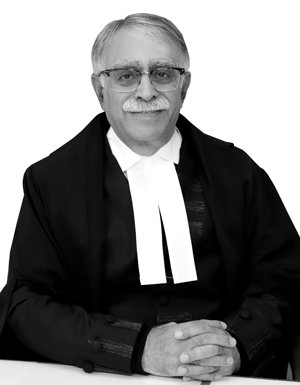
……………………………J.
[SANJAY KAROL]
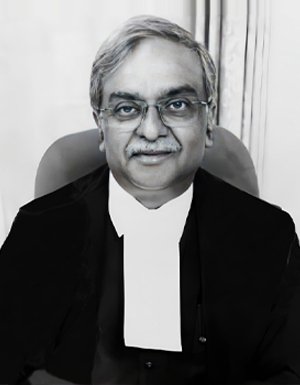
……………………………J.
[SANDEEP MEHTA]
NEW DELHI;
OCTOBER 07, 2025
In a significant ruling concerning a Supreme Court criminal appeal, the apex court recently dismissed appeals challenging a High Court's decision to convict seven individuals in a murder case, emphasizing the paramount importance of the evidentiary value of eyewitness testimony. This crucial judgment, SRI CHIKKEGOWDA & ORS. VS. STATE OF KARNATAKA ETC. and NEELAKANTAPPA VS. STATE OF KARNATAKA ETC. (2025 INSC 1213), is now readily available on CaseOn, offering legal professionals and students comprehensive insights into its implications.
The case, which saw a journey from acquittal by the Trial Court to conviction by the High Court, highlights critical principles regarding the appreciation of evidence, especially the weight given to an injured eyewitness's account versus medical opinions and unsubstantiated defense theories. Let's delve into the specifics using the IRAC method.
The core issues before the Supreme Court revolved around whether the High Court erred in overturning a Trial Court's acquittal without explicitly declaring its findings "improbable" and if it was justified in relying on the injured eyewitness's testimony despite alleged discrepancies in the time of death and a defense theory purporting an illicit relationship and false implication.
The Supreme Court reiterated the established legal principle that an appellate court can only interfere with a judgment of acquittal if it finds the Trial Court's reasoning to be perverse or not a probable view of the evidence. However, merely omitting a specific phrase like "not probable" does not invalidate the appellate court's decision if the underlying analysis clearly demonstrates grave errors or perversity in the Trial Court's findings.
A fundamental rule in criminal jurisprudence is that ocular testimony holds greater evidentiary value than medical opinion, particularly when there are apparent contradictions. Medical opinions on aspects like the exact time of death are often estimates and cannot decisively override a consistent eyewitness account unless the contradiction is so extreme that it renders the ocular evidence completely unreliable.
The testimony of an injured eyewitness carries substantial weight. Such a witness, having personally suffered during the incident, is unlikely to falsely implicate innocent individuals while shielding the actual perpetrators. Their presence at the scene and sustained injuries provide inherent credibility to their account.
Any defense theory, including those alleging conspiracy or false implication, must be supported by concrete evidence or logical reasoning. Mere suggestions or speculative assertions without proof cannot undermine credible prosecution evidence.
The appellants contended that the High Court failed to explicitly state that the Trial Court’s view was "not probable" when overturning the acquittal. The Supreme Court, however, dismissed this argument, noting that the High Court had meticulously detailed the "patent fallacies" and "grave error" in the Trial Court's reasoning. The apex court held that it would be "unfair and unjust" to fault the High Court for not using a specific phrase when its judgment thoroughly dissected and refuted the Trial Court's conclusions.
A key point of contention was the discrepancy between PW-1’s statement that the incident occurred around 6:00 a.m. and the medical officer’s (PW-17) cross-examination opinion that death might have occurred between 3:00 a.m. and 4:00 a.m. The Supreme Court meticulously reconciled this, pointing out that the post-mortem, conducted between 3:00 p.m. and 4:00 p.m., estimated death 10-12 hours prior, which aligns perfectly with a death time between 5:00 a.m. and 6:00 a.m. The Court reinforced that medical opinions on the exact time of death are estimates and cannot eclipse clear, consistent ocular testimony unless irreconcilable. This analysis powerfully upheld the established legal principle regarding the hierarchy of evidence.
The Trial Court had surprisingly accepted a defense theory suggesting PW-1 (the injured wife) had an illicit relationship with PW-3 and conspired with him to murder her husband, Mohan Kumar. The Supreme Court found this theory "purely conjectural and unsustainable." It highlighted several flaws: PW-3’s divorce predated PW-1’s marriage to the deceased, no questions regarding this alleged relationship were put to PW-1 during cross-examination, and crucially, if PW-1 had conspired, there would have been no occasion for her to sustain grievous injuries herself. The Court also expressed strong disapproval of the defense for casting "unnecessarily casting aspersions upon PW-1."
The Supreme Court affirmed the High Court’s reliance on PW-1’s testimony. Her injuries were undisputed and not alleged to be self-inflicted, lending significant credibility to her account. Her statement, consistent from the FIR stage, vividly described the assault and the roles of the assailants. The testimony was further corroborated by another eyewitness, PW-7, as well as the medical evidence (PW-17 and PW-18) concerning the nature of injuries and weapons used, and forensic evidence from the scene.
For legal professionals seeking to quickly grasp the nuances of judgments like this, CaseOn.in offers invaluable 2-minute audio briefs. These concise summaries assist in analyzing specific rulings, making complex legal arguments accessible and saving critical time.
The Supreme Court commended the High Court for its "overall balanced and reasonable approach." The High Court did not blindly accept the prosecution's entire case; it confirmed the acquittal of eight accused and dismissed charges of outraging modesty and attempt to murder against the convicted appellants, while still convicting them for grievous hurt to PW-1. This selective conviction, based on meticulous scrutiny, demonstrated a judicious application of the evidence.
The Supreme Court found no grounds to interfere with the High Court’s well-reasoned judgment. The appellants' arguments regarding the High Court's procedural error and the unreliability of PW-1's testimony were thoroughly addressed and rejected. The apex court underscored that the High Court had correctly appreciated the evidence, rectified the perversities of the Trial Court, and arrived at a justified conclusion. Consequently, the appeals were dismissed, and the convicted individuals are to continue serving their sentences.
This judgment serves as a vital precedent and educational tool for several reasons:
Disclaimer: All information provided in this article is for informational purposes only and does not constitute legal advice. For specific legal guidance, it is essential to consult with a qualified legal professional.

 Login with google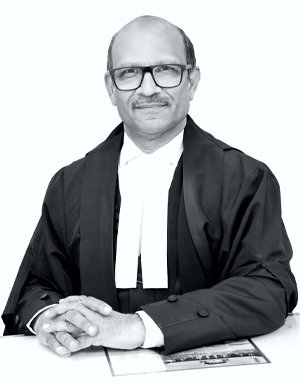
Legal Notes
Add a Note....