
This appeal was filed by the appellant, Srikanta S.M., against the judgment passed by the High Court of Karnataka. The Division Bench of the High Court upheld the decision of ...

No Acts & Articles mentioned in this case
http://JUDIS.NIC.IN SUPREME COURT OF INDIA Page 1 of 7
CASE NO.:
Appeal (civil) 1404 of 2003
PETITIONER:
SRIKANTHA S.M.
RESPONDENT:
BHARATH EARTH MOVERS LTD.
DATE OF JUDGMENT: 07/10/2005
BENCH:
B.N. SRIKRISHNA & C.K. THAKKER
JUDGMENT:
JUDGMENT
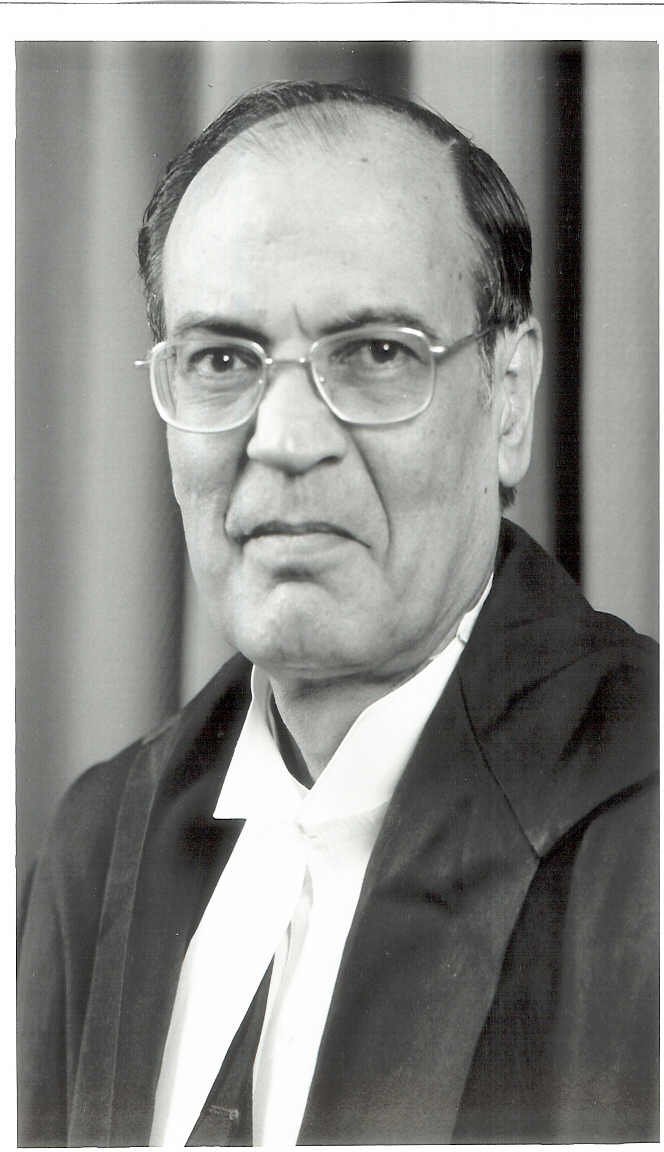
C.K. THAKKER, J.
This appeal is filed by the appellant against the judgment and order passed
by the Division Bench of the High Court of Karnataka on January 28, 2002 in
Writ Appeal No. 5500 of 1998 confirming the order passed by learned single
Judge on September 07, 1998 in Writ Petition No. 26090 of 1993.
To appreciate the points raised in the appeal, few relevant facts may be
stated.
The appellant was selected by the Chairman and Managing Director of Bharath
Earth Movers Limited (`Company' for short) respondent herein, and was
appointed as Senior Manager in the Department of Security and Vigilance for
KGF by an order dated December 11,1989. He reported for duty on December
29, 1989. By an order dated December 03, 1992, the appellant was
transferred to Corporate Office at Bangalore and was relieved on December
04, 1992. The appellant reported at Corporate Office, Bangalore on December
07, 1992. It was his case that he was not assigned any work at Bangalore.
The appellant, in the circumstances, got upset and tendered a letter of
resignation on January 04, 1993. In the said letter, he stated that he was
thankful to the Chief Managing Director for giving him an opportunity to
serve the esteemed organization but he wanted to leave the Company. He
therefore, requested to treat the letter as his resignation and relieve him
from the duties `as per Company rules'. On the basis of the said letter,
the matter was processed and the resignation was accepted by Deputy General
Manager (Personnel) on the same day. The appellant was informed that his
resignation had been accepted and he would be relieved `with immediate
effect'. It was also stated that the appellant would be entitled for pay
towards notice period as per Company rules. By another letter of even date,
however, the appellant was informed that his casual leave had been
sanctioned from January 05, 1993 to January 13, 1993. January 14, 1993
being a holiday, the appellant would be relieved by the close of working
hours on January 15, 1993. It was also stated that the appellant would be
entitled for pay towards the balance of notice period as per Company rules.
It is the case of appellant that from the second letter dated January 4,
1993, it was clear that the resignation submitted by him was to be
effective from January 15, 1993 after office hours. During that period, the
appellant changed his mind and withdrew his resignation by addressing a
letter on January 08, 1993. In the said letter, he made several complaints
and raised grievances and finally stated that if suitable reply would not
be given by January 14, 1993, his letter of resignation dated January 04,
1993 should be treated as withdrawn/cancelled. On January 15, 1993 the
appellant was informed that he would be relieved after office hours on that
day. The service certificate in original alongwith a cheque of Rs. 13,511
was given to him.
http://JUDIS.NIC.IN SUPREME COURT OF INDIA Page 2 of 7
Since the appellant had withdrawn his resignation on January 08, 1993, the
Company could not have accepted it and ought to have continued him in
service. But the appellant was not allowed to work after January 15, 1993.
He, therefore, approached the High Court of Karnataka by filing a writ
petition. The learned single Judge observed in the order that since the
appellant had submitted his resignation on January 04, 1993 and it was
accepted on the same day by the Company, by not continuing him in service,
no illegality had been committed by the Company. Accordingly, the petition
was dismissed. The Division Bench was of the same opinion and dismissed the
appeal. Being aggrieved by the orders passed by the High Court, the
appellant has approached this Court. Notice was issued on August 16, 2002
and after hearing the parties, leave was granted on February 17, 2003.
We have heard learned counsel for the parties.
The learned counsel for the appellant vehemently contended that the
appellant submitted resignation on January 04, 1993. No doubt, the
resignation was accepted by the Company on the same day and he was to be
relieved from service. Later on, however, casual leave was granted for the
period from January 04, 1993 to January 13, 1993 and the appellant was
informed that he would be relieved after office hours on January 15, 1993.
The appellant, in the circumstances, could have withdrawn the resignation
before that date. As the appellant withdrew his resignation on January 08,
1993, it was obligatory on the Company to accept the said letter and to
treat him in service. By not doing so, the Company had acted illegally and
unlawfully and the said action ought to have been set aside by the High
Court. According to the counsel, till office hours of January 15, 1993, the
relationship of employer and employee did not come to an end and effect
ought to have been given by the Company to the letter dated January 08,
1993. It was also submitted by the counsel that the appellant was to attain
age of superannuation on December 31, 1994. He was, therefore, entitled to
all the benefits as if he would have continued in service upto the date of
retirement. It was, therefore, prayed that the order passed by the learned
single Judge and confirmed by the Division Bench deserve to be set aside by
allowing the appeal and by granting consequential benefits.
The learned counsel for the respondent, on the other hand, supported the
order passed by the learned single Judge and confirmed by the Division
Bench. It was urged that the appellant resigned from service on January 04,
1993 and on the same day, the resignation was accepted and he was ordered
to be relieved. It was because of the prayer made by the appellant that
casual leave was granted from January 04, 1993 to January 13, 1993 and he
was informed that he would be relieved after office hours on the next
working day i.e. January 15, 1993. From that, however, it cannot be said
that resignation of the appellant was not accepted or the appellant
continued in service upto January 15, 1993. It was also submitted that on
January 15, 1993, the appellant was given his service certificate in
original alongwith all the benefits to which he was entitled and he
accepted them without any protest. It, therefore, did not lie in the mouth
of the appellant that the action was illegal. He is estopped from making
grievance against the Company. It was, therefore, prayed that the appeal
deserves to be dismissed.
Having given anxious consideration to the facts and circumstances of the
case and in the light of Service Rules and various decisions of this Court
to which our attention has been invited, we are of the view that the High
Court was wrong in holding that it was not open to the appellant to
withdraw the resignation.
As is clear from the facts stated hereinabove that the appellant in the
letter of resignation, had expressly stated; ``This may please be
considered as my resignation and relieved from the duties from the date, as
per Company rules''. (emphasis supplied) It is thus clear that his
resignation was to be considered and an appropriate decision was to be
taken as per `Company rules'. Attention of the Court was invited to the
http://JUDIS.NIC.IN SUPREME COURT OF INDIA Page 3 of 7
rules framed by the Company known as `Bharath Earth Movers Limited Service
Rules'. Rule 16 deals with resignation Clause (1) of the Rule 16 is
relevant and may be reproduced:
"A permanent employee may resign his employment by giving one month's
notice in writing or by paying one month's basic pay in lieu of notice to
the Company. The resignation will become valid and effective only after the
Company communicates in writing to the employee accepting his resignation.
If an employee gives notice of his intention to resign, the Management may
accept the resignation and release him at once or at any time before the
date of expiry of the notice period, in which case he will be paid only for
the period he actually works."
Plain reading of the above rule makes it clear that a permanent employee
may resign from service by giving one month's notice in writing or by
paying one month's basic pay in lieu of notice to the Company. Admittedly,
the appellant had not paid one month's basic pay in lieu of notice to the
Company. It is, therefore, clear that since the letter of resignation was
as per Company rules, it was to become effective after one month. The
learned single Judge was also of the same opinion. He observed in the order
that the Company rules required an employee to resign by giving one month's
notice in writing, or if he wanted to be relieved immediately, be paying
one month's pay in lieu of notice period. Since the appellant had not paid
one month's pay in lieu of notice alongwith his letter of resignation, it
could safely be presumed that he had tendered his resignation letter by
giving a notice of one month in writing to the employer. The learned single
Judge then observed that the `intention' of the appellant to resign from
service was accepted by the employer on the same day, i.e. January 04, 1993
and he was informed that he would be relieved from service at once.
According to the learned single Judge, though by another letter of the same
date, the appellant was informed that he had been granted casual leave from
January 05, 1993 to January 13, 1993 and January 14, 1993 being holiday, he
would be relieved from January 15, 1993, it was within the powers of the
Company under the rules and would not change the legal position that once
the resignation was accepted, it was effective. Hence, it was not open to
the appellant to withdraw the resignation on January 08, 1993. Referring to
several judgments, the learned single Judge held that since the resignation
was accepted, the Company was fully justified in ignoring and not accepting
the request of the appellant made in his letter dated January 08, 1993. In
the opinion of the learned single Judge, the act of relieving the appellant
was a subsequent act which had nothing to do with the act of accepting the
resignation and the appellant was not entitled to any benefit.
The Division Bench, by a cryptic order, dismissed the appeal observing the
when the resignation was submitted on January 04, 1993 by the appellant and
it was accepted on the same day, the fact that he was relieved on January
15, 1993 did not make any difference. To us, both the courts were wrong in
taking the view that the appellant was no more in service after January 04,
1993.
Now, let us consider the controversy on merits. The term `resignation' has
not been defined in the Service Rules. According to dictionary meaning,
however, `resignation' means spontaneous relinquishment of one's own right.
It is conveyed by Latin maxim Resignatio est juris propii spontanea
refutatio. (Resignation is a spontaneous relinquishment of one's own
right). In relation to an office, resignation connotes the act of giving up
or relinquishing the office. `To relinquish an office' means `to cease to
hold the office' or `to leave the job' or `to leave the position'. `To
cease to hold office' or `to loose hold of the office' implies to `detach',
`unfasten', `undo' or `untie' `the binding knot or link' which holds one to
the office and the obligations and privileges that go with it.
In Union of India v. Gopal Chanrd Misra, [1978] 2 SCC 301: [1978] 3 SCR 12,
this Court held that a complete and effective act of resigning an office is
one which severs the link of the resignor with his office and terminates
http://JUDIS.NIC.IN SUPREME COURT OF INDIA Page 4 of 7
its tenure.
In Balram Gupta v. Union of India, [1978] Supp SCC 228, this Court
reiterated the principled in Gopal Chandra Misra and ruled that though that
case related to resignation by a Judge of the High Court, the general rule
equally applied to government servants.
The learned counsel for the parties drew our attention to some of the
decisions of this Court on the point. In Punjab National Bank v. P.K.
Mittal, [1989] Supp 2 SCC 175, an employee resigned from service of the
Bank by a communication dated January 21, 1986. It was to be effective from
June 30, 1986. The Deputy General Manager who was the competent authority
under the Service Regulations, accepted the resignation as per the letter
of resignation i.e. with effect from June 30, 1986. The employee, however,
received a letter from the Bank on February 07, 1986 informing him that his
resignation letter had been accepted by the competent authority with
immediate effect and consequently he was being relieved from the service of
the Bank with effect from that day, i.e. from February 07, 1986. The
employee, therefore, filed a petition challenging the validity of the
purported acceptance of his resignation with effect from February 07, 1986
and for a direction to the Bank to treat him in service upto June 30, 1986
by granting all consequential benefits. The matter, however, did not end
there. On April 15, 1986, the employee addressed a letter to the Bank
purporting to withdraw his resignation letter dated January 21, 1986. The
question which came up for consideration was as to whether the subsequent
development could be taken into account and whether the employee continued
in service in view of the withdrawal of resignation dated April 15, 1986.
Accepting the contention of the employee that he continued in service, the
Court held that his resignation could take effect from June 30, 1986 or on
expiry of three months period provided in the Service Regulations and
before that period he could withdraw the resignation. Since he had
withdrawn the resignation before June 30, 1986, he continued to remain in
service with the Bank.
It was urged on behalf of the Bank that Regulation 20(2) provided for
notice to protect the interest only of the employer (Bank) and to enable it
to make other arrangements in the place of the resigning employee. The
proviso to clause (2) enabled the Bank to reduce the notice-period to less
than three months and as such it was not obligatory for the Bank to wait
till the notice period would expire.
This Court, however, did not agree with the interpretation. Dealing with
the object underlying such provision as giving opportunity to both, the
employer as well as the employee, the Court stated;
"We are of the opinion that clause (2) of the regulation and its proviso
are intended not only for the protection for the bank but also for the
benefit of the employee. It is common knowledge that a person proposing to
resign often wavers in his decision and even in a case where has taken a
firm decision to resign, he may not he ready to go out immediately. In most
cases he would need a period of adjustment and hence like to defer the
actual date of relief form duties for a few months for various personal
reasons. Equally an employer may like to have time to make some alternative
arrangement before relieving the resigning employee. Clause (2) is
carefully worded keeping both these requirements in mind. It gives the
employee a period of adjustment and rethinking. It also enables the bank to
have some time to arrange its affairs, with the liberty, in an appropriate
case, to accept the resignation of an employee even without the requisite
notice if he so desires it. The proviso in our opinion should not be
interpreted as enabling a bank to thrust a resignation on an employee with
effect from a date different from the one on which he can make his
resignation effective under the terms of the regulation. We, therefore,
agree with the High Court that in the present case the resignation of the
employee could have become effective only on or about April 21, 1986 or on
June 30, 1986 and that the bank could not have ``accepted'' that
http://JUDIS.NIC.IN SUPREME COURT OF INDIA Page 5 of 7
resignation on any earlier date. The letter dated February 7, 1986 was,
therefore, without jurisdiction."
(emphasis supplied)
In Balram Gupta, referred to above, the employee withdrew his notice of
voluntary retirement on account of persistent and personal requests from
the staff members. But the prayer for withdrawal was not allowed by the
employer on the ground that it had already been accepted by the Government.
Moreover, Rule 48-A (4) of the Central Civil Service (Pension) Rules, 1972
precluded the Government servant from withdrawing his notice except with
specific approval of the appointing authority.
Deprecating the stand taken by the Government, this Court held that it was
not proper for the Government not to accede to the request of the employee.
``In the modern age we should not put embargo upon people's choice or
freedom'', - stated the Court.
The Court added;
"In the modern and uncertain age it is very difficult to arrange one's
future with any amount of certainty; a certain amount of flexibility is
required, and if such flexibility does not jeopardize government or
administration, administration should be graceful enough to respond and
acknowledge the flexibility of human mind and attitude and allow the
appellant to withdraw his letter of retirement in the facts and
circumstances of this case. Much complications which had arisen could have
been thus avoided by such graceful attitude. The court cannot but condemn
circuitous ways ``to ease out'' uncomfortable employees. As a model
employer the government must conduct itself with high probity and candour
with its employees.''
In Power Finance Corporation Ltd. v. Pramod Kumar Bhatia, [1997] 4 SCC 280,
a workman applied for voluntary retirement pursuant to the scheme framed by
the Corporation to relieve surplus staff. The Corporation vide an order
dated December 20, 1994 accepted voluntary retirement of the workman with
effect from December 31, 1994 subject to certain conditions. Subsequently,
however, the Corporation withdrew the scheme. It was held that the order
dated December 20, 1994 was conditional and unless the employee was
relieved from the duty on the fulfillment of the those conditions, the
order of voluntary retirement did not become effective. The employee,
therefore, could not assert that the voluntary retirement was effective and
claim benefits on that basis.
The Court said;
"It is now settled legal position that unless the employee is relieved of
the duty after acceptance of the offer of voluntary retirement or
resignation, jural relationship of the employee and the employer does not
come to an end. Since the order accepting the voluntary retirement was a
conditional one, the conditions ought to have been complied with. Before
the conditions could be complied with, the appellant withdrew the scheme.
Consequently, the order accepting voluntary retirement did not become
effective. Thereby no vested right his been created in favour of the
respondent. The High Court, therefore, was not right in holding that the
respondent has acquired a vested right and, therefore, the appellant has no
right to withdraw the scheme subsequently.'' (emphasis supplied).
In J.N. Srivastava v. Union of India and Anr, [1998] 9 SCC 559, a notice of
voluntary retirement was given by an employee on October 03, 1989 which was
to come into effect from January 31,1990. The notice was accepted by the
Government on November 02,1989 but the employee withdrew the notice vide
his letter dated December 11, 1989. It was held that withdrawal was
permissible though it was accepted by the Government, since it was to be
made effective from January 31, 1990 and before that date it was withdrawn.
http://JUDIS.NIC.IN SUPREME COURT OF INDIA Page 6 of 7
In Shambhu Murari Sinha v. Project and Development India and Anr. (Shambhu
Murari Sinha 1), [2000] 5 SCC 621, an application for voluntary retirement
of an employee dated October 18, 1995 was accepted by the employer vide
letter dated July 30, 1997 with further intimation that ``release memo
alongwith detailed particulars will follow''. The workman was actually
relieved on September 26, 1997. In the meanwhile, however, by a letter,
dated august 7, 1997, he withdrew the application dated October 18, 1995,
by which he sought voluntary retirement. It was held that the effective
date of voluntary retirement was September 26, 1997 and before that date it
was permissible for the workman to withdraw his retirement. The appellant
was, therefore, held entitled to remain in service.
In Shambhu Murari Sinha v. Project and Development India Ltd. and Anr.
(Shambhu Murari Sinha II), [2002] 3 SCC 437, the view taken in Shambhu
Murari Sinha 1 was reiterated. It was held that when voluntary retirement
was withdrawn by an employee, he continued to remain in service. The
relationship of employer and employee did not come to an end and the
employee had locus penitentiae to withdraw his proposal for voluntary
retirement. He was, therefore, entitled to rejoin duty and the Corporation
was bound to allow him to work.
On the basis of the above decisions, in our opinion, the learned counsel
for the appellant is right in contending that though the respondent-Company
had accepted the resignation of the appellant on January 04, 1993 and was
ordered to be relieved on that day, by a subsequent letter, he was granted
casual leave from January 04, 1993 to January 13, 1993. Moreover, he was
informed that he would be relieved after office hours on January 15, 1993.
The vinculum juris, therefore, in our considered opinion, continued and the
relationship of employer and employee did not come to an end on January 04,
1993. The relieving order and payment of salary also make it abundantly
clear that he was continued in service of the Company upto January 15,
1993.
In affidavit in reply filed by the Company, it was stated that resignation
of the appellant was accepted immediately and he was to be relieved on
January 04, 1993. It was because of the request of the appellant that he
was continued upto January 15, 1993. In the affidavit in rejoinder, the
appellant had stated that he reported for duty on January 15, 1993 and also
worked on that day. At about 12.00 noon, a letter was issued to him stating
therein that he would be relieved at the close of the day. A cheque of Rs.
13,511 was paid to him at 17.30 hrs. The appellant had asserted that he had
not received terminal benefits such as gratuity, provident fund, etc. It is
thus proved that upto January 15, 1993, the appellant remained in service.
If it is so, our opinion, as per settled law, the appellant could have
withdrawn his resignation before that date. It is an admitted fact that a
letter of withdrawal of resignation was submitted by the appellant on
January 08, 1993. It was, therefore, incumbent on the Company to give
effect to the said letter. By not doing so, the Company has acted contrary
to the law and against the decisions of this Court and hence, the action of
the Company deserves to be quashed and set aside. The High Court, in our
opinion, was in error in not granting relief to the appellant. Accordingly,
the action of the Company as upheld by the High Court is hereby set aside.
The next question is, as to what benefits the appellant is entitled to. As
he withdrew the resignation and yet he was not allowed to work, he is
entitled to all consequential benefits. The learned counsel for the
respondent-Company no doubt contended that after January 15, 1993, the
appellant had not actually worked and therefore, even if this Court holds
that the action of the respondent-Company was not in consonance with law,
at the most, the appellant might be entitled to other benefits except the
salary which should have been paid to him. According to the counsel, the
principle of ``no work, no pay'' would apply and when the appellant has
admittedly not worked, he cannot claim salary for the said period.
We must frankly admit that we unable to uphold the contention of the
http://JUDIS.NIC.IN SUPREME COURT OF INDIA Page 7 of 7
respondent-Company. A similar situation had arisen in J.N. Srivastava and a
similar argument was advanced by the employer.The Court, however, negatived
the argument observing that when the workman was willing to work but the
employer did not allow him to work, it would not be open to the employer to
deny monetary benefits to the workman who was not permitted to discharge
his duties. Accordingly, the benefits were granted to him. In Shambhu
Murari Sinha II also, this Court held that since the relationship of
employer and employee continued till the employee attained the age of
superannuation he would be entitled to ``full salary and allowances'' of
the entire period he was kept out of service. In Balram Gupta, in spite of
specific provision precluding the Government servant from withdrawing
notice of retirement, this Court granted all consequential benefits to him.
The appellant is, therefore, entitled to salary and other benefits.
For the foregoing reasons, in our opinion, the appeal deserves to be
allowed and is accordingly allowed. The action of the respondent-Company in
accepting the resignation of the appellant from January 04, 1993 and not
allowing him to work is declared illegal and unlawful. It is, therefore,
hereby set aside. The orders passed by the learned single Judge and the
Division Bench upholding the action of the Company are also set aside. The
respondent-Company is directed to treat the appellant in continuous service
upto the age of superannuation i.e. December 31, 1994 and give him all
benefits including arrears of salary. The Company may adjust any amount
paid to the appellant on January 15, 1993 or thereafter. The appeal is
accordingly allowed with costs.

 Login with google
Legal Notes
Add a Note....