
As per case facts, the complainant Girishbhai Makwana and his cousin were sitting when Hansaben informed them that Chintu, son of Chhotalal Painter, had thrown a water pouch and abused ...
R/CR.A/2151/2010 JUDGMENT DATED: 06/02/2026
IN THE HIGH COURT OF GUJARAT AT AHMEDABAD
R/CRIMINAL APPEAL NO. 2151 of 2010
FOR APPROVAL AND SIGNATURE:
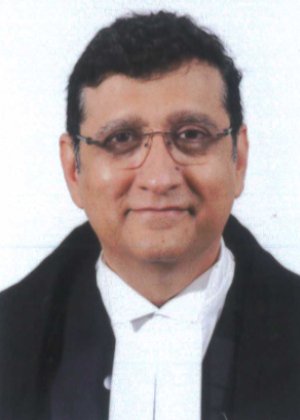
HONOURABLE MR.JUSTICE SANJEEV J.THAKER
==========================================================
Approved for Reporting Yes No
==========================================================
STATE OF GUJARAT
Versus
CHHOTALAL SIYARAM KSHATRIYA & ORS.
==========================================================
Appearance:
MR YUVRAJ BRAHBHATT, APP for the Appellant - State
MR NISHITH P THAKKAR(2836) for the Opponent(s)/Respondent(s) No.
1,2,3
RULE SERVED for the Opponent(s)/Respondent(s) No. 3
UNSERVED EXPIRED (N) for the Opponent(s)/Respondent(s) No. 4
==========================================================
CORAM:HONOURABLE MR.JUSTICE SANJEEV J.THAKER
Date : 06/02/2026
ORAL JUDGMENT
1. Feeling aggrieved by and dissatisfied with the
judgment and order of acquittal dated 30.07.2010, passed by
the learned Special Judge (Atrocity), Court No.18, Ahmedabad
City, in Special (Atrocity) Case No.30 of 2009, for the
offences punishable under Sections 324, 294(b) and 114 of the
Indian Penal Code, Sections 3(1)(10) of the Scheduled Castes
and the Scheduled Tribes (Prevention of Atrocities) Act and
Section 135(1) of the Bombay Police Act, the appellant –
State of Gujarat has preferred this appeal under Section 378
Page 1 of 18
R/CR.A/2151/2010 JUDGMENT DATED: 06/02/2026
of the Code of Criminal Procedure, 1973 (for short, “ the
Code”).
2. The prosecution case, as unfolded during the trial
before the lower Court, is that on 25.08.2008 at about 6:30
p.m., when the complainant – Girishbhai Laljibhai Makwana
and his cousin brother viz., Arvindbhai were sitting in the
compound of Vivekanand Mill, at that time, the wife of
complainant viz., Hansaben called the complainant and
informed that Chintu, son of Chhotalal Painter has thrown
water pouch on the wife of the complainant and also gave
filthy abuses. Therefore, the complainant and his cousin
brother went to their Chawl. At that time, the accused
persons came from the opposite side and gave filthy abuses.
When the complainant told them not to give abuses, the
accused persons got angry and accused No.2 – Chintu
inflicted knife blows on complainant’s left leg, by giving filthy
abuses, by uttering obscene words in public and intentionally
caused hurt to him. Thereafter, on hearing the shout, people
were gathered from the locality and rescued him from the
accused persons, therefore, the accused persons ran away
from there. Therefore, the complaint was filed against the
respondent/s-accused.
3. After investigation, sufficient prima facie evidence
Page 2 of 18
R/CR.A/2151/2010 JUDGMENT DATED: 06/02/2026
was found against the accused person/s and therefore charge-
sheet was filed in the competent criminal Court for the
offences as alleged. Since the offence alleged against the
accused person/s was exclusively triable by the Court of
Sessions, the learned Magistrate committed the case to the
Sessions Court where it came to be registered as Special
(Atrocity) Case No.30 of 2009. The charge was framed against
the accused person/s. The accused pleaded not guilty and
came to be tried.
4. In order to bring home the charge, the prosecution
has examined 10 witnesses and also produced 7 documentary
evidence before the trial Court, which are described in the
impugned judgment.
5. After hearing both the parties and after analysis
of evidence adduced by the prosecution, the learned trial
Judge acquitted the accused for the offences for which they
were charged, by holding that the prosecution has failed to
prove the case beyond reasonable doubt.
6. Learned APP for the appellant – State has pointed
out the facts of the case and having taken this Court
through both, oral and documentary evidence, recorded before
the learned trial Court, would submit that the learned trial
Page 3 of 18
R/CR.A/2151/2010 JUDGMENT DATED: 06/02/2026
Court has failed to appreciate the evidence in true sense and
perspective; and that the trial Court has committed error in
acquitting the accused. It is submitted that the learned trial
Court ought not to have given much emphasis to the
contradictions and/or omissions appearing in the evidence and
ought to have given weightage to the dots that connect the
accused with the offence in question. It is submitted that
the learned trial Court has erroneously come to the
conclusion that the prosecution has failed to prove its case. It
is also submitted that the learned Judge ought to have seen
that the evidence produced on record is reliable and
believable and it was proved beyond reasonable doubt that
the accused had committed an offence in question. It is,
therefore, submitted that this Court may allow this appeal by
appreciating the evidence led before the learned trial Court.
7. As against that, learned advocate for the
respondent/s would support the impugned judgment passed by
the learned trial Court and has submitted that the learned
trial Court has not committed any error in acquitting the
accused. The trial Court has taken possible view as the
prosecution has failed to prove its case beyond reasonable
doubt. Therefore, it is prayed to dismiss the present appeal
by confirming the impugned judgment and order passed by
the learned trial Court.
Page 4 of 18
R/CR.A/2151/2010 JUDGMENT DATED: 06/02/2026
8. In the aforesaid background, considering the oral
as well as documentary evidence on record, independently and
dispassionately and considering the impugned judgment and
order of the trial Court, the following aspects weighed with
the Court :
8.1 The prosecution has examined the complainant –
Girishbhai Laljibhai Makwana as P.W.1, vide Exh.9. Though
the complaint has been given by the complainant, the same
has been narrated by the aunt and at the time when the
aunt was giving details in the said complaint, the
complainant was unconscious and after he gained
consciousness, he has signed the said complaint. The fact
remains that the said aunt, who has given details in the
complaint, has not been examined by the prosecution. The
complainant has also not stated that said aunt – Kamlaben
had seen the alleged incident. Moreover, when the knife
which is alleged to have been used in the offence, was shown
to the complainant, he has stated that it is not the same
knife from which injuries were inflicted; and that the said
knife was a different knife.
8.2 The panch witness – Amarji Dhruvnarayan Shukla
has been examined as P.W.3, vide Exh.12. He has not
Page 5 of 18
R/CR.A/2151/2010 JUDGMENT DATED: 06/02/2026
supported the case of the prosecution. He has stated that he
has only signed the panchnama produced vide Exh.26.
The panch of the place of offence has also not
supported the case of the prosecution and has only stated
that he has signed the said report as he is an illiterate and
whatever was written in the panchnama was not read over
to him. The said panch viz., Vinubhai Dalabhai Parmar has
been examined as P.W.2, vide Exh.11.
If the complaint produced vide Exh.10 is taken
into consideration, the said complaint also does not state that
what kind of abuses were given by the accused to the
complainant and the same has been improved upon while
giving deposition before the Court.
8.3 If the deposition of the PSI – Vijaysinh
Bharatsinh Rajput, who has been examined as P.W.4, vide
Exh.13, is taken into consideration, he, in his deposition, has
also stated that at the time when the complaint was taken,
the complainant has not stated as to what abuses were made
by the accused on the caste of the complainant.
The complainant’s wife - Hansaben Girishbhai
Makwana, who have been examined as P.W.7, vide Exh.20,
has stated that there were two or three boys, who were
drunk and the said fact was not stated while filing the
complaint before the PSI, who has been examined vide P.W.4.
Page 6 of 18
R/CR.A/2151/2010 JUDGMENT DATED: 06/02/2026
Moreover, the complainant has stated that after he
was inflicted with the knife injury, he became unconscious,
whereas the wife of the complainant stated that the
complainant regained consciousness after two to three hours
after they reached the hospital. However, as per the doctor’s
certificate, it does not transpire that the complainant was
unconscious. The fact as per the evidence of the doctor –
Dr.Mittalbhai Bhaskarbhai Dave, who has been examined as
P.W.5, vide Exh.15, is that on 25.08.2008 at around 8:00
p.m., the patient had reached the hospital. If the certificate
of the doctor is taken into consideration, the patient was not
unconscious when he reached at the hospital. The said doctor,
who has been examined as P.W.5, has also stated that as
per his opinion, looking to the muddamal knife, it could be
possible that the injury could not be sustained by the said
knife and the injury could be if the complainant is hurt by a
sharp iron sheet/plate.
8.4 There are lot of contradictions as to the time of
offence. The complainant, in his complaint, has stated that
only the accused - Chintu i.e. accused No.2 had abused the
complainant of his caste and as per the deposition of the
wife of the complainant – P.W.7, she has stated that all the
accused had abused the complainant of his caste.
The fact remains that the complainant himself
Page 7 of 18
R/CR.A/2151/2010 JUDGMENT DATED: 06/02/2026
states that the knife which is shown to him from the
muddamal item is not the knife by which he was assaulted.
The panch witnesses have also not supported the
case of the prosecution. The panch witnesses of recovery of
knife, vide Exh.12, stated that the panchnama was already
prepared, he only signed it, but he does not know the
content of it. Therefore, the recovery panchnama has not
been proved.
8.5 Hansaben Girishbhai Makwana – P.W.7, in her
deposition, has also stated that she does not recognize the
knife and she has only stated that she has seen the knife in
the hands of accused No.2 and she only saw her husband
fallen down and there were injuries on the legs.
8.6 Therefore, the prosecution has not proved the case
against the accused for the offence as alleged. Moreover, as
per the observations made by the Hon’ble Apex Court in the
case of Sajan Sakhariya Vs. State of Kerala and others
reported in AIR 2024 SC 4557 , every insult or intimidation
would not amount to an offence under Section 3(1)(x) of the
Scheduled Castes and Scheduled Tribes (Prevention of
Atrocities) Act, 1989, unless such insult or intimidation is
started at a victim because he is a member of a particular
Scheduled Castes or Scheduled Tribes. Therefore, from the
Page 8 of 18
R/CR.A/2151/2010 JUDGMENT DATED: 06/02/2026
allegations made in the complaint, the prosecution has not
proved that the accused is guilty of an offence under the
Scheduled Castes and Scheduled Tribes (Prevention of
Atrocities) Act, 1989.
8.7 Vide Exh.9, the complainant examined himself as
a prosecution witness. In his examination, he has stated that
when accused stabbed him, he got unconscious and he got
treated fort two days in hospital. There are contradictions in
the complaint vide Ehx.10 and testimony of the complainant
vide Exh.9. In his testimony, he stated that his aunt lodged
the complaint when he was not conscious. When he became
conscious, the complaint was read over to him and he signed
it. However, the prosecution has failed to examine the aunt
of the complainant, nor is the complainant saying that his
aunt has seen the incident with her own eyes.
8.8 The complainant’s cousin – Arvindbhai Somabhai
Waghela was examined as P.W.9, vide Exh.22. He stated that
during the quarrel, he only saw that blows were exchanged,
he did not see anything else. He stated that Girishbhai got
injured on his log during the quarrel, but he does not know
that what exactly struck him. After the quarrel, he went
home. Thus, his testimony does not establish that accused -
Chintoo caused injury to the complainant with a knife.
Page 9 of 18
R/CR.A/2151/2010 JUDGMENT DATED: 06/02/2026
8.9 The trial Court, while considering the evidences in
detail, has observed that the prosecution has failed to prove
the case against the accused beyond reasonable doubt. While
discussing the evidence in detail, the trial court has found
that the only allegation against the accused is of speaking
indecent words against the caste of the complainant. The
trial Court has gone into the evidence in detail and has
come to the conclusion that the accused are not guilty of the
alleged offence.
9. Further, learned APP is not in a position to show
any evidence to take a contrary view in the matter or that
the approach of the Court below is vitiated by some manifest
illegality or that the decision is perverse or that the Court
below has ignored the material evidence on record. In above
view of the matter, this Court is of the considered opinion
that the Court below was completely justified in passing
impugned judgment and order.
10. Considering the impugned judgment, the trial
Court has recorded that there was no direct evidence
connecting the accused with the incident and there are
contradictions in the depositions of the prosecution witnesses.
In absence of the direct evidence, it cannot be proved that
Page 10 of 18
R/CR.A/2151/2010 JUDGMENT DATED: 06/02/2026
the accused are involved in the offence. Further, the motive
of the accused behind the incident is not established. The
trial Court has rightly considered all the evidence on record
and passed the impugned judgment. The trial Court has
rightly evaluated the facts and the evidence on record.
11. It is also a settled legal position that in acquittal
appeal, the appellate court is not required to re-write the
judgment or to give fresh reasoning, when the reasons
assigned by the Court below are found to be just and proper.
Such principle is down by the Apex Court in the case of
State of Karnataka Vs. Hemareddy , reported in AIR 1981 SC
1417 wherein it is held as under:
“… This court has observed in Girija
Nandini Devi V. Bigendra Nandini
Chaudhary (1967)1 SCR 93: (AIR 1967
SC 1124) that it is not the duty of the
appellate court when it agrees with the
view of the trial court on the evidence
to repeat the narration of the evidence
or to reiterate the reasons given by the
trial court expression of general
agreement with the reasons given by the
Court the decision of which is under
Page 11 of 18
R/CR.A/2151/2010 JUDGMENT DATED: 06/02/2026
appeal, will ordinarily suffice.”
12. Thus, in case the appellate court agrees with the
reasons and the opinion given by the lower court, then the
discussion of evidence at length is not necessary.
13. In the case of Ram Kumar v. State of Haryana,
reported in AIR 1995 SC 280, Supreme Court has held as
under:
“The powers of the High Court in an
appeal from order of acquittal to
reassess the evidence and reach its own
conclusions under Sections 378 and 379,
Cr.P.C. are as extensive as in any
appeal against the order of conviction.
But as a rule of prudence, it is
desirable that the High Court should
give proper weight and consideration to
the view of the Trial Court with regard
to the credibility of the witness, the
presumption of innocence in favour of
the accused, the right of the accused to
the benefit of any doubt and the
slowness of appellate Court in justifying
Page 12 of 18
R/CR.A/2151/2010 JUDGMENT DATED: 06/02/2026
a finding of fact arrived at by a Judge
who had the advantage of seeing the
witness. It is settled law that if the
main grounds on which the lower Court
has based its order acquitting the
accused are reasonable and plausible,
and the same cannot entirely and
effectively be dislodged or demolished,
the High Court should not disturb the
order of acquittal."
14. As observed by the Hon'ble Supreme Court in the
case of Rajesh Singh & Others vs. State of Uttar Pradesh
reported in (2011) 11 SCC 444 and in the case of
Bhaiyamiyan Alias Jardar Khan and Another vs. State of
Madhya Pradesh reported in (2011) 6 SCC 394, while dealing
with the judgment of acquittal, unless reasoning by the trial
Court is found to be perverse, the acquittal cannot be upset.
It is further observed that High Court's interference in such
appeal in somewhat circumscribed and if the view taken by
the trial Court is possible on the evidence, the High Court
should stay its hands and not interfere in the matter in the
belief that if it had been the trial Court, it might have
taken a different view.
Page 13 of 18
R/CR.A/2151/2010 JUDGMENT DATED: 06/02/2026
15. In the case of Chandrappa v. State of
Karnataka, reported in (2007) 4 SCC 415, the Hon’ble
Apex Court has observed as under:
“42. From the above decisions, in
our considered view, the following
general principles regarding powers
of the appellate court while dealing
with an appeal against an order of
acquittal emerge:
(1) An appellate court has full
power to review, reappreciate and
reconsider the evidence upon which
the order of acquittal is founded.
(2) The Criminal Procedure Code,
1973 puts no limitation, restriction
or condition on exercise of such
power and an appellate court on
the evidence before it may reach
its own conclusion, both on
questions of fact and of law.
(3) Various expressions, such as,
“substantial and compelling
reasons”, “good and sufficient
Page 14 of 18
R/CR.A/2151/2010 JUDGMENT DATED: 06/02/2026
grounds”, “very strong
circumstances”, “distorted
conclusions”, “glaring mistakes”, etc.
are not intended to curtail
extensive powers of an appellate
court in an appeal against
acquittal. Such phraseologies are
more in the nature of “flourishes of
language” to emphasise the
reluctance of an appellate court to
interfere with acquittal than to
curtail the power of the court to
review the evidence and to come to
its own conclusion.
(4) An appellate court, however,
must bear in mind that in case of
acquittal, there is double
presumption in favour of the
accused. Firstly, the presumption of
innocence is available to him under
the fundamental principle of
criminal jurisprudence that every
person shall be presumed to be
innocent unless he is proved guilty
by a competent court of law.
Page 15 of 18
R/CR.A/2151/2010 JUDGMENT DATED: 06/02/2026
Secondly, the accused having
secured his acquittal, the
presumption of his innocence is
further reinforced, reaffirmed and
strengthened by the trial court.
(5) If two reasonable conclusions
are possible on the basis of the
evidence on record, the appellate
court should not disturb the finding
of acquittal recorded by the trial
court.”
16. The Hon’ble Apex Court, in a recent decision, in
the case of Constable 907 Surendra Singh and Another V/s
State of Uttarakhand reported in (2025) 5 SCC 433, has held
in paragraph 24 as under:
“24. It could thus be seen that it is a
settled legal position that the
interference with the finding of acquittal
recorded by the learned trial Judge
would be warranted by the High Court
only if the judgment of acquittal suffers
from patent perversity; that the same is
based on a misreading/omission to
Page 16 of 18
R/CR.A/2151/2010 JUDGMENT DATED: 06/02/2026
consider material evidence on record; and
that no two reasonable views are
possible and only the view consistent
with the guilt of the accused is possible
from the evidence available on record.”
17. Considering the aforesaid facts and circumstances
of the case and law laid down by the Hon'ble Supreme Court
while considering the scope of appeal under Section 378 of
the Code of Criminal Procedure, 1973 no case is made out to
interfere with the impugned judgment and order of acquittal.
18. In view of above facts and circumstances of the
case, on my careful re-appreciation of the entire evidence, I
found that there is no infirmity or irregularity in the
findings of fact recorded by learned trial Court and under
the circumstances, the learned trial Court has rightly
acquitted the respondent/s - accused for the elaborate reasons
stated in the impugned judgment and I also endorse the
view/finding of the learned trial Court leading to the
acquittal.
19. In view of the above and for the reasons stated
above, the present Criminal Appeal fails to prove its case
and the same deserves to be dismissed and is dismissed,
Page 17 of 18
R/CR.A/2151/2010 JUDGMENT DATED: 06/02/2026
accordingly. Record & Proceedings be remitted to the
concerned trial Court forthwith.
(SANJEEV J.THAKER,J)
M.H. DAVE
Page 18 of 18

Legal Notes
Add a Note....