
☐ The case began with a First Information Report (FIR) filed by Deepakkumar Dhirajlal Thakkar at the Deesa City Police Station in Gujarat, India. Deepakkumar Dhirajlal Thakkar, noticing the missing ...

No Acts & Articles mentioned in this case
Page 1 REPORTABLE
IN THE SUPREME COURT OF INDIA
CRIMINAL APPELLATE JURISDICTION
CRIMINAL APPEAL NO. 1996 /2013
(Arising out of SLP (Crl.) 734/2012)
STATE OF GUJARAT ..Appellant
Versus
GIRISH RADHAKRISHNAN VARDE ..Respondent
J U D G M E N T
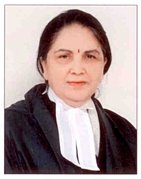
GYAN SUDHA MISRA, J .
Leave granted.
2. This appeal by special leave which was heard
at the admission stage itself, is directed against the
judgment and order dated 8.4.2011 passed by the High
Court of Gujarat at Ahmedabad in Special Criminal
Application No.2477/2010 whereby the learned single
Judge was pleased to dismiss the application filed by the
appellant-State of Gujarat and thus upheld the order
passed by the learned Addl. District & Sessions Judge,
Page 2 Deesa who had set aside the order of the Chief Judicial
Magistrate by which he had permitted the complainant
to add Sections 364, 394 and 398 of the Indian Penal
Code (‘IPC’ for short) into the chargesheet which was
submitted after police investigation.
3. The principal question which arises for
determination in the instant appeal is whether the
learned magistrate by virtue of the powers conferred
upon him under Chapter XV of the Code of Criminal
Procedure 1973 (for short ‘Cr.P.C.’) under the Heading
of “Complaints to Magistrate” can be permitted to allow
the complainant/ informant to add additional sections of
the IPC into the chargesheet after the same was
submitted by the police on completion of investigation of
the police case based on a first information report
registered under Section 154 Cr.P.C.
4. In order to appreciate and determine the
controversy, it may be relevant to relate the factual
background of the matter which disclose that on
27.3.2009 a first information report came to be
registered with Deesa City Police Station being I.
2
Page 3 Cr.59/09 for the offences punishable under Sections 365,
387, 511, 386, 34, 120-B and 506(2) of the IPC and
under Section 25 (1) (A) of the Arms Act, 1959. The FIR
disclosed that the informant/complainant-Deepakkumar
Dhirajlal Thakkar resident of Deesa Taluka was sitting at
the temple of Sai Baba against whom a conspiracy was
hatched by the accused No.1/respondent along with
other accused persons as a result of which the
respondent along with accused persons came towards
the complainant in one Alto Car bearing registration
No. GJ-1 - HP-1 and rushed towards the complainant with
countrymade pistol/revolver. On reaching there, the
respondent pointed the pistol towards the complainant
and demanded money from him. Before the victim-
complainant could understand anything with respect
to the demand made or could have realised the nature
of the situation, the respondent – accused along with the
other accused persons caught hold of the complainant
and tried to kidnap him. In an instant reaction to this
well-planned and deliberated conspiracy hatched by the
respondent for robbing and kidnapping the complainant,
3
Page 4 the complainant raised an alarm as a consequence of
which the people standing nearby immediately rushed
to the spot of crime. Looking at the assembly of people,
the accused persons immediately sat in the car and fled
from the scene of occurrence. This was not the first
time when such offence was committed by the
respondent against the complainant but on a prior
occasion also, the respondent had extorted Rs.50,000/-
from the complainant by putting the complainant under
fear of death. However, the FIR which was registered
included sections referred to hereinbefore but failed to
include Sections 364, 394 and 398 of the IPC which
should have been included as per the prosecution.
5. After the police investigation was complete on
the basis of the FIR registered and a chargesheet was
submitted by the police before the learned Magistrate,
Deesa which included Sections 365, 511, 387, 386, 34,
120-B and 506 (2) as also under Section 25(1) (A) of the
Arms Act, the complainant noticed that despite the fact
that the respondent-accused robbed Rs.50,000/- from
the complainant on one previous occasion and this time
4
Page 5 again attempted to rob and kidnap the complainant,
the offences punishable under Section 364, 394 and 398
of IPC were not included in the chargesheet which was
filed against respondent and other accused persons. In
order to rectify the said error the complainant
submitted an application before the learned Magistrate,
Deesa for adding other Sections 364, 394 and 398 of the
I.P.C. who after hearing the parties was pleased to allow
the application bearing No.1754/2009 and permitted
further additions of Sections 364, 394 and 398 of IPC
into the chargesheet.
6. The respondent-accused feeling aggrieved
and dissatisfied with the aforesaid order permitting
inclusion and addition of sections into the chargesheet,
preferred criminal revision before the Additional District
& Sessions Judge, Deesa who was pleased to quash and
set aside the order dated 7.8.2010 passed by the
learned IIIrd Addl. Chief Judicial Magistrate, Deesa and
thus allowed the civil revision by order dated 23.9.2010.
7. Since the State of Gujarat was prosecuting the
matter, it felt aggrieved of the order passed by the
5
Page 6 Additional District & Sessions Judge who was pleased to
quash the order of the CJM permitting addition of the
sections to the chargesheet and hence filed a Special
Criminal Application No. 2477/2010 before the High
Court of Gujarat.
8. The High Court of Gujarat vide its impugned
judgment and order was pleased to uphold the order
dated 23.9.2010 passed by the Additional District &
Sessions Judge, Deesa which according to the appellant
is illegal and perverse as the learned Additional District
& Sessions Judge did not assign any cogent and
convincing reason while setting aside the order of the
Chief Judicial Magistrate who had permitted the
addition of three sections of the IPC into the
chargesheet before committing the matter for trial.
9. The appellant-State of Gujarat while assailing
the judgment and order of the High Court had submitted
that the magistrates have been conferred with wide
powers to take cognizance of an offence not only when
he receives information about the commission of offence
from a third person but also where he has knowledge or
6
Page 7 even suspicion that the offence has been committed.
Elaborating this submission, it was further contended
that there is no embargo on the powers of the
magistrate to entertain a complaint envisaged in
Chapter XV of the Cr.P.C. and when on receiving
complaint, the magistrate applies his mind for the
purpose of proceeding under Section 200 and the
succeeding sections in Chapter XV of the Cr.P.C., the
magistrate is said to have taken cognizance of the
offence within the meaning of Section 190 of the Cr.P.C.
It was still further added that the magistrate can even
take cognizance on information received by a 3
rd
party
and thus there are no fetter or embargo on the powers
of the magistrate when he thinks it proper to include
more sections on the basis of the complaint lodged for
conducting the trial of the accused and it is open to the
magistrate to take cognizance of the offence under
Section 190 (1) (c) on the ground that after having due
regard to the final report and the police records placed
before him if he has reason to suspect that an offence
has been committed, it is open to the magistrate to take
7
Page 8 cognizance of the offence under Section 190 (1) (c).
Therefore, if the magistrate found that there were
prima facie material against the respondent/accused for
the other offences also under Sections 364, 394 and 398
of the IPC, the same were rightly added by the learned
magistrate after taking conscious notice of the
materials available on record for permitting those
sections to be added into the chargesheet.
10. The counsel for the respondent however
negatived the contentions and relied upon the
reasonings assigned by the High Court which was
pleased to uphold the order of the Additional District &
Sessions Judge which had set aside the order of the III
Addl. Chief Judicial Magistrate, Deesa who had
permitted the three sections to be included which were
not included at the time of the filing of the chargesheet.
The learned single Judge of the High Court however
approved the setting aside of the order of the
magistrate permitting additional sections into the
chargesheet as it took the view that if the trial Judge
noticed that some of the sections of the IPC were not
8
Page 9 referred to in the chargesheet and during trial, the trial
court comes to the conclusion that any other offence
under the provisions of the IPC is made out, then the
trial court is not precluded and has all the powers to
pass appropriate order for adding the sections.
Therefore, the trial court had committed a grave error in
allowing the application of the complainant by permitting
the additions of the three sections of the IPC into the
chargesheet after the same was submitted.
11. While analysing the controversy raised in this
appeal, it is clearly obvious that the entire dispute
revolves around the procedural wrangle and the correct
course to be adopted by the trial court while taking
cognizance but in the entire process it appears that the
distinction between a case lodged by way of a complaint
before the magistrate commonly referred to as
complaint case under Section 190 of the Cr.P.C. and a
case registered on the basis of a first information report
under Section 154 of the Cr.P.C. before the police, seems
to have been missed out, meaning thereby that the
distinction between the procedure prescribed under
9
Page 10 Chapter XII of the Cr.P.C. to be adopted in a case based
on police report and the procedure prescribed under
Chapter XIV and Chapter XV for cases based on a
complaint case lodged before the magistrate has clearly
been overlooked or lost sight of. It may be relevant to
record at this stage that the term ‘complaint’ has been
defined in the Cr.P.C. and it means the allegations made
orally or in writing to a magistrate, with a view to taking
action under the Code due to the fact that some person,
whether known or unknown, has committed an offence
but does not include a police report lodged under
Section 154 Cr.P.C. Section 190(1) of the Cr.P.C.
contains the provision for cognizance of offences by the
Magistrates and it provides three ways by which such
cognizance can be taken which are reproduced
hereunder:-
(a) Upon receiving a complaint of facts which
constitute such offence;
(b) upon a police report in writing of such
facts--that is, facts constituting the offence--
made by any police officer;
(c) upon information received from any
person other than a police officer or upon the
Magistrate's own knowledge or suspicion that
such offence has been committed.
1
Page 11 An examination of these provisions makes it clear
that when a Magistrate takes cognizance of an offence
upon receiving a complaint of facts which constitute
such offence, a case is instituted in the Magistrate's
Court and such a case is one instituted on a complaint.
Again, when a Magistrate takes cognizance of any
offence upon a report in writing of such. facts made by
any police officer it is a case instituted in the
Magistrate's court on a police report. The scheme
underlying Cr.P.C. clearly reveals that anyone who wants
to give information of an offence may either approach
the Magistrate or the officer in charge of a Police Station.
If the offence complained of is a non-cognizable one, the
Police Officer can either direct the complainant to
approach the Magistrate or he may obtain permission of
the Magistrate and investigate the offence. Similarly
anyone can approach the Magistrate with a complaint
and even if the offence disclosed is a serious one, the
Magistrate is competent to take cognizance of the
offence and initiate proceedings. It is open to the
1
Page 12 Magistrate but not obligatory upon him to direct
investigation by police. Thus two agencies have been set
up for taking offences to the court.
12. But the instant matter arises out of a case
which is based on a police report as a first information
report had been lodged before the police at Deesa Police
Station under Section 154 of the Cr.P.C. and, therefore,
the investigation was conducted by the police authorities
in terms of procedure prescribed under Chapter XII of
the Cr.P.C. and thereafter chargesheet was submitted.
At this stage, the Chief Judicial Magistrate after
submission of the chargesheet appears to have
entertained an application of the complainant for
addition of three other sections into the chargesheet,
completely missing that if it were a complaint case
lodged by the complainant before the magistrate under
Section 190 (a) of the Cr.P.C., obviously the magistrate
had full authority and jurisdiction to conduct enquiry
into the matter and if at any stage of the enquiry, the
magistrate thought it appropriate that other additional
sections also were fit to be included, the magistrate
1
Page 13 obviously would not be precluded from adding them
after which the process of cognizance would be taken
by the magistrate and then the matter would be
committed for trial before the appropriate court.
13. But if a case is registered by the police based
on the FIR registered at the Police Station under Section
154 Cr.P.C. and not by way of a complaint under Section
190 (a) of the Cr.P.C. before the magistrate, obviously
the magisterial enquiry cannot be held in regard to the
FIR which had been registered as it is the investigating
agency of the police which alone is legally entitled to
conduct the investigation and, thereafter, submit the
chargesheet unless of course a complaint before the
magistrate is also lodged where the procedure
prescribed for complaint cases would be applicable. In a
police case, however after submission of the
chargesheet, the matter goes to the magistrate for
forming an opinion as to whether it is a fit case for
taking cognizance and committing the matter for trial in
a case which is lodged before the police by way of FIR
and the magistrate cannot exclude or include any
1
Page 14 section into the chargesheet after investigation has been
completed and chargesheet has been submitted by the
police.
14. The question, therefore, emerges as to
whether the complainant/informant/prosecution would
be precluded from seeking a remedy if the investigating
authorities have failed in their duty by not including all
the sections of IPC on which offence can be held to have
been made out in spite of the facts disclosed in the FIR.
The answer obviously has to be in the negative as the
prosecution cannot be allowed to suffer prejudice by
ignoring exclusion of the sections which constitute the
offence if the investigating authorities for any reason
whatsoever have failed to include all the offence into the
chargesheet based on the FIR on which investigation
had been conducted. But then a further question arises
as to whether this lacunae can be allowed to be filled
in by the magistrate before whom the matter comes up
for taking cognizance after submission of the
chargesheet and as already stated, the magistrate in a
case which is based on a police report cannot add or
1
Page 15 substract sections at the time of taking cognizance as
the same would be permissible by the trial court only at
the time of framing of charge under section 216, 218 or
under section 228 of the Cr.P.C. as the case may be
which means that after submission of the chargesheet it
will be open for the prosecution to contend before the
appropriate trial court at the stage of framing of charge
to establish that on the given state of facts the
appropriate sections which according to the prosecution
should be framed can be allowed to be framed.
Simultaneously, the accused also has the liberty at this
stage to submit whether the charge under a particular
provision should be framed or not and this is the
appropriate forum in a case based on police report to
determine whether the charge can be framed and a
particular section can be added or removed depending
upon the material collected during investigation as also
the facts disclosed in the FIR and the chargesheet.
15. In the alternative, if a case is based on a
complaint lodged before the magistrate under Section
190 or 202 Cr.P.C., the magistrate has been conferred
1
Page 16 with full authority and jurisdiction to conduct an enquiry
into the complaint and thereafter arrive at a conclusion
whether cognizance is fit to be taken on the basis of
the sections mentioned in the complaint or further
sections were to be added or substracted. The Cr.P.C.
has clearly engrafted the two channels delineating the
powers of the magistrate to conduct an enquiry in a
complaint case and police investigation based on the
basis of a case registered at a police station where the
investigating authorities of the police conducts
investigation under Chapter XII and there is absolutely
no ambiguity in regard to these procedures.
16. In spite of this unambiguous course of action
to be adopted in a case based on police report under
Chapter XII and a magisterial complaint under Chapter
XIV and XV, when it comes to application of the
provisions of the Cr.P.C. in a given case, the affected
parties appear to be bogged down often into a confused
state of affairs as it has happened in the instant matter
since the magisterial powers which is to deal with a
case based on a complaint before the magistrate and
1
Page 17 the police powers based on a police report/FIR has been
allowed to overlap and the two separate course of
actions are sought to be clubbed which is not the correct
procedure as it is not in consonance with the provisions
of the Cr.P.C. The affected parties have to apprise
themselves that if a case is registered under Section 154
Cr.P.C. by the police based on the FIR and the
chargesheet is submitted after investigation, obviously
the correct stage as to which sections would apply on
the basis of the FIR and the material collected during
investigation culminating into the chargesheet, would be
determined only at the time framing of charge before
the appropriate trial court. In the alternative, if the case
arises out of a complaint lodged before the Magistrate,
then the procedure laid down under Sections 190 and
200 of the Cr. P.C. clearly shall have to be followed.
17. Since the instant case is based on the FIR
lodged before the police, the correct stage for addition
or substraction of the Sections will have to be
determined at the time of framing of charge. But the
learned single Judge of the High Court in the impugned
1
Page 18 judgment and order has not assigned reasons with
accuracy and clarity for doing so and has made a casual
observation by recording that the Trial Court at the
appropriate stage will have the power to determine as
to which provision is to be applied before the matter is
finally sent for trial. The fall out of the Order of the High
Court is that the prosecution represented by the
appellant -State of Gujarat might be rendered remedy
less as setting aside of the order of the Magistrate is
likely to give rise to a situation where the prosecution
would be left with no remedy for rectification or
appreciation of the plea as to whether inclusion or
exclusion of additional charges could be permitted. In
fact, while upholding the order of the learned Additional
District & Sessions Judge, the High Court has further
overlooked the fact that the Additional District &
Sessions Judge before whom revision was filed against
the order of the Chief Judicial Magistrate, could have
allowed the revision on the ground of erroneous exercise
of jurisdiction by the Chief Judicial Magistrate who
permitted to add three more Sections into the
1
Page 19 chargesheet. But the Additional District & Sessions Judge
instead of doing so has straightway quashed the order
passed by the Magistrate instead of confining itself to
consideration of the question regarding error of
jurisdiction and laying down the correct course to be
adopted by the magistrate. In fact, the correct course of
action should have been laid down by the High Court as
also the learned Additional District & Sessions Judge by
permitting the appellant – State of Gujarat to raise the
question of addition of charges at the time of framing of
charge under Section 228 of the Cr. P.C. and should not
have passed a blanket order setting aside the order of
the Magistrate without laying down the correct course of
action to be adopted by the affected parties with the
result that three orders came to be passed by the Chief
Judicial Magistrate, Additional District & Sessions Judge
and the learned Single Judge of the High Court, yet it
could not resolve the controversy by highlighting the
appropriate course of action to be adopted by the
prosecution-State of Gujarat as also the magistrate
which permitted addition of sections after submission of
1
Page 20 chargesheet missing out that the matter did not arise
out of a complaint case lodged before the magistrate but
a case which arose out of a police report/FIR in a Police
Station.
18. As a consequence of the aforesaid analysis,
we although do not approve of the order of the Chief
Judicial magistrate who permitted addition of three
Sections into the chargesheet after the chargesheet was
submitted, we are further of the view that the Additional
District & Sessions Judge and the High Court ought to
have specified the correct course of action to be adopted
by the magistrate and the complainant/prosecution
party, failure of which got the matter enmeshed into this
litigation impeding the trial.
19. We, therefore, dispose of this appeal by
observing and clarifying the order of the High Court to
the extent that the appellant State of Gujarat shall be at
liberty to raise all questions relating to additions of the
Sections on the basis of the FIR and material collected
during investigation at the time of framing of charges by
the Trial Court since the matter arises out of a police
2
Page 21 case based on the FIR registered under Section 154 of
Cr. P.C. and not a complaint case lodged before the
Magistrate under Section 190 of the Cr. P.C. Thus, the
High Court although may be correct in observing in the
impugned order that the Trial Court was not precluded
from modifying the charges by including or excluding the
sections at the appropriate stage during trial, it was duty
bound in the interest of justice and fairplay to specify in
clear terms that the Trial Court would permit and
consider the plea of addition of sections at the stage of
framing of charge under Section 211 of Cr. P.C. since the
matter emerged out of a police case and not a complaint
case before the Magistrate in which event the Magistrate
could exercise greater judicial discretion. Ordered
accordingly.
……………………..J
(G.S. Singhvi)
……………………… J
(Gyan Sudha Misra)
New Delhi
November 25, 2013.
2
Page 22 2

 Login with google
Legal Notes
Add a Note....