
n relation to FIR No.26/09, dated 24.1.2009,registered at Police Station Jawali, District Kangra, Himachal Pradesh, for having committed an offence under Section498-A of the Indian Penal Code, accused-respondent Raj Kumar ...

No Acts & Articles mentioned in this case
High Court of H.P.IN THE HIGH COURT OF HIMACHAL PRADESH , SHIMLA
Cr. Appeal No.432 of 2010
Judgment reserved on: October 10, 2017
Date of Decision: October 27, 2017
State of H.P. …Appellant.
Versus
Raj Kumar ...Respondent.
Coram:
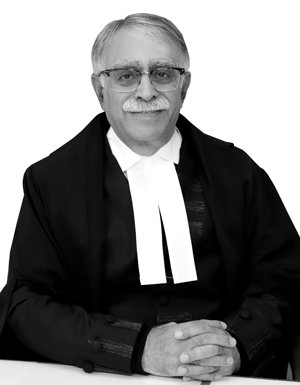
The Hon’ble Mr. Justice Sanjay Karol, Acting Chief Justice.
The Hon’ble Mr. Justice Ajay Mohan Goel, Judge.
Whether approved for reporting?
1 Yes.
For the Appellant : Mr. Shrawan Dogra, Advocate
General, with Mr. J.K. Verma,
Deputy Advocates General.
For the Respondent : Mr. Rajesh Mandhotra, Advocate.
Sanjay Karol, Acting Chief Justice
In relation to FIR No.26/09, dated 24.1.2009,
registered at Police Station Jawali, District Kangra, Himachal
Pradesh, for having committed an offence under Section
498-A of the Indian Penal Code, accused-respondent Raj
Kumar (hereinafter referred to as the accused) was charged
for having subjected his wife Usha Devi (deceased) to
cruelty, as also abetted her to commit suicide, punishable
under the provisions of Sections 498 -A and 306 of the
Indian Penal Code.
Whether reporters of the local papers may be allowed to see the judgment?
::: Downloaded on - 06/10/2022 18:52:01 :::CIS
High Court of H.P.
…2…
2. Trial Court acquitted the accused, discarding
dying declaration (Ex.PW-2/A) made by the deceased not to
be voluntary in nature, and disbelieving the testimonies of
her parents, Sh. Karam Chand (PW-2) and Smt. Preeto Devi
(PW-3), and brother Sh.Amandeep (PW-5) as also co-villager
Sh. Vinay Verma (PW-14) being not worthy of credence.
While holding the prosecution to have established its case
of the deceased having visited the shop of her husband in
the morning of 24.1.2009, the fateful day, but finding no
evidence as to what transpired there, between the
deceased and the accused, which prompted her to set
herself on fire by pouring kerosene oil, Court found the
prosecution not to have proven the charged offence . Trial
Court found the deceased to be a person not only of
hypersensitive nature but also unable to bear extreme
pressures of day-to-day life. The court did not find any
convincing evidence, direct or circumstantial, establishing
the guilt of the accused, of having subjected his wife to
cruelty or abetted her to commit suicide. Conduct of the
accused in helping extinguish fire on the body of the
deceased and getting her immediate medical aid by taking
her to the hospital, was a circumstance, relevant in
::: Downloaded on - 06/10/2022 18:52:01 :::CIS
High Court of H.P.
…3…
establishing his concern for the deceased. Hence, assailing
those findings the present appeal by the State.
3. A Constitution Bench of the Hon’ble Supreme
Court of India in M.G. Agarwal v. State of Maharashtra, AIR
1963 SC 200, has held that in dealing with an appeal
against the judgment of acquittal, normally the appellate
Court should be slow in disturbing findings of fact recorded
by the trial Court. However, there is a caveat to such
principle. Such findings have to be based on proper and
complete appreciation of evidence. Also jurisdiction and
power of the appellate Court is to reappreciate the evidence
but with caution, yet the Court is not to substitute its own
opinion with that of the trial Court.
4. In Madan Gopal Makkad v. Naval Dubey and
another, (1992) 3 SCC 204, the Apex Court held the scope
of the Court in an appeal against acquittal to be “wide as in
appeals from convictions” and “ that an appeal from
acquittal need not be treated different from an appeal from
conviction”.
5. Certain facts are not in dispute. Deceased and
the accused were married for more than 18 years. They
were residing at village Nera Kotla, Tehsil Jawali, District
Kangra, Himachal Pradesh. Also, they had fully grown up
::: Downloaded on - 06/10/2022 18:52:01 :::CIS
High Court of H.P.
…4…
children. In the morning of 24.1.2009, in the matrimonial
house, after pouring kerosene oil, deceased set herself on
fire. Immediately, accused took her to Sukh Sadan
Hospital, Pathankot (State of Punjab), where she was
administered medical treatment and remained admitted till
her last breath, which was on 31.1.2009. Deceased died as
a result of burn injuries.
6. It has come on record that on 24.1.2009, at
about 11.20 a.m., Dr. Avinish Kumar (PW.6) of Sukh Sadan
Hospital informed officials of Police Station Jawali about
admission of the deceased, having sustained burn injuries.
Ex.PW-2/A is evidently clear to such effect.
7. Inspector Parkash Chand (PW -12), SHO of the
concerned Police Station , who also conducted the
investigation, immediately rushed to the hospital and after
obtaining permission and certificate of fitness, recorded
statement (Ex.PW-2/A) of the victim, which reads as under:
“States that I am resident of the
abovestated address and is an Anganwari worker.
My marriage took place in the year 1990. I have
two sons and a daughter. Since after the
marriage, my husband used to beat me and ask
me to bring money from my parental house. My
husband was having illicit relations with some
lady. Last night dated 23.1.2009 my husband was
not at home. I doubted that he was with that lady
during night. Today dated 24.1.2009, in the
morning at 6, to know about whereabouts of my
husband, I went to the shop, where servant
Kishore and Lala were present. I asked them
::: Downloaded on - 06/10/2022 18:52:01 :::CIS
High Court of H.P.
…5…
about whereabouts of my husband, on which they
said that he had left for home at 11 in the night,
on which I stated that he had not reached home,
and I sat in the shop waiting for my husband. At
about 7½ O’clock, he came to the shop. I asked
my husband where he had gone, on which he said
that who was she to ask. On this, he started
beating her in the bazaar. My husband then made
me sit on the scooter of Vinay Verma. I
deboarded the scooter near the shop of Shoko
uncle (Tau) and then went to my house on foot.
Due to the maltreatment by my husband, after
going into the kitchen of the house, I poured
kerosene oil from a can on my body. On this, both
my sons went out to call their father. In the
meantime, I set myself on fire with the help of a
matchstick and came to the verandah. By then,
my husband and both my sons reached home. My
both sons ran towards the kitchen and brought a
bucket of water and poured the same on me,
because of which the fire was extinguished. Due
to fire my entire body has burnt. Thereafter, I fell
down the verandah and thereafter my husband
and my elder son took me in car of Kamal to
Pathankot Hospital. This incident I have done due
to maltreatment of my husband.”
8. At this juncture, it be observed that prosecution
has tried to establish its case of cruelty and abetment to
suicide, on the basis of (a) dying declaration (Ex.PW-2/A),
(b) previous complaint of the deceased, dated 11.11.2008
(Ex.PW-8/B), (c) ocular version of father Karam Chand (PW-
2), mother Preeto Devi (PW -3), independent witness
Narinder Kumar (PW-4), witness to the dying declaration,
Dr. Avinish Kumar (PW -6), and Vinay Verma (PW-14),
witness to what transpired immediately prior to the
::: Downloaded on - 06/10/2022 18:52:01 :::CIS
High Court of H.P.
…6…
deceased taking the unfortunate and drastic step of setting
herself on fire.
9. In the instant case, deceased was just 34 years
of age. In the morning of 24.1.2009, she set herself on fire.
She was admitted in the hospital at about 11.20 a.m. Dying
declaration (Ex.PW-2/A) was recorded in the hospital on
24.1.2009.
10. Inspector Prakash Chand (PW-12), on receiving
information, reached the hospital and moved an application
dated 24.1.2009 (Ex.PW-12/A) for recording statement of
the deceased. From his unrebutted testimony, it is evidently
clear that at about 5 p.m., victim was certified fit to give her
statement and pursuant thereto it was so recorded and her
thumb impression appended thereupon. Invest igating
Officer is categorical that statement was recorded in the
presence of two independent witnesses, as also parents of
the deceased.
11. What stands stated in the dying declaration, we
have already referred to supra.
12. It is true that in his testimony, Dr. Avinash
Kumar (PW-6) does not refer to the dying declaration. But
crucially he does state, which version, we do not find to be
incorrect or false, that “ The patient was admitted by her
::: Downloaded on - 06/10/2022 18:52:01 :::CIS
High Court of H.P.
…7…
husband and she was giving a alleged history of suicidal
burns by pouring kerosene oil on her body after she had an
argument with her husband ”. Thus, one fact is clear that on
the fateful day, argument had taken place between the
deceased and her husband.
13. At this point in time, we may also take note of
the testimony of Vinay Verma (PW -14), who
uncontrovertedly states that in the morning of 24.1.2009 ,
when he came to his shop, he saw the accused standing
outside and the deceased lying on the road. Accused was
asking the deceased to go home. Further on the asking of
the accused, he lifted the deceased and took her to his
shop, where she sat for few minutes, but left for her house.
Lateron at about 9.30 a.m., he saw flames of fire coming
from the house of the accused. Both he and the accused
ran to the spot, where he saw son of the accused running
out of the house. Thereafter, both of them went inside the
house and after few minutes accused took the deceased,
who was suffering from burn injuries, to the hospital. From
his statement also it is evidently clear that all was not well
between the accused and the deceased. Significantly it is
not a case of murder and there is no complicity of any one
of the children of the accused in the crime.
::: Downloaded on - 06/10/2022 18:52:01 :::CIS
High Court of H.P.
…8…
14. We may also take note of the fact that on
11.11.2008, which is just two months prior to the incident,
deceased had lodged a complaint (Ex.PW -8/B) with the
Women Police Cell, Dharamshala, District Kangra, but was
subsequently not pressed. On 5.12.2008, she had sent a
written application (Ex.PW-8/C) that she was not interested
to carry on with the proceedings.
15. Now, all this reveals that notwithstanding the
fact that parties were married for more than 18 years and
that deceased was working as an Anganwari Worker, all
was not well between the parties.
16. Here, we may also observe that from t he
testimony of Karam Chand (PW -2) and Preeto Devi (PW-3),
parents of the deceased, it is quite evident, in fact stands
established, that a sum of `5,00,000/- stood paid to the
accused. Though suggestion of denial has been put to
these witnesses, but one fact, which remains
uncontroverted, as has come in the testimony of Karam
Chand, is that in the morning of the unfortunate incident,
accused had given beatings to the deceased outside his
shop. Significantly, shops of Vinay Verma and that of
accused are nearby, so also the house of the accused.
Vinay Kumar does not state that relationship between the
::: Downloaded on - 06/10/2022 18:52:01 :::CIS
High Court of H.P.
…9…
accused and the deceased were cordial. He also does not
state that nothing happened between the accused and the
deceased. In fact, from his unrebutted testimony, it is clear
that in front of the shop, deceased was lying on the road
and that accused had asked him to take her away.
17. It is in this backdrop, we are of the considered
view that contents of the dying declaration cannot be
ignored.
18. Let us first examine the law on the issue.
19. It is a settled principle of law that dying
declaration is just a piece of evidence and is to be treated
like any other evidence.
20. Dying declaration can be made any time, in the
presence of anyone. It need not to be a Doctor, a
Government Officer or an Executive Magistrate. So long as
the victim is aware and fully conscious of what is being
done and said, any statement made by her can be treated
as a piece of evidence, it being a different matter, as to
whether it requires corroboration or not. [ Munnu Raja and
another v. The State of Madhya Pradesh, (1976) 3 SCC 104;
Ramawati Devi v. State of Bihar, (1983) 1 SCC 211, Sohan
Lal alias Sohan Singh and others vs. State of Punjab, (2003)
11 SCC 534, State of Karnataka vs. Shariff, (2003) 2 SCC
::: Downloaded on - 06/10/2022 18:52:01 :::CIS
High Court of H.P.
…10…
473, Dayal Singh vs. State of Maharashtra, (2007) 12 SCC
452 and Kanti Lal vs. State of Rajasthan, (2009) 12 SCC 498
and Gulam Hussain and another vs. State of Delhi, (2000) 7
SCC 254].
21. In Jaishree Anant Khandekar vs. State of
Maharashtra, (2009) 11 SCC 647, a comparative study of
laws of various countries on the point of dying declaration
was done by the Apex Court. It was held that:
“17. The law relating to dying declaration is an
exception to the hearsay rule. The
rationale behind admissibility of a dying
declaration was best expressed,
not in any judgment, but in one
of the soliloquies in Shakespeare's
King John, when fatally wounded Melun
wails:
‘Have I met hideous
death within my view,
Retaining but a quantity of life,
Which bleeds away
even as a form of wax,
Resolveth from his figure
'gainst the fire?
What in the world should
make me now deceive,
Since I must lose the use of all
deceit?
Why should I then be false
since it is true
That I must die here
and live hence by truth?'
(See King John, Act V, Scene IV.)
18. Both Taylor and Wigmore in their treatise on
Evidence took refuge to the magic of Shakespeare
to illustrate the principles behind admissibility of
dying declaration by quoting the above passage.
::: Downloaded on - 06/10/2022 18:52:01 :::CIS
High Court of H.P.
…11…
19. Among the judicial fraternity this has
been best expressed, possibly by Lord Chief
Justice Baron Eyre (See. R. Vs. Woodcock, (1789) 1
Lea.502, and which I quote (ER p.353): -
"...That such declarations are made in
extremity, when the party is at the point of
death, and when every hope of this
world is gone; when every
motive to falsehood is silenced,
and the mind is induced by the most
powerful considerations to speak
the truth; a situation so solemn
and so awful is considered by
the law as creating an obligation,
equal to that which is imposed by a
positive oath in a court of
justice."
20. The test of admissibility of dying declaration
is stricter in English Law than in Indian Law. Sir
James Fitzjames Stephen in 1876 brought out a
‘Digest of the Law of Evidence' and
its introduction is of considerable interest
even today. The author wrote that
English Code of Evidence is modelled on the
Indian Evidence Act of 1872. In the words of the
author:
"In the autumn of 1872 Lord Coleridge
(then Attorney General) employed me to
draw a similar code for England. I did
so in the course of the winter, and we
settled it in frequent consultations. It
was ready to be introduced early in the
Session of 1873. Lord Coleridge made
various attempts to bring it forward, but he
could not succeed till the very last day of
the Session. He said a few words on
the subject on the 5th August, 1873, just
before Parliament was prorogued. The
Bill was thus never made public, though I
believe it was ordered to be printed.
::: Downloaded on - 06/10/2022 18:52:01 :::CIS
High Court of H.P.
…12…
It was drawn on the model of the
Indian Evidence Act and contained a
complete system of law upon the
subject of evidence."
21. In that book, Article 26 sums up the English
law relating to dying declaration as under:-
"Article 26. Dying Declaration as to
Cause of Death . - A declaration made by
the declarant as to the cause of his death,
or as to any of the circumstances of the
transaction which resulted in his death, is
deemed to be relevant only in trials for the
murder or manslaughter of the declarant;
and only when the declarant is shown, to the
satisfaction of the judge, to have been in
actual danger of death, and to have given
up all hope of recovery at the time when his
declaration was made.
Such a declaration is not irrelevant
merely because it was intended to be made
as a deposition before a magistrate, but is
irregular."
(emphasis supplied)
22. In Section 32(1) of the Indian Evidence Act
the underlined portion is not there. Instead
Section 32 (1) is worded differently and which is
set out:
"32. Cases in which statement of
relevant fact by person who is dead or
cannot be found, etc., is relevant -
Statements, written or verbal, of relevant
facts made by a person who is dead, or who
cannot be found, or who has become
incapable of giving evidence, or whose
attendance cannot be procured, without an
amount of delay or expense which under the
circumstances of the case appears to the
Court unreasonable, are themselves
relevant facts in the following cases:-
::: Downloaded on - 06/10/2022 18:52:01 :::CIS
High Court of H.P.
…13…
(1) When it relates to cause of
death - When the statement is made by a
person as to the cause of his death, or to
any of the circumstances of the
transaction which resulted in his death, in
cases in which the cause of that person's
death comes into question.
Such statements are relevant
whether the person who mad e them was or
was not, at the time when they were made,
under expectation of death, and whatever
may be he nature of the proceeding in which
the cause of his death comes into question."
(emphasis supplied)
23. The Privy Council in the case of Nembhard
Vs. The Queen, 1982 (1) The All England Law
Reports 183 (Privy Council), while hearing an
appeal from the Court of Appeal of Jamaica, made
a comparison of the English Law and Indian Law
by referring to the underlined portions of Section
32(1) of the Indian Evidence Act at page 187 of
the report. Sir Owen Woodhouse, speaking for the
Privy Council, pointed out the different statutory
dispensation in Indian Law prescribing a test of
admissibility of dying declaration which is distinct
from a common law test in English Law.
24. Apart from an implicit faith in the intrinsic
truthfulness of human character at the
dying moments of one's life, admissibility
of dying declaration is also based on the
doctrine of necessity. In many cases victim is the
only eye witness to a crime on him/her and
in such situations exclusion of the dying
declaration, on hearsay principle, would tend to
defeat the ends of justice. American Law o n
dying declaration also proceeds on the twin
postulates of certainty of death leading to an
intrinsic faith in truthfulness of human character
and the necessity principle.
25. On certainty of death, the same strict test of
English Law has been applied in
American Jurisprudence. The test has
been variously expressed as ‘no hope
of recovery', ‘a settled expectation of death'.
The core concept is that the expectation of death
::: Downloaded on - 06/10/2022 18:52:01 :::CIS
High Court of H.P.
…14…
must be absolute and not susceptible to doubts
and there should be no chance of operation of
worldly motives. (See Wigmore on Evidence page
233-234).
26. This Court in Kishan Lal Vs.
State of Rajasthan, AIR 1999 SC 3062,
held that under English Law the credence
and the relevance of the dying declaration is
admissible only when the person making
such statement is in hopeless condition and
expecting imminent death. Justice Willes coined it
as a "settled hopeless expectation of death" (R Vs.
Peel, (1860) 2 F. & F. 21, which was approved by
the Court of Criminal Appeal in R Vs. Perry, (1909)
2 KB 697). Under our Law, the declaration is
relevant even if it is made by a person, who may
or may not be under expectation of death, at the
time of declaration. (See para 18,page 3066).
However, the declaration must relate to any of the
circumstances of the transaction which resulted in
his death.”
22. The apex Court in Tapinder Singh vs. State of
Punjab & another, AIR 1970 S.C. 1566 has held that if the
dying declaration is acceptable as truthful then even in the
absence of other corroborative evidence, the Court can act
upon it and convict the accused.
23. In Khushal Rao vs. State of Bombay, AIR 1958
SC 22, the Apex Court has further held that:-
“Sometimes, attempts have been made to
equate a dying declaration with the evidence of an
accomplice or the evidence furnished by a
confession as against the maker, if it is retracted,
and as against others, even though not retracted.
But in our opinion, it is not right in principle to do
so. Though under S. 133 of the Evidence Act, it is
not illegal to convict a person on the
uncorroborated testimony of an accomplice,
illustration (b) to S. 114 of the Act, lays down as a
rule of produce based on experience, that an
::: Downloaded on - 06/10/2022 18:52:01 :::CIS
High Court of H.P.
…15…
accomplice is unworthy of credit unless his
evidence is corroborated in material particulars
and this has now been accepted as a rule of law.
The same cannot be said of a dyin g declaration
because a dying declaration may not, unlike a
confession, or the testimony of an approver, come
from a tainted source. If a dying declaration has
been made by a person whose antecedents are as
doubtful as in the other cases that may be a
ground for looking upon it with suspicion, but
generally speaking, the maker of a dying
declaration cannot be tarnished with the same
brush as the maker of a confession or an
approver .”
“It cannot be laid down as an absolute rule
of law that a dying declaration cannot form the
sole basis of conviction unless it is corroborated;
each case must be determined on its own facts
keeping in view the circumstances in which the
dying declaration was made ; it cannot be laid
down as a general proposition that a dying
declaration is a weaker kind of evidence that other
pieces of evidence; a dying declaration stands on
the same footing as another piece of evidence and
has to be judged in the light of surrounding
circumstances and with reference to the principles
governing the weighing of evidence; a dying
declaration which has been recorded by a
competent magistrate in the proper manner, that
is to say, in the form of questions and answers,
and, as for as practicable, in the words of the
maker of the declaration, stands on a much higher
footing than a dying declaration which depends
upon oral testimony which may suffer from all the
infirmities of human memory and human
character, and in order to test the reliability of a
dying declaration, the Court has to keep in view,
the circumstances like the opportunity of the lying
man for observation, for example, whether there
was sufficient light if the crime was committed at
night; whether the capacity of the man to
remember the facts stated, had not been impaired
at the time he was making the statement, by
circumstances beyond his control; that the
statement has been consistent throughout if he
had several opportunities of making a dying
declaration apart from the official record of it; and
::: Downloaded on - 06/10/2022 18:52:01 :::CIS
High Court of H.P.
…16…
that the statement had been made at the ea rliest
opportunity and was not the result of tutoring by
interested parties .”
“In order to pass the test of reliability, a
dying declaration has to be subjected to a very
close scrutiny , keeping in view the fact that the
statement has been made in the ab sence of the
accused who had no opportunity of testing the
veracity of the statement by cross-examination.
But once, the Court has come to the conclusion
that the dying declaration was the truthful version
as to the circumstances of the death and the
assailants of the victim, there is no question of
further corroboration. If, on the other hand, the
Court, after examining the dying declaration in all
its aspects, and testing its veracity, has come to
the conclusion that it is not reliable by itself, and
that it suffers from an infirmity, then without
corroboration it cannot form the basis of a
conviction . Thus, the necessity for corroboration
arises not from any inherent weakness of a dying
declaration as a piece of evidence, as held in
some of the reported cases, but from the fact that
the Court, in a given case, has come to the
conclusion that particular dying declaration was
not free from the infirmities.”
(Emphasis supplied)
24. The aforesaid decision came up for
consideration before the Constitution Bench of the Apex
Court in Harbans Singh and another vs. The State of Punjab,
AIR 1962 SC 439 and after taking into account its earlier
decision in Ram Nath vs. State of Madhya Pradesh, AIR
1953 SC 420, affirmed the aforesaid view.
25. In Paniben (Smt.) vs. State of Gujarat, (1992)
2 SCC 474, the Court has further reiterated and laid down
the following principles:-
::: Downloaded on - 06/10/2022 18:52:01 :::CIS
High Court of H.P.
…17…
“A dying declaration is entitled to great weight.
Once the Court is satisfied that the declaration
was true and voluntary, undoubtedly, it can base
its conviction without any further corroboration. It
cannot be laid down as an absolute rule of law
that the dying declaration cannot form the sole
basis of conviction unless it is corroborated. The
rule requiring-corroboration is merely a rule of
prudence.”
“However, since the accused has no power
of cross-examination, which is essential for
eliciting the truth, the dying declaration
should be of such a nature as to inspire full
confidence of the Court in its correctness.
The Court has to be on guard that the
statement of deceased was not as a result of
either tutoring, prompting or a product of
imagination. The Court must be further
satisfied that the deceased was in a fit state
of mind after a clear opportunity to observe
and identify the assailants. Normally the
court in order to satisfy whether deceased
was in a fit mental condition to make the
dying declaration look up to the medical
opinion. But where the eye witness has said
that the deceased was in a fit and conscious
state to make this dying declaration, the
medical opinion cannot prevail”.
“Merely because a dying declaration does
not contain the details as to occurrence, it is
not to be rejected. Equally, merely because
it is a brief statement, it is not be discarded.
On the contrary, the shortness of the
statement itself guarantees truth. But a
dying declaration which suffers from
infirmity cannot form the basis of conviction.
Where the prosecution version differs from
the version as given in the dying
declaration, the said declaration cannot be
acted upon.”
“(i) There is neither rule of law nor of
prudence that dying declaration cannot be
acted upon without corroboration. (Mannu
Raja v. State of U.P. (1976) 2 SCR 764) (AIR
1976 SC 2199).
::: Downloaded on - 06/10/2022 18:52:01 :::CIS
High Court of H.P.
…18…
(ii) If the Court is satisfied that the dying
declaration is true and voluntary it can base
conviction on it, without corroboration (State
of U.P. v. Ram Sagar Yadav, AIR 1985 SC
416; Ramavati Devi v. State of Bihar, AIR
1983 SC 164).
(iii) This Court has to scrutinise the dying
declaration carefully and must ensure that
the declaration is not the result of tutoring,
prompting or imagination. The deceased had
opportunity to observe and identify the
assailants and was in a fit state to make the
declaration. (Rama Chandra Reddy v. Public
Prosecutor, AIR 1976 SC 1994).
(iv) Where dying declaration is suspicious it
should not be acted upon without
corroborative evidence. (Rasheed Beg v.
State of Madhya Pradesh, (1974) 4 SCC 264
: (AIR 1974 SC 332).
(v) Where the deceased was unconscious
and could never make any dying declaration
the evidence with regard to it is to be
rejected. (Kake Singh v. State of M.P., AIR
1982 SC 1021).
(vi) A dying declaration which suffers from
infirmity cannot form the basis of conviction.
(Ram Manorath v. State of U.P., 1981 SCC
(Crl) 581).
(vii) Merely because a dying declaration
does not contain the details as to the
occurrence, it is not to be rejected. (State of
Maharashtra v. Krishnamurthi Laxmipati
Naidu, AIR 1981 SC 617).
(viii) Equally, merely because it is a brief
statement it is not be discarded. On the
contrary, the shortness of the statement
itself guarantees truth. (Surajdeo Oza v.
State of Bihar, AIR 1979 SC 1505).
(ix) Normally the Court in order to satisfy
whether deceased was in a fit mental
condition to make the dying declaration look
::: Downloaded on - 06/10/2022 18:52:01 :::CIS
High Court of H.P.
…19…
up to the medical opinion. But where the
eyewitness has said that the deceased was
in a fit and conscious state to make this
dying declaration, the medical opinion
cannot prevail. (Nanahau Ram v. State, AIR
1988 SC 912).
(x) Where the prosecution version differs
from the version as given in the dying
declaration, the said declaration cannot be
acted upon. (State of U.P. v. Madan Mohan,
AIR 1989 SC 1519).
19. In the light of the above principles, we
will consider the three dying declarations in
the instant case and we will ascertain the
truth with reference to all dying declarations
made by the deceased Bai Kanta. This Court
in Mohan Lal v. State of Maharashtra, AIR
1982 SC 839 held:
"where there are more than one
statement in the nature of dying declaration,
one first in point of time must be preferred."
Of course, if the plurality of dying
declarations could be held to be trust-worthy
and reliable, they have to be accepted.”
26. In Jayabalan vs. Union Territory of Pondicherry,
(2010) 1 SCC 199, the Apex Court was dealing with the
case of an accused who after pouring kerosene oil had set
his wife on fire. The husband was held guilty of having
committed an offence punishable under Section 302, IPC.
The accused assailed the findings of conviction on the
ground that prosecution had examined only interested
witnesses and also dying declaration was tutored, promoted
and product of the imagination of deceased. In the proven
::: Downloaded on - 06/10/2022 18:52:01 :::CIS
High Court of H.P.
…20…
facts of that case repelling the contention, it was held as
under:-
“We are of the considered view that in case where
the court is called upon to deal with the evidence
of the interested witnesses, the approach of the
court, while appreciating the evidence of such
witnesses must not be pedantic. The court must
be cautious in appreciating and accepting the
evidence given by the interested witnesses but
the court must not be suspicious of such evidence.
The primary endeavour of the court must be to
look for consistency. The evidence of a witness
cannot be ignored or thrown out solely because it
comes from the mouth of a person who is closely
related to the victim.”
(Emphasis supplied)
27. In Krishan vs. State of Haryana, (2013) 3 SCC
280, even where the witnesses had turned hostile, solely on
the basis of dying declaration, the Court convicted the
accused.
28. There can be more than one dying declarations
and if there is no inconsistency between them, all can be
used against the accused for proving the guilt. [ State of
Karnataka vs. Shariff, (2003) 2 SCC 473 and (1982) 1 SCC
700, Mohanlal Gangaram Gehani vs. State of Maharashtra,
(1982) 1 SCC 700].
29. This view further stands reiterated in Jaishree
Anant Khandekar vs. State of Maharashtra, (2009) 11 SCC
647, where the Apex Court was dealing with five dyin g
::: Downloaded on - 06/10/2022 18:52:01 :::CIS
High Court of H.P.
…21…
declarations, which were found not to be in variance with
each other.
30. Further in Puran Chand vs. State of Haryana,
(2010) 6 SCC 566, Apex Court has again summarized its
view in the following terms:-
“The Courts below have to be extremely careful
when they deal with a dying declaration as the
maker thereof is not available for the cross -
examination which poses a great difficulty to the
accused person. A mechanical approach in
replying upon a dying declaration just because it
is there is extremely dangerous. The court has to
examine a dying declaration scrupulously with a
microscopic eye to find out whether the dying
declaration is voluntary, truthful, made in a
conscious state of mind and without being
influenced by the relatives present or by the
investigating agency who may be interested in the
success of investigation or which may be
negligent while recording the dying declaration.
When there are more than one dying declarations,
the intrinsic contradictions in those dying
declarations are extremely important. It cannot
be that a dying declaration which supports the
prosecution alone can be accepted while the other
innocuous dying declarations have to be rejected.
Such a trend will be extremely dangerous.
However, the courts below are fully entitled to act
on the dying declarations and make them the
basis of conviction, where the dying declarations
pass all the above tests. The court has to weigh
all the attendant circumstances and come to the
independent finding whether the dying declaration
was properly recorded and whether it was
voluntary and truthful. The courts must bear in
mind that each criminal trial is an individual
aspect. If after careful scrutiny the court is
satisfied that it is true and free from any effort to
induce the deceased to make a false statement
and if it is coherent and consistent, there shall be
no legal impediment to make it a basis of
conviction, even if there is no corroboration.
(Emphasis supplied)”
::: Downloaded on - 06/10/2022 18:52:01 :::CIS
High Court of H.P.
…22…
31. However, where there is variation in the dying
declaration (two in question), the Apex Court has held any
conviction to be bad in law. [Dandu Lakshmi Reddy vs.
State of A.P. (1999) 7 SCC 69 and Sanjay vs. State of
Maharashtra , (2007) 9 SCC 148].
32. Further, where the prosecution version differs
from the statement of deceased, dying declaration cannot
be used for convicting the accused [Paniben (supra) and
State of Rajasthan v. Shravan Ram and another, (2013) 12
SCC 255].
33. The aforesaid view has been reiterated in Jai
Karan vs. State of Delhi (MCT) , (1999) 8 SCC 161, Sham
Shankar Kankaria vs. State of Maharashtra , (2006) 13 SCC
165 and Mohammed Asif vs. State of Uttaranchal, (2009)
11 SCC 497.
34. The Constitutional Bench of the Apex Court in
Laxman vs. State of Maharashtra, (2002) 6 SCC 710, while
considering the conflict in Paparambaka Rosamma vs. State
of A.P. (1999) 7 SCC 695 and Koli Chunilal Savji vs. State of
Gujarat, (1999) 9 SCC 562, came to the conclusion that law
laid down in the latter was the correct law and simply
because the Doctor has not recorded/made en dorsement
that the deceased was in a fit state of mind to make the
::: Downloaded on - 06/10/2022 18:52:01 :::CIS
High Court of H.P.
…23…
statement in question, other material on record to indicate
that the deceased was fully conscious and capable of
making statement cannot be ignored. This view has been
reiterated in Ravi and another vs. State of T.N. (2004) 10
SCC 776; and Kamalavva and another vs. State of
Karnataka, (2009) 13 SCC 614.
35. In Shaik Nagoor vs. State of Andhra Pradesh
represented by its Public Prosecutor, High Court of Andhra
Pradesh, Hyderabad, (2008) 15 SCC 471, the Apex Court
held that where the Judicial Magistrate and the Police officer
had given detailed description and the witnesses were not
cross-examined on the point of fitness of the deceased,
plea taken by the accused that the deceased was not fit to
make the statement in the given circumstances was
untenable.
36. In Sukanti Moharana vs. State of Orissa, (2009)
9 SCC 163, the Court was dealing with a case where the
dying declaration was challenged on the ground that it did
not contain thumb impress ion or signatures of the
deceased. The challenge was repelled on the ground that
medical evidence proved that the deceased was having
90% burn injuries on the thumb and therefore was in no
position to sign the dying declaration. The Apex Court
::: Downloaded on - 06/10/2022 18:52:01 :::CIS
High Court of H.P.
…24…
further reiterated its decision in Nallapati Sivaiah vs. SDO,
(2007) 15 SCC 465, in the following terms:-
"18. …This Court in more than one decision
cautioned that the courts have always to be on
guard to see that the dying declaration was not
the result of either tutoring or prompting or a
product of imagination. It is the duty of the courts
to find that the deceased was in a fit state of mind
to make the dying declaration. In order to satisfy
itself that the deceased was in a fit mental
condition to make the d ying declaration, the
courts have to look for the medical opinion."
37. The apex Court in Lakhan vs. State of Madhya
Pradesh, (2010) 8 SCC 514 had an occasion to deal with two
contradictory dying declarations made by the deceased.
Finding the first one to have been recorded in presence of
the close relatives of the accused, even though by an
Executive Magistrate, the Court by ignoring the same, relied
jupon the second dying declaration recorded by the police
officer in holding the accused guilty of the crime charged
for.
38. Dying declaration need not be in the form of
question and answer. Principles required to be adopted for
recording the statement of deceased stand reiterated in
Ram Bihari Yadav Vs. State of Bihar and others, (1998) 4
SCC 517, State of Karnataka vs. Shariff (2003) 2 SCC 473
and K.Ramachandra Reddy and another vs. The Public
prosecutor, (1976) 3 SCC 618.
::: Downloaded on - 06/10/2022 18:52:01 :::CIS
High Court of H.P.
…25…
39. The apex Court in Dandu Lakshmi Reddy vs.
State of A.P., (1999) 7 SCC 69 has held that when the
sphere of scrutiny of the dying declaration is a restricted
area, the Court cannot afford to sideline such a material
divergence relating to this very occasion of the crime.
40. In Mohan Lal and others vs. State of Haryana
(2007) 9 SCC 151, the Court disbelieved the statement
made by the wife of the accused on the ground that not
only it was vague but also there was no contemporaneous
documentary or other material to prove dowry demands
prior to the incident.
41. In Maiben D/o Danabhai Tulshibai Maheria vs.
State of Gujarat, (2007) 10 SCC 362, the Court was dealing
with a case where death took place 25 days subsequent to
the recording of the statement of the deceased, yet the
same was taken to be a dying declaration.
42. In Ramakant Mishra @ Lalu & others vs. State of
Uttar Pradesh, (2015) 8 SCC 299 the Court cautioned the
prosecution to establish that every step for recording the
dying declaration must be diligently complied with including
alerting the Jurisdictional Magistrate of the occurrence of
the incident.
::: Downloaded on - 06/10/2022 18:52:01 :::CIS
High Court of H.P.
…26…
43. The question, which arises for consideration, is
as to whether the dying declaration is believable or not.
44. No doubt, the doctor has not deposed anything
with regard to fitness of the witness, but then from the
testimony of Inspector Parkash Chand, it is clear that
despite burn injuries, deceased was able to speak and her
statement recorded by the police.
45. It be only observed that after reaching the
hospital, Inspector Parkash Chand, moved an application for
recording statement of the deceased. At 4 p.m., the victim
was found not fit, but lateron at 5 p.m., she was declared fit
and accordingly statement (Ex.PW -2/A) recorded and the
deceased put her thumb impression. Now, on this issue,
defence taken by the accused, as is apparent from the
cross-examination part of the testimonies, is twofold – (a)
that application (Ex.PW-12/A) was prepared in “connivance”
with the doctor, (b) it was written when both the father and
the mother of the deceased were present.
46. Parents Karam Chand and Preeto Devi are also
categorical in their deposition of the deceased having made
statement (Ex.PW-2/A) to the police in their presence. They
are signatories to the document. Also, one finds even
Narinder Kumar (PW-4), so associated by the police during
::: Downloaded on - 06/10/2022 18:52:01 :::CIS
High Court of H.P.
…27…
investigation, to have corroborated such version. He
clarifies that it was police and not the mother of the
deceased, who was putting the questions. In his unrebutted
testimony he states that “Usha had said that accused was
beating her on account of dowry. She had also told that
accused had been demanding money. Usha had als o told
that accused was having illicit relations with some other
lady. Usha had not stated anything about her suspicion ”.
47. Thus, in our considered view, prosecution has
been able to establish the factum of the deceased having
made statement (Ex.PW-2/A).
48. At this juncture, we may also take note of
certain contradictions pointed out by the learned counsel
for the accused, which, according to him render the factum
of dying declaration to be doubtful. Karam Chand states
that the deceased was in pains and not in a position to say
anyting and that at the time of recording of statement
(Ex.PW-2/A) he was outside the room. No doubt, the
document records his presence, but then this fact alone, in
our considered view, is not sufficient enough to either
impeach credit of the witnesses or render the dying
declaration to be false. One cannot forget that this witness
is a rustic villager and his statement came to be recorded in
::: Downloaded on - 06/10/2022 18:52:01 :::CIS
High Court of H.P.
…28…
Court after a period of seven months. The contradiction,
minor in nature, in our considered view, needs to be
ignored. Also, Preeto Devi has explained that her husband
was suffering from heart problem. Significantly it is not the
suggested case that the parents exercised undue influence
or pressurized the deceased to make the statement.
49. Learned counsel for the accused also invites our
attention to the previous complaint (Ex.PW -8/B), only to
highlight that previously allegations were made not against
the husband but the in-laws. Even this would not make any
difference, for one thing is clear that in the morning of the
unfortunate incident, accused had fought and given
beatings to the deceased, for why else would the accused
allow his wife to lie on the road and ask his neighbour to
pick and drop her home.
50. Next, it is contended that prosecution concealed
and suppressed relevant information. They ought to have
associated sons of the accused, who would have thrown
light on what really transpired in the morning. Well
prosecution witnesses have already established such fact.
Equally, it was open for the accused to have adduced
evidence in support of his defence.
::: Downloaded on - 06/10/2022 18:52:01 :::CIS
High Court of H.P.
…29…
51. Significantly, all these witnesses have withstood
the test of cross-examination, establishing authenticity and
genuineness of the dying declaration.
52. Still further, Mr. Rajesh Mandhotra, learned
counsel for the accused, submits that dying declaration is
nothing but a waste paper and requires corroboration.
Well, we are unable to persuade ourselves to accept such a
contention. Dying declaration stands corroborated by the
witnesses, so also its contents and as we notice, allegations
of the accused having illicit relationship with another lady,
which apparently was the reason for the fight stands duly
corroborated from the unrebutted testimony of Preeto Devi
who states that “it is correct that my dau ghter was
suspicious that accused was having relations with some
other lady. Self-stated that on two occasions my daughter
had brought back accused from the company of that lady”.
53. Thus, in our considered view, trial Court erred in
concluding that the dying declaration was not voluntary in
nature and that testimonies of relatives and the co-villagers
were uninspiring in confidence. Trial Court ventured into
the realm of conjecturing, by holding the deceased to be of
“hypersensitive nature unable to bear extreme pressures of
day-to-day life”. The Court below got swayed with the
::: Downloaded on - 06/10/2022 18:52:01 :::CIS
High Court of H.P.
…30…
conduct of the accused, who undoubtedly took steps for
extinguishing the fire and taking the deceased to the
hospital, but then these facts relate to post incident, for it
has come on record that soon before the deceased set
herself on fire, accused had subjected her to cruelty,
prompting her to take away her life.
54. “Cruelty” for the purpose of the crime in
question would mean, willful conduct of the accused, which
is of such a nature as is likely to drive the deceased to
commit suicide or harassment with a view to coerce her to
meet any unlawful demand of property or valuable security.
Also, harassment on account of failure to meet such
demand would also amount to cruelty. Also, for proving the
charge of abetment to suicide, it has to be proved that the
accused treated the deceased with cruelty and drove her to
commit suicide.
55. In Ramesh Kumar vs. State of Chhattisgarh,
(2001) 9 SCC 618, the Apex Court has also held that
“Sections 498-A and 306 IPC are independent and
constitute different offences. Though, depending on the
facts and circumstances of an individual case, subjecting a
woman to cruelty may amount to an offence under section
498-A and may also, if a course of conduct, amounting to
::: Downloaded on - 06/10/2022 18:52:01 :::CIS
High Court of H.P.
…31…
cruelty is established leaving no other option for the woman
except to commit suicide, amount to abetment to commit
suicide. However, merely because an accused has been
held liable to be punished under section 498-A IPC it does
not follow that on the same evidence he must also and
necessarily be held guilty of having abetted the commission
of suicide by the woman concerned.”
56. In State of West Bengal Vs. Orilal Jaiswal (1994)
1 SCC 73 , the Apex Court has held as under:
“In a criminal trial the degree of proof is stricter
than what is required in a civil proceedings. In a
criminal trial however intriguing may be facts
and circumstances of the case, the charges
made against the accused must be proved
beyond all reasonable doubts and the
requirement of proof cannot lie in the realm of
surmises and conjectures. The requirement of
proof beyond reasonable doubt does not stand
altered even after the introduction of S. 498A,
I.P.C and S. 113A of Indian Evidence Act.
Although, the court's conscience mu st be
satisfied that the accused is not held guilty
when there are reasonable doubts about the
complicity of the accused in respect of the
offences alleged, it should be borne in mind that
there is no absolute standard for proof in a
criminal trial and the question whether the
charges made against the accused have been
proved beyond all reasonable doubts must
depend upon the facts and circumstances of the
case and the quality of the evidences adduced
in the case and the materials placed on record.
The doubt must be of a reasonable man and the
standard adopted must be a standard adopted
by a reasonable and just man for coming to a
conclusion considering the particular subject
matter.
::: Downloaded on - 06/10/2022 18:52:01 :::CIS
High Court of H.P.
…32…
The conscience of the court can never be bound
by any rule but that is coming itself dictates the
consciousness and prudent exercise of the
judgment. Reasonable doubt is simply that
degree of doubt which would permit a
reasonable and just man to come to a
conclusion. Reasonableness of the doubt must
be commensurate with the nature of the offence
to be investigated. Exaggerated devotion to the
rule of benefit of doubt must not nurture fanciful
doubts or lingering suspicions and thereby
destroy social defence. Justice cannot be made
sterile on the plea that it is better to let hundred
guilty escape than punish an innocent. Letting
guilty escape is not doing justice, according to
law.”
(Emphasis supplied)
57. The Apex Court further cautioned that the court
should be extremely careful in assessing the facts and
circumstances of each case and the evidence adduced in
the trial for the purpose of finding whether the cruelty
meted out to the victim had in fact induced her to end the
life by committing suicide. If it transpires to the court that a
victim committing suicide was hypersensitive to ordinary
petulance, discord and differences in domestic life quite
common to the society to which the victim belonged and
such petulance, discord and differences were not expected
to induce a similarly circumstanced individual in a given
society to commit suicide, the conscience of the court
should not be satisfied for basing a finding that the accused
::: Downloaded on - 06/10/2022 18:52:01 :::CIS
High Court of H.P.
…33…
charged of abetting the offence of suicide should be found
guilty.
58. In Arun Vyas & anr. Vs. Anita Vyas (1999) 4
SCC 690 , the Apex Court has held tha t the essence of
offence in Section 498-A is cruelty. It is a continuing offence
and on each occasion on which the wife is subjected to
cruelty, she would have a new starting point of limitation.
59. In Kundula Bala Subrahmanyam and Anr. Vs.
State of Andhra Pradesh (1993) 2 SCC 684 , the Apex Court
has held as under:-
“The role of courts, under the
circumstances assumes greater importance and
it is expected that the courts would deal with
such cases in a more realistic manner and not
allow the criminals to escape on account of
procedural technicalities or insignificant lacune
in the evidence as otherwise the criminals
would receive encouragement and the victims
of crime would be totally discouraged by the
crime going unpunished. The courts are
expected to be sensitive in cases involving
crime against women.”
60. Whether one spouse has been guilty of cruelty
to the other is essentially a question of fact. The impact of
complaints, accusations or taunts on a person amounting to
cruelty depends on various factors like the sensitivity of the
individual victim concerned, the social background, the
environment, education etc. Further, mental cruelty varies
from person to person depending on the intensity of
::: Downloaded on - 06/10/2022 18:52:01 :::CIS
High Court of H.P.
…34…
sensitivity and the degree of courage or en durance to
withstand such mental cruelty. In other words, each case
has to be decided on its own facts to decide whether the
mental cruelty was established or not. [Mohd. Hoshan A.P.
& Anrs. Vs. State of A.P. (2002) 7 SCC 414 ].
61. In State of A.P. Vs. M. Madhusudhan Rao (2008)
15 SCC 582 , the Apex Court has held as under:
“It is plain that as per clause (b) of the
Explanation, which, according to learned
counsel for the State, is attracted in the instant
case, every harassment does not amount to
"cruelty" within the meaning of Section 498-A
I.P.C. The definition stipulates that the
harassment has to be with a definite object of
coercing the woman or any person related to
her to meet an unlawful demand. In other
words, for the purpose of Section 498-A I.P.C.
harassment simpliciter is not "cruelty" and it is
only when harassment is committed for the
purpose of coercing a woman or any other
person related to her to meet an unlawful
demand for property etc., that it amounts to
"cruelty" punishable under Section 498-A I.P.C.”
62. In Balram Prasad Agrawal Vs. State of Bihar &
Ors. (1997) 9 SCC 338, the Apex Court has held cruelty to
mean torture to be so unbearable in the common course of
human conduct that a young lady having commitments to
life could take a drastic steps to end her life leaving behind
her infant children in the lurch and at the mercy of the
accused husband who was found to be in contemplation of
remarrying.
::: Downloaded on - 06/10/2022 18:52:01 :::CIS
High Court of H.P.
…35…
63. In Arvind Singh Vs. State of Bihar (2001) 6 SCC
407 , the Apex Court has held as under:-
“The word 'cruelty' in common English
acceptation denotes a state of conduct which is
painful and distressing to another. The
legislative intent in Section 498-A is clear
enough to indicate that in the event of there
being a state of conduct by the husband to the
wife or by any relative of the husband which can
be attributed to be painful or distressing. The
same would be within the meaning of the
section. Torture is a question of fact. There must
be a proper effort to prove it.”
64. Instigation is to goad, urge forward, provoke,
incite or encourage to do "an act". To satisfy the
requirement of instigation though it is not necessary that
actual words must be used to that effect or what
constitutes instigation must necessarily and specifically be
suggestive of the consequence. Yet a reasonable certainty
to incite the consequence must be capable of being spelt
out. The accused must by his acts or omission or by a
continued course of conduct create such circumstances that
the deceased is left with no other option except to commit
suicide in which case an instigation may have been
inferred. A word uttered in the fit of anger or emotion
without intending the consequences to actually follow
cannot be said to be instigation. [ Ramesh Kumar vs. State
of Chhatisgarh, (2001) 9 SCC 618]
::: Downloaded on - 06/10/2022 18:52:01 :::CIS
High Court of H.P.
…36…
65. The concept of cruelty and its effect varies from
individual to individual, also depending upon the social and
economic status to which such person belongs. "Cruelty" for
the purposes of constituting the offence under the aforesaid
section need not be physical. Even mental torture or
abnormal behaviour may amount to cruelty and harassment
in a given case. [Gananath Pattnaik vs. State of Orissa,
(2002) 2 SCC 619 ]
66. The Apex Court in Naresh Kumar v. State of
Haryana and others, (2015) 1 SCC 797, has observed that
“as regards the claim for parity of the case of the Appellant
with his mother and brother who have been acquitted, the
High Court has rightly found his case to be distinguishable
from the case of his mother and brother. The husband is not
only primarily responsible for safety of his wife, he is
expected to be conversant with her state of mind more than
any other relative. If the wife commits suicide by setting
herself on fire, proceeded by dissatisfaction of the husband
and his family from the dowry, the interference of
harassment against the husband may be patent.
Responsibility of the husband towards his wife is
qualitatively different and higher as against his other
relatives”.
::: Downloaded on - 06/10/2022 18:52:01 :::CIS
High Court of H.P.
…37…
67. With regard to dowry death, the Apex Court in
Baljinder Kaur v. State of Punjab , (2015) 2 SCC 629, held
that:
“21. In our view, there is force in the submission
of the learned counsel for the appellant. In cases
related to dowry death, the circumstances
showing the cruelty or harassment are not
restricted to a particular instance, but normally
refer to a course of conduct. Such conduct of
cruelty or dowry harassment must be "soon
before death". There should be a perceptible
nexus between her death and the dowry related
harassment or cruelty inflicted on her.”
68. The Apex Court in Rajinder Singh v. State of
Punjab, (2015) 6 SCC 477, in the following words, explained
the meaning of “dowry”, as under:
“8. A perusal of this Section shows that this
definition can be broken into six distinct parts:
(1) Dowry must first consist of any property or
valuable security - the word "any" is a word of
width and would, therefore, include within it
property and valuable security of any kind
whatsoever.
(2) Such property or security can be given or
even agreed to be given. The actu al giving of
such property or security is, therefore, not
necessary.
(3) Such property or security can be given or
agreed to be given either directly or indirectly.
(4) Such giving or agreeing to give can again
be not only by one party to a marriage to the
other but also by the parents of either party or
by any other person to either party to the
marriage or to any other person. It will be
noticed that this clause again widens the reach
::: Downloaded on - 06/10/2022 18:52:01 :::CIS
High Court of H.P.
…38…
of the Act insofar as those guilty of committing
the offence of giving or rec eiving dowry is
concerned.
(5) Such giving or agreeing to give can be at
any time. It can be at, before, or at any time
after the marriage. Thus, it can be many years
after a marriage is solemnised.
(6) Such giving or receiving must be in
connection with the marriage of the parties.
Obviously, the expression "in connection with"
would in the context of the social evil sought to
be tackled by the Dowry Prohibition Act mean
"in relation with" or "relating to".”
69. In the very same decision, after examining the
intent of the Legislators for enacting the special enactment,
by applying the principle of “force and life”, the Court held
that any money or property or valuable security demanded
by any of the persons mentioned in Section 2 of the Dowry
Prohibition Act, at or before or at any time after the
marriage which is reasonably connected to the death of a
married woman, would necessarily be in connection with or
in relation to the marriage unless, the facts of a given case
clearly and unequivocally point otherwise. Also, that the
word “soon” would not mean immediate and each case had
to be judged on the given facts. There has to be proximity
and link between the impact of dowry demand and the
consequential death and there cannot be any straitjacket
::: Downloaded on - 06/10/2022 18:52:01 :::CIS
High Court of H.P.
…39…
formula for determining such factor. “Soon before” was
held not to be synonymous with “immediately before”.
70. The guilt or innocence of the accused has to be
deduced from the material on record. And, what is required
to be kept in mind by the court, while appreciating the
evidence, stands reiterated by the Apex Court in Bhim
Singh and another v. State of Uttarakhand, (2015) 4 SCC
281, as under:
“22. In the present case, the guilt or innocence
of the accused has to be adduced from the
circumstantial evidence. The law regarding
circumstantial evidence is more or less well
settled. This Court in a plethora of judgments
has held that when the conviction is based on
circumstantial evidence solely, then there
should not be any snap in the chain of
circumstances. If there is a snap in the chain,
the accused is entitled to benefit of doubt.
Gurpreet Singh v. State of Haryana , (2002) 8
SCC 18 is one of such cases. On the question of
any reasonable hypothesis, this Court has held
that if some of the circumstances in the chain
can be explained by any other reasonable
hypothesis, then the accused is entitled to
benefit of doubt. But in assessing the evidence,
imaginary possibilities have no place. The Court
considers ordinary human probabilities.”
71. From the material placed on record, it stands
established by the prosecution witnesses that the accused
is guilty of having committed the offence charged for.
There is sufficient, convincing, cogent and reliable evidence
on record to this effect. The circumstances stand
::: Downloaded on - 06/10/2022 18:52:01 :::CIS
High Court of H.P.
…40…
conclusively proved by unbroken chain of unimpeachable
testimony of the prosecution witnesses. The guilt of the
accused stands proved beyond reasonable doubt to the hilt.
The chain of events stand conclusively established and lead
only to one conclusion, i.e. guilt of the accused. It cannot
be said that accused is innocent or not guilty or that he has
been falsely implicated or that his defence is probable or
that the evidence led by the prosecution is inconsistent,
unreliable, untrustworthy and unbelievable. It cannot be
said that the version narrated by the witnesses in Court is in
a parrot-like manner and hence is to be disbelieved.
72. Hence, in our considered view, prosecution has
been able to establish the guilt of the accused, beyond
reasonable doubt, by leading clear, cogent, convincing and
reliable piece of evidence.
73. Thus, the findings returned by the trial Court
cannot be said to be based on correct and complete
appreciation of material on record, which are reversed. The
appeal is allowed and we hold the accused guilty and
convict him for having committed offences, punishable
under the provisions Sections 498-A & 306 of the Indian
Penal Code, for causing cruelty to the deceased and
thereby abetted her co commit suicide.
::: Downloaded on - 06/10/2022 18:52:01 :::CIS
High Court of H.P.
…41…
74. Bail bonds furnished by the accused -convict
stand cancelled. For the purpose of hearing him on the
quantum of sentence, the appeal be listed on 13.11.2017.
He be produced in the Court on the said date. Copy of the
judgment be supplied to the accused, free of cost.
Appeal stands disposed of, so also pen ding
application(s), if any.
(Sanjay Karol),
Acting Chief Justice.
(Ajay Mohan Goel),
October 27, 2017(sd) Judge.
::: Downloaded on - 06/10/2022 18:52:01 :::CIS

 Login with google
Legal Notes
Add a Note....