
As per case facts, the police filed a chargesheet against accused persons for offences under IPC sections related to rioting and assault. The informant and his brother were closing their ...
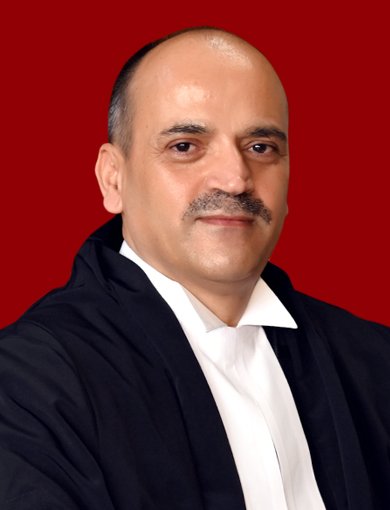
2026:HHC:7980
IN THE HIGH COURT OF HIMACHAL PRADESH, SHIMLA
Cr. Appeal No. 290 of 2014
Reserved on: 25.02.2026
Date of Decision: 20.03.2026
State of H.P. ...Appellant
Versus
Rakesh Kumar & Ors. ...Respondents
Coram
Hon’ble Mr Justice Rakesh Kainthla, Judge.
Whether approved for reporting?
1
No
For the Appellant/State : Mr Ajit Sharma, Deputy Advocate
General, Advocate.
For the Respondents : Mr P.P. Chauhan, Advocate.
Rakesh Kainthla, Judge
The present appeal is directed against the judgment
dated 30.04.2014 passed by learned Judicial Magistrate First Class,
Dharamshala, District Kangra, H.P. (learned Trial Court) vide
which the respondents (accused before learned Trial Court) were
acquitted of the commission of offences punishable under
Sections 147, 148, 323, and 325, read with Section 149 of the Indian
Penal Code (IPC). (Parties shall hereinafter be referred to in the same
1 Whether reporters of Local Papers may be allowed to see the judgment? Yes.
2
2026:HHC:7980
manner as they were arrayed before the learned Trial Court for
convenience.)
2. Briefly stated, the facts giving rise to the present appeal
are that the police filed a charge sheet against the accused persons
for the commission of offences punishable under Sections 147,
148, 323 and 325 read with Section 149 of the IPC. It was asserted
that the informant, Rajnish Kumar, was running a shop. He and
his brother Sajneesh Kumar (PW2) were closing the shop on
14.02.2009 at about 8:30 PM. Rakesh Kumar @ Rinku and Pankaj
@ Pinku came to the shop and started abusing them. Rakesh
Kumar inflicted a blow on the informant’s head by means of a
brick. Rakesh and Pankaj gave beatings to the informant and
Sajneesh Kumar (PW2). Prakash Chand, Shareshtha Devi and
Mona Devi also came to the spot. They also gave beatings to the
informant and his brother. The matter was reported to the police.
An entry (Ext.PW8/A) was recorded in the police station. An
application (Ext.PW-10/E) was filed for medical examination of
the injured. Dr Inder Mohan (PW9) examined Rajnish Kumar
(PW1) and found that he had sustained multiple injuries. He
referred Rajnish Kumar (PW1) to the Dental Surgeon for expert
opinion. Dr Randeep Kumar (PW6) examined Rajnish Kumar
3
2026:HHC:7980
(PW1) and found that one tooth was missing. He issued the report
(Ext.PW6/A). Dr Inder Mohan (PW9) issued a final opinion stating
that the nature of the injury was grievous, which could have been
caused within six hours of the examination. He issued the MLC
(Ext.PW9/A). Dr Inder Mohan (PW9) examined Sajneesh Kumar
(PW2) and found that he had sustained multiple injuries, which
could have been caused by means of a blunt weapon. He issued the
report (Ext.PW9/B). The police registered the FIR (Ext.PW10/F)
after the receipt of the medical opinion. ASI Dalip Singh (PW10)
investigated the matter. He visited the spot and prepared the site
plan (Ext.PW10/A). Rajnish Kumar (PW1) produced three pieces of
bricks (Ext.P1 to Ext.P3) which were put in a cloth parcel, the
parcel was sealed with four impressions of seal ‘M’, and it was
seized vide memo (Ext.PW1/A). Statements of witnesses were
recorded as per their version, and after the completion of the
investigation, the challan was prepared and presented before the
learned Trial Court.
3. Learned Trial Court found sufficient reasons to
summon the accused persons. When the accused persons
appeared, they were charged with the commission of offences
punishable under Sections 147, 148, 323 and 325, read with Section
4
2026:HHC:7980
149 of the IPC, to which they pleaded not guilty and claimed to be
tried.
4. The prosecution examined eleven witnesses to prove its
case. Informant Rajnish Kumar (PW1) and the victim Sajneesh
Kumar (PW2) narrated the incident. Baldev Kumar (PW3) and
Naresh Kumar (PW7) are eyewitnesses. Budhi Singh (PW4)
witnessed the recovery. Ashwani Kumar (PW5) did not support the
prosecution’s case. Dr Randeep Kumar (PW6), Dental Surgeon,
examined Rajnish. HC Arjun Pal (PW8) proved the entry in the
daily diary. Dr Inder Mohan (PW9) medically examined the victim.
ASI Dalip Singh (PW10) investigated the matter. Inspector
Bahadur Singh (PW11) signed the FIR and prepared the challan.
5. The accused, in their statements recorded under
Section 313 of Cr.P.C., denied the prosecution’s case in its entirety.
They claimed that the witnesses were the informant’s relatives,
and they made false statements against the accused because of the
land dispute. They tendered documents in evidence.
6. Learned Trial Court held that the relationship between
the parties was strained because of the land dispute. The
informant admitted that other persons were present in the shop;
5
2026:HHC:7980
however, no such person was examined. The FIR was registered on
17.02.2009, whereas the incident had occurred on 14.02.2009. The
FIR was not sent to the learned Magistrate within time and was
sent on 19.02.2009. This made the prosecution’s case suspect.
Hence, the learned Trial Court acquitted the accused.
7. Being aggrieved by the judgment passed by the learned
Trial Court, the State has filed the present appeal asserting that
the learned Trial Court failed to appreciate the evidence in a
proper perspective. The statements of prosecution witnesses were
discarded without any cogent reason. Sajneesh Kumar (PW2),
Baldev Kumar (PW3) and Naresh Kumar (PW7) had corroborated
the informant’s version. Baldev Kumar (PW3) and Naresh Kumar
(PW7) were independent witnesses and had no reason to support
the informant. Their testimonies were duly corroborated by the
statements of the Medical Officers. The matter was reported to the
police on the same day, and an entry was recorded in the Police
Station. This entry was ignored by the learned Trial Court.
Therefore, it was prayed that the present appeal be allowed and
the judgment passed by the learned Trial Court be set aside.
6
2026:HHC:7980
8. I have heard Mr Ajit Sharma, learned Deputy Advocate
General for the appellant/State and Mr P.P. Chauhan, learned
counsel for the respondents/accused.
9. Mr Ajit Sharma, learned Deputy Advocate General for
the appellant/State, submitted that the learned Trial Court failed
to properly appreciate the material on record. The matter was
reported to the police on the same day, and an entry in the daily
diary was recorded. The FIR was registered after the medical
examination. This was ignored by the learned Trial Court. Enmity
is a double-edged weapon and cannot be used to discard the
prosecution’s case. Learned Trial Court had taken an unreasonable
view of the matter. He prayed that the present appeal be allowed
and the judgment passed by the learned Trial Court be set aside.
10. Mr P.P. Chauhan, learned counsel for the
respondents/accused, submitted that the relationship between the
parties was strained over the land. The FIR was sent belatedly to
the learned Magistrate, and the learned Trial Court had rightly
drawn an adverse inference against the prosecution for doing so.
Learned Trial Court had taken a reasonable view, and this Court
should not interfere with the reasonable view of the learned Trial
7
2026:HHC:7980
Court while deciding the appeal against an acquittal. Hence, he
prayed that the present appeal be dismissed.
11. I have given considerable thought to the submissions
made at the bar and have gone through the records carefully.
12. The present appeal has been filed against a judgment of
acquittal. It was laid down by the Hon’ble Supreme Court in
Surendra Singh v. State of Uttarakhand, (2025) 5 SCC 433: 2025 SCC
OnLine SC 176 that the Court can interfere with a judgment of
acquittal if it is patently perverse, is based on misreading of
evidence, omission to consider the material evidence and no
reasonable person could have recorded the acquittal based on the
evidence led before the learned Trial Court. It was observed at page
438:
“24. It could thus be seen that it is a settled legal position that
the interference with the finding of acquittal recorded by the
learned trial Judge would be warranted by the High Court only
if the judgment of acquittal suffers from patent perversity;
that the same is based on a misreading/omission to consider
material evidence on record; and that no two reasonable views
are possible and only the view consistent with the guilt of the
accused is possible from the evidence available on record.”
13. This position was reiterated in State of M.P. v. Ramveer
Singh, 2025 SCC OnLine SC 1743, wherein it was observed:
“21. We may note that the present appeal is one against
acquittal. Law is well-settled by a plethora of judgments of
8
2026:HHC:7980
this Court that, in an appeal against acquittal, unless the
finding of acquittal is perverse on the face of the record and
the only possible view based on the evidence is consistent
with the guilt of the accused, only in such an event, should
the appellate Court interfere with a judgment of acquittal.
Where two views are possible, i.e., one consistent with the
acquittal and the other holding the accused guilty, the
appellate Court should refuse to interfere with the
judgment of acquittal. Reference in this regard may be made
to the judgments of this Court in the cases of Babu
Sahebagouda Rudragoudar v. State of Karnataka (2024) 8 SCC
149; H.D. Sundara v. State of Karnataka (2023) 9 SCC 581, and
Rajesh Prasad v. State of Bihar (2022) 3 SCC 471.”
14. The present appeal has to be decided as per the
parameters laid down by the Hon’ble Supreme Court.
15. Rajnish Kumar (PW1) stated that he had reported the
matter to the police on the same day, and he was taken to the
hospital for medical examination. This is duly corroborated by the
statement of HC Arjun Pal (PW8), who stated that Rajnish Kumar
and Sajneesh Kumar (PW2) had visited the Police Station on
14.02.2009 and reported the matter to him. An entry No. 26(A)
(Ext.PW8/A) was registered in the Police Station, and the injured
were taken to the hospital for their medical examination.
16. The entry (Ext.PW8/A) mentions that Rakesh Kumar
and Pankaj Kumar had inflicted injuries on the informant and his
brother in their shop. Rakesh inflicted a blow by means of a brick
upon the head of the informant. Parkash Chand, Shareshtha Devi
9
2026:HHC:7980
and Mona Devi also came to the spot, and they gave beatings to
the victim. This version was subsequently incorporated into the
FIR.
17. Learned Trial Court held that the police should have
registered the FIR, and the registration of the FIR on 17.02.2009
made the prosecution’s case suspect. This finding cannot be
sustained. The police had referred the victims for their medical
examination, and the dental surgeon had issued his opinion on
17.02.2009 at 11:30 AM stating that a fracture was detected.
Thereafter, the police registered the FIR at 4:45 PM. The
informant had narrated the incident to the police, and if the police
had only recorded an entry in the daily diary instead of registering
the FIR, the informant could not be faulted; hence, the findings
recorded by the learned Trial Court that the FIR was lodged
belatedly, which made the prosecution’s case suspect, cannot be
sustained.
18. The informant, Rajnish Kumar (PW1), admitted in his
cross-examination that his sister Shareshtha and her family
members were residing on the land of his parents. He admitted
that his father had executed a gift deed of 10 marla of land in
favour of Prakash Chand, and the possession was delivered to him.
10
2026:HHC:7980
He volunteered to say that Prakash Chand has encroached upon
more than 10 biswa of the land. Sajneesh Kumar (PW2) also stated
in his cross-examination that Shareshtha and her family
members were residing on the land of his parents. He admitted
that a gift deed was executed by his father in favour of the accused.
He admitted that, as per him, Prakash has encroached upon more
land than was gifted to him. He admitted that the accused were in
possession of the area in front of the shops.
19. These admissions show that the relationship between
the parties is strained over the land occupied by Prakash Chand,
and the learned Trial Court was justified in seeking the
corroboration of the statements of the informant and his brother.
20. Dr Randeep Kumar (PW6) examined Rajnish Kumar
and found chronic destructive periodontitis, calculus, generalised
gingival recession, and one missing tooth. The socket was empty.
No corresponding soft tissue injury was present. The injury could
have been caused by means of fist blows or striking of any hard
object, like a piece of brick, within 2-3 days of the examination. He
stated in his cross-examination that three teeth of the patient
were missing and 13 teeth were mobile. The fresh missing tooth
was uprooted in a natural way, as the other teeth were also mobile.
11
2026:HHC:7980
21. The statement in the cross-examination that the teeth
had been uprooted naturally, and the other teeth were also mobile,
makes the prosecution’s case suspect.
22. Dr Inder Mohan (PW9) examined Rajnish Kumar (PW1)
and found that he was smelling of alcohol. Rajnish Kumar (PW1)
admitted in his cross-examination that he and his brother had
consumed alcohol on the date of the incident. He volunteered to
say that a birthday was being celebrated on the date of the
incident. Rajnish Kumar (PW1) denied that he had consumed
alcohol on 14.02.2009. He volunteered to say that he had
consumed Beer. Thus, the medical evidence, the admission of the
informant and the witness show that the informant and the victim
had consumed alcohol. This would assume significance because Dr
Randeep Kumar (PW6) stated that the injury noticed by him could
have been caused by way of fall. Dr Inder Mohan (PW9) also stated
in his cross-examination that the injury noticed by him could
have been caused by a fall under the influence of alcohol.
23. Rajnish Kumar (PW1) stated that he and his brother
were closing the shop. Rakesh and Pankaj came to the shop and
started abusing him. He enquired as to why they were hurling the
abuses. The accused started beating him and his brother. They
12
2026:HHC:7980
picked up a piece of brick lying near the shop and inflicted injury
on the head and the face. They gave beatings to his brother with
kicks and fist blows. They also bit him (the informant) with their
teeth. Prakash, Shareshtha and Mona Devi also came to the spot,
and they gave beatings. Pradeep and Naresh came to the spot and
rescued them.
24. The statement made by the informant in the Court that
the accused had bitten the informant with teeth is an
improvement because this fact has not been mentioned in the FIR,
and the Medical Officer had not noticed any bite marks. This
improvement shows the informant’s desperation to secure the
conviction at any cost.
25. Sajnish Kumar (PW2) stated that he and his brother
were closing the shop. Rakesh and Pankaj came to the spot and
started abusing them. When the informant asked them not to hurl
abuses, they picked up the pieces of brick and inflicted injuries on
his head and face. The accused gave him beatings with kicks and
fist blows. Parkash and Shareshtha came to the spot, and they
gave him beatings. Baldev and Naresh rescued him.
13
2026:HHC:7980
26. This witness has not mentioned Mona Devi as the
assailant, who was named by the informant and was also
mentioned in the FIR. Thus, he has contradicted the informant’s
statement regarding the assailants.
27. Baldev Kumar (PW3) stated that he was going to his
home on foot. He reached the shop of Rajnish Kumar (PW1) and
found that a quarrel was going on. Rajnish Kumar (PW1) and his
brother were being beaten by his brother-in-law and nephew.
Rajnish Kumar (PW1) had sustained an injury on the face.
28. This witness has only named the brother-in-law and
the informant as the assailants. He has left Shareshtha and Mona
Devi.
29. Baldev Kumar (PW3) stated in his cross-examination
that he used to purchase articles from the shop of Rajnish Kumar
(PW1). He admitted that Rajnish and Sajneesh had taken him to
the Police Station on 16.02.2009, when his statement was
recorded. He admitted that he had consumed alcohol, but could
not see whether Rajnish Kumar (PW1) and Sajneesh Kumar (PW2)
had also consumed alcohol.
14
2026:HHC:7980
30. He is a resident of a different village. He claimed that he
was going to his home on foot. He admitted in his cross-
examination that it takes about 15 minutes to cover the distance in
a bus, but he volunteered to say that he used to travel on foot. He is
known to Rajnish Kumar (PW1) as he used to purchase articles
from him. The bus is a convenient method of transportation, but
he did not opt for it. He is a chance witness. It was laid down by the
Hon’ble Supreme Court in Harbeer Singh v. Sheeshpal, (2016) 16
SCC 418: (2017) 4 SCC (Cri) 503: 2016 SCC OnLine SC 1164 that the
chance witnesses have a habit of appearing suddenly at the place
of the incident and thereafter disappearing. Their testimonies
should be seen with due care and caution. It was observed at page
427:
23. The defining attributes of a “chance witness” were
explained by Mahajan, J., in Puran v. State of Punjab, (1952) 2
SCC 454: AIR 1953 SC 459: 1953 Cri LJ 1925. It was held that
such witnesses have the habit of appearing suddenly on the
scene when something is happening and then disappearing
after noticing the occurrence about which they are called
later on to give evidence.
24. In Mousam Singha Roy v. State of W.B., (2003) 12 SCC 377:
2004 SCC (Cri) Supp 429, this Court discarded the evidence
of chance witnesses while observing that certain glaring
contradictions/omissions in the evidence of PW 2 and PW 3
and the absence of their names in the FIR has been very
lightly discarded by the courts below. Similarly, Shankarlal
v. State of Rajasthan, (2004) 10 SCC 632: 2005 SCC (Cri) 579
15
2026:HHC:7980
and Jarnail Singh v. State of Punjab, (2009) 9 SCC 719: (2010)
1 SCC (Cri) 107 are authorities for the proposition that
deposition of a chance witness, whose presence at the place
of incident remains doubtful, ought to be discarded.
Therefore, for the reasons recorded by the High Court, we
hold that PW 5 and PW 6 were chance witnesses and their
statements have been rightly discarded.
31. It was laid down by the Hon’ble Supreme Court, Rajesh
Yadav v. State of U.P., (2022) 12 SCC 200: 2022 SCC OnLine SC 150
that the testimony of a chance witness is to be seen with due care
and caution and his presence on the spot should be satisfactorily
established. It was observed:
“Chance witness
29. A chance witness is one who happens to be at the place
of occurrence of an offence by chance, and therefore, not as
a matter of course. In other words, he is not expected to be
in the said place. A person walking on a street witnessing
the commission of an offence can be a chance witness.
Merely because a witness happens to see an occurrence by
chance, his testimony cannot be eschewed, though a little
more scrutiny may be required at times. This again is an
aspect that is to be looked into in a given case by the court.
We do not wish to reiterate the aforesaid position of law
which has been clearly laid down by this Court in State of
A.P. v. K. Srinivasulu Reddy [State of A.P. v. K. Srinivasulu
Reddy, (2003) 12 SCC 660: 2005 SCC (Cri) 817]: (SCC pp. 665-
66, paras 12-13)
“12. Criticism was levelled against the evidence of PWs 4
and 9, who are independent witnesses, by labelling them
as chance witnesses. The criticism about PWs 4 and 9
being chance witnesses is also without any foundation.
They have clearly explained how they happened to be at
16
2026:HHC:7980
the spot of occurrence, and the trial court and the High
Court have accepted the same.
13. Coming to the plea of the accused that PWs 4 and 9
were “chance witnesses” who have not explained how
they happened to be at the alleged place of occurrence, it
has to be noted that the said witnesses were independent
witnesses. There was not even a suggestion to the
witnesses that they had any animosity towards any of
the accused. In a murder trial, by describing the
independent witnesses as “chance witnesses”, it cannot
be implied thereby that their evidence is suspicious and
their presence at the scene doubtful. Murders are not
committed with previous notice to witnesses; soliciting
their presence. If murder is committed in a dwelling
house, the inmates of the house are natural witnesses. If
a murder is committed in a street, only passers-by will
be witnesses. Their evidence cannot be brushed aside or
viewed with suspicion on the ground that they are mere
“chance witnesses”. The expression “chance witness” is
borrowed from countries where every man's home is
considered his castle, and everyone must have an
explanation for his presence elsewhere or in another
man's castle. It is quite an unsuitable expression in a
country where people are less formal and more casual, at
any rate in the matter of explaining their presence.”
30. The principle was reiterated by this Court in Jarnail
Singh v. State of Punjab, (2009) 9 SCC 719: (2010) 1 SCC (Cri)
107: (SCC p. 725, paras 21-23)
“21. In Sachchey Lal Tiwari v. State of U.P., (2004) 11
SCC 410: 2004 SCC (Cri) Supp 105, this Court, while
considering the evidentiary value of the chance
witness in a case of murder which had taken place in a
street and a passer-by had deposed that he had
witnessed the incident, observed as under:
If the offence is committed in a street, only a
passer-by will be the witness. His evidence
cannot be brushed aside lightly or viewed with
suspicion on the ground that he was a mere
17
2026:HHC:7980
chance witness. However, there must be an
explanation for his presence there.
The Court further explained that the expression
“chance witness” is borrowed from countries where
every man's home is considered his castle, and
everyone must have an explanation for his presence
elsewhere or in another man's castle. It is quite an
unsuitable expression in a country like India, where
people are less formal and more casual, at any rate in
the matter of explaining their presence.
22. The evidence of a chance witness requires very
cautious and close scrutiny and a chance witness
must adequately explain his presence at the place of
occurrence (Satbir v. Surat Singh, (1997) 4 SCC 192:
1997 SCC (Cri) 538, Harjinder Singh v. State of Punjab,
(2004) 11 SCC 253: 2004 SCC (Cri) Supp 28,
Acharaparambath Pradeepan v. State of Kerala, (2006)
13 SCC 643 : (2008) 1 SCC (Cri) 241 and Sarvesh Narain
Shukla v. Daroga Singh, (2007) 13 SCC 360 : (2009) 1
SCC (Cri) 188 ). Deposition of a chance witness whose
presence at the place of the incident remains doubtful
should be discarded (vide Shankarlal v. State of
Rajasthan, (2004) 10 SCC 632: 2005 SCC (Cri) 579).
23. Conduct of the chance witness, subsequent to the
incident, may also be taken into consideration,
particularly as to whether he has informed anyone
else in the village about the incident (vide Thangaiya
v. State of T.N., (2005) 9 SCC 650: 2005 SCC (Cri) 1284).
Gurcharan Singh (PW 18) met the informant Darshan
Singh (PW 4) before lodging the FIR, and the fact of
conspiracy was not disclosed by Gurcharan Singh (PW
18) or Darshan Singh (PW 4). The fact of a conspiracy
has not been mentioned in the FIR. Hakam Singh, the
other witness on this issue, has not been examined by
the prosecution. Thus, the High Court was justified in
discarding the part of the prosecution’s case relating
to conspiracy. However, in the fact situation of the
present case, the acquittal of the said two co-accused
18
2026:HHC:7980
has no bearing, so far as the present appeal is
concerned.”
32. Baldev Kumar (PW3) stated that he had tried to rescue
the informant but did not sustain any injuries in the incident. He
omitted the names of Shareshtha and Mona Devi, who were
present on the spot as per the prosecution. All these circumstances
make it difficult to place reliance on his testimony.
33. Naresh Kumar (PW7) stated that he was going to his
home on 14.02.2009 at about 9 PM and saw that the relatives of
Rajnish Kumar (PW1) and his nephew were quarrelling with
Rajnish Kumar (PW1). They inflicted injuries to Rajnish Kumar
with bricks, kicks and fist blows. The accused left the spot.
34. This witness has not named any particular accused but
has used the generalised term ‘accused present in the Court’. He
did not state that injuries were caused to Sajneesh Kumar (PW2) in
his presence. He claimed that the informant Rajnish had sustained
injuries on his back and on his face. Nobody stated that informant
Rajnish had also sustained injuries on his back. He stated that
many people were present on the spot who had rescued the
informant from the accused. It was nobody's case that many
people were present on the spot; rather, the prosecution version is
19
2026:HHC:7980
that he and Baldev Kumar (PW3) were present on the spot.
Therefore, his testimony is not reliable and was rightly rejected by
the learned Trial Court.
35. Thus, the statements of the prosecution witnesses were
not credible. Learned Trial Court had taken a reasonable view
while doubting these testimonies, and this Court will not interfere
with the reasonable view of the learned Trial Court, even if
another view is possible.
36. In view of the above, the present appeal fails, and the
same is dismissed, and so are the pending miscellaneous
applications, if any.
37. In view of the provisions of Section 437-A of the Code
of Criminal Procedure (Section 481 of Bhartiya Nagarik Suraksha
Sanhita, 2023) the respondents/accused are directed to furnish
bail bonds in the sum of ₹25,000/- each with one surety each in
the like amount to the satisfaction of the learned Trial Court
within four weeks, which shall be effective for six months with
stipulation that in the event of Special Leave Petition being filed
against this judgment, or on grant of the leave, the
20
2026:HHC:7980
respondents/accused on receipt of notice thereof, shall appear
before the Hon’ble Supreme Court.
38. A copy of the judgment, along with records of the
learned Trial Court, be sent back forthwith.
(Rakesh Kainthla)
Judge
20
th
March, 2026
(Nikita)

Legal Notes
Add a Note....