
As per case facts, the State of Madhya Pradesh appealed against a High Court judgment that allowed a writ petition. The writ petition had challenged a demand notice for excess ...
1
REPORTABLE
IN THE SUPREME COURT OF INDIA
CIVIL APPELLATE JURISDICTION
CIVIL APPEAL NO.921922 OF 2008
STATE OF M.P. & ANR. .... APPELLANTS
VERSUS
KEDIA GREAT GALEON LTD. & ANR. .... RESPONDENTS
J U D G M E N T
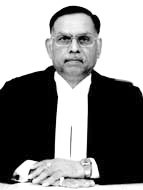
ASHOK BHUSHAN, J.
1.These appeals have been filed by the State of
Madhya Pradesh against the judgment and order dated
04.05.2000 of the High Court by which judgment the
writ petition filed by the Respondents has been
allowed and demand of Rs. 13,24,189.50, claiming to be
excess expenditure incurred on State Government
establishment on Distillery of respondents has been
setaside.
2.Brief facts of the case are:
The Respondent Kedia Great Galeon Ltd. & Anr. held
a licence under Madhya Pradesh Distillery Rules, 1995
2
(hereinafter referred to as Rules 1995) for
manufacturing of Liquor/Spirit. A notice dated 23
rd
March, 1999 was issued to Respondent No. 1 by the
District Excise Officer, demanding an amount of Rs.
13,24,189.50 as excess expenditure on the
establishment of officers and employees as per Rule
4(41) of Madhya Pradesh Distillery Rules, 1995
pertaining to year 199596, 199697 and 199798.
3.The Respondents aggrieved by the above notice
filed a writ petition in the High Court of Madhya
Pradesh, Bench at Indore being Writ Petition No. 589
of 1999. The Respondent in its writ petition placed
reliance on a judgment of this Court in M/s. Lilasons
Breweries (Pvt.) Ltd. versus State of Madhya Pradesh
and Others, (1992) 3 SCC 293 , in which case Rule 22 of
Madhya Pradesh Brewery Rules, 1970 which also entitled
the State to realise from the brewery charges on
officers exceeding five per cent of the duty leviable
was struck down. Respondents pleaded in the writ
petition that Rule 4(41) of the Rules, 1995 is also
non est and void, consequently demand raised on the
strength of such rule is liable to be struck down. In
3
the writ petition following prayers were made in Para
7 by the Respondents:
“(i)A writ, direction or order in
the nature of mandamus or as deemed
fit be issued quashing the order
Annexure/2 and it be declared that
no demand can be raised under Rule
4(41) of the Distillery Rules.
(ii)Such other relief be granted as
deemed fit.
(iii) This petition be allowed with
costs.”
4.A counteraffidavit was filed by the State,
stating that Rule 22 of M. P. Breweries Rules, 1970 is
out of context and has no relevance since the demand
has been raised under Rule 4(41) of Rules, 1995.
5.State pleaded that demand made by the State is
proper and cannot be struck down, however, if the writ
petitioner wishes to challenge the vires of Rule
4(41), same can be challenged before the Constitution
Bench.
6.A learned Single Judge allowed the writ petition
and quashed the demand notice. Learned Single Judge
although, opined that Rule 4(41) of the Rules 1995
appears to be ultra vires to the Madhya Pradesh Excise
4
Act beyond the rule making power, however since no
such prayer is made by the writ petitioner, no order
in this behalf can be passed in the rules by Bench at
Indore.
7.Learned Single Judge, however, held that decision
of this Court in Lilasons (Supra) renders the demand
notice Annexure P.2, as void. Learned Single Judge
also held that the demand towards establishment
charges is more than 150 per cent of the total income
of the distilleries on the basis of which, the demand
is arbitrary and unreasonable.
8.Aggrieved by the judgment of learned Single Judge,
the State filed a Letter Patents Appeal before the
Division Bench of the High Court, which was dismissed
on 06.09.2005, as not maintainable.
9.Aggrieved by the judgment of learned Single Judge
as well as the judgment of the Division Bench of the
High Court, these appeals have been filed by the State
of M.P.
10.We have heard Shri Ankit Kumar Lal, Learned
Counsel appearing for the State of M.P. and Shri
5
Jayant Kumar Mehta, learned counsel appearing for the
respondents.
11.Learned counsel for the appellants in support of
the appeal contends that the judgment of the learned
Single Judge, declaring the demand, as void is
erroneous. It is contended that the learned Single
Judge, relying on the judgment of Lilasons case had
declared the demand, as void whereas, judgment of the
Lilasons was concerned with Rule 22 of M. P. Breweries
Rules 1970, but the demand impugned before the High
Court was raised under Rule 4(41) of the Rules 1995.
12.Learned Counsel also submits that the judgment of
Lilasons has not been followed by this Court in some
subsequent judgments. It is submitted that in the
writ petition, there was no challenge to Rule 4(41) of
Rules 1995, hence, the demand which was fully covered
by Rule 4(41) could not have been struck down. It is
submitted that Rule 4 (41) is intra vires and the
State in accordance with the M. P. Excise Act, 1915 is
fully entitled to realise the above demand. The
demand raised under Rule 4(41) was fully covered
6
under Section 27 and 28 of the M.P. Excise Act, 1915.
Learned Counsel submits that licensee having taken the
licence under the conditions, as contained under Rule
4(41) of Rules 1995, cannot turn round and challenge
the demand. He submits that provisions for realization
of establishment charges from licensee are contained
in different Excise Acts of various States and such
provisions have been held to be intra vires, by this
Court.
13.Shri Mehta, learned counsel appearing for the
respondents, refuting the submissions of the learned
counsel for the appellants contends that the judgment
of Lilasons (supra) is fully applicable in the facts
of the present case and had rightly been relied by
learned Single Judge for quashing the demand. Learned
counsel submits that in the writ petition, there were
specific grounds, challenging the vires of Rule 4(41)
and the mere fact that no specific relief was claimed
in the writ petition is inconsequential and this Court
can very well examine the vires of the rule, which
rule is liable to be struck down following the
judgment of this Court in Lilasons (supra). It is
7
contended that the expenditure on the establishment is
claimed as 150 per cent on revenue earned whereas,
rule making authority has contemplated 5 per cent of
revenue to meet the establishment charges, the demand
is unreasonable and arbitrary and exorbitant. Learned
counsel has relied on Para 9 of the judgment of
learned Single Judge where the demand has been held to
be arbitrary and unreasonable. Learned Counsel further
pointed out that from the demand notice, it is
apparent that there was no revenue earned in the year
199697 whereas, expenditure in excess of 5 per cent
have been claimed as Rs.4,36,897/.
14.Learned counsel further contended that the State
itself in subsequent years have changed its policy and
instead of realising the demand in excess of 5 per
cent of revenue, now a fix amount is charged from the
licensee. He contended that there was no provision in
the Act to realise such charges prior to insertion of
Section 28A in the M. P. Excise Act, 1995 by M.P. Act
No. 24 of 2000 which indicates that charges were not
recoverable from the licensee.
8
15.We have heard the submissions of the learned
counsel for the parties and perused the records.
16.The Trade of Liquor is in existence from the time
immemorial. All civilized societies had soon realised
the necessity to control and regulate such trade. In
an early decision, Field, J in Crowley versus
Christensen 34 L ED 620 had made the following
observations in the above context:
"The sale of such liquors in this
way has, therefore, been, at all
times, by the courts of every State,
considered as the proper subject of
legislative regulation. Not only may
a licence be exacted from the keeper
of the saloon before a glass of his
liquors can be thus disposed of, but
restrictions may be imposed as to
the class of persons to whom they
may be sold, and the hours of the
day, and the days of the week on
which the saloons may be opened.
Their sale in that form may be
absolutely prohibited. It is a
question of public expediency and
public morality, and not of federal
law. The police power of the State
is fully competent to regulate the
business – to mitigate its evils or
to suppress it entirely. There is
no inherent right in a citizen to
thus sell intoxicating liquors by
retail; it is not a privilege of a
citizen of the State or of a citizen
9
of the United States. As it is a
business attended with danger to the
community, it may, as already said,
be entirely prohibited, or be
permitted under such conditions as
as will limit to the utmost its
evils. The manner and extent of
regulation rest in the discretion of
the governing authority. That
authority may vest in such officers
as it may deem proper the power of
passing upon applications for
permission to carry it on, and to
issue licences for that purpose. It
is a matter of legislative will
only.”
17.This Court in Cooverjee B. Bharucha versus The
Excise Commissioner, Ajmer, AIR 1954 SCC 220,
speaking through Mahajan, C.J., after approving the
above passage of Field, J. stated:
“These observations have our entire
concurrence and they completely
negative the contention raised on
behalf of the petitions. The
provisions of the Regulation purport
to regulate trade in liquor in all
its different spheres and are
valid.”
18.Mahajan, C.J., further held in above case:
"It can also not be denied that the
State has the power to prohibit the
trades which are illegal or immoral
or injurious to the health and
welfare of the public. Laws
prohibiting the trades in noxious or
10
dangerous goods or trafficking in
women cannot be held to be illegal
as enacting a prohibition and not a
mere regulation.”
19.Justice Y. V. Chandrachood, speaking through a
Constitution Bench in Har Shankar and Others versus
The Deputy Excise and Taxation Commissioner and
Others, (1975) 1 SCC 737, referring to various earlier
Constitution Benches of this Court laid down following
in Para 45 & 47:
"45.In Nagendra Nath Bora v.
Commissioner of Hills Division and
Appeals, Assam, the decisions in
Cooverjee's case (supra) and
Kidwai's case(supra) were cited by a
Constitution Bench as laying down
the proposition that there was no
inherent right in a citizen to sell
liquor and that the control and
restriction over the consumption of
intoxicating liquors was necessary
for the preservation of public
health and morals and to raise
revenue.”
"47.These unanimous decisions of
five Constitution Benches uniformly
emphasized after a careful
consideration of the problem
involved that the State has the
power to prohibit trades which are
injurious to the health and welfare
of the public, that elimination and
exclusion from business is inherent
in the nature of liquor business,
that no person has an absolute right
11
to deal in liquor and that all forms
of dealings in liquor have, from
their inherent nature, been treated
as a class by themselves by all
civilized communities. The
contention that the citizen had
either a natural or a fundamental
right to carry on trade or business
in liquor thus stood rejected.”
20.This Court in the above Constitution Bench has
also held that one of the main purposes of selling the
exclusive rights of liquor is to raise the Revenue.
Following was stated in para 51:
"...After referring to the decisions
in Cooverjee's case (supra) and
Krishna Kumar Narula's case (supra)
it was observed that one of the
important purposes of selling the
exclusive right to vend liquor was
to raise revenue and since the
Government had the power to sell
exclusive privileges there was no
basis for contending that the owner
of the privileges could not decline
to accept the highest bid if he
thought that the price offered was
inadequate. Hegde, J. speaking for
the Division Bench observed:(SCC
p. 44, Para 13)
The fact that the Government was
the seller does not change the legal
position once its exclusive right to
deal with those privileges is
conceded. If the Government is the
exclusive owner of those privileges,
reliance on Article 19(1)(g) or
Article 14 becomes irrelevant.
Citizens cannot have any fundamental
12
right to trade or carry on business
in the properties or rights
belonging to the Government nor can
there be any infringement of Article
14, if the Government tries to get
the best available price for its
valuable rights.”
21.While delving into the nature of licence fee
charged for granting the privilege to manufacture/sale
intoxicant, Constitution Bench further laid in para
59:
"The amount charged to the licensees
is not a fee properly socalled nor
indeed a tax but is in the nature of
the price of a privilege, which the
purchaser has to pay in any trading
or business transactions.”
22.Those who come forward to seek the above privilege
of the State to manufacture or sell the liquor have to
abide by the statutory regulations and terms and
conditions of the licence. The privilege is not thrust
upon anyone rather it is sought by intending persons
or parties by participating in auctions for settling
such right or by obtaining licence for such privilege
in accordance with the statutory provisions.
23.After noticing the nature of the privilege,
pertaining to manufacture and sale of intoxicant it is
13
relevant to have a birds eye view on the relevant
statutory provisions governing the field.
24.The Central Provinces Act 1915 (M.P. Excise Act
1915 hereinafter referred to as Act 1915) was enacted
to consolidate and amend the laws relating to
importexport, transport, manufacture, sale and
possession of intoxicating liquor and drugs.
Chapter IV of the Act deals with manufacture,
possession and sale. Section 13 provides that no
intoxicant shall be manufactured or collected except
under the authority and subject to the terms and
conditions of a licence granted in that behalf.
Section 14 deals with establishment and licensing of
distilleries and warehouses. Section 18 deals with the
power to grant lease of right to manufacture,
etc..Section 18 (1) is quoted below.
"18.1. The State Government may
lease to any person, on such
conditions and for such period as it
may think fi9t, the right
(a)of Manufacturing, or of
supplying by wholesale or of both,
or
(b)of selling by wholesale or by
retail, or
(c)of manufacturing or of
14
supplying by wholesale, or of both,
and selling by retail,
any 1[omitted by Madhya Pradesh Act
No. 19 of 1964]”liquor or
intoxicating drug within any
specified area.
25.Chapter V deals with the duties and fees. Section
25 (1) deals with the duty on excisable articles.
Section 25 (1) is quoted below.
"25(1). An excise duty or a
countervailing duty, as the case may
be, shall, if the State Government
so direct, be levied on all
excisable articles other than
medicinal and toilet preparations
specified for the time being in the
Schedule to the Medical and Toilet
Preparation (Excise Duties) Act,
1955 (No. 16 of 1955)
(a)imported; or
(b)exported; or
(c)transported; or
(d)manufactured, cultivated or
collected under any licence granted
under section 13; or
(e) manufactured any distillery
established, or any distillery or
brewery licensed, under this Act:
Provided that it shall be lawful for
the State Government to exempt any
excisable article from duty to which
the same may liable under this
Act.”
26.Section 27 deals with payment for grant of leases.
15
Section 27 is as follows:
”27.1 Instead of or in addition to
any duty leviable under this
Chapter, the State Government may
accept payment of a sum in
consideration of the grant of any
lease under Sec. 18.
27.2 Nothing contained in
subsection (1) shall be construed
to preclude the State Government
from enhancing or reducing the sum
received in consideration of a grant
of any lease under Section 18 during
the course of a financial year or
during the currency of a licence and
power to enhance or reduce the sum
shall include power to give
retrospective effect to such
enhancement or reduction from a date
not earlier than the commencement of
the financial year.”
27.Chapter VI deals with the licences, permits and
passes. Section 28 is as follows:
"28. Form and conditions of licence
etc.
(1).Every permit or pass issued or
licence granted under this Act shall
be issued or granted on payment of
such fees, for such period, subject
to such restrictions and conditions
and shall be in such form and
contain such particulars as may be
prescribed.
(2).The conditions prescribed under
subsection(1) may require, inter
alia the licensee to lift for sale,
16
the minimum quantity of country
spirit or Indianmade liquor, fixed
for his shop and to pay the penalty
at the prescribed rate on the
quantity of liquor short lifted.
(3).Penalty at the prescribed rate
on infraction or infringement of any
conditions laid down in subsection
(1) of specifically enumerated in
subsection(2) shall be leviable on
and recoverable from the licensee.”
28.Section 62 is rule making power of the State. Sub
section 2(1) (h), which is relevant for the present
case is as follows:
"62(1)(h). prescribing the authority
by, the form in which, and terms and
conditions on and subject to which
any licence, permit or pass shall be
granted, and by such rules, among
other matters
(i)fix the period for which any
licence, permit or pass shall
continue in force,
(ii)prescribe the scale of fees or
the manner of fixing the fees
payable in respect of any such
licence, permit or pass,
(iii) prescribe the amount of
security to be deposited by holders
of any licence, permit or pass for
the performance of the conditions of
the same,
(iv) prescribe the accounts to be
maintained and the returns to be
submitted by licenceholders, and
17
(v)prohibit or regulate the
partnership in, or the transfer of,
licences;”
29.In exercise of above power, the State has framed
the rule, namely, Madhya Pradesh Distilleries Rules,
1995. Section 4(41) which is involved in the present
case is as follows:
"4(41) If the expenditure incurred
on the State Government
establishment at a distillery
exceeds five per cent of the
revenues earned on the issues of
spirit therefrom, by export fee or
any other levy, the amount, in
excess of the aforesaid five per
cent, shall be realised from the
distiller.”
30.After noticing the statutory scheme, now we
proceed to consider the issues raised by the learned
counsel for the parties. The first issue which is to
be considered is as to whether this Court need to
examine the vires of Rule 4(41) of 1995 Rules, whereas
in the writ petition filed by the respondents, no
prayer was made to struck down Rule 4(41) of the Rules
1995.
31.Learned counsel for the Respondents submitted that
18
in the writ petition and in the grounds, there was a
challenge to Rule 4(41) and mere omission to claim a
specific relief for declaring Rule 4(41) as ultra
vires cannot preclude examination of the vires of Rule
4(41) and to grant necessary declaration. He has
referred to Para 9 of the Writ Petition , which is to
the following effect:
"That in view of the judgment of the
Hon'ble Supreme Court in the case of
M/s. Leela Sons Brewery Rule 4(41)
of the Distillery Rules is also non
est and void. Consequently no demand
can be raised on the strength of
such a rule hence the demand in
Annexure/1 is liable to be struck
down. AS per the law declared by
the Hon'ble Supreme Court Old Rule
22 of the Brewery Rules is ultra
vires and consequentially Rule 4(41)
of the Distillery Rules is non est.
Hence it is not necessary to seek
separate relief to strike down Rule
4(41).”
32.Learned counsel for the Respondents has also
placed reliance on the judgment of this Court in
Godrej Sara Lee Limited versus Assistant Commissioner
(AA) and Another, (2009) 14 SCC 338 , in support of
the proposition that when the order of an statutory
authority is questioned on the ground that same
19
suffers from lack of jurisdiction, the fact that no
specific prayer has been made is inconsequential. In
above case, following was held in Para 12 & Para 13:
“12.It is true that the appellant,
in its writ petition, has not made a
specific prayer that the said
Notification dated 2112006 was
ultra vires or otherwise illegal
but, as indicated hereinbefore, a
specific ground in that behalf had
been taken in respect thereof.
13. Even otherwise, in our opinion,
the question as to whether the said
notification could have a
retrospective effect or retroactive
operation being a jurisdictional
fact, should have been determined by
the High Court in exercise of its
writ jurisdiction under Article 226
of the Constitution of India as it
is well known that when an order of
a statutory authority is questioned
on the ground that the same suffers
from lack of jurisdiction,
alternative remedy may not be a bar.
(See Whirlpool Corpn. v. Registrar
of Trade Marks and Mumtaz Post
Graduate Degree v.
ViceChancellor.)”
33.The ratio of the aforesaid judgment is contained
in para 13. This Court has laid down that when an
order of the statutory authority is questioned on the
ground that the same suffers from the lack of
20
jurisdiction alternative remedy was not a bar and
Whether the notification dated 21.1.2006 could have a
retrospective effect or retroactive operation being a
jurisdiction affect, the High Court ought to have
determined the question in exercise of its
jurisdiction.
34.The present is not a case where the District
Excise Officer who has issued the notice of demand
lacks jurisdiction nor there was any issue of
retrospective or retroactive operation. The above case
in no manner helps the respondents.
35.The second case relied by the counsel for the
respondent is Girimallappa versus Special Land
Acquisition Officer M and MIP and Another, (2012) 11
SCC 548.
36.In the above case, against an order passed by the
Reference Court, a Land Acquisition Appeal was filed
before the District Judge, seeking enhancement of the
compensation at the rate of Rs. 24000 per acre. In the
appeal before the High Court no specific amount was
demanded.
37.The District Judge allowed the claim of Rs. 24000
21
per acre against which further appeal was filed before
the High Court. Before this Court, it was contended
that the High Court should not have preferred
technicalities over substantial justice in awarding
the compensation. Following was laid down in Para 13
&14:
“13. It was not a case where an
order could be challenged on the
ground that the same is a nullity
for want of competence of the
issuing authority and proper
pleadings including appropriate
grounds challenging the same have
been taken, but no prayer has been
made for quashing the said order. In
such an eventuality the order can be
examined only after considering the
statutory provisions invoked
therein. The court may reach a
conclusion that the order suffers
from lack of jurisdiction.”
"14. In case, the petitioner was
serious about the matter, he could
have amended the memo of appeal and
that application could have been
considered sympathetically by the
High Court as held by this Court in
Harcharan v. State of Haryana. The
facts mentioned in this petition
depict an entirely different picture
and it gives an impression as if the
High Court had not enhanced the
compensation though demanded by the
petitioner for want of payment of
court fees which he could not afford
to pay due to paucity of funds.”
The above case also in no manner helps the
22
respondents.
38. There is an another reason due to which, the above
submission of learned counsel for the respondents
cannot be accepted. As noted above although, in Para 9
of the Writ Petition, petitioner have pleaded that in
view of the judgment of M/s. Lilasons Rule 4(41) of
the 1995 Rules is non est and void. But, there was no
specific prayer in the writ petition. The reason for
not making the specific prayer declaring Rule 4(41) as
ultra vires was not an omission or by oversight. The
pleadings on the record disclose a reason for the
above. In the counteraffidavit filed on behalf of the
State to the Writ Petition brought on record as
Annexure P. 3 in Para 2 following statement has been
made by the State:
"The demand made by the respondent
is proper and cannot be struck down.
However, if the petitioner wish to
challenge the vires of Rule 4(41),
the same can be challenged only
before the Constitutional Bench.”
39.Learned Single Judge, while deciding the writ
petition has also in Para 7 made the following
observations:
"In view of the aforesaid legal
23
position, the Rule 4(41) of the
present Rules, 1995 also appeared to
be ultra vires the M.P. Excise Act
and beyond the rule making power of
the State. However, since no such
prayer is made by the petitioners in
the petition and no order in this
behalf can be passed under the Rules
by this Bench at Indore. I leave
this question here only. However,
the ratio of the decisions in
Lilasons and Kedia Distilleries
(supra) renders the demand
notice(Annexure P.2) as void.”
40.Thus from the above, it is clear that under the
Rules of the High Court, the Bench hearing the writ
petition at Indoor was not competent to pass the
order, declaring Rules ultra vires. The statement in
the counteraffidavit, as noted above indicates that
there was some specific bench for hearing
constitutional issues regarding vires of the Rules.
Thus had the writ petitioner intended to challenge the
vires of the rules, he had to file the writ petition
for appropriate relief before the Bench having
roster to decide the vires. Thus, it is clear that
writ petitioner never intended to challenge the
vires of the Rules, which is apparent from the
reasons, as noted above. We are thus of the considered
opinion that the something which writ petitioner never
24
intended or prayed for cannot be looked into in this
appeal.
41.The learned Single Judge, in the impugned judgment
has struck down the demand, relying on M/s. Lilasons
(supra). As noted above, learned Single Judge in Para
7 held that the ratio of the decision in Lilasons and
Kedia Distilleries renders the demand notice as void.
The judgment of Lilasons having been heavily relied by
learned Single Judge as well as learned counsel for
the respondents, it is necessary to notice the said
judgment in some detail.
42.In Lilasons case, Rule 22 of the M. P. Brewery
Rules 1970 was questioned. Rule 22 of the aforesaid
Rules has been extracted in Para 2 of the judgment
which is to the following effect:
“2. Vires of Rule 22 of the Madhya
Pradesh Brewery Rules, 1970 framed
under Section 62 of the Madhya
Pradesh Excise Act, 1915 stands
questioned. That rule says:
“22. Excise Commissioner to
appoint officer in charge of
brewery.— Every brewery shall be
placed by the Excise Commissioner
under the charge of an Excise
Inspector to be designated as
officer in charge of the brewery.
25
The Excise Commissioner will further
appoint such other officers of the
Excise Department as he may deem fit
to the charge of breweries. The pay
of all such officers shall be met by
the Government; provided that when
the annual charges exceed five per
cent of the duty leviable on the
issues made from the brewery to
districts within the State, the
excess shall be realised from the
brewer.”
43.This Court after noticing Rule 22 and the
provisions of M.P. Excise Act, 1915, Sections 18, 25,
27 and 28, recorded its conclusion in paragraphs 8
and 9 which are extracted below:
“8. Now is the demand a further
duty and hence a further tax or is
it a further fee or consideration
for transferring the right, is the
pointed question. In Bimal Chandra
Banerjee v. State of M.P., this
Court had the occasion to examine
some of the provisions of the Act
inclusive of Sections 27 and 62(2)
(h). Under the conditions of licence
of the then appellants they were
required to make compulsory payment
of excise duty on the quantity of
liquor which they failed to take
delivery of, since those conditions
prescribed the minimum quantity of
liquor which they had to purchase
from the Government. Releasing them
from such obligation, this Court
ruled as follows: (SCC p.471, para
12)
26
“Neither Section 25 nor
Section 26 nor Section 27 nor
Section 62(1) nor clauses (d)
and (h) of Section 62(2)
empower the rulemaking
authority viz. the State
Government to levy tax on
excisable articles which have
not been either imported,
exported, transported,
manufactured, cultivated or
collected under any licence
granted under Section 13 or
manufactured in any distillery
established or any distillery
or brewery licensed under the
Act. The legislature has levied
excise duty only on those
articles which come within the
scope of Section 25. The
rulemaking authority has not
been conferred with any power
to levy duty on any articles
which do not fall within the
scope of Section 25. Therefore
it is not necessary to consider
whether any such power can be
conferred on that authority.
Quite clearly the State
Government purported to levy
duty on liquor which the
contractors failed to lift. In
so doing it was attempting to
exercise a power which it did
not possess.
No tax can be imposed by any
byelaw or rule or regulation
unless the statute under which
the subordinate legislation is
made specially authorises the
imposition even if it is
assumed that the power to tax
can be delegated to the
27
executive. The basis of the
statutory power conferred by
the statute cannot be
transgressed by the rulemaking
authority. A rulemaking
authority has no plenary power.
It has to act within the limits
of the power granted to it.”
The ratio in Banerjee case was
followed in State of M.P. v. Firm
Gappulal and then again in a case
from Uttar Pradesh in Excise
Commissioner, U.P. v. Ram Kumar. Now
if the exaction under Rule 22 of the
Brewery Rules is an exaction not
authorised under Section 25 and is
being made as if additional excise
duty, the three cases aforequoted
would nip the demand outright. But
if it is an additional payment under
Section 27 as consideration for the
grant of licence, or a further fee
or condition of licence, as
contended by the respondentState
then it may have to be sustained. It
would be relevant to take note of
another decision of this Court in
Panna Lal v. State of Rajasthan at
this stage in which the contractual
obligation of the licensee to pay
the guaranteed or stipulated sum
mentioned in the licence was held
not to be dependent on the quantum
of liquor held by him and no excise
duty was held charged or chargeable
on undrawn liquor under the licence.
The aforesaid case cannot advance
the defence of the State for there
is no lump sum payment stipulated as
such in the instant licence. The
licence only mentions that the
licensee would be bound by the
28
Brewery Rules. The High Court in
that situation went on to lean on
Sections 62(2)(h) and 28 when
discovering there was no express
provision in the Act for realisation
of charges in respect of pay of
officers posted for control of
breweries. But when we analyse the
latter part of Rule 22, the
following position emerges:
(i) The pay of all such
officers shall be met by the
Government; [the Government
owns the responsibility]
(ii) if the annual charges do
not exceed 5 per cent of the
duty leviable on the issue made
from the brewery to districts
within the State, nothing is
realisable from the brewer;
(iii) 5 per cent of the duty
has been considered enough from
which to reimburse the
Government for the pay of such
officers; and
(iv) in case the annual charges
exceed 5 per cent of the duty
leviable then the excess shall
be realised from the brewer,
i.e., to reimburse the
Government for the pay of all
such officers.
9. The excise duty collected goes
to the coffers of the State. The pay
of officers has to come out from
coffers of the State. Five per cent
of the duty leviable is assessed to
meet the pay of such officers, which
29
the Government, but for the rule, is
otherwise supposed to meet. This
part of the rule is purely internal
between the Government and its
officers. The licensee is least
concerned as to how the excise duty
leviable would be appropriated. It
is only in the case of a shortfall
when the excess is sought to be
realised from the brewer that he
gets affected. Now what is this
excess? It is obviously the sum
which falls short of the duty
leviable. In other words it is this
for the brewer: “You have not lifted
enough quantities of beer and sent
them to districts within the State.
Thus the State has not earned enough
excise duty resulting in a shortfall
in its 5%. That does not go to meet
the annual expenses of the officers.
Therefore you meet the shortfall,
without lifting the goods.”
Therefore, the shortfall partakes of
the same colour and content. It
cannot for a moment be suggested
that when there is a shortfall, the
demand is as if of an “additional
fee or consideration” and not
additional excise duty. It is
obvious from the language of the
rule that in the event of the excise
duty leviable falling short of the
expected five per cent to meet the
pays of the officers cannot be met
therefrom, the State has all the
same to pay. The measure goes to
recoup the State of the charges by
demanding a sum equal to the duty
leviable to that extent without
lifting excisable articles. On this
understanding arrived at the demand
is hit, in our view, by the ratio of
Banerjee case, Firm Gappulal case
30
and Ram Kumar case and cannot be
sustained. Rule 22 to that extent is
ultra vires the Act and beyond the
rulemaking power of the State.”
44.The basis of judgment of Lilasons’s case (supra)
was the judgment in Bimal Chandra Banerjee vs. State
of Madhya Pradesh Etc., 1970(2) SCC 467. In Bimal
Chandra Banerjee’s case this Court had occasion to
examine the provisions of Madhya Pradesh Excise Act,
1915 inclusive of Sections 27 and 62(2)(h). From
paragraph 8 of the judgment, as quoted above, it is
clear that compulsory payment of excise duty on the
quantity of liquor which could not be lifted by the
licensee was held to be illegal. In Bimal Chandra
Banerjee’s case it was held that rule making authority
has not been conferred with any power to levy duty on
any articles which do not fall within the scope of
Section 25 and the Legislature has levied excise duty
only on those articles which come within the scope of
Section 25, i.e., those excisable articles which have
been manufactured under any licence. After referring
Banerjee’s case, Lilasons relied on to two other
judgments, namely, State of M.P. v. Firm Gapulal,
(1976) 1 SCC 791 and Excise Commissioner, U.P. v. Ram
31
Kumar, (1976) 3 SCC 540. Both the above cases laid
down the same proposition.
45.Judgment in Banerjee’s case was delivered on 19
th
August, 1970. There has been amendment in Section 28
by Madhya Pradesh Act No.6 of 1995 by which provision
specific provision requiring licensee to lift for
sale, the minimum quantity of country spirit or
Indianmade liquor, fixed for his shop and to pay the
penalty at the prescribed rate on the quantity of
liquor short lifted, has been brought in the statute
book. The Scheme of M.P. Excise Act, 1915 having been
amended by the aforesaid Act of 1995, the very basis
of case of Banerjee is knocked down and cannot be
relied on in view of changed statutory scheme. The
judgment in Lilasons’ case was delivered on 21
st
April, 1992 that is before the above amendment in
Section 28 by M.P. Act No.6 of 1995. In paragraph 9 of
the judgment in Lilasons it was held that when there
is a shortfall in the lifting of the enough
quantities of beer, the demand is for additional
excise duty which is not permissible. Sections 27 and
28 were also referred in Lilasons’s case in
32
paragraph 10. Paragraph 10 is as quoted below:
“10. Now with regard to the
suggested wide amplitude of Section
62(2)(h) and Section 28 and
condition of licence, all we need to
say is that though under Section 28
licences are issued on the
prescribed forms and on payment of
such fee as prescribed and licences
containing such particulars as the
State Government may direct etc.,
this power even though wide is yet
confined within its frame and can in
no event assume the power to impose
or levy a tax or excise duty by
means of a rule without the sanction
of the Act. As we have analysed
earlier, the payment asked, on the
contingency of events, cannot
partake the character of a fee so as
to come within the purview of
Section 28. And if it does not the
support of Section 62(2)( h) is
sterile. Seeking help from Section
27 would also be of no avail because
the additional payment conceived of
therein is also a payment over and
above the duty leviable and as a
part consideration towards the grant
of any lease under Section 18. The
additional consideration conceived
of in Section 27 is a consideration
over and above the excise duty. The
way we have analysed Rule 22, the
terms of Section 27 do not go to
retrieve the situation.”
46.Section 28, as noticed above, has been amended by
M.P. Act No.6 of 1995 and after amendment in Section
33
28 by the aforesaid Amendment Act, the contents of
Section 28 have entirely been changed and Section 28
as noticed by Lilasons cannot be relied on for
finding out as to whether demand under Rule 4(41) is
beyond the scope of Section 28.
47.A threeJudge Bench of this Court in State of
M.P. and others vs. KCT Drinks Ltd., (2003) 4 SCC 748,
had occasion to consider the M.P. Excise Act, 1915 ,
Section 27. In the above case condition 8 of the
licence provides that the licensee shall pay the full
cost of excise supervisory staff posted at the
premises of the licensee. Although, judgment of
Lilasons was cited before threeJudge Bench but,
however, this Court upheld Clause 8 of the licence and
laid down following in paragraphs 7 and 11:
“7. In view of Sections 18 and
27, the State Government is entitled
to accept payment of a sum in
consideration of grant of any lease
in lump sum in addition to any duty
leviable under the Act on terms and
conditions which are mentioned in
the licence deed. Condition 8 of the
licence provides that the licensee
shall pay the full cost of excise
supervisory staff posted at the
premises of KCT Drinks, Mandideep,
34
District Raisen.
11. In view of the aforesaid
settled legal position, the
condition empowering the State
Government to recover the actual
cost of supervisory staff posted at
the premises of the respondent
cannot be said to be in any way
illegal or ultra vires as it
constitutes the price or
consideration which the Government
charges to the licensee for parting
with its privilege and granting
licence. In this view of the matter,
the impugned judgment and order
passed by the High Court requires to
be set aside.”
48.Learned counsel for the appellants has also
rightly placed reliance on judgment of this Court in
Government of Andhra Pradesh vs. M/s. Anabeshahi Wine
and Distilleries Pvt. Ltd., (1988) 2 SCC 25. In the
above case, this Court held that the demand with
regard to establishment charges was valid and legal.
49.In view of above, we fail to see as to how the
judgment of this Court in Lilasons’s case can be
relied by the High Court for declaring the demand as
void.
50.There is one more aspect of the matter which needs
to be considered. The demand which has been claimed
35
from the respondent pertains to 3 years’. The details
of the demand have been mentioned in the notice dated
23
rd
March, 1999, which are to the following effect:
Year Revenue
(Rs.)
5% of
Revenue
(Rs.)
Expenditure on
salary
(Rs.)
Expenditure in
excess of 5%
(Rs.)
1995-963,08,250/-15,412.50 3,91,956/- 3,76,543.50
1996-97 - - 4,36,897/- 4,36,897.00
1997-985,55,000/-27,750.00 5,38,499/- 5,10,749.00
Total 13,24,189.50
51.The High Court in paragraph 8 of the judgment has
noticed the details of demand and it has also held the
demand to be arbitrary and unreasonable. In paragraph
8, the High Court has stated as follows:
“8. The demand is arbitrary and
unreasonable even otherwise. The
very fact that the establishment
charges to the extent of 5% ought
to be borne by the State goes to
show that the expenses on the
establishment are supposed to be
within reasonable limits. In
another decision in Bihar
Distilleries (AIR 1997 SC 1208)
the Apex Court has held that the
State will be entitled to levy
reasonable regulatory fees to
defray the cost of the staff
posted in the distillery. It is,
however, significant to read the
impugned notice (Annexure P/2).
The total income of the distillery
during the relevant years 199596
to 199798 is shown to Rs.
36
8,63,250/. As against this, the
demand towards establishment
charges over and above 5% has been
shown at Rs.13,24,189.50. The
total expenses shown in the
establishment are more than 150%
of the total income of the
distillery. On the face of it, the
demand is arbitrary and
unreasonable. On the face of it,
the demand is arbitrary and
unreasonable. It is liable to be
struck down on this count leave
aside the question of validity of
the Rule 4(41).”
52.The High Court has observed that establishment
charges to the extent of 5% ought to be borne by the
State goes to show that the expenses on the
establishment are supposed to be within reasonable
limits and demand appears to be arbitrary and
unreasonable. But a perusal of the writ petition
indicates that no sufficient foundation was laid in
the writ petition to enter into the issue as to
whether the demand is arbitrary and unreasonable. From
the details of the demand as noted above, it is
further clear that in the demand for the year 199697
expenditure on salary was shown as Rs.4,36,897/ but
no figure pertaining to the Revenue of the said year
is mentioned, whether the distillery could function
37
during the relevant period and without there being any
Revenue how the expenditure on salary is fastened on
respondent, is not explained.
53.Learned counsel for the respondent has further
stated before us that the State of Madhya Pradesh has
abandoned the Statutory Scheme as contained in Rule
4(41) and subsequently fixed amount of establishment
charges included in the licence fee. Learned counsel
for the State has, however, refuted the above
submission of the learned counsel of the respondent.
Learned counsel for the respondent has also referred
to Section 28A, which has been substituted by Madhya
Pradesh Act No.24 of 2000, which is to the following
effect:
“Section 28A. Payment of
supervision charges— The State
Government may by general or special
order in writing direct the
manufacture, import, export,
transport, storage, sale, purchase,
use, collection or cultivation of
any intoxicant, denatured spirituous
preparations or hemp shall be under
the supervision of such Excise staff
as the Excise Commissioner may deem
proper to appoint in this behalf and
that the person manufacturing,
importing, exporting, transporting,
storing, selling purchasing, using,
38
collecting or cultivating the
intoxicant or denatured spirituous
preparations shall pay to the State
Government towards supervision
charges as levy as may be imposed by
the State Government in this behalf:
Provided that the State
Government may exempt any class of
person or any institution from
paying the whole or any part of such
levy.”
54.Section 28A being not in existence during the
relevant period for which demand has been raised, it
is not necessary for us to consider the effect and
consequence of Section 28A in so far as the present
case is concerned. However, taking into consideration
the overall circumstances, as noted above, ends of
justice will be served in giving liberty to the
respondent to represent against the demand notice
dated 23
rd
March, 1989 before the State. The State
Government shall consider such representation taking
into consideration relevant facts relating to
concerned years and the other factors as relevant in
the present case. In the event, such representation is
submitted to Appellant No.2 within four weeks from
today, the State shall consider the representation and
take appropriate decision expeditiously. It goes
39
without saying that further steps shall be taken
consequent to such decision by the State Government as
indicated above.
55.In result, the judgment of the High Court dated
04.05.2000 is set aside and the appeals are disposed
of with the directions aforesaid.
……………………………………………J
[Ranjan Gogoi]
……………………………………………J
[Ashok Bhushan]
New Delhi
February 28, 2017.
40
ITEM NO.1A COURT NO.7 SECTION IV
(For Judgment) S U P R E M E C O U R T O F I N D I A
RECORD OF PROCEEDINGS
Civil Appeal No(s).921-922/2008
STATE OF M.P.& ANR. Appellant(s)
VERSUS
KEDIA GREAT GALEON LTD. & ANR. Respondent(s)
Date : 28/02/2017 These appeals were called on for
pronouncement of judgment today.
For Appellant(s)
Mr. Mishra Saurabh, Adv.
For Respondent(s)
Mr. Jayant Kumar Mehta, Adv.
Hon'ble Mr. Justice Ashok Bhushan pronounced the
judgment of the Bench comprising Hon'ble Mr.Justice Ranjan
Gogoi and His Lordship.
The appeals are disposed of in terms of the signed
reportable judgment.
(Ashok Raj Singh) (Mala Kumari Sharma)
Court Master Court Master
(Signed reportable judgment is placed in the file)


Legal Notes
Add a Note....