
NHRC is the high powered statutory body to act as an instrument for the protection and promotion of human rights. It has been set up under provisions of protection of ...

No Acts & Articles mentioned in this case
http://JUDIS.NIC.IN SUPREME COURT OF INDIA Page 1 of 16
CASE NO.:
Appeal (civil) 7800 of 2001
PETITIONER:
State of Rajasthan & Ors.
RESPONDENT:
Basant Nahata
DATE OF JUDGMENT: 07/09/2005
BENCH:
Ashok Bhan & S.B. Sinha
JUDGMENT:
J U D G M E N T
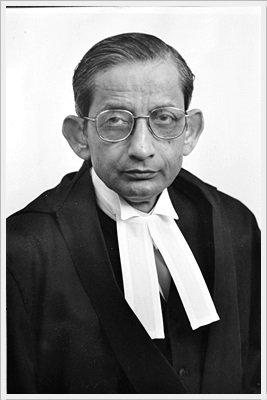
S.B. SINHA, J:
Constitutionality of Section 22-A of the Registration Act (The Act) as
amended by the State of Rajasthan as also the notifications issued by it in
terms thereof are in question in this appeal which arises out of a judgment
and order dated 28.11.2000 passed by a Division Bench of the High Court of
Judicature for Rajasthan at Jodhpur in D.B. Civil Writ Petition No. 3554 of
1999.
FACTS:
The Respondent herein is a resident of town of Bikaner. He was a
Khatedar tenant of agricultural lands situated at Chak No. 13 KYD, Square
No. 110/24, Killa No. 1 to 25 Bighas, Tehsil Khajuwala, District Bikaner.
He appointed one Sukhdeo Singh as his attorney authorizing him to look
after his lands, cultivate the same and to do all other acts, deeds and things
including mortgage or sell the same, get the requisite deeds and documents
registered, by a deed of Power Of Attorney dated 16.7.1999. The said deed
was presented before the Sub-Registrar, Bikaner on 30.7.1999 for the
purpose of registration which was refused by making an endorsement on the
document that the same could not be registered in terms of the Government
Notification dated 26.3.1999 published in the Rajasthan Gazette dated
1.4.1999 as amended on 22.4.1999 whereby and whereunder registration of
such documents have been prohibited as being 'opposed to public policy'.
The said notifications were said to have been issued by the State of
Rajasthan in exercise of its power conferred upon it under Section 22-A of
the Act.
The Respondent herein questioned the constitutionality of Section 22-
A of the Act as inserted by the legislature of Rajasthan as also the
aforementioned notifications by filing a writ petition before the Rajasthan
High Court.
HIGH COURT:
By reason of the impugned judgment the Rajasthan High Court
declared Section 22-A of the Act as inserted by the Rajasthan Amendment
Act, 1976 being Act No. 16 of 1976 as unconstitutional and consequently
the notifications as contained in annexures 3, 4, 6 and 7 of the writ petition
were also quashed. The Sub-Registrar was also directed to register the
power of attorney dated 16.7.1999 which was presented on 30.7.1999 within
two weeks from the date of presentation of the copy of the order.
The High Court in its impugned judgment, inter alia, held that Section
22-A of the Act confers arbitrary powers on the State Government to
determine as regard declaring a particular document being opposed to public
policy. It was opined that the question as to whether a transaction is
opposed to public policy or not can be determined only by the courts and not
http://JUDIS.NIC.IN SUPREME COURT OF INDIA Page 2 of 16
by the Sub-Registrar. The impugned legislation invades the right of a citizen
to deal with the property and, thus, is wholly arbitrary and unreasonable. The
object of registration of a document is not achieved by the impugned
legislation. The Act deals with the deeds and documents and not
transactions and in that view of the matter non-registration of a document
per se cannot be said to be opposed to public policy.
SECTION 22-A OF THE ACT AND THE NOTIFICATIONS:
Section 22-A of the Act reads as under:
"Documents registration of which is opposed to
public policy \026 (1) The State Government may, by
notification in the Official Gazette, declare that the
registration of any document or class of document
is opposed to public policy.
(2) Notwithstanding anything contained in this
Act, the registering officer shall refuse to register
any document to which a notification issued under
sub-section (1) is applicable."
The Notifications contained in annexures 3,4,6 and 7 of the Writ
petition are as under:
"Annexure/3
1 April, 1999
"S.O.7. In exercise of the power conferred by
section 22-A of the Indian Registration Act, 1908
[Central Act No. XVI of 1908] P.S. applicable in
the State of Rajasthan, the State Govt. hereby
declares that the registration of the following
classes of documents is opposed to public policy.
Any power of attorney authorizing the
attorney to transfer any immovable property for a
term in excess of six months or irrevocable or
where the term is not mentioned."
[No. F.2(2)FD/Tax-Div/99-189]
By order of the Governor,
Sd/-
Dy. Secretary to Govt."
"Annexure/4
April 22, 1999
"S.O. 62 \026 In exercise of the powers conferred
under Section 22-A of the Indian Registration Act,
1908 [Central Act No. XVI of 1908] as applicable
in the State of Rajasthan, it is expedient to amend
the Notification No. F.2[3] FD-Tax-Div/99-189
dated 26.3.1999 as under;
In place of the phrase "six months" in the
above notification, the phrase "Three years" is
substituted.
[No. F.2(FD/TAX-DIV/99-213]
By order of the Governor,
http://JUDIS.NIC.IN SUPREME COURT OF INDIA Page 3 of 16
Sd/-
(Shikhar Agarwal)
Dy. Secretary Govt."
"Annexure/6
26th March, 1999
S.O. 484:- In exercise of the powers conferred by
Section 22-A of the Registration Act, 1908
(Central Act No. XVI of 1908), as applicable in
the State of Rajasthan, the State Govt. hereby
declares that the registration of any of the
following documents is opposed to public policy:-
Power of Attorney authorizing the execution
of the sale deed, gift, mortgage or any other
document of transfer of immovable property
presentation for registration before any office other
than the Sub-Registrar or Registrar respectively in
whose District or Sub-District the whole or some
part of the property to which such power of
attorney relates is situated.
[No. F.2[3] FD/TAX-DIV./99-186].
By order of the Governor,
Sd/-
Dy. Secretary Govt."
"Annexure/7
22nd April, 1999
S.O. 60. In exercise of the powers conferred under
section 22-A of the Indian Registration Act, 1908
[Central Act No. XVI] as applicable in the State of
Rajasthan, it is expedient to amend the notification
No. F.2[16]FD/Tax Div./99-186 S.O. 484 dated
26.03.1999 in the public interest as under:
AMENDMENT @@
After the words 'authorising' following words are
added:
"Other than the power of attorney executed in
favour of brother or sister or son or daughter or
father or mother or husband or wife or grand sons
or grand daughter".
[No. F.2[3]FD/Tax Div./99-212]
By order of the Governor,
Sd/-
Dy. Secretary Govt."
PROCEEDING BEFORE THIS COURT:
This Court while hearing the matter having regard to the fact that
similar amendments have been carried out by the other States and would
have wide repercussions directed issuance of notice to the States of Bihar,
Gujarat, Karnataka, Maharashtra and Meghalaya. Pursuant to the said
directions, the intervenor States including the States of Maharashtra,
Gujarat, Jharkhand, Meghalaya, etc. appeared and made their submissions.
http://JUDIS.NIC.IN SUPREME COURT OF INDIA Page 4 of 16
SUBMISSIONS:
The learned counsel appearing on behalf of the Appellant and the
intervenor States raised inter alia the following contentions:
(i) That a presumption is attached in favour of a validity of a statute and
it would be for the person to establish who alleges violation of fundamental
or other rights for impinging upon the constitutional validity of Section 22-A
of the Act.
(ii) A legislation directing compulsory registration of a document and / or
refusal to register the same being a matter of policy so as to enable the State
to regulate registration of document or class of documents could not be
interfered by the High Court.
(iii) The terminologies 'opposed to public policy' or 'public interest' carry
precise meaning having regard to the provisions of Section 23 of the Indian
Contract Act, Section 7(1)(b)(ii) of Foreign Awards (Recognition and
Enforcement) Act, 1961, Section 3(1) of U.P. (Temporary Control of Rent
and Evictions) Act, 1947 and Section 34(2)(b)(ii) of Arbitration and
Conciliation Act, 1996 and, thus, cannot be said to be wholly arbitrary.
(iv) In exercise of its power of judicial review the superior courts would
not invalidate a statute only on the ground that guidelines have not been laid
down by the legislature for making subordinate legislation or that the
legislature has abdicated its essential legislative function in favour of
executive but in a given case may strike down only the notifications issued
by the State if it be found to have exceeded its jurisdiction in that behalf. In
any event as such guidelines can be found out either from the preamble or
from other provisions of the Act, the same need not be stated in the
offending provision itself.
THE ACT:
The Act was enacted to consolidate the enactments relating to the
Registration of Documents. Prior to enactment of the said Act, the
provisions relating to registration of documents were scattered in seven
enactments. The Act was enacted in terms of Entry 18, List II and Entry 6,
List III of the Seventh Schedule of the Constitution of India. It mainly deals
with the necessity of getting a document registered in India so as to make
them valid and even if they are executed outside India to provide for
registration thereof after their first arrival in India.
Section 17 of the Act enumerates the instruments registration of which
is compulsory under the Act whereas Section 49 encompasses the effect of a
failure to register. Registration of documents, however, is not confined only
to documents relating to immovable property but also for the documents
dealing with other matters as for example adoption. Section 17 of the Act
has been amended inter alia by the State of Rajasthan. The State of
Rajasthan, however, inserted Section 17(1)(f) and 17(1)(g) with effect from
18.9.1989 and made the registration of agreement to sale and irrevocable
power to attorney relating to transfer of immovable property in any way a
compulsorily registerable document. Section 18 provides for optional
registration of documents specified therein. Section 22 provides for
description of houses and land by reference to Government maps or surveys.
Several States, however, as noticed hereinbefore, inserted Section 22-A. In
terms of Sub-Section (1) thereof, the State Governments have been
authorized to issue a notification declaring that the registration of any
document or class of document would be opposed to public policy. Sub-
section (2) of Section 22-A starts with a non-obstante clause stating that
notwithstanding anything contained in the Act, the registering officer shall
refuse to register any document for which a notification issued under Sub-
section (1) is applicable.
Section 32 occurring in Part VI provides for presentation of
documents for registration. Section 33 deals with power of attorney
http://JUDIS.NIC.IN SUPREME COURT OF INDIA Page 5 of 16
recognizable for the said purpose. Part XI of the Act deals with the duties
and powers of registering officers. Part XII deals with documents which a
Sub-Registrar may refuse to register which, inter alia, refers to a document
relating to property, which was not situated within the district of the
Registrar or which ought to be registered in the office of Sub-Registrar or on
the ground of denial of execution. An appeal from such orders of the Sub-
Registrar is provided for under Sub-section (2) of Section 72. Even as
against the order of Registrar a suit is maintainable. However, if and when
a document is refused to be registered by the Sub-Registrar in terms of Sub-
section (2) of Section 22-A of the Act, evidently no appeal would lie.
POWER OF ATTORNEY :
A grant of power of attorney is essentially governed by Chapter X of
the Indian Contract Act. By reason of a deed of power of attorney, an agent
is formally appointed to act for the principal in one transaction or a series of
transactions or to manage the affairs of the principal generally conferring
necessary authority upon another person. A deed of power of attorney is
executed by the principal in favour of the agent. The agent derives a right to
use his name and all acts, deeds and things done by him and subject to the
limitations contained in the said deed, the same shall be read as if done by
the donor. A power of attorney is, as is well-known, a document of
convenience.
Besides the Indian Contract Act, the Power of Attorney Act, 1882
deals with the subject. Section 1A of the Power of Attorney Act defines
power of attorney to include any instruments empowering a specified person
to act for and in the name of the person executing it. Section 2 of the said
Act reads, thus:
"Execution under power-of-attorney \026 The donee
of a power-of-attorney may, if he thinks fit,
execute or do any instrument or thing in and with
his own name and signature, and his own seal,
where sealing is required, by the authority of the
donor of the power; and every instrument and
thing so executed and done, shall be as effectual in
law as if it had been executed or done by the donee
of the power in the name, and with the signature
and seal, of the donor thereof.
This section applies to powers-of-attorney
created by instruments executed either before or
after this Act comes into force."
Execution of a deed of power of attorney, therefore, is valid in law
and subject to the provisions of the Act is not compulsorily registerable.
PRESUMPTION AS TO CONSTITUTIONALITY OF A STATUTE:
Indisputably, there exists a presumption as regard constitutionality of
a statute. Rule of presumption in favour of constitutionality, however, only
shifts the burden of proof and rests it on the shoulders of the person who
attacks it. It is for that person to show that there has been a clear
transgression of constitutional principles [See Charanjit Lal Chowdhury Vs.
the Union of India and others AIR 1951 SC 41 : 1950 SCR 869]. But this
rule is subject to the limitation that it is operative only till the time it
becomes clear and beyond reasonable doubt that the legislature has crossed
its limits. This rule in its application as principle of construction means that
if two meanings are possible then the courts will reject the one which
renders it unconstitutional and accept the other upholding the validity of the
impugned legislation.
In Union of India Vs. Elphinstone Spinning and Weaving Co. Ltd. and
others [AIR 2001 SC 72 : (2001) 4 SCC 139], it was stated:
http://JUDIS.NIC.IN SUPREME COURT OF INDIA Page 6 of 16
"9. A statute is construed so as to make it
effective and operative. There is always a
presumption that the legislature does not exceed
its jurisdiction and the burden of establishing
that the legislature has transgressed
constitutional mandates, such as those relating
to fundamental rights, is always on the person
who challenges its vires. Unless it becomes
clear beyond reasonable doubt that the
legislation in question transgresses the limits
laid down by the organic law of the
Constitution it must be allowed to stand as the
true expression of the national will \027 Shell Co.
of Australia v. Federal Commr. of Taxation.
The aforesaid principle, however, is subject to
one exception that if a citizen is able to
establish that the legislation has invaded its
fundamental rights then the State must justify
that the law is saved. It is also a cardinal rule of
construction that if on one construction being
given the statute will become ultra vires the
powers of the legislature whereas on another
construction which may be open, the statute
remains effective and operative, then the court
will prefer the latter, on the ground that the
legislature is presumed not to have intended an
excess of jurisdiction."
Hence, the said principle of presumption is not an absolute rule but it
is also subject to limitations. Its application in interpretation can only be
applied to resolve a conflict when two interpretations are possible and not
when there is only one leading to the conclusion that the delegated
legislation is unguided and excessive. If the provisions are unconstitutional
a mere presumption which decides the burden of proof cannot save them.
In Craies on Statute Law, seventh edition at page 95, it is stated:
"The first business of the courts is to make sense
of the ambiguous language, and not to treat it as
unmeaning, it being a cardinal rule of construction
that a statute is not to be treated as void, however,
oracular. This was thus laid down by Bowen L.J.
in Curtis v. Stovin: "The rules for the construction
of statutes are very like those which apply to the
construction of other documents, especially as
regards one crucial rule \026 viz. that, if possible, the
words of an Act of Parliament must be construed
so as to give a sensible meaning to them. The
words ought to be construed ut res magis valeat
quam pereat." And Fry L.J. added: "The only
alternative construction offered to us would lead to
this result \026 that the plain intention of the
legislature has entirely failed by reason of a slight
inexactitude in the language of the section. If we
were to adopt this construction, we should be
construing the Act in order to defeat its object
rather than with a view to carry its object into
effect."
DELEGATED LEGISLATION:
The necessity of the legislature's delegating its powers in favour of
http://JUDIS.NIC.IN SUPREME COURT OF INDIA Page 7 of 16
the executive is a part of legislative function. It is a constituent element of
the legislative power as a whole under Article 245 of the Constitution. Such
delegation of power, however, cannot be wide, uncanalised or unguided.
The legislature while delegating such power is required to lay down the
criteria or standard so as to enable the delegatee to act within the framework
of the statute. The principle on which the power of the legislature is to be
exercised is required to be disclosed. It is also trite that essential legislative
functions cannot be delegated.
The procedural powers are, therefore, normally left to be exercised by
the executive by reason of a delegated legislation.
LAW OPERATING IN THE FIELD :
We have been taken through a large number of decisions by the
learned counsel appearing on behalf of the parties beginning from Re: Delhi
Laws Act, 1912 [1951 SCR 747] to Andhra Bank vs. B. Satyanarayana and
Others, [(2004) 2 SCC 657], but it may not be necessary to deal therewith
separately in great detail.
In Re: Delhi Laws Act (supra) this Court in no unmistakable terms
stated that the legislature may utilize any outside agency to the extent it finds
necessary for doing things which it is unable to do itself or finds
inconvenient to do which would mean such things which are ancillary to the
main enactment and necessary for the full and effective exercise of its power
of legislation. Justice Mukherjea, in his opinion, stated:
"It cannot be said that an unlimited right of delegation is
inherent in the legislative power itself. This is not
warranted by the provisions of the Constitution and the
legitimacy of delegation depends entirely upon its being
used as an ancillary measure which the legislature
considers to be necessary for the purpose of exercising its
legislative powers effectively and completely. The
legislature must retain in its own hands the essential
legislative functions which consist in declaring the
legislative policy and laying down the standard which is
to be enacted into a rule of law, and what can be
delegated is the task of subordinate legislation which by
its very nature is ancillary to the statute which delegates
the power to make it. Provided the legislative policy is
enunciated with sufficient clearness or a standard laid
down the Courts cannot and should not interfere with the
discretion that undoubtedly rests with the legislature
itself in determining the extent of delegation necessary in
a particular case."
As regard delegated power to "restrict and modify", it was held:
"delegation \005cannot extend to the altering in essential
particulars of laws which are already in force in the area
in question."
"The power to 'restrict and modify does not import the
power to make essential changes. It is confined to
alterations of a minor character such as are necessary to
make an Act intended for one area applicable to another
and to bring it into harmony with laws already in being in
the State, or to delete portions which are meant solely for
another area. To alter essential character of an Act or to
change it in material particulars is to legislate, and that,
namely the power to legislature, all authorities are
agreed, cannot be delegated by a Legislature which is not
unfettered."
Vivian Bose, J., however, speaking for a Constitution Bench of this
http://JUDIS.NIC.IN SUPREME COURT OF INDIA Page 8 of 16
Court in Rajnarain Singh vs. The Chairman, Patna Administration
Committee, Patna and Another [1955 (1) SCR 290] analysed the opinions of
different learned Judges in Re: Delhi Laws Act (supra) and culled out the
majority view thus:
"..that an executive authority can be authorized to
modify either existing or future laws but not in any
essential feature. Exactly what constitutes an essential
feature cannot be enunciated in general terms, and there
was some divergence of view about this in the former
case, but this much is clear from the opinions set out
above: it cannot include a change of policy."
In Hamdard Dawakahan and another Vs. the Union of India and
others [AIR 1960 SC 554] Krishna Mohan (P) Ltd. vs. Municipal
Corporation of Delhi and Others [(2003) 7 SCC 151]. this Court held that
vague or uncanalised or unguided power would render the delegation bad in
law.
The legal position has been explained by a Constitution Bench of this
Court in Kishan Prakash Sharma and Others vs. Union of India and Others
[(2001) 5 SCC 212] holding :
"...The legislatures in India have been held to possess
wide power of legislation subject, however, to certain
limitations such as the legislature cannot delegate
essential legislative functions which consist in the
determination or choosing of the legislative policy and of
formally enacting that policy into a binding rule of
conduct. The legislature cannot delegate uncanalised and
uncontrolled power. The legislature must set the limits of
the power delegated by declaring the policy of the law
and by laying down standards for guidance of those on
whom the power to execute the law is conferred. Thus
the delegation is valid only when the legislative policy
and guidelines to implement it are adequately laid down
and the delegate is only empowered to carry out the
policy within the guidelines laid down by the legislature.
The legislature may, after laying down the legislative
policy, confer discretion on an administrative agency as
to the execution of the policy and leave it to the agency
to work out the details within the framework of the
policy. When the Constitution entrusts the duty of law-
making to Parliament and the legislatures of States, it
impliedly prohibits them to throw away that
responsibility on the shoulders of some other
authority\005"
[See also Ajoy Kumar Banerjee and Others etc. vs. Union of India &
Others [(1984) 3 SCC 127], Agricultural Market Committee vs. Shalimar
Chemical Works Ltd. [1997) 5 SCC 516], Krishna Mohan (supra).
Our attention, however, has been drawn to a decision of this Court in
Ramesh Birch and Others etc. vs. Union of India and Others [1989) Supp.
(1) SCC 430] wherein Ranganathan, J. speaking for a 2-Judge Bench while
construing the provisions of Section 87 of the Reorganisation Act
empowering the Central Government to extend with such restrictions or
modifications as it may think fit any enactment which is in force in a State at
the date of notification to the Union Territory of Chandigarh observed:
"23. But, these niceties apart, we think that Section 87
is quite valid even on the "policy and guideline" theory if
one has proper regard to the context of the Act and the
object and purpose sought to be achieved by Section 87
http://JUDIS.NIC.IN SUPREME COURT OF INDIA Page 9 of 16
of the Act. The judicial decisions referred to above make
it clear that it is not necessary that the legislature should
"dot all the i's and cross all the t's" of its policy. It is
sufficient if it gives the broadest indication of a general
policy of the legislature. If we bear this in mind and have
regard to the history of this type of legislation, there will
be no difficulty at all\005"
Their Lordships in the fact and circumstance of the case were of the
view that such delegation of power being confined to a 'transplantation of
law' and not 'enacting a law' shall be valid.
Our attention has also been drawn to a Constitution Bench decision of
this Court in Seth Nand Lal and Another Vs. State of Haryana and Others
[1980 (Supp) SCC 574] for the proposition that unless the provisions are so
vague, the same cannot be declared unconstitutional.
In that case, the Constitution Bench of this Court was concerned with
certain provisions of Haryana Ceiling on Land Holdings Act, 1972 and the
validity thereof was upheld in the touchstone of Articles 31-A and 31-B of
the Constitution of India opining that the impugned Act was within the
legislative competence of the State. The question as regard vagueness of
definition of 'family' etc. came up for consideration and it was held that the
legislature is legally entitled to create legal fiction for the purpose of the
said Act.
ANALYSIS:
There cannot be any doubt whatsoever that the court shall not
invalidate a legislation on the ground of delegation of essential legislative
function or on the ground of conferring unguided, uncontrolled and vague
powers upon the delegate without taking into account the preamble of the
Act as also other provisions of the statute in the event they provide good
means of finding out the meaning of the offending statute. This aspect of the
matter has been considered in some details in People Union for Civil
Liberties and Another vs. Union of India and Others [(2004) 2 SCC 476] and
Andhra Bank vs. B. Satyanarayana and Others, [(2004) 2 SCC 657] in which
one of us was a member.
But preamble and statement of object and reason can only be looked
into when there is vagueness or ambiguity present in the language of the Act
as in Arnit Das vs. State of Bihar [(2000) 5 SCC 488] wherein this Court has
held :
"22. All this exercise would have been avoided if only
the legislature would have taken care not to leave an
ambiguity in the definition of "juvenile" and would have
clearly specified the point of time by reference to which
the age was to be determined to find a person to be a
juvenile. The ambiguity can be resolved by taking into
consideration the Preamble and the Statement of Objects
and Reasons. The Preamble suggests what the Act was
intended to deal with. If the language used by Parliament
is ambiguous the court is permitted to look into the
Preamble for construing the provisions of an Act
(Burrakur Coal Co. Ltd. v. Union of India). A Preamble
of a statute has been said to be a good means of finding
out its meaning and, as it were, the key of understanding
of it, said this Court in A. Thangal Kunju Musaliar v. M.
Venkatachalam Potti. The Preamble is a key to unlock
the legislative intent. If the words employed in an
enactment may spell a doubt as to their meaning it would
be useful to so interpret the enactment as to harmonise it
with the object which the legislature had in its view\005"
http://JUDIS.NIC.IN SUPREME COURT OF INDIA Page 10 of 16
So it is only when the language is itself capable of more than one
meaning, then the preamble or the statement of objects and reasons can be
looked into and not when something is not capable of given a precise
meaning as in case of 'Public policy'. Even if the Statement of Objects and
Reasons is looked into to ascertain its meaning then also there is nothing
therein which can be said to be related to morality or public policy. We
have, furthermore, not been shown as to how the preamble or any other
provisions of the Act would provide for any guideline in construing Section
22-A of the Act. The principal contention raised on behalf of the counsel for
the Appellants, as noticed hereinbefore, is that the terminology 'opposed to
public policy' itself provide for such guidelines.
The phraseology 'in the interest of public health' came up for
consideration before a Division Bench of this Court in Godwat Pan Masala
Products I.P. Ltd. and Another vs. Union of India and Others [(2004) 7 SCC
68], wherein it was held that it cannot operate as an incantation or mantra to
get over all the constitutional difficulties posited. As regard application of
doctrine of 'res extra commercium' in relation to tobacco, the court held that
the same is a matter of legislative policy and must arise out of an Act of
legislature and not by a mere notification issued by an executive authority.
It is always in the domain of judiciary to interpret what is morality at a
given point of time and this power can not be given to executive.
Finality cannot be attached to decisions of executive when such things
are in exclusive domain of judiciary as stated in State of Kerala and Others
vs. Travancore Chemicals and Manufacturing Co. and Another [(1998) 8
SCC 188] observing:
"13. Section 59-A enables the Government to pass an
administrative order which has the effect of negating the
statutory provisions of appeal, revision etc. contained in
Chapter VII of the Act which would have enabled the
appellate or revisional authority to decide upon questions
in relation to which an order under Section 59-A is
passed. Quasi-judicial or judicial determination stands
replaced by the power to take an administrative decision.
There is nothing in Section 59-A which debars the
Government from exercising the power even after a
dealer has succeeded on a question relating to the rate of
tax before an appellate authority. The power under
Section 59-A is so wide and unbridled that it can be
exercised at any time and the decision so rendered shall
be final. It may well be that the effect of this would be
that such a decision may even attempt to override the
appellate or the revisional power exercised by the High
Court under Section 40 of the Act as the case may be.
The section enables passing of an executive order which
has the effect of subverting the scheme of a quasi-judicial
and judicial resolution of the lis between the State and
the dealer."
We are not oblivious of the decisions of this Court laying down the
proposition of law that the statute dealing with fiscal matters and / or laying
down a provision or enforcing the doctrine of social justice adumbrated in
the Directive Principles of State Policy as contained in Part IV of the
Constitution of India ordinarily would not be interfered with by the superior
courts in exercise of their power of judicial review. The Act is neither a
fiscal statute nor deals with any matter falling under Part IV of the
Constitution of India.
PUBLIC POLICY:
The words 'Public policy' or 'opposed to public policy', inter alia,
http://JUDIS.NIC.IN SUPREME COURT OF INDIA Page 11 of 16
find reference in Section 23 of the Indian Contract Act, Section 7(1)(b)(ii) of
Foreign Awards (Recognition and Enforcement) Act, 1961, Section 3(1) of
U.P. (Temporary Control of Rent and Evictions) Act, 1947 and Section
34(2)(b)(ii) of Arbitration and Conciliation Act, 1996.
By reason of the said provisions the judiciary has been conferred with
power to determine as to the factors of public policy which may form the
basis for interference with a contract or award.
It may not be necessary for us to deal with extensively the case laws
dealing with the relevant provisions of the said statutes but it would not, in
our opinion, be correct to contend that public policy is capable of being
given a precise definition. What is 'opposed to public policy' would be a
matter depending upon the nature of the transaction. The pleadings of the
parties and the materials brought on record would be relevant so as to enable
the court to judge the concept as to what is for public good or in the public
interest or what would be injurious or harmful to the public good or the
public interest at the relevant point of time as contra-distinguished from the
policy of a particular government. A law dealing with the rights of a citizen
is required to be clear and unambiguous. Doctrine of public policy is
contained in a branch of common law, it is governed by precedents.
The principles have been crystallized under different heads and
though it may be possible for the courts to expound and apply them to
different situations but it is trite that the said doctrine should not be taken
recourse to in 'clear and incontestable cases of harm to the public though the
heads are not closed and though theoretically it may be permissible to evolve
a new head under exceptional circumstances of a changing world'. [See
Gherulal Parakh vs. Mahadeodas Maiya and Others [AIR 1959 SC 781 :
1959 (2) SCR 406]
In Zoroastrian Cooperative Housing Society Ltd. and Another vs.
District Registrar, Cooperative societies (Urban) and Others [(2005) 5 SCC
632], however, this Court observed:
"In the context of Section 23 of the Contract Act,
something more than a possible or plausible
argument based on the constitutional scheme is
necessary to nullify an agreement voluntarily
entered into by a person."
It was further observed:
"Normally, as stated by this Court in Gherulal
Parakh v. Mahadeodas Maiya, the doctrine of
public policy is governed by precedents, its
principles have been crystalised under the different
heads and though it was permissible to expound
and apply them to different situations it could be
applied only to clear and undeniable cases of harm
to the public. Although, theoretically it was
permissible to evolve a new head of public policy
in exceptional circumstances, such a course would
be inadvisable in the interest of stability of
society."
A contract being "opposed to public policy" is a defence under section
23 of the Indian contract Act and the courts while deciding the validity of a
contract has to consider:
a) Pleadings in terms of Order VI, Rule of the Code of Civil Procedure.
b) Statute governing the case
http://JUDIS.NIC.IN SUPREME COURT OF INDIA Page 12 of 16
c) Provisions of Part III and IV of the Constitution of India
d) Expert evidence, if any.
e) The materials brought on record of the case.
f) Other relevant factors, if any.
A party in a suit against whom illegality is pleaded also gets an
opportunity to defend himself. Hence this essential function to decide on
what is public policy can not be delegated to executive through a
subordinate legislation.
The legislature of a State, however, may lay down as to which acts
would be immoral being injurious to the society. Such a legislation being
substantive in nature must receive the legislative sanction specifically and
not through a subordinate legislation or executive instructions.
The phraseology 'opposed to public policy' may embrace within its
fold such acts which are likely to deprave, corrupt or injurious to the public
morality and, thus, essentially should be a matter of legislative policy.
The said phraseology came up for consideration before this Court in
Central Inland Water Transport Corporation Limited and Another vs. Brojo
Nath Ganguly and Another etc. [(1986) 3 SCC 156] where a note of caution
has been sounded that it being a 'very unruly horse', once when gets astride
one does not know how far it would carry him. The question as to whether
the statement as regard the validity of a contract on the ground that it is
opposed to public policy must normally be viewed within the parameters
fixed therefor by longstanding authorities or precedents but in deciding a
case it may not be covered by such authorities and lacking precedents, the
preamble of the Constitution or the principles underlying the fundamental
rights and the Directive Principles in our Constitution can be taken recourse
to. This Court in Rattan Chand Hira Chand vs. Askar Nawazjung (Dead) by
Lrs. and Others [(1991) 3 SCC 67] quoted the following from Prof.
Winfield's Article "Public Policy in the English Common Law" :
"Some judges appear to have thought it [the unruly
horse of public policy] more like a tiger, and refused to
mount it at all, perhaps because they feared the fate of the
young lady of Riga. Others have regarded it like
Balaam's ass which would carry its rider nowhere. But
none, at any rate at the present day, has looked upon it as
a Pegasus that might soar beyond the momentary needs
of the community."
It was further observed:
"All courts have at one time or the other felt the need to
bridge the gap between what is and what is intended to
be. The courts cannot in such circumstances shirk from
their duty and refuse to fill the gap. In performing this
duty they do not foist upon the society their value
judgments. They respect and accept the prevailing values,
and do what is expected of them. The courts will, on the
other hand, fail in their duty if they do not rise to the
occasion but approve helplessly of an interpretation of a
statute or a document or of an action of an individual
which is certain to subvert the societal goals and
endanger the public good."
In Chitty on Contracts, 28th edition at page 838, it is stated:
"Objects which on grounds of public policy invalidate
contracts may, for convenience, be generally classified
into five groups : first, objects which are illegal by
common law or by legislation; secondly, objects
injurious to good government either in the field of
domestic or foreign affairs; thirdly, objects which
http://JUDIS.NIC.IN SUPREME COURT OF INDIA Page 13 of 16
interfere with the proper working of the machinery of
justice; fourthly, objects injurious to marriage and
morality; and fifthly, objects economically against the
public interest. This classification is adopted primarily
for case of exposition. Certain cases do not fit clearly
into any of these five categories."
The learned author observed that doctrine of public policy is
somewhat open-textured and flexible which has been the cause of judicial
censure of the doctrine and has been seen by the courts as being vague and
unsatisfactory, a treacherous ground for legal decision, a very unstable and
dangerous foundation on which to build until made safe by decision as also
being not immutable, stating that the commercial practice which was once
permissible may be found to be mischievous and vice-versa.
In Cheshire, Fifoot & Furmston in their Law of Contract, Fourteenth
Edition at page 407 states:
"Assuming, then, that contracts vitiated by some
improper element must be divided into two classes, how
are the more serious examples of 'illegality' at common
law to be distinguished from the less serious? Which of
the contracts that have been frowned upon by the courts
are so patently reprehensible \026 so obviously contrary to
public policy \026 that they must be peremptorily styled
illegal? Judicial authority is lacking, but it is submitted
that the epithet 'illegal' may aptly and correctly be
applied to the following six types of contract:
A contract to commit a crime, a tort or a fraud on a third
party.
A contract that is sexually immoral.
A contract to the prejudice of the public safety.
A contract prejudicial to the administration of justice.
A contract that tends to corruption in public life.
A contract to defraud the revenue.
There remain three types of contract which offend
'public policy', but which are inexpedient rather than
unprincipled.
A contract to oust the jurisdiction of the court.
A contract that tends to prejudice the status of marriage.
A contract in restraint of trade."
Prof. Winfield in his article "Public Policy in the English Common
Law" reported in 42 Harvard Law Review 76 stated:
"First among these is the principle that it cannot
conflict with existing Parliamentary legislation. It
may be useful in resolving a doubtful point in the
interpretation of an enactment. But there cannot
be public policy leading to one conclusion when
there is a statute directing a precisely opposite
conclusion. Moreover, where a rule of the
common law is itself clear, arguments based upon
public policy are beside the mark, however useful
and admissible they may be where a new or
doubtful question arises. There has been a
noticeable tendency to regard public policy as a
last resort for molding the law."
Despite the words of caution that the court's duty is to expound the
law and not expand, new heads of illegality of contract being opposed to
public policy have been found out and in any event there exists such a
possibility. [See Nagle Vs. Feilden, (1966) 2 QB 633 and Newcastle Diocese
http://JUDIS.NIC.IN SUPREME COURT OF INDIA Page 14 of 16
(Church Property Trustees Vs. Ebbeck (1960) 34 ALJR 413].
A doctrine which is so vague or uncertain, in our opinion, thus, cannot
and does not provide any guideline whatsoever. Furthermore, the executive
while making a subordinate legislation cannot be permitted to open new
heads of public policy in its whims. Towards opposed to public policy,
therefore, do not lay down any guidelines to render it constitutional.
Execution of power of attorney per se is not invalid. On the other hand, it is
lawful.
The notifications issued by the State of Rajasthan themselves show
that the uncertain position to which the parties to a transaction evidenced by
a deed or a document can be put to. By the notification dated 1st April,
1999, any power of attorney authorizing the attorney to transfer any
immovable property for a term in excess of six months or irrevocable or
where the term is not mentioned was declared to be opposed to public
policy; whereas by reason of a subsequent notification dated 22nd April,
1999 in place of six months, three years was substituted. Similarly, by a
notification dated 26th March, 1999, power of attorney authorizing the
execution of the sale deed, gift, mortgage or any other document of transfer
of immovable property presentation for registration before any office other
than the Sub-Registrar or Registrar respectively in whose District or Sub-
Distrct the whole or some part of the property to which such power of
attorney relates was declared as opposed to public policy which was
amended by a notification dated 22nd April, 1999 exempting such power of
attorney executed in favour of brother or sister or son or daughter or father
or mother or husband or wife or grand sons or grand daughter.
Execution of a power of attorney in terms of the provisions of the
Indian Contract Act as also the Power of Attorney Act is valid. A power of
attorney, we have noticed hereinbefore, is executed by the donor so as to
enable the donee to act on his behalf. Except in cases where power of
attorney is coupled with interest, it is revocable. The donee in exercise of
his power under such power of attorney only acts in place of the donor
subject of course to the powers granted to him by reason thereof. He cannot
use the power of attorney for his own benefit. He acts in a fiduciary
capacity. Any act of infidelity or breach of trust is a matter between the
donor and the donee.
CONCLUSION :
We have noticed hereinbefore that the State of Rajasthan inserted
Section 17(1)(f) and (g) in the Act making the registration of agreement to
sale and irrevocable power of attorney relating to transfer of immovable
property in any way a compulsorily registrable document. The State went
further to amend Article 23 of the Second Schedule of the Stamp Act, 1899
making an agreement to sale of immovable property and irrevocable power
of attorney or any other instrument executed in the course of conveyance,
etc. with possession to be deemed to be a conveyance and stamp duty is
chargeable thereon accordingly. According to the State, despite such
enactments sales were being made by seller on the basis of a power of
attorney with a right to sell the property and such powers of attorney were
being executed for an unspecified period. A transaction between two
persons capable of entering into a contract which does not contravene any
statute would be valid in law. The State of Rajasthan does not make such
transactions illegal. The Indian Contract Act or the Power of Attorney Act
have not been amended. Execution of a power of attorney per se, therefore,
is not illegal. Registration of power of attorney except in cases falling under
Section 17(1)(g) or 17(1)(h) is not compulsorily registrable. Sections 32 and
33 of the Indian Registration Act also do not bar any such registration.
The Act only strikes at the documents and not at the transactions. The
whole aim of the Act is to govern documents and not the transactions
embodied therein. Thereby only the notice of the public is drawn.
In M.E. Moolla Sons, Ltd. (in Liquidation) Vs. Official Assignee,
http://JUDIS.NIC.IN SUPREME COURT OF INDIA Page 15 of 16
Rangoon and others [AIR 1936 PC 230], while commenting on section 17
and section 49 of the Act, it was stated:
"It is to be observed upon a comparison of these different
sections that while the Registration Act only requires
certain documents to be registered on pain of the
consequences entailed by S. 49, T.P. Act, by S. 54 enacts
that (with a limited exception) the sale of immovable
property can be made only by registered instrument. The
provisions of the Registration Act by themselves would
not operate to render invalid a mere oral sale. On the
other hand the somewhat wide phrase "any interest\005.to
or in immovable property" which occurs in Cl. (b),
S.17(1), Registration Act, does not occur in S. 54 of the
other statute."
[See also K. Panchapagesa Ayyar and another Vs. K.
Kalyanasundaram Ayyar and Others, AIR 1957 MADRAS 472]
Similar view has been taken in Syed Abdullah Sahib Vs. Syed
Rahmatulla Sahib alias Baji Sahib and others [AIR 1960 MADRAS 274]
stating:
"14. The Transfer of Property Act requires that certain
transactions should be effectuated only by registered
instruments. Apart from the provisions contained in that
enactment, the obligation to register arises only under the
Registration Act. Under the latter Act registration is
made obligatory in respect of certain specified class of
documents, but there is nothing to require a transaction to
be effected by a registered instrument. Section 17 of the
Registration Act enumerates the documents which
require registration.
The necessity for registration under that Act would
depend upon what a document is or what it purports to
be. A bargain or an arrangement between the parties may
comprise several transactions. The question whether
there should be a writing or registration would depend on
each of the transactions and not on their cumulative
result."
Hence, Section 22-A of the Act through a subordinate legislation
cannot control the transactions which fall out of the scope thereof.
We have noticed hereinbefore the effect of a power of attorney under
the Indian Contract Act or the Power of Attorney Act. A subordinate
legislation which is not backed up by any statutory guideline under the
substantive law and opposed to the enforcement of a legal right, in our
opinion, thus, would not be valid.
The question can be considered from another angle. A person may
not have any near relative or is otherwise unable to attend the office of the
Sub-Registrar or Registrar within whose jurisdictions the property is
situated. He may even be out of the country. In absence of any substantive
provisions contained in a parliamentary or legislative act, he cannot be
refrained from dealing with his property in any manner he likes. Such
statutory interdict would be opposed to one's right of property as envisaged
under Section 300 A of the Constitution of India.
The scope and effect of public policy has been construed differently
by this Court in different cases; see for example Renusagar Power Co. Ltd.
vs. General Electric Co. [(1994) Supp. (1) SCC 644] and Oil and Natural
http://JUDIS.NIC.IN SUPREME COURT OF INDIA Page 16 of 16
Gas Corporation Ltd. vs. Saw Pipes Ltd. [(2003) 5 SCC 705].
Hence, it becomes amply clear that it is not possible to define Public
policy with precision at any point of time. It is not for the executive to fill
these grey areas as the said power rests with judiciary. Whenever
interpretation of the concept "public policy" is required to be considered it is
for the judiciary to do so and in doing so even the power of the judiciary is
very limited.
Even for the said purpose, the part dealing with public policy in
Section 23 of the Indian Contract Act is required to be construed in
conjunction with other parts thereof.
A further question which arises is whether having regard to the
doctrine of separation of powers what is essentially within the exclusive
domain of the judiciary can be delegated to the executive unless policy
behind the same is finally laid down.
A thing which itself is so uncertain cannot be a guideline for any thing
or cannot be said to be providing sufficient framework for the executive to
work under it. Essential functions of the legislature cannot be delegated and
it must be judged with touchstone of Article 14 and Article 246 of the
Constitution of India. It is, thus, only the ancillary and procedural powers
which can be delegated and not the essential legislative point.
The contention raised on behalf of the Appellants herein that the State,
being higher authority, having been delegated with the power of making
declaration in terms of Section 22-A of the Act, would not be abused is
stated to be rejected. Such a question does not arise herein as the provision
has been held to be ultra vires Articles 14 and 246 of the Constitution of
India.
The contention raised to the effect that this Court would not interfere
with the policy decision is again devoid of any merit. A legislative policy
must conform to the provisions of the constitutional mandates. Even
otherwise a policy decision can be subjected to judicial review. [See
Cellular Operators Association of India and Others vs. Union of India and
Others (2003) 3 SCC 186 and Clariant International Ltd. and Another vs.
Securities & Exchange Board of India (2004) 8 SCC 524]
For the reasons aforementioned, we do not find any merit in this
appeal which is dismissed accordingly. No costs.
So far as amendments made by other States are concerned, we are of
the opinion that any order passed by a Sub-Registrar or Registrar refusing to
register a document pursuant to any notification issued under Section 22-A
of the Act would not be reopened.

 Login with google
Legal Notes
Add a Note....