
As per case facts, Sriram Verma, an officer in the Rajasthan Administrative Service, appealed against a promotion order because his junior was promoted while he was overlooked. The State argued ...
http://JUDIS.NIC.IN SUPREME COURT OF INDIA Page 1 of 7
PETITIONER:
STATE OF RAJASTHAN
Vs.
RESPONDENT:
SRIRAM VERMA & ANR
DATE OF JUDGMENT: 29/10/1996
BENCH:
B.P. JEEVAN REDDY, K.S. PARIPOORNAN
ACT:
HEADNOTE:
JUDGMENT:
Present:
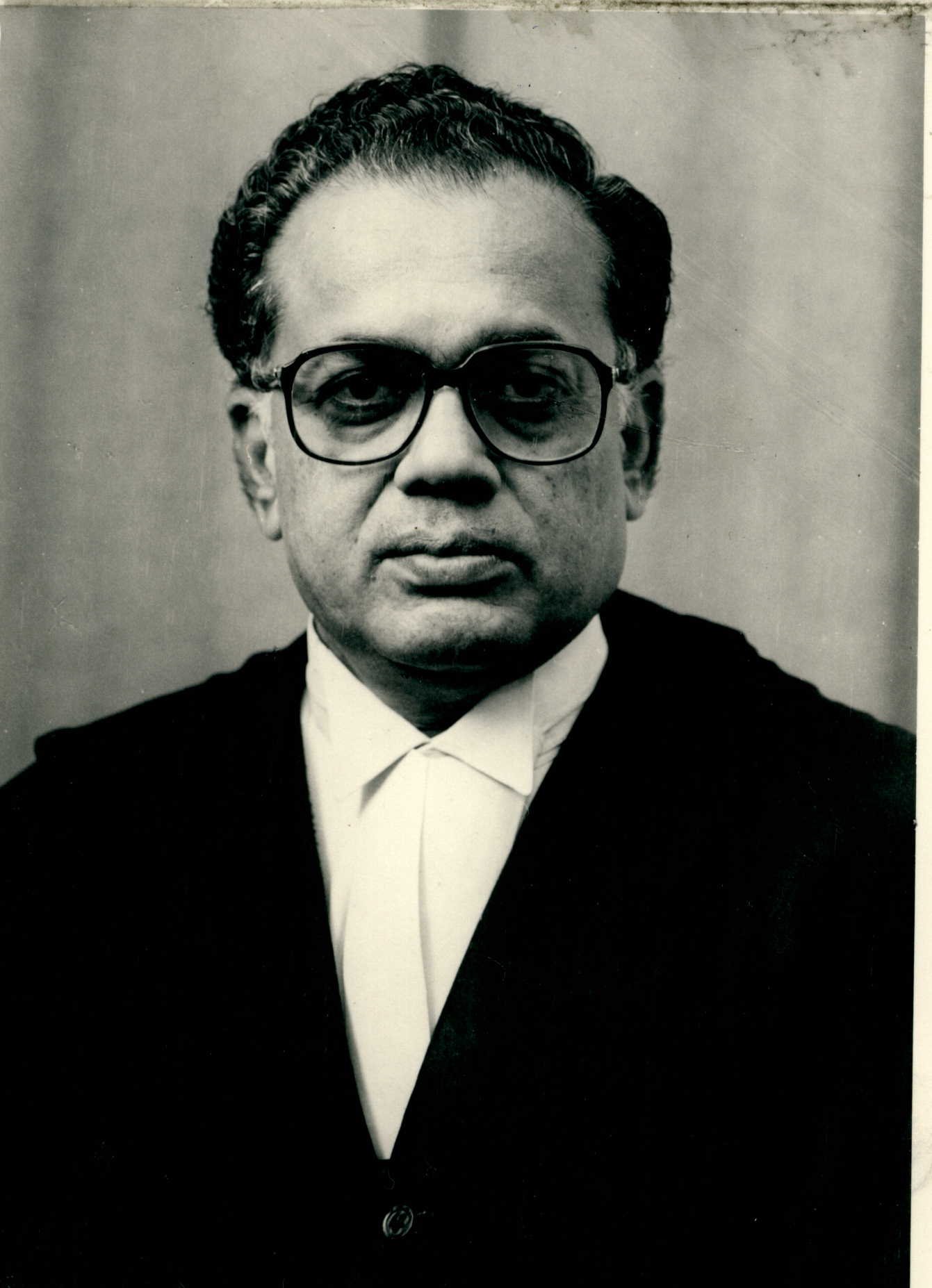
Hon'ble Mr. Justice B.P. Jeevan Reddy
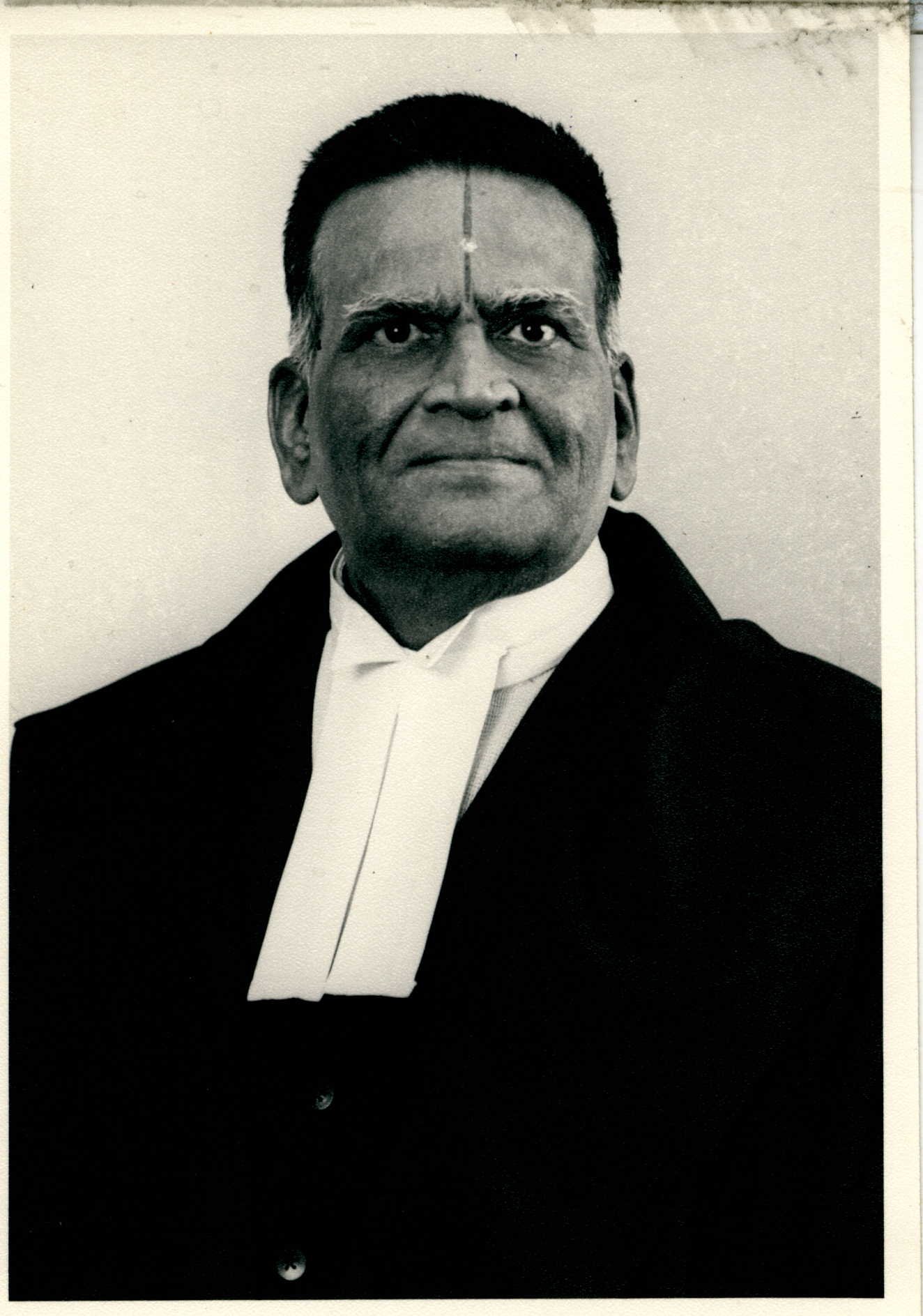
Hon'ble Mr. Justice K.S. Paripoornan
K.S. Bhati M.K. Singh and Ms. Musum, Advs. for the
appellant Sushil Kr. Jain and A.D. Dhamija, Advs. For
Respondents.
J U D G M E N T
The following Judgment of the Court was delivered :
B.P.JEEVAN REDDY,J.
Leave granted. Heard counsel for the parties.
The respondent, Sriram Verma, is an officer belonging
to the Rajasthan Administrative Service. By an order dated
March 24, 1991, thirteen officers were "selected and
appointed in senior pay-scale..... subject to review and
revision for the year 1980-91 as prescribed in the separate
list mentioned in Rule 28(B)(b)" of Rajasthan Administrative
Services Rules, 1954. Thirteen officers selected and
appointed under the said order were mentioned under two
categories separately. Nine of officers were mentioned under
the heading "On the basis of seniority and merit" and four
officers were mentioned under the heading "On the basis of
merit". Among the nine officers promoted on the basis of
seniority and merit, "Sri Ashok Kumar Sanvaria [Scheduled
Caste] was mentioned at Sr. No. 8.
The respondent, Sriram verma, who is also a member of
a Scheduled Castes preferred an appeal against the aforesaid
order before the Rajasthan Civil Services Appellate
Tribunal. He complained that his junior, Ashok Kumar
Sanvaria, has been promoted while he himself has been
overlooked wrongly. The learned advocate appearing for the
State of Rajasthan submitted before the Tribunal that an
enquiry was pending against the respondent under Rule 16 of
the Rajasthan Civil Services [Classifications Control and
Appeal] Rules, 1958 and also because the impugned promotions
were in the nature of urgent/temporary promotions, the
respondent therein was not promoted. The Tribunal allowed
the appeal preferred by the respondent holding that "a
perusal or the written reply filed by the Government does
not very clearly indicate whether the appellant's case for
promotion was considered by the D.P.C. or not"- The Tribunal
http://JUDIS.NIC.IN SUPREME COURT OF INDIA Page 2 of 7
observed that during the arguments, no doubt, the advocate
for the State did mention that an enquiry was pending
against the respondent but that assertion was squarely
denied by the respondent's counsel. The respondent's case
was that "on the date of D.P.C., there was no enquiry
pending against him". The Tribunal observed that it is not
clear whether the respondent's case for promotion was
considered by the D.P.C. or not. If an enquiry was pending
against him, the Tribunal observed his name should have been
kept in sealed cover after considering him and if no enquiry
was pending against him "then clear recommendations should
have been recorded by the D.P.C. in respect of the
appellant". The appeal was allowed accordingly and the
Government was directed to place the respondent's case for
promotion to the selection scale against the vacancies for
the year 1990-91 before the DPC. The DPC was directed to
record its clear recommendations about the respondent.
The order of the tribunal was challenged by the.
Government of Rajasthan before the High Court. The High
Court says that it sent for the record relating. to regular
selection by D.P.C. and then says: "We have got the record
and after going through the same, find that the name of
respondent No.1 was there before the D.P.C. but no reason
has been provided in the proceedings of the D.P.C. as to why
the respondent was not considered fit for promotion". The
High Court then referred to the submission of the counsel
for the State that where was an adverse entry against the
respondent. The High Court saw the entry but without
expressing any opinion whether it is really adverse or not,
observed: "We may say that when his name was considered by
the D.P.C., process of reasoning or application of mind had
to be indicated at the time D.P.C. meeting as to why he is
not being promoted or as his promotion is being withheld.
They did not say that they were withholding promotion on
account of adverse entry. This is the minimum requirment. A
which is being enunciated by courts from time to time and
this law is being observed in breach. The High Court added
further:
"Even before us, the learned
counsel for the State says that
D.P.C. do not give their reasons
when somebody is ignored or
withheld from promotion. This is
not the correct state of law.
D.P.C. is not to write a long
judgment but whatever occurs in
their mind to withhold promotion,
that must be indicated in the
proceedings of the D.P.C., so that
case the matter challenged before a
Court of law, the Court can see
what appealed to the mind of D.P.C.
for not giving promotion.
Copy of this order may be sent to
the Chief Secretary to the
Government of Rajasthan so that he
may be able to advise all
authorities and Departments keep
this in view while sitting in
D.P.C."
The learned counsel for the appellant-State submitted
that it is not obligatory upon the D.P.C. to record reasons
for not selecting an officer and/or for selecting a junior
while not selecting the senior. Counsel submitted that
unless the rules expressly so provide, no such obligation
http://JUDIS.NIC.IN SUPREME COURT OF INDIA Page 3 of 7
can be deduced from the Rajasthan Administrative Services
Rules, 1954. Counsel submitted that the principles of
natural justice have no application to such selections.
Learned counsel relied upon the decision of this Court in
Sarat Kumar Das v. Vishwajit Patnaik [1995 Suppl.(1)
S.C.C.434] and the several decisions referred to therein.
Counsel for the respondent, however disputed the said
propositions and submitted that when a senior is ignored and
Junior is selected, it is obligatory upon the D.P.C. to
record reasons therefor. This requirement, the learned
counsel submitted, has to be inferred because the selection
is liable to be challenged in a court of law and unless
there is something on record to indicate the reasons for
ignoring a senior or for selecting a junior, the Court will
not be in a position to judge the fairness of selection.
Reliance is placed upon the decisions of this Court in State
Bank of India v. Kashinath Kher [AIR 1996 S.C.1328], Union
of India v. E.G.Nambudiri [1991 (3) SCC 38] and Union of
India v. N.P.Dhamania [1995 Suppl.(1) SCC 1].
Before dealing with the submissions, it is necessary to
record a statement made by the learned counsel for the
appellant-State. He stated that so far as the respondent is
concerned, no grievance survives on his part inasmuch as the
order of the Tribunal [as confirmed by the High Court] has
been implemented and the respondent has been given what was
due to him. The counsel stated that the State is not
interested in disturbing what is already given to the
respondent but that they only want a decision on the
proposition enunciated by the High Court that where a
seniors overlooked and a junior is selected, the selecting
authority must indicate the reason for doing so. The above
statement is recorded.
It must be noticed in the first instance that the
promotion to the selection scale is on a twin basis viz.,
seniority-cum-merit as well as merit. The case of the
respondent and his Junior, Sri Sanvaria, was considered on
the basis of seniority-cum-merit. the selection has been
made by the Departmental Promotion Committee constituted
according to rules. The question is whether the D.P.C. is
under an obligation to record reasons far selecting a junior
while ignoring a senior. The High Court has observed that
even though the selecting authority is not required to write
a long order giving reasons for not selecting a senior and
for selecting his junior, the proceedings of the D.P.C. must
indicate in some manner as to why a senior was ignored and
his junior was selected. The question is whether the High
Court is right in saying so?
With a view to clear the ground, we may mention that we
are not dealing with a case of initial appointment. We are
also not dealing with a case where promotion is exclusively
on the basis of merit. We are concerned with a case where
promotion is on the basis of seniority and merit i.e.,
seniority-cum-merit. It is in such a case that the question
is arising whether the selecting authority is required to
record reasons for not selecting a senior and for selecting
a Junior. In R.S.Dass v.Union of India [1986 Suppl. S.C.C.
617] the Bench comprising Sabyasachi Mukharji and
K.N.Singh, JJ. considered the amended Regulations 54 and 55
of the Indian Administrative Service (Appointment by
Promotion) Regulations, 1955. Prior to its amendment in 1977
the Regulation required that where it is proposed to
supersede any member of the State Service "the committee
shall record its reasons for the proposed supersession".
After the amendment, the Regulation requires the Selection
Committee to classify eligible officers as 'outstanding',
http://JUDIS.NIC.IN SUPREME COURT OF INDIA Page 4 of 7
'very gaud', 'good' or 'unfit', as the case may be, on an
over-all consideration and assessment of their service
record. After such categorisation, the Committee has to
arrange the names of officers in the select list in
accordance with the procedure laid down in Regulation 55.
The Bench opined that the amended Regulation gave primacy
and that in such a case it may happen that a junior officer,
if categorised as outstanding' or 'very good' may supersede
his seniors. The Bench rejected the argument that in such a
situation, it is necessary to record reasons for superseding
a senior. The following observations of the Bench are
relevant.
"Learned counsel urged that reasons
if recorded ensure objectively and
impartiality. In the absence of
reasons the Committee may act in
arbitrary manner to supersede
senior officers which would
violative of Arts. 14 and 16 of the
Constitution. We find no merit in
the submission. Article 16 ensures
equality in matters relating to
appointment and promotion to an
office or post under the State. It
enjoins State not to practise
discrimination in matters relating
to appointment and promotion. A
member of the State Civil Service
eligible for selection for
promotion to the I.A.S. has right
to be considered along with others
for selection for promotion. If
eligible officers are considered on
merit, in an objective manner no
Government servant has any legal
right to insist for promotion nor
any such right is protected by the
Arts. 14 or 16 or the Constitution.
Article 16 does not insist that
reasons should be recorded for the
non-selection of member of a State
Service.
The Bench also rejected the argument that since the
Regulations do not lay down any guidelines for
categorisation of the officers as aforesaid, the
categorisation is bound to be arbitrary. It held that since
the categorisation is made objectively on the basis of the
service record of the officers, there is no room for any
arbitrariness. This decision was followed by another Bench
(M.P. Thakkar and N.D. Ojha, JJ.) in Union Public Service
Commission v. Hiranyalal Dev and others [1988 (2) S.C.C. 242
while considering identical provisions in I.P.S promotion
regulations. The Bench reiterated that it is not necessary
to record the reasons for not selecting a person who is
within the field of eligibility.
National institute of Mental Health and Neuro Sciences
v. Dr. K.Kalyana Raman and Others [1992 Suppl. (2) S.C.C.
481] was case concerning appointment to the post of
professor in the institute. It was held that in the absence
of any requirement in the Rules or Regulation obliging the
selection Committee to record reasons, no such requirement
can be inferred. It was held, following R.S. Dass, that
principles of natural justice are not attracted to such
situation and that recording the reasons was not necessary
requirement. In Major General I.P.S Dewan v. Union of India
http://JUDIS.NIC.IN SUPREME COURT OF INDIA Page 5 of 7
and Others [1995 (3) S.C.C. 383], this Bench took the view
that unless the Rules so require, the Selection
Committee/Selection Board is not obliged to record reasons
why they are not selecting a particular person, as the case
may be. In Sarat Kumar Dash and Others v. Biswajit Patnaik
and Others [1995 Suppl. (1) S.C.C. 434] a Bench of this
Court (K. Ramaswamy and N.Venkatachala, JJ.) considered a
case where the promotion was on the basis of merit-cum-
suitability. The Public Service Commission adopted the
method of grading or categorisation, as it may be called,
and then made the selection. It was cantended that since the
reasons were not recorded by the P.S.C. for the
recommendations made by it, the selection was bad. This
contention was rejected following the decisions
aforementioned.
Now coming to the Rules applicable herein, the position
is this: Clauses (a) and (b) af sub-rule (11) of Rule 28-B
of the Rajasthan Administrative Service Rules, 1954 read
thus:
"(11)(a) The Committee shall
consider the cases of all
seniormost persons who are eligible
and qualified for promotion to the
class of posts concerned under
these rules and shall prepare a
list containing names of the
persons found suitable on the basis
of seniority-cum-merit and/or on
the basis of merit, as the case may
be, as per the criteria for
promotion laid down in these rules,
equal to the number of vacancies
determined under rule relating to
"Determination of vacancies" of
these rules. The list so prepared
on the basis of seniority-cum-merit
and/or on the basis of merit, as
the case may be, shall be arranged
in the order of seniority on the
category of pasts from which
selection is made.
(b) The Committee shall also
prepare a separate list on the
basis of seniority-cum-merit and/or
on the basis of merit, as the case
may be, as per the criteria far
promotion laid down in the rules,
containing names of persons equal
to the number of persons selected
in the list prepared under (a)
above to fill temporary or
permanent vacancies which may occur
subsequently. The list so prepared
on the basis of seniority-cum-merit
and/or on the basis of merit shall
be arranged in the order of
seniority in, the cotegory of posts
from which selection shall be made
Such a list shall be reviewed and
revised by the Departmental
promotion Committee that meets in
the subsequent year and that such
list shall remain in force till the
end of the last day or the next
year or till the Departmental
http://JUDIS.NIC.IN SUPREME COURT OF INDIA Page 6 of 7
Promotion Committee meets?
whichever is earlier."
The clauses aforesaid neither provide for grading nor
do they require the recording of reasons for superseding a
senior. So far as the promotion on the basis of seniority-
cum-merit is concerned, lt only says that the Committee
shall consider the names of all senior and qualified persons
"and shall prepare a list containing names of the persons
found suitable on the basis Of seniority-cum-merit." After
preparation, such list, the officers included therein shall
be arranged in the order of inter se seniority obtaining in
the feeder post. In such a situation and when the promotion
is made by the Departmental Promotion Committees we find it
difficult to say either that ordinarily the D.F.C. should
record reasons for not selecting a senior (and selecting his
junior) or that at least the record should indicate some
reason therefor. It is one thing to say that such a course
is fair and desirable but lt is altogether a different thing
to say that such a course is obligatory or necessary in all
cases for in the latter event the Selections made are liable
to be set aside for not complying with the said requirement.
The High Court has pointed out that such selections are
likely to the challenged in Court of law and if no reason,
are recorded - or at least the record indicates the reason
for superseding a senior and selecting his junior, the Court
would not be in a position to consider the grievance
effectively and satisfactorily. This argument brings to our
mind the decision in Bhagat Raja v. Union of India Other
[A.I.R 1967 S.C. 1606 (C.B] but that was case where the
order questioned before the Court was a quasi-judicial
order. It is equally true that even in administrative
matters this Court has been, insisting upon the duty to Act
fairly which may sometimes require an apportunity of hearing
But having regard to the nature of function of selection
and taking into consideration the fact that the only right
of the government servant is a right to be considered and
not a right to promotion we do not think it possible to
infer the requirement of recording reasons in all
situations. At the same time, we think that it is always
desirable that procedure adopted selecting body should be
fair and such as to lend credence to the process; it should
be such as to inspire confidence in all concerned within the
practicable limits. From this point of view, it would be a
wholesome step for the Government of Rajasthan for that
matter, all governments to provide either by amendment of
Rules or by general instructions that in the Promotion on
the basis of merit or merit-cum-seniority/merit-cum-
suitablity, the selecting authority should follow the method
of grading all the candidates appearing before them. This
requirement we are suggesting in cases where the Rules do
not provide for grading or for awarding marks or for
recording of reason for over-looking a senior; where,
however, the Rules already provide for awarding of marks or
any other appropriate method, our suggestion may not be
applicable. It must also be understood clearly that ours is
a suggestion to avoid complaints of arbitrariness and
primarily with a view to make the process credible. The
governments shall keep this underlying object in mind and
cause appropriate amendments or issue appropriate
instructions. It is obvious that any such
amendments/instructions shall have only prospective
operation.
For the above reasons, the appeal is allowed. The
order of the High Court that of the Rajasthan Civil Service
Appellate Tribunal impugned herein are set aside. But as
http://JUDIS.NIC.IN SUPREME COURT OF INDIA Page 7 of 7
recorded hereinabove, this order shall in no manner affect
the first respondent, or for that matter, the second
respondent. There shall be no order to costs.
Copies of this order shall be sent to all the Chief
Secretaries of Stato Governments and Union Territories as
well as to the Secretary, Ministry of Home Affairs,
Government of India.
In the landmark case of State of Rajasthan v. Sriram Verma & Anr., the Supreme Court of India delivered a crucial judgment clarifying the nuances of DPC promotion rules and the procedural requirement of recording reasons for supersession. Available for in-depth study on CaseOn, this ruling meticulously dissects the balance between administrative discretion and procedural fairness, establishing that while recording reasons for bypassing a senior for promotion is a desirable practice, it is not a mandatory legal obligation unless explicitly required by service rules.
The central legal issue before the Supreme Court was whether a Departmental Promotion Committee (DPC) is legally bound to record its reasons for not selecting a senior employee for promotion while selecting a junior. In essence, does the principle of fairness demand a written justification when a senior is superseded in promotions based on “seniority-cum-merit”?
The Court's decision was anchored in the existing legal framework. The relevant regulations, the Rajasthan Administrative Services Rules, 1954, did not contain any provision that explicitly mandated the DPC to record reasons for supersession. The Supreme Court also referred to established precedents, including R.S. Dass v. Union of India, which held that a government employee's fundamental right under Article 16 of the Constitution is the right to be *considered* for promotion, not an absolute right *to* be promoted. These precedents established that in the absence of a specific statutory rule, the principles of natural justice do not compel a selection committee to provide reasons for its decisions.
The case originated when Mr. Sriram Verma, a senior officer, was overlooked for promotion in favor of his junior. The Rajasthan High Court, siding with Mr. Verma, had ruled that the DPC must provide reasons for its decision to ensure transparency and enable effective judicial review. The High Court argued that without a recorded rationale, it would be impossible for a court to determine if the decision was fair or arbitrary.
The Supreme Court, however, took a more nuanced view. It acknowledged the High Court's perspective, agreeing that recording reasons is a “fair and desirable” course of action that inspires confidence in the selection process. However, the Apex Court drew a sharp distinction between a desirable administrative practice and a mandatory legal requirement. It reasoned that elevating this practice to a binding obligation, without any basis in the service rules, could lead to numerous promotions being set aside on purely procedural grounds.
The Court distinguished the administrative nature of DPC selections from quasi-judicial proceedings, where recording reasons is often a necessity (as held in Bhagat Raja v. Union of India). Since the DPC’s function is purely administrative, its procedural obligations are primarily defined by the governing service rules. Legal professionals can quickly grasp these subtle but critical distinctions in administrative law with tools like the CaseOn.in 2-minute audio briefs, which are designed to help analyze such specific rulings efficiently. The Court concluded that in the absence of a rule, it could not impose such a condition.
The Supreme Court allowed the State of Rajasthan's appeal and set aside the High Court's judgment. It firmly held that a DPC is not under a legal obligation to record reasons for superseding a senior officer unless the service rules expressly provide for it.
However, in a significant forward-looking recommendation (obiter dicta), the Court strongly urged the Government of Rajasthan and all other governments to consider amending their rules or issuing general instructions. It suggested implementing a system of grading candidates (e.g., 'Outstanding', 'Very Good', 'Good') during promotion considerations. Such a practice, the Court noted, would introduce greater objectivity, make the process more credible, and minimize complaints of arbitrariness. This recommendation was to have a prospective effect.
The Supreme Court's final order was to allow the appeal filed by the State of Rajasthan, thereby setting aside the High Court's mandate that DPCs must record reasons for supersession. However, the Court clarified that its decision would not affect the promotion that had already been granted to the respondent, Mr. Sriram Verma, in compliance with the earlier orders of the Tribunal and High Court. The judgment thus settled a significant question of law without disturbing the individual relief already granted.
This judgment is an essential read for legal professionals and students for several reasons:
The information provided in this article is for informational and educational purposes only. It does not constitute legal advice. For advice on any specific legal problem, you should consult with a qualified legal professional.

 Login with google
Legal Notes
Add a Note....