
This case was an appeal filed by the State of Uttar Pradesh against the decision of the lower court acquitting the respondent, Satish.
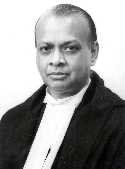

No Acts & Articles mentioned in this case
http://JUDIS.NIC.IN SUPREME COURT OF INDIA Page 1 of 7
CASE NO.:
Appeal (crl.) 256-257 of 2005
PETITIONER:
State of U.P.
RESPONDENT:
Satish
DATE OF JUDGMENT: 08/02/2005
BENCH:
Arijit Pasayat & S.H. Kapadia
JUDGMENT:
JUDGMENT
ARIJIT PASAYAT, J.
Leave granted.
One Vishakha @ Akansha (hereinafter referred to as the `victim') who had
not even seen six summers in her life lost her life on account of bestial
acts of the respondent Satish (hereinafter referred to as the `accused')
who allegedly raped her and thereafter murdered her. When the victim went
out to school on 16.8.2001, her parents would have never thought in their
widest dreams that she would not come back home and would fall victim to
the barbaric and inhuman acts of the respondent. Rape is one of the most
depraved acts. The iniquitous flagitious act becomes abonimal when the
victim is a child. The diabolic act reaches the lowest level of humanity
when the rape is followed by brutal murder.
In a nutshell the accused faced trial in the following backdrop.
On 16.8.2001 the victim who was studying in Sarvodya Public School had gone
to school and did not return at the usual time. On the next day morning her
dead body was found in the Sugarcane field of one Moolchand around 6.00
a.m. She was lying in a dead condition and blood was oozing from her
private parts and there were marks of pressing on her neck. Report was
lodged at the nearly Police Station and the dead body was sent for post
mortem examination Dr. R.K. Gupta (PW-7) conducted the post mortem around
2.00 p.m. on 17.8.2001 and opined that death was within the preceding 24
hours.
Three persons claimed to have seen the accused nearby the place of
occurrence between 1.00 p.m. to 2.00 p.m. on the date of occurrence. Two of
them, namely, Sanjeev Kumar Tyagi (PW-3) and Kulbhushan (PW-5) claimed to
have seen the deceased being carried on a bicycle by the accused who was
taking the bicycle with the deceased sitting on the handle thereof. Anil
(PW-2) stated that he had seen the accused in perplexed state around 2.00
p.m. near the place from where the dead body of deceased was found.
Investigation was undertaken. During such investigation, there was recovery
of accused's underwear as also the undergarment the deceased was wearing.
This recovery was treated to be under Section 27 of the Indian Evidence
Act, 1872 (in short the `Evidence Act').
The trial Court found that the circumstances highlighted by the prosecution
were sufficient to fasten guilt on the accused. She, therefore, convicted
him under Section 363, 366, 376(2), 302 and 201 of the Indian Penal Code,
1860 (in short the `IPC'). The crime was held to be one falling under
rareset of rare category. Death sentence was imposed for the offence under
Section 302 IPC. Various custodial sentences and fines were imposed for
other offences. Since a death sentence was awarded the matter was referred
http://JUDIS.NIC.IN SUPREME COURT OF INDIA Page 2 of 7
to the High Court for confirmation in terms of Section 366 of Code of
Criminal Procedure, 1973 (in short the `Code'). The accused preferred an
appeal before the High Court. Both the capital sentence reference and the
criminal appeal were heard together. By the impugned judgment the High
Court set aside the judgment of conviction. It was held that the case
rested on circumstantial evidence and the circumstances highlighted by the
prosecution did not inspire confidence. Three circumstances were
highlighted by the High Court to arrive at the aforesaid conclusions.
Firstly, was held that examination of PWs. 3 and 5 after long passage of
time rendered their version unacceptable and improbable. The prosecution
did not offer any explanation for such delayed examination. Secondly, in
the FIR name of the accused was not indicated. Thirdly, presence of the
accused nearby the place from where the dead body was recovered, as deposed
by PW-2, may be a suspicious circumstance but was not determinative.
Accordingly, it was held that prosecution had failed to prove its
accusations.
In support of the appeals, learned counsel for the State submitted that the
approach of the High Court is clearly erroneous both on legal and factual
aspects. No question was put to the Investigating Officer (PW-8) regarding
alleged delayed examination. Further the evidence of PWs 2, 3 and 5 clearly
established the circumstances which unerringly point the accusing finger at
the accused. Additionally, explanation was given for non inclusion of the
name of the accused in the FIR by PW-1 and without indicating any reason
the High Court had treated the same to be unacceptable.
It is relevant to point out that during trial no question was raised about
the delayed examination and not even a plea was raised before the trial
Court that the delayed examination of PWs 3 and 5 affected credibility of
the prosecution version.
In response, learned counsel for the accused-respondent submitted that the
High Court by a well reasoned judgment has found the prosecution version to
be unreliable. That being so, this Court should not interfere with the
order of acquittal. Further, the evidence tendered by the prosecution is
not sufficient to prove unerringly that the accused was responsible for the
crime. The case being one which rests on circumstantial evidence, the view
taken by the High Court is a possible view and, therefore, this Court
should not interfere.
It has been consistently laid down by this Court that where a case rests
squarely on circumstantial evidence, the inference of guilt can be
justified only when all the incriminating facts and circumstances are found
to be incompatible with the innocence of the accused or the guilt of any
other person. (See Hukam Singh v. State of Rajasthan, AIR (1977) SC 1063,
Eradu v. State of Hyderabad, AIR (1956) SC 316, Earabhadrappa v. State of
Karnataka, AIR (1983) SC 446, State of U.P. v. Sukhbasi, AIR (1985) SC
1224, Balwinder Singh v. State of Punjab, AIR (1987) SC 350 and Ashok Kumar
Chatterjee v. State of M.P., AIR (1989) SC 1890). The circumstances from
which an inference as to the guilt of the accused is drawn have to be
proved beyond reasonable doubt and have to be shown to be closely connected
with the principal fact sought to be inferred from those circumstances. In
Bhagat Ram v. State of Punjab, AIR (1954) SC 621 it was laid down that
where the case depends upon the conclusion drawn from circumstances the
cumulative effect of the circumstances must be such as to negative the
innocence of the accused and bring home the offences beyond any reasonable
doubt.
We may also make reference to a decision of this Court in C. Chenga Reddy
v. State of A.P., [1996] 10 SCC 193, wherein it has been observed thus:
"21. In a case based on circumstantial evidence, the settled law is that
the circumstances from which the conclusion of guilt is drawn should be
fully proved and such circumstances must be conclusive in nature. Moreover,
all the circumstances should be complete and there should be no gap left in
http://JUDIS.NIC.IN SUPREME COURT OF INDIA Page 3 of 7
the chain of evidence. Further, the proved circumstances must be consistent
only with the hypothesis of the guilt of the accused and totally
inconsistent with his innocence."
In Padala Veera Reddy v. State of A.P., AIR (1990) SC 79 it was laid down
that when a case rests upon circumstantial evidence, such evidence must
satisfy the following tests:
(1) The circumstances from which an inference of guilt is sought to be
drawn, must be cogently and firmly established;
(2) Those circumstances should be of a definite tendency unerringly
pointing towards guilt of the accused;
(3) The circumstances, taken cumulatively, should form a chain so complete
that there is no escape from the conclusion that within all human
probability the crime was committed by the accused and none else; and
(4) The circumstantial evidence in order to sustain conviction must be
complete and incapable of explanation of any other hypothesis than that of
guilt of the accused and such evidence should not only be consistent with
the guilty of the accused but should be inconsistent with his innocence.
In State of U.P. v. Ashok Kumar Srivastava, (1992) Crl LJ 1104 it was
pointed out that great care must be taken in evaluating circumstantial
evidence and if the evidence relied on is reasonably capable of two
inferences, the one in favour of the accused must be accepted. It was also
pointed out that the circumstances relied upon must be found to have been
fully established and the cumulative effect of all the facts so established
must be consistent only with the hypothesis of guilt.
Sir Alfred Wills in his admirable book `Wills' Circumstantial Evidence'
(Chapter VI) lays down the following rules specially to be observed in the
case of circumstantial evidence: (1) the facts alleged as the basis of any
legal inference must be clearly proved and beyond reasonable doubt
connected with the factum probandum; (2) the burden of proof is always on
the party who asserts the existence of any fact, which infers legal
accountability; (3) in all cases, whether of direct of circumstantial
evidence the best evidence must be adduced which the nature of the case
admits; (4) in order to justify the inference of guilt, the inculpatory
facts must be incompatible with the innocence of the accused and incapable
of explanation, upon any other reasonable hypothesis than that of his
guilt; and (5) if there be any reasonable doubt of the guilt of the
accused, he is entitled as of right to be acquitted.
There is no doubt that conviction can be based solely on circumstantial
evidence but it should be tested by the touchstone of law relating to
circumstantial evidence laid down by this Court as far back in 1952.
In Hanumant Govind Nargundkar v. State of M.P., AIR (1952) SC 343 it was
observed thus;
"It is well to remember that in case where the evidence is of a
circumstantial nautre, the circumstances from which the conclusion of guilt
is to be drawn should be in the first instance be fully established, and
all the facts so established should be consistent only with the hypothesis
of the guilt of the accused. Again, the circumstances should be of a
conclusive nature and tendency and they should be such as to exclude every
hypothesis but the one proposed to be proved. In other words, there must be
a chain of evidence so far complete as not to leave any reasonable ground
for a conclusion consistent with the innocence of the accused and it must
be such as to show that within all human probability the act must have been
done by the accused."
A reference may be made to a later decision in Sharad Birdhichand Sarda v.
http://JUDIS.NIC.IN SUPREME COURT OF INDIA Page 4 of 7
State of Maharashtra, AIR (1994) SC 1622. Therein, while dealing with
circumstantial evidence, it has been held that the onus was on the
prosecution to prove that the chain is complete and the infirmity of lacuna
in the prosecution cannot be cured by a false defence or plea. The
conditions precedent in the words of this Court, before conviction could be
based on circumstantial evidence must be fully established. They are:
(1) The circumstances from which the conclusion of guilt is to be drawn
should be fully established. The circumstances concerned must or should and
not may be established;
(2) The facts so established should be consistent only with the hypothesis
of the guilt of the accused, that is to say, they should not be explainable
on any other hypothesis except that the accused is guilty;
(3) The circumstances should be of a conclusive nature and tendency;
(4) They should exclude every possible hypothesis except the one to be
proved; and
(5) There must be a chain of evidence so complete as not to leave any
reasonable ground for the conclusion consistent with the-innocence of the
accused and must show that in all human probability the act must have been
done by the accused.
When the evidence on record is analysed in the background of principles
highlighted above, the inevitable conclusion is that the prosecution has
established its accusations.
As regards delayed examination of certain witnesses, this Court in several
decisions has held that unless the Investigating officer is categorcially
asked as to why there was delay in examination for the witnesses the
defence cannot gain any advantage therefrom. It cannot be laid down as a
rule of universal application that it there is any delay in examination of
a particular witness the prosecution version become suspect. It would
depend upon several factors. If the explanation offered for the delayed
examination is plausible and acceptable and the court accepts the same as
plausible, there is no reason to interfere with the conclusion [See Ranbir
and Ors. v. State of Punjab, AIR (1973) SC 1409, Bodhraj @ Rodha and Ors.
v. State of Jammu and Kashmir, [2002] 8 SCC 45 and Banti @ Guddu v. State
of M.P., [2004] 1 SCC 414.]
The High Court has placed reliance on a decision of this Court in Ganesh
Bhayan Patel and Anr. v. State of Maharashtra, [1978] 4 SCC 371. A bare
reading of the fact situation of that case shows that the delayed
examination by I.O. was not the only factor which was considered to be
determinative. On the contrary it was held that there were catena of
factors which when taken together with the delayed examination provided
basis for acquittal.
It is to be noted that the explanation when offered by I.O. on being
questioned on the aspect of delayed examination, by the accused has to be
tested by the Court on the touchstone of credibility. If the explanation is
plausible then no adverse inference can be drawn. On the other hand, if the
explanation is found to be implausible, certainly the Court can consider it
to be one of the factors to affect credibility of the witnesses who were
examined belatedly. It may not have any effect on the credibility of
prosecution's evidence tendered by the other witnesses.
One significant factor which seems to have missed by the High Court is that
there was no suggestion to either PW-3 or PW-5 that in fact they had not
seen the accused and deceased together. Even no question was asked about
that aspect in cross-examination. On the contrary, an irrelevant suggestion
was given that though the witness and seen them together, the witness had
not asked the accused as to why he was walking while carrying the deceased
http://JUDIS.NIC.IN SUPREME COURT OF INDIA Page 5 of 7
on the bicycle. That being so, the High Court could not have come to the
conclusion that there was no credible evidence of the accused and the
deceased being seen together by PWs 3 and 5. As noted above, the I.O.
(PW-8) was never asked the reason for delayed examination of PWs 3 and 5.
The cross examination was only on the aspect of the recovery of the
underwear and undergarment of the accused and the deceased respectively.
The last seen theory comes into play where the time-gap between the point
of time when the accused and the deceased were seen last alive and when the
deceased is found dead is so small that possibility of any person other
than the accused being the author of the crime becomes impossible. It would
be difficult in some cases to positively establish that the deceased was
last seen with the accused when there is a long gap and possibility of
other persons coming in between exists. In the absence of any other
positive evidence to conclude that the accused and the deceased were last
seen together, it would be hazardous to come to a conclusion of guilt in
those cases. In this case there is positive evidence that the deceased and
the accused were seen together by witnesses PWs. 3 and 5, in addition to
the evidence of PW-2.
The reason as to why accused's name did not find place in the FIR was
explained by the informant when he was recalled. The High Court drew an
adverse inference without indicating any reason therefore. Looked at from
above angle, the High Court's order is clearly untenable and unsustainable
and deserves to be set aside, which we direct.
There is no embargo on the appellate Court reviewing the evidence upon
which an order of acquittal is based. Generally, the order of acquittal
shall not be interfered with because the presumption of innocence of the
accused is further strengthened by acquittal. The golden thread which runs
through the web of administration of justice in criminal cases is that if
two views are possible on the evidence adduced in the case, one pointing to
the guilt of the accused and the other to his innocence, the view which is
favourable to the accused should be adopted. The paramount consideration of
the Court is to ensure that miscarriage of justice is prevented. A
miscarriage of justice which may arise from acquittal of the guilty is no
less than from the conviction of an innocent. In a case where admissible
evidence is ignored, a duty is cast upon the appellate Court to re-
appreciate the evidence where the accused has been acquitted, for the
purpose of ascertaining as to whether any of the accused really committed
any offence or not. [See Bhagwan Singh and Ors. v. State of Madhya Pradesh,
(2002) 2 Supreme 567]. The principle to be followed by appellate Court
considering the appeal against the judgment of acquittal is to interfere
only when there are compelling and substantial reasons for doing so. If the
impugned judgment is clearly unreasonable and relevant and convincing
materials have been unjustifiably eliminated in the process, it is a
compelling reason for interference. These aspects were highlighted by this
Court in Shivaji Sahabrao Bobade and Anr. v. State of Maharashtra, AIR
(1973) SC 2622, Ramesh Babulal Doshi v. State of Gujarat, (1996) 4 Supreme
167, Jaswant Singh v. State of Haryana, (2000) 3 Supreme 320, Raj Kishore
Jha v. State of Bihar and Ors., (2003) 7 Supreme 152. State of Punjab v.
Karnail Singh, (2003) 5 Supreme 508 and State of Punjab v. Pohla Singh and
Anr., (2003) 7 Supreme 17.
In Bachan Singh v. State of Punjab, [1980] 3 SCC 684 and Machhi Singh and
Ors. v. State of Punjab, [1983] 3 SCC 470 the guidelines which are to be
kept in view when considering the question whether the case belongs to the
rarest of the rare category for awarding death sentence were indicated.
In Machhi Singh's case supra it was observed:
"The following questions may be asked and answered as a test to
determine the "rarest of the rare" case in which death sentence can
be inflicted:-
http://JUDIS.NIC.IN SUPREME COURT OF INDIA Page 6 of 7
(a) Is there something uncommon about the crime which renders
sentence of imprisonment for life inadequate and calls for a death
sentences?
(b) Are the circumstance of the crime such that there is no
alternative but to impose death sentence even after according
maximum, weightage to the mitigating circumstances which speak in
favour of the offender?
The following guidelines which emerge from Bachan Singh case
(supra) will have to be applied to the facts of each individual
case where the question of imposition of death sentence arises:
(SCC p. 489, para 38):-
(i) The extreme penalty of death need not be inflicted except in
gravest cases of extreme culpability.
(ii) Before opting for the death penalty the circumstances of the
`offender' also require to be taken into consideration along with
the circumstances of the `crime'.
(iii) Life imprisonment is the rule and death sentence is an
exception. Death sentence must be imposed only when life
imprisonment appears to be an altogether inadequate punishment
having regard to the relevant circumstance of the crime, and
provided, and only provided, the option to impose sentence of
imprisonment for life cannot be conscientiously exercised having
regard to the nature and circumstances of the crime and all the
relevant circumstances.
(iv) A balance sheet of aggravating and mitigating circumstances
has to be drawn up and in doing so the mitigating circumstances
have to be accorded full weightage and a just balance has to be
struck between the aggravating and the mitigating circumstances
before the option is exercised.
In rarest of rare cases when collective conscience of the community
is so shocked that it will expect the holders of the judicial power
centre to inflict death penalty irrespective of their personal
opinion as regards desirability or otherwise of retaining death
penalty, death sentence can be awarded. The community may entertain
such sentiment in the following circumstances :
(1) When the murder is committed in an extremely brutal, grotesque,
disbolical, revolting or dastardly manner so as to arouse intense and
extreme indignation of the community.
(2) When the murder is committed for a motive which evinces total depravity
and meanness; e.g. murder by hired assassin for money or reward or a cold-
blooded murder for gains of a person vis-a-vis whom the murderer is in a
dominating position or in a position of trust, or murder is committed in
the course for betrayal of the motherland.
(3) When murder of a member of a Scheduled Caste or minority community
etc., is committed not for personal reasons but in circumstances which
arouse social wrath, or in cases of `bride burning' or `dowry deaths' or
when murder is committed in order to remarry for the sake of extracting
dowry once again or to marry another woman on account of infatuation.
(4) When the crime is enormous in proportion. For instance when multiple
murders, say of all or almost all the members of a family or a large number
of persons of a particular caste, community, or locality, are committed.
(5) When the victim of murder is an innocent child, or a helpless woman or
old or infirm person or a person vis-a-vis whom the murderer is in
http://JUDIS.NIC.IN SUPREME COURT OF INDIA Page 7 of 7
dominating position or a public figure generally loved and respected by the
community.
If upon taking an overall global view of all the circumstances in
the light of the aforesaid proposition and taking into account the
answers to the questions posed by way of the test for the rarest of
rare cases, the circumstances of the case are such that death
sentence is warranted, the court would proceed to do so."
A convict hovers between life and death when the question of gravity of the
offence and award of adequate sentence comes up for consideration. Mankind
has shifted from the state of nature towards a civilized society and it is
no longer the physical opinion of the majority that takes away the liberty
of a citizen by convicting him and making him suffer a sentence of
imprisonment. Award of punishment following conviction at a trial in a
system wedded to the rule of law is the outcome of cool deliberation in the
court room after adequate hearing is afforded to the parties, accusations
are brought against the accused, the prosecuted is given an opportunity of
meeting the accusations by establishing his innocence. It is the outcome of
cool deliberations and the screening of the material by the informed man
i.e. the judge that leads to determination of the lis.
The principle of proportion between crime and punishment is a principle of
just desert that servers as the foundation of every criminal sentence that
is justifiable. As a principle of criminal justice it is hardly less
familiar or less important than the principle that only the guilty ought to
be punished. Indeed, the requirement that punishment not be
disproportionately great, which is a corollary of just desert, is dictated
by the same principle that does not allow punishment of the innocent, for
any punishment in excess of what is deserved for the criminal conduct is
punishment without guilt.
The criminal law adheres in general to the principle of proportionality in
prescribing liability according to the culpability of each kind of criminal
conduct. It ordinarily allows some significant discretion to the judge in
arriving at a sentence in each cases, presumably to permit sentences that
reflect more subtle considerations of culpability that are raised by the
special facts of each case. Judges in essence affirm that punishment ought
always to fit the crime; yet in practice sentences are determined largely
by other considerations. Sometimes it is the correctional needs of the
perpetrator that are offered to justify a sentence. Sometimes the
desirability of keeping him out of circulation, and sometimes even the
tragic results of his crime. Inevitably these considerations cause a
departure from just desert as the basis of punishment and create cases of
apparent injustice that are serious and widespread.
Proportion between crime and punishment is a goal respected in principle,
and in spite of errant notions, it remains a strong influence in the
determination of sentences. Anything less than a penalty of greatest
severity for any serious crime is thought to be a measure of toleration
that is unwarranted and unwise. But in fact quite apart from those
considerations that make punishment unjustifiable when it is out of
proportion to the crime, uniformly disproportionate punishment has some
very undesirable practical consequences.
Considering the view expressed by this Court in Bachan Singh's case (supra)
and Machhi Singh's case (supra) we have no hesitation in holding that the
case at hand falls in rarest of rare category and death sentence awarded by
the trial Court was appropriate. The acquittal of the respondent-accused is
clearly unsustainable and is set aside. In the ultimate result, the
judgment of the High Court is set aside and that of the trial Court is
restored. The appeals are allowed.

Legal Notes
Add a Note....