
By way of a writ petition, the case was first filed in the Punjab and Haryana High Court. Upon an adverse decision, it was taken to the Supreme Court of ...
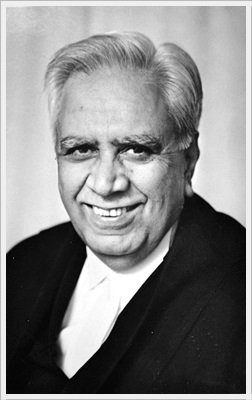

No Acts & Articles mentioned in this case
http://JUDIS.NIC.IN SUPREME COURT OF INDIA Page 1 of 9
CASE NO.:
Appeal (crl.) 57 of 1996
PETITIONER:
SUKHCHAIN SINGH
Vs.
RESPONDENT:
STATE OF HARYANA & ORS.
DATE OF JUDGMENT: 24/04/2002
BENCH:
R.P. Sethi & Doraiswamy Raju
JUDGMENT:
(With Criminal A.No.58/96)
J U D G M E N T
SETHI,J.
These appeals are directed against the order of the
High Court acquitting the respondents who, upon trial, were
found guilty and convicted by the trial court for the
commission of the offence punishable under Section 302 read
with Section 34 of the Indian Penal Code. They were
sentenced to life imprisonment and a fine of Rs.10,000/-
each to be paid, on realisation, to the widow of the
deceased. It is contended that the judgment of the High
Court is perverse, based upon assumptions and conjectures,
completely ignoring the reliable legal evidence and has
resulted in miscarriage of justice which is sought to be set
right.
The occurrence in which one Raj Karan aged about 23
years was murdered, took place in Village Siwah near Panipat
in the State of Haryana. Report of the occurrence was
lodged on the same day at about 10.30 a.m. at the police
station which is 8 kms. away from the place of occurrence.
The copy of the said report was sent to the Area Magistrate
under Section 157 of the Cr.P.C. which reached the
Magistrate at 11.00 a.m.
The deceased along with his 7 other brothers was living
in the said village Siwah where they owned their lands. One
of his brother Sukhchain Singh (PW1) was a practicing lawyer
at Panipat while permanently residing in the village. The
deceased and Sukhchain Singh (PW1) were living jointly
whereas all the remaining brothers lived separately. In
their neighbourhood lived Hardwari Lal and Suraj Mal who
were in litigation with each other for partition of the
land. As Raj Karan was on visiting terms with Suraj Mal,
Hardwari Lal's nephew Bishna and his grand-son Balbir, both
accused, had conceived ill-will against Raj Karan, deceased
whom they considered as the apple of discord. On the night
intervening 2nd and 3rd of May, 1989, Sukhchain Singh
(PW1), Raj Karan, deceased and Jai Karan, cousin of PW1 were
carrying chaff loaded in a trolley from the fields of the
http://JUDIS.NIC.IN SUPREME COURT OF INDIA Page 2 of 9
village. At about 4 a.m. on 3rd May, 1989, the deceased
after loading the trolley tied it with the tractor and drove
it near their house where the chaff was to be stacked in the
adjoining rooms. Sukhchain Singh (PW1) and Jai Karan (PW2)
were coming to their house on foot by a short-cut passage
after Raj Karan had left the fields. After reaching near
the house Raj Karan started waiting for his brother and
cousin to reach. At that time both the accused persons,
armed with lathis (sticks), came out of their house, raised
a lalkara declaring that they will teach a lesson to Raj
Karan for helping Suraj Mal and finish him. They surrounded
the deceased and inflicted lathi blows on his head. The
commotion and the noise attracted the attention of Sukhchain
Singh (PW1) and Jai Karan (PW2) who saw the occurrence.
They saw Balbir and Bishna giving blows on the head of Raj
Karan as a consequence of which the injured became
unconscious and fell down on the ground. When the witnesses
raised hue and cry and sought help of the villagers, the
accused persons fled away from the spot with their lathis.
Satinder Kumar, another brother of the deceased, also
reached on the spot. All the persons present on the spot
arranged a trolley and removed Raj Karan in an injured
condition to Civil Hospital, Panipat for treatment but at
6.45 p.m. the injured succumbed to his injuries in the
Hospital. When the injured was brought to the Hospital, the
doctor had sent a note to the Police Station, Sadar, Panipat
on the receipt of which Bullan Singh, Assistant Sub-
Inspector (PW5) reached the Civil Hospital and recorded the
statement of complainant Sukhchain Singh (PW1) at 8.30 a.m.
which was later treated as First Information Report and
marked Exh. PA/3.
After completing the investigation, the accused were
sent for their trial under Section 302 read with Section 34
of the Indian Penal Code. In order to prove its case
prosecution examined Sukhchain Singh (PW1), Jai Karan (PW2),
Dr.Mahesh Parkash (PW3), Balak Ram (PW4), Assistant Sub-
Inspector Bhullan Singh (PW5), Head Constable Hanu Ram (PW6,
Head Constable Chandi Ram (PW7), Head Constable Tasveer
Singh (PW8), Sub-Inspector Mehar Singh (PW9) and Constable
Om Parkash (PW10). As earlier noticed, Sukhchain Singh (PW1)
and Jai Karan (PW2) are the eye-witnesses of the occurrence.
Relying upon the testimony of the eye-witnesses, the trial
court held both the accused guilty of the offence punishable
under Section 302 read with Section 34 of the Indian Penal
Code and sentenced them to life imprisonment.
Not relying upon the testimony of PWs1 and 2, the High
Court acquitted the accused persons vide the judgment
impugned in these appeals. Feeling aggrieved by the
judgment of the High Court Criminal Appeal No.57 of 1996 was
filed by the complainant and Criminal Appeal No.58 of 1996
by the State of Haryana.
To arrive at the conclusion that PWs1 and 2 were not
the eye-witnesses of the occurrence, the High Court noted:
"PW1 Sukhchain Singh stated at the trial that he
brought his injured brother Raj Karan to Civil
Hospital, Panipat in a tractor-trolley. He was
accompanied by Satinder Kumar, Sukhdarshan alias
Sukhdev and Jai Karan; but from the medico-legal
report, it is shown that injured Raj Karan (since
deceased) was brought to the Hospital by
Sukhdarshan alias Sukhdev and none else. On the
http://JUDIS.NIC.IN SUPREME COURT OF INDIA Page 3 of 9
medico-legal report Exhibit PE, in the column
"name of relative and friend", the name of
Sukhdarshan alias Sukhdev was written. It is
again clear from the medico-legal report Exhibit
PE that the certificate to the effect that the
injured was not previously medico-legally examined
was also signed by Sukhdarshan. At the end of the
medico-legal report where it is printed as
signatures of thumb-impression of private party,
there also the name of Sukhdarshan is written.
Date of arrival and medical examination of Raj
Karan is given as May 3, 1989, 6.30 a.m. by the
Doctor. Immediately after the medical examination
of injured Raj Karan the doctor had sent ruqa
Exhibit PF to the Station House Officer, Police
Station Sadar, Panipat, which reads as under:
"To
SHO,
Sadar, Panipat
It is for your information that an
unconscious patient Mr.Raj Karan, S/o Sh.Kehar
Singh is admitted in G.H. Panipat alleged to have
been beaten up by somebody.
Kindly note and take the necessary action.
Sd/-
Doctor 3.5.1989
at 6.35 a.m."
Immediately after receipt of ruqa Exhibit PF from
the Hospital in the police station which is
admittedly at a distance of about 200 yards from
the Hospital, an entry Exhibit PF/1 in the Daily
Diary Register was made in the police station
which reads as under:
P.S. Sadar Panipat Copy of Rapat District Karnal
SI/SHO On receipt of 3.5.1989 Time
the ruqa of 6.55 a.m.
the Doctor and
Departure of
ASI
At this time a ruqa of the doctor has been
received from G.H. Hospital through the Ward
Servant with following subject.
It is for your information that unconscious
patient Mr.Raj Karan S/o Kehar Singh is admitted
in G.H. Panipat alleged to have been beaten up by
somebody. Kindly note and take the necessary
action.
Sd/-
DOCTOR
3.5.1989 6.30 a.m.
http://JUDIS.NIC.IN SUPREME COURT OF INDIA Page 4 of 9
FROM THE POLICE STATION:
On receipt of the ruqa of the doctor with the
above subject, I the ASI along with H.C. Tasvir
Singh No.1012 and Davinder Singh No.183, started
towards G.H. Panipat for recording the statement
of injured.
Sd/-
P.S. SADAR
PANIPAT
3.5.1989."
From the evidence mentioned above, one thing is,
however, clear that immediately after arrival of
injured Raj Karan, the Doctor who had conducted
medico-legal examination was informed by Sudarshan
that injured Raj Karan was beaten up by someone.
The accused were not named as the assailants
before the Doctor. Even PW1 had stated at the
trial that Sukhdarshan alias Sukhdev gave
information to the Doctor about the particulars of
the injured and PW2 Jai Karan had stated at the
trial that Sukhdarshan had made enquiries from
them as to who had caused injuries to Raj Karan
and they had told him as to who had caused
injuries to Raj Karan. It has come in evidence of
PW5 Assistant Sub-Inspector Bhullan Singh that
when he reached the Hospital at 7.10 a.m., on May
3, 1989 there was none with Raj Karan Injured
(deceased) except the Doctor. He had searched for
relations/attendants of Raj Karan, but he could
not find any. It was only at 8.30 a.m. on that
date that Sukhchain Singh (PW1) met him in the
lawn of the Hospital who was alone at that time
and he recorded his statement. It was only at
that stage that the appellants were named as
accused in this case by PW1 Sukhchain Singh, the
real brother of the deceased. Earlier to that,
neither Sukhchain Singh, the first informant nor
others including Jai Karan, Satinder Kumar or
Sukhdarshan alias Sukhdev were available to the
police in the Hospital nor any one of them had
informed the police regarding the occurrence,
though the police station was hardly 200 yards
from the Hospital (the distance of 200 yards from
the Hospital to Police Station has come in the
evidence of PW1 Sukhchain Singh). Again it is
clear from the evidence on record that Sukhdarshan
met the Doctor who prepared the medico-legal
report Exhibit PE and he did not name these two
accused-appellants as the assailants. It is
further fortified by the fact that Sukhdarshan who
was a material witness in this case and signed the
medico-legal report and had taken the injured to
the Hospital had not been produced by the
prosecution having been left over as unnecessary
and particularly so when PW1 had stated at the
trial that Sukhdarshan had given information about
the injured to the Doctor."
The High Court further found that except the alleged
bald assertions of PWs1 and 2, there was no evidence of
http://JUDIS.NIC.IN SUPREME COURT OF INDIA Page 5 of 9
transporting the chaff from the field to the house of the
complainant. The room where the chaff was to be stacked was
held to be not in possession of the complainant and in fact
leased out to Anganbadi because in one of rooms there hung a
sign-board with the words "Agan Badi Village Siwah". The
transportation of the chaff was also held to be not proved
by the High Court because of the non seizure of the tractor
trolley or the chaff by the investigating officer. As some
semi digested food was found in the stomach of the deceased,
the High Court held PWs1 and 2 to be untrustworthy as they
had consumed their food at 8.30 p.m. and the deceased was
wrongly stated to have taken his food at 10-11 p.m. The
High Court concluded that it was the case of blind murder
and the occurrence had not taken place at 4 a.m. in view of
the finding of the Doctor regarding semi-digested food in
the stomach of the deceased.
Mr.U.R. Lalit, Senior Advocate who appeared for the
accused persons supported the judgment of the High Court and
submitted that it was a fit case where this Court should not
interfere under Article 136 of the Constitution of India.
It is submitted that the view taken by the High Court, on
appreciation of evidence, was a probable view which did not
require to be substituted by another view even that view is
possible to be taken. Learned counsel also justified, on
facts, the conclusions arrived at by the High Court in the
impugned judgment.
Mr.J.P. Dhanda, the learned counsel appearing for the
State of Haryana submitted that the finding of the High
Court being perverse and based upon assumptions and
presumptions required to be rectified. He contended that in
view of the elaborate judgment of the trial court, there was
no ground or occasion for the High Court to have passed the
impugned judgment.
It is true that generally this Court does not interfere
with the finding of fact arrived at after proper
appreciation of evidence by the Courts below. But if such a
finding is perverse, based upon no evidence or based upon
such evidence which is inadmissible or is the result of
imaginative hypothesis, conjectures, illegal assumptions and
presumptions, the Court is entitled to re-appreciate the
evidence to ascertain the validity of its judgment. In
Pritam Singh v. The State [AIR 1950 SC 169] this Court held
that special leave to appeal can be granted only if it is
shown that the exceptional and special circumstances exist
to show that substantial and grave injustice has been done
and the case in question presents features of sufficient
gravity to warrant a review of the decision appealed
against. In Sadu Singh Harnam Singh v. The State of Pepsu
[AIR 1954 SC 271] it was observed that this Court does not,
by special leave, convert itself into a court of review to
review evidence for a third time. But where, however, the
court below is shown to have failed in appreciating the true
effect of material change in the version given by the
witnesses, it would be right for this Court to interfere to
avert the failure of justice. In Duli Chand v. Delhi
Administration [1975 (4) SCC 649], Ramniklal Gokuldas & Ors.
v. State of Gujarat[1976 (1) SCC 6], Mst.Dalbir Kaur & Ors.
v. State of Punjab [1976 (4) SCC 158], State of Jammu &
Kashmir v. Hazara Singh & Anr. [AIR 1981 SC 451], Ramanbhai
Naranbhai Patel & Ors. v. State of Gujarat [2000 (1) SCC
358] the scope of the appellate jurisdiction under Article
136 of the Constitution was considered in detail and
http://JUDIS.NIC.IN SUPREME COURT OF INDIA Page 6 of 9
guidelines provided for the exercise of the power. In its
latest judgment in State of Punjab v. Jugraj Singh & Ors.
[JT 2002 (2) SC 147] this Court held:
"It is now well established that this Court does
not, by special leave, convert itself into a court
to review evidence for a third time. However,
where the High Court is shown to have failed in
appreciating the true effect and material change
in the version given by the witnesses, in such a
situation it would not be right for this Court to
affirm such a decision when it occasions a failure
of justice. The power under Article 136 of the
Constitution of India is, no doubt, extraordinary
in amplitude and this Court goes into action only
to avert miscarriage of justice if the existence
of perversity is shown in the impugned judgment.
Unless some serious infirmity or grave failure of
justice is shown, this Court normally refrains
from re-appreciating the matter on appeal by
special leave. The findings of the High Court
have to be judged by the yardstick of reason to
ascertain whether such findings were erroneous,
perverse and resulted in miscarriage of justice.
If the conclusions of the courts below can be
supported by acceptable evidence, the Supreme
Court will not exercise its overriding powers to
interfere with such a decision."
As in the medico-legal report Exh.PE, name of PW1 was
found not mentioned, the High Court presumed that he had not
accompanied the injured. Such an assumption is not
referable to any legal or factual presumption. It is in
evidence that Sukhchain Singh, accompanied by his cousin Jai
Karan and other relatives had taken the injured to the
Hospital. In the report Exh.PE in the column "Name of
relatives and friends", the name of Sukhdev Singh is
mentioned by the Doctor. Omission to mention the names of
other relatives in the said certificate cannot be attributed
to any of the prosecution witnesses. No question is shown
to have been put to PW1 as to his presence or alleged
absence at the time of preparation of medico-legal report
Exh.PE. It is neither the requirement of law nor usually
expected that names of all the relatives of the injured
should be mentioned in the medico-legal report prepared by
the Doctor in his discretion. The mention of the injured
having been beaten by somebody in the Doctor's intimation to
the police station has been used to hold that in fact by
that time the witness did not know the name of any of the
assailants and that the case was a blind murder case. The
intimation given by the Doctor was regarding the admission
of the patient in unconscious position requesting the police
to take necessary action. Mentioning of the names or
holding the inquiry regarding the occurrence was neither the
duty of the Doctor nor usually expected from him. The High
Court further held that as when Bhullan Singh, Assistant
Sub-Inspector (PW5) reached the Hospital at 7.40 a.m., he
could not find PWs1 and 2, it should be presumed that they
had not come with the injured in the hospital and thus were
not eye-witnesses. Such an assumption by the High Court is
also not referable to any legal evidence. No question was
put to PW1 as to where he was at 7.40 a.m. when Assistant
Sub-Inspector Bhullan Singh had come in the police station.
It was not unusual for a brother to search for some good
doctor or be busy in arranging better treatment for his
http://JUDIS.NIC.IN SUPREME COURT OF INDIA Page 7 of 9
injured brother. Jai Karan (PW2) had very specifically
stated "We reached in the Civil Hospital Panipat at about
6.15 a.m.. From 6.15 a.m. to 8.30 a.m. I remained in the
Hospital but during this period I had also gone for my blood
testing in the Hospital itself as it was required by the
Doctor". After admission of the patient in the Hospital if
his relations who were none else than brothers and cousin
were not found standing by the side of the injured, it
cannot be imagined, by any stretch of imagination, that they
actually had not come to the hospital and were telling
lies. Non reporting and non-mentioning the names of the
accused at the police station before 8.30 a.m. is stated to
be a reason to hold that the witnesses had not seen the
occurrence. Such a finding, apparently, appears to be
perverse as it is in the evidence that the doctor had
reported to the police about the admission of the injured in
the hospital in presence of the witnesses which justified
them to pay more attention for the treatment of the injured
and wait for the police to come. The investigating officer
had categorically stated that he did not feel the necessity
of seizing the tractor trolley or the chaff as the same was
not considered to be material evidence in the case. Be that
as it may, the failure of the investigating agency to take
steps which may have been required in strengthening to prove
the guilt, beyond doubt, cannot be made a basis to reject
the prosecution version or the statements of the eye-
witnesses. Similarly, the High Court was not justified in
holding that there did not exist any room where the chaff
was to be stacked. Shri Balak Ram, Draftsman (PW4) in his
deposition in the Court had stated that he had prepared the
site plan Exh.PJ wherein, in addition to one room shown in
Exh.PJ he had seen two more rooms at Point "X" and "X1"
marked in the said Exhibit. What persuaded the court to
hold that the complainant had no room to stack the chaff is
not borne out from the record.
The statement of PW1 could not be rejected only because
a special behaviour was expected of him on account of his
being an advocate. Non mentioning of the fact that he had
not hired a house in the town of Panipat where he was
carrying on practice could not be made a basis for rejecting
his testimony without seeking his explanation. It has come
in evidence that Village Siwah was only 8 kms. away from
Panipat and was located on the GT Road and the witness was
commuting every day.
Learned counsel appearing for the accused then brought
to our notice some alleged improvements and contradictions
in the statements of the prosecution witnesses. The trial
court dealt with those discrepancies and rightly held them
to be minor discrepancies not affecting the merits of the
case. Otherwise also the alleged improvements and
contradictions must be shown with respect to the material
particulars of the case and the occurrence. Every
contradiction or improvement, not directly related to the
occurrence, is no ground to reject the testimony of the
witnesses. The improvement and contradictions, pointed out
by the learned senior advocate have no reference to the
material particulars of the occurrence.
It has been argued in the alternative that the
introduction of lalkara in the FIR was only to attract the
provisions of Section 34 of the Indian Penal Code. We are
not impressed with this argument also. Both the accused are
proved to have inflicted the injuries on the vital part of
http://JUDIS.NIC.IN SUPREME COURT OF INDIA Page 8 of 9
the body of Raj Karan which clearly show their intention.
It is contended that the prosecution version, if accepted,
the nature of the injuries would not show the commission of
the offence punishable under Section 302 of the Indian Penal
Code. At the most accused are stated to have committed the
offence punishable under Section 326 or 304 (II) of the
Indian Penal Code. We are not impressed with this argument
in view of the injuries found on the person of the deceased.
Dr.Dilgulzar Singh, Medical Superintendent of
Civil Hospital (PW3), who conducted the post-mortem on the
dead body of Raj Karan, found the following injuries on his
body:
"1. Stitched wound on the right side of the head
starting 2 inch above the middle of the right
eye-brow going upward and medially, 7 c.m.
long T. shape from the middle of the wound
(stitched extending laterally towards the
right ear 7 c.m. long. There was swelling of
the whole right side of the head up to the
eye lid. Clotted blood was present.
2. Stitched wound just lateral to the occipital
5 c.m. long with swelling around was present.
Clotted blood was present.
3. lacerated wound on the left ear posterior at
a base 1 cm long. Clotted blood was present
in the left ear.
4. Two lacerated wound on the back of right ear
1 c.m. x c.m. each was present. Pinna was
swollen and clotted blood was present.
5. Contusion of the right arm (deltoid region) 4
inch x 1-1/2 inch red in colour and swelling
was present.
On exploration of the skull, there was a big sub
contaneous haematoma present on both side of the
skull. On right side of the skull, anteriorly 1-
1/4 inch above the right ear, there was a
depressed fracture of the skull bone of the size
of 5 inch x 4 inch. The piece of the skull bone
were fractured in multiple pieces and embedded in
the brain matter. Clotted blood was present. The
posterior part of the depressed fracture was
extending as a leniar fracture upto the occiput 4-
1/2 inch in length. Medially the fracture was
extending on left side vertically upto the root of
the left ear canal. Linear in shape and was half
c.m. wide, clotted blood was present. There was a
big sub dural haemotoma on the right side of the
skull. The membrance was lacerated at the
depressed fracture sight. Brain matter was also
lacerated. On left side subdural haemotoma was
present below the fracture sight and the clotted
blood was present. It the left middle cranial
cavity."
According to him the cause of death was injury on the brain
leading to shock and haemorrhage. Injury No.1 and its
impact leaves no doubt in our mind that the accused had
intended to cause the death of the deceased and they shared
http://JUDIS.NIC.IN SUPREME COURT OF INDIA Page 9 of 9
the common intention as both are proved to have given the
blows with lathis which they had brought with them to
inflict the injuries to the deceased. The trial court,
therefore, had rightly held the accused guilty for the
offence of murder punishable under Section 302 IPC. We
are satisfied that in the instant case the High Court
erroneously held that PWs1 and 2 were not the eye-witnesses
and that the occurrence had not taken place in the manner
they had deposed in the court. We are of the opinion that
the trial court had assigned valid and cogent reasons for
concluding that the accused persons had committed the
offence and were guilty.
Both the appeals are allowed and the judgment of
the High Court is set aside. Upholding the judgment of the
trial court, the respondents are convicted under Section 302
IPC and sentenced to life imprisonment besides paying a fine
of Rs.10,000/- each, imposed by the trial court on them. The
amount of fine, when it is realized, shall be paid to the
widow of the deceased in terms of the directions of the
trial court.
.......................J.
(R.P. Sethi)
.......................J.
(Doraiswamy Raju)
April 24, 2002

 Login with google
Legal Notes
Add a Note....