
As per case facts, the petitioner was engaged as a daily wager on a sanctioned post of V.C. Operator in Sub-Jail, Khunti, since 2009. The petitioner claimed continuous service for ...
[2026:JHHC:10806]
Page | 1
IN THE HIGH COURT OF JHARKHAND AT RANCHI
W.P.(S) No. 221 of 2017
-----
Nitin Kumar Bhagat, s/o Sri Pramod Bhagat, R/o Karra Road, Khunti,
P.O. Khunti, P.S. Khunti, District-Khunti, Jharkhand.
… … Petitioner
Versus
1. The State of Jharkhand through the Principal Secretary, Ministry of
Home, Office at Project Building, P.O. and P.S. Dhurwa, District-
Ranchi (Jharkhand).
2. The I.G., Prison, Jharkhand, Office at Project Building, P.O. and P.S.
Dhurwa, District-Ranchi (Jharkhand).
3. The Superintendent of Sub-Jail, Khunti, P.O. and P.S.-Khunti, District-
Khunti (Jharkhand).
… … Respondents
With
W.P.(S) No. 339 of 2017
-----
Sumanjan Mundu, S/o Late Beeru Mundu, r/o Barudih, Khunti, P.O.
Khunti, P.S.-Khunti, District-Khunti, Jharkhand.
… … Petitioner
Versus
1. The State of Jharkhand through the Principal Secretary, Ministry of
Home, Office at Project Building, P.O. and P.S. Dhurwa, District-
Ranchi (Jharkhand).
2. The I.G., Prison, Jharkhand, Office at Project Building, P.O. and P.S.
Dhurwa, District-Ranchi (Jharkhand).
3. The Superintendent of Sub-Jail, Khunti, P.O. and P.S.-Khunti, District-
Khunti (Jharkhand).
… … Respondents
-------
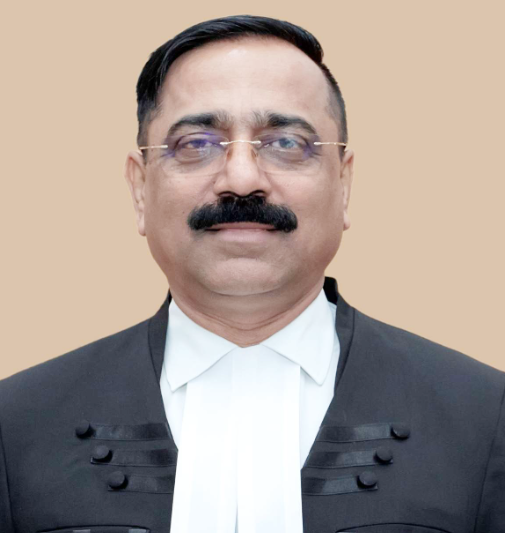
CORAM : HON’BLE MR. JUSTICE SUJIT NARAYAN PRASAD
-------
For the Petitioners : Ms. Shivani Jaluka, Advocate
For the Resp.-State : Mr. Ashok Kumar Singh, AC to SC(L&C)-III
[W.P.(S) No.221 of 2017]
Mr. Devesh Krishna, SC Mines-III
Mr. Kumar Pawan, AC to SC Mines-III
Mr. Faisal Alam, AC to SC Mines-III
[W.P.(S) No.339 of 2017]
------
16/Dated: 15
th
April, 2026
1. Since both the writ petitions are having common issues, as such, both the
writ petitions are being heard together and being disposed of with this
common order/judgment.
2. Both the writ petitions have been filed under Article 226 of the
Constitution of India praying therein the following relief(s):
[2026:JHHC:10806]
Page | 2
W.P.(S) No. 221 of 2017:
“That, by this application, the petitioner prays for Writ(s), Order(s),
Direction(s) particularly a writ in the nature of Certiorari for quashing
of the order contained in letter No.3825 dated 01/12/16 issued by the
Respondent Authority under the signature of I.G., Prison whereby and
whereunder the petitioner is terminated from his employment as V.C.
Operator even without issuing any show cause to him and without
affording any opportunity of hearing despite the fact that the petitioner
was engaged since 30/06/09 as daily wager against the sanctioned post
of V.C. Operator.
And/Or
The petitioner further prays that he may be reinstated in his employment
and may be allowed to continue to discharge his duty till the Respondent
states goes for regular employment on the abovementioned post of V.C.
Operator.
And/Or
Pass such Order/Orders as this Hon’ble Court may think just and proper
in the facts and circumstances of the case, doing conscionable justice to
the petitioner.”
W.P.(S) No. 339 of 2017
“That, by this application, the petitioner prays for Writ(s), Order(s),
Direction(s) particularly a writ in the nature of Certiorari for quashing
of the order contained in letter No.3825 dated 01/12/16 issued by the
Respondent Authority under the signature of I.G., Prison whereby and
whereunder the petitioner is terminated from his employment as
Sweeper/Driver even without issuing any show cause to him and without
affording any opportunity of hearing despite the fact that the petitioner
was engaged since 23/10/06 as daily wager against the sanctioned post
of Sweeper & subsequently in the year 2015 he was appointed to post of
Driver.
And/Or
The petitioner further prays that he may be reinstated in his employment
and may be allowed to continue to discharge his duty till the Respondent
states goes for regular employment on the abovementioned post of
Sweeper.
And/Or
Pass such Order/Orders as this Hon’ble Court may think just and proper
in the facts and circumstances of the case, doing conscionable justice to
the petitioner.”
3. The brief facts of both the cases as per the pleading made in the writ
petitions needs to be referred herein which is as under.
4. The case of the petitioner is that they had been engaged on daily wages
on the sanctioned post of V.C. Operator [petitioner of W.P.(S) No. 221
of 2017] and Sweeper [petitioner of W.P.(S) No. 339 of 2017] in the
Sub-Jail at Khunti on 29.07.2009 and 23.10.2006 respectively.
5. It is the case of the petitioners that the service in this regard is like
permanent employee. The status report with respect to services of the
Daily wager working in jail within state of Jharkhand are regularly
[2026:JHHC:10806]
Page | 3
furnished by concerned prison to the Office of I.G. Prison. Vide Letter
dated 02.06.2012, 14.08.2013, 17.10.2014 & 22.01.2015, the respondent
authorities were informed about the employees who were engaged on
daily wages. It is evident that the petitioners are continuously working
since the date of employment.
6. It is the also the case of the petitioners that the respondent authorities at
no point of time were having any grievance against the petitioners and
the authorities were fully satisfied with the services of the petitioners.
The petitioners were engaged against the sanctioned post and even
otherwise they were possessing requisite qualification as required for
appointment for the said post. The engagement of the petitioners were on
daily wages and they are serving the department for almost 8-10 years
before the impugned order of termination was passed
7. The respondent authority vide letter dated 01.10.2015 took a decision to
enhance the salary of the petitioners and others similarly situated daily
wages employee.
8. But, paying no heed to all this, the impugned order of termination vide
letter no. 3825 dated 01.12.2016 was issued terminating all the daily
rated employees working at Khunti Sub-Jail and in the said impugned
order of termination, there is a reference of letter No. 2109 dated
23.05.2009 and also letter No. 1168 dated 04.06.2009. The
recommendation preceding letter dated 23.05.2009 is dated 20.05.2009
wherein at para-3 it is indicated that in future no appointment on daily
wages shall be made on the sanctioned post.
9. It is the grievance of the writ petitioners that they have been appointed to
the post of V.C. Operator [writ petitioner of W.P.(S) No. 221 of 2017]
and to the post of Sweeper [writ petitioner of W.P.(S) No. 339 of 2017]
on 29.07.2009 and 23.10.2006 respectively and worked continuously up
till the date they have been terminated from service, i.e., on 01.12.2016.
10. The claim of the writ petitioners are that although they have been
terminated from service but they have again been allowed to continue in
service and by such continuation, both the writ petitioners have
completed 10 years of continuous service, as such, their cases come
under the fold of paragraph-53 of the judgment rendered by the Hon’ble
[2026:JHHC:10806]
Page | 4
Supreme Court in the case of Secretary, State of Karnataka & Ors. Vs.
Uma Devi (3), (2006) 4 SCC 1.
11. The writ petitioners when have not been regularized, the present writ
petitions have been filed.
Argument on behalf of the learned counsel for the petitioners:
12. Learned counsel for the petitioners has taken the ground that the action
of the respondent authorities in not regularizing the services of the
petitioners is highly arbitrary and illegal, i.e., contrary to the law laid
down in the case of Secretary, State of Karnataka & Ors. Vs. Uma Devi
(3) (supra) as also to the judgment rendered by the Hon’ble Apex Court
in the case of Jaggo vs. Union of India and Ors, 2024 SCC OnLine
3826 [S.L.P.(C) No. 5580 of 2024].
13. It has also been submitted by taking the ground that the writ petitioners
have been terminated only to break the chain of completion of 10 years
of service.
14. Learned counsel for the petitioners, based upon the aforesaid grounds,
has submitted that the both the writ petitions are, therefore, fit to be
allowed by quashing the letter no.3825 dated 01.12.2016.
Argument on behalf of the learned counsel for the respondents:
15. Per contra, learned counsel for the respondent-State has submitted that it
is not a case where the order of regularization is fit to be passed reason
being that the ratio laid down by the Hon’ble Apex Court in the case of
Secretary, State of Karnataka & Ors. Vs. Uma Devi (3) (supra) is not
applicable if the factual aspect of the present case will be taken into
consideration.
16. Such submission has been made based on the admitted fact that both the
writ petitioners have been terminated from service on the instructions
given at the level of department and only that, instruction has also been
issued to conduct inquiry regarding the conduct of the local authority in
engaging these petitioners in service.
17. The departmental proceeding has culminated into the order of
punishment of censure.
[2026:JHHC:10806]
Page | 5
18. It has submitted that further continuation in service after the order of
termination is, therefore, of no avail because that is at the local level for
which the local authority has already been punished on conclusion of the
inquiry by inflicting the punishment of censure.
19. The argument has been advanced that so far as the case of Secretary,
State of Karnataka & Ors. Vs. Uma Devi (3) (supra) and Jaggo vs.
Union of India and Ors. (supra) are concerned, the same are also not
applicable in the facts of the present case since in both the cases,
continuity in service was taken into consideration but herein, the services
has not been continued said to be counting the period of 10 years of
continuous service as has been stipulated by the Hon’ble Supreme Court
in the case of Secretary, State of Karnataka & Ors. Vs. Uma Devi (3)
(supra).
20. Learned counsel for the respondent, based upon the aforesaid grounds,
has submitted that both the writ petitions, therefore, lacks merit and are
liable to be dismissed.
Analysis:
21. This Court has heard the learned counsel for the parties and gone
through the pleading made on behalf of the respective parties as
available on record.
22. The issue which has been raised on behalf of the petitioners regarding
the continuation of 10 years of service said to be regular even after the
order of termination as they were being allowed to continue in service
thereafter.
23. This Court, before considering the aforesaid issue, needs to refer herein
the underlying principle which has been propounded by the Hon’ble
Apex Court in its Constitution Bench judgment rendered in the case of
Secretary, State of Karnataka & Ors. Vs. Uma Devi (3) (supra).
24. The background upon which the Hon’ble Apex Court has propounded
the proposition to put restriction upon the back-door entry in public
employment by putting restriction of induction of the person concerned
on the daily rated capacity. Further, the Hon’ble Apex Court by way of
one-time exercise, after taking into consideration the fact about the
[2026:JHHC:10806]
Page | 6
continuation of service of daily rated employee who have already
completed more than 10 years of service has come out with the
relaxation by carving out the guideline as under paragraph-53 thereof,
which is being reproduced as under:
“53. One aspect needs to be clarified. There may be cases where
irregular appointments (not illegal appointments) as explained in S.V.
Narayanappa [(1967) 1 SCR 128 : AIR 1967 SC 1071] , R.N.
Nanjundappa [(1972) 1 SCC 409 : (1972) 2 SCR 799] and B.N.
Nagarajan [(1979) 4 SCC 507 : 1980 SCC (L&S) 4 : (1979) 3 SCR 937]
and referred to in para 15 above, of duly qualified persons in duly
sanctioned vacant posts might have been made and the employees have
continued to work for ten years or more but without the intervention of
orders of the courts or of tribunals. The question of regularisation of the
services of such employees may have to be considered on merits in the
light of the principles settled by this Court in the cases abovereferred to
and in the light of this judgment. In that context, the Union of India, the
State Governments and their instrumentalities should take steps to
regularise as a one -time measure, the services of
such irregularly appointed, who have worked for ten years or more in
duly sanctioned posts but not under cover of orders of the courts or of
tribunals and should further ensure that regular recruitments are
undertaken to fill those vacant sanctioned posts that require to be filled
up, in cases where temporary employees or daily wagers are being now
employed. The process must be set in motion within six months from this
date. We also clarify that regularisation, if any already made, but not sub
judice, need not be reopened based on this judgment, but there should be
no further bypassing of the constitutional requirement and regularising
or making permanent, those not duly appointed as per the constitutional
scheme.”
25. It is evident from the proposition as laid down under paragraph-53 for
consideration at the end of the State that the daily rated employees who
are to be regularized by way of one-time exercise are required to
complete 10 years of continuous service without any aid of interim order
passed by the Court such appointment if made against the sanctioned
post.
26. The said principle has been followed in the other judgments of the
Hon’ble Apex Court rendered in the case of State of Karnataka & Ors.
vs. M.L. Kesari & Ors., (2010) 9 SCC 247; Narendra Kumar Tiwari &
Ors. vs. State of Jharkhand & Ors., (2018) 8 SCC 238 and; Nihal Singh
and Ors. vs. State of Punjab and Ors., (2013) 14 SCC 65.
27. The judgments rendered in the case of State of Karnataka & Ors. vs.
M.L. Kesari & Ors. (supra) has come out with the proposition that what
would be the meaning of the period of six months for completion of the
exercise which has been propounded as under paragraph-53 of the
judgment rendered in the case of Secretary, State of Karnataka & Ors.
[2026:JHHC:10806]
Page | 7
Vs. Uma Devi (3) (supra). It has been held therein that the period of six
months will be said to be in completion if the candidature of all the daily
rated employee has been considered by the State. If candidature of any of
the candidate has not been considered, then the period of six months will
be stretched. Relevant paragraphs of the judgment rendered in State of
Karnataka & Ors. vs. M.L. Kesari & Ors. (supra) is being reproduced as
under:
“10. At the end of six months from the date of decision in Umadevi
(3) [(2006) 4 SCC 1] , cases of several daily-wage/ad hoc/casual
employees were still pending before courts. Consequently, several
departments and instrumentalities did not commence the one-time
regularisation process. On the other hand, some government
departments or instrumentalities undertook the one-time exercise
excluding several employees from consideration either on the ground
that their cases were pending in courts or due to sheer oversight. In such
circumstances, the employees who were entitled to be considered in
terms of para 53 of the decision in Umadevi (3) [(2006) 4 SCC 1] , will
not lose their right to be considered for regularisation, merely because
the one-time exercise was completed without considering their cases, or
because the six-month period mentioned in para 53 of Umadevi
(3) [(2006) 4 SCC 1] has expired. The one-time exercise should consider
all daily-wage/ad hoc/casual employees who had put in 10 years of
continuous service as on 10-4-2006 without availing the protection of
any interim orders of courts or tribunals. If any employer had held the
one-time exercise in terms of para 53 of Umadevi (3) [(2006) 4 SCC 1] ,
but did not consider the cases of some employees who were entitled to the
benefit of para 53 of Umadevi (3) [(2006) 4 SCC 1] , the employer
concerned should consider their cases also, as a continuation of the one-
time exercise. The one-time exercise will be concluded only when all the
employees who are entitled to be considered in terms of para 53
of Umadevi (3) [(2006) 4 SCC 1] , are so considered.
11. The object behind the said direction in para 53 of Umadevi
(3) [(2006) 4 SCC 1] is twofold. First is to ensure that those who have
put in more than ten years of continuous service without the protection of
any interim orders of courts or tribunals, before the date of decision
in Umadevi (3) [(2006) 4 SCC 1] was rendered, are considered for
regularisation in view of their long service. Second is to ensure that the
departments/instrumentalities do not perpetuate the practice of
employing persons on daily-wage/ad hoc/casual basis for long periods
and then periodically regularise them on the ground that they have
served for more than ten years, thereby defeating the constitutional or
statutory provisions relating to recruitment and appointment. The true
effect of the direction is that all persons who have worked for more than
ten years as on 10-4-2006 [the date of decision in Umadevi (3) [(2006) 4
SCC 1] ] without the protection of any interim order of any court or
tribunal, in vacant posts, possessing the requisite qualification, are
entitled to be considered for regularisation. The fact that the employer
has not undertaken such exercise of regularisation within six months of
the decision in Umadevi (3) [(2006) 4 SCC 1] or that such exercise was
undertaken only in regard to a limited few, will not disentitle such
employees, the right to be considered for regularisation in terms of the
above directions in Umadevi (3) [(2006) 4 SCC 1] as a one-time
measure.”
[2026:JHHC:10806]
Page | 8
28. Another judgment has been rendered by the Hon’ble Apex Court in the
case of Narendra Kumar Tiwari & Ors. vs. State of Jharkhand & Ors.,
(supra) wherein by following the principle laid down by the Hon’ble
Apex Court in the case of Secretary, State of Karnataka & Ors. Vs.
Uma Devi (3) (supra) wherein the period of 10 years was to be counted
till the date of pronouncement of the judgment. But the question arose
that how the period of 10 years will be counted in a situation where the
State of Jharkhand has been carved out w.e.f. 15.11.2000. The period of
10 years, therefore, has been modified by counting it from the date of
creation of the State, i.e., from 15.11.2000. Relevant paragraphs of the
judgment rendered in Narendra Kumar Tiwari & Ors. vs. State of
Jharkhand & Ors., (supra) is being reproduced as under:
“10. Under the circumstances, we are of the view that the Regularisation
Rules must be given a pragmatic interpretation and the appellants, if they
have completed 10 years of service on the date of promulgation of the
Regularisation Rules, ought to be given the benefit of the service
rendered by them. If they have completed 10 years of service they should
be regularised unless there is some valid objection to their regularisation
like misconduct, etc.”
29. The State of Jharkhand, based upon the aforesaid proposition, as has
been laid down in the case of Secretary, State of Karnataka & Ors. Vs.
Uma Devi (3) (supra) coupled with the case of Narendra Kumar Tiwari
& Ors. vs. State of Jharkhand & Ors. (supra) wherein the Hon'ble Apex
Court has passed observation by giving liberty to the State to formulate a
rule for regularization and in turn thereof, a Rule has been formulated in
the year 2015 which has been made effective from 01.12.2015. The Rule
contains a provision of constituting a committee for consideration of the
case of one or the other daily rated employees on the basis of the
principle as laid down in the aforesaid judgment.
30. Adverting to the facts of the present case, it is admitted that the writ
petitioners of both the cases have been appointed by the local authorities
without any advertisement.
31. The departmental authority has made a query and has instructed to
immediately dispense with the services of the writ petitioners being
inducted through back-door entry. The local authority, in pursuance of
the said direction, has dismissed the services of the writ petitioners by
[2026:JHHC:10806]
Page | 9
passing order as contained in letter no.3825 dated 01.12.2016, as
impugned in both the writ petitions.
32. The authority at the departmental level has also taken a decision to
initiate a departmental proceeding against the erring officials who have
inducted the writ petitioners to discharge their duty in daily rated
capacity. The departmental proceeding initiated has concluded on the
punishment of censure upon the local authority but most surprising thing
is that even after their termination, they have been allowed to continue in
service by the local authority.
33. The writ petitioners now want to take advantage of the services which
has been rendered by the writ petitioners after the termination from
services so that the period be counted of 10 years.
34. The purpose of such argument is to claim regularization by taking
instance of the completion of 10 years of service by considering the case
of the writ petitioners in view of paragraph-53 of the case of Secretary,
State of Karnataka & Ors. Vs. Uma Devi (3) (supra).
35. This Court has also considered the judgment rendered in the case of
Jaggo vs. Union of India and Ors. (supra). The factual aspect of the said
case needs to be referred herein which is as under:
“3. The appellants before this Court, who were applicants before the
Tribunal originally numbered five. However, the fourth applicant before
the Tribunal has not approached this Court. Therefore, these appeals are
instituted by Applicant Nos.1, 2, 3, and 5 only. The sole Appellant in
SLP(C) No. 5580/2024 was applicant no. 2 before the Tribunal whereas
the Appellant no. 1, 2 and 3 in SLP(C) No. 11086/ 2024 were Applicant
Nos. 1, 3 and 5 respectively before the Tribunal. For ease of reference
and to maintain consistency, they shall continue to be referred to by their
original applicant numbers as before the Tribunal.
4. The appellants before this Court, being Applicant Nos.1, 2, 3, and 5
before the Tribunal, were originally engaged by the Central Water
Commission2 on part-time, ad-hoc terms. Applicant No.1 was appointed
as a Safaiwali in 1993, Applicant No.2 as a Safaiwali in 1998, and
Applicant No.3 as a Safaiwali in 1999. All three were primarily
responsible for cleaning and maintaining the office premises under the
CWC. Applicant No.5, appointed in 2004 as a Khallasi (also discharging
duties akin to a Mali/Khallasi), was entrusted with tasks such as
gardening, dusting, and other ancillary maintenance work. Throughout
their engagement, these individuals performed essential housekeeping
and support functions at CWC establishments, including its offices at
Faridabad, ensuring daily upkeep and contributing to the smooth
functioning of the Commission’s administrative operations.
5. Initially, the appellants sought regularization of their services by filing
Original Application No.2211/2015 before the Tribunal. They contended
that over the years, their roles and responsibilities had evolved beyond
[2026:JHHC:10806]
Page | 10
the nominal labels of “part-time” or “contractual” and that they were
performing ongoing and core functions integral to the CWC’s
operations. They relied on applicable government instructions and the
principle that long-serving employees, engaged against work of a
perennial nature, deserve fair consideration for regularization, provided
their appointments were not illegal or clandestine. The Tribunal, by its
order dated 17.04.2018, dismissed the appellants’ plea. It concluded that
the appellants were not engaged on what it considered “regular
vacancies,” that they had not completed what it termed as sufficient
“full-time” service (such as meeting a 240-days per year criterion), and
that their case did not attract the principles enabling regularization.
Within ten days after the dismissal of the original application, on
17.04.2018, the services of all these individuals were abruptly terminated
on 27.10.2018 by the respondent authorities without issuance of any
show-cause notice.
6. Aggrieved by the Tribunal’s decision and subsequent termination, the
appellants approached the High Court in W.P.(C) No. 6822 of 2018
praying for the following reliefs:
“a) Setting aside and quashing the impugned order dated 17.04.2018
passed by the Hon'ble Central Administrative Tribunal, Principal
Bench, New Delhi in O.A. No. 2211/2015 titled as Smt. Anita & Ors.
Versus Union of India & Ors., and
b) Directing the respondents to reinstate the petitioners to their posts
held by them prior to their illegal termination on 27.04.2018 and
further to regularize the services of all the petitioners in their
respective posts, from the date of their initial appointments with all
the consequential benefits, in the interest of justice.
c) Issue the writ of mandamus or any other appropriate writ,
direction, or order, as this Hon'ble Court may deem fit and proper in
the facts and circumstances of the case, in favor of the petitioners and
against the respondents.”
7. They urged the High Court to recognize their long and continuous
service, the nature of their work, and the lack of any backdoor or illegal
entry. They highlighted that they had functioned without any break,
performed tasks equivalent to regular employees, and had been assigned
duties essential to the regular upkeep, cleanliness, and maintenance of
the respondent’s offices. The High Court, after examining the Tribunal’s
decision and the submissions advanced, concluded that the petitioners
before it were part-time workers who had not been appointed against
sanctioned posts, nor had they performed a sufficient duration of full-
time service to satisfy the criteria for regularization. It relied on the
principle laid down in Secretary, State of Karnataka vs. Uma Devi3
holding that the petitioners could not claim a vested right to be absorbed
or regularized without fulfilling the requisite conditions. The High Court
further observed that the petitioners did not possess the minimum
educational qualifications ordinarily required for regular appointments,
and additionally noted that the employer had subsequently outsourced
the relevant housekeeping and maintenance activities. Concluding that
there was no legal basis to grant the reliefs sought, the High Court
dismissed the writ petition. Aggrieved by this rejection, the appellants
have approached this Court by way of these appeals.
36. It is evident from the factual aspect that the concerned appellant was
allowed to continue in service for more than two decades and thereafter,
they have been terminated. The Hon’ble Apex Court, after taking into
consideration the fact of their continuous service of 20 years, has passed
an order that even though the post is not sanctioned but even then, the
[2026:JHHC:10806]
Page | 11
daily rated employee has been allowed to continue in service
continuously for two decades. The State Government cannot be allowed
to take advantage of the post being not sanctioned.
37. Similarly, in the case of Nihal Singh and Ors. vs. State of Punjab and
Ors. (supra) the issue of regularization and issue of sanctioned post has
been discussed. For ready reference, relevant paragraphs of the said
judgment is being reproduced as under:
“20. But we do not see any justification for the State to take a defence that
after permitting the utilisation of the services of a large number of people
like the appellants for decades to say that there are no sanctioned posts to
absorb the appellants. Sanctioned posts do not fall from heaven. The State
has to create them by a conscious choice on the basis of some rational
assessment of the need.
21. The question is whether this Court can compel the State of Punjab to
create posts and absorb the appellants into the services of the State on a
permanent basis consistent with the Constitution Bench decision of this
Court in Umadevi (3) case [State of Karnataka v. Umadevi (3), (2006) 4
SCC 1 : 2006 SCC (L&S) 753] . To answer this question, the ratio
decidendi of Umadevi (3) case [State of Karnataka v. Umadevi (3), (2006)
4 SCC 1 : 2006 SCC (L&S) 753] is required to be examined. In that case,
this Court was considering the legality of the action of the State in
resorting to irregular appointments without reference to the duty to
comply with the proper appointment procedure contemplated by the
Constitution: (SCC pp. 17-18, para 4)
“4. … The Union, the States, their departments and instrumentalities
have resorted to irregular appointments, especially in the lower rungs
of the service, without reference to the duty to ensure a proper
appointment procedure through the Public Service Commissions or
otherwise as per the rules adopted and to permit these irregular
appointees or those appointed on contract or on daily wages, to
continue year after year, thus, keeping out those who are qualified to
apply for the post concerned and depriving them of an opportunity to
compete for the post. It has also led to persons who get employed,
without the following of a regular procedure or even through the
backdoor or on daily wages, approaching the courts, seeking directions
to make them permanent in their posts and to prevent regular
recruitment to the posts concerned. The courts have not always kept the
legal aspects in mind and have occasionally even stayed the regular
process of employment being set in motion and in some cases, even
directed that these illegal, irregular or improper entrants be absorbed
into service. A class of employment which can only be called ‘litigious
employment’, has risen like a phoenix seriously impairing the
constitutional scheme. Such orders are passed apparently in exercise of
the wide powers under Article 226 of the Constitution. Whether the
wide powers under Article 226 of the Constitution are intended to be
used for a purpose certain to defeat the concept of social justice and
equal opportunity for all, subject to affirmative action in the matter of
public employment as recognised by our Constitution, has to be
seriously pondered over.”
(emphasis supplied)
It can be seen from the above that the entire issue pivoted around the fact
that the State initially made appointments without following any rational
procedure envisaged under the scheme of the Constitution in the matters of
public appointments. This Court while recognising the authority of the
[2026:JHHC:10806]
Page | 12
State to make temporary appointments engaging workers on daily wages
declared that the regularisation of the employment of such persons which
was made without following the procedure conforming to the requirement
of the scheme of the Constitution in the matter of public appointments
cannot become an alternate mode of recruitment to public appointment.
22. It was further declared in Umadevi (3) case [State of
Karnataka v. Umadevi (3), (2006) 4 SCC 1 : 2006 SCC (L&S) 753] that
the jurisdiction of the constitutional courts under Article 226 or Article 32
cannot be exercised to compel the State or to enable the State to
perpetuate an illegality. This Court held that compelling the State to
absorb persons who were employed by the State as casual workers or
daily-wage workers for a long period on the ground that such a practice
would be an arbitrary practice and violative of Article 14 and would itself
offend another aspect of Article 14 i.e. the State chose initially to appoint
such persons without any rational procedure recognised by law thereby
depriving vast number of other eligible candidates who were similarly
situated to compete for such employment.
23. Even going by the principles laid down in Umadevi (3) case [State of
Karnataka v. Umadevi (3), (2006) 4 SCC 1 : 2006 SCC (L&S) 753] , we
are of the opinion that the State of Punjab cannot be heard to say that the
appellants are not entitled to be absorbed into the services of the State on
permanent basis as their appointments were purely temporary and not
against any sanctioned posts created by the State.
24. In our opinion, the initial appointment of the appellants can never be
categorised as an irregular appointment. The initial appointment of the
appellants is made in accordance with the statutory procedure
contemplated under the Act. The decision to resort to such a procedure
was taken at the highest level of the State by conscious choice as already
noticed by us.
25. The High Court in its decision in LPA No. 209 of 1992 recorded that
the decision to resort to the procedure under Section 17 of the Act was
taken in a meeting dated 24-3-1984 between the Advisor to the
Government of Punjab and senior officers of the various banks in the
public sector. Such a decision was taken as there was a need to provide
necessary security to the public sector banks. As the State was not in a
position to provide requisite police guards to the banks, it was decided by
the State to resort to Section 17 of the Act. As the employment of such
additional force would create a further financial burden on the State,
various public sector banks undertook to take over the financial burden
arising out of such employment. In this regard, the written statement filed
before the High Court in the instant case by Respondents 1 to 3 through
the Assistant Inspector General of Police (Welfare & Litigation) is
necessary to be noticed. It is stated in the said affidavit:
“2. That in meeting of higher officers held on 27-3-1984 in Governor
House, Chandigarh with Shri Surinder Nath, IPS, Advisor to the
Governor of Punjab, in which the following decisions were taken:
(i) That it will not be possible to provide police guard to banks unless
the banks were willing to pay for the same and additional force could
be arranged on that basis, it was decided that police guards should be
requisitioned by the banks for their biggest branches located at the
district and sub-divisional towns. They should place the requisition with
the District SSPs endorsing a copy of IG CID. In the requisition, they
should clearly state that the costs of guard would be met by them. It will
then be for the Police Department to get additional force sanctioned.
This task should be done on a top priority. In the meantime depending
upon the urgency of the need of any particular branch, the Police
Department may provide from police strength for its protection.
(ii) For all other branches guards will be provided by District SSP after
selecting suitable ex-servicemen or other able-bodied persons who will
[2026:JHHC:10806]
Page | 13
be appointed as Special Police Officer in terms of Section 17 of the
Police Act. Preference may be given to persons who may already be in
possession of licensed weapons. All persons appointed as SPO for this
purpose will be given a brief training for about 7 days in Police Lines
in the handling of weapons taking suitable position for protection of
branches. These SPOs will work under the discipline and control and
as per the Police Act, they will have the same powers, privileges and
protection and shall be amenable to same penalty as ordinary police
personnel.”
It can be seen from the above that a selection process was designed under
which the District Senior Superintendent of Police is required to choose
suitable ex-servicemen or other able-bodied persons for being appointed
as Special Police Officers in terms of Section 17 of the Act. It is indicated
that the persons who are already in possession of a licensed weapon are to
be given priority.
26. It is also asserted by the appellants that pursuant to the requisition by
the Police Department options were called upon from ex-servicemen who
were willing to be enrolled as Special Police Officer (SPOs) under Section
17 of the Police Act, 1861. [ Para 4 of the writ petition and at p. 34 of the
SLP paperbook:“That the Government made a policy to enrol the ex-
servicemen to guard the life and property of the government employees as
well as government employees. All the petitioners being ex-servicemen
enrolled themselves in the employment exchange. The Police Department
sent the intimation to the employment exchange and thereafter all the ex-
servicemen who were enrolled with the employment exchange were called
upon and got their option to be enrolled in as Special Police Officer
(SPOs) under Section 17 of the Police Act, 1861 (hereinafter called as the
SPOs). Those persons who were having armed licence were enrolled as
SPOs and this enrolment was made by the Superintendent of Police,
Amritsar.”]
27. Such a procedure making recruitments through the employment
exchanges was held to be consistent with the requirement of Articles 14
and 16 of the Constitution by this Court in Union of India v. N.
Hargopal [(1987) 3 SCC 308 : 1987 SCC (L&S) 227 : (1987) 4 ATC
51:“9. … We, therefore, consider that insistence on recruitment through
employment exchanges advances rather than restricts the rights
guaranteed by Articles 14 and 16 of the Constitution. The submission that
employment exchanges do not reach everywhere applies equally to
whatever method of advertising vacancies is adopted. Advertisement in the
daily press, for example, is also equally ineffective as it does not reach
everyone desiring employment.”] .
28. The abovementioned process clearly indicates it is not a case where
persons like the appellants were arbitrarily chosen to the exclusion of
other eligible candidates. It required all able-bodied persons to be
considered by the SSP who was charged with the responsibility of
selecting suitable candidates.
29. Such a process of selection is sanctioned by law under Section 17 of
the Act. Viewed in the context of the situation prevailing at that point of
time in the State of Punjab, such a process cannot be said to be irrational.
The need was to obtain the services of persons who had some experience
and training in handling an extraordinary situation of dealing with armed
miscreants.
30. It can also be noticed from the written statement of the Assistant
Inspector General of Police (Welfare & Litigation) that preference was
given to persons who were in possession of licensed weapons. The
recruitment of the appellants and other similarly situated persons was
made in the background of terrorism prevailing in the State of Punjab at
that time as acknowledged in the order dated 23-4-2002 of the SSP. The
procedure which is followed during the normal times of making
recruitment by inviting applications and scrutinising the same to identify
[2026:JHHC:10806]
Page | 14
the suitable candidates would itself take considerable time. Even after
such a selection the selected candidates are required to be provided with
necessary arms and also be trained in the use of such arms. All this
process is certainly time-consuming. The requirement of the State was to
take swift action in an extraordinary situation.
31. Therefore, we are of the opinion that the process of selection adopted
in identifying the appellants herein cannot be said to be unreasonable or
arbitrary in the sense that it was devised to eliminate other eligible
candidates. It may be worthwhile to note that in Umadevi (3) case [State of
Karnataka v. Umadevi (3), (2006) 4 SCC 1 : 2006 SCC (L&S) 753] , this
Court was dealing with appointments made without following any rational
procedure in the lower rungs of various services of the Union and the
States.
…
37. We are of the opinion that neither the Government of Punjab nor these
public sector banks can continue such a practice consistent with their
obligation to function in accordance with the Constitution. Umadevi
(3) [State of Karnataka v. Umadevi (3), (2006) 4 SCC 1 : 2006 SCC (L&S)
753] judgment cannot become a licence for exploitation by the State and
its instrumentalities.
38. For all the abovementioned reasons, we are of the opinion that the
appellants are entitled to be absorbed in the services of the State. The
appeals are accordingly allowed. The judgments under appeal are set
aside.
39. We direct the State of Punjab to regularise the services of the
appellants by creating necessary posts within a period of three months
from today. Upon such regularisation, the appellants would be entitled to
all the benefits of services attached to the post which are similar in nature
already in the cadre of the police services of the State. We are of the
opinion that the appellants are entitled to the costs throughout. In the
circumstances, we quantify the costs to Rs 10,000 to be paid to each of the
appellants.”
38. The admitted fact herein is that the writ petitioners have been appointed
to the post of V.C. Operator and Sweeper respectively and thereafter
terminated from service vide letter no. 3825 dated 01.12.2016, meaning
thereby, they were in service of the period which is less than the period
of 10 years.
39. So far as the claim of the writ petitioners to count the period of 10 years
of service after the termination since they have been allowed to work is
concerned, this Court is of the view that such continuation cannot be said
to be proper reason being that once the petitioners have been terminated
from service that too by the order passed by the departmental authority at
the departmental level and even though the local authority has been
punished with the punishment of censure allowing the petitioners to
continue in service cannot be considered for the purpose of consideration
for the purpose of consideration of the issue of regularization by adding
the aforesaid period to count the continuation period of 10 years.
[2026:JHHC:10806]
Page | 15
40. So far as the ground taken by the learned counsel for the petitioners that
the writ petitioners have been terminated only to break the chain is
concerned, this Court is of the view that once the order of termination
has been passed by the authority above than the local authority who have
allowed the petitioners to continue in service, it is not available to the
petitioners to take the ground that to break the chain, the order of
termination has been passed.
41. Further, while considering the entry of these petitioners by the local
authority without any policy decision to that regard or any cognizance by
the State Government, the departmental proceeding had already been
initiated against them, hence, it cannot be said that only to break the
chain, the order of termination has been passed.
42. That could have been considered, if further continuation of service
would have been made by the authority at the departmental level but that
is not the case herein.
43. Even if the contention of the learned counsel for the petitioners will be
accepted, then, there will be anomalous situation and everything will
come at the hand of the local authority.
44. This Court, in view of the aforesaid fact, is of the view that the case of
the writ petitioners is not coming under the fold of the judgment
rendered in the case of Secretary, State of Karnataka & Ors. Vs. Uma
Devi (3) (supra) or under the fold of Jaggo vs. Union of India and Ors.
(supra) upon which the learned counsel for the petitioners has relied
upon.
45. This Court in view of the entirety of facts and circumstances and based
upon the reasons as referred hereinabove, is of the view that the both the
writ petitions lack merit and as such, the same stand dismissed.
46. Pending interlocutory application(s), if any, also stands disposed of.
(Sujit Narayan Prasad, J.)
15
th
April, 2026
Saurabh/-
A.F.R.
Uploaded on 21.04.2026

Legal Notes
Add a Note....