
As per case facts, the petitioner sought quashing of an FIR and subsequent proceedings, initially challenging the dismissal of his discharge application. Later, the petitioner restricted his prayer to seeking ...
CRM-M-45376-2023 (O&M) 1
IN THE HIGH COURT OF PUNJAB AND HARYANA
AT CHANDIGARH
1 The date when the judgment is reserved 01.04.2026
2 The date when the judgment is pronounced 01.07.2026
3 The date when the judgment is uploaded on the website 01.07.2026
4 Whether only operative part of the judgment is
pronounced or whether the full judgment is pronounced
Full
5 The delay, if any, of the pronouncement of full judgment,
and reasons thereof
Not Applicable
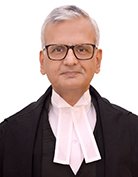
CORAM: HON'BLE MR. JUSTICE TRIBHUVAN DAHIYA
Present: Mr. R.S. Cheema, Senior Advocate,
Mr. S.S. Narula, Senior Advocate, assisted by
Mr. G.S. Dhillon, Advocate,
Mr. Inderjeet Sihag, Advocate, and
Mr. S.S. Kang, Advocate, for the petitioner.
Mr. Deepender Singh, Additional Advocate General, Punjab, &
Mr. Satjot Singh Chahal, Assistant Advocate General, Punjab.
TRIBHUVAN DAHIYA, J.
The petition has been filed under Section 482 Code of Criminal
Procedure (for short, ‘Cr.P.C.’) for quashing of: (i) FIR No.19 dated
15.10.2022, registered under Section 8 of the Prevention of Corruption Act,
CRM-M-45376-2023 (O&M) 2
1988, as amended by Prevention of Corruption (Amendment) Act, 2018
(hereinafter referred to as ‘the PC Act’), at Police Station Vigilance Bureau,
FS-I, Punjab at Mohali, Annexure P-1, along with all subsequent
proceedings arising therefrom; (ii) final report/challan under Section 173
Cr.P.C., dated 03.12.2022, Annexure P-2; (iii) order passed by learned
Special Judge, S.A.S. Nagar, Mohali, dated 29.08.2023, Annexure P-14,
whereby the petitioner’s application filed under Section 227 Cr.P.C. seeking
discharge from the case has been dismissed. Further, a prayer has been made
to allow the application for discharge, Annexure P-7.
1.1. At the outset, learned senior counsel for the petitioner have
restricted the prayer in the petition, as mentioned in the additional affidavit
dated 23.12.2023 also, only to seeking a direction to the respondent to get a
fresh/de novo investigation of the case conducted through an independent
agency.
2. The aforementioned FIR no.19 was registered on 15.10.2022;
the relevant extract whereof reads as under:
… states that I am Manmohan Kumar, I am posted as Assistant
Inspector General Police at Vigilance Bureau, Flying Squad-1,
Punjab SAS Nagar. Yesterday on 14.10.2022 at around 6:15 PM
I received a call on my personal mobile phone number
9915029010 from another phone number 9815212222. As this
number was not saved in my mobile, I enquired about the
identity of the person speaking on the other side. On which the
other person told his name to be Sunder Sham Arora and
introduced himself as former-minister and told himself to be old
acquaintance. While talking about the well being of the
families, he told me about the passing away of his wife. On
which I paid condolences. On which he told me to sent the
location of my house but I refused to do so. But he insisted to
CRM-M-45376-2023 (O&M) 3
come to my house to share the grief on which I sent him the
location of my house at Zirakpur through whatsapp from my
number 9915029010 to his whatsapp no. 9815212222. After
some time he came to my house and started discussing about
domestic matters. During this time he initiated the topic of case
pending against him of vigilance bureau and told me that I can
save him from this case. He offered me a bribe of
Rs.1,00,00,000/- (one crore rupees) in lieu of this and I was
shocked to hear this. He told me that he'll pay half the amount
of Rs.50,00,000/- (50 lakh rupees) on 15.10.2022 and the
remaining amount will be paid afterwards. I never expected this
kind of discussion from him that is why I did not record the
conversation because I never demanded bribe nor I wanted to
take the bribe. Being the officer of vigilance bureau, I remained
silent at that time to take legal action against such person who
was promoting bribery in the society. He left my house after
stating that he will pay the bribe money on 15.10.2022. After he
left, I immediately informed my senior officer regarding this.
Today on 15.10.2022, Sunder Sham Arora, former minister will
come to give me Rs.50,00,000/- (50 Lakhs) as bribe. Sunder
Sham Arora, former minister, has committed the crime of
inducing a government official to perform his duties illegally by
offering him bribe money in return for doing his work. Due to
this, appropriate legal action should be taken against former
minister Sunder Sham Arora, under the provisions of Prevention
of Corruption Act. SD/- Manmohan Kumar dated 15/10/2022,
Attested by Ajay Kumar, Deputy Superintendent of Police,
Vigilance Bureau, F.S-1, Punjab at Mohali dated 15.10.2022,
Police Proceedings:- Today on 15.10.2022, I was present at my
office Vigilance Bureau, F.S-1, Mohali. One application from
Manmohan Kumar, PPS, Deputy Superintendent of Police,
Vigilance Bureau, FS-1, Punjab, S.AS. Nagar, son of Late Mr.
Raj Kumar Resident of House No. 8-A, Savitri Enclave,
Zirakpur, District S.A.S Nagar was submitted to the Chief
CRM-M-45376-2023 (O&M) 4
Director Vigilance Bureau Punjab. The Chief Director Vigilance
Bureau, Punjab directed the DSP, Vigilance Bureau, F.S-1,
Punjab at Mohali to conduct inquiry on the above complaint.
2.1. After completion of investigation, the police prepared a final
report against the petitioner under Section 173 Cr.P.C., dated 03.12.2022,
and presented it in the Court on 12.12.2022. He was granted regular bail
thereafter vide order dated 28.03.2023, Annexure P-3. However, a copy of
the final report was handed over to him only on 10.05.2023. He claimed that
all the documents relied upon in the report had not been furnished, and
moved an application under Section 207 Cr.P.C., dated 16.05.2023,
Annexure P-5, seeking a direction to the investigating/prosecuting agency to
supply the documents/articles listed in para 2 and 3 of the application. The
same was allowed by the trial Court vide order dated 27.07.2023, Annexure
P-6, directing the Vigilance Bureau to furnish the documents to the
petitioner/accused in the interest of fair trial.
2.2. In the meanwhile, another application was filed by the
petitioner under Section 227 Cr.P.C. seeking discharge from the case,
Annexure P-7. It was primarily on the grounds that offence under Section 8
of the PC Act was not made out against him, nor was the Vigilance Bureau
competent to conduct investigation of the case. Later, a “written note” dated
16.08.2023, Annexure P-9, was submitted before the trial Court taking a few
other grounds; one of which was that investigation of the case had not been
carried out in a fair manner. It had been got conducted by a police officer
who was subordinate to the complainant in the same police station. In effect,
it meant the complainant was investigating his own case, which could not be
permitted under any circumstances. This also established a definite bias and
CRM-M-45376-2023 (O&M) 5
lack of fairness in carrying out the investigation, which was even otherwise
lopsided. The application for discharge was duly considered by the trial
Court and dismissed vide a detailed order dated 29.08.2023, which is under
challenge in the instant petition filed on 03.09.2023.
2.3. Thereafter, charge was framed against the acc used on
18.09.2023, and as of now six out of twenty-five prosecution witnesses have
been examined, as stated by learned State counsel during the course of
arguments.
3. In this background, learned senior counsel for the petitioner
have firstly contended that investigation in the case stands vitiated on
account of inherent bias of the investigating officer in favour of the
complainant. The former is an officer subordinate to the latter, who holds an
overbearing influence and records his Annual Confidential Reports (ACRs)
also. The investigation carried out by such an officer is bound to be one-
sided, lacking in objectivity. It is a case of definite bias as the facts have not
been impartially looked into. This is the reason whatever complaint was
submitted to him, it was accepted as true without carrying out the necessary
investigation requiring collection of evidence relating to commission of the
alleged offence, examining the witnesses, recording their statements, and
finally forming an opinion on that basis whether to send the accused to trial.
The final report has been presented without complying with these mandatory
requirements. The investigating officer has clearly failed in his duties to
carry out a fair and unbiased investigation, to which the petitioner is entitled
as a matter of right. Accordingly, the allegations are required to be re-
investigated by an independent agency or a competent unbiased officer to
ensure free and fair trial of the case which can only be on the bedrock of a
CRM-M-45376-2023 (O&M) 6
fair investigation. In support of the contention, they have heavily relied upon
a judgment rendered by the Supreme Court in H.N. Rishbud and another v.
State of Delhi, (1954) 2 SCC 934.
3.1. Secondly, it has been contended that the petitioner was unable
to seek re-investigation of the case at an earlier point of time, as the facts
regarding nature of the investigation and the person by whom it had been
carried out, came to his knowledge only after all the documents relied upon
by the investigating agency were furnished to him under order of the trial
Court, dated 27.07.2023. Immediately thereafter, the issue was raised before
the Court by filing the aforementioned “written note”. Therefore, the
petitioner cannot be accused of any delay in seeking direction for
re-investigation at this stage. No other argument has been raised.
4. Per contra, learned State counsel has contended that there is no
prayer for re-investigation of the case in the petition which has been filed
against the order dated 29.08.2023, whereby the petitioner’s application
seeking discharge from the case has been dismissed. In the absence of such a
prayer, he cannot be allowed to seek any direction for re-investigation of the
case. Even otherwise, the facts do not justify his seeking any such direction
from the Court. Investigation of the case has been carried out in a fair and
reasonable manner, and the essential ingredients for commission of the
alleged offence have been clearly made out on the basis of material
collected. It was a trap case where the petitioner was caught red-handed with
the bribe money amounting ₹50 lakh, in the presence of witnesses; the
currency notes were duly sealed. In this regard, he has referred to the
following part of the final report dated 03.12.2022:
CRM-M-45376-2023 (O&M) 7
… Out of them the person having the heavy structure met the
complainant and both sat in the nearby parked white colored
Innova car. After some time the person having a heavy structure
opened the window and asked the hindu gentlemen who came
with him to give him the bag then the person having a thin
structure took out the bag from the car and gave it to the above
mentioned person. After sometime the shadow witness gave the
pre learned signal. After getting the signal from the shadow
witness DSP Ajay Kumar along with government witness and
the raiding party approached the innova car where the accused
and complainant were sitting at the back seat and were talking.
Then the investigating officer opened the door of the car and
told the hindu gentlemen about his name, position and the
raiding party and instructed him not to make any movement and
said that whatever action will be taken it would be taken
according to the law. Then the investigating officer asked his
name on which he told that his name is Sunder Sham Arora
former minister, Punjab and the complainant told that the bribe
of Rs 50 lakhs which has been given to him by Sunder Sham
Arora is in a bag.
Thereafter in the presence of the witnesses on the demand
of the investigating officer the complainant produced the tarpal
type bag which is printed on both sides with the brand OMNI
Since 1992 and tagline and address of the company etc is
printed before the investigating officer. The zip of the bag was
opened in front of the government witnesses. Out of which a
plain a black colored plain polythene bag containing a white
polythene bag on which SHALIMAR CARRY BAGS and
company and its address was printed out of which bundles of
currency notes of denomination 500/500 and 2000/2000 were
recovered. On counting the bundles, 30 bundles containing
currency notes of denomination of 500/500 (Total-15 Lakhs)
Total 17 bundles containing currency notes of denomination
2000/2000 (Total-34,00,000/-) and one bundle containing 50
CRM-M-45376-2023 (O&M) 8
currency notes of denomination of 2000/2000 (Total-1 Lakh)
were recovered. In this manner total 50,00,000/- (Fifty Lakh
rupees) were recovered. Bundle of recovered currency notes
were taken into police possession as evidence vide recovery
memo. Memo was signed by witnesses. At the spot where
Sunder Sham Arora had given bribe rough site plan of that place
without scale was prepared. Due to gathering of the people
there and the spot not being safe therefore investigating officer
along with raiding party took the accused sunder sham arora
and case property and left for police station F.S-1 Punjab at
Mohali. On reaching at police station senior constable Amritpal
Singh no. 13/2020 who brought the ruqa got joined in the
investigation of the case and got his statement u/s 161 Cr.P.C
recorded. The accused was joined in the investigation and
interrogated and on finding sufficient evidence to arrest the
accused he was arrested as per procedure. The information of
the arrest of the accused was given to his daughter Shivani on
phone. Memo of arrest and information regarding arrest were
prepared which were signed by the witness. Thereafter, the
personal search of the accused was conducted. … All the
recovered articles were taken into police possession and memo
was prepared which was signed by the accused and witnesses.
xxx xxx xxx
During investigation the blue colored mobile phone brand
Samsung which was recovered during his personal search and
taken by the police possession was taken out from the malkhana
and the screenshots of the incoming/outgoing calls from the
Whatsapp call log were taken and were printed and are attached
with the challan.
During investigation the footage of CCTV cameras dated
15.10.2022 installed at the parking of Cosmo Plaza Zirakpur
were obtained. In this regard pen drive and certificate u/s 65-B
of Evidence act were obtained and attached with the challan.
Statement u/s 161 Cr.P.C of the concerned were recorded and
CRM-M-45376-2023 (O&M) 9
attached with the challan. The investigation of the case is
completed.
4.1. Learned State counsel further contended that after presentation
of final report, cognizance of the offence was taken by the trial Court on
12.12.2022. The petitioner filed two bail applications also, but never raised
any objection to the investigation being unfair, biased or tainted in any
manner. Even in the application filed under Section 227 Cr.P.C. seeking
discharge from the case, no such allegation regarding nature of the
investigation was levelled. Therefore, at this belated stage he is not entitled
to seek re-investigation. Lastly, he contended that law laid down in
H.N. Rishbud case ibid. was considered by the Supreme Court in R.A.H.
Siguran v. Shankare Gowda alias Shankara and another, (2017) 16 SCC
126, holding that after cognizance has been taken, trial cannot be quashed
for invalidity of investigation. He has also referred to C. Muniappan and
others v. State of Tamil Nadu, (2010) 9 SCC 567, to contend that trial of the
case cannot be made solely dependent upon the probity of investigation.
5. Submissions made by learned counsel for the parties have been
considered and records of the case have been perused.
6. Apparently, the FIR in question has been lodged on a complaint
dated 14.10.2022 submitted by AIG of Police to Chief Director, Vigilance
Bureau, Punjab, who assigned it to Deputy Superintendent of Police,
Vigilance Bureau. The investigation was, accordingly, carried out by the
latter after registration of the FIR in question. The petitioner was caught with
currency notes of ₹50 lakh in the presence of witnesses on 15.10.2022. The
car the accused was travelling in, and his mobile phones were taken in
possession; the CCTV footage of the parking lot of Cosmo Plaza, dated
CRM-M-45376-2023 (O&M) 10
15.10.2022, was also obtained. On completion of investigation, final report
dated 03.12.2022 was presented, whereupon the trial Court took cognizance
of the offence on 12.12.2022. On an application dated 16.05.2023 filed by
the petitioner seeking the documents relied upon by the investigating agency
(but not given to him), the same were directed to be furnished vide order
dated 27.07.2023 passed by the trial Court. Thereafter, he moved another
application under Section 227 Cr.P.C. seeking discharge from the case; it
was on the grounds that the offence under Section 8 of the PC Act was not
made out against him, and the Vigilance Bureau had no jurisdiction to
investigate the case. After filing the application, an additional ground was
raised by way of a “written note”, dated 16.08.2023, that investigation of the
case was biased and tainted as it had been carried out by an officer
subordinate to the complainant. It is noteworthy that the petitioner did not
seek re-investigation of the case even at that time. It was only before this
Court that he raised this plea for the first time through an additional affidavit
dated 23.12.2023.
6.1. Learned senior counsel for the petitioner have tried to explain
the delay in raising the objection to investigation by contending that in the
absence of relevant documents, which were furnished to the petitioner only
after the trial Court order dated 27.07.2023, such an objection could not have
been taken by him. The explanation cannot be accepted for the simple reason
that identity/details of the complainant as well as the investigating officer
stood disclosed to the petitioner much prior thereto. The same find mention
in the FIR as well as the challan. The police proceedings which are a part of
the FIR clearly record that DSP, Vigilance Bureau, FS-I, Punjab at Mohali,
has been directed by Chief Director, Vigilance Bureau, to conduct an inquiry
CRM-M-45376-2023 (O&M) 11
on the complaint. And it is not the petitioner’s case that he was not given
these documents. Accordingly, there is no basis to contend he was not aware
that the investigation was being conducted by an officer subordinate to the
complainant. Further, despite the documents/material relied upon in the final
report and demanded by the petitioner having been furnished to him in terms
of order dated 27.07.2023, he did not seek re-investigation of the case. The
only prayer in the application was to discharge him from the case; not even
an argument was raised before the trial Court seeking an order for re-
investigation. Before this Court also, initially while filing the petition such a
direction was not sought, and only during pendency of the petition the prayer
was made by way of an additional affidavit, dated 23.12.2023. These facts
lead to an inescapable conclusion that it is only as an afterthought the
petitioner has sought re-investigation of the case at a belated stage, which
cannot be permitted when cognizance of the offence has already been taken
and the case is pending trial.
7. After examining merits of the case also, this Court finds that the
petitioner cannot be held entitled to seek a direction for re-investigation of
the case. The sole premise based upon which the direction has been sought is
that the investigation carried out by an officer subordinate to the
complainant is bound to be tainted due to inherent bias in favour of his
superior/complainant; it cannot be objective or impartial. The subordinate
officer would not question the veracity of allegations levelled by his
superior, and hence his inability to ascertain relevant facts establishing
ingredients of the offences alleged. To substantiate, learned senior counsel
have pointed out flaws in the investigation of the case, like failure of the
investigating officer to record the conversation between the petitioner and
CRM-M-45376-2023 (O&M) 12
the complainant, and/or take the help of any other electronic device to
collect relevant material, absence of independent witnesses, registering the
FIR on exactly the same allegations mentioned in the complaint without
verification, etc. This vitiated investigation cannot form the basis of trial.
The argument, however, has no merit due to the following reasons. Firstly, it
stands settled that invalid investigation is not a ground to order re-
investigation of the case after the cognizance of offence has been taken,
unless miscarriage of justice has been established. And the lapses/flaws in
investigation that have been pointed out, even if assumed to be existing, do
not make it a case of miscarriage of justice. It is because, considering the
material collected during the investigation which prima facie indicates the
petitioner’s presence at the chosen place to meet the complainant with
currency notes - recovered and sealed in the presence of witnesses - it cannot
be said the prosecution is without any probable cause, nor can it be termed
an outcome of sheer malice. It is for the trial Court to ascertain whether
ingredients of the alleged offence have been established against the
petitioner beyond any reasonable doubt despite the lapses in investigation, if
any.
7.1. With respect to the proposition of law aforementioned a
reference can be made to R.A.H. Siguran case (supra), which considers
H.N. Rishbud case also. The relevant observations of the Court are as under:
9. In H.N. Rishbud v. State (UT of Delhi) the question
considered by this Court was whether after the court takes
cognizance, trial can be held to be vitiated merely on the ground
that investigation was invalid. Answering in the negative, this
Court held that if the plea of invalidity of investigation is raised
at sufficiently early stage, the court, instead of taking
CRM-M-45376-2023 (O&M) 13
cognizance, direct reinvestigation by competent investigating
officer. But, after cognizance is taken, the trial cannot be
quashed for invalidity of investigation.
10. The observations in the said judgment are: (H.N. Rishbud
case, AIR pp. 203-05, paras 9-10)
"9. … If, therefore, cognizance is in fact taken, on a
police report vitiated by the breach of a mandatory
provision relating to investigation, there can be no doubt
that the result of the trial which follows it cannot be set
aside unless the illegality in the investigation can be
shown to have brought about a miscarriage of justice.
That an illegality committed in the course of investigation
does not affect the competence and the jurisdiction of the
court for trial is well settled as appears from the cases in
Parbhu v. King Emperor (1944 SCC OnLine PC 1), and
Lumbhardar Zutshi v. R (1949 SCC OnLine PC 64).
These no doubt relate to the illegality of arrest in the
course of investigation while we are concerned in the
present cases with the illegality with reference to the
machinery for the collection of the evidence. This
distinction may have a bearing on the question of
prejudice or miscarriage of justice, but both the cases
clearly show that invalidity of the investigation has no
relation to the competence of the Court. We are, therefore,
clearly, also, of the opinion that where the cognizance of
the case has in fact been taken and the case has
proceeded to termination, the invalidity of the precedent
investigation does not vitiate the result, unless
miscarriage of justice has been caused thereby. (italics by
this Court)
10. It does not follow, however, that the invalidity of
the investigation is to be completely ignored by the Court
during trial. When the breach of such a mandatory
provision is brought to the knowledge of the Court at a
CRM-M-45376-2023 (O&M) 14
sufficiently early stage, the Court, while not declining
cognizance, will have to take the necessary steps to get
the illegality cured and the defect rectified, by ordering
such reinvestigation as the circumstances of an individual
case may call for. …
11. The above view has been repeatedly followed in
subsequent decisions of this Court. In Union of India v. T.
Nathamuni [(2014) 16 SCC 285], the position was discussed as
follows: (SCC pp. 289-92, paras 12-17)
"12. It is clear that in the case of investigation under the
Delhi Special Police Establishment Act, an officer below
the rank of Inspector cannot investigate without the order
of a competent Magistrate. In the present case, order of
the Special Judge was obtained by filing an application.
That order dated 24-9-2009 shows that it was passed on
request and in the interest of justice, investigation
pursuant to such order did not suffer from want of
jurisdiction and hence, in the facts of the case, the High
Court erred in law in interfering with such investigation
more so when it was already completed.
13. The question raised by the respondent is well
answered by this Court in a number of decisions rendered
in a different perspective. The matter of investigation by
an officer not authorised by law has been held to be
irregular. Indisputably, by the order of the Magistrate
investigation was conducted by the Sub-Inspector, CBI
who, after completion of investigation, submitted the
charge-sheet. It was only during the trial, objection was
raised by the respondent that the order passed by the
Magistrate permitting the Sub-Inspector, CBI to
investigate is without jurisdiction. Consequently, the
investigation conducted by the officer is vitiated in law.
Curiously enough the respondent has not made out a case
that by reason of investigation conducted by the Sub-
CRM-M-45376-2023 (O&M) 15
Inspector a serious prejudice and miscarriage of justice
has been caused. It is well settled that invalidity of the
investigation does not vitiate the result unless a
miscarriage of justice has been caused thereby. (italics by
this Court)
7.2. Further, concerning the same issue - effect of defective
investigation on a case - reliance can also be placed on the law laid down in
C. Muniappan case (supra). It holds that conclusion of trial cannot be
allowed to depend solely on the probity of investigation. The relevant
paragraph whereof reads as under:
55. There may be highly defective investigation in a case.
However, it is to be examined as to whether there is any lapse
by the IO and whether due to such lapse any benefit should be
given to the accused. The law on this issue is well settled that
the defect in the investigation by itself cannot be a ground for
acquittal. If primacy is given to such designed or negligent
investigations or to the omissions or lapses by perfunctory
investigation, the faith and confidence of the people in the
criminal justice administration would be eroded. Where there
has been negligence on the part of the investigating agency or
omissions, etc. which resulted in defective investigation, there
is a legal obligation on the part of the court to examine the
prosecution evidence dehors such lapses, carefully, to find out
whether the said evidence is reliable or not and to what extent it
is reliable and as to whether such lapses affected the object of
finding out the truth. Therefore, the investigation is not the
solitary area for judicial scrutiny in a criminal trial. The
conclusion of the trial in the case cannot be allowed to depend
solely on the probity of investigation. [Vide Chandrakant
Luxman v. State of Maharashtra, (1974) 3 SCC 626, Karnel
Singh v. State of M.P., (1995) 5 SCC 518, Ram Bihari Yadav
v. State of Bihar, (1998) 4 SCC 517, Paras Yadav v. State of
CRM-M-45376-2023 (O&M) 16
Bihar, (1999) 2 SCC 126, State of Karnataka v. K. Yarappa
Reddy, (1999) 8 SCC 715, Amar Singh v. Balwinder Singh,
(2003) 2 SCC 518, Allarakha K. Mansuri v. State of Gujarat,
(2002) 3 SCC 57, and Ram Bali v. State of U.P., (2004) 10 SCC
598]
Accordingly, in line with the settled law, in the instant case also the alleged
invalidity of investigation cannot in itself be a ground to seek
re-investigation of the case, as the petitioner has not been able to establish
any miscarriage of justice.
7.3. Secondly, in the cases referred to herein before, including
H.N. Rishbud case (supra), the investigation carried out was invalid as it had
not been conducted by an officer authorised to do so under the statute, which
is not so in the instant case. The investigating officer is not precluded from
conducting the investigation in question; it is not invalid or illegal under any
law. Nevertheless, learned senior counsel have termed the investigation
invalid only because it has been carried out by an officer subordinate to the
complainant. In their view such an officer can never be objective in
investigating the complaint. The argument is seemingly misconceived, as it
is too far fetched to be accepted that a subordinate officer would always be
biased in investigating a complaint filed by his superior, and would act in
breach of his responsibility to be fair and impartial. Such a view would be
outlandish amounting to drawing a presumption against the professional
ethics and duties every officer has to stand by. That is the reason even the
legislature has deemed it appropriate not to proscribe an investigating officer
from investigating his/her superior’s complaint under the Cr.P.C., and this
Court finds no justification to hold otherwise. Also, the view canvassed has
no precedent, nor has any been cited. Furthermore, there is no allegation of
CRM-M-45376-2023 (O&M) 17
personal bias or wrongdoing against the investigating officer; the allegations
are, being subordinate to the complainant he cannot act fairly and impartially
in investigating the case. These are mere assumptions as the flaws in
investigation pointed out by learned senior counsel, recorded herein before,
are mere irregularities not sufficient to indicate inherent bias of the officer.
Besides, the allegations against the petitioner have been corroborated by the
material collected and the statements of witnesses recorded during the
investigation carried out. It is a well-known principle that assumptions
cannot replace hard facts and, therefore, cannot serve as a basis to order re-
investigation of the case either. In the absence of any allegation, much less
any tangible material establishing bias, this Court has no reason to believe
that the officer would fail in performing his professional duties in
accordance with law.
7.4. A case in point is the Constitution Bench judgment in Mukesh
Singh v. State (Narcotic Branch of Delhi), (2020) 10 SCC 120. It dealt with
the issue whether an investigation carried out by the informant himself
would suffer from the vice of unfairness or bias, which would entitle the
accused to acquittal. The Court held that in the absence of any bar in the
Code of Criminal Procedure, it could not be said that the police officer
registering the case caused any prejudice to the accused by lodging the FIR
and conducting the investigation himself. The observations of the Court in
this regard are as follows:
12. Therefore, as such, there is no reason to doubt the
credibility of the informant and doubt the entire case of the
prosecution solely on the ground that the informant has
investigated the case. Solely on the basis of some apprehension
or the doubts, the entire prosecution version cannot be discarded
CRM-M-45376-2023 (O&M) 18
and the accused is not to be straightaway acquitted unless and
until the accused is able to establish and prove the bias and the
prejudice. As held by this Court in Ram Chandra [State of
Rajasthan v. Ram Chandra, (2005) 5 SCC 151] the question of
prejudice or bias has to be established and not inferred. The
question of bias will have to be decided on the facts of each
case [See Vipin Kumar Jain] [Union of India v. Vipan Kumar
Jain, (2005) 9 SCC 579].
12.1. xxx xxx xxx
12.2. Similarly, even with respect to offences under the IPC, as
observed hereinabove, there is no specific bar against the
informant/complainant investigating the case. Only in a case
where the accused has been able to establish and prove the bias
and/or unfair investigation by the informant-cum-investigator
and the case of the prosecution is merely based upon the
deposition of the informant-cum-investigator, meaning thereby
prosecution does not rely upon other witnesses, more
particularly the independent witnesses, in that case, where the
complainant himself had conducted the investigation, such
aspect of the matter can certainly be given due weightage while
assessing the evidence on record. Therefore, as rightly observed
by this Court in Bhaskar Ramappa Madar [Bhaskar Ramappa
Madar v. State of Karnataka, (2009) 11 SCC 690], the matter
has to be decided on a case-to-case basis without any universal
generalisation.
Consequently, in the facts of the instant case, as already discussed, it cannot
be accepted that investigation is biased and vitiated merely because it has
been conducted by an officer subordinate to the complainant.
8. In view of the discussion, there is no merit in the petition and it
stands dismissed.
9. Pending miscellaneous application(s), if any, also stand(s)
disposed of.
CRM-M-45376-2023 (O&M) 19
10. The observations made in the judgment are only for deciding
this petition and will have no bearing on the pending trial.
(TRIBHUVAN DAHIYA)
JUDGE
01.07.2026
Maninder
Whether speaking/reasoned : Yes/No
Whether reportable : Yes/No
In a significant ruling concerning the integrity of criminal proceedings, the High Court of Punjab and Haryana recently addressed critical questions surrounding allegations of Investigation Bias in Corruption Cases and the permissibility of Re-investigation after Cognizance. This judgment, CRM-M-45376-2023 (O&M), involving Sunder Sham Arora versus the State of Punjab, stands as a pivotal reference point for legal professionals, with its comprehensive analysis now readily accessible on CaseOn, offering invaluable insights into procedural challenges.
The petitioner, Sunder Sham Arora, a former minister, sought the quashing of an FIR, subsequent proceedings, and a discharge order in a corruption case. The core of his plea evolved into a request for a fresh, de novo investigation by an independent agency, primarily alleging bias in the initial investigation.
The case originated from FIR No.19, registered on October 15, 2022, under Section 8 of the Prevention of Corruption Act, 1988. The complaint was lodged by Manmohan Kumar, Assistant Inspector General of Police, Vigilance Bureau, Punjab, alleging that Mr. Arora offered him a bribe of ₹1 Crore, eventually paying ₹50 Lakh. The investigation was subsequently carried out by a Deputy Superintendent of Police (DSP) from the same Vigilance Bureau unit. Notably, the petitioner was caught red-handed with the bribe money in a trap operation.
Following the investigation, a final report (challan) was presented, and the trial court took cognizance of the offence on December 12, 2022. Mr. Arora’s application for discharge under Section 227 Cr.P.C. was dismissed, and charges were framed against him. During the proceedings, he argued that the investigation was tainted because the investigating officer was subordinate to the complainant, leading to inherent bias.
The central legal issue before the High Court was whether the investigation conducted by an officer subordinate to the complainant, in a corruption case, inherently suffers from bias, thereby vitiating the trial and warranting a de novo investigation, especially after charges have been framed and trial commenced.
The Court relied on established legal principles concerning the impact of defective investigations on criminal trials, citing several Supreme Court judgments:
Crucially, the Court distinguished the present case from those where investigations were deemed invalid because they were conducted by *unauthorized* officers. Here, the investigating officer (DSP) was authorized under the law to conduct the investigation.
The High Court meticulously analyzed Mr. Arora's arguments, particularly the claim of inherent bias. The Court first addressed the delay in raising the objection. It noted that the identity of both the complainant and the investigating officer was clearly disclosed in the FIR and the challan. The petitioner's prayer for re-investigation through an additional affidavit at a very belated stage in the High Court, after cognizance was taken and charges framed, was deemed an afterthought and not an early stage intervention as contemplated by `H.N. Rishbud`.
Regarding the merits of the bias claim, the Court found the argument that a subordinate officer would always be biased in investigating a complaint from a superior to be "too far fetched." It reasoned that such a view would amount to drawing a presumption against the professional ethics and duties of officers, without any allegation of personal bias or wrongdoing against the investigating officer. The legislature, it was pointed out, has not proscribed an officer from investigating a superior's complaint under the Cr.P.C.
The Court further observed that the alleged lapses or flaws in the investigation, even if assumed to exist, did not amount to a "miscarriage of justice." The prosecution had prima facie material, including the petitioner being caught red-handed with the bribe money, which was recovered and sealed in the presence of witnesses. It held that it is for the trial court to ascertain whether the alleged offence has been established beyond reasonable doubt, despite any procedural irregularities.
For legal professionals seeking swift understanding of such complex rulings, CaseOn.in's 2-minute audio briefs provide an invaluable resource, distilling the core arguments and judicial pronouncements into easily digestible summaries.
The High Court concluded that there was no merit in the petition. The argument of inherent bias based solely on the subordinate relationship between the investigating officer and the complainant was not accepted. The Court reiterated that an invalid investigation does not automatically vitiate a trial unless a miscarriage of justice is established, which was not the case here. Consequently, the petition was dismissed, and the trial was allowed to proceed.
The High Court of Punjab and Haryana dismissed the petition filed by Sunder Sham Arora, a former minister, who sought a fresh investigation into a corruption case on grounds of alleged inherent bias. The petitioner contended that the investigation was flawed because it was conducted by an officer subordinate to the complainant. The Court rejected this argument, stating that mere subordination does not automatically imply bias or vitiate an investigation. It emphasized that invalidity in investigation does not warrant quashing a trial unless a miscarriage of justice is proven, and that such objections must be raised at an early stage. With prima facie evidence of the petitioner being caught red-handed, the Court found no grounds for re-investigation or interference with the ongoing trial, allowing the judicial process to continue.
This judgment serves as a crucial precedent for understanding the limits of challenging investigative procedures in criminal trials. For lawyers, it underscores the high bar for proving "miscarriage of justice" due to defective investigation, especially after cognizance has been taken. It clarifies that mere professional subordination, without specific allegations of personal bias or non-compliance with statutory authorization, is insufficient to halt or re-initiate an investigation. For law students, it provides an excellent case study on the application of the IRAC method, demonstrating how courts distinguish between procedural irregularities and fundamental defects that genuinely prejudice an accused. It also highlights the importance of raising objections at the earliest possible stage in legal proceedings and the judicial reluctance to interfere with trials already underway unless there is a clear and demonstrable injustice.
All information provided in this article is for informational purposes only and does not constitute legal advice. While efforts have been made to ensure accuracy, readers are advised to consult with a qualified legal professional for advice pertaining to their specific circumstances. The analysis presented here is based solely on the provided court document.

Legal Notes
Add a Note....