
As per case facts, the appellant was convicted for gang rape and other offences involving a minor. The prosecutrix's mother filed a delayed report, alleging her daughter was taken to ...
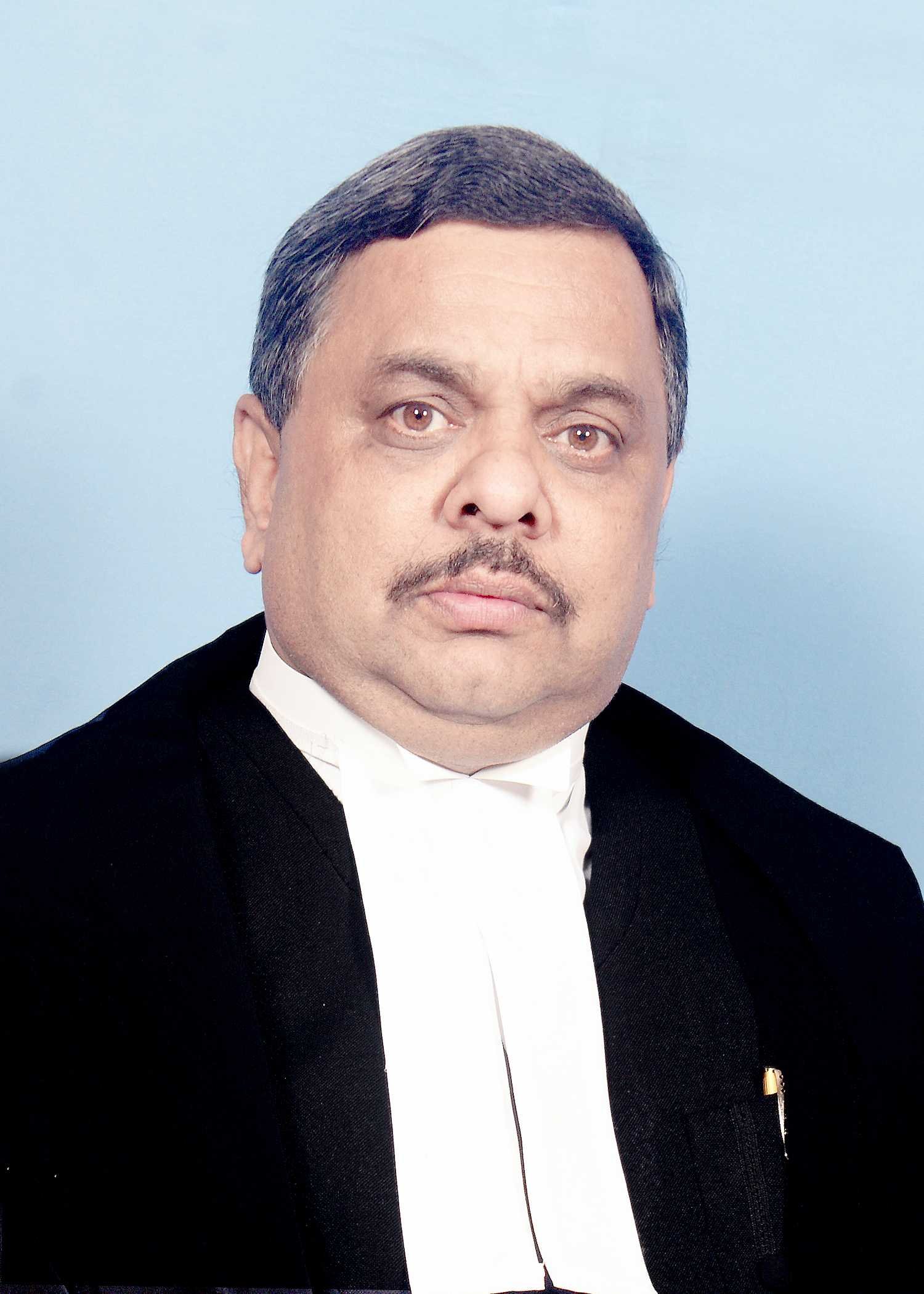
No Acts & Articles mentioned in this case
[2026:RJ-JP:21182-DB]
HIGH COURT OF JUDICATURE FOR RAJASTHAN
BENCH AT JAIPUR
D.B. Criminal Appeal (DB) No. 38/2019
Surajbhan S/o Shri Nawal Kishore, R/o Vill. Sop PS And Teh.
Nadoti Dist. Karauli Raj. (Presently Confined In Central Jail Kota)
----Appellant
Versus
State Of Rajasthan Through PP.
----Respondent
For Appellant(s) : : Shri Rahul Agrawal
For Respondent(s) : : Shri Amit Kumar Punia, PP
HON'BLE MR. JUSTICE MAHENDAR KUMAR GOYAL
HON'BLE MR. JUSTICE ANIL KUMAR UPMAN
Judgment
Date of Conclusion of Arguments : : 19 /0 5 /2026
Judgment Reserved On : : 19 /0 5 /2026
Whether the full judgment or
only the operative part is pronounced : : Full Judgment
Judgment Pronounced On : : 27 /0 5 /2026
Per Hon’ble Mahendar Kumar Goyal, J.
This appeal is directed against the judgment dated
13.12.2018 passed by learned Special Judge, Protection of
Children from Sexual Offences Act Cases cum Child Welfare
Commission No.2, Kota (for short-`the learned trial court’) in
Sessions Case No.72/2018 (CIS No.72/2018) whereby, the
accused-appellant has been convicted and sentenced as under:
1. Section 376D r/w 120B IPC r/w 5(g)/6 of the
Protection of Children from Sexual Offences Act,
2012: Life imprisonment, which shall mean remainder of
his natural life and fine of Rs.50,000/-; in default whereof,
six months’ additional imprisonment.
2. Section 342 r/w 120B IPC: Six months’ imprisonment.
[2026:RJ-JP:21182-DB] (2 of 15) [CRLAD-38/2019]
3. Section 11(v)/12 of Protection of Children from
Sexual Offences Act, 2012: One year rigorous
imprisonment and fine of Rs.10,000/-; in default whereof,
one month’s additional imprisonment.
All the sentences to run concurrently.
The relevant facts, in nutshell, are that Smt. Kamla Meena
(PW3) submitted a typed report (Ex.D1) on 24.01.2014 to SHO
Police Station Bheemganj Mandi, Kota City, Kota wherein, it was
averred that her minor daughter aged about 13 years, studying in
Central School No.1, had gone to Agra on 15.10.2013 along with
school team to participate in the sports activities but, when she
went to school in the month of December, she came to know that
her daughter did not participate in the sports activities and her
teachers informed that she did not go to Agra along with the
team. When she asked her daughter, she was found to be very
frightened but, after much consolation, she disclosed that the co-
accused-Ramkaran Jangid threatened her to go with him from
Kota to Mathura and thereafter to Agra. It was alleged that in the
night, she was taken to Gangapur City in the room of his friend-
appellant-Surajbhan where his another friend Ashish @ Kalli was
also present. It was alleged that she was subjected to rape there
whereafter, the co-accused-Ramkaran took her to Udaipur, kept
her there for about 3-4 days and was again subjected to wrongful
act. It was averred that the co-accused-Ramkaran had threatened
her of publicizing the video clip prepared by him and had also
threatened of eliminating her and the family and therefore, she
did not disclose anything to her family members. Based
thereupon, an FIR no.38 dated 24.01.2014 was registered under
the provisions of Sections 363, 366 and 376 IPC and Section 3/4
[2026:RJ-JP:21182-DB] (3 of 15) [CRLAD-38/2019]
of the Protection of Children from Sexual Offences Act, 2012 (for
short-`the POCSO Act’) and Section 3(1)(xii) of the SC/ST
(Prevention of Atrocities) Act (for short-`the SC/ST Act’).
After investigation, the appellant was chargesheeted, along
with co-accused Ramkaran under Sections 363, 366, 376D, 376(2)
(h), (m) and 342 IPC and Sections 3/4 & 5/6 of POCSO Act and
Section 3(2)(v) of SC/ST Act. Charges under Sections 376D, 342
& 120B of IPC, Sections 5(g)/6 & 11(v)/12 of POCSO and Section
3(2)(v) of SC/ST Act were framed against him. After trial, he has
been convicted and sentenced by the learned trial court, vide
judgment impugned dated 13.12.2018, as stated hereinabove.
The co-accused Ramkaran was also convicted vide same
judgement and he had preferred the criminal appeal no.102/2019
which shall, for the reasons recorded therein, be decided
separately.
It may also be pertinent to notice here that two co-accused
were also subjected to trial before the Juvenile Justice Board,
Kota. While, the co-accused-Manish Kumar was acquitted in
regular criminal case no.16/2015 vide judgment dated 06.09.2018
of the charges framed against him under Section 354D of IPC,
Section 17/8 of POCSO Act and Section 3 of SC/ST Act, the
another co-accused namely; Ashish @ Kalli was convicted under
Section 376 IPC and Section 3/4 of the POCSO Act by the learned
Juvenile Justice Board, Kota in regular criminal case no.128/2014
vide its judgment dated 17.04.2017 and was sentenced, under
Section 15(1)(c) of the Juvenile Justice Act, 2000, for two hours
community service on every working day at Primary Health Centre
for a period of six months. We are informed at Bar that no appeal
[2026:RJ-JP:21182-DB] (4 of 15) [CRLAD-38/2019]
was preferred by the accused Ashish Kumar @ Kalli against his
conviction recorded vide judgment dated 17.04.2017.
Assailing the impugned judgment, learned counsel for the
appellant contended that the learned trial court has erred in
recording his conviction based on conjectures and surmises in
absence of legally admissible evidence against him. Inviting
attention of this Court towards the deposition of the prosecutrix
(PW1), he would contend that it is full of contradictions and
improvements on material aspects of the case and therefore, was
not reliable. He, therefore, prayed that the appeal be allowed, the
judgment impugned dated 13.12.2018 be quashed and set aside
and he may be acquitted of the charges framed against him. In
the alternative, he prayed that the substantive sentence awarded
to him may be reduced to the sentence of 20 years-the minimum
sentence provided under Section 376D of IPC.
Per contra, learned Public Prosecutor, opposing the
submissions, contended that the learned trial court has held the
appellant guilty of the charges framed against him assigning
cogent reasons based on appreciation of the evidence available on
record which warrant no interference by this Court. He, therefore,
prayed for dismissal of the appeal.
Heard. Considered.
The learned trial court has, after appreciating the school
record of the prosecutrix, statement of Ms. Deepti Nair (PW8)- the
Principal, Central School and statement of prosecutrix as PW1,
held the date of birth of the prosecutrix to be 23.01.2000 and her
to be minor being 13 years 8 months and 22 days on the date of
incident i.e. 15.10.2013. Her date of birth or for that matter, her
[2026:RJ-JP:21182-DB] (5 of 15) [CRLAD-38/2019]
minority has not been assailed by the appellant. Therefore, we
find no reason to interfere with the same.
Genesis of the prosecution case is the typed report (Ex.D1)
submitted by Smt. Kamla Meena (PW3)-mother of the prosecutrix
with a delay of more than three months and a week from the date
of incident i.e. 15.10.2013. As per it, the delay occurred as she
had come to know in the month of December, 2013 that the
prosecutrix-her daughter had not gone to Agra to participate in
the sports meet and thereafter, when she confronted the
prosecutrix, she was found to be very frightened and only after
much consolation, she disclosed the incident. However, the
prosecutrix has, as PW-1, made no such averment; rather, has
stated that on 23.01.2014 two boys riding on a bike had cut her
hand outside the school and had threatened of her murder if she
disclosed anything against co-accused-Ramkaran as also the co-
accused Ashish. She further alleged that on the next day, four
boys riding on two bikes again threatened her whereupon, she
disclosed entire incident to her mother. But, her mother, as PW3,
stated in the examination-in-chief that Solanki Sir had informed
her to have seen the prosecutrix at Kota Station and that she did
not go to Agra along with school team and when after coming
back to home, she questioned the prosecutrix, she disclosed the
entire incident. Thus, her deposition is in stark contrast with the
explanation offered in the typed report. Furthermore to
substantiate the allegation of threatening the prosecutrix by two
boys on 23.01.2014 and on the next day, by four boys, no
evidence was led by the prosecution; rather, as a matter of fact,
the material on record does not reflect that any investigation was
[2026:RJ-JP:21182-DB] (6 of 15) [CRLAD-38/2019]
carried out in this regard. Thus, this unexplained inordinate delay
in lodging the FIR raises a serious doubt as to veracity of the
prosecution case.
Furthermore, there is material contradiction in the
prosecution case as to the source of information that the
prosecutrix did not go to Agra along with school team. As per
Ex.D1 and the deposition of the complainant-PW3, she was
informed by Solanki Sir-a Teacher in the Central School that the
prosecutrix had not gone to Agra along with school team but,
Mukesh Kumar Solanki (PW4) has deposed that brother of the
prosecutrix had telephoned him enquiring as to whether she had
gone with the school team. In his cross examination, he has
categorically denied to have talked to the complainant. Another
School Teacher namely Ritesh Kumar Chausariya as PW2, has also
claimed to have spoken only with the brother of the prosecutrix.
This contradiction also dents the reliability of the genesis of the
prosecution case.
Further, since, the first report is a typed report submitted
with a delay of more than three months and a week, it can safely
be inferred that it was made after much deliberation still, it does
not contain a specific allegation that the prosecutrix was subjected
to rape in Gangapur City at the room of the appellant by whom;
either by the appellant or, by the co-accused-Ramkaran or, by the
co-accused Ashish @ Kalli or, by all of them; rather, it contains a
bald allegation that the co-accused-Ramkaran had taken the
prosecutrix to the room of the appellant where his another friend
Ashish @ Kalli was also present and there, she was subjected to
rape. However, the prosecutrix has, as PW1, levelled specific
[2026:RJ-JP:21182-DB] (7 of 15) [CRLAD-38/2019]
allegation against all the accused of subjecting her to rape. She
has further deposed that despite her protest and repeated
screaming, they did not stop. She further alleged that they made
a video film and threatened to make it viral on internet if she
disclosed the incident to anybody. However, no such video film
was ever recovered. Furthermore, the site plan of the scene of
crime (Ex.P3) discloses that abutting the subject room, the rooms
no.A2 and A3 existed inhabited by the children of the landlord
Harkesh Meena (PW6). It also discloses that in the same
residential house, other rooms also existed and the house itself
was situated in a densely populated residential area. From the
prosecution evidence available on record, the time of alleged gang
rape comes on or around 12 o’ clock in the night. In absence of
the prosecution case that at that time, in the vicinity, there was
some loud music or sound so as to suppress the sound of
repeated screams by the prosecutrix, it is rendered highly
improbable, even if not impossible, that the person
residing/sleeping during the dead night in the vicinity in a town
like Gangapur City would not have heard the screams / protest
raised by the prosecutrix and would not have reached there; even
if not with a sense of rescuing the victim, for the sake of anxiety.
It is also worthy to notice here that although, Harkesh Meena
(PW6)-the landlord of the appellant has deposed that when he
reached to the house in the morning, his children informed that
the co-accused-Ramkaran had visited the house along with a girl
in the night but, he found there none. Conspicuously, neither the
children who had allegedly informed the PW6 nor, any other
neighbour was examined by the prosecution to lend credence to
[2026:RJ-JP:21182-DB] (8 of 15) [CRLAD-38/2019]
its story of subjecting the prosecutrix to gang rape by the accused
in the subject room or, her raising protest/alarm at that time.
Moreover, the prosecutrix has also asserted that the
appellant as also the co-accused-Ramkaran were in her company
till next evening in the room and for some time, they had gone out
locking the room whereupon, she raised hue and cry but, none
came. However, PW6 has categorically denied presence of anyone
in the house when he reached in the morning. Again, despite the
subject house being situated in the densely populated residential
area and despite hue and cry raised by the prosecutrix as claimed,
none came hearing the same which also raises a suspicion as to
reliability of the testimony of the prosecutrix.
Further, her cross-examination as PW1 reveals another
salient feature which discredits her testimony. She has stated that
when she was being undressed, she did not try to run away as the
room was locked and the accused were three in number. She has
also admitted that she was not manhandled by the accused in the
room. However, in the same breath, she has claimed that she was
intimidated by them. But, when confronted with her statement
recorded under Section 164 Cr.P.C. (Ex.P5), she feigned ignorance
as to whether the allegation of intimidation was made in it or not.
She also admitted that she had stated before the Magistrate that
she complained as to why she was being subjected to sex when
she was brought for a trip. As a matter of fact, from her statement
under Section 164 Cr.P.C., it is not revealed that she ever raised
any alarm or hue and cry when she was subjected to the alleged
offence of gang rape by the three accused including the appellant
as claimed in her court statement.
[2026:RJ-JP:21182-DB] (9 of 15) [CRLAD-38/2019]
Indisputably, the instant case hinges on the sole deposition
of the prosecutrix and we are conscious of the fact that conviction
for the offence of rape can rest only on the sole testimony of
prosecutrix provided it is intrinsically trustworthy, free from any
suspicion and is creditworthy as held by the Hon’ble Supreme
Court of India in the case of State of Punjab vs. Gurmit Singh
& Ors.-(1996) 2 SCC 384 , as under:
“xxxxxx The courts must, while evaluating evidence, remain
alive to the fact that in a case of rape, no self respecting
woman would come forward in a court just to make a
humiliating statement against her honour such as is involved
in the commission of rape on her. In cases involving sexual
molestation, supposed considerations which have no material
effect on the veracity of the prosecution case or even
discrepancies in the statement of the prosecutrix should not,
unless the discrepancies are such which are of fatal nature, be
allowed to throw out an otherwise reliable prosecution case.
The inherent bashfulness of the females and the tendency to
conceal outrage of sexual aggression are factors which the
Courts should not over-look. The testimony of the victim in
such cases is vital and unless there are compelling reasons
which necessitate looking for corroboration of her statement,
the courts should find no difficulty to act on the testimony of a
victim of sexual assault alone to convict an accused where her
testimony inspires confidence and is found to be reliable.
Seeking corroboration of her statement before relying upon
the same, as a rule, in such cases amounts to adding insult to
injury. Why should the evidence of a girl or a woman who
complains of rape or sexual molestation, be viewed with
doubt, disbelief or suspicion?
The Court while appreciating the evidence of a prosecutrix
may look for some assurance of her statement to satisfy its
[2026:RJ-JP:21182-DB] (10 of 15) [CRLAD-38/2019]
judicial conscience, since she is a witness who is interested in
the outcome of the charge leveled by her, but there is no
requirement of law to insist upon corroboration of her
statement to base conviction of an accused. The evidence of a
victim of sexual assault stands almost at par with the
evidence of an injured witness and to an extent is even more
reliable. Just as a witness who has sustained some injury in
the occurrence which is not found to be self inflicted, is
considered to be a good witness in the sense that he is least
likely to shield the real culprit, the evidence of a victim of a
sexual offence is entitled to great weight, absence of
corroboration notwithstanding. Corroborative evidence is not
an imperative component of judicial credence in every case of
rape. Corroboration as a condition for judicial reliance on the
testimony of the prosecutrix is not a requirement of law but a
guidance of prudence under given circumstances.
It must not be over-looked that a woman or a girl subjected
to sexual assault is not an accomplice to the crime but is a
victim of another person's lust and it is improper and
undesirable to test her evidence with a certain amount of
suspicion, treating her as if she were an accomplice.
Inferences have to be drawn from a given set of facts and
circumstances with realistic diversity and not dead uniformity
lest that type of rigidity in the shape of rule of law is
introduced through a new form of testimonial tyranny making
justice a casualty. Courts cannot cling to a fossil formula and
insist upon corroboration even if, taken as a whole,the case
spoken of by the victim of sex crime strikes the judicial mind
as probable. In State of Maharashtra v. Chandraprakash
Kewalchand Jain MANU/SC/0122/1990:1990CriLJ889 Ahmadi,
J. (as the Lord Chief Justice then was) speaking for the Bench
summarised the position in the following words :
A prosecutrix of a sex offence cannot be put on a par with
an accomplice. She is in fact a victim of the crime. The
Evidence Act nowhere says that her evidence cannot be
accepted unless it is corroborated in material particulars.
[2026:RJ-JP:21182-DB] (11 of 15) [CRLAD-38/2019]
She is undoubtedly a competent witness Under Section
118 and her evidence must receive the same weight as is
attached to an injured in cases of physical violence. The
same degree of care and caution must attach in the
evaluation of her evidence as in the case of an injured
complainant or witness and no more. What is necessary is
that the court must be alive to and conscious of the fact
that it is dealing with the evidence of a person who is
interested in the outcome of the charge leveled by her. If
the court keeps this in mind and feels satisfied that it can
act on the evidence of the prosecutrix, there is no rule of
law or practice incorporated in the Evidence Act similar to
illustration (b) to Section 114 which requires it to look for
corroboration. If for some reason the court is hesitant to
place implicit reliance on the testimony of the prosecutrix
it may look for evidence which may lend assurance to her
testimony short of corroboration required in the case of
an accomplice. The nature of evidence required to lend
assurance to the testimony of the prosecutrix must
necessarily depend on the facts and circumstances of
each case. But if a prosecutrix is an adult and of full
understanding the court is entitled to base a conviction of
her evidence unless the same is shown to be infirm and
not trustworthy. If the totality of the circumstances
appearing on the record of the case disclose that the
prosecutrix does not have' a strong motive to falsely
involve the person charged, the court should ordinarily
have no hesitation in accepting her evidence.”
In Nirmal Premkumar and Anr. Vs. State Rep. by
Inspector of Police-(2024) 20 SCC 293 , their Lordships have
held as under:
“24. What flows from the aforesaid decisions is that in cases
where witnesses are neither wholly reliable nor wholly
unreliable, the Court should strive to find out the true genesis
[2026:RJ-JP:21182-DB] (12 of 15) [CRLAD-38/2019]
of the incident. The Court can rely on the victim as a
"sterling witness" without further corroboration, but
the quality and credibility must be exceptionally high.
The statement of the prosecutrix ought to be consistent
from the beginning to the end (minor inconsistencies
excepted), from the initial statement to the oral
testimony, without creating any doubt qua the
prosecution's case. While a victim's testimony is
usually enough for sexual offence cases, an unreliable
or insufficient account from the prosecutrix, marked by
identified flaws and gaps, could make it difficult for a
conviction to be recorded.” (Emphasis supplied)
What evidence is of sterling worth has succinctly been
explained by their Lordships in the case of Rai Sandeep @
Deepu vs. State of NCT, Delhi-(2012) 8 SCC 21, as under:
“22. In our considered opinion, the 'sterling witness' should be
of a very high quality and calibre whose version should,
therefore, be unassailable. The Court considering the version
of such witness should be in a position to accept it for its face
value without any hesitation. To test the quality of such a
witness, the status of the witness would be immaterial and
what would be relevant is the truthfulness of the statement
made by such a witness. What would be more relevant would
be the consistency of the statement right from the starting
point till the end, namely, at the time when the witness makes
the initial statement and ultimately before the Court. It should
be natural and consistent with the case of the prosecution qua
the accused. There should not be any prevarication in the
version of such a witness. The witness should be in a position
to withstand the cross-examination of any length and
howsoever strenuous it may be and under no circumstance
should give room for any doubt as to the factum of the
occurrence, the persons involved, as well as, the sequence of
it. Such a version should have co-relation with each and
[2026:RJ-JP:21182-DB] (13 of 15) [CRLAD-38/2019]
everyone of other supporting material such as the recoveries
made, the weapons used, the manner of offence committed,
the scientific evidence and the expert opinion. The said
version should consistently match with the version of every
other witness. It can even be stated that it should be akin to
the test applied in the case of circumstantial evidence where
there should not be any missing link in the chain of
circumstances to hold the accused guilty of the offence
alleged against him. Only if the version of such a witness
qualifies the above test as well as all other such similar tests
to be applied, it can be held that such a witness can be called
as a 'sterling witness' whose version can be accepted by the
Court without any corroboration and based on which the guilty
can be punished. To be more precise, the version of the said
witness on the core spectrum of the crime should remain
intact while all other attendant materials, namely, oral,
documentary and material objects should match the said
version in material particulars in order to enable the Court
trying the offence to rely on the core version to sieve the
other supporting materials for holding the offender guilty of
the charge alleged.”
If the deposition of the prosecutrix (PW1) is tested on the
anvil of aforesaid principles, we do not find the same to be of
sterling worth or intrinsically trustworthy so as to sustain the
finding of conviction of the appellant as to the offence of rape or
for that matter, of gang rape. Following are the circumstances
which raise a suspicion as to reliability of the testimony of the
prosecutrix. As already observed, in the FIR, though, lodged with
a delay of more than three months and a week from the date of
incident after much deliberation, there is absence of specific
allegation against him of subjecting the prosecutrix to rape; in her
deposition as PW1, she has claimed to have protested and
[2026:RJ-JP:21182-DB] (14 of 15) [CRLAD-38/2019]
screamed repeatedly when being subjected to gang rape but,
despite it being the dead night and the subject room being
situated in a residential house surrounded by other rooms
inhabited by residents and the house itself being situated in a
densely populated residential area, none either heard the alarm
or, came to her rescue as also failure on the part of the
prosecution to examine any such resident/neighbour; further,
despite testimony of Harkesh Meena (PW6) that when he reached
in the morning, his children informed of bringing a girl by the co-
accused-Ramkaran but, neither the children were examined nor, it
was stated that they had disclosed to have heard the alarm raised
by the prosecutrix, as claimed by her; absence of any averment of
raising any alarm in her Section 164 Cr.P.C. statement as claimed
in her court statement; claim of continue to stay in the same room
with the accused till evening of next day and having food there
which was contradicted by PW6 who claimed to have seen none in
the following morning; her claim to have raised hue and cry when,
on the next day, the appellant along with co-accused Ramkaran
had left the room locking her inside but, none heard the same and
none came to her rescue despite the subject room being situated
in a densely populated residential area, as already observed.
The aforesaid circumstances render the testimony of the
prosecutrix highly doubtful and unreliable so far as involvement of
the appellant in the offence of rape/gang rape or, for that matter,
offences for which he was charged with is concerned so as to
sustain the finding of his conviction.
So far as the provisions of Section 29 of the POCSO Act are
concerned, since, in our considered opinion, the prosecution has
[2026:RJ-JP:21182-DB] (15 of 15) [CRLAD-38/2019]
miserably failed to establish the foundational facts necessary to
constitute the offence, we are not persuaded to draw an inference
on the strength thereof.
In view of aforesaid sketchy, inconsistent, unnatural,
insufficient and unreliable evidence, we are not persuaded to
uphold the findings of conviction of the appellant.
Resultantly, the criminal appeal no.38/2019 deserves to be
allowed. The appeal is allowed accordingly. The judgment dated
13.12.2018 passed by the Special Judge, Protection of Children
from Sexual Offences Act Cases cum Child Welfare Commission
No.2, Kota in Sessions Case No.72/2018 qua the appellant is
quashed and set aside. The appellant-Surajbhan is acquitted of
the charges framed against him. He is in jail and therefore, shall
be released forthwith, if not required to be detained in any other
case.
In view of the provisions of Section 481 of the Bharatiya
Nagarik Suraksha Sanhita, 2023, the appellant-Surajbhan is
directed to furnish a personal bond in the sum of ₹25,000/- each,
and a surety in the like amount before the Registrar (Judicial) of
this Court which shall be effective for a period of six months with
the stipulation that in the event of Special Leave Petition being
filed against the judgment or on grant of leave, the appellant
aforesaid, on receipt of notice thereof, shall appear before the
Hon’ble Supreme Court.
(ANIL KUMAR UPMAN),J (MAHENDAR KUMAR GOYAL),J
RAVI SHARMA/S1-2

 Login with google
Legal Notes
Add a Note....