
Accused appellant Suresh has been convicted under Section302 IPC and sentenced to rigorous life imprisonment along with fine of Rs. 1000/- and on failure to pay the fine to undergo ...
No Acts & Articles mentioned in this case
Court No. - 43
Case :- CRIMINAL APPEAL No. - 3379 of 2002
Appellant :- Suresh
Respondent :- State of U.P.
Counsel for Appellant :- S.K. Mishra, Mohd. Raghib Ali,Mohd. Raghib
Ali,A.C.,Saghir Ahmad.A.C.
Counsel for Respondent :- A.G.A.
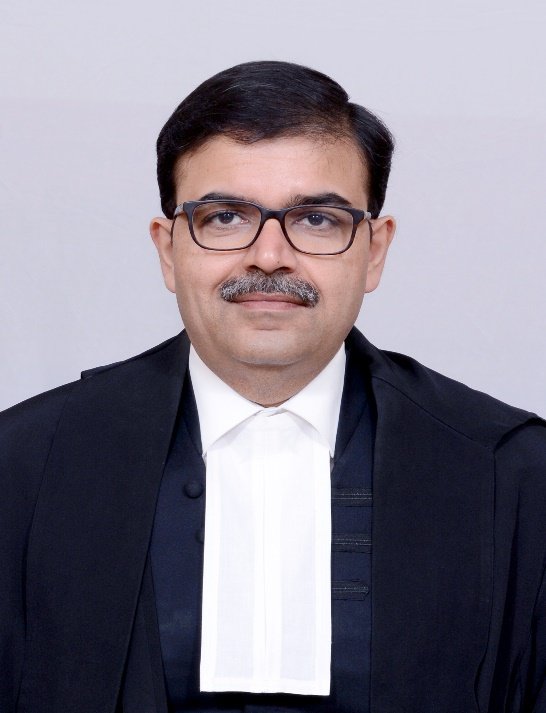
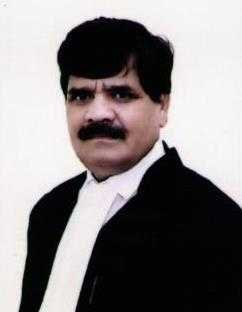
Hon'ble Ashwani Kumar Mishra,J.
Hon'ble Shiv Shanker Prasad,J.
1. Accused appellant Suresh has been convicted under Section
302 IPC and sentenced to rigorous life imprisonment alongwith fine
of Rs. 1000/- and on failure to pay the fine to undergo six months
additional imprisonment; while his two brothers Hansu and Rakesh
who were charged under Section 302/34 IPC have been acquitted
vide a composite judgment and order of the Additional Sessions
Judge (Fast Track Court No. 4), Firozabad, dated 21.6.2002 and
22.6.2002. Thus aggrieved the accused appellant Suresh is before
this Court in the present appeal filed under Section 374 of the Code
of Criminal Procedure. No appeal is preferred by the State against
the acquittal of the two co-accused Hansu and Rakesh, who are the
real brothers of accused appellant Suresh.
2. A written report was given by the first informant Harish Kumar
Fanda (PW-1) stating that the accused appellant at about 10.30 in
the morning came to his shop to purchase Tobacco for Rs. 2.00. The
informant refused to accept the tender as the Two Rupee Note
offered was torn. The accused appellant went back after threatening
that he would see the informant and his family. At about 11.30
accused appellant armed with a knife, his two brothers Hansu armed
with a bottle of Acid and Rakesh armed with two iron rods (saria)
rushed towards him. The informant out of fear closed the door of the
shop. The accused then rushed to enter the adjoining house of the
informant, which was objected by the wife of informant Karuna
Fanda, when the accused appellant inflicted knife blow below her
chest. Accused Hansu is stated to have thrown acid bottle towards
Karuna Fanda which ricocheted and the acid got sprinkled on Hansu
2
and Suresh. The informant rushed his wife to the hospital where she
died. The incident is said to have been seen by Ram Lal Fanda (PW-
2), Sumitra Devi (mother of informant) and Banwari. Sumitra Devi
has not been adduced in evidence while Banwari has died. On the
basis of such written report scribed by PW-2 the first information
report in Case Crime No. 509 of 1995, under Section 302 IPC, Police
Station Shikohabad, District - Firozabad, was registered at 12.45 pm
on 7.11.1995 in respect of the incident occurring at 11.30 am on the
same day.
3. The Investigating Officer recovered two iron rods (saria), edge
of one of which was pointed while the other was flat near the place
of occurrence vide Exhibit Ka-2. Bloodstained earth from the spot
was also recovered vide Exhibit Ka-3. Panchayatnama was conducted
at the hospital, where the dead body was kept, and the cause of
homicidal death appeared to be the wound six fingers below the
chest of the deceased. Panch witnesses were of the view that the
deceased has died on account of stab wound. The dead body was
accordingly sealed and sent to mortuary where the postmortem was
conducted by Dr. R.K. Garg (PW-4). In the postmortem, the cause of
death has been determined as shock and bleeding on account of
following ante-mortem injury:-
"1. Incised wound 4.0 cm x 1.0 cm x chest cavity deep
on (Lt) side front of chest 9.5 cm below and lateral to
left nipple at 5 ‘O’ clock position.”
4. The investigation proceeded and ultimately a charge sheet (Ex.
Ka. 11) was submitted by the police against the accused appellant
and his two brothers Rakesh and Hansu. The Magistrate took
cognizance and committed the case to the court of sessions where
the charges were framed against them. Vide order dated
23.10.1998, the accused appellant was charged of offence under
Section 302 IPC, while his two brothers namely Hansu and Rakesh
were charged under Section 302/34 IPC by a separate order. The
charges were read out to the accused who denied them and
demanded trial.
3
5. The prosecution in order to establish the charges against
accused appellants produced oral testimonies of following
witnesses:-
“1.Harish Kumar Fanda PW-1
2.Ram Lal Fanda PW-2
3.Yogesh Kumar PW-3
4.Dr. R.K. Garg PW-4
5.Shiv Charan Pal PW-5
6.Siyaram Sharma CW-1
7.Dr. Lakhan Singh CW-2”
6. Documentary evidences have also been adduced by the
prosecution consisting of FIR as Ex.Ka. 12; written report as
Ex.Ka.1; recovery memo of Iron ‘Saria’ as Ex.Ka. 2; recovery memo
of blood from stairs as Ex. Ka.3; Postmortem Report as Ex.Ka. 10;
Panchayatnama as Ex. Ka. 4 and Charge Sheet as Ex. Ka. 11.
7. PW-1 is the first informant who has supported the prosecution
case by stating that the accused appellant Suresh is a resident of
Punjabi Colony Shikohabad who came to his shop and offered a two
rupee torn note for purchasing Kapoori Tobacco and as the note was
torn, the informant refused to accept it, on which Suresh threatened
the informant that he would see him and his family. After about an
hour, on the same day, Suresh armed with a knife alongwith Hansu
and Rakesh who had acid bottle and iron rods in their hands rushed
towards the shop of the informant. On seeing this PW-1 put the
shutters down. The accused then rushed towards the house of the
informant hurling abuses. Informant’s wife was standing near the
gate/shutter and she objected to their entry on which the accused
appellant Suresh stabbed her. Acid bottle was also allegedly thrown
by Hansu but the acid got sprinkled on Suresh and Hansu. PW-1 has
proved the written report (Ex.Ka-1) and has also supported the
recoveries of plain earth; bloodstained earth and two iron rods by
signing on the memo of recovery.
4
8. In the cross-examination PW-1 has admitted that accused
Suresh, Hansu and Rakesh are the sons of his real uncle, which
indicates that the accused and the informant are first cousin. He has
also admitted that the lane passing between the house of accused
and his house is rather narrow. At the time of incident accused
appellant Suresh was not working while Hansu was working in a
hotel running a tandoor. He has stated that one of the two iron rods
recovered had a sharp edge while the other was flat and these rods
were used for preparing chapatis in tandoor. He has stated that these
iron rods have not been used for commissioning of offence and there
was no scuffle of accused with any of the witnesses. He has shown
ignorance about the arrest of Hansu or his medical examination. He
has also admitted that no injuries from acid have been caused to
first informant or the deceased or any of the witnesses. He has
further admitted that at the time of collection of bloodstained earth
no empty bottle of acid was found. PW-1 further stated that acid
bottles were taken by the accused persons and non mentioning of
such facts cannot be explained by him. He has further admitted that
acid stained earth have not been recovered from the spot, nor any
acid was found and even on the wall or the channel of his gate no
stains of acid were found. PW-1 has stated that he saw accused
appellant stabbing his wife while standing at a distance of 4 ft. in the
gallery from the place of occurrence. PW-1 denied the suggestion
that there was any dispute on account of his father having grabbed
the ancestral house of the accused or that Hansu was attacked with
knife by informant while he was going for work or that acid was
thrown on Hansu by the deceased and the deceased while turning
after throwing the acid got accidentally stabbed with the knife in the
hands of the informant. He has further denied the suggestion that he
did not allow the report of Hansu to be registered when he had gone
to the police station or that Hansu was falsely implicated.
9. PW-2 is the father of informant who has similarly supported
the prosecution case. In the cross-examination he has stated that he
saw the incident from the road in front of the shop of the informant.
5
In cross-examination he has also denied the suggestion that he
wanted to grab the ancestral house of the accused or that the
incident occurred when his son (PW-1) attempted to stab Hansu and
the deceased threw acid and that she got accidentally stabbed while
turning back.
10.PW-3 Yogesh Kumar was posted in the concerned Police
Station and has proved the panchayatnama as also site plan. He has
admitted that he was not the Investigating Officer, but he had made
the recoveries on the asking of the SHO. The iron rods recovered,
however, have not been produced before the Court.
11.Dr. R.K. Garg is PW-4 who has conducted the autopsy on the
deceased. He has stated that there was only one injury on the
deceased and her 8
th
rib was cut. Both sides of injury were sharp. He
has also stated that it was not necessary that the weapon of assault
in this case be necessarily sharp for causing the aforesaid injury.
12.PW-5 Shivcharan Pal, Investigating Officer, has proved the
chargesheet and has stated that PW-3 Yogesh Kumar was orally
directed to undertake investigation and that there was no order by
him in writing to conduct investigation by him. He has also stated
that plain earth was not taken from the place of occurrence and the
place from where the bloodstained earth has been taken has also not
been specified in the site plan. This witness has clearly stated that
neither any acid has been found on the spot, nor the place where
bottle of acid fell has been specified. It has also not been specified as
to what happened to the acid bottle.
13.Siyaram Sharma, Pharmacist, R.N.M. Hospital, Shikohabad has
appeared as CW-1 and has produced the records in respect of the
injury caused to Hansu S/o Deshraj. The original register has also
been produced by him. Dr. Lakhan Singh has also been adduced as
CW-2 who had examined Hansu at 5.15 pm on 7.11.95 and following
injuries have been found on him by the concerned doctor:-
6
^^pksV ua0 1 & tyus dh pksV ¼fu’kku½ iwjs psgjs ds vk/ks fgLls es] xnZu Nkrh isV
nksuks gkFkksa ds vxys fgLlks esa nksuks tkWa?kks ds vxys fgLls esa ;s pksV lqijfQf’k;y
FkhA yxHkx 45% 'kjhj ds fgLls ij Fkh yky jax dh FkhA Qqksys ugha FksA^^
It was, however, opined by the doctor that these injuries were
superficial and could be caused by chemical burn. He has also
certified that injuries were fresh and could come from acid. The
doctor has further stated that Hansu was kept under observation and
although he described the injury as superficial but it could prove fatal
since burn percentage was more than 20% and he was referred to
the district hospital. The doctor was not informed of any further
development in the matter.
14.Trial Court found the testimony of PW-1 and PW-2 to be
truthful and reliable and on its basis came to the conclusion that
deceased has been stabbed by the accused appellants and
consequently convicted the accused appellant for offence under
Section 302 IPC. So far as injuries on Hansu is concerned the court
below has not given much importance to it as the injuries were
allegedly superficial and thus ignored. A finding has been returned
that accused persons were present on the spot. The court below
however found that prosecution has not been able to prove the guilt
of Hansu and Rakesh beyond reasonable doubt and they were
acquitted by giving them benefit of doubt.
15.Sri Saghir Ahmad, learned Senior Counsel assisted by Sri
Raghib Ali, has appeared as Amicus Curiae for the appellant, and
submits that the prosecution has not established the genesis of
crime in the manner disclosed by it on the strength of prosecution
evidence. He further submits that the cause of death and the manner
of death have not been proved. He also argues that injuries of Hansu
have not been explained and as the witnesses are interested
witnesses their testimony is not reliable and trustworthy and
consequently the accused appellant is entitled to benefit of doubt. He
further submits that the acquittal of Hansu and Rakesh by the trial
court despite offences alleged under section 34 IPC, on the basis of
same set of evidence, is also a ground to extend same benefit to the
7
accused appellant. Contention is that PW-1 and PW-2 since are not
reliable witnesses and are otherwise interested persons and the
injuries on Hansu have not been explained and the weapon of
assault i.e. the knife has not been recovered, as such, the conviction
of accused appellant is bad in law.
16.Learned AGA, on the other hand states that the ocular
evidence matches the postmortem report and since PW-1 and PW-2
have specifically seen the incident, in which solitary stab wound was
caused by the accused appellant, as such, the conviction recorded by
the court below is valid.
17.Having heard the respective counsels, we have examined the
original records of the case in order to determine whether the
prosecution has succeeded in establishing the guilt of accused
appellant, beyond reasonable doubt?
18.The first information report in the present case has been
lodged on the basis of written report wherein the genesis of crime is
alleged to be a dispute regarding non acceptance of tender of Rs.
2.00 on the ground that the note was torned. This, according to the
prosecution, is the cause of provocation and also the motive on
account of which the accused appellant came armed with a knife
alongwith his two brothers and attacked the informant with knife,
acid and iron rods.
19.The genesis of crime is thus required to be examined in the
facts of the present case before adverting to the credibility and
reliability of the two eye-witnesses, whose testimony forms the basis
of conviction of accused appellant. The FIR version as also the
statement in chief of PW-1 suggests that accused is a stranger and
on flimsy premise has stabbed the deceased. This apparent
impression, however, is not supported by the evidence on record.
20.Firstly, the dispute regarding non acceptance of two rupee note
does not, on its own, constitutes sufficient provocation for the
8
assault on the informant and deceased. Moreover, in the cross-
examination of PW-1 it is clearly admitted that the three accused are
the uncle’s son of informant and, therefore, informant is the first
cousin of the three accused. PW-1 moreover has admitted in his
cross-examination that the mother of accused has been
subsequently murdered wherein the informant is the prime accused.
21.Although there is no defence evidence substantiating any
alternative genesis of crime or motive for occurrence of incident or
false implication but a suggestion has been given to PW-1 that his
father wanted to grab the ancestral house, in which the accused also
had a share, which suggestion is nevertheless denied. It is also to be
noticed that according to the site plan the accused and informant live
in close vicinity and their houses are just across a narrow lane. The
close relationship between the parties as also the admission of PW-1
that he is accused of murdering the mother of accused appellant
clearly goes to show that relationship between them was not cordial.
22.In the facts of the case there are only two eye-witnesses who
are interested witnesses being the husband and father-in-law of
deceased. Law is settled that testimony of interested witnesses can
always be looked into but only after subjecting it to cautious and
careful scrutiny.
23.As we have already seen from the evidence brought on record
that the genesis of crime disclosed by the prosecution is not entirely
reliable and eye-witnesses are close relatives of the deceased the
facts asserted by the prosecution will have to be minutely
scrutinized.
24.The prosecution witnesses have stated that the accused
appellant alongwith his two brothers rushed towards the informant’s
shop on account of the motive disclosed i.e. non acceptance of two
rupee note. Accused appellant is alleged to have carried a knife
which admittedly is neither recovered nor produced before the court.
The two rupee torn note, which was the bone of contention as per
9
prosecution and provided the genesis has also not been recovered or
produced in evidence. So far as Hansu possessing acid bottle is
concerned neither any acid has been found on the ground at the
place of crime nor any acid marks were noticed on the nearby
walls/shutter. These are circumstances which adds to the cloud on
the prosecution case. The further fact that the informant or the
deceased did not sustain any chemical burn injuries despite the
prosecution case that acid was thrown on them by Hansu also puts a
question on the prosecution case.
25.PW-1 has disclosed that Hansu threw acid bottle and the acid
fell on Suresh and Hansu. No burn injuries from acid attack is found
on Suresh. Such injuries are found only on Hansu. The statement of
PW-1 that acid fell on Suresh is thus found incorrect.
26.It is difficult to believe that acid thrown on deceased/informant
from close distance would not cause any injuries upon them nor any
signs of acid would be available on the nearby walls/shutter/floor. No
acid bottle has been recovered either.
27.Although there is no defence witness on this aspect, yet, it
may be worth noticing that the accused Hansu in his statement
under section 313 Cr.P.C. has denied that he was carrying acid.
Moreover, he has stated that he was going to hotel for work when
the deceased threw acid on him and the deceased was hit by knife of
informant by which the informant intended to assault him. The reply
of Hansu to question no.13 is relevant and is reproduced
hereinafter:-
^^eS gksVy ij dke djus tk jgk FkkA d:.kk Q.Mk us esjs ij rstkc Mkyk FkkA gjh’k
pkdw esjs ekj jgk Fkk tks d:.kk Q.Mk ds yxkA esjk HkkbZ jkds’k fjiksVZ djus eq>s
fjiksVZ djus Fkkus ys x;k iqfyl us eq>s tyh gqbZ voLFkk esa ogha cSBk fy;k rFkk fjiksVZ
izkIr dj esjs HkkbZ dks ns nh rFkk eq>s esfMdy djkus ds uke ij ogha cSBk fy;kA^^
28.Accused appellant has also stated under section 313 Cr.P.C.
that deceased was hit by the knife of informant and that the
deceased threw acid on Hansu.
10
29.Dr. Lakhan Singh has appeared as court witness and proved
that burn injuries were caused to Hansu on his half face, neck, chest,
both hands and thighs which was on 45% of his body. He has opined
that such burn injuries could be caused by acid attack. He has
further stated that though he recorded the injuries to be superficial
but as the burn was above 20% and could be fatal as such the
patient was kept under observation and was referred to S.N.M.
Hospital, Firozabad.
30.It is not clear whether Hansu was actually referred to S.N.M.
Hospital, Firozabad. No complaint/report at the instance of Hansu is
otherwise on record. The only explanation furnished under section
313 Cr.P.C. is that Hansu went to police station for lodging the report
but he was detained and the report was received by the police.
31.The trial court has ignored the injuries caused to Hansu only
on the ground that such injuries were superficial. The statement of
Dr. Lakhan Singh that burn was above 20% and could be fatal or
that Hansu was referred to the district hospital has been completely
overlooked.
32.On the basis of evidence led by the prosecution on the aspect
relating to alleged throwing of acid by Hansu, and his sustaining
burn injuries as acid also fell/sprinkled on him, we are not impressed
by the reasoning assigned by the trial judge for ignoring the injuries
caused to Hansu. We are not inclined to accept that burn injuries
would be sustained on 45% of the body only because some acid fell/
got sprinkled on Hansu while throwing the acid bottle upon the
informant or the deceased, particularly when no burn injuries are
found on the deceased or the informant, although acid was allegedly
thrown on them.
33.Learned Senior Counsel for the appellant submits that where
the genesis of crime is suppressed and the injuries on accused are
not explained the evidence of prosecution witnesses relating to the
incident cannot be treated as true or at any rate not wholly true and
11
cannot be relied upon to convict an accused. Reliance is placed upon
a judgment of Supreme Court in Kumar Vs. State Represented by
Inspector of Police, 2018 (6) JT 85, wherein the Court observed as
under in para 27 to 29 of the report, which is reproduced
hereinafter:-
“27. Another point put forth by the learned counsel on
behalf of the accused—appellant is that the prosecution has
not explained the injuries suffered by the accused and hence
prosecution case should not be believed. At the outset, it
would be relevant to note the settled principles of law on
this aspect. Generally failure of the prosecution to offer any
explanation in that regard shows that evidence of the
prosecution witnesses relating to the incident is not true or
at any rate not wholly true [See : Mohar Rai and Bharath Rai
v. The State of Bihar, 1968 CriLJ 1479].
28. In Lakshmi Singh and Ors. v. State of Bihar, 1976 CriLJ
1736 this Court observed:
“Where the prosecution fails to explain the injuries on the
accused, two results follow :
(1) that the evidence of the prosecution witnesses is untrue;
and
(2) that the injuries probabilise the plea taken by the
appellants.
It was further observed that:
In a murder case, the non-explanation of the injuries
sustained by the accused at about the time of the
occurrence or in the course of altercation is a very important
circumstance from which the Court can draw the following
inferences :
(1) that the prosecution has suppressed the genesis and
the origin of the occurrence and has thus not presented the
true version;
(2) that the witnesses who have denied the presence of
the injuries on the person of the accused are lying on a most
material point and, therefore, their evidence is unreliable;
(3) that in case there is a defence version which explains
the injuries on the person of the accused assumes much
greater importance where the evidence consists of
interested or inimical witnesses or where the defence gives a
version which competes in probability with that of the
prosecution one.”
29. In the case on hand, admittedly, the accused—appellant
was also injured in the same occurrence and he too was
admitted in the hospital. But, prosecution did not produce
his medical record, nor the Doctor was examined on the
nature of injuries sustained by the accused. The trial Court,
12
instead of seeking proper explanation from the prosecution
for the injuries sustained by the accused, appears to have
simply believed what prosecution witnesses deposed in one
sentence that the accused had sustained simple injuries
only.”
34. Recently, a three judge bench of the Supreme Court in
Ramanand @ Nandlal Bharti vs. State of Uttar Pradesh, Criminal
Appeal Nos. 64-65 of 2022, decided on 13.10.2022, has again
examined the issue and reiterated the law on the subject in paras
111 to 115, which are reproduced hereinafter:-
“111. In Dhananjay Shanker Shetty v. State of Maharashtra,
(2002) 6 SCC 596, in paragraph 10 in reference to the
circumstantial evidence, in the case of murder, the
nonexplanation of injuries on accused by prosecution was
held to be significant when there are circumstances which
makes prosecution case doubtful. For the relevant purpose,
the relevant extract of paragraph 10 is extracted as below:
“10. ....But nonexplanation of injuries assumes significance
when there are material circumstances which make the
prosecution case doubtful. Reference in this connection may
be made to recent decisions of this Court in the cases of
Takhaji Hiraji v. Thakore Kubersing Chamansing [(2001) 6
SCC 145 : 2001 SCC (Cri) 1070] and Kashiram v. State of
M.P. [(2002) 1 SCC 71 : 2002 SCC (Cri) 68]. In the present
case, nonexplanation of injuries on the appellant by the
prosecution assumes significance as there are circumstances
which make the prosecution case, showing the complicity of
the appellant with the crime, highly doubtful.”
[Emphasis supplied]
112. In Mohar Rai and Bharath Rai v. State of Bihar, AIR
1968 SC 1281, it was observed:
“6. …..In our judgment the failure of the prosecution to offer
any explanation in that regard shows that evidence of the
prosecution witnesses relating to the incident is not true or
at any rate not wholly true. Further those injuries probabilise
the plea taken by the appellants.”
[Emphasis supplied]
113. In another important case Lakshmi Singh and Others v.
State of Bihar, (1976) 4 SCC 394, after referring to the ratio
laid down in Mohar Rai (supra), this Court observed:
“12. …..where the prosecution fails to explain the injuries on
the accused, two results follow: (1) that the evidence of the
prosecution witnesses is untrue; and (2) that the injuries
probabilise the plea taken by the appellants…..”
114. It was further observed that:
“12. …..in a murder case, the nonexplanation of the injuries
13
sustained by the accused at about the time of the
occurrence or in the course of altercation is a very important
circumstance from which the court can draw the following
inferences:
(1) that the prosecution has suppressed the genesis and the
origin of the occurrence and has thus not presented the true
version;
(2) that the witnesses who have denied the presence of the
injuries on the person of the accused are lying on a most
material point and therefore their evidence is unreliable;
(3) that in case there is a defence version which explains the
injuries on the person of the accused it is rendered probable
so as to throw doubt on the prosecution case…..”
115. In Mohar Rai (supra) it is made clear that failure of the
prosecution to offer any explanation regarding the injuries
found on the accused may show that the evidence related to
the incident is not true, or at any rate, not wholly true.
Likewise in Lakshmi Singh (supra) it is observed that any
nonexplanation of the injuries on the accused by the
prosecution may affect the prosecution case. But such a
nonexplanation may assume greater importance where the
defence gives a version which competes in probability with
that of the prosecution. But where the evidence is clear,
cogent and creditworthy and where the court can distinguish
the truth from falsehood, the mere fact that the injuries are
not explained by the prosecution cannot itself be a sole basis
to reject such evidence, and consequently the whole case.
Much depends on the facts and circumstances of each case.
These aspects were highlighted by this Court in Vijay Singh
and Ors. v. State of U.P., (1990) CriLJ 1510.”
35.It appears that the trial court itself was not entirely convinced
with the prosecution case and that is why it granted benefit of doubt
to the co-accused Hansu and Rakesh on the basis of same set of
evidence. Since the two co-accused were also charged under section
34 IPC, therefore, their acquittal on the basis of same set of
evidence is also a ground available for the accused appellant to claim
benefit of doubt.
36.Upon overall evaluation of the evidence led in the matter we
are not convinced of the genesis of crime as disclosed by the
prosecution nor are we satisfied with the explanation offered by the
prosecution regarding injuries sustained by the accused Hansu in the
matter. The testimony of the two eye witnesses PW-1 and PW-2, in
our considered view, cannot be entirely relied upon to convict the
14
accused appellant when on the same set of evidence two other
accused have been acquitted by granting them benefit of doubt.
37.In Raghunath vs. State of Haryana, (2003) 1 SCC 398 the
Supreme Court in similar circumstances observed as under in
paragraph 22 to 24 and 33, which are reproduced hereinafter:-
“22. As already pointed out, accused Ram Kishan sustained
as many as six injuries on his body, Injuries 3 and 4 stated
to be grievous in nature. Both the trial court and the High
Court accepted the version of PW 2 that the injuries were
caused in self-defence. We have already disbelieved the
version of PW 2. No explanation whatsoever has been
afforded by the prosecution with regard to the injuries on
the person of the accused Ram Kishan.
23. The question whether the prosecution is obliged to
explain the injuries sustained by the accused in the same
occurrence and failure to explain injuries on the accused
would construe that the prosecution has suppressed the
truth and also the origin and genesis of the occurrence, has
been in controversy before this Court in a catena of
decisions. A three-Judge Bench of this Court in Ram Sunder
Yadav v. State of Bihar [(1998) 7 SCC 365 : 1998 SCC (Cri)
1630] (at SCC p. 366, para 3) referred to another three-
Judge Bench decision of this Court in Vijayee Singh v. State
of U.P. [(1990) 3 SCC 190 : 1990 SCC (Cri) 378] , SCC at
p. 202, para 10, which held as under:
“In Mohar Rai case [Mohar Rai v. State of Bihar, AIR 1968
SC 1281 : 1968 Cri LJ 1479] it is made clear that failure of
the prosecution to offer any explanation regarding the
injuries found on the accused may show that the evidence
related to the incident is not true or at any rate not wholly
true. Likewise in Lakshmi Singh case [Lakshmi Singh v.
State of Bihar, (1976) 4 SCC 394 : 1976 SCC (Cri) 671]
also it is observed that any non-explanation of the injuries
on the accused by the prosecution may affect the
prosecution case. But such a non-explanation may assume
greater importance where the evidence consists of
interested or inimical witnesses or where the defence gives
a version which competes in probability with that of the
prosecution. But where the evidence is clear, cogent and
creditworthy and where the court can distinguish the truth
from falsehood the mere fact that the injuries are not
explained by the prosecution cannot by itself be a sole basis
to reject such evidence, and consequently the whole case.”
24. In the present case, as noticed earlier, the prosecution
evidence consists of interested or inimical witnesses.
Therefore, non-explanation of the injuries sustained by Ram
Kishan may assume greater importance. There is also the
defence version which competes in probability with that of
the prosecution. In our view, therefore, non-explanation of
15
the injuries sustained by the accused Ram Kishan, which
are grievous in nature, renders the prosecution story not
wholly true.
33. In the facts and circumstances recited above, we are
clearly of the view, that the prosecution has not come up
with the true story. It has suppressed the facts. If that be
the case, the whole prosecution story would stand on
quicksand. The prosecution has failed to establish its case
beyond reasonable doubts. It is now a well-settled principle
of law that if two views are possible, the one in favour of
the accused and the other adversely against it, the view
favouring the accused must be accepted.”
38.In Khema and others vs. State of U.P. and others, AIR 2022 SC
3765, the Supreme Court has reiterated the previous judgment of
the Court in Vadivelu Thevar vs. State of Madras, 1957 SCR 981,
wherein the Court emphasized that well established rule of law is
that the Court is concerned with quality and not the quantity of
evidence necessary for proving or disproving a fact. Generally
speaking, oral testimony may be classified into three categories,
namely: (1) wholly reliable, (2) wholly unreliable and (3) neither
wholly reliable nor wholly unreliable. In the first category the court
may acquit or convict on the testimony of a single witness, if it found
to be above reproach or suspicion of interestedness, incompetence
or subornation. In the second category the court has equally no
difficulty in coming to its conclusion. It is in the third category of
cases that the court has to be circumspect and has to look for
corroboration in material particulars by reliable testimony, direct or
circumstantial………….
39.On the conspectus of above consideration, we are of the
opinion that prosecution has not succeeded in proving the guilt of
accused appellant beyond reasonable doubt on the basis of evidence
led by it.
40.For the reasons recorded above, this appeal succeeds and is
allowed. The accused appellant is held entitled to the benefit of
doubt and consequently, the judgment and order dated
21/22.6.2002, passed by the Additional Sessions Judge (FTC-4),
16
Firozabad in Sessions Trial No. 157 of 1997, State Vs. Rakesh and
others; whereby the appellant Suresh has been convicted under
section 302 IPC in Case Crime No.509/1995, Police Station
Shikohabad, District Firozabad and sentenced to rigorous life
imprisonment alongwith fine of Rs. 1000/- and on failure to pay the
fine to undergo six months additional imprisonment, is set aside.
41.The accused appellant Suresh since is already on bail, his bail
bond and sureties shall stand discharged and he shall be set at
liberty, unless he is wanted in any other case subject to compliance
of Section 437A Cr.P.C.
42.We also record our appreciation for the pro bono services
rendered by Sri Saghir Ahmad, learned Senior Counsel, who has
appeared as Amicus Curiae for the appellant. Sri Raghib Ali,
Advocate, who has assisted the senior counsel shall however be
entitled to his fee from the High Court Legal Service Authority.
Order Date:- 20.10.2022
Ranjeet Sahu
(Shiv Shanker Prasad, J.) (Ashwani Kumar Mishra, J.)

 Login with google
Legal Notes
Add a Note....