
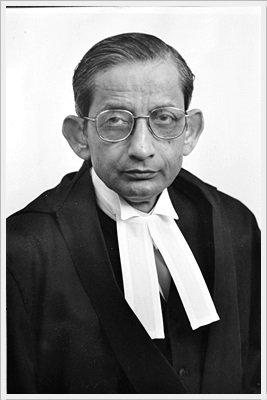
No Acts & Articles mentioned in this case
http://JUDIS.NIC.IN SUPREME COURT OF INDIA Page 1 of 21
CASE NO.:
Appeal (crl.) 454 of 2006
PETITIONER:
Swamy Shraddananda @ Murali Manohar Mishra
RESPONDENT:
State of Karnataka
DATE OF JUDGMENT: 18/05/2007
BENCH:
S.B. Sinha
JUDGMENT:
J U D G M E N T
S.B. SINHA, J :
1. Appellant herein was convicted and sentenced to death for committing
murder of his wife on or about 28.05.1991 at their residential house situate at
81, Richmond Road, Bangalore. The deceased was earlier married to one
Akbar Khaleeli who was in the diplomatic service in the Government of
India. She had four daughters. The deceased along with her children in the
year 1983 visited the Maharaja of Rampur. There she was introduced to the
appellant. Appellant at the relevant time was assisting the Rampur royal
family. In regard to the management of her landed properties, the deceased
sought for his assistance. She had inherited huge properties including House
No. 81, Richmond Road, Bangalore from her mother. She had inherited
some other properties during her marriage. Some litigations in respect of the
said properties had been going on.
2. Mr. Khaleeli on his assignment as diplomat of Iran went to the said
country. The deceased together with her daughters started living at
Bangalore. Appellant came there. He was also staying in the same house.
The deceased desired for a son and she was made to believe by the appellant
that he was capable of blessing her with a son. Akbar Khaleeli and the
deceased separated in the year 1985. The deceased thereafter married the
appellant on 17.04.1986. They started living together at the said house. She
had executed a General Power of Attorney and a Will in his favour.
However, despite her marriage with the appellant, the deceased was
maintaining her relationship with her parents and daughters. Mrs. Sabah
Khaleeli, second daughter of the deceased (PW-5) had all along been in
touch with her.
3. It is not in dispute that from 28.05.1991, the deceased was not seen.
PW-5 had been trying to contact her on phone. She was informed by the
appellant that the deceased had gone to Hyderabad. In June 1991, when
contacted, she was informed that her mother had gone to Kutch to attend a
wedding. A week thereafter it was informed to her that the deceased had
been lying low owing to some income tax problems. She, being exasperated
with the said explanations, came down to Bangalore. She did not find her
mother there. She was told that the deceased being pregnant had gone to
United States of America for delivery of the child. She was told to have
been admitted in Roosevelt Hospital. She made verifications thereabout
through her acquaintances and came to know that no such woman had ever
been admitted to the said hospital. Appellant being confronted thereto,
informed her that the deceased had gone to London as she had wanted to
keep it as a secret. However, in 1992, when she met the accused at Mumbai,
noticed the passport of her mother lying in the room of the hotel which
confirmed that the deceased had not visited USA or London as represented
to her by the appellant on earlier occasions.
4. She ultimately informed the Ashok Nagar Police Station by giving a
written complaint about missing of her mother. A missing complaint was
registered on 10.06.1992. No serious effort, however, was made to find out
the whereabouts of the deceased. PW-5 approached the higher authorities
http://JUDIS.NIC.IN SUPREME COURT OF INDIA Page 2 of 21
resulting in the investigation of the matter being entrusted to the Central
Crime Branch. Apprehending arrest, Appellant obtained anticipatory bail
with a condition that he would attend the police between 6 p.m. to 8 p.m. on
every Monday and shall also make him available to the police. He applied
for relaxation of the said condition and by an order dated 3.12.1993, it was
directed that the appellant shall appear before the police authorities on every
Monday once in three months.
5. The investigation was entrusted to one C. Veeraiaha (PW-37). He
suspected the appellant herein. He was interrogated on 28.03.1994,
whereupon he made a voluntary statement which was marked as Ex. P-175.
He stated in great details as to the manner in which he had killed his wife
and disposed of her dead body. He also disclosed as to how a wooden box
of size 2 x 7 x 2 was made, a pit was dug and how the dead body was buried
there. He narrated that how with the help of Raju he had put the box into the
pit covered with mud and on the next day with the help of some masons
brought by the said Raju kadapa stone slabs were put on the pit and the
adjacent land and cemented the place.
6. In the said statement, he stated:
"If I am taken I will show the place where the
wooden box was prepared and the person who
prepared it, the persons who transported the box
and the people who helped in digging out the pit
and the crow bar, spade, pan used for digging pit,
the cement bags and the spot where Shakerah is
buried and I exhume the dead body of the deceased
and show you. The statement what all I had earlier
given to Ashoknagar Police was a false statement
given intentionally just to escape myself."
7. An Executive Magistrate Syed Ejaj Ahmad (PW-3) was called for
exhumation of the dead body. He asked a doctor to conduct exhumation
proceeding. On 30.03.1994, Dr. Nissar Ahmed (PW-14) came to the place
of occurrence for the said purpose. Appellant was asked as to whether he
was ready to show the spot as per his earlier statement. The entire
proceeding of exhumation of the dead body was video-graphed. It took
place at about 10.30 a.m. on the said day. Appellant with a chalk piece
marked the spot. Coolies accompanying the party as per instructions of the
appellant himself, dug the earth of the said place whereupon a box was
noticed. The plank of the lid of the wooden box was removed. A bed, a
nighty, pillow and bed sheets were recovered. Channaiah who had come
along with Dr. Nissar Ahmed removed the scalp, skull and hairs of the head
which were detached from the skull and other bone pieces. He also removed
the pieces of the bones. Another Doctor Shri Thiruvanakkarasu also came
there. They joined the bones and fixed the skull and mandible in orderly
manner. It was found to be that of a human skeleton. The mother of the
deceased Smt. Gauhar Taj Namazie identified a ring which was embedded
with red stone and two other black rings as belonging to the deceased. The
nighty which was recovered was identified to be belonging to the deceased
by the maid servant who had been working in the house.
8. The post mortem examination commenced at 4.45 p.m. on 30.03.1994
which ended at about 6 p.m.
9. Appellant was, thereafter, charged for commission of murder of his
wife. Before the learned Trial Judge, 39 prosecution witnesses were
examined. There was no eye-witness to the occurrence. The prosecution
was based on circumstantial evidence.
10. The learned Trial Judge, as noticed hereinbefore, found the appellant
guilty of commission of offence under Sections 302 and 201 of the Indian
Penal Code and sentenced him to death.
11. Appellant preferred an appeal before the High Court. A reference was
also made by the learned Judge in terms of Section 366 of the Code of
Criminal Procedure.
12. The circumstances which were found to be existing by the High Court
for proving commission of the offence are said to be :
http://JUDIS.NIC.IN SUPREME COURT OF INDIA Page 3 of 21
"(a) Motive \026 Murder for gain
(b) The deceased Shakereh was last seen alive
in May 1991 when she was residing at No. 81,
Richmond Road, Bangalore along with accused
and his wife.
(c) Strange conduct of the accused after 28-5-91
(d) A wooden box (MO.5) was got prepared and
brought to the house by the accused.
(e) Discovery of the wooden box containing a
skeleton and feminine articles buried in the
backyard of the said house of the accused and the
deceased in furtherance of information furnished
by the accused.
(f) Fixing the identity of the skeleton as that of
the deceased with the help of skull and the
admitted undisputed photograph of Mrs. Shakereh
by photo Super-imposition method.
(g) Fixing the identity of the skeleton as that of
the deceased on the basis of DNA finger printing.
(h) Identifying some of the articles like MOs. 5,
6, 8, 11 to 17 along with the skeleton in the box as
belonging to the deceased.
(i) The last circumstance put forth i.e., the
attempt of the accused to mislead or to give false
explanation."
13. Before the High Court, a contention was raised that before imposition
of sentence, the appellant had not been granted adequate opportunity to
make a representation as was mandatorily required under Sub-section (2) of
Section 235 of the Code of Criminal Procedure, 1973. The High Court gave
the appellant an opportunity of being heard. Before the High Court, the
appellant accepted that he was instrumental in burying the dead body stating:
"The accused submitted that he is innocent and has
been illegally convicted. He submitted that as the
family members of the deceased (parents and
daughters) had filed number of cases against the
deceased, she was mentally depressed and was
taking number of sedative pills/ drugs; that she
died naturally in May 1991 and as he feared
adverse consequences, especially repercussions
from her family members and community people,
he buried her body in the backyard of his house
without informing anybody. He submitted that
though this fact was not stated by him in the trial
court, as he could not bear it any more and after
thinking over the matter for the last few years, he
has decided to come out with this truth. He
submitted that as he is innocent, his conviction be
set aside and he be acquitted. So far as the
sentence is concerned, he submitted that as now he
is 61 years old and suffering from serious ailments
like diabetes, hypertension and hernia and as he is
in custody for the last 11 years, mercy be shown to
him by reducing the capital punishment, if ever the
court decides to convict him."
14. The High Court, however, affirmed the judgment of conviction and
sentence.
15. Mr. Alok Vagrecha, learned counsel appearing on behalf of the
appellant raised the following contentions in support of this appeal:
http://JUDIS.NIC.IN SUPREME COURT OF INDIA Page 4 of 21
(i) A First Information Report having been already lodged by PW-5, a
second report by the Investigating Officer \026 PW-37 lodged on
28.03.1994 (Ex. P-171) was illegal.
(ii) The purported recovery of the wooden box containing some
articles and the bones which were not admissible in evidence under
Section 27 of the Indian Evidence Act as the location of the dead
body was already known, the purported statement made by the
appellant (Ex. P 175) being wholly inadmissible in evidence,
consequent recovery of the dead body would also be inadmissible.
In this connection our attention has been drawn to the fact that the
appellant was given an opportunity to have the services of a lawyer
during interrogation.
(iii) If the prosecution case is true that the appellant had administered
sedative to the deceased on 28.05.1991 in the afternoon, the courts
below should have also taken into consideration that in view of the
statement of the investigating officer that the appellant at about the
same time on 28.05.1991 was found to be in the company of one
Rekha Handa, a former Miss India, the prosecution case must be
held to have not been proved as against the appellant.
(iv) A Will and General Power of Attorney having already been
executed by the deceased, the appellant could not have any motive
to kill her.
(v) The purported circumstances on the basis whereof the judgment of
conviction and sentence have been rendered does not complete all
the links in the chain as there had been (a) no recovery of drug; (b)
motive had not been proved; and (c) there was no proof that she
died of poisoning.
(vi) The purported recovery of drug on 31.03.1994 by the Investigating
Officer was wholly inadmissible in evidence.
(vii) The High Court having recorded that the deceased did not meet
any violent death, the impugned judgment cannot be sustained and
in any event the death sentence should not have been imposed.
(viii) The High Court committed a serious illegality in relying upon the
statement made by the appellant before it as being confession of
his guilt although the same was meant to be used for the purpose of
hearing on the question of sentence only.
16. Mr. Sanjay R. Hegde, learned counsel appearing on behalf of the
State, on the other hand, supported the judgment. The learned counsel
would contend that the court while analyzing the evidences brought on
records should keep in mind the following facts:
(a) The deceased was a beautiful woman. She had a husband and four
daughter
(b) She was an owner of huge property
(c) She met her death at the age of 40 years.
(d) Appellant although could enjoy all the luxuries of life, he had greed
for more money and, therefore, hatched a plan to murder the deceased
wherefor he got prepared a wooden box, took advantage of temporary
absence of the two old servants and at the opportune moment
administered sedative to the deceased.
(f) Despite her death, he had been operating the bank account which was
a joint account and had been acting on the basis of the General Power
of Attorney.
(g) He kept to PW-5 at dark although she had been constantly making
enquiry in regard to the whereabouts of the deceased for one and half
years.
(h) The manner in which the dead body was found categorically shows
the vicious mind of the appellant as the bed-sheet was found on her
face, her jewelery was found on the top of the body, the deceased had
nighty on her person and, thus, it was essentially principally a planned
murder.
17. We have not doubt that the death of the deceased was homicidal in
nature. The identity of the dead body has also been established. The
circumstances in which the deceased married the appellant have also not
been disputed. Their marriage was proved by PW-8 T.H.
http://JUDIS.NIC.IN SUPREME COURT OF INDIA Page 5 of 21
Lokeshminarayana. Appellant also did not deny or dispute that he had been
living with the deceased at all material times at 81, Richmond Road,
Bangalore. It has furthermore not been disputed that she had not been seen
on and from 28.05.1991.
18. We have noticed hereinbefore the circumstances which are said to
have been found by the courts below. The law in this behalf is now no
longer res integra.
19. In Sharad Birdhichand Sarda v. State of Maharashtra [AIR 1984 SC
1622], this Court held:
"153. A close analysis of this decision would show that
the following conditions must be fulfilled before a case
against an accused can be said to be fully established:
(1) the circumstances from which the conclusion of
guilt is to be drawn should be fully established.
It may be noted here that this Court indicated that the
circumstances concerned "must or should" and not "may
be" established. There is not only a grammatical but a
legal distinction between "may be proved" and "must be
or should be proved" as was held by this Court in Shivaji
Sahabrao Bobade v. State of Maharashtra where the
observations were made: [SCC para 19, p. 807: SCC
(Cri) p. 1047]
"Certainly, it is a primary principle that the
accused must be and not merely may be guilty
before a court can convict and the mental distance
between 'may be' and 'must be' is long and
divides vague conjectures from sure conclusions."
(2) the facts so established should be consistent only
with the hypothesis of the guilt of the accused, that is to
say, they should not be explainable on any other
hypothesis except that the accused is guilty,
(3) the circumstances should be of a conclusive nature
and tendency,
(4) they should exclude every possible hypothesis
except the one to be proved, and
(5) there must be a chain of evidence so complete as
not to leave any reasonable ground for the conclusion
consistent with the innocence of the accused and must
show that in all human probability the act must have been
done by the accused."
20. In regard to the circumstantial evidence in a case of death by
poisoning, this Court opined:
"So far as this matter is concerned, in such cases
the court must carefully scan the evidence and
determine the four important circumstances which
alone can justify a conviction:
(1) there is a clear motive for an accused to
administer poison to the deceased,
(2) that the deceased died of poison said to have
been administered,
(3) that the accused had the poison in his
possession,
(4) that he had an opportunity to administer the
poison to the deceased."
[See also Aloke Nath Dutta & Ors. v. State of West Bengal 2006 (13)
SCALE 467]
http://JUDIS.NIC.IN SUPREME COURT OF INDIA Page 6 of 21
21. We may proceed to consider the matter keeping in view the
aforementioned legal principle in mind.
22. Dr. Nissar Ahamed who examined himself as PW-14 in his evidence
proved the exhumation of the dead body. It, as noticed hereinbefore, was
conducted by the Taluka Magistrate PW-3. Upon removal of the detached
skull, mandible, carpal and tarsal, palm and bones from the pit of feet, all the
said bones were assembled on plastic paper. A Human skeleton was formed.
There was a foul smell. According to him, all the bones were intact. The
skeleton was that of a human body. In the post mortem examination, it was
found:
"Decomposed and Skeletanised body removed
from the wooden box described. The body was
removed in piece meal from the box as the bones
were easily coming out from the joints and body
was assembled in anatomical position which
consists of skull with black hair measuring 25"
long."
It was further noticed:
"The bones one below the other are: Skull bone
with mandible, two clavicles, two scapulae, bones
of upper limbs and lower limbs, vertebral column,
pelvis and carple and tarsal bones. The
decomposed tissue were greish white in colour
emitting foul smell. All bones were intact skull
shows female characteristic feature, articulate well
with were each other. Skull suture completely
obliterated endocrenaly, partially obliterated
exocreinaly. All teeth erupted showed attrition.
The stature was calculated from long bones and
average taken from the bones.
Right Femur \026 46 cms.
Right Tibia \026 39 cms.
Left Humorus \026 32.5 cms and estimated stature is
5'4" to 5'6"
Four Pieces of body of sternum fused."
23. All the internal organs were found to be decomposed and liquefied.
He, however, reserved his opinion in regard to the cause of death pending
chemical analysis. The doctor preserved skull and mandible for super
imposition and visera and hair for chemical analysis report and bone marrow
hair and soft tissues for DNA Fingerprinting.
24. PW-14 on the basis of the said FSL report formed his opinion that the
cause of death cannot be furnished as the percentage/ amount of
Chlodiazepoxide consumed had not been furnished. In regard to the effect
of Chlordizaepoxide on human body, however, his opinion was as under:
"The effect of Chlordiazopoxide on human body
depends upon the dosage. They are weight gain,
as a result of increase appetite, anxiety, nausea,
vertigo, impaired sexual function, menstrual
irregularities, skin rashes, agramlocytosis etc."
In regard to the effect of over dose of the said medicine, it was stated:
"Effects of over dose are rare, as the drug has got
remarkable safety margins. A few deaths have
been reported at doses greater than 700 mgs as per
the literature. The symptoms are respiratory and
cardiovascular, dis-function due to the suppression
of higher centers in the brain."
http://JUDIS.NIC.IN SUPREME COURT OF INDIA Page 7 of 21
25. PW-14 in his cross-examination opined that the death of the deceased
was homicidal. According to him, if the deceased had consumed only one or
two tablets of Equibrom and her body was put in a box and lid was closed
suddenly, an unexpected death may occur due to natural causes also. It is
not a case where the dead body was not identified to that of the deceased.
Blood sample of PW-5 was taken. Blood samples of Mirza Gulam Hussain
Namazie and Gauhar Taj Begum Namazie had also been taken. PW-20
Srimannarayan, Chief Medical Officer of Bowring Hospital, in his evidence,
spoke about the result of the DNA analysis in regard to taking of the blood
samples.
26. The bones were sent for DNA test to Hyderabad Forensic Science
Laboratory through Forensic Science Laboratory, Bangalore. The test was
conducted by Dr. Laljit Singh, Scientist, who was examined as PW-24.
According to him, he and Dr. G.V. Rao (PW-17), another scientist in
Hyderabad together carried the process of DNA isolation and testing from
Exs. A to D, i.e., from blood of the father, teeth of the deceased, hair of the
deceased and blood of the mother in two tests being Polymerase Chain
Reaction (PCR) and HLA DQ typing both the tests confirmed that the
deceased was the offspring of the said Mirza Gulam Hussain Namazie and
Gauhar Taj Begum Namazie.
27. PW-17 Dr. G.V. Rao categorically stated that in carrying out DNA
fingerprinting they followed the same procedure as in the case of blood
samples received earlier which were examined. He proved the report
prepared by him and Dr. Laljit Singh on 4.10.1995 which was marked as Ex.
P-155.
28. PW-1 Dr. T.R. Kumari was an Assistant Director of Forensic Science
Laboratory. She gave her opinion on 15.09.1994 which was marked as Ex.
P-125 stating:
"1. Presence of Clonazepam was detected in article
no. I(a) & I(b).
2. Presence of Alprazolam was detected in article
No. I(b) & I(f).
3. Presence of Diazepam was detected in article
No. I(c).
4. Presence of Chlodizepoxide was detected in No.
I(e), III & IV.
5. No poison was detected in article No. I(h)."
29. Dr. T.R. Kumari (PW-1) conducted the Photo Superimposition
Method Test on the skull, which was marked as MO-1 along with the
admitted photograph of the deceased, which was marked as MO-3.
According to the said witness, anthropometric characters or land marks of
the skull and the superimposed admitted photographs matched. She
prepared a report, which was marked as Ex.P-2. Her qualification as an
expert to conduct the said test is not in doubt. Even otherwise, she holds a
Ph.D. degree in Forensic Science. She has been awarded a medal for her
research work by the Madras Forensic Society of India. She has also
undergone special training in photo superimposition and has submitted a
number of papers thereon. Her report as also the report of PW-17 are
relevant evidences.
30. The qualification of the expert has not been questioned before us. The
learned counsel appearing on behalf of the appellant has not raised any
contention which would point out that the methodology conducted by the
experts in carrying out the study was in any manner unscientific or raised
any suspicion as regards the correctness thereof.
31. It is borne out from the records that even the photographs were
brought by PW-1 before the trial court. Identify of the skull vis-`-vis the
other parts of the body, thus, categorically goes to show that the same was
that of the deceased, Smt. Shakereh.
32. It has also not been seriously disputed that the deceased was last seen
in the company of the company of the appellant. The fact that she had not
been seen alive from May, 1991 also stands fully established.
33. We will hereinafter notice the circumstances which existed in
http://JUDIS.NIC.IN SUPREME COURT OF INDIA Page 8 of 21
establishing the commission of the crime.
34. PW-5 Sabah Khaleeli, was the daughter of the deceased through her
first husband. She in her deposition categorically stated that she had spoken
to her mother on 19.04.1991. She was not available on phone from May,
1991 onwards. Gauhar Namazee (PW-25) was the mother of the deceased.
She in her deposition stated that she had last seen the deceased on
13.04.1991. She had not been cross-examined on the said point. It is also
not disputed that PW-18 and PW-19, who were husband and wife, were
engaged by the deceased. They saw the deceased in the company of the
appellant in the morning of 28.05.1991, for the last time. The said witnesses
were staying in a servant quarter in the said premises. PW-18 was working
as gardener-cum-handyman; whereas PW-19 was working as maid servant,
since 1988. They stated in unison that they had seen the deceased at about
07.30 A.M. on that day. According to PW-19, she went to the kitchen to
prepare tea for the couple and kept the tea cups on the dining table. She in
no uncertain terms stated that the cups of tea were taken by the appellant to
the bed-room where the deceased was reading a newspaper. PW-19 while
sweeping the house was called by the deceased and was instructed to clean
the articles kept in the showcase instead of sweeping. They, however,
received a telegram at about 10.00 a.m. whereby they were informed that the
sister-in-law of PW-19 was sick at Gudisuvarapally in the State of Andhra
Pradesh. They sought for leave and some money. They were permitted to
leave Bangalore and were asked to collect the requisite amount after some
time. They came back to their quarters and started packing their goods. At
about 1.30 p.m. they went back to the house. PW-18, however, was said to
have been asked by the appellant herein to shift a wooden box kept in the
guest house to the bed room before leaving. They together with some others
took a large wooden box from the guest house and kept the same inside the
bed room, where they found the deceased sleeping on the bed. They were
thereafter paid a sum of Rs.1,200/- towards their salary and additional sum
of Rs.500/- towards travelling expenses. They left for their home. They
came back after a couple of days, but did not find the deceased. The said two
witnesses in their depositions corroborated each other.
35. We have noticed hereinbefore that the appellant had applied for grant
of anticipatory bail in July, 1992 i.e. after the missing complaint was filed by
PW-5. In the said application for bail, the appellant himself disclosed that
the deceased had left for unknown destination in the month of May, 1991,
allegedly because of her agitated mental condition.
36. If it is proved that the deceased died in an unnatural circumstance in
her bed room, which was occupied only by her and her husband, law
requires the husband to offer an explanation in this behalf. We, however, do
not intend to lay down a general law in this behalf as much would depend
upon the facts and circumstances of each case. Absence of any explanation
by the husband would lead to an inference which would lead to a
circumstance against the accused.
37. We may, however, notice that recently in Raj Kumar Prasad Tamarkar
v. State of Bihar & Anr. [2007 (1) SCALE 19 : JT 2007 (1) SC 239], this
Court opined :
"Once the prosecution has been able to show that at the
relevant time, the room and terrace were in exclusive
occupation of the couple, the burden of proof lay upon
the respondent to show under what circumstances death
was caused to his wife. The onus was on him. He failed
to discharge the same."
This legal position would appear from a decision
of this court in Nika Ram v. The State of Himachal
Pradesh [AIR 1972 SC 2077] wherein it was held:
"It is in the evidence of Girju PW that only the
accused and Churi deceased resided in the house of
the accused. To similar effect are the statements of
Mani Ram (PW 8), who is the uncle of the
accused, and Bhagat Ram school teacher (PW 16).
According to Bhagat Ram, he saw the accused and
the deceased together at their house on the day of
http://JUDIS.NIC.IN SUPREME COURT OF INDIA Page 9 of 21
occurrence. Mani Ram (PW 8) saw the accused at
his house at 3 p.m., while Poshu Ram, (PW 7) saw
the accused and the deceased at their house on the
evening of the day of occurrence. The accused also
does not deny that he was with the deceased at his
house on the day of occurrence. The house of the
accused, according to plan PM, consists of one
residential room one other small room and a
varandah. The correctness of that plan is proved by
A. R. Verma overseer (PW 5). The fact that the
accused alone was with Churi deceased in the
house when she was murdered there with the
Khokhri and the fact that the relations of the
accused with the deceased, as would be shown
hereafter, were strained would, in the absence of
any cogent explanation by him, point to his guilt."
In Trimukh Maroti Kirkan v. State of Maharashtra
[JT 2006 (9) SC 50], the law is stated in the following
terms:
"Where an accused is alleged to have committed
the murder of his wife and the prosecution
succeeds in leading evidence to show that shortly
before the commission of crime they were seen
together or the offence took place in the dwelling
home where the husband also normally resided, it
has been consistently held that if the accused does
not offer any explanation how the wife received
injuries or offers an explanation which is found to
be false, it is a strong circumstance which indicates
that he is responsible for commission of the
crime\005"
38. We have noticed hereinbefore as to why the investigation was taken
over by the Central Crime Branch. As the interrogation of the appellant,
while in custody of the police, revealed the possibility of the deceased
having been buried in the backyard of her residential house, the
Investigating Officer requested the Sub-Divisional Magistrate to conduct
exhumation proceedings, who in turn, authorized the Taluka Executive
Magistrate (PW-3) to do so. Confession of the accused was not admissible
in evidence. What was admissible only was that part of the confession
leading to the discovery of fact in terms of Section 27 of the Indian Evidence
Act. The proceedings were conducted in the presence of the accused, which
were videographed and marked as MO-18. The learned Trial Judge as also
the learned Judges of the High Court had the benefit of watching the said
videograph. The High Court in its impugned judgment recorded :
"The videograph and the inquest proceeding
disclose that a large wooden box was found buried in the
backyard of the house of the accused and the deceased
and contained a skeleton. The videograph recording
which is not disputed by the accused, clearly discloses
and shows that it was the accused who was pointing out
the exact spot to be dug up in the big backyard and in fact
marked the area with a chalk. The videograph further
showed that the backyard flooring was of well laid
Cuddapah stones property cemented. In such a situation,
in our view, nobody except the person who buried the
box could have the knowledge of its burial."
39. Discovery of the last remains of the deceased was a relevant fact,
which was, thus, admissible in evidence. Appellant had pinpointed the exact
place which was to be dug up. He marked the exact area. He also made an
http://JUDIS.NIC.IN SUPREME COURT OF INDIA Page 10 of 21
oral statement that the box was buried beneath the area so marked, location
whereof showed that it was a big area, flooring of which had been well
plastered with cement having Cuddapah stone slabs. The video showed that
the slabs had been laid there much earlier and were not of recent origin.
40. In Aloke Nath Dutta (supra), in regard to applicability of Section 26
and Section 27 of the Indian Evidence Act, it was stated :
"The policy underlying behind Sections 25 and 26
is to make it a substantive rule of law that confessions
whenever and wherever made to the police, or while in
the custody of the police to any person whomsoever
unless made in the immediate presence of a magistrate,
shall be presumed to have been obtained under the
circumstances mentioned in Section 24 and, therefore,
inadmissible, except so far as is provided by Section 27
of the Act."
41. Pulukuri Kottayya v. King Emperor [AIR 1947 PC 67] is an authority
for the proposition that "fact discovered" envisaged under Section 27 of the
Indian Evidence Act, 1872, embraces the place from which the object was
produced, the knowledge of the accused as to it, but the information given in
that behalf must relate distinctly to that effect, stating :
"The condition necessary to bring the section into
operation is that discovery of a fact in consequence of
information received from a person accused of any
offence in the custody of a Police Officer must be
deposed to, and thereupon so much of the information as
related distinctly to the fact thereby discovered may be
proved."
It was further observed :
"In their Lordships' view it is fallacious to treat the
"fact discovered" within the section as equivalent to the
object produced; the fact discovered embraces the place
from which the object is produced and the knowledge of
the accused as to this, and the information given must
relate distinctly to this fact."
"Information supplied by a person in custody that
"I will produce a knife concealed in the roof of my
house" does not lead to the discovery of a knife, knives
were discovered many years ago. It leads to the
discovery of the fact that a knife is concealed in the
house of the informant to his knowledge, and if the knife
is proved to have been used in the commission of the
offence, the fact discovered is very relevant."
42. An attempt was made by the Bombay High Court to take a different
view in Shri Shankar Gopal Patil & Others v. The State of Maharashtra
[2000 (5) Bom. CR 360].
43. The legal proposition propounded in Pullukuri Kottaya (supra) has
been considered by this Court in Jaffar Hussain Dastagir v. State of
Maharashtra [(1969) 2 SCC 872], Shamshuk Kanwar v. State of U.P.
[(1995) 4 SCC 430] and State of Maharasthra v. Damu [(2000) 6 SCC 269],
wherein this Court reiterated it with approval.
44. The learned counsel appearing on behalf of the appellant, in our
opinion, was not correct to contend that only because the investigating team
http://JUDIS.NIC.IN SUPREME COURT OF INDIA Page 11 of 21
having regard to the purported confession made by the appellant had already
known that a dead body had been buried in the house, Section 27 of the
Evidence Act would not be attracted. In his statements before the
investigating officer, he made a confession; but what was admissible in
evidence his only that part which would come within the purview of Section
27 of the Evidence Act and not the rest. The court while analyzing the
evidence and appreciating the same cannot take note of confession made
before the police.
45. The prosecution case must rest on the other materials brought before
the court. It is also not permissible to start with the confession and find
corroborative evidence thereof and come back to the confession again for the
purpose of arriving at a conclusion of guilt.
46. What was, therefore, relevant for the purpose of Section 27 of the
Evidence Act was that at the instance of the appellant himself a particular
place which had been pin pointed by him had been dug and remains of a
body and other articles were recovered.
47. The various circumstances leading to the pointing out the guilt of the
appellant and appellant alone have been enumerated by us hereinbefore.
From our discussions, it is evident that each of the circumstances had been
established, the cumulative effect whereof would show that all the links in
the chain are complete and the conclusion of the guilt is fully established.
48. We are not oblivious of the fact that there is a material difference
distance between 'may be' and 'must be' and furthermore in a case of this
nature the evidence must be considered with more than ordinary care lest the
shocking nature of crime induce an instinctive reaction against a
dispassionate judicial scrutiny of the facts and law. [See Kashmira Singh v.
State of Madhya Pradesh - AIR 1952 SC 159].
49. The question, however, is as to whether in a case of this nature death
sentence should be imposed. In Aloke Nath Dutta (supra), this Court had an
occasion to consider a large number of decisions taking different views in
regard to the interpretation of the words "rarest of rare cases" as adumbrated
in Bachan Singh v. State of Punjab [(1980) 2 SCC 684].
50. This Court had also the occasion therein to notice the growing
demand in the international fora and in particular the second Optional
Protocol to the International Covenants on Civil and Political Rights and the
Protocol to the American Constitution on Human Rights abolished that death
penalty should be abolished.
51. Recently, the Privy Council in Reyes v. R. [(2002) UKPC 11 : 12
BHRC 219] and Hughes, R. v. (Saint Lucia) [(2002) UKPC 12], noticing
the decision of this Court in Mithu v. State of Punjab [(1983) 2 SCR 6903],
opined that the mandatory death punishment is unconstitutional. [See also
Fox v. The Queen (2002) 2 AC 284, Bowe v. The Queen (2006) 1 WLR
1623 and Coard & Ors. v. The Attorney General (Grenada), (2007) UKPC
7].
52. Abolition of death penalty is not being and, in fact, cannot be
advocated; but what requires serious consideration is as to whether the
jurisdiction should not be invoked unless there exists an extra-ordinary
situation to find that it comes within the purview of "rarest of rare" cases.
The approach of the courts should not be to confine its thought process to
the identification of a "rare" case. The expression "rarest of rare" case has
been evolved by a Constitution Bench of this Court and, thus, demands a
meaningful application.
53. It is interesting to note that Bhagwati, J. in Bachan Singh v. State of
Punjab [(1982) 3 SCC 24], while expressing his dissenting opinion, noticed
as under :
"\005This arbitrariness in the imposition of death penalty is
considerably accentuated by the fragmented Bench
structure of our courts where Benches are inevitably
formed with different permutations and combinations
from time to time and cases relating to the offence of
murder come up for hearing sometimes before one
Bench, sometimes before another sometimes before a
third and so on. Professor Blackshield has in his article
on Capital Punishment in India published in Volume 21
http://JUDIS.NIC.IN SUPREME COURT OF INDIA Page 12 of 21
ot the Journal of the Indian Law Institute\006 pointed out
how the practice of Bench formation contributes to
arbitrariness in the imposition of death penalty. It is well
known that so far as the Supreme Court is concerned,
while the number of Judges has increased over the years,
the number of Judges on Benches which hear capital
punishment cases has actually decreased. Most cases are
now heard by two-Judge Benches. Professor Blackshield
has abstracted 70 cases in which the Supreme Court had
to choose between life and death while sentencing an
accused for the offence of murder and analysing these 70
cases he has pointed out that during the period April 28,
1972 to March 8, 1976 only 11 Judges of the Supreme
Court participated in 10 per cent or more of the cases. He
has listed these 11 Judges in an ascending order of
leniency based on the proportion for each Judge of plus
votes (i.e. votes for the death sentence) to total votes and
pointed out that these statistics show how the judicial
response to the question of life and death varies from
judge to judge. It is significant to note that out of 70
cases analysed by Professor Blackshield, 37 related to the
period subsequent to the coming into force of Section
354, sub-section (3) of the Code of Criminal Procedure,
1973. If a similar exercise is performed with reference to
cases decided by the Supreme Court after March 8, 1976,
that being the date up to which the survey carried out by
Professor Blackshield was limited, the analysis will
reveal the same pattern of incoherence and arbitrariness,
the decision to kill or not to kill being guided to a large
extent by the composition of the Bench. Take for
example Rajendra Prasad case decided on February 9,
1979. In this case, the death sentence imposed on
Rajendra Prasad was commuted to life imprisonment by
a majority consisting of Krishna Iyer, J. and Desai, J.,
A.P. Sen, J. dissented and was of the view that the death
sentence should be confirmed. Similarly in one of the
cases before us, namely, Bachan Singh v. State of
Punjab, when it was first heard by a Bench consisting of
Kailasam and Sarkaria, JJ., Kailasam, J. was definitely of
the view that the majority decision in Rajendra Prasad
case9 was wrong and that is why he referred that case to
the Constitution Bench. So also in Dalbir Singh v. State
of Punjab, the majority consisting of Krishna Iyer, J. and
Desai, J. took the view that the death sentence imposed
on Dalbir Singh should be commuted to life
imprisonment while A.P. Sen, J. stuck to the original
view taken by him in Rajendra Prasad case9 and was
inclined to confirm the death sentence, It will thus be
seen that the exercise of discretion whether to inflict
death penalty or not depends to a considerable extent on
the value system and social philosophy of the Judges
constituting the Bench\005"
54. We are not oblivious of a line of decisions of this Court where the
doctrine of proportionality has been applied, even in the matter of awarding
death penalty. [See State of Rajasthan v. Kheraj Ram, (2003) 8 SCC 224,
Bablu @ Mubarik Hussain v. State of Rajasthan, 2006 (14) SCALE 15 and
Shivu and Anr. v. R.G. High Court of Karnataka and Anr. 2007 (3) SCALE
157]
55. In this case we need not go into the correctness or otherwise of the
said view. Although it is also not necessary to do so, we may notice some
development of law in this regard.
56. Criminal Justice Act 1991 of England famously hailed doctrine of
proportionality as the guiding principle. But since the 1991 legislation, field
of sentencing has seen much reform and Criminal Justice Act of 2003
http://JUDIS.NIC.IN SUPREME COURT OF INDIA Page 13 of 21
presents a fresh set of sentencing objectives. Section 142 of the Act
delineates the following as the purposes of sentencing:
"142 Purposes of sentencing
(1) Any court dealing with an offender in
respect of his offence must have regard to the
following purposes of sentencing-
(a) the punishment of offenders,
(b) the reduction of crime (including its reduction
by deterrence),
(c) the reform and rehabilitation of offenders,
(d) the protection of the public, and
(e) the making of reparation by offenders to
persons affected by their offences."
57. In this context it, a reference should also be made of the Halliday
Report of 2001 (Making Puncishments Work) which has some interesting
insights to offer on the sentencing structure in England and Wales. In the
same vein, a White Paper in 2002 has made a case of reforms and suggested
a shift from the proportionality principle.
58. In fine, scholarship on sentencing which has been quite diverse in its
prescriptions certainly has consensus on the point that any decision on
sentencing aspect would require assessing more than one variables and
single minded pursuit of any one sentencing ideal would be discounting on
other equally urgent parameters and objectives.
59. We do not have a sentencing policy, unlike some other countries.
England has the concept of "guideline judgments" which is considered as a
judge managed sentencing model rather than a statute induced one. Section
354 (3) suggests that Indian law furthers statute induced sentencing guidance
in part. Therefore it has to be given full colour.
60. We have no practice of referring such matters to superior courts for
laying down the guidelines relating to imposition of sentence under various
situations. [See The Queen v. Julie McGinley and Michael Monaghan,
(2003) NICC 1]
61. In our country, therefore, each case may have to be considered on its
own merit.
62. It may be of some interest to note that Furman v. Georgia [408 U.S.
238 (1972)] ruled on the requirement for a degree of consistency in the
application of the death penalty.
Justice Stewart held that:
"The penalty of death differs from all other forms
of criminal punishment, not in degree, but in kind.
It is unique in its total irrevocability. It is unique
in its rejection of rehabilitation of the convict as a
basic purpose of criminal justice. And it is unique,
finally, in its absolute renunciation of all that is
embodied in our concept of humanity.
*** *** ***
These death sentences are cruel and unusual in the
same way that being struck by lightning is cruel
and unusual. For, of all the people convicted of
rapes and murders in 1967 and 1968, many just as
reprehensible as these, the petitioners are among a
capriciously selected random handful upon whom
the sentence of death has in fact been imposed."
63. Justice Brennan while interpreting Eighth Amendment (Amendment
VIII: (Excessive bail shall not be required, nor excessive fines imposed, nor
cruel and unusual punishments inflicted) of US Constitution observes in
http://JUDIS.NIC.IN SUPREME COURT OF INDIA Page 14 of 21
Furman:
"In determining whether a punishment comports
with human dignity, we are aided also by a second
principle inherent in the Clause -- that the State
must not arbitrarily inflict a severe punishment.
This principle derives from the notion that the
State does not respect human dignity when,
without reason, it inflicts upon some people a
severe punishment that it does not inflict upon
others. Indeed, the very words "cruel and unusual
punishments" imply condemnation of the arbitrary
infliction of severe punishments."
64. It is important to refer to Harbans Singh v. Union of India [AIR 1982
SC 849] at this juncture. In that case three people were sentenced to death by
the trial court for playing an equal part in jointly murdering a family of four
persons. The sentence of all the three was confirmed by the High Court.
Each of them moved to the Supreme Court by different Special Leave
Petitions before three separate benches. One of the accused's petition was
dismissed and he was actually executed. Another's petition was allowed and
his death sentence was commuted to life imprisonment. And the petition of
the third one was also dismissed. He filed a review petition, which was also
dismissed, and the Executive refused clemency. He then moved another
petition before the Supreme Court bringing to light this arbitrariness. The
Supreme Court recommended the President to commute his sentence.
Chandrachud J. while lamenting the death of dead accused said:
"The fate of Jeeta Singh has a posthumous moral
to tell. He cannot profit by the direction which we
propose to give because he is now beyond the
process of human tribunals."
65. Bentham's discourse on determination of minimum punishment and
maximum punishment serves as a yardstick in this context. Bentham in his
landmark treatise Principles of Penal Law propose to establish a proportion
between crimes and punishments. But he cautions against an oracular
understanding than an instructive one. We here further go in the details of
what doctrine of proportionality holds in the realm of sentencing. The first
rule of proportionality mandates:
"The value of the punishment must not be less in
any case than what is sufficient to outweigh that of
the profit of the offence."
While talking of minimum punishment Bentham observes:
"Punishments may be too small or too great; and
there are reasons for not making them too small, as
well as not making them too great. The terms
minimum and maximum may serve to mark the
two extremes of this question, which require equal
attention.
With a view of marking out the limits of
punishment on the side of the first of these
extremes, we may lay it down as a rule:\027
That the value of the punishment must not be less
in any case than what is sufficient to outweigh that
of the profit of the offence.
By the profit of the crime, must be understood not
only pecuniary profit, but every advantage real or
apparent, which has operated as a motive to the
commission of the crime."
66. It is to be appreciated here that statutorily decided minimum sentence
takes into account the basic value of the crime and suffice to outweigh the
profit of the offence. The moot question relates to parameters to decide the
maximum punishment. Setting the trail of caution on the side of
http://JUDIS.NIC.IN SUPREME COURT OF INDIA Page 15 of 21
determination of maximum punishment Bentham posits:
"Punishment, whatever shape it may
assume, is an evil...
The minimum of punishment is more clearly
marked than its maximum. What is too little is
more clearly observed than what is too much.
What is not sufficient is easily seen, but it is not
possible so exactly to distinguish an excess. An
approximation only can be attained. The
irregularities in the force of temptations, compel
the legislator to increase his punishments till they
are not merely sufficient to restrain the ordinary
desires of men; but also the violence of their
desires when unusually excited.
The greatest danger lies in an error on the
minimum side, because in this case the punishment
is inefficacious; but this error is least likely to
occur, a slight degree of attention sufficing for its
escape; and when it does exist, it is at the same
time clear and manifest, and easy to be remedied.
An error on the maximum side, on the contrary, is
that to which legislators and men in general are
naturally inclined\027antipathy, or a want of
compassion for individuals who are represented as
dangerous and vile, pushes them onward to an
undue severity. It is on this side therefore, that we
should take the most preparations, as on this side
there has been shown the greatest disposition to
err."
67. On the same point Beccaria in his historic work Of Crimes and
Punishments denounced retributive basis of punishment.
"The aim of punishment can only be to prevent the
criminal committing new crimes against his
countrymen, and to keep others from doing
likewise. Punishments, therefore, and the method
of inflicting them, should be chosen in due
proportion to the crime so as to make the most
efficacious and lasting impression on the minds of
men, and the least painful impressions on the body
of the criminal.
For a punishment to be efficacious, it is enough
that the disadvantage of the punishment should
exceed the advantage anticipated from the crime;
in which excess should be calculate the certainty of
punishment and the loss of the expected benefit.
Everything beyond this, accordingly, is
superfluous, and therefore tyrannical."
68. There is a clear and discernible necessity of caution to set the
maximum punishment in an offence. And also by implication there must be
intensive and exhaustive inquiry into accused related parameters before
employing the maximum sentence by a court of law. Therefore discretion to
the judiciary in this respect (to declare the maximum punishment) is of
utmost critical and seminal value. Reasons must be detailed setting clearly
why any punishment other than the maximum punishment will not suffice.
This is a general and age-old rule of sentencing which has been statutorily
recognized under section 354(3).
69. Reference to the decision of other jurisdictions and/or the recent trend
in the international fora has not been referred to by way of precedents or
even a persuasive value but the court in this age cannot afford to put down
blinkers on its window to the outside world.
http://JUDIS.NIC.IN SUPREME COURT OF INDIA Page 16 of 21
70. It is noteworthy to mention here the Law Commission in its Report of
1967 took the view that capital punishment acted as a deterrent to crime.
While it conceded that statistics did not prove these so-called deterrent
effects. It also said that figures did not disprove them either.
71. Tracing the judicial view on Death Penalty, one can start with the
Jagmohan Singh case (1973) where it agreed with the Law Commission that
capital punishment should be retained. But subsequent cases such as those of
Ediga Anamma (1974) and Rajendra Prasad (1979) saw dissenting voices
being raised in this court. These led to a hearing of the Bachan Singh (1980)
case by a Constitutional Bench.
72. In Rajendra Prasad v. State of U.P. [(1979) 3 SCR 646], it was held
that the special reasons necessary for imposing a death penalty must relate
not to the crime but to the criminal. It could be awarded only if the security
of the state and society, public order in the interest of the general public
compelled that course.
73. The death penalty was abolished in 1965 in the U.K. Member-states
of the European Union cannot have the death penalty. In Canada, after the
abolition of the death penalty in 1976, the homicide rate declined. In 2000,
there were 542 homicides in Canada \027 16 fewer than in 1998 and 159 fewer
than in 1975 (one year prior to the abolition of capital punishment). In 1997,
the Attorney-General of Massachusetts said: "there is not a shred of credible
evidence that the death penalty lowers the murder rate. In fact, without the
death penalty the murder rate in Massachusetts is about half the national
average."
74. The South African Constitutional Court unanimously ruled in 1995
that the death penalty for murder violated the country's Constitution. More
than 118 countries have abolished the death penalty either in law or practice.
The second optional protocol to the International Civil Covenant, which
came into force in 1991, mandates the abolition of the death penalty.
75. Whatever may be the "merits", "demerits" or "criticism", one cannot
hope for unjustness in society. Deterring or preventive theory may not have
any application at all in respect of imposition of death sentence. The law
itself mandates that for imposing death sentence, special reasons are to be
assigned. Imposition of death punishment is an exception in terms of sub-
section (3) of Section 354 of the Code of Criminal Procedure. Whereas for
commission of other offences, one or other theory, justly or otherwise may
be taken recourse to, a large number of factors are required to be borne in
mind for awarding death penalty.
76. In Renuka Bai alias Rinku alias Ratan and Another v. State of
Maharashtra [(2006) 7 SCC 442], Balakrishnan, J. (as the learned Chief
Justice then was) while imposing a death sentence in a case where the
appellants had kidnapped seven children and committed their murder in a
most dastardly manner also noticed:
"36\005We have carefully considered the whole
aspect of the case and are also alive to the new
trends in the sentencing system in criminology\005"
(Emphasis supplied)
77. Similarly in Bhimashya and Ors. v. Smt. Janabi @ Janawwa [2006
(14) SCALE 27], Dr. Pasayat, J. took into consideration the overall global
view imparting death penalty.
78. This new trend, thus, must be taken into consideration only for
awarding appropriate punishment.
79. We may also note that in Ram Singh v. Sonia & Ors. [2007 (3)
SCALE 106] imposition of a death penalty has been upheld in the case
where the accused had not only put an end to the life of her step brother and
his whole family which included three tiny tots of 45 days, 2 \026 = years and 4
years but also her own father, mother and sister in a very diabolic manner so
as to deprive her father from giving the property to her step brother and his
family. It was, in the aforementioned extraordinary situation, held:
http://JUDIS.NIC.IN SUPREME COURT OF INDIA Page 17 of 21
"\005The fact that murders in question were
committed in such a diabolic manner while the
victims were sleeping, without any provocation
whatsoever from the victims' side indicates the
cold-blooded and premeditated approach of the
accused to cause death of the victims. The brutality
of the act is amplified by the grotesque and
revolting manner in which the helpless victims
have been murdered which is indicative of the fact
that the act was diabolic of most superlative degree
in conception and cruel in execution and that both
the accused persons are not possessed of the basic
humanness and completely lack the psyche or
mind set which can be amenable for any
reformation\005"
(Emphasis supplies)
80. Yet again, another Division Bench of this Court in Shivu (supra) has
upheld the death penalty where the accused was charged with Sections 302
and 376 read with Section 34 of the Indian Penal Code. In that case, the
repeated attempts were made by two accused aged 20 and 22 years to
commit rape on Lakkamma, daughter of one Puttegowda (PW-7). They
were caught but only had been admonished. Yet again, they attempted to
commit rape on PW-10 who was the daughter of Jayamma (PW-1). The
accused persons, however, escaped any punishment even then at the instance
of village elders and their family members and instead Panchayat of village
elders was called on each occasion and accused were directed to mend their
ways. The court found that emboldened by the escapes from punishment in
those two incidents, the accused committed rape on the deceased a young
girl of hardly 18 years and to avoid detection committed heinous and brutal
act of her murder.
81. It would, therefore, appear that cases where death penalty is upheld
are those where murder was committed of a large number of persons or by
more than one person in a brutal or systematic manner.
82. Bhagwati, J. in his dissenting opinion in Bachan Singh (supra) pointed
out one; Aloke Nath Dutta (supra) has also pointed out other instances.
83. With utmost respect, I am of the opinion that the doctrine of
proportionality which is often referred to in the judicial pronouncements in
regard to the sentencing policy required to be judicially adopted should not
apply in a case of imposition of capital punishment. Precedent should not be
contrary to Parliamentary law; far less the decision of a Constitution bench
of this Court
84. We may, however, notice that the question in regard to the death
penalty again came up for consideration before this Court in
Acharaparambath Pradeepan & Anr. v. State of Kerala [2006 (13) SCALE
600] and Bishnu Prasad Sinha and Anr. v. State of Assam [2007 (2) SCALE
42] wherein Aloke Nath Dutta (supra) was reiterated.
85. In Bishnu Prasad Sinha (supra), it was observed :
"The question which remains is as to what
punishment should be awarded. Ordinarily, this Court,
having regard to the nature of the offence, would not
have differed with the opinion of the learned Sessions
Judge as also the High Court in this behalf, but it must be
borne in mind that the appellants are convicted only on
the basis of the circumstantial evidence. There are
authorities for the proposition that if the evidence is
proved by circumstantial evidence, ordinarily, death
penalty would not be awarded. Moreover, the appellant
No.1 showed his remorse and repentance even in his
statement under Section 313 of the Code of Criminal
http://JUDIS.NIC.IN SUPREME COURT OF INDIA Page 18 of 21
Procedure. He accepted his guilt."
(See also Amarjit Singh v. State of Punjab, AIR 2006 SCW
5712)
86. We may, however, hasten to add that no universal rule is meant to be
laid down as even in Bishnu Prasad Sinha (supra), the word "ordinarily" has
been used. There may be cases and cases where even on circumstantial
evidence, a death penalty may be imposed.
87. In Sahdeo & Ors. vs. State of U.P. [(2004) 10 SCC 682], this Court
opined :
"As regards the sentence of death imposed
on five accused persons by the sessions court,
which was confirmed by the appellate court, the
counsel for the appellants, Shri Sushil Kumar
submitted that in the absence of clear and
convincing evidence regarding the complicity of
the accused, these appellants could not be visited
with the death penalty, while the counsel for the
State submitted that this is a ghastly incident in
which eight persons were done to death and the
death penalty alone is the most appropriate
punishment to be imposed. Though it is proved
that there was an unlawful assembly and the
common object of that unlawful assembly was to
kill the deceased persons, there is another aspect of
the matter inasmuch as there is no clear evidence
by the use of whose fire-arm all the six deceased
persons died as a result of firing in the bus. It is
also pertinent to note that the investigating agency
failed to produce clear and distinct evidence to
prove the actual overt acts of each of the accused.
The failure to examine the driver and conductor of
the bus, the failure to seize the bus and the absence
of a proper 'mahzar', are all lapses on the part of
investigating agency. Moreover, the doctor who
gave evidence before the court was not properly
cross-examined regarding the nature of the
injuries. Some more details could have been
collected as to how the incident might have
happened inside the bus. These facts are pointed
out to show that the firing may have been caused
by the assailants even while they were still
standing on the footboard of the bus and some of
the appellants may not, in fact, have had an
occasion to use the fire-arm, though they fully
shared the common object of the unlawful
assembly. Imposition of the death penalty on each
of the five appellants may not be justified under
such circumstances. We take this view in view of
the peculiar circumstances of the case and it should
not be understood to mean that the accused persons
are not to be convicted under Section 302 read
with Section 149 and the death penalty cannot be
imposed in the absence of various overt acts by
individual accused persons. In view of the nature
and circumstances of the case, we commute the
death sentence imposed on A-1 Sahdeo, A-4
Subhash, A-5 Chandraveer, A-7 Satyapal and A-10
Parvinder to imprisonment for life."
88. In Raju vs. State of Haryana [(2001) 9 SCC 50], it has been opined by
this Court :
"However, the next question is whether this
http://JUDIS.NIC.IN SUPREME COURT OF INDIA Page 19 of 21
would be a rarest of rare cases where extreme
punishment of death is required to be imposed. In
the present case, from the confessional statement
made by the accused, it would appear that there
was no intention on the part of the accused to
commit the murder of the deceased child. He
caused injury to the deceased by giving two brick
blows as she stated that she would disclose the
incident at her house. It is true that learned
Sessions Judge committed error in recording the
evidence of SI Shakuntala, PW 15 with regard to
the confessional statement made to her, but in any
set of circumstances, the evidence on record
discloses that the accused was not having an
intention to commit the murder of the girl who
accompanied him. On the spur of the moment
without there being any premeditation, he gave
two brick blows which caused her death. There is
nothing on record to indicate that the appellant was
having any criminal record nor can he be said to be
a grave danger to the society at large. In these
circumstances, it would be difficult to hold that the
case of the appellant would be rarest of rare case
justifying imposition of death penalty."
89. It has been a fundamental point in numerous studies in the field of
Death Penalty jurisprudence that cases where the sole basis of conviction is
circumstantial evidence, have far greater chances of turning out to be
wrongful convictions, later on, in comparison to ones which are based on
fitter sources of proof. Convictions based on seemingly conclusive
circumstantial evidence should not be presumed as full proof incidences and
the fact that the same are circumstantial evidence based must be a definite
factor at the sentencing stage deliberations, considering that capital
punishment is unique in its total irrevocability. Any characteristic of trial,
such as conviction solely resting on circumstantial evidence, which
contributes to the uncertainty in the culpability calculus, must attract
negative attention while deciding maximum penalty for murder.
90. One of the older cases in this league dates back to 1874, Merritt v.
State, 52 Ga. 82, 85 (1874) where the Supreme Court of Georgia described
the applicable law in Georgia as follows:
"By the penal code of this state the punishment of
murder shall be death, except when the conviction
is founded solely on circumstantial testimony.
When the conviction is had solely on
circumstantial testimony, then it is discretionary
with the presiding judge to impose the death
penalty or to sentence the defendant to
imprisonment in the penitentiary for life, unless the
jury . . . shall recommend that the defendant be
imprisoned in the penitentiary for life; in that case
the presiding judge has no discretion, but is bound
to commute the punishment from death to
imprisonment for life in the penitentiary."
91. Later case of Jackson v. State, 74 Ala. 26, 29-30 (1883) followed the
aforementioned case. [Also see S.M. Phillipps, Famous Cases of
Circumstantial Evidence with an Introduction on the Theory of Presumptive
Proof 50-52 (1875)]
92. In United States v. Quinones, 205 F. Supp. 2d 256, 267 (S.D.N.Y.
2002) the court remarked:
"Many states that allow the death penalty permit a
conviction based solely on circumstantial evidence
http://JUDIS.NIC.IN SUPREME COURT OF INDIA Page 20 of 21
only if such evidence excludes to a moral certainty
every other reasonable inference except guilt."
93. In the instant case, confession before police was taken as a gospel
truth. It seems that the judicial mind has a role to play in that behalf in
imposition of sentence.
94. Another aspect which needs to be considered as according to the
Bachan Singh Rule (that sentencing should involve analysis about the nature
of crime as well as the accused) which require consideration, is the effect of
two pointers relating to the nature of crime. Firstly, the case does not seem
to be an instance of what is called a diabolical murder. We come across
cases of murdering wife by burning for non-fulfillment of dowry, preceded
by continuous torture. Simon and Ors. v. State of Karnataka [(2004) 2 SCC
694] noting the "all murders are cruel" observation in Bachan Singh (supra)
puts the law on death penalty in perspective as:
"The Constitution Bench said that though all
murders are cruel but cruelty may vary in its
degree of culpability and it is only then the
culpability assumes the proportion of extreme
depravity that "special reasons" can legitimately be
said to exist."
95. Second point relates to planning which went into committing the
murder. It is agreed that accused deliberately came close to the beautiful and
wealthy lady. He must have had his intentions and calculations in that
regard. To that extent intention behind the marriage can be imputed. But to
infer from that the murder was a pre-planned murder will be going a bit too
far as he did not know the opportune date when the servant would be
leaving the house. He could not have known the servants would receive a
telegram and ask for leave. Without their leaving the place, the plan, if there
was any, could not have been executed. This is one weak link in the
hypothesis that the murder was meticulously planned.
96. In Kashmir Singh v. State of Himachal Pradesh, [1990 Supp (1) SCC
133] the Court held:
"There was no infirmity in appraisal of the facts
and circumstances and the circumstantial evidence
by the courts below in arriving at the conclusion
that the accused-appellant has committed the crime
under Section 302 IPC. But considering the fact
that it was not a pre-meditated and cold-blooded
murder, and also because the appellant appeared
before the Sessions Judge and made a confessional
statement, the sentence is converted from death to
life imprisonment."
97. Keeping the abovementioned other characteristics of the crime, we
now delve into whether this instance can be categorized as a "rarest of rare"
murder. The question is whether murder of wife for the purpose of usurping
property is a rarest of rare crime statistically. It is not to say that rarest of
rare doctrine only has a statistical dimension i.e. incidence of particular type
of murder in a given sample; rarest of rare benchmark can also be used in the
context of other parameters such a brutality, planning, society's reaction et
al. Facets relating to nature of the crime have already been explained in
terms of the few parameters mentioned just now. Therefore we attend to the
incidence aspect. It can not be conclusively said that murder of wife for
usurping property is a particularly rarest of rare incident. It could, of course,
be a rare incident.
98. Also it is to be realized that in criminal cases character of accused is
immaterial by the mandate of section 53 and 54 of Indian Evidence Act. The
same should not factor in the discussions at the sentencing stage. If that be
so, bad character of the accused by itself should not be a determinative
http://JUDIS.NIC.IN SUPREME COURT OF INDIA Page 21 of 21
factor.
99. In fact, Appellant should not have been heard at that stage. The stage
of hearing an accused under Section 235(2) of the Code is after the judgment
of conviction is pronounced and not prior thereto. Appellant herein made a
confession before the High Court. The High Court took the same into
consideration in the main judgment which could not be done. He had been
brought before the High Court only for purpose of fulfilling the requirement
of sub-section (2) of Section 235 of the Code of Criminal Procedure. His
Statement was taken during midst of hearing. He knew the implications
thereof. Despite the same, he made a categorical statement that he was
responsible for burring the dead body. He gave an explanation, which might
not have found favour with the High Court, but the fact that he had made a
confession at least accepting a part of the offence could not have been
ignored at least for the purpose of imposition of punishment. He is more
than 64 years' old. He is in custody for a period of 16 years. The death
sentence was awarded to him by the trial court in terms of its judgment dated
20.05.2005. In a situation of this nature, we are of the opinion that
imposition of a life imprisonment for commission of the crime under Section
302 shall serve the ends of justice.
100. However, while saying so, we direct that in a case of this nature 'life
sentence' must be meant to be 'life sentence'. Such a direction can be given,
as would appear from some precedents. {See Subhash Chander v. Krishan
Lal and Ors. [(2001) 4 SCC 458]}.
101. Yet again in Ram Anup Singh and Ors. v. State of Bihar [(2002) 6
SCC 686], this Court directed that the accused shall remain in jail for a
period of not less than 20 years. [See Prakash Dhawal Khairnar (Patil) v.
State of Maharashtra, (2002) 2 SCC 35], Shri Bhagwan v. State of Rajasthan
[(2001) 6 SCC 296] and Mohd. Munna etc. v. Union of India & Ors. etc.
[(2005) 7 SCC 417].
102. However, before parting with this case, we may notice that a prayer
was made by Smt. Sabhah Khaleeli (daughter of the deceased) that the
mortal remains of Smt. Shakereh (deceased) including skull are required by
the family of the deceased for burial and obsequies ceremony. The High
Court has issued such a direction. As the family of the deceased and in
particular Smt. Sabah Khaleeli (PW-5) desires to perform burial and other
obsequies ceremonies, we direct that the order of the High Court, in this
behalf, may be implemented, as expeditiously as possible.
103. For the reasons aforementioned, the appeal is dismissed, subject to the
modification in sentence, as directed hereinbefore.

 Login with google
Legal Notes
Add a Note....