
As per case facts, numerous daily-rated and monthly-rated employees, some with up to two decades of continuous service in various government establishments in Karnataka, were not regularized or paid equally ...
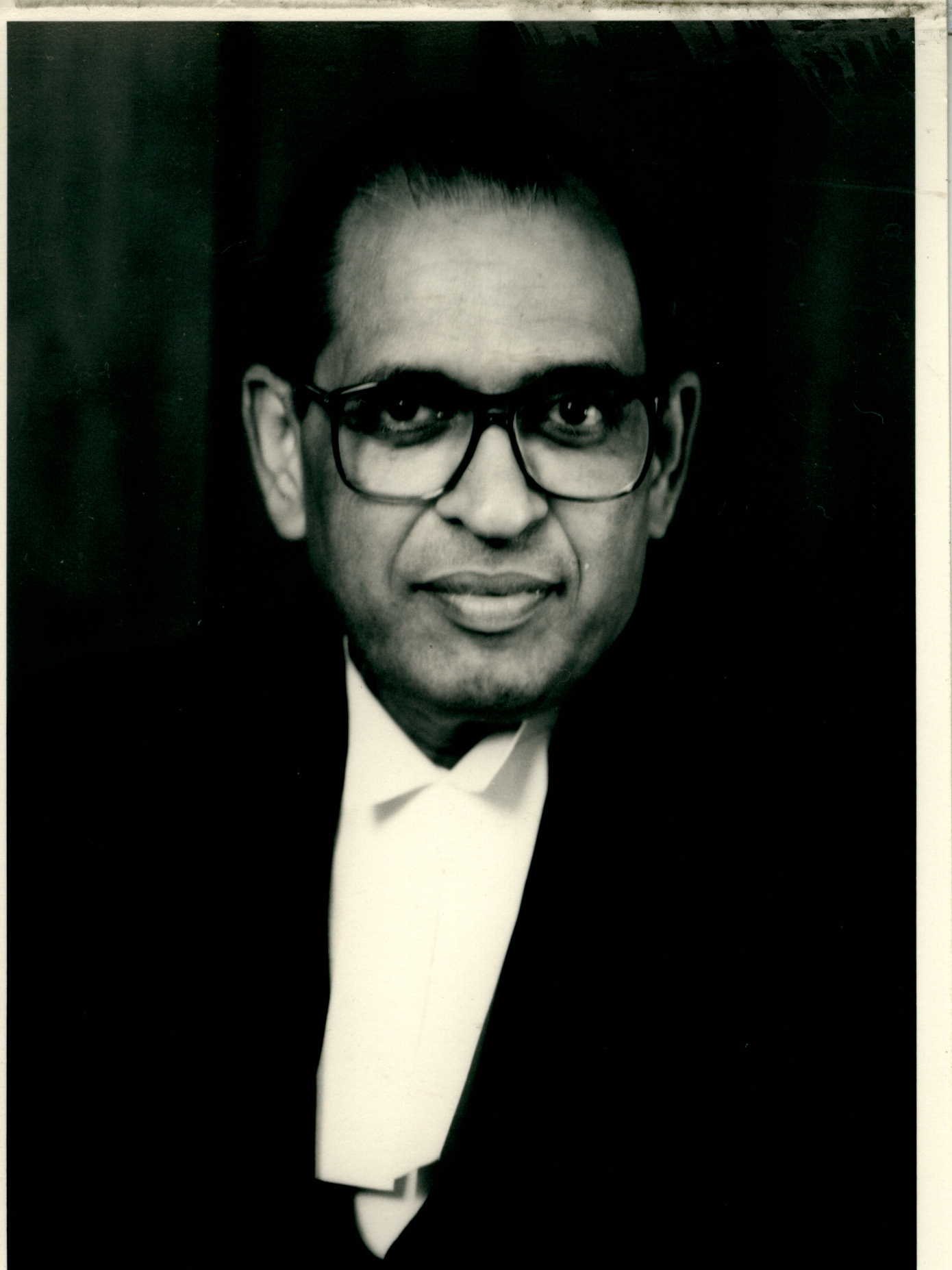
http://JUDIS.NIC.IN SUPREME COURT OF INDIA Page 1 of 12
PETITIONER:
THE DHARWAD DISTT. P.W.D. LITERATE DAILY WAGES EMPLOYEES
Vs.
RESPONDENT:
STATE OF KARNATAKA & ORS. ETC.
DATE OF JUDGMENT23/02/1990
BENCH:
MISRA RANGNATH
BENCH:
MISRA RANGNATH
PUNCHHI, M.M.
AGRAWAL, S.C. (J)
CITATION:
1990 AIR 883 1990 SCR (1) 544
1990 SCC (2) 396 JT 1990 (1) 343
1990 SCALE (1)288
CITATOR INFO :
R 1992 SC 713 (1)
RF 1992 SC2130 (10)
ACT:
Karnataka State--Daily rated and monthly rated employ-
ees-Treatment as regular government servants--Directions by
Court.
HEADNOTE:
These are Writ Petitions under Article 32 of the Consti-
tution of India and a Special Leave Petition against the
Judgment of the Karnataka High Court filed by two trade
unions and a Society formed by law students of the Universi-
ty College and two individuals asking for quashing the
Karnataka Government's Notification dated 12th March, 1982
and for directions to confirm the daily rated and monthly
rated employees as regular government servants and for
payment of normal salary and service benefits as applicable
to the appropriate categories of the government servants.
Nearly 50,000 such persons are employed in different
Government establishments though many of them have put in 15
to 20 years of continuous service. They have not been regu-
larised in their service and are not being paid equal pay
for equal work as has been mandated by this Court by way of
implementation of the Directive Principles of State Policy.
Pursuant to the directions of this Court, the State of
Karnataka filed a draft Scheme. The Court considering both
the aspects of 'equal pay for equal work' and continuing
casual employment for too long re-affirmed the view that the
principle of 'equal pay for equal work' is not an abstract
doctrine instead it is vital and vigorous doctrine accepted
throughout the world. While accepting the petitions, the
Court,
HELD: That 'equal pay for equal work' and providing
security for service by regularising casual employment
within a reasonable period have been unanimously accepted by
this Court as a constitutional goal of our socialist polity.
While giving directions to the State for giving final shape
to the Scheme, the Court further held that under the
545
http://JUDIS.NIC.IN SUPREME COURT OF INDIA Page 2 of 12
scheme of the Constitution the purse remains in the hands of
the Executive. The Legislature of the State controls the
consolidated Fund out of which the expenditure to be in-
curred, in giving effect to the scheme will have to be met.
[553F; 559H; 560A]
The flow into the Consolidated Fund depends upon the
policy of taxation depending perhaps on the capacity of the
payer. Therefore unduly burdening the State for implementing
the constitutional obligation would create problems which
the State may not be able to stand. Directions have there-
fore been made with judicious restraint with the hope and
trust that both parties would appreciate and understand the
situation. The instrumentality of the State must realise
that it is charged with a big trust. [560B-C]
The casual/daily rated employees appointed on or before
1.7.1984 shall be treated as monthly rated establishment
employees at the fixed pay of Rs.780 p.m. without any allow-
ances with effect from 1.1. 1990. [558H]
The scheme which has been finalised is not the ideal
one. It is the obligation of the Court to individualise
justice to suit a given situation in a set of facts that are
placed before it. [559H]
Randhir Singh v. Union of India & Ors., [1982] 1 SCC
618; Dhirendra Chamoli & Anr. v. State of U.P., [1986] 1 SCC
637; Surinder Singh & Ant. v. Engineer-in-Chief, C.P.W.D. &
Ors., [1986] 1 SCC 639; Kishori Mohanlal Bakshi v. Union of
India, AIR 1962 SC 1139; D.S. Nakara v. Union of India,
[1983] 2 SCR 165; R.C. Gupta & Ors. v. Lt. Governor, Delhi
Admn. & Ors., [1987] 4 SCC 505; Bhagwan Dass & Ors. v. State
of Haryana & Ors., [1987] 1 SCC 634; Jaipal & Ors. v. State
of Haryana & Ors., [1988] 3 SCC 354; Daily Rated Casual
Labour employed under P & T Department Contingent Paid Staff
Welfare Association v. Union of India & Ors., [1987] Suppl.
SCC 658; State of U. P. & Ors. v. J.P. Chaurasia & Ors.,
[1989] 1 SCC 121; Kesavananda Bharati v. State of Kerala,
[1973] 4 SCC 225 and Bhagwan Sahai Carpenter & Ors. v. Union
of India & Anr., [1989] 1 JT. 545, referred to.
JUDGMENT:
ORIGINAL JURISDICTION: Writ Petition Nos. 8307-11 of
1983 etc.
(Under Article 32 of the Constitution of India)
WITH
Special Leave Petition No. 6823 of 1988.
546
From the Judgment and Order dated 22.1.1988 of the
Karnataka High Court in Application No. 3392 of 1987
N.S. Hegde, Additional Solicitor General, R.K. Garg,
M.C. Bhandare, Mrs. Indra Jaisingh, P.S. Poti (NP), Govind
Mukhoty, TS. Krishnamurthy Iyer (NP), Miss Rani Jethmalani,
R.M. Tiwari, L.P. Gour, Mohan Katarki, D.K. Garg, V. Laxmi
Narayan, P.R. Ramasheesh, M. Veerappa (NP), S. Ravindra
Bhatt and C.S. Vaidyanathan for the appearing parties.
The Judgment of the Court was delivered by
RANGANATH MISRA, J. These are five writ petitions under
Article 32 of the Constitution by two trade unions, a socie-
ty formed by Law students of the University College and two
individuals asking for quashing of the Karnataka Govern-
ment's Notification of 12th March, 1982, and for directions
to confirm the daily rated and monthly rated employees as
regular government servants and for payment of normal salary
at the rates prescribed for the appropriate categories of
the Government servants and other service benefits. It has
http://JUDIS.NIC.IN SUPREME COURT OF INDIA Page 3 of 12
been pleaded that about 50,000 such workers are employed in
the different Government establishments and though many of
them have put in 15 to 20 years of continuous service--which
is proof of the fact that there is permanent need for the
jobs they perform--they have not been regularised in their
service and are not being paid equal pay for equal work as
has been mandated by this Court by way of implementation of
the Directive Principles of State Policy.
A two Judge Bench of this Court dealing with these writ
petitions on 14th July, 1988, directed:
"We have heard learned counsel for both the parties, only on
one of the questions involved in this case viz. whether the
monthly rated Gangmen who are referred to in Paragraph 1 of
the Government's order No. PWD 100 PWC 83, Bangalore dated
12th January, 1984 and the monthly rated Sowdies etc. re-
ferred to in the Government's order No, PWD 120 PWC 84 dated
4th December, 1984 should be paid the same salary as the
salary paid to Gangmen and Sowdies respectively who are
employed regularly by the State Government. As we are of the
view that the principle enunciated by this Court in Para-
graph 3 of the judgment of this Court in Daily Rated Casual
Labour Employed under
547
P & T Department through Bhartiya Dak Tar Mazdoor Manch v.
Union of India & Ors., [1988] 1 SCC 122 is applicable to
this case also, we direct the Government of Karnataka to pay
salary to such workmen at the rates equivalent to the mini-
mum pay in the pay-scales of the regularly employed Gangmen
or Sowdies, as the case may be, but without any increment
with effect from 1.7. 1988. The question whether they are
entitled to any arrears for the period between the date on
which their services were regularised under the State Gov-
ernment's Orders and 1.7. 1988 will be considered along with
the other questions involved in this case at the final
hearing. This case shall stand adjourned by three months. In
the meanwhile we permit the State Government to frame a
more rational scheme for absorbing as many casual workers
and monthly rated Gangmen and Sowdies as possible in regular
cadres. The case need not be treated as part-heard."
Pursuant to the aforesaid directions, the State of
Karnataka has filed a draft scheme, copies of which have
been served on the parties, their response to the draft
scheme has been received and the matter has been heard at
length.
A three-Judge Bench in Randhir Singh v. Union of India &
Ors., [1982] 1 SCC 618 observed:
"It is true that the principle of 'equal pay for equal work'
is not expressly declared by our Constitution to be a funda-
mental right. But it certainly is a constitutional goal.
Article 39(d) of the Constitution proclaims 'equal pay for
equal work for both men and women' as a Directive Principle
of State Policy. 'Equal pay for equal work for both men and
women' means equal pay for equal work for everyone and as
between the sexes. Directive Principles, as has been pointed
out in some of the judgments of this Court have to be read
into the fundamental rights as a matter of interpretation.
Article 14 of the Constitution enjoins the State not to deny
any person equality before the law or the equal protection
of the laws and Article 16 declares that there shall be
equality of opportunity for all citizens in matters relating
to employment or appointment to any office under the State.
These equality clauses of the Constitution must mean some-
thing to everyone. To the vast majority of the
548
people the equality clauses of the Constitution would mean
http://JUDIS.NIC.IN SUPREME COURT OF INDIA Page 4 of 12
nothing if they are unconcerned with the work they do and
the pay they get. To them the equality clauses will have
some substance if equal work means equal pay. Whether the
special procedure prescribed by a statute for trying alleged
robber-barons and smuggler kings or for dealing with tax
evaders is discriminatory; whether a particular governmental
policy in the matter of grant of licences or permits confers
unfettered discretion on the Executive, whether the take-
over of the empires of industrial tycoons is arbitrary and
unconstitutional and other questions of like nature, leave
the millions to people of this country untouched. Questions
concerning wages and the like, mundane they may be, are yet
matters of vital concern to them and it is there, if at all
that the equality clauses of the Constitution have any
significance to them ..... Construing Articles 14 and 16
of the Constitution in the light of the Preamble and Article
39(d), we are of the view that the principle 'equal pay for
equal work' is deducible from those Articles and may be
properly applied to cases of unequal scales of pay based on
no classification or irrational classification though those
drawing the different scales of pay do identical work under
the same employer."
That was the case of Delhi Police drivers. In the case
of Dhirendra Charnoli & Anr. v. State of U.P., [1986] 1 SCC
637, the claim for equal pay for equal work arose for con-
sideration on the complaint of persons who were engaged by
the Nehru Yuvak Kendra as casual workers on daily wage
basis. While dealing with the problem a two-Judge Bench took
note of the fact that casual employment was being continued
for too long a period and directed:
"the Central Government to accord to these persons who are
employed by the Nehru Yuvak Kendras and who are concededly
performing the same duties as Class IV employees, the same
salary and conditions of service as are being .received by
Class IV employees, except regularisation which cannot be
done since there are no sanctioned posts. But we hope and
trust that posts will be sanctioned by the Central Govern-
ment in the different Nehru Yuvak Kendras, so that these
persons can be regularised. It is not at all desirable that
any management and particularly the Central Government
should continue to employ persons on
549
casual basis in organisations which have been in existence
for over 12 years."
Both these aspects, namely, 'equal pay for equal work'
and continuing casual employment for too long came for
consideration of another two-Judges Bench of this Court in
Surinder Singh & Anr. v. Engineer-in-Chief, C.P.W.D. & Ors.,
[1986] 1 SCC 639. Chinnappa Reddy, J. speaking for the Court
began his judgment by saying:
"In these two writ petitions, the petitioners who are em-
ployed by the Central Public Works Department on a daily
wage basis and who have been so working for several years,
demand that they should be paid the same wages as permanent
employees employed to do identical work. They state that
even if it is not possible to employ them on regular and
permanent basis for want of a suitable number of posts,
there is no reason whatsoever why they should be denied
'equal pay for equal work'.
Continuing to deal with the matter the learned Judge pointed
out:
"One would have thought that the judgment in the Nehru Yuvak
Kendras case concluded further argument on the question.
However, Shri V.C. Mahajan, learned counsel for the Central
Government reiterated the same argument and also contended
http://JUDIS.NIC.IN SUPREME COURT OF INDIA Page 5 of 12
that the doctrine of 'equal pay for equal work' was a mere
abstract doctrine and that it was not capable of being
enforced in a court of law. He referred us to the observa-
tions of this Court in Kishori Mohanlal Bakshi v. Union of
India, AIR 1962 SC 1139. We are not a little surprised that
such an argument should be advanced on behalf of the Central
Government 36 years after the passing of the Constitution
and 11 years after the Fortysecond Amendment proclaiming
India as a socialist republic. The Central Government like
all organs of the State is committed to the Directive Prin-
ciples of State Policy and Article 39 enshrines the princi-
ple of equal pay for equal work. In Randhir Singh v. Union
of India, supra, this Court has occasion to explain the
observations in Kishori Mohanlal Bakshi v. Union of India,
and to point out how the principle of equal pay for equal
work is not an abstract doctrine and how it is a vital and
vigorous doctrine
550
accepted throughout the world, particularly by all socialist
countries. For the benefit of those who do not seem to be
aware of it, we may point out that the decision in Randhir
Singh, case has been followed in any number of cases by this
Court and has been affirmed by a Constitution Bench of this
Court in D.S. Nakara v. Union of India, [1983] 2 SCR 165.
The Central Government, the State Governments and likewise,
all public sector undertakings are expected to function like
model and enlightened employers and arguments such as those
which were advanced before us that the principle of equal
pay for equal work is an abstract doctrine which cannot be
enforced in a court of law should ill come from the mouths
of the State and the State Undertakings ..... "
A little later came the case of R.D. Gupta & Ors. v. Lt.
Governor, Delhi Admn. & Ors., [1987] 4 SCC 505 raising the
problem of inequality of pay in a situation where equal work
was being rendered. In paragraph 18 of the judgment the
ratio of the decision already referred to was reaffirmed. In
the case of Bhagwan Dass & Ors. v. State of Haryana & Ors.,
[1987] 4 SCC 634, the same principles were reiterated in the
case of Teachers and Supervisors in the education service.
Another Division Bench in Jaipal & Ors. v. State of Haryana
& Ors., [1988] 3 SCC 354 was dealing with the disparity in
the conditions of service of Instructors under the Adult and
Non-formal Education Scheme and regular employees of the
State of Haryana. This court stated:
"There is no doubt that instructors and squad teachers are
employees of the same employer doing work of similar nature
in the same department; therefore, the appointment on a
temporary basis or on regular basis does not affect the
doctrine of equal pay for equal work. Article 39(d) con-
tained in Part IV of the Constitution ordains the State to
direct its policy towards securing equal pay for equal work
for both men and women. Though Article 39 is included in the
chapter on Directive Principles of State Policy, but it is
fundamental in nature. The purpose of the Article is to fix
certain social and economic goals for avoiding any discrimi-
nation amongst the people doing similar work in matters
relating to pay. The doctrine of equal pay for equal work
has been implemented by this Court in Randhir Singh v. Union
of India, Dhirendra Chamoli v. State of U.P. and
551
Surinder Singh v. Engineer-in-Chief, CPWD. In view of these
authorities it is too late in the day to disregard the
doctrine of equal pay for equal work on the ground of the
employment being temporary and the other being permanent in
nature. A temporary or casual employee performing the same
http://JUDIS.NIC.IN SUPREME COURT OF INDIA Page 6 of 12
duties and functions is entitled to the same pay as paid to
a permanent employee."
In the case of Daily Rated Casual Labour employed under
P & T Department v. Union of India & Ors., [1988] 1 SCC 122,
the twin aspects for consideration before us had arisen for
determination. This Court then indicated:
"It may be true that the petitioners have not been regularly
recruited but many of them have been working continuously
for more than a year in the department and some of them have
been engaged as casual labourers for nearly ten years. They
are rendering the same kind of service which is being ren-
dered by the regular employees doing the same type of work.
Clause (2) of Article 38 of the Constitution of India which
contains one of the Directive Principles of State Policy
provides that 'the State shall, in particular, strive to
minimise the inequalities in income and endeavour to elimi-
nate inequalities in status, facilities and opportunities,
not only amongst individuals but also amongst groups of
people residing in different areas or engaged in different
vocations'. Even though the above directive principle may
not be enforceable as such by virtue of Article 37 of the
Constitution of India, it may be relied upon by the peti-
tioners to show that in the instant case they have been
subjected to hostile discrimination. It is urged that the
State cannot deny at least the minimum pay in the pay scales
of regularly employed workmen even though the government may
not be compelled to extend all the benefits enjoyed by
regularly recruited employees. We are of the view that such
denial amounts to exploitation of labour. The government
cannot take advantage of its dominant position, and compel
any worker to work even as a casual labourer on starvation
wages. It may be that the casual labourer has agreed to work
on such low wages. That he has done because he has no other
choice. It is poverty that has driven him to that state. The
government should be a model employer. We are
552
of the view that on the facts and in the circumstances of
this case the classification of employees into regularly
recruited employees and casual employees for the purpose of
paying less than the minimum pay payable to employees in the
corresponding regular cadres particularly in the lowest
rungs of the department where the pay scales are the lowest
is not tenable ..... India is a socialist republic. It
implies the existence of certain important obligations which
the State has to discharge. The right to work, the right to
free choice of employment, the right to just and favourable
conditions of work, the right to protection against unem-
ployment. the right of everyone who works to just and fa-
vourable remuneration ensuring a decent living for himself
and his family, the right of everyone without discrimination
of any kind to equal pay for equal work, the right to rest,
leisure, reasonable limitation on working hours and periodic
holidays with pay, the right to form trade unions and the
right to join trade unions of one's choice and the right to
security of work are some of the rights which have to be
ensured by appropriate legislative and executive measures.
It is true that all these rights cannot be extended simulta-
neously. But they do indicate the socialist goal. The degree
of achievement in this direction depends upon the economic
resources, willingness of the people to produce and more
than all the existence of industrial peace throughout the
country. Of those rights the question of security of work is
of utmost importance. If a person does not have the feeling
that he belongs to an organisation engaged in production he
will not put forward his best effort to produce more. That
http://JUDIS.NIC.IN SUPREME COURT OF INDIA Page 7 of 12
sense of belonging arises only when he feels that he will
not be turned out of employment the next day at the whim of
the management. It is for this reason it is being repeatedly
observed by those who are in charge of economic affairs of
the countries in different parts of the world that as far as
possible security of work should be assured to the employees
so that they may contribute to the maximisation of produc-
tion. It is again for this reason that managements and the
governmental agencies in particular should not allow workers
to remain as casual labourers or temporary employees for an
unreasonably long period of time ...... ' '
Keeping these principles in view this Court in the case of
H.P. Income
553
Tax Department Contingent Paid Staff Welfare Association v.
Union of India & Ors., [1987] Suppl. SCC 658 indicated with
emphasis:
"We accordingly allow this writ petition and direct the
respondents to pay wages to the workmen who are employed as
the contingent paidstaff of the Income Tax Department
throughout India, doing the work of Class IV employees at
the rates equivalent to the minimum pay in the pay scale of
the regularly employed workers in the corresponding
cadres ..... "
Then came the case of State of U.P. & Ors. v. J.P. Chau-
rasia & Ors., [1989] 1 SCC 121 where a Division Bench of
this Court reiterated:
"Equal pay for equal work for both men and women has been
accepted as a constitutional goal capable of being achieved
through constitutional remedies."
On this occasion the authority of the larger Bench in Kesa-
vananda Bharati v. State of Kerala, [1973] 4 SCC 225 where
the Court said 'the dominant objective in view was to amel-
iorate and improve the lot of the common man and to bring
about a socio-economic justice' was called in aid for the
conclusion of the Court.
Reference may also be made to another Division Bench
judgment of this Court in the case of Bhagwan Sahai Carpen-
ter & Ors. v. Union of India & Anr., [1989] 1 JT 545 where
the ratio of the decisions referred to above was given
effect to.
We have referred to several precedents--all rendered
within the current decade--to emphasise upon the feature
that equal pay for equal work and providing security for
service by regularising casual employment within a reasona-
ble period have been unanimously accepted by this Court as a
constitutional goal to our socialistic polity. Article 141
of the Constitution provides how the decisions of this Court
are to be treated and we do not think there is any need to
remind the instrumentalities of the State--be it of the
Centre or the State, or the public sector--that the Consti-
tution-makers wanted them to be bound by what this Court
said by way of interpreting the law.
The question that arises in these matters is indeed not
one that has been left wholly to the realm of interpretation
and to be described
554
as Judge-made law. Parliament has stepped in as early as
1976 by enacting the Equal Remuneration Act (25 of 1976) to
take over a part of the question which arises here. That Act
is a legislation providing equality to pay for equal work
between men and women which certainly is a part of the
principle which we are considering.
President Roosevelt, the American Chief Executive, in
one of his annual reports about the state of the Nation to
http://JUDIS.NIC.IN SUPREME COURT OF INDIA Page 8 of 12
the Congress once pointed out:
"The chief law-makers in our country may be, and often are,
the Judges because they are the final seat of authority.
Every time they interpret contract, property vested rights,
due process of law, liberty, they necessarily enact into law
part of a system of social philosophy; and as such interpre-
tation is fundamental, they give direction to all law mak-
ing. The decisions of the Courts on economic and social
questions depend upon their economic and social philosophy;
and for the peaceful progress of our people during the
twentieth century, we shall owe most of those Judges to hold
to a twentieth century economic and social philosophy and
not to a long overgrown philosophy which was itself a
product of primitive economic conditions."
We would like to point out that the philosophy of this
Court as evolved in the cases we have referred to above is
not that of the Court but is ingrained in the Constitution
as one of the basic aspects and if there was any doubt on
this there is no room for that after the Preamble has been
amended and the Forty-Second Amendment has declared the
Republic to be a socialistic one. The judgments, therefore,
do nothing more than highlight one aspect of the constitu-
tional philosophy and make an attempt to give the philosophy
a reality of flesh and blood.
Jawaharlal Nehru, the first Prime Minister of this
Republic while dreaming of elevating the lot of the common
man of this country once stated:
"Our final aim can only be a classless society with equal
economic justice and opportunity to all, a society organised
on a planned basis for the raising of mankind to higher
material and cultural level. Everything that comes in the
way will have to be removed gently if possible; forcibly if
555
necessary, and there seems to be little doubt that coercion
wilt often be necessary."
These were his prophetic words about three decades back.
More than a quarter of century has run out since he left us
but there has yet been no percolation in adequate dose of
the benefits the constitutional philosophy stands for to the
lower strata of society. Tolstoy wrote:
"The abolition of slavery has gone on for a long time. Rome
abolished slavery. America abolished it and we did but only
the words were abolished, not the thing."
Perhaps what Tolstoy wrote about abolition of
slavery in a large sense applies to what we have done to the
constitutional etches. It has still remained on paper and is
contained in the book. The benefits have not yet reached the
common man. What Swami Vivekananda wrote in a different
context may perhaps help a quicker implementation of the
goal to bring about the overdue changes for transforming
India in a positive way and in fulfilling the dreams of the
Constitution fathers. These were the words of the Swami:
"It is imperative that all this various yogas should be
carried out in practice. Mere theories about them wilt not
do any good. First we have to hear about them; then we have
to think about them. We have to reason the thoughts out,
impress them on our minds and meditate on them; realise
them, until at last they become our whole life. No longer
will religion remain a bundle of ideas or theories or an
intellectual assent; it will enter into our very self. By
means of intellectual assent, we may today subscribe to many
foolish things, and change our minds altogether tomorrow.
But true religion never changes. Religion is realisation;
not talk, nor doctrine, nor theories, however beautiful they
may be. It is being and becoming, not hearing or acknowledg-
http://JUDIS.NIC.IN SUPREME COURT OF INDIA Page 9 of 12
ing. It is the whole soul's becoming changed into what it
believes. That is religion."
The relevant constitutional philosophy should be
the substitute for religion and it must be allowed to become
a part of every man in this country; then only would the
Constitution reach every one and he or she would be nearer
the goals set by it. That perhaps can happen in every field.
556
The precedents referred to above have, therefore,
obliged the State of Karnataka, respondent before us, to
regularise the services of the casual employees who are in
these cases called daily rated and monthly rated employees
and the State of Karnataka is obliged to make them the same
payment as regular employees are getting. Mr. Hegde appear-
ing for the State has, however, pointed out that while on
principle it is difficult to play a different tune, in
reality and as a matter of state-craft, implementation
thereof forthwith is an economic impossibility. He has,
therefore, placed the scheme drawn up by the State for our
consideration and has pleaded for balancing the philosophy
and the economic constraints of the State for the purpose of
resolution of the dispute.
We have already pointed out that there are about 50,000
employees covered by the classifications who await regulari-
sation. On 3rd of April, 1986, the question of regularisa-
tion of services of persons working on daily wages in the
local bodies under the administrative control of the Urban
Wing of the Housing and Urban Development Department came
for consideration on the basis of the report of the Commit-
tee set up on 26.11. 1985. In the meantime, this Court's
order dated 17th of January, 1986 in a group of writ peti-
tions laying down the principle of equal pay for equal work
had been pronounced. Keeping that in view the State Govern-
ment on 3.4.1986 made the following order:
"Having regard to the recommendations of the Com-
mittee and after duly taking into account the observation
made by the Supreme Court in the case referred to above,
Government of Karnataka hereby direct that all the employees
working on daily wage basis or NMR basis in the local bodies
which come under the administrative control of Urban Wing of
Housing and Urban Development Department, be granted the
same pay and allowances as are allowed to regular employees
of the respective cadres with effect from 1.1.1986, subject
to the following conditions:
1. No financial assistance shall be available from
Government.
2. The additional resources on this account
should be raised by the local bodies concerned; and
557
3. The local bodies should freeze the recruitment
for the next 4 to 5 years or alternatively study the work-
load and prune the expenditure accordingly.
On 2nd of July, 1986, a set of rules known as the Karna-
taka State Civil Services (Special Recruitment of the Candi-
date) Rules, 1986 came into force. We have been told that
ambit of the present dispute before us is in no manner
affected by the said decision of the Government nor the
Rules that have been referred to above. We do not propose to
examine the correctness of this statement while dealing with
the scheme of the State Government.
The scheme furnished by the State contemplates that all
casual/ daily rated employees appointed on or before 2.7.
1974 shall be treated as monthly rated establishment employ-
ees on a fixed pay of Rs.780 per month without any allowance
from 1.1. 1990. They would be eligible for an annual incre-
http://JUDIS.NIC.IN SUPREME COURT OF INDIA Page 10 of 12
ment at the rate of Rs. 10 till their services are regula-
rised. On regularisation they shall be adjusted at the basic
payscale applicable to the lowest Group D cadre but would be
entitled to all other benefits available to regular employ-
ees of their class. From amongst the casual and daily rated
employees who have completed ten years of service as on
31.12.1989, 18,600 would be immediately regularised on
seniority-cum-suitability basis with effect from 1.1.
1990. The State Government shall also regularise the serv-
ices of the remaining casual or daily rated workers who have
already completed ten years of service as on 31.12.1989 but
could not be included in the limit of 18,600 in a phased
manner on the basis of seniority-cumsuitability on or before
31st of December, 1990. The remaining casual or daily rated
employees will be absorbed and/or regularised in a phased
manner on seniority-cum-suitability basis on or before 31st
of December, 1997.
This revised scheme filed by Mr. Hegde for the State
has, however, not been accepted by Mr. Bhandare and other
counsel appearing on the side of the petitioners in these
petitions though on certain aspects there is unanimity. Mr.
Bhandare in his note by way of response to the scheme of Mr.
Hegde has emphasised upon the need of regularising all the
employees who have completed ten years of service with
effect from 1.1. 1990. He has further claimed that all the
casual and daily rated workmen who have completed five years
of service as on 31.12. 1989 should be put on monthly rated
pay and the balance of casual or daily rated workmen who are
not covered by the above two classes should be continued in
that capacity and put on the monthly
558
rated establishments as and when they complete five years of
service and be regularised on completion of ten years of
service from the initial employment as daily rated workmen.
It has been contended that a lot of these casual and daily
rated workmen have been retrenched in violation of this
Court's interim order dated 25.7.1983 and there should be a
direction for their reinstatement with the benefit of no
break in service. It has been further maintained that some
of these employees belong to higher classifications like
Groups B and C and, therefore, they should be given the
benefit of the corresponding scales of pay on regularisa-
tion.
One of the further claims in the written note of Mr.
Bhandare is that when the daily rated workmen are absorbed
into monthly rated employment, they should be entitled to
the minimum basic wage in the corresponding scale of the
group of the permanent employees. The response points out
that the casual and daily rated workmen to be covered by the
scheme should include casual employees and NMR employees,
progressive farmers, gram sahai and anganwadi workers. There
is claim for weightage for past service, namely, for every
unit of five years exceeding ten years of service on the
date of regularisation, an additional increment should be
admissible and added to the basic salary and the advantages
of the scheme extended to all the employees under the State
prior to formation of the Zila Parishads in the Karnataka
State and transfer of some of them to the Zila Parishads and
Mandal Panchayats. Finally, it has been contended that no
one who is in employment on casual or daily rated basis on
the date of our judgment should be retrenched.
We can well realise the anxiety of the petitioners who
have waited too long to share the equal benefits mandated by
Part IV of the Constitution in respect of their employment.
At the same time, we cannot overlook the contraints arising
http://JUDIS.NIC.IN SUPREME COURT OF INDIA Page 11 of 12
out of or connected with availability of State resources.
Keeping both in view and reposing our trust in the relevant
instrumentalities of the State that may be connected with
the implementation of the scheme to act with a sense of
fairness, anxiety to meet the demands of the human require-
ments and also anxious to fulfil the constitutional obliga-
tions of the State, the directions which we give below will
give a final shape to the scheme thus:
1. The casual/daily rated' employees appointed on or before
1.7.1984 shall be treated as monthly rated establishment
employees at the fixed pay of Rs.780 per month without any
allowances with effect from 1.1. 1990. They would be enti-
tled to
559
an annual increment of Rs. 15 till their services are regu-
larised. On regularisation they shall be put in the minimum
of the time scale of pay applicable to the lowest Group D
cadre under the Government but would be entitled to all
other benefits available to regular government servants of
the corresponding grade.
Those belonging to the B or C Groups upon regularisa-
tion shall similarly be placed at the minimum of the time
scale of pay applicable to their respective groups under
government service, and shall be entitled to all other
benefits available to regular government servants of these
grades.
2. From amongst the casual and daily rated employees who
have completed ten years of service by 31.12.1989, 18,600
shall immediately be regularised with effect from 1.1. 1990
on the basis of seniority-cum-suitability.
There shall be no examination but physical infirmity
shall mainly be the test of suitability.
3. The remaining monthly rated employees covered by the
paragraph 1 who have completed ten years of service as on 3
ist December, 1989, shall be regularised before 31st Decem-
ber, 1990, in a phased manner on the basis of
seniority-cum-suitability, suitability being understood in
the same way as above.
4. The balance of casual or daily rated employees who become
entitled to absorption on the basis of completing ten years
of service shall be absorbed/regularised in a phased manner
on the same principle as above on or before December 31,
1997.
5. At the point of regularisation, credit shall be given for
every unit of five years of service in excess of ten years
and one additional increment in the time scale of pay shall
be allowed by way of weightage.
There was a direction that the claims on other heads would
be considered at the time of .final disposal. We have come
to the conclusion that apart from these reliefs no other
would be admissible.
We are alive to the position that the scheme which we
have finalised is 'not the ideal one but as we have already
stated, it is the obligation of the Court to individualise
justice to suit a given situation
560
in a set of facts that are placed before it. Under the
scheme of the Constitution the purse remains in the hands of
the Executive. The Legislature of the State controls the
Consolidated Fund out of which the expenditure to be in-
curred in giving effect to the scheme will have to be met.
The flow into the Consolidated Fund depends upon the policy
of taxation depending perhaps on the capacity of the payer.
Therefore, unduly burdening the State for implementing the
constitutional obligation forthwith would create problems
http://JUDIS.NIC.IN SUPREME COURT OF INDIA Page 12 of 12
which the State may not be able to stand. We have, there-
fore, made our directions with judicious. restraint with the
hope and trust that both parties would appreciate and under-
stand the situation. The instrumentality of the State must
realise that it is charged with a big trust. The money that
flows into the Consolidated Fund and constitutes the re-
sources of the State comes from the people and the welfare
expenditure that is meted out goes from the same Fund back
to the people. May be that in every situation the same tax-
payer is not the beneficiary. That is an incident of taxa-
tion and a necessary concomitant of living within a welfare
society.
Since this is not an adversarial litigation, we make no
order as to
costs.
R.N.J. Petitions
allowed.
561

 Login with google
Legal Notes
Add a Note....