
As per case facts, the State of Madhya Pradesh appealed the acquittal of Bhagwati Raikwar and others, charged under dowry death provisions after Sunita Raikwar died by suicide within seven ...
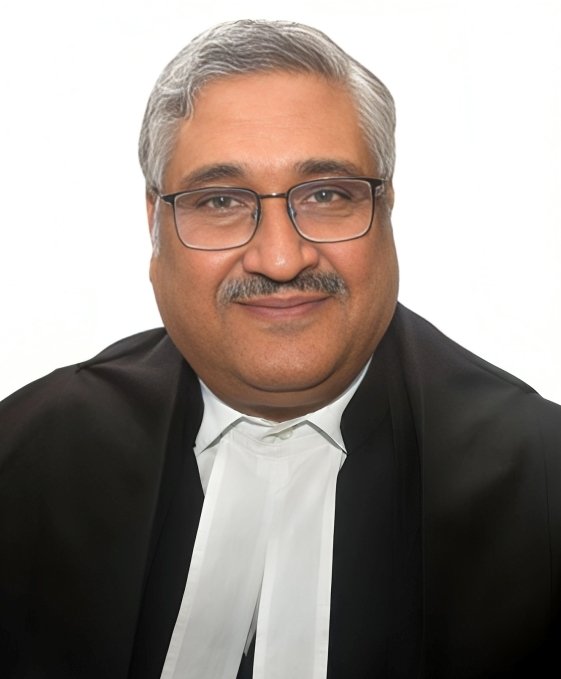
IN THE HIGH COURT OF MADHYA PRADESH
<>
AT JABALPUR
<>
BEFORE
<>
HON'BLE SHRI JUSTICE VIVEK AGARWAL
<>
&
<>
HON'BLE SHRI JUSTICE RAJENDRA KUMAR VANI
<>
ON THE 9
<>
th
<>
OF FEBRUARY, 2026
<>
CRIMINAL APPEAL No. 2757 of 2024
<>
THE STATE OF MADHYA PRADESH
<>
Versus
BHAGWATI RAIKWAR AND OTHERS
<>
Appearance:
<>
Shri Ajay Tamrakar - Government Advocate for the appellant/State.
<>
None for the respondents.
<>
JUDGMENT
<>
Per
<>
: Justice Rajendra Kumar Vani
<>
This appeal under Section 378(1) of Cr.P.C. has been filed by the
State assailing the judgment and order of acquittal dated 30.11.2023 passed
in S.T.No.32/2020 (State of M.P. vs. Bhagwati Raikwar and others) by
learned First Additional Sessions Judge, Jatara, District Tikamgarh (M.P.)
whereby respondents /accused persons, Bhagwati Raikwar, Haricharan
Raikwar, Mahendra @ Pappu Raikwar and Sanju Raikwar have
been acquitted of the offence under Section 304-B read with Section 34 of
IPC and Section 3/4 of the Dowry Prohibition Act, 1961.
2
<>
. It is not in dispute that five years ago the deceased -Sunita Raikwar,
was married to the accused - Pappu alias Mahendra. Accused Harcharan
Raikwar is the deceased's father-in-law, accused Pappu alias Mahendra is the
deceased's husband, and accused Sanju, Vanshi Raikwar are the deceased's
1 CRA-2757-2024NEUTRAL CITATION NO. 2026:MPHC-JBP:11443
brothers-in-law. The deceased died after consuming a poisonous substance.
3
<>
. The prosecution's case in brief is that on 11.06.2020 Pappu alias
Mahendra Ahirwar, a resident of village Gadari village, appeared at the
Khajri police chowki and reported that he was at home on 11.06.2020. His
wife Sunita (deceased) and children were also at home. His eldest daughter
Karishma, aged two years, had asked his wife Sunita for money to buy
biscuits. When she was asking for money, she slapped the girl. He angrily
asked the deceased why she was slapping the girl. Upon saying this, his wife
went inside the house and came out and said that she had consumed fly
repellent (poison) and he should take care of her children well and Sunita was
feeling dizzy. He took Sunita to village Taktoli for treatment, where the
doctor refused to treat her, so he took her to Mauranipur by taxi for
treatment. The doctor checked and told that Sunita was dead. Based on the
above information, a case of untimely death was registered at the Khajri
police station under Section 174 of Cr.P.C. and the case was registered and
the investigation was started.
4
<>
. During the inquest, the investigating officer recorded the statements of
the deceased's parents and other witnesses, in which it was found that due to
the accused physically and mentally torturing the deceased for demanding
Rs.50,000 and a motorcycle as dowry, the deceased consumed poisonous
substance and died under other than normal circumstances within 07 years of
marriage. Thereafter, a case was registered against the accused in Police
Station Palera at Crime No. 235/2020 for offence under Sections 304-B, 34
IPC and Section 3/4 Dowry Prohibition Act.
2 CRA-2757-2024NEUTRAL CITATION NO. 2026:MPHC-JBP:11443
5
<>
. After completion of investigation, a charge-sheet was filed in the
competent court which, on its turn, committed the case to the court of
Sessions and from where it was received by the court of First A.S.J., Jatara,
District Tikamgarh for trial.
6.
<>
The learned trial Judge on going through the evidence available in the
charge sheet framed charges against the appellants for the offences
punishable under Sections 304-B, 34 IPC and Section 3/4 Dowry Prohibition
Act. The accused persons abjured their guilt and pleaded complete
innocence. The defence of accused persons is of false implication.
7.
<>
In order to bring home the charges, the prosecution examined as many
as 10 witnesses, namely, Phoolwati Raikwar (PW-1), Usha Raikwar (PW-2),
Malkhan Raikwar (PW-3), Bhagunti Raikwar (PW-4), Kashiram Raikwar
(PW-5), Dhruv Pateriya (PW-6), Pushpa Dheemer (PW-7), Dr. Pushpalata
Bharti (PW-8), Ramsahai Ahirwar (PW-9) and Yogendra Singh Bhadoriya
(PW-10) and placed Ex.P/1 to P/19 the documents on record. The accused
persons examined Jeevanlal Tiwari (DW-1) and Chintaman Kushwaha (DW-
2) in their defence.
8.
<>
The learned Trial Court having analyzed and marshalled the testimonies
of witnesses and examined the documentary evidence available on record
found that the prosecution has failed to prove its case beyond all reasonable
doubts and eventually acquitted the accused respondent of the charges under
Section 304-B read with Section 34 of IPC and Section 3/4 of the Dowry
Prohibition Act, 1961 . Hence, this appeal.
9
<>
. It is submitted by learned Government Advocate appearing for the
3 CRA-2757-2024NEUTRAL CITATION NO. 2026:MPHC-JBP:11443
appellant/State that despite there being ample evidence available on record
against the accused/respondents, the learned trial Court has not properly
appreciated the evidence and erred in acquitting the respondents. Thus, it is
prayed that allowing the appeal impugned judgment be set aside and the
respondents/accused be convicted and punished appropriately for the
aforesaid offences.
10.
<>
We have heard learned Government Advocate for the appellant/State
and perused the record meticulously.
11.
<>
As far as the conclusion of learned Trial Court in respect of
consideration of Point No.1 is concerned, it is found warranting no
interference. It is rightly found by the learned Trial Court in light of evidence
on record that the deceased had died within seven years of her marriage and
the death was unnatural. As regards points for consideration No.2 & 3, the
story of prosecution is supported by parents mother Phoolwati (PW-1) and
father Malkhan Raikwar (PW-3). The other witnesses, namely, Smt Usha
Raikwar (PW-2), Bhagunti Raikwar (PW-4), Kashiram Raikwar (PW-5) and
Pushpa Dheemer (PW-7) have not substantiated the prosecution story at all.
Except Bhagunti Raikwar (PW-4), other aforesaid witnesses have been
declared hostile and cross-examined by the prosecution but no fact
supporting the prosecution story is revealed from their testimonies. The
testimonies of Phoolwati (PW-1) and Malkhan Raikwar (PW-3) which are
not supported by independent witnesses, are under the scrutiny with
circumspection.
12.
<>
When we travel through the testimonies of Phoolwati (PW-1) and
4 CRA-2757-2024NEUTRAL CITATION NO. 2026:MPHC-JBP:11443
Malkhan Raikwar (PW-3), it revealed that the deceased was short tempered
and she was living along with her husband separately from her in-laws and
there was no prior complaint against respondents/accused persons lodged by
the parents of the deceased qua the demand of dowry and harassment or
cruelty meted out to the deceased. It is also admitted by Phoolwati (PW-1)
categorically in her cross-examination that after the marriage of deceased
with respondent Mahendra, the accused persons used to treat the deceased
well and a daughter Karishma @ Pari was also born during the period. In
para 11 she categorically admitted that her daughter Sunita (the deceased)
never told her or her relatives about any serious problem facing by her with
her in-laws. Sunita (deceased) used to say that she had minor family
disputes with her husband.
13.
<>
It is also revealed from the testimony of Investigating Officer
Yogendra Singh (PW-10) that the FIR has been lodged after 25 days of the
incident. At the time of taking the statement under marg inquiry, no
complaint was made to him by the parents or the relatives of the deceased
qua the demand of dowry or any harassment or cruelty meted out to the
deceased by the accused persons.
14.
<>
Phoolwati (PW-1) has stated that the accused persons have demanded
Rs.50,000/- and a 'vehicle' and twenty days after giving Rs.5000/- to accused
Pappu, the accused persons started committing marpeet with the deceased
and on 11th of that month the information about death of deceased has been
received by her. Malkhan (PW-3) has stated in his chief examination that
accused persons have demanded Rs.50,000/- and a 'motorcycle' and after 8
5 CRA-2757-2024NEUTRAL CITATION NO. 2026:MPHC-JBP:11443
to 10 days since giving Rs.5000/- to Mahendra, Mahendra called him and
informed that the deceased has died. There is variation in respect of what is
demanded as dowry as well as the duration after such giving when the death
of the deceased took place.
15.
<>
That apart, both the witnesses Phoolwati (PW-1) and Malkhan Raikwar
(PW-3) in their statements have categorically stated that when they saw the
deceased, there were several injuries on her persons while as per the
statement of Dr. Pushpalata Bharti (PW-8), who conducted postmortem of
the deceased, in her chief examination has stated that there was no injury
mark on the person of the deceased, which indicates falsity of the statements
of these two witnesses i.e. Phoolwati (PW-1) and Malkhan Raikwar (PW-3)
on the aforesaid point. It is also revealed from the statement of Malkhan
Raikwar (PW-3) that the financial condition of the family of accused persons
was weak and, therefore, accused Mahendra and his wife Sunita (deceased )
used to go to Delhi for doing labour work.
16.
<>
Investigating officer Yogendra Singh (PW-10) in his cross-examination
has admitted that it is surfaced from the police statement of Pushpa that
accused Sanju, Vanshi and Mahendra all were living separately from their
father Haricharan. Similar is the statement given by Bhagunti (PW-4) and
Kashiram (PW-5). He also admits that Ramswaroop in police statement
(Ex.P/6) has also deposed in similar line and has also stated that there was no
trouble/pressure to the deceased in her in-laws house. He also admits that
Pushpa (PW-7) in her police statement has stated that since a dispute arose
between the deceased and her husband, the deceased consumed poison. This
6 CRA-2757-2024NEUTRAL CITATION NO. 2026:MPHC-JBP:11443
fact has also been substantiated by the defence witnesses Jeevanlal Tiwari
(DW-1) and Chintaman Kushwaha (DW-2) that there was no demand of
dowry or harassment or cruelty meted out to the deceased by the accused
persons.
17.
<>
The aforesaid factual scenario revealed from evidence does not inspire
confidence of court in placing reliance on such evidence. The learned Trial
Court while considering the evidence available on record has rightly
concluded that the points No.2 and 3 are not found to be proved beyond
reasonable doubt and this court finds no ground warranting any interference
with the findings of the learned Trial Court.
18.
<>
In the case of State of Gujarat v. Jayrajbhai Punjabhai Varu, (2016) 14
<>
SCC 151
<>
the Hon'ble Apex Court has held that prosecution has to prove the
guilt of the accused beyond all reasonable doubt. It is also the rule of justice
in criminal law that if two views are possible on the evidence adduced in the
case, one pointing to the guilt of the accused and the other towards his
innocence, the view which is favourable to the accused should be adopted. In
case of Nikhil Chandra Mondal v. State of W.B., (2023) 6 SCC 605
<>
Hon'ble
Apex Court has observed that it is a settled principle of law that however
strong a suspicion may be, it cannot take place of a proof beyond reasonable
doubt. Unless finding of the trial Court is found to be perverse or
illegal/impossible, it is not permissible for the appellate Court to interfere
with the same.
19.
<>
Recently in the case of Mallappa & others v. State of Karnataka,
<>
(2024) 3 SCC 544
<>
the Hon'ble Apex Court has again summarized the
7 CRA-2757-2024NEUTRAL CITATION NO. 2026:MPHC-JBP:11443
principles while deciding the appeal against acquittal which are as follows :-
"42. Our criminal jurisprudence is essentially based on the
promise that no innocent shall be condemned as guilty. All the
safeguards and the jurisprudential values of criminal law, are
intended to prevent any failure of justice. The principles which
come into play while deciding an appeal from acquittal could be
summarised as :
(i) Appreciation of evidence is the core element of a criminal trial
and such appreciation must be comprehensive -- inclusive of all
evidence, oral or documentary;
(ii) Partial or selective appreciation of evidence may result in a
miscarriage of justice and is in itself a ground of challenge;
(iii) If the court, after appreciation of evidence, finds that two
views are possible, the one in favour of the accused shall
ordinarily be followed;
(iv) If the view of the trial court is a legally plausible view, mere
possibility of a contrary view shall not justify the reversal of
acquittal;
(v) If the appellate court is inclined to reverse the acquittal in
appeal on a reappreciation of evidence, it must specifically address
all the reasons given by the trial court for acquittal and must cover
all the facts;
(vi) In a case of reversal from acquittal to conviction, the appellate
court must demonstrate an illegality, perversity or error of law or
fact in the decision of the trial court."...
20.
<>
In the backdrop of foregoing discussion and the legal principles laid
down in the aforementioned cases, it is found that the acquittal of the present
respondent rests on cogent and well-reasoned grounds, warranting no
interference. We are of the considered view that the acquittal of respondent
from the charges under Section 304-B read with Section 34 of IPC and
Section 3/4 of the Dowry Prohibition Act, 1961 is based on sound legal
reasonings. No perversity or illegality is committed while passing the
impugned judgment of acquittal.
8 CRA-2757-2024NEUTRAL CITATION NO. 2026:MPHC-JBP:11443
(VIVEK AGARWAL)
<>
JUDGE
<>
(RAJENDRA KUMAR VANI)
<>
JUDGE
<>
21.
<>
Accordingly, the appeal, being devoid of merit, is hereby dismissed.
<>
DV
9 CRA-2757-2024NEUTRAL CITATION NO. 2026:MPHC-JBP:11443

 Login with google
Legal Notes
Add a Note....