
This is an appeal by the State of West Bengal from a judgment of a full bench of the High Court of Judicature at Calcutta quashing the conviction of the ...

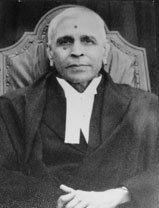

The Supreme Court of India's decision in The State of West Bengal v. Anwar Ali Sarkar (1952) is a cornerstone of Indian constitutional law, fundamentally shaping the interpretation of the Right to Equality. This landmark judgment meticulously dissects the scope of Article 14 of the Constitution and establishes the definitive reasonable classification test, a principle that continues to guide judicial review of legislative and executive actions. As a pivotal case frequently cited in constitutional matters, its detailed analysis on CaseOn offers invaluable insights into the protections against arbitrary state power.
The case arose from a challenge to the West Bengal Special Courts Act, 1950. This Act was enacted with the stated objective of ensuring the "speedier trial of certain offences." Section 5(1) of the Act empowered the State Government, through a general or special order, to direct any "offences, classes of offences, cases or classes of cases" to be tried by a newly constituted Special Court.
The procedure prescribed for these Special Courts departed significantly from the standard criminal procedure under the Code of Criminal Procedure (CrPC). Key differences included the elimination of committal proceedings, trial without a jury or assessors, and restrictions on the accused's rights. The respondent, Anwar Ali Sarkar, along with 49 others, was charged in the "Dum Dum Factory Raid case" and his case was referred to a Special Court under the Act. After his conviction, he challenged the constitutional validity of Section 5(1) before the Calcutta High Court, which found the provision to be void. The State of West Bengal then appealed to the Supreme Court.
The central issue before the seven-judge bench of the Supreme Court was whether Section 5(1) of the West Bengal Special Courts Act, 1950, was unconstitutional because it violated the right to equality and equal protection of the laws guaranteed under Article 14. Specifically, did the Act confer an unguided, arbitrary, and uncontrolled discretion upon the State Government to single out individual cases for a special, more stringent, and prejudicial trial procedure?
The ruling hinged on the interpretation of Article 14 of the Constitution of India, which states:
"The State shall not deny to any person equality before the law or the equal protection of the laws within the territory of India."
The Court acknowledged that this guarantee does not mean that all laws must be uniform. The State has the power to classify persons and things for the purpose of legislation. However, to be constitutionally valid, this classification must not be arbitrary. The judgment solidified the two-pronged test for reasonable classification:
The Supreme Court, by a 6-1 majority, upheld the High Court's decision, though the judges offered varied reasoning in their concurring opinions.
The majority found the Act to be fundamentally discriminatory. It subjected individuals to a procedure that was substantially different and less advantageous than the one available to others accused of the same offences under the CrPC. The Court systematically dismantled the State's arguments:
Legal professionals often face time constraints when delving into such foundational judgments. For a quick and comprehensive understanding of rulings like State of West Bengal v. Anwar Ali Sarkar, the 2-minute audio briefs on CaseOn.in provide an invaluable tool, distilling complex legal reasoning into concise summaries.
Chief Justice Patanjali Sastri delivered a powerful dissent. He argued that the Act should not be viewed in a vacuum but should be interpreted in light of its preamble, which clearly stated its purpose was to ensure "speedier trial." In his view, this objective provided a guiding principle for the government's discretion. He contended that the discretion conferred was not arbitrary but was to be exercised bona fide based on the specific features of a case that necessitated a quicker trial. For him, the mere possibility that the power could be abused was not a sufficient ground to declare the law itself unconstitutional.
The Supreme Court, by a decisive majority, concluded that Section 5(1) of the West Bengal Special Courts Act, 1950, was unconstitutional and void as it violated the fundamental right to equality enshrined in Article 14. The power to refer individual "cases" without any guiding principle was deemed particularly offensive to the principle of equal protection. Consequently, the conviction of Anwar Ali Sarkar was quashed, and the appeal by the State of West Bengal was dismissed.
In essence, The State of West Bengal v. Anwar Ali Sarkar is a landmark decision that breathes life into Article 14. The Supreme Court struck down a legislative provision that granted the executive unfettered power to subject certain individuals to a harsher and less protective judicial procedure. By finding the stated objective of "speedier trial" too ambiguous to serve as a valid basis for classification, the Court cemented the two-pronged test of intelligible differentia and rational nexus as the bedrock for evaluating the constitutionality of any law that creates a classification.
Disclaimer: The information provided in this article is for informational purposes only and does not constitute legal advice. It is essential to consult with a qualified legal professional for advice on any specific legal issue or matter.

Legal Notes
Add a Note....