
As per case facts, a victim was subjected to a serious crime, and an FIR was filed. While some accused were apprehended and tried, the respondent absconded. The victim's testimony ...
2026 INSC 718
Crl. A. No(s). 1164 – 1166 of 2023 Page 1 of 17
REPORTABLE
IN THE SUPREME COURT OF INDIA
CRIMINAL APPELLATE JURISDICTION
CRIMINAL APPEAL NO (S). 1164 – 1166 OF 2023
THE STATE OF WEST BENGAL … APPELLANT(S)
VERSUS
KADER KHAN …RESPONDENT(S)
J U D G M E N T
SANJAY KAROL, J.
1. The present appeals have been preferred by the State against
the impugned judgment and order dated 06.05.2022 passed in
C.R.R. 3012 of 2018 by the High Court at Calcutta, wherein the
order dated 05.09.2018, passed by the Additional District and
Crl. A. No(s). 1164 – 1166 of 2023 Page 2 of 17
Sessions Judge, Fast Track, 2
nd
Court, City Sessions Court,
Calcutta in Order No. 36 in Session Case No. 47 of 2012, came to
be set aside.
2. The brief facts giving rise to this appeal are that on the
basis of a written complaint, FIR No. 29/2012 was registered on
09.02.2012 under Sections 376/223/506/34 of the Indian Penal
Code, 1860
1
and Section 25(ii)(a) & 27 of the Arms Act, 1959
against five accused persons, including the respondent herein. It
was stated in the complaint that on 05.02.2012, the victim was
returning home from Tantra Disco Thek in Kolkata at around
12:15 am at night, when one Lavi Gidwani offered to drop the
victim home. Upon entering the car, the accused persons got into
the car with her. Upon asking to be let out of the car, they refused
and continued driving. Thereafter, she was threatened and gang-
raped at gunpoint. Later, near the crossing of Exide House, she
was pushed out of the running car.
3. Thereafter, on 18.02.2012, three out of the five accused
persons, namely Nishad Alam, Sumit Bajaj and Md. Nasir Khan
2
were apprehended and taken into custody. As two accused could
1
Hereinafter ‘IPC’.
2
Hereinafter ‘apprehended accused persons’.
Crl. A. No(s). 1164 – 1166 of 2023 Page 3 of 17
not be apprehended, namely, the present respondent and Md. Ali
Khan, on 05.03.2012, warrant of arrest was issued by C.M.M.,
Kolkata qua them. As their presence could still not be secured,
on 12.04.2012, proclamation was issued against these
absconding accused. Proclamation notices came to be affixed on
12.04.2012 and 16.04.2012.
4. Upon the completion of investigation, on 10.05.2012,
chargesheet was filed against the three apprehended accused
persons under Sections 376(2)(g), 323 and 506 of the IPC.
Importantly, the present respondent and Md. Ali Khan were
shown to be absconding and a prayer was made for filing
supplementary chargesheet qua them.
5. Thereafter, while considering the bail applications of two
of the apprehended accused persons, the High Court at Calcutta
directed the trial to be split qua the apprehended accused persons
and absconding respondents, if they were not arrested before the
next date of hearing. Accordingly, on 22.01.2013, the trial stood
segregated. Charges were framed against the apprehended
accused persons under Section 376(2)(g) of the IPC on
19.02.2013.
Crl. A. No(s). 1164 – 1166 of 2023 Page 4 of 17
6. During the course of trial, the deposition of the victim lady
took place from 13.03.2013 till 03.07.2013 on multiple occasions
with the accused extensively cross-examining her. In all, the
prosecution examined 45 witnesses throughout the course of the
trial.
7. Unfortunately, post completion of her testimony, the
victim passed away on 13.03.2015. Vide judgment and order
dated 10.12.2015, the Trial Court convicted the three
apprehended accused persons for offences of gang-rape, criminal
conspiracy, hurt and criminal intimidation under Sections
376(2)(g), 120B, 34, 323, 506 of the IPC. They were sentenced
to undergo ten years of rigorous imprisonment.
8. Since the respondent herein and Md. Ali Khan were finally
apprehended and arrested on 30.09.2016 a supplementary
chargesheet was filed against them on 24.11.2016 in relation to
offences under Section 376(2)(g), 120B, 323, 506 and 34 of the
IPC in which charges were framed by the Additional District
and Sessions Judge, under all such aforesaid Sections.
Crl. A. No(s). 1164 – 1166 of 2023 Page 5 of 17
9. During the course of this trial, the prosecution moved an
application dated 20.04.2018 under Section 33 of the Indian
Evidence Act, 1872, seeking admission of the statement rendered
by the deceased victim in the earlier trial, admitted in the present
trial. The Trial Court, vide order dated 05.09.2018 allowed the
same.
10. Aggrieved thereof, the respondent filed a criminal revision
application bearing number C.R.R. No. 3012 of 2018 before the
High Court at Calcutta. Vide the impugned order, the High Court
allowed the same by setting aside the order dated 05.09.2018 of
the Trial Court. It was observed:
• The words of Section 299 CrPC cast an unambiguous
duty on the prosecuting agency to obtain a direction
from the Trial Court that the evidence may also be
recorded against the absconder.
• The deposition of the victim in the earlier trial cannot
be made admissible in the subsequent trial of the
absconding accused.
11. We have heard learned senior counsel, Mr. Siddharth
Aggarwal, for the appellant State, and learned advocate-on-
record Mr. Satya Kam Sharma for the respondent.
Crl. A. No(s). 1164 – 1166 of 2023 Page 6 of 17
12. A well-recognized facet of criminal jurisprudence is that
in normal circumstances a witness in a trial must be examined in
the presence of the accused and that such evidence given in one
trial cannot be used against an accused in another trial. But,
however, Section 299 of the CrPC is a departure from this rule.
It reads:
“299. Record of evidence in absence of accused.—
(1) If it is proved that an accused person has absconded, and
that there is no immediate prospect of arresting him, the
court competent to try or commit for trial, such person for
the offence complained of may, in his absence, examine the
witnesses (if any) produced on behalf of the prosecution, and
record their depositions and any such deposition may, on the
arrest of such person, be given in evidence against him on
the inquiry into, or trial for, the offence with which he is
charged, if the deponent is dead or incapable of giving
evidence or cannot be found or his presence cannot be
procured without an amount of delay, expense or
inconvenience which, under the circumstances of the case,
would be unreasonable.
(2) If it appears that an offence punishable with death or
imprisonment for life has been committed by some person or
persons unknown, the High Court or the Sessions Judge may
direct that any Magistrate of the First Class shall hold an
inquiry and examine any witnesses who can give evidence
concerning the offence and any depositions so taken may be
given in evidence against any person who is subsequently
accused of the offence, if the deponent is dead or incapable
of giving evidence or beyond the limits on India.”
(emphasis supplied)
Crl. A. No(s). 1164 – 1166 of 2023 Page 7 of 17
13. This Court had considered the import of Section 299
CrPC, in Nirmal Singh v. State of Haryana
3
and observed:
“4. …
Section 299 of the Code of Criminal Procedure consists of
two parts. The first part speaks of the circumstances under
which witnesses produced by the prosecution could be
examined in the absence of the accused and the second part
speaks of the circumstances when such deposition can be
given in evidence against the accused in any inquiry or trial
for the offence with which he is charged. This procedure
contemplated under Section 299 of the Code of Criminal
Procedure is thus an exception to the principle embodied in
Section 33 of the Evidence Act inasmuch as under Section
33, the evidence of a witness, which a party has no right or
opportunity to cross-examine is not legally admissible.
Being an exception, it is necessary, therefore, that all the
conditions prescribed, must be strictly complied with. In
other words, before recording the statement of the
witnesses produced by the prosecution, the court must be
satisfied that the accused has absconded or that there is no
immediate prospect of arresting him, as provided under the
first part of Section 299(1) of the Code of Criminal
Procedure…
… … …
In the case in hand, there is no order of the learned trial
Judge, recording a conclusion that on the materials, he was
satisfied that the persons who are examined by the
Magistrate under Section 299(1) are dead, though
according to the prosecution case, it is only after summons
being issued and the process-server having reported those
persons to be dead, their former statements were tendered
as evidence in trial and were marked as Exhibits PW-48/A
3
(2000) 4 SCC 41.
Crl. A. No(s). 1164 – 1166 of 2023 Page 8 of 17
to PW-48/E. As has been stated earlier, since the law
empowers the court to utilise such statements of persons
whose statements were recorded in the absence of the
accused as an exception to the normal principles embodied
in Section 33 of the Evidence Act, inasmuch as the accused
has been denied the opportunity of cross-examining the
witnesses, it is, therefore, necessary that the preconditions
for utilising such statements in evidence during trial must
be established and proved like any other fact. There
possibly cannot be any dispute with the proposition of law
that for taking the benefits of Section 299 of the Code of
Criminal Procedure, the conditions precedent therein must
be duly established and the prosecution, which proposes to
utilise the said statement as evidence in trial, must,
therefore, prove about the existence of the preconditions
before tendering the evidence. The Privy Council, in fact in
the case of Chainchal Singh v. Emperor [AIR 1946 PC 1 :
1945 All LJ 550] AIR p. 1 in analysing the applicability of
Section 33 of the Evidence Act, did come to the conclusion
that when the evidence given by the prosecution witness
before the committing Magistrate is sought to be admitted
before the Sessions Court under Section 33 on the ground
that the witness was incapable of giving evidence, then that
fact must be strictly proved and this may be more so in
those cases where the witness was not cross-examined in
the committing Magistrate's Court by reason of the accused
not having been represented by a counsel. In that particular
case the process-server had been examined, who stated that
he found the witness ill and unable to move from his house,
but that was not treated to be sufficient to hold that the
prosecution had discharged its burden of proving that the
witness was not available. But having said so, their
Lordships did not interfere with the conviction on the
ground that the court can interfere only if it is satisfied that
grave and substantial injustice has been caused by
misreception of the evidence in the case. On a mere perusal
of Section 299 of the Code of Criminal Procedure as well
as Section 33 of the Evidence Act, we have no hesitation to
come to the conclusion that the preconditions in both the
sections must be established by the prosecution and it is
Crl. A. No(s). 1164 – 1166 of 2023 Page 9 of 17
only then, the statements of witnesses recorded under
Section 299 CrPC before the arrest of the accused can be
utilised in evidence in trial after the arrest of such accused
only if the persons are dead or would not be available or
any other condition enumerated in the second part of
Section 299(1) of the Code of Criminal Procedure is
established…
… … …
The High Court in fact, on consideration of the entire
materials did record a finding that the requirements of the
first part of Section 299 of the Code of Criminal Procedure
must be held to have been established and there was no
illegality in recording the statements of the five persons as
the accused had been absconding and there was no
immediate prospect of the arrest of the said accused.”
(emphasis supplied)
14. From a conjoint reading of this elaborate discussion and
the statutory provisions, it is clear that for statements of
witnesses who are dead or otherwise incapable to be used in a
trial after the arrest of the accused, two facts must be established
before their deposition. The first being that the accused
concerned is absconding; and secondly, that there is no prospect
of their immediate arrest. There is no statutory requirement in the
aforesaid Section, mandating the formal passing of an order by
the Magistrate concerned, recording that the above two facts
have been complied with, before the witness has deposed. What
Crl. A. No(s). 1164 – 1166 of 2023 Page 10 of 17
would be relevant is whether these two essentials stood
established on the date of the deposition of the witness.
15. This view is fortified by the view taken by this Court in
CBI v. Abu Salem Ansari
4
. We cannot find reason to agree
with the High Court’s observation that in Abu Salem (Supra) the
“said report by a cryptic order observed only upon compliance
of requirements of Section 299(1) of the Cr.P.C. may evidence
recorded in an earlier trial be used in the subsequent trial of the
absconder.” In our view, in Abu Salem (Supra), this Court
permitted the evidence adduced in the earlier trial against the
accused therein, upon an application in the subsequent trial,
subject to the conditions discussed above. This Court observed
therein:
“5. As regards the first respondent, sub-section (1) of
Section 299 would apply as he, an accused person, was
absconding, his case is already split up and has to undergo
the trial. Obviously, the evidence adduced in the earlier
trial cannot be used against the first respondent except as
provided in sub-section (1) of Section 299 CrPC. In the
circumstances if the absconding accused appears again, the
prosecution witnesses have to be examined afresh. But, if
the deponent is dead or incapable of giving evidence or
cannot be found or his presence cannot be procured without
an amount of delay, expense or inconvenience, the
prosecution would be justified in relying on the evidence
already on record taken in the earlier trial in the absence of
the absconding accused.
4
(2011) 4 SCC 426.
Crl. A. No(s). 1164 – 1166 of 2023 Page 11 of 17
6. In the present case, sub-section (2) of Section 299 CrPC
has no application. Therefore, we make it clear that the
prosecution may rely on the earlier evidence recorded in
the earlier trial against the first respondent subject to
establishment of existence of any of the conditions
precedent as described in first part of Section 299 CrPC.”
16. This interpretation of Abu Salem (Supra) has been
followed by various High Courts of the country, in similar
circumstances to the instant case, as rightly submitted by the
appellant State. The High Court of Chhattisgarh at Bilaspur, in
Farida alias Farid Ahmed v. State of Chhatisgarh
5
, while
allowing the statements of witnesses in the earlier trial to be used
against the accused therein observed:
“12. The accused person who avoids trial at the initial stage
by remaining absconding and subsequently at a later stage
when he knows that the material witnesses are not available
on account of their death or being not traceable cannot be
given the benefit of the evidence which was recorded at the
first instance detrimental to the interest of the prosecution. If
such an analogy is brought into force then the entire criminal
jurisprudence system itself would get jeopardized and it
would rather give a premium to the accused person wherein
there are more than one accused available. They would make
the accused against whom the gravity of offence is less to
surrender and undergo the trial and thereafter the main
accused after a considerable period of time when the material
witnesses have either expired or are not traceable subject him
to trial and in whose case the material witnesses already
examined cannot be taken into consideration. It would result
5
2016 SCC OnLine Chh 2343.
Crl. A. No(s). 1164 – 1166 of 2023 Page 12 of 17
in the main accused getting scot-free easily and such a
situation in the larger perspective would be dangerous in a
civilized society governed by the rule of law.
14. On the basis of the discussions held in the preceding
paragraphs as also the ratio laid down by the Supreme Court
in the case of Abu Salem4 (supra), in the opinion of this
Court the Trial Court also has not committed any error of law
while rejecting the objection and the application moved by
the Revisioner accused seeking not to accept the evidence of
the witnesses who are not traceable or who have died as
admissible. So far as the contention of the Counsel for the
Reversioner in respect of the proceeding before the
Committal Court being taken into consideration by the Trial
Court for declaring the accused as an absconder being bad in
law the same is not sustainable. From the record what is
reflected is that before declaring the Revisioner accused as
an absconder, the proceedings had in fact been complied
with under the provisions of CrPC and such a proceeding
once having already undertaken at the stage of committal of
the trial would not be required to be undertaken again by the
Trial Court where the matter is being subjected to trial or else
it would amount to repeat of a procedure which has already
been undertaken further resulting in more delay in the
conclusion of trial.”
17. Similarly, the High Court of Judicature at Madras, in
Abdul Aziz v. State of Tamil Nadu
6
observed:
“10. In this case a valid proclamation was made against the
appellant as proclaimed offender and he has not challenged
the said proclamation. The CBI was unable to trace him
during the trial and hence, the mother case in CC No. 6 of
1998 was split into CC No. 10 of 2010 against the appellant
and evidence was recorded and his case was treated as
“LPC” case (Long pending cases as per the above Rules) and
6
2025 SCC OnLine Mad 2479.
Crl. A. No(s). 1164 – 1166 of 2023 Page 13 of 17
case was split against remaining accused in mother case in
CC No. 6 of 1998 and the same ended in conviction. During
the course of the said trial, approvers were examined. As
against one of the absconding accused also a separate trial
was conducted and during the said course of trial also
approvers were examined. Only during the present trial, one
of the approvers died and the other approver was unable to
be secured by the prosecution. The occurrence took place in
the year 1993 and the approver was examined by CBI in the
year 1994 and they were very much available till 2010 and
only during examination of witness in the year 2017 in this
split up case against the appellant, they were not available.
In the said circumstances, the application filed under Section
391 CrPC to mark the deposition of the approver recorded in
the mother case in CC No. 6 of 1998 is very much essential
and necessary to decide the role of the appellant. Section 391
is enabling section in order to secure the ends of justice and
to avoid the miscarriage of justice. The CBI has not newly
introduced the said witness in the course of the appeal. The
deposition of the approver PWs 1 and 2 were recorded during
the course of the trial of the mother case in CC No. 6 of 1998.
The present CC No. 10 of 2010 is continuation of the
proceedings of mother case in CC No. 6 of 1998. Further
under Section 299 CrPC it is clearly stated that recording of
the evidence in the absence of the accused in special
circumstances is permitted. Therefore, the present case
comes under such special circumstances.
10.4. Further, it is the duty of the accused to be present
during the trial. In spite of his knowledge about the trial,
he did not appear and voluntarily waived his right of
presence during the trial, hence, he cannot be allowed to
turn around and say that proper procedure was not
followed by the court and he lost the opportunity of fair
trial. The Supreme Court also reiterated the principle
that no one can be allowed to take advantage of his own
wrong.
10.7. The right of an accused to watch the prosecution
witnesses deposing before a court of law indisputably is
Crl. A. No(s). 1164 – 1166 of 2023 Page 14 of 17
a valuable right. However, same is only a statutory right
and has not yet been accepted as fundamental right in a
case where accused had absconded within the meaning
of Article 21 of the Constitution of India. As a sequel,
right to confront a witness by an absconding accused is
not a fundamental right. Even otherwise, fundamental
rights are not absolute being subject to reasonable
restrictions. The right of confronting by an accused is
subject to just exceptions. In the event of abscondance
for long years with intention to cause natural death to
the witnesses is an exceptional circumstance to decline
the right of confronting by accused.”
18. The High Court of Delhi at Delhi, has observed to similar
effect. While following the expositions in Nirmal Singh (Supra)
and Abu Salem (Supra), the High Court in Afzal v. State
7
observed:
“12. Thus it has to be seen whether ingredients of Section
299 Cr. P.C. as noted above have been satisfied or not in
the present case so that statement of Jyoti Gupta recorded
during the trial of co-accused can be used in the trial against
the appellant. The prosecution has proved on record that
after the appellant was arrested on 29th September, 2014 in
the above-noted FIR and after framing of charge when
Jyoti Gupta was required to be examined, she could not be
examined for the reason she had passed away. The first
charge-sheet in FIR No. 139/2005 registered at PS Malviya
Nagar was filed on 29th July, 2005 wherein it was clearly
noted that one of the accused involved was Afzal and
despite efforts he could not be traced and as and that
supplementary charge-sheet will be filed against him.
Proceedings to declare him a proclaimed offender were
initiated and he was finally declared a proclaimed offender
7
2019 SCC OnLine Del 9686.
Crl. A. No(s). 1164 – 1166 of 2023 Page 15 of 17
by the learned ACMM on 14th October, 2008.
Complainant Jyoti Gupta was partly examined in the Court
as PW-3 on 5th May, 2006 and her further examination in
chief and cross-examination were conducted on 4th
December, 2009 and 28th May, 2010. It is thus evident that
the evidence of Jyoti Gupta was completed only after the
appellant was declared a proclaimed offender and hence
her evidence in the trial of the appellant can be read against
him for the reason after the appellant was arrested in the
present FIR on 29th September, 2014 and Jyoti Gupta was
required to be examined as a witness, she had passed away.
It may also be noted that in the trial of the co-accused
Aditya Gupta was not examined as a witness, however as
Jyoti Gupta had passed away, in the trial of the appellant
Aditya Gupta who was also a victim and eye-witness was
examined as PW-2.”
19. Carrying the above expositions forward, in our view, if a
restrictive view of Section 299(1) is taken, it would be against its
purported intent. We find credence in the submission of the
appellant that the question of transfer of depositions will only
arise when the deponent thereof is no longer available.
20. From a reading of Section 299(1), it is clear that the
purported intent is to ensure evidence against an accused is
preserved, where he has deliberately absconded from trial. This
Court cannot give an interpretation to this Section, which would
defeat the very purpose behind it. The prosecuting agency cannot
move an application in the first trial as a matter of rule in every
trial where the accused is absconding, envisioning that by the
Crl. A. No(s). 1164 – 1166 of 2023 Page 16 of 17
time they are apprehended, the concerned witness will not remain
available due to death or other circumstances.
21. Such an interpretation finds no support in the text of
Section 299(1), which makes no reference or limitation to the
stage at which the Section may be invoked. If that were the case,
the phraseology involved, would have been so. Moreover, such
an interpretation may also prompt accused persons to wilfully
abscond themselves for long periods and await the death of the
witness concerned. We also note that the Legislature has made
no change to the corresponding provision to Section 299 CrPC,
in the recently enacted Bharatiya Nagarik Suraksha Sanhita,
2023 being Section 335.
22. Adverting to the facts at hand, it is borne from the record
that proclamation notice was issued against the respondent
herein on 12.04.2012. Thereafter, the chargesheet filed on
10.05.2012, showed the respondent as absconding. It cannot be
disputed that no challenge has been laid by the respondent to
these facts. The deposition of the deceased victim took place
from 13.03.2013 till 03.07.2013. Admittedly, on such date there
was no prospect of the respondent being apprehended soon. The
respondent only came to be arrested on 30.09.2016, three years
Crl. A. No(s). 1164 – 1166 of 2023 Page 17 of 17
thereafter. Consequently, the two facts required for invocation of
Section 299(1) are met in the instant case. Furthermore,
undisputably, the victim passed away on 13.03.2015. Therefore,
in our view, the contours of Section 299(1) stand satisfied.
23. In view of the above, the present appeals are allowed. The
impugned order dated 06.05.2022 passed in C.R.R. 3012 of 2018
by the High Court at Calcutta is set aside.
24. Pending application(s), if any, shall stand disposed of.
………………… ……………J.
(SANJAY KAROL)
………..………… …………..J.
(VIPUL M. PANCHOLI)
New Delhi
July 17, 2026

 Login with google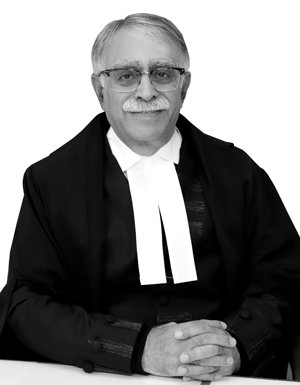

Legal Notes
Add a Note....