
The case was originally filed before the Central Administrative Tribunal (CAT), Principal Bench, which rejected the employees' claim for pay parity. They then appealed to the Delhi High Court, which ...

No Acts & Articles mentioned in this case
2023 INSC 995 REPORTABLE
IN THE SUPREME COURT OF INDIA
CIVIL APPELLATE JURISDICTION
CIVIL APPEAL NO.1663 OF 2016
Union of India & Ors. .… Appellant(s)
Versus
D.G.O.F. Employees Association and Anr. …. Respondent(s)
J U D G M E N T
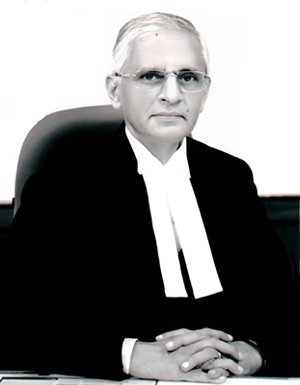
A.S. Bopanna, J.
1. The appellants-Union of India and others are before
this Court assailing the order dated 14.10.2014 passed by
the High Court of Delhi in Writ Petition (Civil) No.4606 of
2013. By the said order, the High Court has set aside the
order dated 18.10.2012 passed by the Central
Administrative Tribunal, Principal Bench (‘CAT’ for short) in
C.A. No.1663 of 2016 Page 1
O.A. No.39 of 2011 and the order dated 01.04.2013 passed
in the Review Application bearing R.A.No.43 of 2013. The
CAT had thereby declined the relief sought by the
respondents herein for parity in pay scales. The High Court
while setting aside the order of CAT has held that the
respondents would be entitled to the benefit in terms of
paragraph 3.1.9 of the recommendations contained in the
VI
th
Central Pay Commission (VI
th
CPC for short). The
appellants therefore claiming to be aggrieved are in this
appeal.
2.The respondent is an Association of Employees in the
Head Quarters of Ordnance Factory Board. They sought for
upgradation of the pay scales of Assistant and Personal
Assistants of Ordnance Factory Board, Headquarters as had
been given to similarly placed employees of Central
Secretariat Service (‘CSS’ for short) and equivalent posts in
Armed Force Headquarters Civil Service (‘AFHCS’ for short)
Cadre, New Delhi and similar other cadres. The Ministry of
Defence through the order dated 20.04.2010 did not
C.A. No.1663 of 2016 Page 2
approve the same. This was communicated to the
respondents by the letter dated 07.06.2010. The
respondents therefore being aggrieved were before the CAT.
The CAT also declined the prayer which resulted in the writ
proceedings before the High Court.
3. The High Court having analysed the matter was
however of the view that the members of the respondent
were historically treated as equals to CSS/CSSS employees
and had earlier enjoyed equal pay and all benefits. Hence a
direction was issued to the appellants herein to fix the
members of the Respondent Association and other similarly
placed Assistants working in Ordnance Factories and in
OFB in the same pay scale as was given to Assistants
similarly placed in CSS/CSSS, Army Headquarters, UPSC,
CAT, MEA, Ministry of Parliamentary Affairs etc. with effect
from the same date as was first given to them. The appellant
therefore claiming to be aggrieved by the same are in this
appeal.
C.A. No.1663 of 2016 Page 3
4. Heard Mr. R. Bala Subramanian, learned senior
counsel for the appellant, Ms. Kiran Suri, learned senior
counsel for the respondents and perused the appeal papers.
5. The thrust of the contention on behalf of the
appellants is that the power of judicial review in matters
pertaining to pay scale is limited, unless arbitrariness can
be demonstrated or there is palpable discrimination. Insofar
as the provision contained in the recommendations of the
VI
th
CPC the appellants seek to rely on para 3.1.14 which
recommended replacement pay scale. The reliance placed by
the respondents instead on para 3.1.9 is disputed to
contend that it does not refer to employees of OFB and it is
further contended that it does not extend any extra benefits.
In that backdrop, it is seen that the High Court having
noted the fact that the successive CPC recommendations
had resulted in parity in pay scales and in view of such
equal treatment historically had also considered the pay
scale as provided in the VI
th
CPC as well as the intention as
contained in para 3.1.9 which provided for parity.
C.A. No.1663 of 2016 Page 4
6. In order to appreciate the manner in which the High
Court has analysed the issue to arrive at its conclusion, it
would be apposite to reproduce relevant portion of the
consideration made by the High Court. The same reads as
hereunder:-
“16. In this background, it would be necessary to
extract the relevant recommendations of the Sixth
CPC, i.e. paras 3.1.9 and 3.1.14 which reads as
follows:
"3.1.9 Accordingly, the Commission recommends
upgradation of the entry scale of Section Officers in
all Secretariat Services (including CSS as well as
non-participating
ministries/departments/organizations) to Rs. 7500-
12000 corresponding to the revised pay band PB 2
of Rs.8700-34800 along with grade pay of Rs.4800.
Further, on par with the dispensation already
available in CSS, the Section Officers in other
Secretariat Offices, which have always had an
established parity with CSS/CSSS, shall be
extended the scale of Rs.8000-13500 in Group B
C.A. No.1663 of 2016 Page 5
corresponding to the revised pay band PB 2 of
Rs.8700-34800 along with grade pay of Rs.4800 on
completion of four years service in the lower grade.
This will ensure full parity between all Secretariat
Offices. It is clarified that the pay band PB 2 of
Rs.8700-34800 along with grade pay of Rs.4800 is
being recommended for the post of Section Officer in
these services solely to maintain the existing
relativities which were disturbed when the scale was
extended only to the Section Officers in CSS. The
grade carrying grade pay of Rs.4800 in pay band
PB-2 is, otherwise, not to be treated as a regular
grade and should not be extended to any other
category of employees. These recommendations shall
apply mutatis mutandis to post of Private
Secretary/equivalent in these services as well. The
structure of posts in Secretariat Offices would now
be as under: -
Post Pre revised
pay scale
Corresponding revised
pay band and grade
pay
LDC Rs.3050-4590 PB-1 of Rs.4860-
20200 along with
grade pay of Rs.1900
C.A. No.1663 of 2016 Page 6
UDC Rs.4000-
6000
PB-1 of Rs.4860-
20200 along with
grade pay of Rs.2400
Assistant Rs.6500-
10500
PB-2 of Rs.8700-
34800 along with
grade pay of Rs.4200
Section OfficerRs.7500-12000
Rs.8000-13500 (on
completion of four
years)
PB-2 of Rs.8700-34800
along with grade pay of
Rs.4800 PB-2 of
Rs.8700-34800 along
with grade pay of
Rs.5400* (on completion
of four years)
Under
Secretary
Rs.10000-15200
Rs.8000-13500 (on
completion of four
years)
PB-3 of Rs.15600-39100
along with grade pay of
Rs.6100
Deputy
Secretary
Rs.12000-16500 PB-3 of Rs.15600-
39100 along with
grade pay of Rs.6600
Director Rs.14300-18300 PB-3 of Rs.15600-
39100 along with
grade pay of Rs.7600
* This scale shall be available only in such of those
organizations/services which have had a historical
parity with CSS/CSSS. Services like
AFHQSS/AFHQSSS/RBSS and Ministerial/
Secretarial posts in Ministries/Departments
C.A. No.1663 of 2016 Page 7
organizations like MEA, Ministry of Parliamentary
Affairs, CVC, UPSC, etc. would therefore be covered.”
XXXXX XXXXX XXXXX
Recommendations for non-Secretariat Organizations
3.1.14 In accordance with the principle established
in the earlier paragraphs, parity between Field and
Secretariat Offices is recommended. This will involve
merger of few grades. In the Stenographers cadre,
the posts of Stenographers Grade II and Grade I in
the existing scales of Rs.4500-7000/Rs.5000-8000
and Rs.5500-9000 will, therefore, stand merged and
be placed in the higher pay scale of Rs.6500-10500.
In the case of ministerial post in non-Secretariat
Offices, the posts of Head Clerks, Assistants, Office
Superintendent and Administrative Officers Grade
III in the respective pay scales of Rs.5000-8000,
Rs.5500-9000 and Rs.6500-105000 will stand
merged. The existing and revised structure in Field
C.A. No.1663 of 2016 Page 8
Organization will, therefore, be as follows:-
Designation Present
pay
scale
Recommende
d Pay scale
Corresponding Pay
Band & Grade Pay
Pay
Ban
d
Grade Pay
LDC 3050-
4590
3050-4590 PB-
1
1900
UDC 4000
-
6000
4000-6000 PB-
1
2400
Head
Clerk/Assistant/
Steno Grade
II/equivalent
4500-
7000/
5000-
8000
6500-
10500
PB-
2
420
0
Office
Superintendent/Sten
o Grade I/equivalent
5500-
9000
Superintendent/Asst
t. Admn.
Officer/Private
Secretary/equivalent
6500-
10500
6500-
10500
PB-2420
0
Administrative
Officer Grade II/Sr.
Private
7500-
12000
7500-
12000
entry grade
PB-2480
0
5400
C.A. No.1663 of 2016 Page 9
Secretary/equ. for fresh
recruits)
8000-
13500 (on
completion
of four
years)
(afte
r 4
year
s)
Administrative
Officer Grade I
10000-
15200
10000-
15200
PB-2610
0
Note1: The posts in the intermediate scale of
Rs.7450-11500, wherever existing, will be extended
the corresponding replacement pay band and grade
pay.”
Note 2 The existing Administrative Officer Grade
II/Sr. Private Secretary/equivalent in the scale of
Rs.7500-12000 will, however, be placed in the
corresponding replacement pay band and grade pay
till the time they become eligible to be placed in the
scale of Rs.8000-13500 corresponding to the
revised pay band PB 2 of Rs.8700-34800 along with
grade pay of Rs.5400.”
17.The Sixth CPC had this to say about the
AFHQ Civil Service, AFHQ Stenographer’s Services
C.A. No.1663 of 2016 Page 10
and other similarly placed posts in different
Headquarter organizations:
“AFHQ Civil Services and AFHQ
Stenographers Service
7.10.22 AFHQ Civil Services and AFHQ
Stenographers Service have demanded parity
with CSSS and CSS. Since the Commission
has recommended parity between posts in
headquarters and field offices, it is only
justified that such parity also exists between
similarly placed posts in different
headquarter organisations. The Commission,
accordingly, recommends that parity should
be maintained between the posts at the level
of Assistant and Section Officer in these
services.”
18.It is evident from the above discussion that
the denial of parity is based upon the Central
Governments interpretation of the 6
th
CPC
recommendations. As observed earlier, there
is about that parity had existed as between
C.A. No.1663 of 2016 Page 11
Assistants working in the OFs falling within
the jurisdiction of the OFB and identically
situated Assistants working in CSS/CSSS.
This parity had also existed as between
CSS/CSSS Assistants on the one hand and
similar ranking employees in all other
non-Secretariat employees working in
different departments in the Central
Government. This parity existed for 10
years even after the Fifth CPC
recommendations and its implementation.
The singular event which brought about a
change was not the result of the Sixth CPC
recommendations; it was the intervening
upgradation of the pay scales that had
existed for Assistants in all these
organizations pending the acceptance of
those recommendations. The upgradation
given to all others but denied to
employees in OFs was the point of
departure, and also the turning point of
the discrimination practiced against them.
C.A. No.1663 of 2016 Page 12
19.The Central Government’s first
explanation for denial is that this is in
terms authorized by Para 3.1.14 of the
Sixth CPC recommendations. That is
plainly incorrect, because that portion of
the Sixth CPC merely indicated the
replacement scales from the existing
Rs.5000-8000/- to be Rs.6500-10,500/-.
By the time this recommendation was
accepted, Assistants in the CSS/CSSS
were already enjoying the higher scale of
Rs.6500-10,500/-. Even the CCS (Revised
Pay) Rules, 2008 support this inference.
Under Rule 3(1) of the said Rules, “existing
basic pay” means “pay drawn in the
prescribed existing scale of pay, including
stagnation increment(s), but does not include
any other type of pay like ‘special pay’, etc.
Rule 3(2) on the other hand, prescribed
“existing scale” in relation to a Government
servant as “the present scale applicable to
the post held by the Government servant…as
on the 1
st
day of January..2006”. Rule 3 (7)
C.A. No.1663 of 2016 Page 13
defined “revised pay structure” as one in
relation to any post specified in column 2 of
the First Schedule and meaning “the pay
band and grade pay specified against that
post or the pay scale specified in column 5 &
6 thereof, unless a different revised pay band
and grade pay or pay scale is notified
separately for that post.” Rule 11 prescribed
the mode of fixation in pay after 01.01.2006.
Part B of Section II of the First Schedule to
the Rules specifically stated as follows:
“XXXXXXXXXXXXXXXXXXX
“Sl.
No.
(1)
Post
(2)
Present
scale
(3)
Revised
Scale (4)
Corresponding Pay &
Band
Para
No of
the
report
(7)
Pay Band
(5)
Grade Pay
(6)
OFFICE STAFF IN THE SECRETARIAT*
1. Section
Officer/
PS/equi
valent
6500-
10500/
-
7500-
12000
8000-
13500 (on
PB-2
PB-3
4800/-
5400/-
(on
3.1.9
C.A. No.1663 of 2016 Page 14
completion
of 4 years)
completion
of 4 years)
* This scale shall be available only in such of those
organizations/services which have had a historical
parity with CSS/CSSS. Services like
AFHQSS/AFHQSSS/RBSS and
Ministrial/Secretarial posts in
Ministries/Departments organizations like MEA,
Ministry of Parliamentary Affairs, CVC, UPSC, etc.
would therefore be covered.
OFFICE STAFF WORKING IN ORGANIZATIONS OUTSIDE THE
SECRETARIAT
1.Head
clerk/Assistants/Sten
o Grade II equivalent
4500-
7000/5000
-8000/
6500-
10500
8000-
135000
(on
completio
n of 4
years)
PB
-2
4200/-
5400/-
(on
completio
n of 4
years)
3.1.1
2
.
Administrative Officer
Grade II/Senior
Private
7500-
12000
7500-
12000
(entry
PB-
2
480/-
5400/-
3.1.
1
C.A. No.1663 of 2016 Page 15
Secretary/equivalent grade for
fresh
recruits)
8000-
13000/-
(on
completion
of 4 years)
(on
completion
of 4 years)
XXXXXXXXXXXXXXXXXX XXXXXXXXXXXXXX”
The interesting part of the above table is that but
for the explanation it affords, the substantive part
of the Rules are based on the replacement scales
being in accordance with the ones indicated in Part
A of the First Schedule-read with definition of
“revised pay”. The scales indicated, under the First
schedule are in the form of merger of four pay
scales- Rs.4500-7000/-; Rs.5000-8000/-; Rs.5500-
9000/- and Rs.6500-10,500/-. All are merged into
one pay scale, i.e., Rs.9300-34800/-. The Rules, as
well as the Sixth CPC recommendations
specifically talk of continuation of pay benefits
on the basis of “historical parity”. As observed
C.A. No.1663 of 2016 Page 16
earlier, this historical parity is not denied;
however, the explanation for denial of the
benefit of upgradation – and the consequent
placement in higher pay scales, to employees in
Ordnance Factories is that OFB employees are
not specifically mentioned, as opposed to
mention of other non-secretariat employees:
“like AFHQSS/AFHQSSS/RBSS and
Ministerial/Secretarial posts in Ministries/
Departments organizations like MEA, Ministry
of Parliamentary Affairs, CVC, UPSC, etc.” This
argument is both unpersuasive and specious,
because mention of specific department was
meant only by way of illustration; else a
contrary intention would have been clearer.
That the mention of some, not all non-
secretariat employees is illustrative and not
exhaustive is clear from the qualifying terms –
“like” and “etc.” The allusion to historical parity
with reference to only a few illustrations was to
encompass all those organizations where
employees had identical pay scales and not
merely those in enumerated departments or
C.A. No.1663 of 2016 Page 17
organizations. Any other interpretation would
negate the whole intention of maintaining
historical parity altogether.
21. The other submission of the respondents
was that employees in Ordnance Factories were
not working in Headquarters based
organizations. The history of Ordnance
Factories, available from the record is that by
the Central Government order dated 27
th
September, 1975, the President had extended
the Armed Forces Headquarters Service scheme
mutatis mutandis to the Directorate General
Headquarters Staff. Later, by order of
09.01.1979, the Ordnance Factory Board was
set up at the Headquarters office of the DGOF.
These documents point to the untenability of
the respondents’ submission that of services are
not Headquartes based services. In this context, it
is worth mentioning that what comprises
“Headquarters” is indicated in the Sixth CPC
recommendations although no such definition
exists under the CCS (Revised Pay) Rules. At para
C.A. No.1663 of 2016 Page 18
3.1.1 of the Sixth CPC recommendations, it is
stated that:
“Office staff in Headquarters and Field
Organisations of Government of India
3.1.1 The various Secretariats of the
Ministries and Departments of Government
of India together constitute the headquarters
organization. The Secretariats are chiefly
involved in matters relating the formulation of
policy and ensuring that these policies are
executed in a coordinated and effective
manner. Actual execution of these policies,
however, is left to field agencies outside the
Secretariat which may be either attached or
subordinate offices or quasi-
Government/autonomous/public sector
undertakings.”
22.If the respondents’ submission is that
Headquarters implies the headquarters being
located in New Delhi, there is no warrant-
either express or implied, for such a
C.A. No.1663 of 2016 Page 19
contention. Headquarters of different Central
Government organizations can and are
geographically dispersed- some, deliberately
having regard to functional necessity and
others as a historical reality. These can,
without anything more, not be the basis of
discrimination or valid differentiation.”
(emphasis supplied)
7.Having noted the manner of consideration made by the
High Court, before we advert to appreciate the correctness
of the same, it would be necessary to take note of the rival
contentions addressed relating to the power of the Court to
delve into the aspect relating to determination of pay scale.
The learned senior counsel for the appellant in support of
his contention that the fixation of pay scale is in the realm
of the employer and the Court should exercise restraint has
relied on the pronouncement of this Court in State of
Punjab and others vs. Jagjit Singh and others (2017) 1
SCC 148 with specific reference to para 42 wherein the
parameters relating to consideration of cases relating to
C.A. No.1663 of 2016 Page 20
equal pay for equal work has been adverted to and the
extent to which comparison between one set of employees
with another is permissible. It is stated therein that where
there is no comparison between one set of employees of one
organisation and another set of employees of a different
organization, there can be no question of the equation of
pay scales under the principle of “equal pay for equal work”
even if two organizations have a common employer.
8.The decision in Union of India vs. Indian Navy
Civilian Design Officers Association and Another (2023)
SCC Online SC 173 is next referred to by the learned senior
counsel for the appellant to point out the consideration
made therein at para 11 to 14 with reference to the earlier
decisions of this Court. It is thereafter held therein that the
Courts, therefore, should not enter upon the task of job
evaluation which is generally left to the expert bodies like
the Pay Commissions which undertake rigorous exercise for
job evaluation after taking into consideration several factors
like the nature of work, the duties, accountability and
C.A. No.1663 of 2016 Page 21
responsibilities attached to the posts, the extent of powers
conferred on the persons holding a particular post, the
promotional avenues, the statutory rules governing the
conditions of service, the horizontal and vertical relativities
with similar jobs etc.
9.The learned senior counsel for the respondents on the
other hand has referred to the decision of this Court in
Union of India vs. Dineshan K.K. (2008) 1 SCC 586
wherein it is held that though the equation of posts and
equation of pay structure being complex matters are
generally left to the executive and expert bodies like the Pay
Commission etc. and the carefully evolved pay structure
ought not to be ordinarily disturbed by the Court as it may
upset the balance and cause avoidable ripples in other
cadres as well, nevertheless, it will not be correct to lay
down as an absolute rule that merely because
determination and granting of pay scales is the prerogative
of the executive, the Court has no jurisdiction to examine
any pay structure and an aggrieved employee cannot be left
C.A. No.1663 of 2016 Page 22
with no remedy if he is unjustly treated by arbitrary State
action or inaction, except to go on knocking at the doors of
the executive or the legislature. It is further held therein
that undoubtedly, when there is no dispute with regard to
the qualifications, duties and responsibilities of the persons
holding identical posts or ranks but they are treated
differently merely because they belong to different
departments or the basis for classification or post is ex facie
irrational, arbitrary or unjust it is open to the Court to
intervene.
10. A cumulative perusal of the opinion expressed by this
Court would indicate that though the Courts would not
undertake the exercise of determining the pay scale keeping
in view the nature of the work by comparing employees who
are not similarly placed in cases where the exercise of
determining such complex issues would arise, at the same
time, relief cannot be denied to the employees when the
entitlement is denied due to irrational consideration
without application of mind to the facts involved in the case
C.A. No.1663 of 2016 Page 23
by the employer, thereby denying the benefits to the
employees. If this aspect of the matter is kept in view, a
perusal of the consideration made by the High Court as
seen from the portion reproduced above from the judgment
of the High Court, it would disclose that the High Court has
not undertaken the exercise regarding which restraint has
been expressed by this Court. However, on the admitted
facts and the earlier situation which existed, a consideration
has been made keeping in view the very recommendation of
the Pay Commission in reckoning the appropriate
application of the pay scale. In that regard, all that has been
adverted to by the High Court is as to whether the
employees who are the members of the respondent and are
employed in the headquarters are similarly placed as that of
the employees of CSS/CSSS and in that regard has
considered the matter further to ensure that the members
of the respondent are not discriminated upon.
11. In that view of the matter what is to be taken into
consideration is as to whether in the facts and
C.A. No.1663 of 2016 Page 24
circumstances of the present case the High Court was
justified in arriving at the conclusion that the provision
contained in para 3.1.9 of the Sixth CPC would apply to the
fact situation and in that regard whether it had rightly
rejected the contention of the appellant herein that it ought
to have been guided by para 3.1.14 of the
recommendations. The contention as noted by the High
Court is what was urged before us. In that regard, at the
outset it is necessary to clarify that the conclusion as
reached with regard to the parity in pay scale in the case of
the employees who are members of the first respondent is
basically due to the fact that they are employees in the
headquarters of the Ordnance Factory and therefore they
are similarly placed as that of the Assistants in CSS/CSSS
Army Headquarters as well as such other similarly placed
organisations referred to in the recommendations. If that be
the position, the conclusion as reached by the High Court is
unexceptionable.
C.A. No.1663 of 2016 Page 25
12. However, the learned senior counsel for the appellant
in order to buttress his contention that para 3.1.14 of the
recommendations would apply has sought to rely on the
decision of this Court in Union of India and Others vs.
Manoj Kumar and Others Civil Appeal Nos.913-914 of
2021 disposed of on 31.08.2021 wherein this court while
examining the very same provision as contained in paras
3.1.9 and 3.1.14 had arrived at the conclusion that the
benefit of equal pay in the said case cannot be extended and
had held that the Pay Commission, which is a specialised
body set up with the objective of resolving anomalies had
made its recommendation, which would not call for
interference. The decision would indicate that this Court
though had referred to the very paragraph as contained in
the Sixth CPC recommendations, what had however arisen
for consideration therein was with regard to disparity
between Secretariat and Field Officers. What was noted in
that case was the claim made by Private Secretaries Grade
II employed in Eastern Central Railways (Field Office/Zonal
Railways) for parity in pay with their counterparts working
C.A. No.1663 of 2016 Page 26
in the Central Secretariat Stenographers Service/Railway
Boards Secretariat Stenographers Service/Central
Administrative Tribunal. In that view, this Court was of the
view that though there is an observation that the
recommendations shall apply mutatis mutandis to Private
Secretaries and posts equivalent thereto in the service
under para 3.1.9; the subsequent para 3.1.14 has
specifically dealt with the aspect of parity between the Field
and Secretariat Offices which was really the subject matter
of the claim therein. The said observation, though
emphasised by the learned senior counsel for the appellant
would indicate that it is not a consideration akin to the
consideration herein. As seen from the highlighted portion
of the reproduced paragraphs from the impugned order
passed by the High Court hereinabove, it would disclose
that in the instant facts the reliance placed by the High
Court on para 3.1.9 is based on the fact that there was
similarity inasmuch as the pay scale as sought for
implementation is the one which was provided to the
C.A. No.1663 of 2016 Page 27
employees of the headquarters as they were similarly placed
as the employees of the headquarters in CSS/CSSS.
13. Further, what was also taken into consideration by
the High Court is the historical similarity in pay scales
which existed prior to the recommendations in the Sixth
CPC. Such historical similarity which had existed was taken
note and, in that light, the pay scale which was applicable
was taken into consideration and had accordingly arrived at
the conclusion that the employees in the headquarters of
the Ordnance Factories being similarly placed cannot be
discriminated. Therefore, such consideration in the instant
case would fall within the parameters as permitted by this
Court. Also, in the present circumstance, the High Court
has adverted to the fact situation and has thereby rectified
the pay anomaly. In fact, the question of parity with regard
to the pay scale to the Assistants in the lower formations in
the Indian Navy with that of the Assistants in CSS was held
as discriminatory and violative of Article 14 of the
Constitution by this Court in the case of All India Naval
C.A. No.1663 of 2016 Page 28
Clerks Association and Others vs. Union of India and
Others in Civil Appeal arising out of Special Leave Petition
(Civil) No.29204 of 2019 dated 27.07.2022.
14. As noted by the High Court, it is evident that parity of
pay scales vis-à-vis LDCs, UDCs, Assistants/PAs and
Stenographers, was maintained even prior to 01.01.1986
under the Third Central Pay Commission recommendations
(for the period of 01.01.1973 to 31.03.1985). This parity
was continued in the Fourth Central Pay Commission
recommendations (with effect from 01.01.1986 to
31.12.1995) and the Fifth Central Pay Commission
recommendations (for the period 01.01.1996 to
14.09.2006). The post of Assistants, PAs and Stenographers
is governed by Director General Ordnance Factories
Headquarters Civil Service Rules, 1977.
15. Be that as it may, in the present facts the perusal of
the judgment passed by the High Court impugned herein
would indicate that the High Court having kept in view the
legal, as well as the factual aspects, has not proceeded in a
C.A. No.1663 of 2016 Page 29
manner so as to equate two sets of employees in different
organizations. But, keeping in view the recommendation of
the Pay Commission and the applicability of the pay scales
recommended to similarly placed employees employed in the
headquarters and on noticing discrimination despite
historical similarity has merely rectified the error, which
does not call for interference.
16. In view of the above, the appeal being devoid of merit,
stands dismissed with no order as to costs.
17. Pending application, if any, shall stand disposed of.
…………...………………….…………………J.
(A.S. BOPANNA)
…………...………………….…………………J.
(PAMIDIGHANTAM SRI NARASIMHA)
New Delhi,
November 09, 2023
C.A. No.1663 of 2016 Page 30

 Login with google
Legal Notes
Add a Note....