
•Eastern Railway Adminstration of Union of India is before the supreme court to challenge the judgement given by the high court of calcutta which dismissed the writ petitions filed by ...
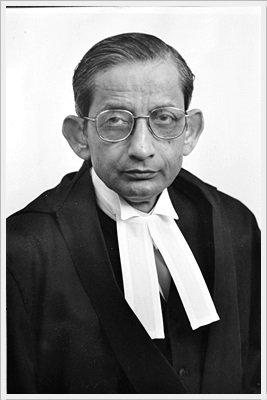

No Acts & Articles mentioned in this case
REPORTABLE
IN THE SUPREME COURT OF INDIA
CIVIL APPELLATE JURISDICTION
CIVIL APPEAL NO. 7353-7354 OF 2008
(Arising out of SLP (C) No.26873-26874 of 2005)
Union of India & Ors. … Appellant
Versus
Satya Brata Chowdhury & Ors. … Respondents
J U D G M E N T
S.B. Sinha, J.
1.Leave granted.
2.Eastern Railway Administration of Union of India is before us
aggrieved by and dissatisfied with a judgment and order dated 20.4.2005
passed by a Division Bench of the Calcutta High Court in WPCT No.365 of
2004 and WPCT No.840 of 2004 dismissing the writ petitions filed by
appellants from a judgment and order dated 3.6.2004 passed by the Central
Administrative Tribunal in Original Application No.1254 of 2000 and 10
th
February 2004 passed by the Tribunal in Original Application No.1458 of
1997.
3.The short question which arose for consideration before the Tribunal
and consequently before the High Court, was whether the recommendations
of the Fifth Central Pay Commission could have been extended in favour of
respondents herein with effect from 18.2.2000 in stead and in place of
1.10.1996; and whether their claim for fixation of pay scale with effect from
1.1.1996 was justified.
4.Respondents were appointed as Time Keepers in different workshops
belonging to the Eastern Railway Administration. Other Railway
Administrations also have similar workshops. Time Keepers, although are
recruited in the clerical grade, in view of this Court’s decision in Works
Manager, Central Railway Workshop v. Vishwanath & Ors. [AIR 1970 SC
488] are to be treated as workers under the Factories Act, 1948.
5.Respondents appointed as Time Keepers at Liluah and Kancharpara
Workshops were, however, being treated as Clerical Grade employees.
Indisputably, the concerned workers filed an Original Application before
the Central Administrative Tribunal, Calcutta Bench, which was marked as
T.A. No.1585 of 1996, praying, inter alia, for the following reliefs :
2
“i)That a separate cadre and a separate
seniority list for the Time Keepers of the
Liluah Workshop be maintained and the
Time Keepers should not be transferred to
the post of Clerks.
(ii)For rescinding and revoking the order dated
14.7.1985 (Annexure-B to the petition) for
transferring petitioner Nos.1, 2 and 11 from
Time Officer to clerical side.
(iii)To pass an order of injunction restraining
the respondents from transferring petitioner
Nos.1, 2 and 11 from Time Office to the
clerical side.”
It was allowed, opining :
“We find that no records of Kharagpur Workshop,
S.E. Railway, Diesel Locomotive Workshop,
Varanasi or C.L.W. as stated in the reply were
produced during hearing to demolish the case of
the applicants that the Time Keeprs are treated as a
distinct cadre with separate seniority, promotion
and transfer lists. In view of the admission made
by the official respondents in this respect in the
unreported judgment of this Tribunal, mentioned
above, that except in Eastern Railway, Time
Keepers are treated as a separate cadre, there could
be no doubt about the authenticity of the
statements made by the applicants in this petition
on this point. Annexure ‘B’ to the reply whereby
the respondents wanted to establish that applicant
Nos.1, 3, 4, 7, 8 and 11 refused to be Time
Keepers on 26.8.84 has no legal consequence in
view of the decision of the Supreme Court referred
to above, holding that the nature of the duties
discharged by the Time Keepers bring them within
the purview of ‘worker’ under the Factories Act,
3
1948. Under the circumstances, the alleged
refusal cannot change the legal position.
We are bound by the decision of the Supreme
Court and the judgment of our Bench dated
11.5.90. In view of the findings of the Supreme
Court that Time Keepers are ‘workers’ within the
meaning of Factories Act, 1948 for all practical
purposes, the authorities of Eastern Railway are
not permitted to treat the Time Keepers in the
manner they have been treating them.”
The Tribunal, on the basis of the said findings, issued the following
directions :
“On careful consideration of the facts and
circumstances of this case and the submissions of
the counsel for the parties to the proceeding, we
quash the order of transfer dated 14.7.85 of the
applicant Nos.1, 2 and 11. We also direct the
official respondents herein to treat the Time
Keepers in the Eastern Railway, Liluah Workshop
or elsewhere in a similar manner as is being done
by Kharagpur Workshop, S.E. Railway, Diesel
Locomotive Workshop, Varanasi and C.L.W. as a
separate cadre regarding seniority, confirmation,
promotion and transfer etc. and allow them all
other benefits admissible to them under the
Factories Act, 1948 and all these must be finalized
and our direction be implemented within six
months from the date of communication of this
order.”
It furthermore observed :
4
“The Eastern Railway, being one of the biggest
employers, we hope that this decision will be
treated as passed on a representative suit and the
directions given in this application be made
available to the Time Keepers who are similarly
circumstanced but are not parties to this
proceeding. The Railway, as a model employer,
will try to prevent the Time Keepers from coming
to this Tribunal for obtaining similar reliefs
repeatedly and thereby prevent wasting public
money in fighting out futile litigations. The
country is passing through serious economic crisis
and all unnecessary and useless expenses should
be prevented by taking reasonable steps whenever
necessary.”
6.Indisputably, pursuant to or in furtherance of the said observations,
options were obtained from them as to whether they would continue as
clerical grade staff or workmen. They were treated to be workers under the
Factories Act. A separate seniority list started to be maintained. A different
cadre was created. By an order dated 28.10.1991, it was directed :
“The existing staff of Mech./Elect. Deptt.
Attached to Time office should be treated as one
Unit and in one seniority group. If anyone of the
time office staff except the petitioners desires to
get merged with clerical group of staff on their
own volition in writing, there should be no cause
for rejection.”
5
7.Indisputably, the Central Government constituted the Fifth Pay
Revision Committee. It made its recommendations. The said
recommendations were enforced as regards clerical staff with effect from
1.1.1996. By an office order dated 18.2.2000, the Railway Board directed
implementation of the said revised pay with effect from 18.2.2000, in the
case of respondents, stating :
“… The Ministry have noted that the pattern of
recruitment of Time Keepers in Eastern Railway
differs from the pattern prevalent elsewhere. Time
Keepers being a common category existing in
various Railways and Production Units, it has
been decided that the recruitment pattern,
including recruitment qualifications etc. for
induction as Time Keepers at various levels in
Eastern Railway should fall in line with the
practice prevailing in other Railways and
Production Units.
2.The Ministry of Railways, with the approval
of the President, have accordingly decided as
under :
(i)Induction at the level of Junior Time
Keepers should continue in accordance with
the existing pattern, which includes direct
recruitment through RRBs to the extent of
66 from amongst candidates possessing
qualification of matriculation;
(ii)Induction at the level of Senior Time
Keepers should henceforth take place in
accordance with the existing pattern for Sr.
Clerks, which would include direct
recruitment through RRBs, to the extent of
20% from amongst candidates possession
6
qualification of graduation and 13½%
through Limited Departmental Competitive
examination held by RRB’s from amongst
serving staff in the grade Rs.3050-4590 and
(iii)The following pay scales should be allotted to the Time
Keeping Staff of Eastern Railway :
S. Designation Existing Pay
Improved
No. Scale (Rs) Pay Scale (Rs)
1.Jr. Time Keeper3050-4580/- 3050-
4590/-
2.Sr. Time Keeper4000-6000/- 4500-
7000/-”
8.By another letter dated 28.7.2000, it was furthermore directed by the
Railway Board :
“However, with a view to standardizing the cadre
structure at least for the future, since the change in
recruitment pattern could take place only
prospectively in Eastern Railway, the benefit of
the improved pay structure has been permitted
with prospective effect only.”
9.We may also, at this stage, place on record, a letter of the Chief
Personnel Officer of the Eastern Railway dated 13.7.2000 wherein it was
stated that no such recruitment rules were framed by the Eastern Railway
Administration, stating :
7
“Would you please connect this Railway’s letters
of even number dated 28.4.2000 and 8.6.2000
wherein it was requested to examine the issue
related to the date of effect of the upgraded Pay
Scale of Time Keeping staff of this Railway. After
collecting information from various Zonal
Railways/Production Units it is understood that
the upgraded pay scale of Time-Keeping category
(where exists) were introduced w.e.f. 1.1.1996 in
all Zonal Railways/Production Units except
Eastern Railway wherein instructions were issued
by Railway Board that the same order will be
effective from the date of issue of modified
Recruitment Rules in line with Ministerial staff.
In Eastern Railway no separate Recruitment
Rule was framed after the order of the Hon’ble
CAT/Cal on May/90 for treating the Time-keepers
a separate entity as workers within the meaning of
Factories Act, since there was no intake for filling
up the vacancy of Time-keepers after May/90, but
before that the Time-keepers of this Railway were
Recruited from the same panel prepared for clerks
i.e. their Recruitment Rule was same as that of the
clerks.”
10.The legality and/or validity of the decision of the Railway Board was
the subject matter of the Original Application filed by the respondents.
Indisputably, the only contention raised in support of the said decisions by
the appellant was that the recruitment pattern for the post of Time-Keeper in
Eastern Railway was different.
8
11.Pranab Kumar Chakraborty and others filed an Original Application
before the Tribunal which was marked as OA No.1458 of 1997. The said
application was disposed of by the Tribunal, holding :
“We have gone through the said communication
dated 28.7.2000, which has been received from the
Rly. Board. In this there is indication that the
recruitment pattern was changed, but it is not the
case. In subsequent rule depriving or denying the
applicants from getting the pay scales with effect
from 1.1.1996 was hampered by this change. For
the time being we are not inclined to do into the
change in the policy stand which may affect the
equation of a particular group or grade with the
corresponding Ministerial Staff, which is an
internal matter to be sorted out. However, to the
extent the benefits has been extended to the Time
Keeper grades the Eastern Rly, the same should be
equitably applicable with effect from 1.1.1996 as
the case is in respect of the awarding the scales
under V CPC. We, therefore, partially allow this
OA to the extent that the benefit should be
awarded with effect from 1.1.1996 to the present
applicants only within 3 months from the date of
communication of the order with arrears.”
12.Satya Brata Chowdhary and 70 others thereafter filed another
Original Application before the Tribunal which was marked as OA No.1254
of 2000.
By a judgment and order dated 3.6.2004, the question, as to whether
the Eastern Railway Administration was justified in its stand not to treat the
9
respondents similarly in the matter of grant of benefit of revision in the pay
scales was answered, stating :
“We have gone through the said communication
dated 18.2.2000 (Annexure-A/11) as well as dated
28.7.2000 (Annexure A/18), which was received
from the Railway Board. In the above said letter
of Railway Board dated 28.7.2000, it has been
indicated that pattern of recruitment of the Time
Keepers in Eastern Railway differs from the
pattern prevalent in other Railways. Accordingly,
treatment of this order in Eastern Railway has to
be essentially different from that of the other
Railways. But a bare perusal of the record clearly
indicates that actually it is not so.”
It was directed :
“In view of above, the Railway Board’s circular
dated 18.2.2000 (Annexure-A/11) and order dated
28.7.2000 (Annexure-A/10 quashed/set aside. The
extent of the benefit which has been extended to
the and CLW, Chittaranjan (Annexure-A/14) w.e.f
1.1.1996 and also the letter of the Chief Personnel
Officer (Admn) dated 13.7.2000 Grades of S.E.
Railway/as well as DLW, Varanasi and CLW,
Chittaranjan should also be extended in favour of
the applicants which are also similarly situated
persons and working as Time Keeper in the Liluah
Workshop of Eastern Railway. The respondent
authorities, more particularly, the respondent Nos.
5 and 6 are directed to fix the pay scale of the
applicants as per 5
th
Pay Commission’s
recommendation for the post of Time Keeping
Cadre w.e.f. 1.1.1996 instead of 18.2.2000 and
extend all consequential financial and other
benefits in favour of the applicants within a period
10
of three months from the date of communication
of this order along with arrears. It is made clear
that we are not inclined to say anything as to the
payment of interest.”
As noticed hereinbefore, writ petitions preferred thereagainst by
appellant were dismissed by the High Court.
13.The matter came up before this Court for hearing on 8.2.2008 when,
inter alia, a contention was raised on behalf of respondents that the revised
pay scales of Time-Keeper at the Jamalpur workshops had been
implemented but the same was denied to the staff at Liluah and
Kancharpura workshops.
14.An additional affidavit thereafter has been placed on record on behalf
of appellant to contend that the Time-Keepers of Jamalpur workshop had
been treated as clerical grade staff and, thus, they are not similarly situated
as the respondents.
15.The learned Additional Solicitor General, Mr. Amarendra Sharan,
appearing for the appellant, would contend that as the respondents had been
treated to be workers under the Factories Act and obtained several benefits
including overtime, the appellants were entitled to implement the
recommendations of the Fifth Pay Revision Commission with effect from
11
18.2.2000 in stead and in place of 1.1.1996. Such a classification,
according to the learned counsel, being valid and reasonable, does not
attract the wrath of Article 14 of the Constitution of India.
16.Mr. Gaurav Jain and Mr. Shekhar Kumar, learned counsel appearing
on behalf of respondents, on the other hand, would contend that the
purported classification of Time-Keepers in different workshops cannot be
treated to be valid warranting different treatments so far as regards
implementation of the recommendations of the Fifth Pay Commission is
concerned.
17.We may, at the outset, notice that the only contention raised by the
appellant before the Tribunal, as also before the High Court, was that the
recruitment Procedure in the Eastern Railway Administration was different
for the Time-keepers. It has been held not to be so. The judgment of the
Central Administrative Tribunal dated 5.7.1991 in TA No.1585 of 1986 has
been noticed by us. Therein, the Tribunal directed the workmen of the
workshops at Liluah and elsewhere to be treated at par with their
counterparts of Kharagpur, Banaras and Chittaranjan locomotive workshop.
It was, therefore, impermissible for the appellant to treat the workers
similarly situated, differently. They were to be treated as workers under the
Factories Act. Only because some overtime allowance became payable to
12
them or a separate seniority list was maintained or a cadre for the said
workers on workshop basis was constituted, the same by itself, in our
opinion did not authorize the Eastern Railway Administration to
discriminate the workers working in one workshop with the workers
working in the other.
18.We may also notice that letter dated 13.7.2000 issued by the Chief
Personnel Manager, Eastern Railways Administration; from a perusal
whereof it appears that the claim of appellants that a different recruitment
rules existed for the Time-Keepers of different workshops within the
Eastern Railway Administration, is not correct. It has also been so found by
the Tribunal as also by the High Court.
19.The contention of the learned Additional Solicitor General that the
Time-Keepers recruited in the Liluah workshop could be treated differently
from their counterparts at Jamalpur as in the said letter they were not treated
as clerical grade staff, also does not appear to be wholly correct. Appellants
themselves have annexed with their affidavit a letter dated 16.6.2006 issued
by the Assistant Personnel Officer, Eastern Railway, Jamalpur to Chief
Assistant Officer, Eastern Railway, Kolkatta wherein it was stated :
“As cadre/seniority of Time keeping staff is being
maintained with General Group Clerks as such
13
benefit of restructuring has been given to the time
keeping staff.
The staff posted in Time Office and working as
Time keepers are governed under Factories Act.”
20.The Time keepers of Jamalpur Workshop, thus, have been treated as
workers under the Factories Act and if they had been given the benefit of
recommendations of the Fifth Pay Revision Commission, we fail to
understand why the same benefit would be denied to the respondents herein.
21.For the reasons aforementioned, we do not find any ground to
interfere with the impugned judgment and orders. The appeals are
dismissed with costs. Counsel’s fee assessed at Rs.25,000/-.
..………………………J.
[S.B. Sinha]
..………………………J.
[Cyriac Joseph]
New Delhi;
December 17, 2008
14

 Login with google
Legal Notes
Add a Note....