
As per case facts, the respondent took over the appellant's undertaking, leading to a dispute over the fair market value, particularly concerning compensation for service lines laid using consumer contributions. ...

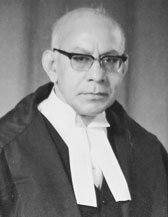
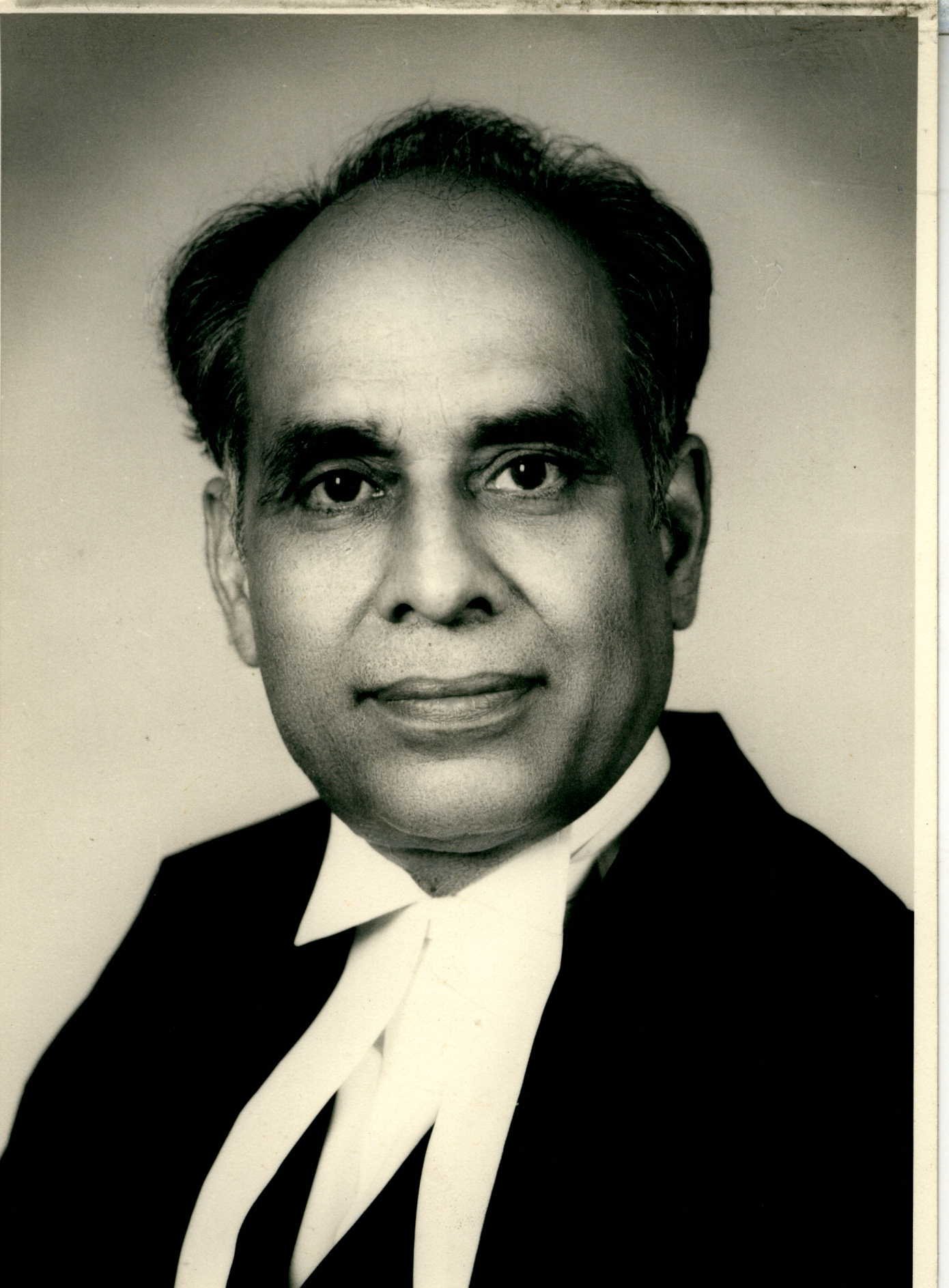
No Acts & Articles mentioned in this case
http://JUDIS.NIC.IN SUPREME COURT OF INDIA Page 1 of 8
PETITIONER:
UPPER GANGES VALLEY ELECTRICITY SUPPLY COMPANY LTD.
Vs.
RESPONDENT:
U.P. ELECTRICITY BOARD
DATE OF JUDGMENT19/12/1972
BENCH:
CHANDRACHUD, Y.V.
BENCH:
CHANDRACHUD, Y.V.
KHANNA, HANS RAJ
VAIDYIALINGAM, C.A.
CITATION:
1973 AIR 683 1973 SCR (3) 107
1973 SCC (1) 254
CITATOR INFO :
RF 1989 SC 890 (18,30)
ACT:
Arbitration Act (10 of 1940), s. 30--Speaking award -Error
apparent on its face with respect to a severable Item-if
entire award should be set aside-Court, if may amend award
instead of remitting it.
HEADNOTE:
The respondent took over the appellant's Undertaking, in May
19591, but as the parties were at variance on the true
market value to ',- paid to the appellant, the matter was
referred to arbitration. As the arbitrators were unable to
agree on the question whether the appellant was entitled to
compensation for the 'service lines which were laid with the
help of contributions made by consumers, they referred the
question to the umpire. The umpire framed an issue and gave
a finding that the appellant was not entitled to claim from
the respondent the value of the portion of the service lines
which were laid at the cost of the consumers, for the sole
reason that they were, laid at the cost of the consumers.
The appellant filed an application under s. 30 of the
Arbitration Act, 1940, challenging the validity of the award
on the question. The lower court and High Court hold
against the appellant.
Allowing the appeal to this Court,
HELD : (1) The appellant's application for setting aside the
award could succeed only if there was an error of law on the
face of the award. The other conditions of s. 30 have no
bearing on the, case.
(2)The umpire had made a speaking award and there was no
question of the construction of any document incorporated
in or appended to the award. If it is transparent from the
award that a leggal proposition which forms its basis is
erroneous, the award is liable to be
set aside.[111 D]
Unionof India Y. Bugo Steel Furniture P. Ltd., [1967]
(1) S.C.R. 324, M/S. Allen Berry and Co. P., Ltd. v. The
Union of India, A.I.R. 1971 S.C. 696, followed.
(3)The conditions of licence, the provisions of the Act
namely, ss. 2(f), (1) and (n), 3(f), 7(1) as it stood at the
http://JUDIS.NIC.IN SUPREME COURT OF INDIA Page 2 of 8
time of taking over, Section 8 of the Indian Electricity
Act, 1910, Paragraph VI of, the Schedule to the Act, and the
legal position, all point only in one direction that the
appellant is entitled to receive compensation for the
service lines laid at the cost of the consumers. The
umpire, however, in his calculations, had expressly excluded
the value of the portion of service lines installed at the
cost of consumers. In making the exclusion, the umpire had
therefore mis-conducted himself in law rendering his award
erroneous on its face. [113G]
108
Calcutta Electric Supply Corporation v. Commissioner of
Wealth-tax, West Bengal, 82 I.T.R. 154 referred to.
(4)The reference to the arbitrations in the present case
was on the broad question of the fair market value of the
appellant's undertaking, and the parties did not refer any
specific question of law for the decision of the
arbitrators. Therefore, the decision in Durga Prasad
Chamria and Anr. v. Sewkishendas Bhatter, A.I.R. 1949 P.C.
334 has no application. [115B]
(5)The part of the award, which is invalid, being
severable from that which is valid, there is no
justification for setting aside the entire award. [115D]
(6)This Court should itself amend the award instead of
remitting it in the interests of justice and to avoid undue
delay in a dispute pending since 1959. [115E]
(7)The consumers' contribution for laying the service line
were made from April 1, 1958 to March 31, 1959. The, taking
over of the undertaking by the respondent being in May 1959,
the consumers' contribution would roughly represent the
market value of the service lines, even if, as required by
the first proviso to s. 7(1) as it then stood, due regard
was to be had to the nature and condition of the 'works', to
the circumstance that they ate in such a Position as to be
ready for immediate working, and to their suitability for
the purposes of the undertaking. Therefore, the sum
representing the consumers' contributions should be taken
into account in arriving at the price to be paid to the
appellant. [115G],
JUDGMENT:
CIVIL APPELLATE JURISDICTION : Civil Appeal No. 1314 of
1967.
Appeal by special leave from the judgment and decree dated
April 15, 1966 of the Allahabad High Court in F.A.F.O. No.
279 1963.
B. Sen and S. N. Mukherjee, for the appellant.
C. B. Agarwala, O. P. Rana and Ravinder Bana, for the res-
pondent.
The Judgment of the Court was delivered by
CHANDRACHUD, J. On February 5, 1929 the Governor-in Council
of the then Government of the United Provinces granted to
Messrs. Martin & Co. a licence under section 3 of the
Indian Electricity Act, 1910 for supply of electric energy
within the Districts of Bijnor and Moradabad. Messrs.
Martin & Co., who were Managing Agents of the apppllants
company, assigned that licence to it. By a notice dated
January 31, 1957 the Government of Uttar Pradesh exercised
its option to purchase the Undertaking of the appellant on
the expiry of two years from the date of the notice. This
period was on appellant's request, extended till May 4,
1959. The respondent-Uttar Pradesh State Electricity, Board
was constituted on April 1, 1959 and under section 71 of the
http://JUDIS.NIC.IN SUPREME COURT OF INDIA Page 3 of 8
109
Electricity (Supply) Act, 1948, the option of the Government
of Uttar Pradesh to purchase electrical undertakings stood
transferred to the respondent.
By a letter dated May 1, 1959 respondent informed the appel-
lant that it had decided to purchase the Undertaking on
payment of a sum of Rs. 25,38,407/-, being the fair market
value of all its assets, inclusive of solatium. On May 4,
1959 respondent made a provisional payment of rupees 15
lakhs to the appellant which, the latter accepted under
protest. The Undertaking was eventually taken over by the
respondent on May 4/5, 1959.
Being unable to agree on the true market value of the Under-
taking, parties referred their differences to two
arbitrators. Out of the several contentions raised before
the arbitrators, we are concerned with one only : Whether,
in the computation of the market value of its Undertaking,
the appellant was entitled to compensation for the "service
lines" which were laid with the help of contributions made
by consumers. On this question, arbitrators were unable to
agree and therefore they referred it to the decision of an
umpire, Shri Randhir Singh.
Out of the eight issues framed by the umpire, issues 1 (a),
1 (b), 7 and 8 only are relevant. These issues read thus :
Issue No. 1 (a) : Is the Board entitled to get a credit for
the amount of consumers' contribution paid for the service
lines, laid on their premises and at their cost ?
Issue No. 1 (b) : What is the amount of the Consumers'
contribution for the period 1st of April, 1958 to 4/5 May,
1959 ?
Issue No. 7 : Has any excess- payment been made by the Board
to the Company ? If so are the Board entitled to a refund,
and interest thereon ? What should be the rate of interest
if any ?
Issue No. 8 : What was the fair market value of the
Undertaking on the midnight of 4/5 May 1959 ?
Issue No. 1 (a) : "The Company is not entitled to claim from
the Board the value of the portion of the service lines
which were laid at the cost of the consumers."
Issue No. 1 (b) : "The Consumers' contribution from 1.4.58
to 31st of March, 1959 is Rs. 2,38,255/-. The amount of the
contribution from 1.4.59 to 415 May, 1959 has not been
proved."
On Issue No. 8, the umpire found that on the date of
purchase, the fair market value of the assets of the
Undertaking was
110
Rs. 23,81,670/-. As the appellant had already received a
sum of rupees 15 lakhs from the respondent and as the
respondent was entitled to a refund of Rs. 9,80,238/- on
account of security deposits held by the appellant, the
Umpire came to the conclusion by his award dated November
27, 1961 that the appellant had received Rs. 9,8,568/- in
excess of the amount of the fair market value. On Issue No.
7, the Umpire accordingly held that the respondent had made
an excess payment of the. aforesaid amount to the appellant
which the latter was liable to refund with future interest
as awarded.
The appellant, by an application under section 30 of the
Arbitration Act, 1940 challenged the validity of the award
in the court of the Civil Judge, Moradabad on the ground
that the Umire had legally misconducted himself in not
awarding compensation for the service lines. The learned
Judge upheld a part of the award, to the extent to which the
market value of the Undertaking was fixed at Rs. 23,81,670/-
http://JUDIS.NIC.IN SUPREME COURT OF INDIA Page 4 of 8
but he set aside the rest of it. Obviously, he
misunderstood the appellant's contention in regard to its
right to receive compensation for the service lines. He
mixed up that claim with the claim in regard to security
deposits and overlooked considering the main question
whether the appellant was entitled to compensation for the
service lines.
The appellant filed an appeal in the High Court of Allahabad
against that judgment while the respondent filed its cross-
objections. By a judgment dated April 15,1966 the High
Court held that the Umpire was justified in refusing to
award compensation to the appellant for the service lines.
'the appeal as well as the cross-objections were dismissed
by the High Court. This appeal by special leave is directed
against that judgment.
The only point of dispute in the appeal is whether the
appellant is entitled to compensation for the service lines.
Before considering this question, it is necessary to
emphasise that these proceedings arise, not out of a suit
but out of an application made under section 30 of- the
Arbitration Act, 1940 for setting aside an award. That
section provides that an award shall not be set aside except
on one or more of the grounds therein mentioned. Two of the
three grounds on which alone an award is liable to be set
aside under section 30 are that the arbitrator or umpire has
misconducted himself or the proceedings, or (ii) that the
award has been improperly procured or is otherwise invalid.
It is well settled that if parties constitute an arbitrator
as the sole and final judge of the disputes arising between
them, they bind themselves as a rule to accept the award as
final and conclusive. An award is Ordinarily not liable to
be set aside on the
111
ground that either on facts or in law, it is erroneous. In
Hodgkinson v. Fernie(1) the true principle_was states thus :
"Where a cause or matters in difference are referred to an
arbitrator. He is constituted the sole and
final judge of all questions both of law and
fact... The only exceptions to that rule are,
cases where the award is the result of
corruption or fraud, and one other, which
though it is to be regretted, is now, I think,
firmly established, viz., where the question
of law necessarily arises on the face of the
award, or upon some paper accompanying and
forming part of the award."
This view was cited with approved in Union of India v. Bungo
Steel Furniture P. Ltd.(2) and was recently adopted in Mls.
Allen Berry and Co. P. Ltd. v. The Union of India. (3) It is
therefore plain that the appellant's application for setting
aside the award can succeed only if there is an error of law
on the face of the award. The other conditions of section
30 have no. bearing on the case.
It is unnecessary to consider the comprehension of the
expression "on the face of the award" because the Umpire has
made a speaking award and there is no question here of the
construction of a document incorporated in the award or
appended to it. If it is transparent from the award that a
legal proposition which forms its basis is erroneous, the
award would be liable to be set aside.
In order to find the true legal position, it is necessary to
look at a few provisions of the Indian Electricity Act, 1910
(herein, "the Act"). Section 2(1) of the Act defines a'
"service "line" as meaning any electric supply-line, through
which energy is, or is intended to be, supplied (i) to a
http://JUDIS.NIC.IN SUPREME COURT OF INDIA Page 5 of 8
single consumer either from a distributing main or
immediately from the supplier's premises or (ii) from a
distributing main to a group of consumers on the same
premises or on adjoining premises supplied from the same
point of the distributing main. Under section 2(c),
"consumer" means any person who is supplied with energy by a
licensee or by the Government. Under section 3(f) the
provisions contained in the Schedule to the Act are to be
deemed to be incorporated' with and to form part of every
licence granted under the Act, save in so far as they are
expressly added to, varied or excepted by the licence.
Paragraph VI(1) of the Schedule casts on the licensee an ob-
ligation, subject to certain exceptions, to supply electric
energy to the opner or occupier of premises situated within
the area of
(1) 1857 (3) C.B. (N.S.) 189.
(3) A.LR. 1971 S.C. 696.
(2) [1967] 1 S.C.R. 32,4.
112
supply, within one month of the requisition. Under clause
(b) of the first provision to Paragraph VI(1), however, the
licensee is not bound to comply with such requisition
unless, among other things, the person making the
requisition, if required by the licensee so to do, pays to
the licensee the cost of so much of any service line as may
be laid down or placed for the purposes of the supply upon
the property in respect of which the requisition is made.
Section 7 of 'the Act, as it stood then, conferred on the
State Government an option to purchase the undertaking of a
licensee " on payment of the value of all lands, buildings,
works, materials and plant of the licensee suitable to, and
used by him for, the purposes of the undertaking-." The
first proviso to section 7(i) said that "the value of such
lands, buildings, works, materials and IC plant shall be
deemed to be their fair market value at the time of
purchase, due regard being had to the nature and condition
for the time being" of such lands, buildings, works etc.
Section 2 (n) defines "work' to include electric, supply
line and any building, plant, machinery, apparatus and any
other thing of Section 2(f) defines "electric supply line"
as meaning a wire, conductor or other means used for
conveying, transmitting or distributing energy.
It is patent from these provisions that the appellant was
entitled to receive compensation for the service lines laid
with the help of contributions made by consumers. Section 7
(1 ) of the Act conferred upon the appellant the right to
receive the fair market value of "works' amongst other
assets. Under section 2(n) "'works" includes an electric
supply-line and by reason of the definitions in sections
2(f) and (1), a supply-line includes a service line.
Under paragraph VI (2) of the Schedule, any service line
laid for the purpose of supply in pusuance of a requisition
made by a consumer has to be maintained by the licensee,
"notwithstanding that a portion of it may have been paid for
by the person making the requisition"; the licensee,
however, has the right to use such service fine "for the
supply of energy to any other person". Under section, 8 of
the Act, if neither the State Electricity Board nor the
State Government nor the local authority is willing to
purchase a licensee's undertaking and the licence is
revoked, the licensee has the right to dispose of "all
lands, buildings, works, materials and plant belonging to
the undertaking in such manner as he may think fit".
An interesting sidelight of the issue involved in this
appeal is H that in 1923, the Government of India in its
http://JUDIS.NIC.IN SUPREME COURT OF INDIA Page 6 of 8
Department of Industries and Labour, had sought the opinion
of the officiating
113
Advocate-General, Bengal, on the, "question of ownership of
the service line the cost of which has been paid for by the
consumer". Shri B. L. Mitter who was then the officiating
Advocate-General opined that "the property in a service line
is in the licensee It makes no difference whether the
consumer pays for any portion under schedule rule VI( 1 )
(b). The service line is part of the "Works' (Sec. 2) (n)
and the licensee maintains it. Schedule VI(2)". In 1924, a
copy of this opinion was forwarded by the Government of
India to The Government of the United Provinces., When years
later, the same question cropped over once again, the
Government of Uttar Pradesh informed all the electric supply
undertakings in the State by their letter dated December 5,
1952 that the Government had decided "that the ownership of
a service line vests in the licensee irrespective of whether
the cost of the whole or part of it, has been paid for by a
consumer or not".
On March 10, 1953, the, Government of Uttar Pradesh sent an
intimation to all the electricity supply companies in the
State including the appellant that the Governor of Uttar
Pradesh had, under section 21 (2) of the Act, given his
sanction to an amendment or modification in the existing
conditions of the licences by the addition of a new clause
4. That clause reads thus :
"The whole of the service line, irrespective of the payment
made by the consumer, shall be and remain the property of
the company to whom and at whose cost it shall be maintained
and the Company reserves the rights to extend. alter,
remodel or replace the said service line or cable to afford
a supply to other consumers, should this be necessary."
Finally, it is of some relevance that in Calcutta Electric
Supply Corporation v. Commissioner of Wealth-tax, West
Bengal(1), it was held by this Court that service lines laid
with the help of contributions made by consumers for a part
of the licensee's wealth for the purposes of computing the
net wealth under Wealth-tax Act, 1957.
The conditions of the licence, the provisions of the Act and
the legal position point only in one direction : that the
appellant is entitled to receive compensation for the
service lines laid at the cost of the consumers. In the
award. the Umpire has made calculations for arriving at the
market value of the appellant's undertaking and has
expressly excluded therefrom the "value of the portion of
services installed at the cost of the consumers." In
(1) 82 I.T.R. 154.
9-L631 SupCI 73
114
making this exclusion, the Umpire misconducted himself in
law, thereby rendering the award erronous on its face.
The reason for this error may easily be this : Under section
7 of the Act to which we have called attention, the licensee
was entitled to the "payment of the value of all lands,
buildings, works" etc. This section, along with certain
others, was amended by the Electricity (Amendment) Act, 32
of 1959, which came into force on September 5, 1959. By
this amendment, a new section 7A was inserted in the Act in
order to provide for the "Determination of purchase price".
Under the relevant part of sub-section (2) of that section,
the market value of an undertaking is to be the value of all
lands, buildings, works etc. other than "service lines.
C .... which have been constructed at the expense of
consumers". The appellant's undertaking having been
http://JUDIS.NIC.IN SUPREME COURT OF INDIA Page 7 of 8
acquired on 4/5 May, 1959, the provisions of old section 7
and not of the newly added section 7A would govern his
rights. The Umpire made his award on November 27, 1961
relying, probably, on section 7A which had no application.
Learned counsel for the respondent is right that even a
mistake of law cannot vitiate the award unless the mistake
is apparent on the face of the award. But here, the Umpire
framed specific issues for decision, the first of these
being : whether the respondent was "entitled to get a credit
for the amount of consumers' contribution paid for the
service lines. laid on their premises and at their cost".
The finding of the Umpire on this issue was that "The
Company is not entitled to claim from the Board the value of
the portion of the service lines which were laid at the cost
of the consumers". The calculations made by the Umpire in
the award for ascertaining the true market value of the
appellants undertaking show that the " value of the portion
of services installed at the cost of the consumers" was
expressly excluded from the total market value of the assets
of the undertaking. It seems beyond the pale of controversy
that the Umpire did not award compensation to the appellant
in respect of the service lines for the sole reason that
they were laid at the cost of the consumers. Some market-
value the service-lines must have had, even if it be no more
than the scrap value. But to the way of thinking which the
Umpire adopted, that consideration had no relevance. The
service-lines were paid for by the consumers and that. for
the Umpire, was the end of the matter. That, patently, was
the wrong end,
Respondent drew our attention to the decision in Durga
Prasad Chamria and Anr. v. Sewkishendas Bhattar and Ors.(1)
in which it was held that if a question of law is
specifically referred to an
(1) A.T.R. 1949 P.C. 334.
115
arbitrator for his decision. it would be contrary to well-
established principles for a court of law to interfere with
the award, even if the court itself would have taken a
different view of the point of law, had it been before it.
This decision can have no application because the parties
here did not refer any specific question of law for the
decision of the arbitrators. The reference to arbitrators
was on the broad question as to what was the fair market-
value of the appellant's undertaking. Being unable to agree
on this question, the two arbitrators referred the matter to
an umpire. The umpire raised a question of law and decided
it. Parties had invited none to decide a specific question
of law.
We are Dot disposed to hold, as contended by the respondent,
that if a part of the award be found to be invalid, the
entire award should be set aside and remitted back for a
fresh decision. The error which has occurred in the award
of the Umpire relates to a matter which is distinct and
separate from the rest of the award. The part which is
invalid being severable from that which is valid, there is
no justification for setting aside the entire award.
Normally, we would have remitted the award for a decision in
the light of our judgment but that is likely to involve
undue delay and expense in a dispute which is pending since
1959. Learned counsel for the appellant was agreeable that
we should ourselves amend the award. Learned counsel for
the respondent demurred but- he was unable to indicate any
cogent reason why we should not adopt a course which. far
from causing any prejudice to the parties, was clearly in
the interests of justice.
http://JUDIS.NIC.IN SUPREME COURT OF INDIA Page 8 of 8
The Umpire has held that on the date of sale. the fair
market value of the appellant's undertaking was Rs. '23
81.670. He arrived at this figure after excluding from the
total market value, the sum of Rs. 2,38.255 which
represented the consumers' contributions to the cost of
laying the service lines. These contributions, according to
him, were made from April 1, 1958 to March 31, 1959. The
date of sale being 4/5 May, 1959 the consumers' contribution
will roughly represent the market value of the service,
lines even if, as, required by the first proviso to section
7(1) of the Act as it then stood, due regard is to be had to
the nature and condition for the time being of the "works"
to the state of repair thereof, to the circumstance that
they are in such a position as to be ready for immediate
working and to the suitability of the same for the purposes
of the undertaking.
Accordingly, we direct that the award of the Umpire will
stand amended to the extent that the fair market value of
the appellant's undertaking shall be Rs. 23,81,670 plus Rs.
2,38,255, plus
116
Rs. 5,26,962/60 that is to say Rs. 31,46,887/60. We have
not allowed solatium on the additional amount, so as to off-
set reasonable depreciation in the value of the service
lines after they were laid.
The appeal is accordingly allowed to the extent indicated
and with costs.
V.P.S. Appeal
allowed.
117
The landmark case of Upper Ganges Valley Electricity Supply Company Ltd. vs. U.P. Electricity Board remains a critical authority on the scope of judicial review under the Arbitration Act 1940. This judgment, prominently featured on CaseOn, provides a definitive analysis of what constitutes an error of law on the face of the award, establishing the narrow but significant grounds upon which a court can interfere with the finality of an arbitral decision. The Supreme Court’s meticulous examination clarifies when an arbitrator's legal reasoning, if flawed and transparent, can lead to the setting aside or modification of an award.
The case originated from the takeover of the appellant's (Upper Ganges Valley Electricity Supply Company Ltd.) electricity undertaking by the respondent (U.P. Electricity Board) in May 1959. The parties could not agree on the fair market value of the undertaking, leading them to refer the matter to arbitration. The arbitrators, however, were deadlocked on a key issue: whether the appellant was entitled to compensation for the 'service lines' laid using financial contributions from consumers.
This specific question was referred to an umpire. The umpire framed an issue and concluded that the appellant company was not entitled to claim the value of the portion of service lines laid at the cost of consumers. This decision significantly reduced the total compensation payable. The appellant challenged this part of the award under Section 30 of the Arbitration Act, 1940, but both the lower court and the High Court of Allahabad upheld the umpire's finding. The matter then reached the Supreme Court by special leave.
The central issue for the Supreme Court's consideration was: Did the umpire commit an error of law, apparent on the face of the award, by excluding the value of consumer-funded service lines from the undertaking’s market value, thereby justifying the setting aside of the award under Section 30 of the Arbitration Act, 1940?
The Court reiterated the well-settled principle that an arbitral award is generally final and not liable to be set aside merely because of an error of fact or law. Judicial interference is limited to the specific grounds mentioned in Section 30 of the Arbitration Act, 1940. Citing the classic case of Hodgkinson v. Fernie, the Court affirmed that an award can be challenged if corruption or fraud is involved, or where a question of law necessarily arises on the face of the award and is found to be erroneous. Since the umpire had provided reasons for his decision, creating a 'speaking award', his legal reasoning was open to scrutiny for any patent errors.
The Court delved into the provisions of the Indian Electricity Act, 1910, to determine the ownership of the service lines. It found that:
These provisions made it clear that the service lines were assets of the appellant's undertaking, and their value had to be included in the compensation calculation.
The Supreme Court found the umpire's reasoning to be transparently flawed. The umpire had made a speaking award, explicitly stating that compensation was denied for the sole reason that consumers had paid for the service lines. This, the Court held, was a fundamental legal error.
The right to compensation arises from the ownership of the asset, not from the source of funds used for its initial installation. Since the service lines were legally the property of the appellant, their value had to be accounted for in the takeover. The umpire’s failure to do so amounted to legal misconduct, rendering his award erroneous on its face.
The Court also noted that the umpire might have been mistakenly influenced by Section 7A of the Electricity (Amendment) Act, 1959, which excluded consumer-funded service lines from compensation but was enacted *after* the undertaking was acquired and was therefore not applicable to this case.
For legal professionals tracking precedents on arbitral awards, dissecting the nuances of such rulings is critical. This is where resources like CaseOn.in's 2-minute audio briefs become invaluable, offering a quick yet comprehensive summary to help analyze the specific reasoning applied by the Supreme Court in this and other landmark cases.
The Supreme Court allowed the appeal, holding that the umpire's decision contained an error of law apparent on the face of the award. Recognizing that the dispute had been pending since 1959, the Court opted for a pragmatic solution. Instead of remitting the matter back, which would cause further delay, it exercised its power to amend the award directly. This was possible because the erroneous part—the exclusion of the value of service lines—was clearly severable from the rest of the award.
The Court directed that the award be amended to include the sum representing the consumer contributions (Rs. 2,38,255) in the total fair market value payable to the appellant.
In essence, this case involved a dispute over compensation for service lines during the takeover of an electricity undertaking. The arbitrator, through a speaking award, wrongly denied compensation based on the fact that consumers had funded the lines. The Supreme Court found this to be a patent error of law. It clarified that ownership determines the right to compensation, not the source of installation funds. In a move to ensure justice without delay, the Court directly amended the severable, erroneous part of the award, reinforcing the principle that while arbitral awards are final, they are not immune to judicial review when a clear legal error is apparent on their face.
The information provided in this article is for informational purposes only and does not constitute legal advice. Please consult with a qualified legal professional for advice on your specific situation.

 Login with google
Legal Notes
Add a Note....