
This case involves a dispute between the Uttar Pradesh State Electricity Board (UPSEB) and cooperative societies that operate spinning and textile mills. These mills challenged certain electricity-related charges and interruptions ...

No Acts & Articles mentioned in this case
http://JUDIS.NIC.IN SUPREME COURT OF INDIA Page 1 of 8
CASE NO.:
Appeal (civil) 7965 of 2001
PETITIONER:
U.P.S.E.B. & Anr.
RESPONDENT:
Sant Kabir Sahakari Katai Mills Ltd.
DATE OF JUDGMENT: 19/09/2005
BENCH:
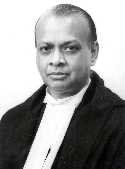
ARIJIT PASAYAT & H.K. SEMA
JUDGMENT:
J U D G M E N T
WITH
CIVIL APPEAL NOS. 7966 to 7973 of 2001 and
7990 to 7991 of 2001
ARIJIT PASAYAT, J.
These appeals are directed against the judgments
rendered by a Division Bench of the Allahabad High Court.
The main judgment was rendered in Civil Misc. Writ Petition
no. 5859 of 1999 which is the subject-matter of challenge in
Civil Appeal No. 7965 of 2001. Following the judgment
rendered in the said case other writ petitions were disposed
of. In each of the writ petitions filed before the High
Court correctness of the electricity bills raised by the
appellant no.1-Uttar Pradesh State Electricity Board
(hereinafter referred to as the 'Board') was questioned.
The High Court by the impugned judgment held that the Board
was as authority under Article 12 of the Constitution of
India, 1950 (in short 'the Constitution') and similar was
the position so far as the writ petitioners are concerned
who according to the High Court were Public Sector
Undertakings. The High Court held that in cases where the
dispute involves the State Government and a Public Sector
Undertaking, Committee in the line indicated by this Court
in Oil and Natural Gas Commission and Another v. Collector
of Central Excise [1992 Supp(2) SCC 432] (for convenience
referred to as ONGC-I) should be set up. Accordingly it was
observed that the writ petitioners would move the State
through the Chief Secretary to constitute a Committee to
resolve the dispute. Further direction was given to the
effect that the power supply to the writ petitioners was not
to be discontinued.
According to the appellant-Board factual position is as
follows:-
State Government issued a notification under Section
22-B of the Indian Electricity Act, 1910 (in short
'Electricity Act') titled as Uttar Pradesh Electricity
(Regulation of Distribution, Consumption) Order 1972 (in
short the '1972 Order') which imposed certain restrictions
on various categories of consumers for using electricity
during certain periods. The 1972 Order was repealed and in
the year 1977 another Notification under Section 22-B, known
as Uttar Pradesh Electricity (Regulation of Supply,
http://JUDIS.NIC.IN SUPREME COURT OF INDIA Page 2 of 8
Distribution, Consumption and Use) Order 1977 (in short
'1977 Order') was issued. In this order consumers were
divided into several categories and so far as the Industrial
Consumers are concerned two categories were indicated. They
are "Continuous Process Industries Power Consumers" and
"Non-continuous Process Industries Power Consumers". List
of consumers belonging to the aforesaid category was annexed
as Annexure 2 of the said Order. It was provided in the
1977 Order that Non-continuous Process Industries Power
Consumers would not use electricity from 18.00 to 22.00
hours every day. It meant that the distinction between the
Continuous Process Industries Power Consumers and the Non-
Continuous Process Industries Power Consumers was that peak
hours restrictions, not to use electricity were not
applicable in case of Continuous Process Industries Power
Consumers. The spinning mills and textiles Mills were
exempted from observing power cutting during peak hours as
per clause 8 of the Order and thus these industries also
were covered by category "Continuous Process Industries".
The Writ Petitioners were co-operative societies
registered under Uttar Pradesh Co-operative Societies Act,
1965. Undisputedly they had entered into agreements with the
Board and one of the clauses in the agreement provided that
supply shall be available to the consumers continuously
during 24 hours of each day and throughout whole period of
agreement. This Clause was however, subject to the following
restrictions:
"Supplier shall not be responsible for the
damages or otherwise on account of accidental
interruption of supply or stoppage or
deficiency of energy caused by any order or
direction issued by the Government of U.P. or
resulting from fire, flood, temptest or any
accident or from any strike or lock out of
workers or from any other cause beyond the
control of the supplier but the supplier shall
make every effort to restore the supply as
soon as possible."
Clause 20 of the Agreement provided that in case of any
dispute between the consumer and the Board the matter was to
be decided by a person nominated by the Chairman of the
Board and the dispute can only be referred when the consumer
pays outstanding dues. The said clause reads as follows:
"If any question or dispute or difference
arises between the parties to this agreement
as to the interpretation or effect of any
provisions or clause herein contained or the
construction thereof or as to any other matter
thereof or the rights, duties or liabilities
of either party in connection therewith, such
question, dispute or difference shall be
referred to the arbitration of the Chairman,
U.P. State Electricity Board or the person
nominated by him and the award/decision of the
said arbitrator shall be final and binding
upon the parties.
Provided that if the question, dispute or
difference relates to or concerns any dues
chargeable to the Consumer in terms of this
http://JUDIS.NIC.IN SUPREME COURT OF INDIA Page 3 of 8
agreement, no reference to arbitration shall
at the instance of such consumer be made till
the consumer has either deposited with the
supplier the amount of dues in dispute or
difference or given a Bank Guarantee of such
amount in favour of the Supplier valid upto
the period of one year from the date in which
the award becomes final or the amount or dues
is cleared, whichever is earlier."
In the year 1984 in exercise of powers conferred under
Section 49 read with Section 79 of the Electricity Supply
Act, 1948 (in short the 'Supply Act') the Uttar Pradesh
Electricity Supply (Consumers Regulation) 1984 (in short the
'Regulations') was framed. The regulations have statutory
force and Regulation 14 has considerable significance so far
as the present cases are concerned. It reads as follows:
"Regulation 14 : Failure of supply
The supplier shall not be liable for
any claim for any loss, damage or
compensation, whatsoever arising out of any
accidental failure of supply or stoppage or
curtailment of diminution or variation in
supply or for failure restoring as a result
of any direct or indirect strike or order of
the Government or other competent Authority
in regard to distribution of power or due to
war, mutiny, commotion, Riot, strike,
lockout, fire flood, lighting earthquake or
other causes beyond the control of the
supplier."
In 1986 a Notification dated 28.1.1986 was issued
categorizing the industrial consumers into two categories
i.e. Continuous Process Industries and Non-Continuous
Process Industries. Challenging the different rates fixed
by the Board, writ petitions were filed which were dismissed
by the High Court upholding the validity. It was held that
it was a valid classification. Board felt that the language
of the Notification dated 28.1.1986 was not very clear and
therefore a corrigendum was issued clarifying the position
that Continuous Process Industries which are not observing
peak hours restrictions have to pay higher charges. Writ
Petitions were filed challenging the levy of higher charges.
The High Court allowed the levy from the date the
corrigendum was issued. The Board has filed appeals
questioning the High Court's view. During pendency of the
appeals, writ petitions were filed alleging that
uninterrupted power supply was not given though higher rates
were being charged. Therefore, it was claimed that amounts
paid, which were in excess of the amounts payable, should be
adjusted against the future bills along with interest. The
High Court by its impugned order held that the writ
petitioners and the Board were 'State' within Article 12 of
the Constitution, and directed a resolution of the dispute
by a person to be nominated by the Chief Secretary of State
of U.P. It held that writ petitioners were "Public Sector
Undertakings".
According to the learned counsel for the appellant \026
Board and its functionaries, the approach of the High Court
is clearly erroneous. Huge amounts have not been paid by
the respondents-writ petitioners. What was challenged before
http://JUDIS.NIC.IN SUPREME COURT OF INDIA Page 4 of 8
the High Court was the levy of higher charges on the
allegation that uninterrupted power supply was not given.
The decision in ONGC-I case (supra) has no application to
the facts of the present case. In any event, the High Court
should not have passed a blanket order of stay.
Learned counsel for the respondents on the other hand
submitted that the respondents are entitled to receive some
amount from the appellants. According to him, the payment
raised is absolutely unreasonable and without any basis. It
was also submitted that disputes between public sector
undertakings and the State should be resolved in the line
suggested by this Court in ONGC-I case (supra). There is
nothing wrong in the High Court's order granting interim
protection.
In ONGC-I case (supra) it was felt desirable that to
avoid unnecessary litigation, disputes between the
Governments and the Public Sector Undertakings should be
sorted out by a Committee to be constituted. It was pointed
out that most of the disputes between the Public Sector
undertakings and the Government get resolved by meeting of
minds.
It is certainly desirable that inter-departmental
disputes and disputes between Governments and Public Sector
Undertakings should be sorted out in the manner suggested by
this Court in ONGC-I case (supra).
The stand of the learned counsel for the Board is that
the operation of the High Court's order was stayed and,
therefore, the Committee as directed by this Court has not
been set up. The quantum of arrears in different cases has
been set out in the affidavit filed by the appellant-Board.
They are as follows:
1. CIVIL APPEAL NO. 7965 Rs. 1,65,49,000/-
2. CIVIL APPEAL NO. 7968 Rs. 6,26,73,485/-
3. CIVIL APPEAL NO. 7970 Rs. 16,62,497/-
4. CIVIL APPEAL NO. 7971 Rs. 1,04,11,681.02/-
5. CIVIL APPEAL NO. 7972 Rs. 1,88,85,823/-
6. CIVIL APPEAL NO. 7990 Rs. 4,98,42,000/-
High Court equated the Board with the State Government
and held that the writ petitioners who were co-operative
societies were public sector undertakings.
The High Court's view is clearly untenable. Board
cannot be equated with State Government. Section 80 of the
Code of Civil Procedure, 1908 (in short 'CPC') is a pointer
in that regard. Co-operative Societies and Pubic Sector
Undertakings are conceptually different. The Board is a
Public Sector Undertaking and not a State Government
department. It may be "State" for the purpose of Article
12 of the Constitution. There the similarity ends. Co-
operative Societies (writ petitioners) cannot be, without
examination of relevant factual aspects, equated with Public
Sector Undertaking. The High Court has come to abrupt
conclusion that they are Public Sector Undertakings without
indicating any reason for such conclusion. The High Court,
therefore, was wrong in applying ratio of ONGC-I case
(supra) to the facts of the present cases.
The view in ONGC-I case (supra) was further elaborated
in Oil and Natural Gas Commission v. C.C.E. 1995 (Supp.) 4
http://JUDIS.NIC.IN SUPREME COURT OF INDIA Page 5 of 8
SCC 541) (For sake of convenience described as ONGC-II). It
was noted in Oil and Natural Gas Commission v. C.C.E.
(2004(6) SCC 437) (for convenience described as ONGC-III)
that some doubts and problems arose in the working out of
the arrangements in terms of the order of this Court dated
11.10.1991 (ONGC-II case (supra). It was noted in ONGC-III
case (supra) as follows:
"There are some doubts and problems that
have arisen in the working out of these
arrangements which require to be clarified
and some creases ironed out. Some doubts
persist as to the precise import and
implications of the words "and recourse to
litigation should be avoided". It is clear
that the order of this Court is not to the
effect that \026 nor can that be done \026 so far
as the Union of India and its statutory
corporations are concerned, their statutory
remedies are effaced. Indeed, the purpose of
the constitution of the High-powered
Committee was not to take away those
remedies. The relevant portion of the order
reads: (SCC pp. 541-42 para 3)
"3. We direct that the Government
of India shall set up a committee
consisting of representatives from the
Ministry of Industry, the Bureau of
Public Enterprises and the Ministry of
Law, to monitor disputes between
Ministry and Ministry of the Government
of India, Ministry and public sector
undertakings of the Government of India
and public sector undertakings in
between themselves to ensure that no
litigation comes to court or to a
tribunal without the matter having been
first examined by the Committee and its
clearance for litigation. The
Government may include a representative
of the Ministry concerned in a specific
case and one from the Ministry of
Finance in the Committee. Senior
officers only should be nominated so
that the Committee would function with
status, control and discipline."
It is abundantly clear that the machinery
contemplated is only to ensure that no litigation
comes to court without the parties having had an
opportunity of conciliation before an in-house
committee."
The matter was again examined in the case of Chief
Conservator of Forest v. Collector (2003(3) SCC 472). In
Paras 14 and 15 it was noted as follows:
"Under the scheme of the Constitution,
Article 131 confers original jurisdiction on
the Supreme Court in regard to a dispute
between two States of the Union of India or
http://JUDIS.NIC.IN SUPREME COURT OF INDIA Page 6 of 8
between one or more States and the Union of
India. It was not contemplated by the framers
of the Constitution or the C.P.C. that two
departments of a State or the Union of India
will fight a litigation in a court of law. It
is neither appropriate nor permissible for
two departments of a State or the Union of
India to fight litigation in a court of law.
Indeed, such a course cannot but be
detrimental to the public interest as it also
entails avoidable wastage of public money and
time. Various departments of the Government
are its limbs and, therefore, they must act
in co-ordination and not in confrontation.
Filing of a writ petition by one department
against the other by invoking the
extraordinary jurisdiction of the High Court
is not only against the propriety and polity
as it smacks of indiscipline but is also
contrary to the basic concept of law which
requires that for suing or being sued, there
must be either a natural or a juristic
person. The States/Union of India must evolve
a mechanism to set at rest all inter-
departmental controversies at the level of
the Government and such matters should not be
carried to a court of law for resolution of
the controversy. In the case of disputes
between public sector undertakings and Union
of India, this Court in Oil and Natural Gas
Commission v. Collector of Central Excise
(1992 Suppl. (2) SCC 432) called upon the
Cabinet Secretary to handle such matters. In
Oil and Natural Gas Commission & Anr. v.
Collector of Central Excise (1995 Suppl. (4)
SCC 541), this Court directed the Central
Government to set up a Committee consisting
of representatives from the Ministry of
Industry, the Bureau of Public Enterprises
and the Ministry of Law, to monitor dispute
between Ministry and Ministry of the
Government of India, Ministry and public
sector undertakings of the Government of
India and public sector undertakings in
between themselves, to ensure that no
litigation comes to court or to a Tribunal
without the matter having been first examined
by the Committee and its clearance for
litigation. The Government may include a
representative of the Ministry concerned in a
specific case and one from the Ministry of
Finance in the Committee. Senior officers
only should be nominated so that the
Committee would function with status, control
and discipline.
The facts of this appeal, noticed above,
make out a strong case that there is a felt
need of setting up of similar committees by
the State Government also to resolve the
controversy arising between various
departments of the State or the State and any
of its undertakings. It would be appropriate
for the State Governments to set up a
http://JUDIS.NIC.IN SUPREME COURT OF INDIA Page 7 of 8
Committee consisting of the Chief Secretary
of the State, the Secretaries of the
concerned departments, the Secretary of Law
and where financial commitments are involved,
the Secretary of Finance. The decision taken
by such a committee shall be binding on all
the departments concerned and shall be the
stand of the Government. "
The directions as noted above were quoted in Mahanagar
Telephone Nigam Ltd. v. Chairman, Central Board, Direct
Taxes and another (2004(6) SCC 431) and were adopted in
paragraph 8. It was noted as follows :
"Undoubtedly, the right to enforce a
right in a court of law cannot be effaced.
However, it must be remembered that courts
are overburdened with a large number of
cases. The majority of such cases pertain to
Government Departments and/or public sector
undertakings. As is stated in Chief
Conservator of Forests' case [2003] 3 SCC 472
it was not contemplated by the framers of the
Constitution or the Civil Procedure Code that
two departments of a State or Union of India
and/or a department of the Government and a
public sector undertaking fight a litigation
in a court of law. Such a course is
detrimental to public interest as it entails
avoidable wastage of public money and time.
These are all limbs of the Government and
must act in co-ordination and not
confrontation. The mechanism set up by this
court is not, as suggested by Mr.
Andhyarujina, only to conciliate between
Government Departments. It is also set up for
purposes of ensuring that frivolous disputes
do not come before courts without clearance
from the High Powered Committee. If it can,
the High Powered Committee will resolve the
dispute. If the dispute is not resolved the
Committee would undoubtedly give clearance.
However, there could also be frivolous
litigation proposed by a department of the
Government or a public sector undertaking.
This could be prevented by the High Powered
Committee. In such cases there is no question
of resolving the dispute. The Committee only
has to refuse permission to litigate. No
right of the Department/public sector
undertaking is affected in such a case. The
litigation being of a frivolous nature must
not be brought to court. To be remembered
that in almost all cases one or the other
party will not be happy with the decision of
the High Powered Committee. The dissatisfied
party will always claim that its rights are
affected, when in fact, no right is affected.
The Committee is constituted of highly placed
officers of the Government, who do not have
an interest in the dispute, it is thus
expected that their decision will be fair and
honest. Even if the Department/public sector
undertaking finds the decision unpalatable,
discipline requires that they abide by it.
http://JUDIS.NIC.IN SUPREME COURT OF INDIA Page 8 of 8
Otherwise the whole purpose of this exercise
will be lost and every party against whom the
decision is given will claim that they have
been wronged and that their rights are
affected. This should not be allowed to be
done."
The ONGC I to III cases (supra), Chief Conservator's
case (supra) and Mahanagar Telephone's case (supra) deal
with disputes relating to Central Government, State
Government and Public Sector Undertakings. They have no
application to the facts of these cases as the High Court
has not indicated any reason for its abrupt conclusion that
the writ petitioners are Public Sector Undertakings. In the
absence of a factual determination in that regard, the
decisions can have no application.
Accordingly, we set aside the impugned judgments of the
High Court and remit the matter for fresh consideration of
the cases. As the matter is pending consideration for a long
time, it would be appropriate if the writ petitions are
disposed of early. It is made clear that if parties place
material to show that writ petitioners are Public Sector
Undertakings then the High Court can direct action in line
with Chief Conservator of Forest's case (supra) and not
otherwise.
The appeals are accordingly disposed of. No costs.

Legal Notes
Add a Note....