
As per case facts, the Petitioner filed these Writ Petitions, but during the proceedings, the Court determined that the cause of action for these petitions no longer survived. The question ...
IN THE HIGH COURT OF ANDHRA PRADESH: AT AMARAVATI
*****
WRIT PETITION Nos: 31871, 32835 of 2022, 30041 of 2023 & 1690 of 2024
WRIT PETITION NO: 31871 of 2022
Between:
V.Rabbani Basha ` .. Petitioner
And
The State of Andhra Pradesh,
Rep. by its Principle Secretary,
Department of Panchayat Raj
And Rural Development and 5 others. .. Respondents
WRIT PETITION NO: 32835 of 2022
Between:
V.Rabbani Basha ` .. Petitioner
And
The State of Andhra Pradesh,
Rep. by its Principle Secretary,
Department of Panchayat Raj
And Rural Development and 5 others. .. Respondents
WRIT PETITION NO: 30041 of 2023
Between:
V.Rabbani Basha ` .. Petitioner
And
The State of Andhra Pradesh,
Rep. by its Principle Secretary,
Muncipal Administration & Urban Development
Department and 3 others. .. Respondents
2
WRIT PETITION NO: 1690 of 2024
Between:
V.Rabbani Basha ` .. Petitioner
And
The Vice Chairman cum Managing
Director (APSRTC), Amaravathi and 3 others. .. Respondents
DATE OF ORDER PRONOUNCED: 05.01.2026
HON’BLE Mr. JUSTICE GANNAMANENI RAMAKRISHNA PRASAD
1. Whether Reporters of Local : Yes/No
Newspapers may be allowed to see
the Judgments?
2. Whether the copies of judgment : Yes/No
may be marked to Law Reports/Journals?
3. Whether Their Ladyship/Lordship : Yes/No
wish to see the fair copy of the Judgment?
________________________________________
GANNAMANENI RAMAKRISHNA PRASAD, J
3
*HON’BLE Mr. JUSTICE GANNAMANENI RAMAKRISHNA PRASAD
+ WRIT PETITION Nos: 31871, 32835 of 2022, 30041 of 2023 &
1690 of 2024
% DATE: 05.01.2026
WRIT PETITION NO: 31871 of 2022
Between:
V.Rabbani Basha ` .. Petitioner
And
The State of Andhra Pradesh,
Rep. by its Principle Secretary,
Department of Panchayat Raj
And Rural Development and 5 others. .. Respondents
WRIT PETITION NO: 32835 of 2022
Between:
V.Rabbani Basha ` .. Petitioner
And
The State of Andhra Pradesh,
Rep. by its Principle Secretary,
Department of Panchayat Raj
And Rural Development and 5 others. .. Respondents
WRIT PETITION NO: 30041 of 2023
Between:
V.Rabbani Basha ` .. Petitioner
And
The State of Andhra Pradesh,
Rep. by its Principle Secretary,
Muncipal Administration & Urban Development
Department and 3 others. .. Respondents
4
WRIT PETITION NO: 1690 of 2024
Between:
V.Rabbani Basha ` .. Petitioner
And
The Vice Chairman cum Managing
Director (APSRTC), Amaravathi and 3 others. .. Respondents
! Counsel for the petitioners :
Heard Sri Venkateswarlu Kolla, learned Counsel for the Writ Petitioners
in W.P.No.1690 of 2024, 30041 of 2023, Smt. G. Urmila, learned Counsel
appearing on behalf of Smt. P. Vijaya Kumari, learned Counsel for the Writ
Petitioner in W.P.No.32835 of 2022.
^Counsel for respondents :
Sri Aravala Rama Rao, learned Standing Counsel for APSRTC.
< Gist:
Head Note:
?CASES REFERRED:
1. (1973) 3 SCC 489
2. (1980) 4 SCC 1
3. (2004) 3 SCC 214
4. (2011) 6 SCC 508
5. (2012) 10 SCC 1
6. (2018) 6 SCC 1
7. (2024) 15 SCC 461
8. 2024 SCC OnLine 3432
9. 2025 SCC OnLine 2368
5
Judgment reserved on 16.12.2025
Judgment pronounced on 05.01.2026
Judgment uploaded on 08.01.2026
APHC010520862022
IN THE HIGH COURT OF ANDHRA PRADESH
AT AMARAVATI
(Special Original Jurisdiction)
[3328]
MONDAY,THE FIFTH DAY OF JANUARY
TWO THOUSAND AND TWENTY SIX
PRESENT
THE HONOURABLE SRI JUSTICE GANNAMANENI RAMAKRISHNA
PRASAD
WRIT PETITION NOs: 31871, 32835 OF 2022, 30041 OF 2023 &
1690 OF 2024
Between:
1. V.RABBANI BASHA, S/O V.AMEER BASHA, AGED ABOUT 36
YEARS, OCC- CONTRACTOR, RESIDENT OF KALASAPADU
VILLAGE AND MANDAL, YSR KADAPA DISTRICT
...PETITIONER
AND
1. THE STATE OF ANDHRA PRADESH, REP. BY ITS PRINCIPLE
SECRETARY, DEPARTMENT OF PANCHAYAT RAJ AND RURAL
DEVELOPMENT, SECRETARIAT, VELAGAPUDI, AMARAVATHI.
2. THE DISTRICT COLLECTOR, YSR KADAPA DISTRICT AT KADAPA.
3. THE DISTRICT PANC HAYAT OFFICER, KADAPA, YSR KADAPA
DISTRICT.
4. THE KALASAPADU GRAMPANCHYAT, REP. BY ITS PANCHAYAT
SECRETARY, KALASAPADU MANDAL, YSR KADAPA DISTRICT.
5. THE TAHSILDAR, KALASAPADU MANDAL, YSR KADAPA DISTRICT.
6. SMT Y SIVA LEELA, W/O Y.SRIDHAR, AGED ABOUT 32 YEARS,
6
OCC- SARPANCH, KALASAPADU GRAMPANCHAYAT AND
MANDAL, YSR KADAPA DISTRICT.
...RESPONDENT(S):
Counsel for the Petitioner:
1. VUTUPALLI RAJANNA
Counsel for the Respondent(S):
1. GP FOR REVENUE
2. GP FOR PANCHAYAT RAJ RURAL DEV
3. Mattegunta.Sudhir,Standing Counsel For Z.P.Ps,M.P.Ps,Gram
Panchayats
WRIT PETITION NO: 32835 OF 2022
Between:
1. V.RABBANI BASHA, S/O V.AMEER BASHA, AGED ABOUT 36
YEARS, OCC- CONTRACTOR, RESIDENT OF KALASAPADU
VILLAGE AND MANDAL, YSR KADAPA DISTRICT
...PETITIONER
AND
1. THE STATE OF ANDHRA PRADESH, REP. BY ITS PRINCIPLE
SECRETARY, DEPARTMENT OF PANCHAYAT RAJ AND RURAL
DEVELOPMENT, SECRETARIAT, VELAGAPUDI, AMARAVATHI.
2. THE DISTRICT COLLECTOR, YSR KADAPA DISTRICT AT KADAPA.
3. THE DISTRICT PANCHAYAT OFFICER, KADAPA, YSR KADAPA
DISTRICT.
4. THE KALASAPADU GRAMPANCHYAT, REP. BY ITS PANCHAYAT
SECRETARY, KALASAPADU MANDAL, YSR KADAPA DISTRICT
5. THE TAHSILDAR, KALASAPADU MANDAL, YSR KADAPA DISTRICT.
6. SMT Y SIVA LEELA, W/O Y.SRIDHAR, AGED ABOUT 32 YEARS,
OCC- SARPANCH, KALASAPADU GRAMPANCHAYAT AND
7
MANDAL, YSR KADAPA DISTRICT.
...RESPONDENT(S):
Counsel for the Petitioner:
1. P VIJAYA KUMARI
Counsel for the Respondent(S):
1. GP FOR REVENUE
2. GP FOR PANCHAYAT RAJ RURAL DEV
3. Mattegunta.Sudhir,Standing Counsel For Z.P.Ps,M.P.Ps,Gram
Panchayats
WRIT PETITION NO: 30041 OF 2023
Between:
1. V.RABBANI BASHA, , S/O.V.AMEER BASHA, AGED ABOUT 40
YEARS, R/O.D.NO.2/100, MAIN BAZAR, KOTHA BAVI STREET,
KALASAPADU, YSR KADAPA DISTRICT.
...PETITIONER
AND
1. THE STATE OF ANDHRA PRADESH, REPRESENTED BY ITS
PRINCIPAL SECRETARY, MUNICIPAL ADMINISTRATION AND
URBAN DEVELOPMENT DEPARTMENT, A.P. SECRETARIAT,
VELAGAPUDI, AMARAVATI, GUNTUR DISTRICT.
2. THE MUNICIPAL COMMISSIONER, YARRAGUNTLA MUNICIPALITY,
YARRAGUNTLA, YSR KADAPA DISTRICT
3. THE REGIONAL MANAGER, ANDHRA PRADESH STATE ROAD
TRANSPORT CORPORATION, YSR KADAPA DISTRICT.
4. THE DEPOT MANAGER, APSRTC, PRODDATUR DEPOT, YSR
KADAPA DISTRICT.
...RESPONDENT(S):
Counsel for the Petitioner:
8
1. VENKATESWARLU KOLLA
Counsel for the Respondent(S):
1. GP FOR MUNCIPAL ADMN URBAN DEV
2. N RANGA REDDY (SC MC RSEEMA SPSR NLR)
3. K VISWANATHAM (SC FOR APSRTC)
WRIT PETITION NO: 1690 OF 2024
Between:
1. V. RABBANI BASHA,, S/O V. AMEER BASHA, AGED 36 YEARS,
BUSINESS, R/O. 2/100, MAIN BAZAR, KALASAPADU (PANDM),
KADAPA, YSR DISTRICT.
...PETITIONER
AND
1. THE VICE CHAIRMAN CUM MANAGING DIRECTOR APSRTC,
AMARAVATI, GUNTUR DISTRICT.
2. THE REGIONAL MANAGER APSRTC, KADAPA REGION, YSR
DISTRICT.
3. THE DISTRICT PUBLIC TRANSPORT OFFICER APSRTC, KADAPA -
YSR DISTRICT.
4. THE DEPOT MANAGER APSRTC, PRODDUTUR, KADAPA - YSR
DISTRICT
...RESPONDENT(S):
Counsel for the Petitioner:
1. VENKATESWARLU KOLLA
Counsel for the Respondent(S):
1. ARAVALA RAMA RAO(SC FOR APSRTC KKAC)
9
The Court made the following COMMON ORDER:
Heard Sri Venkateswarlu Kolla, learned Counsel for the Writ Petitioners
in W.P.No.1690 of 2024, 30041 of 2023, Smt. G. Urmila, learned Counsel
appearing on behalf of Smt. P. Vijaya Kumari, learned Counsel for the Writ
Petitioner in W.P.No.32835 of 2022 and Sri Aravala Rama Rao, learned
Standing Counsel for APSRTC.
2. The Writ Petitioner is the same person in all the four Writ Petitions. As no
cause survives in W.P.Nos.31871, 32835 of 2022 & 30041 of 2023, these Writ
Petitions have become infructuous.
3. The Writ Petition bearing W.P.No.1690 of 2024 is filed seeking the following
relief :
“…….to issue Writ, Order or Orders more particularly in the
nature of Writ of Mandamus declaring the action of District
Public Transport Officer (Respondent 3) in issuing
termination orders of my licence dated 08-12-2023 for open
space No. 03, 04 , 06 ,07, 10 and also open space No. 05 &
08 dated 15-11-2023 and also inviting fresh tenders dated 4-
1-2024 for open spaces in Erraguntla Bus Station of Kadapa,
YSR District as illegal, arbitrary, capricious and against
principles of natural justice offending articles 14, 19, 21 and
article 300 of the Constitution of India and consequently
quash or set aside the termination orders dated 8-12-2023
for open space No. 03, 04 , 06 ,07, 10 and 15-11-2023 for
open space No. 05 & 08 and also the tender notification
dated 4-1-2024 issued by the District Public Transport Officer
Kadapa, YSR District and pass such other Order or Orders
as may deem fit and necessary in the circumstances of the
case”
FACTS AS PER WRIT PETITIONER:
4. The above prayer would indicate that the Writ Petitioner is aggrieved of
the Termination Orders of his licences in respect of Open Space Nos.3,4,5,6,
7,8,10. The Writ Petitioner is also aggrieved of the issuance of the latest
Tender Notification dated 04.01.2024 for the above mentioned Open Spaces
(Ex.P.1). The above prayer would indicate that the Termination Orders were
passed in the months of November and December, 2023, and thereafter, the
10
Respondents have issued Tender Notification dated 04.01.2024. Previously,
the Respondent APSRTC Kadapa Region has called for bidding of Open
Spaces and issued Tender Notification dated 05.01.2022 for grant of licences
for doing different kind of businesses at Yerraguntla Bus Station by fixing a
monthly licence fee. The Writ Petitioner had participated in the Tender
process and secured allotment letters for Open Spaces dated 31.03.2022 for
Open Stall Nos.5 to 10 for the purpose of running different businesses for a
period of five years. Licence fee for each of the Open Spaces was payable on
monthly basis. The Writ Petitioner entered into an Agreement for running the
said Open Spaces on 16.06.2022. The Writ Petitioner has also entered into
an Agreement on 25.04.2023. It is submitted by the learned Counsel for the
Writ Petitioner that the Respondents have issued Show Cause Notices dated
10.10.2023, 2011.2023 & 24.11.2023 in respect of payment of monthly licence
fee for the months of November, 2023.
5. The Writ Petitioner has filed W.P.No.28876 of 2023 challenging the said
Show Cause Notices dated 10.10.2023, 2011.2023 & 24.11.2023. Vide Order
dated 03.11.2023, this Court has disposed of the W.P.No.28876 of 2023
directing the Writ Petitioner to submit the explanation to the Show Cause
Notices that were issued to him. Thereafter, the Writ Petitioner has received
the Orders of Termination dated 15.11.2023 & 08.12.2023 immediately.
Thereafter, the Respondent Corporation herein has called for Tenders on
04.01.2025 for grant of licences for the stalls/Open Spaces which were meant
for different kind of businesses in the Open Stall Nos.2,5,6,7,8,9,10 at
Yerraguntla Bus Station. Licence Fee was payable monthly. Aggrieved by
the Tender Notification dated 04.01.2024, the Writ Petitioner has filed the
W.P.No.1690 of 2024 (the present Writ Petition). Vide Order dated
23.01.2024, this Court has directed the Respondents not to finalize the
Tenders under Notification dated 04.01.2024.
11
VERSION OF APSRTC:
6. The Respondent Corporation has filed the Counter-Affidavit through its
Law Officer on 19.02.2024 along with material documents. It is submitted that
vide Proceeding dated 28.05.2022, the Respondent Corporation has handed
over the Open Space Nos.5,7,8,9,10 of 150 square feet each to the Writ
Petitioner. This document is filed along with the Counter-Affidavit. The
cardinal contention of the Respondent – APSRTC is that the Writ Petitioner
had grossly violated the conditions of licence by sub-letting the Open Spaces
secured by him to the third parties. The Respondent Corporation has placed
on record the Letters given by the sub-tenants confirming the position that the
Writ Petitioner has sub-let the Open Spaces. One such Letter is given by Sri
N. Reddappa dated 18.01.2024 stating that he has taken the Open Space as
sub-tenant from the Writ Petitioner and he has been paying the rents
regularly. Similar letter was also given by one Sri T. Venkata Subbaiah dated
14.11.2023. One more Letter of similar nature is given by Sri N. Reddappa in
respect to another shop (Open Space) on 14.11.2023. Similar Letter is
submitted by one Sri Bala Subramanyam that he has taken Open Space as
sub-tenant from the Writ Petitioner and he has been paying monthly rent of
Rs.8,500/-. The Respondent Corporation has also filed the transaction details
in respect of the said amounts paid by the sub-tenant as evidence against the
Writ Petitioner.
7. There is no rebuttal from the side of Writ Petitioner in respect of the
allegations made by the Respondent Corporation that the Writ Petitioner has
violated the terms of the licence by sub-letting the Open Spaces to the third
parties. Strangely, the Writ Petitioner took the plea that third parties have
illegally occupied the Open Spaces despite the fact that there is overwhelming
evidence to the contrary to the effect that the Writ Petitioner had sub-let the
Open Spaces to third parties. The Official Respondents have placed on
record the written confirmation by such third parties/sub-tenants that they are
regularly paying the rents to the Writ Petitioner.
12
ANALYSIS:
8. Having considered the facts as presented by both the parties, this Court
has noticed that the Respondent Corporation has given several Open Spaces
to one single person by imposing conditions that each of the Open Space is
earmarked for a particular kind of business and that licencee is required to
undertake only that business without any deviation.
9. It is the case of the Respondents that the Writ Petitioner has secured
licences in favour of several Open Spaces (as already indicated supra). The
Writ Petitioner has not only committed default of licence fee/rent but also
violated the conditions of the licence by sub-letting the Open Spaces to the
third parties. The Respondent Corporation has filed the Letters collected from
the sub-tenants clearly evidencing that the Writ Petitioner has indulged in sub-
letting the premises and that the sub-tenants were not carrying on the
businesses which are indicated and earmarked by the Respondent
Corporation for each of the Open Spaces and therefore, this is the third
violation of the conditions of licence. Since these facts have not been
rebutted by the Writ Petitioner, this Court has no other option but to accept the
contentions of the Respondent Corporation that the Writ Petitioner has
violated the conditions of the licence, inasmuch as the Writ Petitioner has sub-
let the Open Spaces to the third parties in violation of the licence conditions.
The Writ Petitioner has also violated the terms of the licence inasmuch as the
businesses earmarked for the Open Spaces have not been followed by the
Writ Petitioner beside the default of non-payment of licence fee/monthly rents.
On the contrary, the Writ Petitioner had approached this Court with unclean
hands inasmuch as Writ Petitioner had complained of illegal encroachment by
third parties which he had illegally sub-let the Open Spaces to the third parties
or sub-tenants in violation of the conditions of the licence.
10. In this view of the matter, this Court is of the opinion that the present
Writ Petition is devoid of any merit. Accordingly, this Writ Petition is dismissed.
No Order as to Costs.
13
11. As indicated above, the other Writ Petitions bearing W.P.Nos.31871,
32835 of 2022 & 30041 of 2023 have become infructuous and accordingly
disposed of as such.
12. Before parting with this case, this Court is rather duty bound to opine
and hold that the very practice adopted by the APSRTC by granting several
licences in favour of one single person i.e., the Writ Petitioner is a pernicious
practice, thereby giving scope to the Writ Petitioner to sub-let the Open
Spaces to the third parties unauthorisedly, thereby violating the conditions of
the licences. This apart, granting of several licences to a single person has
also created a vested interest inasmuch as State largesse ought not to have
been granted to a single person, thereby creating monopoly. It is the
incumbent duty on the part of the Respondent Authorities to ensure that each
Open Space is allocated to a different person, since such State largesse is
created with an avowed object of ensuring that the material resources of the
community are so distributed as best to sub-serve the common good (Article
39 (b)); and that the State shall in particular, strive to minimize the inequalities
in income (Article 38 (2)) on one hand and to prevent development of vested
interest or monopoly on the other hand.
13. Articles 38 and 39 of the Constitution of India are usefully extracted
hereunder:
“38. State to secure a social order for the
promotion of welfare of the people.—
(1) The State shall strive to promote the welfare of the
people by securing and protecting as effectively as it may
a social order in which justice, social, economic and
political, shall inform all the institutions of the national life.
(2) The State shall, in particular, strive to minimise
the inequalities in income, and endeavour to eliminate
inequalities in status, facilities and opportunities, not
only amongst individuals but also amongst groups of
people residing in different areas or engaged in
different vocations.
(Emphasis Supplied)
14
39. Certain principles of policy to be followed by
the State.—The State shall, in particular, direct its policy
towards securing—
(a) that the citizens, men and women equally, have
the right to an adequate means to livelihood;
(b) that the ownership and control of the material
resources of the community are so distributed as
best to subserve the common good;
(c) that the operation of the economic system does
not result in the concentration of wealth and means
of production to the common detriment;
(d) that there is equal pay for equal work for both men
and women;
(e) that the health and strength of workers, men and
women, and the tender age of children are not
abused and that citizens are not forced by economic
necessity to enter avocations unsuited to their age or
strength;
(f) that children are given opportunities and facilities to
develop in a healthy manner and in conditions of
freedom and dignity and that childhood and youth are
protected against exploitation and against moral and
material abandonment.”
(Emphasis Supplied)
14. The above view as expressed by this Court is fortified by various
decisions of the Hon’ble Supreme Court. In Ramana Dayaram Shetty V.
International Airport Authority of India and Others: (1979) 3 SCC 489 in
Para-11 and 12 the Hon’ble Apex Court has held as under:
“11. Today the Government in a welfare State, is
the regulator and dispenser of special services and
provider of a large number of benefits, including jobs,
contracts, licences, quotas, mineral rights, etc. The
Government pours forth wealth, money, benefits,
services, contracts, quotas and licences. The
valuables dispensed by Government take many forms,
but they all share one characteristic. They are steadily
taking the place of traditional forms of wealth. These
15
valuables which derive from relationships to Government
are of many kinds. They comprise social security benefits,
cash grants for political sufferers and the whole scheme of
State and local welfare. Then again, thousands of people
are employed in the State and the Central Governments
and local authorities. Licences are required before one
can engage in many kinds of businesses or work. The
power of giving licences means power to withhold
them and this gives control to the Government or to
the agents of Government on the lives of many
people. Many individuals and many more businesses
enjoy largessee in the form of Government contracts.
These contracts often resemble subsidies. It is virtually
impossible to lose money on them and many enterprises
are set up primarily to do business with Government.
Government owns and controls hundreds of acres of
public land valuable for mining and other purposes. These
resources are available for utilisation by private
corporations and individuals by way of lease or
licence. All these mean growth in the Government
largessee and with the increasing magnitude and
range of governmental functions as we move closer to
a welfare State, more and more of our wealth consists
of these new forms. Some of these forms of wealth may
be in the nature of legal rights but the large majority of
them are in the nature of privileges. But on that account,
can it be said that they do not enjoy any legal protection?
Can they be regarded as gratuity furnished by the State so
that the State may withhold, grant or revoke it at its
pleasure? Is the position of the Government in this respect
the same as that of a private giver? We do not think so.
The law has not been slow to recognise the importance of
this new kind of wealth and the need to protect individual
interest in it and with that end in view, it has developed
new forms of protection. Some interests in Government
largessee, formerly regarded as privileges, have been
recognised as rights while others have been given legal
protection not only by forging procedural safeguards but
also by confining/structuring and checking Government
discretion in the matter of grant of such largessee. The
discretion of the Government has been held to be not
unlimited in that the Government cannot give or withhold
largessee in its arbitrary discretion or at its sweet will. It is
insisted, as pointed out by Prof. Reich in an especially
stimulating article on “The New Property” in 73 Yale
Law Journal 733, “that Government action be based
on standards that are not arbitrary or unauthorised”.
The Government cannot be permitted to say that it will
give jobs or enter into contracts or issue quotas or
licences only in favour of those having grey hair or
16
belonging to a particular political party or professing a
particular religious faith. The Government is still the
Government when it acts in the matter of granting
largessee and it cannot act arbitrarily. It does not
stand in the same position as a private individual.
12. We agree with the observations of Mathew, J., in V.
Punnan Thomas v. State of Kerala [AIR 1969 Ker 81] that:
“The Government, is not and should not
be as free as an individual in selecting the
recipients for its largessee. Whatever its
activity, the Government is still the
Government and will be subject to restraints,
inherent in its position in a democratic
society. A democratic Government cannot lay
down arbitrary and capricious standards for
the choice of persons with whom alone it will
deal.”
The same point was made by this Court in Erusian
Equipment and Chemicals Ltd. v. State of West
Bengal [(1975) 1 SCC 70 : (1975) 2 SCR 674] where the
question was whether blacklisting of a person without
giving him an opportunity to be heard was bad? Ray, C.J.,
speaking on behalf of himself and his colleagues on the
Bench pointed out that blacklisting of a person not only
affects his reputation which is, in Poundian terms, an
interest both of personality and substance, but also denies
him equality in the matter of entering into contract with the
Government and it cannot, therefore, be supported without
fair hearing. It was argued for the Government that no
person has a right to enter into contractual relationship
with the Government and the Government, like any other
private individual, has the absolute right to enter into
contract with any one it pleases. But the Court, speaking
through the learned Chief, Justice, responded that the
Government is not like a private individual who can pick
and choose the person with whom it will deal, but the
Government is still a Government when it enters into
contract or when it is administering largessee and it
cannot, without adequate reason, exclude any person
from dealing with it or take away largessee arbitrarily. The
learned Chief Justice said that when the government
is trading with the public, “the democratic form of
Government demands equality and absence of
arbitrariness and discrimination in such transactions.
. . The activities of the Government have a public
element and, therefore, there should be fairness and
equality. The State need not enter into any contract
17
with anyone, but if it does so, it must do so fairly
without discrimination and without unfair procedure”.
This proposition would hold good in all cases of
dealing by the Government with the public, where the
interest sought to be protected is a privilege. It must,
therefore, be taken to be the law that where the
Government is dealing with the public, whether by
way of giving jobs or entering into contracts or
issuing quotas or licences or granting other forms of
largessee, the Government cannot act arbitrarily at its
sweet will and, like a private individual, deal with any
person it pleases, but its action must be in conformity
with standard or norms w hich is not arbitrary,
irrational or irrelevant. The power or discretion of the
Government in the matter of grant of largessee
including award of jobs, contracts, quotas, licences,
etc. must be confined and structured by rational,
relevant and non-discriminatory standard or norm and
if the Government departs from such standard or
norm in any particular case or cases, the action of the
Government would be liable to be struck down, unless
it can be shown by the Government that the departure
was not arbitrary, but was based on some valid
principle which in itself was not irrational,
unreasonable or discriminatory.”
(Emphasis Supplied)
15. In Kasturi Lal Lakshmi Reddy v. State of J&K: (1980) 4 SCC 1, the
Hon’ble Apex Court held in Para Nos. 12 to 14 as under.
“12. Now what is the test of reasonableness which has
to be applied in order to determine the validity of
governmental action. It is undoubtedly true, as pointed out
by Patanjali Sastri, J., in State of Madras v. V.G.
Row [(1952) 1 SCC 410 : 1952 SCR 597 : AIR 1952 SC
126 : 1952 Cri LJ 966] that in forming his own conception
of what is reasonable, in all the circumstances of a given
case, it is inevitable that the social philosophy and the
scale of values of the judge participating in the decision,
would play an important part, but even so, the test of
reasonableness is not a wholly subjective test and its
contours are fairly indicated by the Constitution. The
concept of reasonableness in fact pervades the entire
constitutional scheme. The interaction of Articles 14, 19
and 21 analysed by this Court in Maneka Gandhi v. Union
of India [(1978) 1 SCC 248 : (1978) 2 SCR 621] clearly
demonstrates that the requirement of reasonableness runs
like a golden thread through the entire fabric of
18
fundamental rights and, as several decisions of this Court
show, this concept of reasonableness finds its positive
manifestation and expression in the lofty ideal of social
and economic justice which inspires and animates the
directive principles. It has been laid down by this Court
in E. P. Royappa v. State of Tamil Nadu [(1974) 4 SCC 3 :
(1974) 2 SCR 348] and Maneka Gandhi case [(1978) 1
SCC 248 : (1978) 2 SCR 621] that Article 14 strikes at
arbitrariness in State action and since the principle of
reasonableness and rationality, which is legally as well as
philosophically an essential element of equality or non-
arbitrariness, is projected by this Article, it must
characterise every governmental action, whether it be
under the authority of law or in exercise of executive
power without making of law. So also the concept of
reasonableness runs through the totality of Article 19
and requires that restrictions on the freedoms of the
citizen, in order to be permissible, must at the best be
reasonable. Similarly Article 21 in the full plenitude of
its activist magnitude as discovered by Maneka
Gandhi case [(1978) 1 SCC 248 : (1978) 2 SCR 621]
insists that no one shall be deprived of his life or
personal liberty except in accordance with procedure
established by law and such procedure must
be reasonable, fair and just. The directive principles
concretise and give shape to the concept of
reasonableness envisaged in Articles 14, 19 and 21
and other Articles enumerating the fundamental
rights. By defining the national aims and the
constitutional goals, they setforth the standards or
norms of reasonableness which must guide and
animate governmental action. Any action taken by the
Government with a view to giving effect to anyone or more
of the directive principles would ordinarily, subject to any
constitutional or legal inhibitions or other overriding
considerations, qualify for being regarded as reasonable,
while an action which is inconsistent with or runs counter
to a directive principle would prima facie incur the
reproach of being unreasonable.
13. So also the concept of public interest must as far
as possible receive its orientation from the directive
principles. What according to the founding fathers
constitutes the plainest requirement of public interest is set
out in the directive principles and they embody par
excellence the constitutional concept of public interest. If,
therefore, any governmental action is calculated to
implement or give effect to a directive principle, it would
ordinarily, subject to any other overriding considerations,
be informed with public interest.
19
14. Where any governmental action fails to satisfy
the test of reasonableness and public interest
discussed above and is found to be wanting in the
quality of reasonableness or lacking in the element of
public interest, it would be liable to be struck down as
invalid. It must follow as a necessary corollary from
this proposition that the Government cannot act in a
manner which would benefit a private party at the cost
of the State; such an action would be both
unreasonable and contrary to public interest. The
Government, therefore, cannot, for example, give a
contract or sell or lease out its property for a consideration
less than the highest that can be obtained for it, unless of
course there are other considerations which render it
reasonable and in public interest to do so. Such
considerations may be that some directive principle is
sought to be advanced or implemented or that the contract
or the property is given not with a view to earning revenue
but for the purpose of carrying out a welfare scheme for
the benefit of a particular group or section of people
deserving it or that the person who has offered a higher
consideration is not otherwise fit to be given the contract
or the property. We have referred to these considerations
only illustratively, for there may be an infinite variety of
considerations which may have to be taken into account
by the Government in formulating its policies and it is on a
total evaluation of various considerations which have
weighed with the Government in taking a particular action,
that the court would have to decide whether the action of
the Government is reasonable and in public interest. But
one basic principle which must guide the court in arriving
at its determination on this question is that there is always
a presumption that the governmental action is reasonable
and in public interest and it is for the party challenging its
validity to show that it is wanting in reasonableness or is
not informed with public interest. This burden is a heavy
one and it has to be discharged to the satisfaction of the
court by proper and adequate material. The court cannot
lightly assume that the action taken by the Government is
unreasonable or without public interest because, as we
said above, there are a large number of policy
considerations which must necessarily weigh with the
Government in taking action and therefore the court would
not strike down governmental action as invalid on this
ground, unless it is clearly satisfied that the action is
unreasonable or not in public interest. But where it is so
satisfied, it would be the plainest duty of the court under
the Constitution to invalidate the governmental action. This
is one of the most important functions of the court and also
20
one of the most essential for preservation of the rule of
law. It is imperative in a democracy governed by the rule
of law that governmental action must be kept within the
limits of the law and if there is any transgression, the court
must be ready to condemn it. It is a matter of historical
experience that there is a tendency in every
Government to assume more and more powers and
since it is not an uncommon phenomenon in some
countries that the legislative check is getting diluted,
it is left to the court as the only other reviewing
authority under the Constitution to be increasingly
vigilant to ensure observance with the rule of law and
in this task, the court must not flinch or falter. It may
be pointed out that this ground of invalidity, namely, that
the governmental action is unreasonable or lacking in the
quality of public interest, is different from that of mala fides
though it may, in a given case, furnish evidence of mala
fides.”
(Emphasis Supplied)
16. In Jamshed Hormusji Wadia v. Board of Trustees, Port of Mumbai
and another: (2004) 3 SCC 214, the Hon’ble Apex Court held in Para-18 as
under:
“18. In our opinion, in the field of contracts the
State and its instrumentalities ought to so design their
activities as would ensure fair competition and non-
discrimination. They can augment their resources but
the object should be to serve the public cause and to
do public good by resorting to fair and reasonable
methods. The State and its instrumentalities, as the
landlords, have the liberty of revising the rates of rent so
as to compensate themselves against loss caused by
inflationary tendencies. They can — and rather must —
also save themselves from negative balances caused by
the cost of maintenance, payment of taxes and costs of
administration. The State, as the landlord, need not
necessarily be a benevolent and good charitable
Samaritan. The felt need for expanding or stimulating its
own activities or other activities in the public interest
having once arisen, the State need not hold its hands from
seeking eviction of its lessees. However, the State cannot
be seen to be indulging in rack-renting, profiteering and
indulging in whimsical or unreasonable evictions or
bargains.”
(Emphasis Supplied)
21
17. In NOIDA Entrepreneurs Assn. v. NOIDA: (2011) 6 SCC 508, the
Hon’ble Supreme Court held in Paras 38 to 41 as under:
“38. The State or the public authority which holds the
property for the public or which has been assigned the
duty of grant of largessee, etc. acts as a trustee and,
therefore, has to act fairly and reasonably. Every holder of
a public office by virtue of which he acts on behalf of the
State or public body is ultimately accountable to the
people in whom the sovereignty vests. As such, all powers
so vested in him are meant to be exercised for public good
and promoting the public interest. Every holder of a public
office is a trustee.
39. State actions are required to be non-arbitrary and
justified on the touchstone of Article 14 of the Constitution.
Action of the State or its instrumentality must be in
conformity with some principle which meets the test of
reason and relevance. Functioning of a “democratic form
of Government demands equality and absence of
arbitrariness and discrimination”. The rule of law prohibits
arbitrary action and commands the authority concerned to
act in accordance with law. Every action of the State or its
instrumentalities should neither be suggestive of
discrimination, nor even apparently give an impression of
bias, favouritism and nepotism. If a decision is taken
without any principle or without any rule, it is unpredictable
and such a decision is antithesis to the decision taken in
accordance with the rule of law.
40. The public trust doctrine is a part of the law of
the land. The doctrine has grown from Article 21 of the
Constitution. In essence, the action/order of the State
or State instrumentality would stand vitiated if it lacks
bona fides, as it would only be a case of colourable
exercise of power. The rule of law is the foundation of
a democratic society. [Vide Erusian Equipment &
Chemicals Ltd. v. State of W.B. [(1975) 1 SCC 70 : AIR
1975 SC 266] , Ramana Dayaram Shetty v. International
Airport Authority of India [(1979) 3 SCC 489 : AIR 1979
SC 1628] , Haji T.M. Hassan Rawther v. Kerala Financial
Corpn. [(1988) 1 SCC 166 : AIR 1988 SC 157] , Shrilekha
Vidyarthi v. State of U.P. [(1991) 1 SCC 212 : 1991 SCC
(L&S) 742 : AIR 1991 SC 537] and M.I. Builders (P)
Ltd. v. Radhey Shyam Sahu [(1999) 6 SCC 464 : AIR
1999 SC 2468] .]
41. Power vested by the State in a public authority
should be viewed as a trust coupled with duty to be
22
exercised in larger public and social interest. Power is to
be exercised strictly adhering to the statutory provisions
and fact situation of a case. “Public authorities cannot
play fast and loose with the powers vested in them.” A
decision taken in an arbitrary manner contradicts the
principle of legitimate expectation. An authority is under
a legal obligation to exercise the power reasonably
and in good faith to effectuate the purpose for which
power stood conferred. In this context, “in good faith”
means “for legitimate reasons”. It must be exercised
bona fide for the purpose and for none other.
[Vide Commr. of Police v. Gordhandas Bhanji [1951 SCC
1088 : AIR 1952 SC 16] , Sirsi Municipality v. Cecelia Kom
Francis Tellis [(1973) 1 SCC 409 : 1973 SCC (L&S) 207 :
AIR 1973 SC 855] , State of Punjab v. Gurdial
Singh [(1980) 2 SCC 471 : AIR 1980 SC 319] , Collector
(District Magistrate) v. Raja Ram Jaiswal [(1985) 3 SCC 1
: AIR 1985 SC 1622] , Delhi Admn. v. Manohar Lal [(2002)
7 SCC 222 : 2002 SCC (Cri) 1670] and N.D.
Jayal v. Union of India [(2004) 9 SCC 362 : AIR 2004 SC
867] .]”
(Emphasis Supplied)
18. In Natural Resources Allocation, In re, Special Reference No. 1 of
2012: (2012) 10 SCC 1, the Hon’ble Apex Court held in Para-107 as under:
“107. From a scrutiny of the trend of decisions it is
clearly perceivable that the action of the State,
whether it relates to distribution of largessee, grant of
contracts or allotment of land, is to be tested on the
touchstone of Article 14 of the Constitution. A law may
not be struck down for being arbitrary without the pointing
out of a constitutional infirmity as McDowell case [(1996) 3
SCC 709] has said. Therefore, a State action has to be
tested for constitutional infirmities qua Article 14 of the
Constitution. The action has to be fair, reasonable, non-
discriminatory, transparent, non-capricious, unbiased,
without favouritism or nepotism, in pursuit of
promotion of healthy competition and equitable
treatment. It should conform to the norms which are
rational, informed with reasons and guided by public
interest, etc. All these principles are inherent in the
fundamental conception of Article 14. This is the mandate
of Article 14 of the Constitution of India.”
(Emphasis Supplied)
23
19. The Hon’ble Supreme Court had highlighted the requirement of balancing
the fundamental rights harmoniously with the directive principles of State
policy in Lok Prahari through its General Secretary v. State of U.P., and
others: (2018) 6 SCC 1, the Hon’ble Apex Court held in Paras 23 and 24 as
under:
23. Similarly, in Akhil Bhartiya Upbhokta
Congress v. State of M.P. [Akhil Bhartiya Upbhokta
Congress v. State of M.P., (2011) 5 SCC 29 : (2011) 2
SCC (Civ) 531] this Court held that: (SCC pp. 50-51, para
48)
“48. Part IV contains “directive principles of
State policy” which are fundamental in the
governance of the country and it is the duty of
the State to apply these principles in making
laws. Article 39 specifies certain principles of
policy which are required to be followed by the
State. Clause (b) thereof provides that the
State shall, in particular, direct its policy
towards securing that the ownership and
control of the material resources of the
community are so distributed as best to
subserve the common good. Parliament and
legislatures of the States have enacted several
laws and the Governments have, from time to
time, framed policies so that the national wealth
and natural resources are equitably distributed
among all sections of people so that have-nots of
the society can aspire to compete with haves.”
(Emphasis Supplied)
24. In Akhil Bhartiya [Akhil Bhartiya Upbhokta
Congress v. State of M.P., (2011) 5 SCC 29 : (2011) 2
SCC (Civ) 531] this Court examined the legality of the
action of the Madhya Pradesh Government to allot twenty
acres of land to an institution on the basis of application
made by the Trust. This Court held that the distribution of
State largessee allocation of land, grant of permit, licence,
etc. should always be in a fair and equitable manner. It
was held that the elements of favouritism or nepotism shall
not influence the exercise of discretion by the decision-
maker. Observing that every action of the public
authority should be guided by public interest, free
from arbitrariness, in para 65, it was held as under:
(SCC p. 60)
24
“65. What needs to be emphasised is that
the State and/or its agencies/instrumentalities
cannot give largessee to any person according
to the sweet will and whims of the political
entities and/or officers of the State. Every
action/decision of the State and/or its
agencies/instrumentalities to give largessee or
confer benefit must be founded on a sound,
transparent, discernible and well-defined
policy, which shall be made known to the
public by publication in the Official Gazette
and other recognised modes of publicity and
such policy must be implemented/executed by
adopting a non-discriminatory and non-
arbitrary method irrespective of the class or
category of persons proposed to be benefited
by the policy. The distribution of largessee like
allotment of land, grant of quota, permit licence,
etc. by the State and its agencies/instrumentalities
should always be done in a fair and equitable
manner and the element of favouritism or
nepotism shall not influence the exercise of
discretion, if any, conferred upon the particular
functionary or officer of the State.
(Emphasis Supplied)
19. In Subodh Kumar Singh Rathour v. Kolkata Metropolitan
Development Authority : (2024) 15 SCC 461, the Hon’ble Apex Court held in
Para 128 as under:
“128. The sanctity of public tenders lies in their role
in upholding the principles of equal opportunity and
fairness. Once a contract has come into existence
through a valid tendering process, its termination
must adhere strictly to the terms of the contract, with
the executive powers to be exercised only in
exceptional cases by the public authorities and that
too in loathe. The courts are duty bound to zealously
protect the sanctity of any tender that has been duly
conducted and concluded by ensuring that the larger
public interest of upholding bindingness of contracts are
not sidelined by a capricious or arbitrary exercise of power
by the State. It is the duty of the courts to interfere in
contractual matters that have fallen prey to an arbitrary
action of the authorities in the guise of technical faults,
policy change or public interest, etc.”
(Emphasis Supplied)
25
20. In State of Andhra Pradesh and Others v. Dr. Rao, V.B.J. Chelikani
and Others : 2024 SCC OnLine SC 3432, the Hon’ble Apex Court had held
in Para No.46 as under:
“46. Thus, time and again, this Court has held that
while the power to distribute and redistribute public
assets and resources lie within the State's discretion,
such discretion is not absolute. Article 14 and the logic
of equality impose fetters on the exercise of this
discretionary power. Therefore, it cannot be questioned or
contested that state policy and executive action must
satisfy the rigours of Article 14.”
(Emphasis Supplied)
21. In Shanti Construction Pvt. Ltd. V. State of Odisha and Others :
2025 SCC OnLine SC 2368, the Hon’ble Apex Court had held in Para No.10
as under:
“10. A public tender is not a private bargain. It is
instrument of governance, a mechanism through
which the State discharges its solemn duty as trustee
of public wealth. Its purpose is not merely procedural
compliance, but maximisation of public value through
a process i.e. fair, transparent and competitive. The
obligation of the Tendering Authority is therefore
twofold, namely, to interpret its own terms with
consistency and to ensure that such interpretation
advances, not defeats, the object of tender. The court
must intervene in a case of demonstrable
misconstruction of a tender condition or irrationality
which affects the public interest. When an interpretation
of a tender condition narrows competition and excludes
the highest bidder on a ground unsupported by law, the
decision making process is vitiated. The interpretation of
the terms of tender must, therefore, serve the object and
purpose of the tender mainly to maximise the revenue to
the State, when it deals with a natural resource.”
(Emphasis Supplied)
22. The conduct of the Respondent Corporation in allotting so many Open
Spaces in favour of one single person, namely the Writ Petitioner, is
deprecated by this Court. The present Tender Notification issued by the
26
Respondent Corporation dated 04.01.2024 (Ex.P.1) is the same as the earlier
Tender Notifications. This Court has perused the conditions in the Tender
Notification. This Tender Notification also does not prohibit a single person
from bidding for more than one Open Space. The Respondents have carried
on with this pernicious practice of allotting several Open Spaces to a single
person that leads to monopoly and development of vested interest as
indicated above on account of this unhealthy practice. This practice is
contrary to public interest. The State largesse is meant to be distributed in
favour of persons who are in real need and it ought not to create any vested
interest or monopoly in one person. The facts involved in the present case is
a classic example of the Writ Petitioner developing vested interest since he
had bidded for several shops, thereby giving scope to the Writ Petitioner to
sub-let the Open Spaces to several third parties. This indicates that a laxity on
the part of the Official Respondents had enabled the Writ Petitioner to create
his own eco-system that made him to blatantly abuse the tender conditions
and the conditions of licence.
23. In this view of the matter, this Court is inclined to quash the Tender
Notification issued by the Respondent Corporation dated 04.01.2024 (Ex.P.1).
Accordingly, the Tender Notification bearing Sl.No.E2/797(1)2024-EPTO/Y
(Ex.P.1) is quashed and set aside. There shall be a direction to the Official
Respondents to refund all the deposits submitted by the bidders including the
Writ Petitioner within a period of three weeks from today if not refunded
earlier. The Respondent Corporation is directed to prepare a fresh Tender
which ensures that a single person cannot bid for more than one licence (for
Open Space).
27
24. Interlocutory Applications, if any, stand closed in terms of this order.
______________________________________
GANNAMANENI RAMAKRISHNA PRASAD, J
Dt: 05.01.2026
Note: LR copy to be marked
B/o. JKS/MNR
28
10
HON'BLE SRI JUSTICE GANNAMANENI RAMAKRISHNA PRASAD
W.P.Nos. 31871, 32835 of 2022, 30041 of 2023 & 1690 of 2024
Dt: 05.01.2026
Note: LR copy to be marked
B/o. JKS/MNR

 Login with google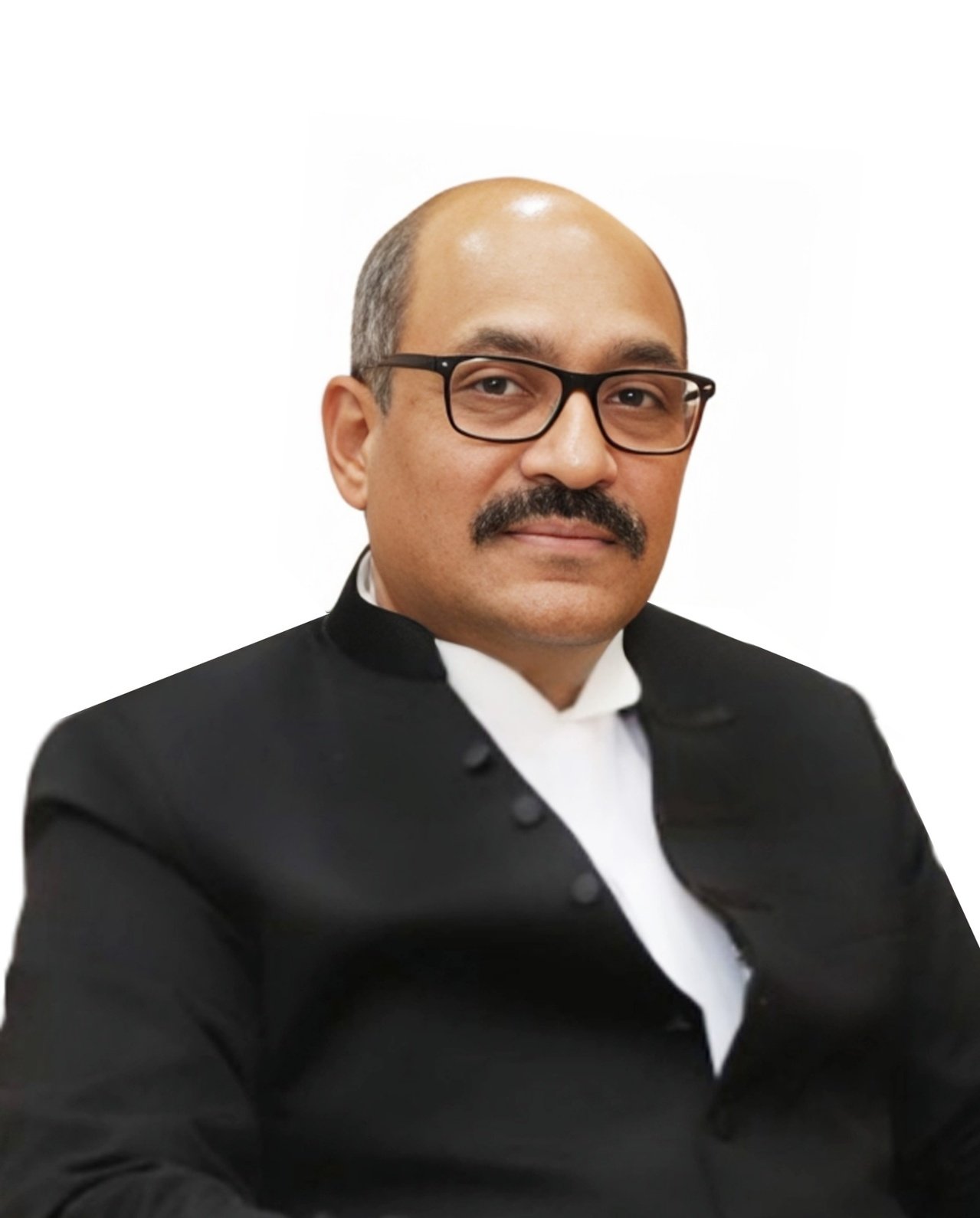
Legal Notes
Add a Note....