
The case revolves around a contractual dispute between two partnership firms—M/s. Premionics, represented by its partner V.Y. Jose (Appellant No. 1) and its employee (Appellant No. 2), and the second ...

No Acts & Articles mentioned in this case
REPORTABLE
IN THE SUPREME COURT OF INDIA
CRIMINAL APPELLATE JURISDICTION
CRIMINAL APPEAL NO. 2048 OF 2008
(Arising out of SLP (Crl.) No.1491 of 2007)
V.Y. Jose & Anr. … Appellants
Versus
State of Gujarat & Anr. …
Respondents
J U D G M E N T
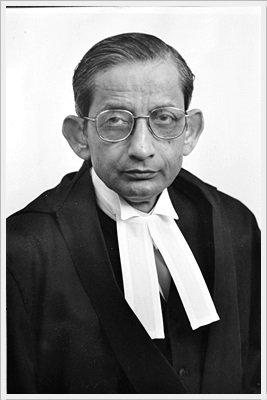
S.B. Sinha, J.
1.Leave granted.
2.This appeal is directed against a judgment and order dated 4.12.2006
passed by the High Court of Gujarat at Ahmedabad dismissing an
application filed by the appellants herein under Section 482 of the Code of
Criminal Procedure.
3.Appellant No.1 is a partner of a partnership firm known as M/s.
Premionics (hereinafter referred to as ‘the firm’ for the sake of brevity).
Appellant No.2 is an employee of the said firm.
Respondent No.2, the complainant is also a partnership firm. On or
about 18.10.1997, it placed an order on the firm to manufacture and install a
machine to purify and desalt the dyes of a particular quality and quantity
with the firm. The total manufacturing cost of the said machine worked out
to be at Rs.17,96,488/- including excise duty and other incidental charges.
Second respondent paid a sum of Rs.3,00,000/- to the firm as advance and
part payment of the said consideration. There has been a change in the
specifications of the said machine purported to be on the request of the
second respondent in terms whereof two extra modules thereto were
provided. A revised offer was made. The said machine, although was to be
manufactured and supplied within a period of three months, the same was
not complied with.
4.A partner of the second respondent along with its technical engineer
visited the site of the firm. Allegedly, it was found that the said machine
did not conform to the specifications contained in the order placed with the
firm. It refused to take the delivery thereof. To the said effect, the second
2
respondent, by a letter dated 7.4.1998 called upon the firm to return the
amount of advance, stating :
“Please take a trial your Laboratory as discussed
and concentrate between 25 to 30% & collect it in
a new plastic drum after good cleaning. I am quite
sure that this dye has got a molecular wt. around
400 and p/h in between 4.5 to and I am hopeful
that your R.O. Machine should work for this dye
only and you have manufactured for another. This
is not fair and if you cannot manufacture
accordingly, please return our money.
As per specific order an advance 3 lacs of
Rupees in October 1997, please send stamped
receipt which we have not received so far.”
5.Second respondent by another letter dated 9.7.1999 called upon the
firm to refund the said amount together with interest thereon, stating :
“Please send demand draft payable at Nadiad of
Rs.3,97,674/- as per accounts below :
Rs.3,00,000
Rs. 22,500 Interest of 5 months.
Rs.3,22,500
Rs. 58,050 Interest of 1998-99
Rs.3,80,550
Rs. 17,124 Interest of 1999-200
(April, May & June)
Rs.3,97,674
3
We hope you will do the needful
immediately.”
The firm, by its letter dated 14.7.1999, responded to the said letter of
the Second respondent as under :
“We are in receipt of your letter No.KPH/31/99-
2000 dated 9.7.1999 and are surprised to note your
content therein. As per your order we have
manufactured the system and you had inspected
the system also. We have been reminding you to
take delivery of the system but no action had been
taken from your end so far. We have blocked
material worth more than fourteen lakhs for the
last so many months.”
6.Thereafter, a criminal complaint was filed.
The learned Chief Judicial Magistrate took cognizance of the offences
against the appellants under Section 417, 420 read with Section 114 of the
Indian Penal Code. Summons were issued.
Appellants filed an application for quashing of the said proceedings
before the Gujarat High Court which by reason of the impugned judgment
has been dismissed.
4
7.Mr. Dayan Krishnan, learned counsel appearing on behalf of the
appellant, would submit :
1.The allegations made in the complaint petition even if given face
value and taken to be correct in its entirety do not disclose an offence
under Section 420 of the Indian Penal Code.
2.A breach of contract simpliciter does not constitute an offence under
Section 420 of the Indian Penal Code.
3.There is no averment in the complaint petition to the effect that the
appellant has an intention to cheat at the time of entering into the
contract.
8.Mr. Sushil Kumar Jain, learned counsel appearing on behalf of the
respondent No.2, on the other hand, would urge :
(1)The firm manufactured a machine different from the one for which
order was placed which was found out on inspection of the site of the
firm.
(2)Although a sum of Rs.3,00,000/- was paid by way of advance, the
said amount has not been returned which manifests dishonest
intention on the part of the firm.
5
(3)In any event, the High Court has rightly refused to exercise its
jurisdiction under Section 482 of the Code of Criminal Procedure
which can be resorted to only in rarest of rare cases.
9.We have been taken through the complaint petition in its entirety.
Indisputably, the parties entered into a contract in terms whereof the firm
was to manufacture a machine to purify and desalt the dyes of a particular
quality and quantity. The specifications for the machine were changed.
First appellant issued a letter dated 20.2.1998 to the complainant, stating :
“Further to our letter No.P:G:971:97 dated 2.2.98
and subsequent visit of our Mr. Sunil Rao. Please
find enclosed herewith our revised offer for your
reference. You may note that we are giving two
module extra free of charge in the system so that
the total number of modules becomes 105 no’s
instead of the committed 103 no’s. We are also
enclosing herewith the detailed assembly drawing
for your reference. Since the system is totally skid
mounted the system can be installed on a leveled
platform.
I am sure this will fulfill your pre-dispatch
requirement. In case you need any additional
details kindly let us know so that we can provide
the same.”
10.Inspection of the machine was admittedly made on 6.4.1998. During
the period 18.10.1997 (when the order was placed) and 6.4.1998, no
6
allegation was made in regard to any false design or bad intention on the
part of the appellants.
The complainant-respondent No.2 in letters dated 7.4.1998 and
9.7.1999 did not also make any allegation in regard to existence of a
dishonest intention on the part of the appellants herein when the contract
was entered into.
Ordinarily, we would not have referred to the correspondences passed
between the parties but, indisputably, the said correspondences have been
referred to in the complaint petition itself. Even before us, a contention had
been raised by Mr. Jain that the appellants’ letter dated 7.4.1998 was not
replied to.
11.Section 415 of the Indian Penal Code defines cheating as under :
“Section 415.—Cheating—Whoever, by
deceiving any person, fraudulently or dishonestly
induces the person so deceived to deliver any
property to any person, or to consent that any
person shall retain any property, or intentionally
induces the person so deceived to do or omit to do
anything which he would not do or omit if he were
not so deceived, and which act or omission causes
or is likely to cause damage or harm to that person
in body, mind, reputation or property, is said to
‘cheat’.”
7
An offence of cheating cannot be said to have been made out unless
the following ingredients are satisfied :
“i) deception of a person either by making a
false or misleading representation or by
other action or omission;
(ii)fraudulently or dishonestly inducing any person to
deliver any property; or
(iii)To consent that any person shall retain any property and
finally intentionally inducing that person to do or omit to
do anything which he would not do or omit.”
12.For the purpose of constituting an offence of cheating, the
complainant is required to show that the accused had fraudulent or
dishonest intention at the time of making promise or representation. Even
in a case where allegations are made in regard to failure on the part of the
accused to keep his promise, in absence of a culpable intention at the time
of making initial promise being absent, no offence under Section 420 of the
Indian Penal Code can be said to have been made out.
13.No exception can be taken to the submission of Mr. Jain that it is not
necessary to reproduce the wordings of a penal provision in the complaint
petition, but, there cannot be any doubt whatsoever that the facts disclosing
the ingredients of the offence must be averred.
8
There cannot, furthermore, be any doubt that only because civil law
can be taken recourse to would not necessarily mean that criminal
proceedings should be barred as has been opined by this Court in Pratibha
Rani v. Suraj Kumar & Anr. [(1985) 2 SCC 370].
We are, however, not concerned in a case of this nature where the
allegations were clear, specific and unambiguous and, therefore, the
complainant should have been given a chance to prove her case as has been
noticed by the High Court in the said judgment. This Court therein also,
while laying down the law that the High Court would have no jurisdiction to
examine the correctness of the allegations, opined :
“In case no offence is committed on the allegation
and the ingredients of Section 405 and 406, IPC
are not made out, the High Court would be
justified in quashing the proceedings.”
Reliance has also been placed by Mr. Jain on Rajesh Bajaj v. State
NCT of Delhi & Ors. [(1999) 3 SCC 259], wherein Thomas, J. opined :
“10. It may be that the facts narrated in the present
complaint would as well reveal a commercial
transaction or money transaction. But that is
hardly a reason for holding that the offence of
cheating would elude from such a transaction. In
fact, many a cheatings were committed in the
course of commercial and also money transactions.
9
One of the illustrations set out under Section 415
of the Indian Penal Code (Illustration f) is worthy
of notice now :
‘(f)A intentionally deceives Z into a
belief that A means to repay any money that
Z may lend to him and thereby dishonestly
induces Z to lend him money, A not
intending to repay it. A cheats’.”
Similar observations have also been made by the same learned Judge
in Trisuns Chemical Industry v. Rajesh Agarwal & Ors. [(1999) 8 SCC 686]
in the following terms :
“9. We are unable to appreciate the reasoning that
the provision incorporated in the agreement for
referring the disputes to arbitration is an effective
substitute for a criminal prosecution when the
disputed act is an offence. Arbitration is a remedy
for affording reliefs to the party affected by breach
of the agreement but the arbitrator cannot conduct
a trial of any act which amounted to an offence
albeit the same act may be connected with the
discharge of any function under the agreement.
Hence, those are not good reasons for the High
Court to axe down the complaint at the threshold
itself. The investigating agency should have had
the freedom to go into the whole gamut of the
allegations and to reach a conclusion of its own.
Pre-emption of such investigation would be
justified only in very extreme cases as indicated in
State of Haryana v. Bhajan Lal.”
10
14.We may hereat refer to the decision of this Court in State of Haryana
& Ors. v. Bhajan Lal & Ors. [(1992) Supp.(1) SCC 335], whereupon
reliance has been placed by this Court. In the aforementioned decision
relied upon by Mr. Jain, it was stated :
“102. In the backdrop of the interpretation of the
various relevant provisions of the Code under
Chapter XIV and of the principles of law
enunciated by this Court in a series of decisions
relating to the exercise of the extraordinary power
under Article 226 or the inherent powers under
Section 482 of the Code which we have extracted
and reproduced above, we give the following
categories of cases by way of illustration wherein
such power could be exercised either to prevent
abuse of the process of any court or otherwise to
secure the ends of justice, though it may not be
possible to lay down any precise, clearly defined
and sufficiently channelised and inflexible
guidelines or rigid formulae and to give an
exhaustive list of myriad kinds of cases wherein
such power should be exercised.
(1)Where the allegations made in the first
information report or the complaint, even if
they are taken at their face value and
accepted in their entirety do not prima facie
constitute any offence or make out a case
against the accused.
(2)Where the allegations in the first
information report and other materials, if
any, accompanying the FIR do not disclose
a cognizable offence, justifying an
investigation by police officers under
Section 156(1) of the Code except under an
11
order of a Magistrate within the purview of
Section 155(2) of the Code.
(3)Where the uncontroverted allegations made
in the FIR or complaint and the evidence
collected in support of the same do not
disclose the commission of any offence and
make out a case against the accused.
(4)Where, the allegations in the FIR do not
constitute a cognizable offence but
constitute only a non-cognizable offence, no
investigation is permitted by a police officer
without an order of a Magistrate as
contemplated under Section 155(2) of the
Code.
(5)Where the allegations made in the FIR or
complaint are so absurd and inherently
improbable on the basis of which no prudent
person can ever reach a just conclusion that
there is sufficient ground for proceeding
against the accused.
(6)Where there is an express legal bar
engrafted in any of the provisions of the
Code or the concerned Act (under which a
criminal proceeding is instituted) to the
institution and continuance of the
proceedings and/or where there is a specific
provision in the Code or the concerned Act,
providing efficacious redress for the
grievance of the aggrieved party.
(7)Where a criminal proceeding is manifestly
attended with mala fide and/or where the
proceeding is maliciously instituted with an
ulterior motive for wreaking vengeance on
the accused and with a view to spite him
due to private and personal grudge.
12
103. We also give a note of caution to the effect
that the power of quashing a criminal proceeding
should be exercised very sparingly and with
circumspection and that too in the rarest of rare
cases; that the court will not be justified in
embarking upon an enquiry as to the reliability or
genuineness or otherwise of the allegations made
in the FIR or the complaint and that the
extraordinary or inherent powers do not confer an
arbitrary jurisdiction on the court to act according
to its whim or caprice.”
The High Court, although noticed some of the principles laid down in
Bhajan Lal (supra), failed to assign any reason as to why in a case of this
nature the provisions of Section 482 of the Code of Criminal Procedure
should not be applied and how the allegations made in the complaint
petition, even if given face value and taken to be correct in its entirety, make
out an offence.
15.There exists a distinction between pure contractual dispute of civil
nature and an offence of cheating. Although breach of contract per se
would not come in the way of initiation of a criminal proceeding, there
cannot be any doubt whatsoever that in absence of the averments made in
the complaint petition wherefrom the ingredients of an offence can be found
out, the court should not hesitate to exercise its jurisdiction under Section
482 of the Code of Criminal Procedure.
13
We may reiterate that one of the ingredients of cheating as defined in
Section 415 of the Indian Penal Code is existence of an intention of making
initial promise or existence thereof from the very beginning of formation of
contract.
Section 482 of the Code of Criminal Procedure, saves the inherent
power of the court. It serves a salutary purpose viz. a person should not
undergo harassment of litigation for a number of years although no case has
been made out against him.
It is one thing to say that a case has been made out for trial and as
such the criminal proceedings should not be quashed but it is another thing
to say that a person should undergo a criminal trial despite the fact that no
case has been made out at all.
16.In Hira Lal Hari Lal Bhagwati v. CBI [(2003) 5 SCC 257], this Court
held :
“40. It is settled law, by a catena of decisions, that
for establishing the offence of cheating, the
complainant is required to show that the accused
had fraudulent or dishonest intention at the time of
making promise or representation. From his
making failure to keep promise subsequently, such
a culpable intention right at the beginning that is at
the time when the promise was made cannot be
presumed. It is seen from the records that the
14
exemption certificate contained necessary
conditions which were required to be complied
with after importation of the machine. Since the
GCS could not comply with it, therefore, it rightly
paid the necessary duties without taking advantage
of the exemption certificate. The conduct of the
GCS clearly indicates that there was no fraudulent
or dishonest intention of either the GCS or the
appellants in their capacities as office-bearers
right at the time of making application for
exemption. As there was absence of dishonest and
fraudulent intention, the question of committing
offence under Section 420 of the Indian Penal
Code does not arise. We have read the charge-
sheet as a whole. There is no allegation in the first
information report or the charge-sheet indicating
expressly or impliedly any intentional deception or
fraudulent/dishonest intention on the part of the
appellants right from the time of making the
promise or misrepresentation. Nothing has been
said on what those misrepresentations were and
how the Ministry of Health was duped and what
were the roles played by the appellants in the
alleged offence. The appellants, in our view, could
not be attributed any mens rea of evasion of
customs duty or cheating the Government of India
as the Cancer Society is a non-profit organisation
and, therefore, the allegations against the
appellants levelled by the prosecution are
unsustainable. The Kar Vivad Samadhan Scheme
certificate along with Duncan and Sushila Rani
judgments clearly absolve the appellants herein
from all charges and allegations under any other
law once the duty so demanded has been paid and
the alleged offence has been compounded. It is
also settled law that once a civil case has been
compromised and the alleged offence has been
compounded, to continue the criminal proceedings
thereafter would be an abuse of the judicial
process.
15
[See also Indian Oil Corporation v. NEPC India Ltd. & Ors. [(2006)
6 SCC 736]
17.Recently, in Vir Prakash Sharma v. Anil Kumar Agarwal [(2007) 7
SCC 373], noticing, inter alia, the aforementioned decisions, this Court
held:
“13. The ingredients of Section 420 of the Penal
Code are as follows:
(i) Deception of any persons;
(ii) Fraudulently or dishonestly inducing any
person to deliver any property; or
(iii) To consent that any person shall retain any
property and finally intentionally inducing
that person to do or omit to do anything
which he would not do or omit.
No act of inducement on the part of the appellant
has been alleged by the respondent. No allegation
has been made that he had an intention to cheat the
respondent from the very inception.
14. What has been alleged in the complaint
petition as also the statement of the complainant
and his witnesses relate to his subsequent conduct.
The date when such statements were allegedly
made by the appellant had not been disclosed by
the witnesses of the complainant. It is really
absurd to opine that any such statement would be
made by the appellant before all of them at the
same time and that too in his own district. They,
thus, appear to be wholly unnatural.
15. In law, only because he had issued cheques
which were dishonoured, the same by itself would
16
not mean that he had cheated the complainant.
Assuming that such a statement had been made,
the same, in our opinion, does not exhibit that
there had been any intention on the part of the
appellant herein to commit an offence under
Section 417 of the Penal Code.
16. Furthermore, admittedly, their residences are
in different districts. Whereas the appellant is a
resident of the district of Ajamgarh, the
respondent is a resident of the district of Rampur.
Cheques were admittedly issued by the appellant
at his place. There is nothing on record to show
that any part of the cause of action arose within
the jurisdiction of the court concerned. Even if
such statements had been made, the same
admittedly have been made only at the place where
the appellant resides. The learned Magistrate,
therefore, had no jurisdiction to issue the
summons. (See Mosaraf Hossain Khan v.
Bhagheeratha Engg. Ltd.)”
The said principle has been reiterated in All Carogo Movers (I) Pvt.
Ltd. v. Dhanesh Badarmal Jain & Anr. [2007 (12) SCALE 391], stating :
“For the said purpose, allegations in the complaint
petition must disclose the necessary ingredients
therefor. Where a civil suit is pending and the
complaint petition has been filed one year after
filing of the civil suit, we may for the purpose of
finding out as to whether the said allegations are
prima facie cannot notice the correspondences
exchanged by the parties and other admitted
documents. It is one thing to say that the Court at
this juncture would not consider the defence of the
accused but it is another thing to say that for
exercising the inherent jurisdiction of this Court, it
17
is impermissible also to look to the admitted
documents. Criminal proceedings should not be
encouraged, when it is found to be mala fide or
otherwise an abuse of the process of the Court.
Superior Courts while exercising this power
should also strive to serve the ends of justice.”
18.A matter which essentially involves dispute of a civil nature should
not be allowed to be the subject matter of a criminal offence, the latter being
not a shortcut of executing a decree which is non-existent. The Superior
Courts, with a view to maintain purity in the administration of justice,
should not allow abuse of the process of court. It has a duty in terms of
Section 483 of the Code of Criminal Procedure to supervise the
functionings of the trial courts.
19.An offence of cheating may consist of two classes of cases :
(1) where the complainant has been induced fraudulently or dishonestly.
Such is not the case here;
(2)When by reason of such deception, the complainant has not done or
omitted to do anything which he would not do or omit to do if he was not
deceived or induced by the accused.
20.It is in that sense, a distinction between a mere breach of contract and
the offence of cheating should be borne in mind. We, having regard to the
18
facts and circumstances of the case, are of the opinion that no case has been
made out and against the appellant so as to hold that he should face the
criminal trial.
21.Before parting, however, we may notice a decision of this Court in
from State of Madhya Pradesh v. Awadh Kishore Gupta [(2004) 1 SCC 691]
whereupon strong reliance has been placed by Mr. Jain. This Court, therein
upon referring to Bhajan Lal (supra) opined as under :
“11. As noted above, the powers possessed by the
High Court under Section 482 of the Code are
very wide and the very plenitude of the power
requires great caution in its exercise. Court must
be careful to see that its decision in exercise of this
power is based on sound principles. The inherent
power should not be exercised to stifle a legitimate
prosecution. The High Court being the highest
court of a State should normally refrain from
giving a prima facie decision in a case where the
entire facts are incomplete and hazy, more so,
when the evidence has not been collected and
produced before the Court and the issues involved,
whether factual or legal, are of magnitude and
cannot be seen in their true perspective without
sufficient material. Of course, no hard-and-fast
rule can be laid down in regard to cases in which
the High Court will exercise its extraordinary
jurisdiction of quashing the proceedings at any
stage. (See Janata Dal v. H.S. Chowdhary and
Raghubir Saran (Dr) v. State of Bihar) It would
not be proper for the High Court to analyse the
case of the complainant in the light of all
probabilities in order to determine whether a
conviction would be sustainable and on such
19
premises, arrive at a conclusion that the
proceedings are to be quashed. It would be
erroneous to assess the material before it and
conclude that the complaint cannot be proceeded
with. In proceedings instituted on complaint,
exercise of the inherent powers to quash the
proceedings is called for only in a case where the
complaint does not disclose any offence or is
frivolous, vexatious or oppressive. If the
allegations set out in the complaint do not
constitute the offence of which cognizance has
been taken by the Magistrate, it is open to the
High Court to quash the same in exercise of the
inherent powers under Section 482 of the Code. It
is not, however, necessary that there should be
meticulous analysis of the case before the trial to
find out whether the case would end in conviction
or acquittal. The complaint has to be read as a
whole. If it appears that on consideration of the
allegations in the light of the statement made on
oath of the complainant that the ingredients of the
offence or offences are disclosed and there is no
material to show that the complaint is mala fide,
frivolous or vexatious, in that event there would
be no justification for interference by the High
Court. When an information is lodged at the police
station and an offence is registered, then the mala
fides of the informant would be of secondary
importance. It is the material collected during the
investigation and evidence led in the court which
decide the fate of the accused person. The
allegations of mala fides against the informant are
of no consequence and cannot by itself be the
basis for quashing the proceedings.”
(Emphasis supplied)
22.No exception can be taken to the aforementioned principles of law, as
therein also it has categorically been held that exercise of inherent power
20
under Section 482 is permissible where allegations set out in the complaint
do not constitute the offence for which cognizance has been taken by the
Magistrate. It is evidently a case of that nature.
23.For the reasons aforementioned, the judgment of the High Court
cannot be sustained. It is set aside accordingly. Criminal proceedings
against the appellants are quashed. The appeal is allowed.
..…………………………..…J.
[S.B. Sinha]
..…………………………..…J.
[Cyriac Joseph]
New Delhi;
December 16, 2008
21

 Login with google
Legal Notes
Add a Note....