
As per case facts, Walchandnagar Industries Ltd. contracted MFC Transport Pvt. Ltd. to transport over-dimensional cargo, leading to disputes over milestone payments and cargo detention. MFC claimed detention and bonus ...
No Acts & Articles mentioned in this case
Judgement-ARA-40-2023-F.doc
IN THE HIGH COURT OF JUDICATURE AT BOMBAY
CIVIL APPELLATE JURISDICTION
ARBITRATION APPEAL NO. 40 OF 2023
Walchandnagar Industries Ltd. …Appellant
Versus
MFC Transport Pvt. Ltd. …Respondent
Mr. Aditya Bapat, Counsel a/w Joshua D’Souza, Asid Lampwala,
Chirag Sancheti, Hriday Karia, Saad Memon i/b Bullock Solicitors for
the Appellant.
Mr. Vishal Kanade a/w Mr. Sanath Warkar i/b Mr. Tejas
Deshpande for Respondent
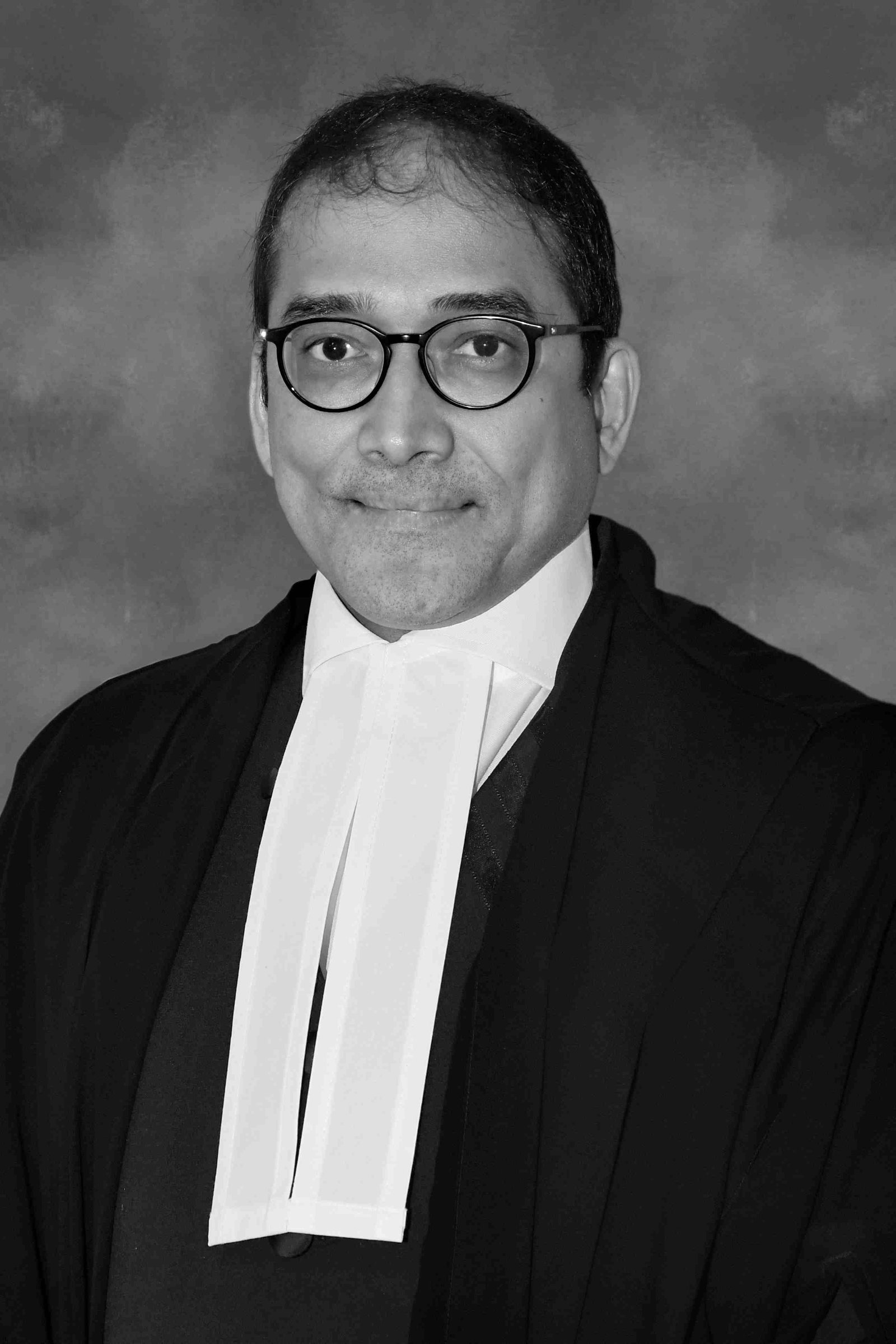
CORAM: SOMASEKHAR SUNDARESAN, J.
DATE: SEPTEMBER 1, 2026
JUDGEMENT :
Context and Factual Background:
1. The captioned proceedings are an appeal under Section 37 of the
Arbitration and Conciliation Act, 1996 (“the Act”), directed against a
Judgment and Order dated April 29, 2019 (“Impugned Judgement ”)
passed by the Learned District Judge-4, Baramati, District Pune, in
Arbitration Petition No. 1 of 2016 (“Section 34 Petition”), setting aside an
Arbitral Award dated August 25, 2016 (“Arbitral Award”) made by the
Page 1 of 20
September 1, 2026
Chaitanya
CHAITANYA
ASHOK
JADHAV
Digitally
signed by
CHAITANYA
ASHOK
JADHAV
Date:
2026.09.01
16:17:03
+0530
Judgement-ARA-40-2023-F.doc
Learned Single-member Arbitral Tribunal, with an award of costs of Rs.
25,000.
2. The Appellant, Walchandnagar Industries Ltd. (“Walchandnagar ”),
was the Respondent in the arbitration and before the Section 34 Court. The
Respondent, MFC Transport Pvt. Ltd. (“MFC”), was the Claimant in the
arbitration and the Petitioner in the Section 34 Court.
3. The disputes and differences between the parties relate to a contract of
carriage of equipment by MFC on behalf of Walchandnagar, which was
required to move a “Calandria”, an over-dimensional cargo item from its
works in Pune District, Maharashtra, to Nuclear Power Corporation of India
Limited (“NPCIL”) atomic power plant site in Kota District, Rajasthan.
Following a quotation dated July 10, 2012 and a revised quotation dated
September 21, 2012, Walchandnagar issued a Purchase Order dated July 22,
2013 (“Purchase Order”) in favour of MFC for a consideration of Rs. 3.60
crores, payable in seven tranches: Rs. 75 Lakhs as advance against a bank
guarantee; Rs. 50 Lakhs on loading; Rs. 50 Lakhs on the vehicle reaching each
of Ahmednagar, Dhule and Indore; Rs. 35 lakhs on the vehicle reaching the
Rajasthan border; and Rs. 50 lakhs upon delivery at site.
4. The Purchase Order provided for a bonus at the rate of 1% of the
Purchase Order Value per week, subject to a maximum of 5%, if the Calandria
Page 2 of 20
September 1, 2026
Chaitanya
Judgement-ARA-40-2023-F.doc
was delivered within 90 days, and for liquidated damages at 1% per week of
delay, subject to a maximum of 10%, if the delivery took longer than 135 days.
It is common ground that the requirement of a bank guarantee to secure the
advance was waived and an indemnity bond was furnished instead. Whether
the Purchase Order comprised only two pages or also carried the general
conditions of purchase was in dispute.
5. The vehicle was mobilised on February 5, 2014 with loading completed
on February 12, 2014, but the vehicle remained at Walchandnagar until March
14, 2014. MFC’s case is that Walchandnagar’s failure to make the milestone
payments as and when the milestones were reached was the reason for the
halts in the movement of the Calandria. By e-mail dated April 15, 2014 MFC
informed Walchandnagar that it would levy detention charges at Rs. 30,000/-
per day.
6. A tripartite meeting among Walchandnagar, MFC and NPCIL was held
on June 17, 2014, the minutes of which (“Tripartite Agreement”) record,
among other things, that Walchandnagar was to finalise the detention and
bonus charges payable to MFC and pay them on the Calandria reaching
NPCIL’s gate, before delivery. The vehicle reached the gate on July 13, 2014
but MFC did not take it inside or deliver the consignment. Walchandnagar
moved the District Court at Baramati under Section 9 of the Act, and the
Page 3 of 20
September 1, 2026
Chaitanya
Judgement-ARA-40-2023-F.doc
Section 9 Court directed MFC to deliver the goods to Walchandnagar paying
Rs. 50 Lakhs by demand draft and furnishing a bank guarantee for Rs. 70
lakhs (“Section 9 Order”).
7. MFC’s Arbitration Appeal No. 29 of 2014 against the Order of the
District Court at Baramati was dismissed on November 20, 2014, the Section 9
Order not having been stayed in the interim. Delivery was ultimately made on
January 19, 2015, following a further meeting and a Memorandum of
Understanding dated January 8, 2015 (“MOU”), under which, a bank
guarantee of Rs. 90 Lakhs was furnished to MFC and the earlier guarantee of
Rs. 70 Lakhs was returned.
8. In the arbitration, MFC claimed Rs. 1,03,20,000/- with interest,
comprising Rs. 18 Lakhs as bonus and Rs. 87,20,000/- as detention charges at
Rs. 30,000/- per day for a total of 284 days, made up of 30 days at
Walchandnagar; 67 days in transit; and 187 days outside t he gate.
Walchandnagar made a counter-claim of Rs. 6,64,18,808/-, of which Rs. 36
Lakhs was towards Liquidated Damages; Rs. 83,17,134/- towards loss of
interest on payments receivable from NPCIL; and Rs. 5 Crores towards loss of
reputation.
Page 4 of 20
September 1, 2026
Chaitanya
Judgement-ARA-40-2023-F.doc
Arbitral Award:
9. The Learned Arbitral Tribunal rejected the claims in their entirety and
partly allowed the counter-claim. On detention charges, it was held that the
Purchase Order contained no term providing for such payment, and that the
case pleaded in the Statement of Claim was that such charges were payable on
account of delay “as per quotation submitted by the Claimant”. The Learned
Arbitral Tribunal interpreted the Tripartite Agreement on which MFC relied to
claim detention and bonus payments, to hold that a mere assertion that an
agreement for payment of detention charges had been arrived at was not
sufficient. It would have to be established by documentary and oral evidence
when such amounts would become payable, at what rate or by what method
they were to be determined, when they were meant to be paid, and what MFC
could do if Walchandnagar failed to determine and pay them.
10. It was found that MFC’s witnesses did not depose that a rate had been
discussed or agreed at the meeting, and in fact one of its witnesses stated in
cross-examination that the parties had been unable to settle the quantum
during that meeting. In that light, the Learned Arbitral Tribunal held that the
statement in the minutes constituting the “Tripartite Agreement”, that
detention charges would be finalised and paid was meaningless without the
relevant aspects thereof being decided. In that context, the Learned Arbitral
Page 5 of 20
September 1, 2026
Chaitanya
Judgement-ARA-40-2023-F.doc
Tribunal found substance in Walchandnagar’s submission that the statement
had been included under duress.
11. The three heads of detention charges claimed were then dealt with. On
the 30-day detention at Pune, the Learned Arbitral Tribunal found that Rs. 25
Lakhs had been paid on the very day of loading; a further Rs. 25 Lakhs was
paid within a week and a further Rs. 25 Lakhs was paid on March 8, 2014.
Therefore, substantial payment had been made while the vehicle stood loaded
even while neither the Purchase Order nor the quotation contained any
stipulation that the vehicle would not be moved until the advance was paid in
full or that detention charges could be claimed.
12. As to the 67 days in transit, the Learned Arbitral Tribunal held that even
assuming MFC was justified in halting the vehicle, what it would be entitled to
was compensation, which would have to be pleaded as an alternative case with
proof of actual damages and loss suffered for each day of delay. Neither was
any such case pleaded nor was evidence led to demonstrate loss and damages.
The Learned Arbitral Tribunal held that there was nothing to show how the
figure of Rs. 30,000/- per day had been arrived at.
13. As regards the 187 days detention outside the gate, the Learned Arbitral
Tribunal held that no term of the Tripartite Agreement or provision of law had
been shown that would entitle a carrier to retain the goods and refuse delivery
Page 6 of 20
September 1, 2026
Chaitanya
Judgement-ARA-40-2023-F.doc
to the consignee on the ground that the consignor had committed a breach. It
was held that the carrier ought to deliver and then sue for what is due. The
Learned Arbitral Tribunal found MFC’s conduct wholly unjustifiable and
noted that it had not obeyed the Section 9 Order although it had not been
stayed.
14. On the claim for bonus, the Learned Arbitral Tribunal held that since
the 187-day period could not be excluded, delivery had not been made within
90 days of loading and no bonus was payable.
15. On the counter-claim, the Learned Arbitral Tribunal held that since
delivery had taken well beyond 135 days, Liquidated Damages were justified at
10% of the consideration under the Purchase Order, that is Rs. 36 Lakhs, with
interest at 9% per annum from the date of the award until realisation. The
remaining heads of the counter-claim were not pressed. MFC was directed to
return the bank guarantee of Rs. 90 Lakhs furnished under the MOU, and to
pay costs of Rs. 17 Lakhs. The Learned Arbitral Tribunal indeed found that
there had been delay on the part of Walchandnagar in making the milestone
payments and that they had not been made exactly as per the Purchase Order.
Impugned Judgement:
16. The Impugned Judgement set aside the Arbitral Award. The Section 34
Court set out the scope of its jurisdiction. It recorded that the Learned
Page 7 of 20
September 1, 2026
Chaitanya
Judgement-ARA-40-2023-F.doc
Arbitral Tribunal had found that the milestone payments had not been made
in time by Walchandnagar. On the question of whether detention charges
were payable, the Section 34 Court held that the Purchase Order was silent,
and there had been no agreement entitling MFC to stop the goods in transit.
The Section 34 Court agreed with the Learned Arbitral Tribunal that there was
no term in the Purchase Order or in any provision of law entitling MFC to stop
the carriage in transit or to claim detention charges.
1
The Section 34 Court
also agreed with the Learned Arbitral Tribunal that the detention and bonus
charges were to be finalised by Walchandnagar and were payable upon the
Calandria reaching the gate before delivery.
2
17. However, the Section 34 Court was pleased to set aside the Arbitral
Award on two grounds – first, on the finding of duress; and second, on the
facet of quantum of such charges. On the finding of duress, the Section 34
Court held that the case that the Tripartite Agreement had been agreed to
under duress was neither the pleaded case of Walchandnagar nor supported
by any evidence led by it. By accepting what had only emerged only in
arguments, it was held that the Learned Arbitral Tribunal had travelled
beyond the pleadings and the evidence. Had it been pleaded, MFC would have
had the opportunity to meet it and therefore, the finding was perverse for
denial of natural justice since MFC did not have notice of this proposition in
1 Paragraph 16 of the Impugned Judgement
2 Paragraph 19 of the Impugned Judgement
Page 8 of 20
September 1, 2026
Chaitanya
Judgement-ARA-40-2023-F.doc
assessing the Tripartite Agreement. The Section 34 Court held that the
Tripartite Agreement existed and had been acted upon, and Walchandnagar
having thereafter made payment of the arrears, that the Learned Arbitral
Tribunal’s observation as to duress were without notice to MFC.
18. As regards the quantum of detention charges, the Section 34 Court held
3
that the question as to whether there was an agreement for payment of
detention and bonus charges had been conflated with what the quantum of
payment was meant to be. According to the Section 34 Court, the Learned
Arbitral Tribunal had unnecessarily relied on the fact that the quantum of
payment was not fixed, ignoring the fact that an agreement for payment had
been in existence. Therefore, it was found that the Learned Arbitral Tribunal
had failed to consider the contract between the parties. The Section 34 Court
also found that the Learned Arbitral Tribunal had not considered the MOU,
which the Impugned Judgement describes as an instrument dated January 19,
2015, which was held to be crucial for a just resolution of the case.
4
Contentions of the Parties:
19. I have heard Mr. Aditya Bapat, Learned Advocate on b ehalf of
Walchandnagar and Mr. Vishal Kanade, Learned Advocate on behalf of MFC.
With their assistance I have examined the record.
3 Paragraphs 20 and 21 of the Impugned Judgement
4 Paragraph 22 of the Impugned Judgement
Page 9 of 20
September 1, 2026
Chaitanya
Judgement-ARA-40-2023-F.doc
20. Mr. Bapat would contend that once the Section 34 Court had accepted
the arbitral finding that the Purchase Order contained no term for payment of
detention charges, and recorded the concessions of both counsel to that effect
and that the detention charges had not been finalised in the Tripartite
Agreement, the Section 34 Court just could not have held that MFC’s claims
could have succeeded. The Impugned Judgement does not engage with the
issue of how to deal with the quantum of payment not having been agreed
upon and not having been proved.
21. As regards the finding that there was no basis for the Learned Arbitral
Tribunal to have found duress, Mr. Bapat would submit that the Arbitral
Award did not decide the dispute on the footing that the Tripartite Agreement
was entered into under duress and that the observation on duress was an
aside. The Learned Arbitral Tribunal had held that the term about detention
charges being payable as contained in the Tripartite Agreement was
meaningless because it did not determine when or at what rate the charges
were payable. The finding, in fact, was that even the Tripartite Agreement did
not justify MFC detaining the carriage without delivery. The elaborate
findings in the Arbitral Award were independent of the observations on
duress, he would submit, and therefore, there was no basis to set aside the
Arbitral Award on the ground of perversity since even if the finding on duress
Page 10 of 20
September 1, 2026
Chaitanya
Judgement-ARA-40-2023-F.doc
were to be regarded as perverse, it was not a perversity that cut to the root of
the matter.
22. Mr. Bapat would also submit that the Learned Arbitral Tribunal was the
master of the evidence and was entitled to interpret the contract, which it has
fairly done without any perversity of the nature that warrants an intervention
under Section 34 of the Act. He would contend that the Tripartite Agreement
had been considered in detail. The MOU too was about the adjustment of a
bank guarantee and a commitment to deliver the Calandria before January 18,
2015 and about another purchase order relating to a different project in Tamil
Nadu. Mr. Bapat would emphasise that there is no Memo randum of
Understanding dated January 19, 2015 at all, that being the date of delivery,
and that the Section 34 Court has therefore faulted the Learned Arbitral
Tribunal for not considering a document that does not exist.
23. Mr. Kanade would submit that the milestone payments, the bonus
payments, and the Liquidated Damages were reciprocal and interdependent
obligations. Walchandnagar was to release each tranche as the vehicle
reached the agreed points along the route, and only against performance of
such payment obligations could MFC be held to the 90-day and 135-day
deadlines. Mr. Kanade would submit that Walchandnagar defaulting on those
payments is not in dispute and is the subject matter of concurrent findings by
Page 11 of 20
September 1, 2026
Chaitanya
Judgement-ARA-40-2023-F.doc
the Learned Arbitral Tribunal as well as by the Section 34 Court. Once such
default is established, the contractual equilibrium is disturbed and therefore,
the award of Liquidated Damages is untenable. Correspondingly, MFC is
entitled to detention charges and to relief in respect of bonus, which the
Learned Arbitral Tribunal has failed to appreciate.
24. On quantification, Mr. Kanade would point to an e-mail dated June 12,
2014, in which Walchandnagar’s request to reduce detention charges from Rs.
30,000/- per day to Rs. 15,000/- per day is recorded with MFC being
agreeable to a reduction to Rs. 28,000/- per day. The Tripartite Agreement
followed immediately after such exchange and must be read against it, even
though the figures were not carried into the Tripartite Agreement.
Walchandnagar was thus bound to finalise and pay the detention and bonus
charges, to be quantified and paid upon the consignment reaching the gate,
and payment was to precede the delivery thereof. NPCIL too had directed
both parties to adhere to the Tripartite Agreement. MFC’s refusal to deliver is
contended to be supported by Section 170 of the Indian Contract Act, 1872
(“Contract Act”), under which a bailee may retain goods until charges
lawfully due in respect of them are paid, and by Section 9 of the Carriage by
Road Act, 2007 (“Carriage Act”).
Page 12 of 20
September 1, 2026
Chaitanya
Judgement-ARA-40-2023-F.doc
25. Therefore, Mr. Kanade would contend that the Section 34 Court
correctly identified the errors in the Arbitral Award and rightly held that the
Learned Arbitral Tribunal had failed to distinguish between the existence of an
agreement for detention charges and bonus charges and the ascertainment of
their quantum to reject the claim in its entirety. In a nutshell, Mr. Kanade
would submit that the arbitral finding that delivery must precede recovery,
ignored the Tripartite Agreement, the statutory lien, and overlooked the MOU.
Therefore, the Arbitral Award was vitiated by perversity, patent illegality and
breach of natural justice, as rightly held in the Impugned Judgement,
necessitating dismissal of the Appeal.
Analysis and Findings:
26. I have examined the record and the submissions made on behalf of the
parties. In my view, while the scope of jurisdiction of the Section 34 Court has
been rightly noticed in the Impugned Judgement, the intervention is beyond
the scope of what is permissible under Section 34 of the Act.
27. Merely because an alternative interpretation of the contractual terms
may be possible, the Section 34 Court cannot intervene and set aside an
arbitral finding. In the facts of this case, the Learned Arbitral Tribunal has
come to the view that the Tripartite Agreement indeed contained a reference
to payment of detention charges and bonus payments upon delivery but
Page 13 of 20
September 1, 2026
Chaitanya
Judgement-ARA-40-2023-F.doc
clearly there was no agreed position on how such payments were to be
computed. Indeed, between April 2014 and June 2014, the parties traded e-
mails regarding the detention charges and thereafter executed the Tripartite
Agreement without an actual rate being agreed. However, the claim in
arbitration was of Rs. 30,000 per day, while the parties did not have
consensus on the amount and had negotiated a range of Rs. 15,000 per day to
Rs. 28,000 per day, which was left without a final agreement when the
Tripartite Agreement was executed. Therefore, even without conflating the
absence of agreed terms in the Tripartite Agreement with the existence of
Tripartite Agreement, the position that would come about is that the parties
had an ‘agreement to agree’. That apart, the Learned Arbitral Tribunal is the
master of the quantity and quality of evidence, and the Arbitral Award has
clearly found that no evidence was led on detention charges having been
agreed or on loss being suffered. On the contrary, there had been a positive
deposition that the parties had not agreed upon the rates. Therefore, the
parties had agreed to agree without having eventually agreed upon the rates
payable. Therefore, even if the Section 34 Court was to be unhappy with the
interpretation of the Learned Arbitral Tribunal, it lost sight of the fact that its
perceived perversity was not one that cut to the root of the matter.
Page 14 of 20
September 1, 2026
Chaitanya
Judgement-ARA-40-2023-F.doc
28. In Konkan Railway,
5
the Supreme Court, dealing with the scope of
the concurrent jurisdiction of the Section 34 Court and the Section 37 Court
ruled thus:
“14. Analysis: At the outset, we may state that the jurisdiction of the Court
under Section 37 of the Act, as clarified by this Court in MMTC Ltd. v. Vedanta Ltd.,
is akin to the jurisdiction of the court under Section 34 of the Act. Scope of
interference by a court in an appeal under Section 37 of the Act, in examining an
order, setting aside or refusing to set aside an award, is restricted and subject to the
same grounds as the challenge under Section 34 of the Act.
15. Therefore, the scope of jurisdiction under Section 34 and Section 37 of the Act
is not akin to normal appellate jurisdiction. It is well-settled that courts ought not to
interfere with the arbitral award in a casual and cavalier manner. The mere
possibility of an alternative view on facts or interpretation of the contract does not
entitle courts to reverse the findings of the Arbitral Tribunal. In Dyna Technologies
Private Limited v. Crompton Greaves Limited (2019) 20 SCC 1, this Court held:
“24. There is no dispute that Section 34 of the Arbitration Act limits a challenge to
an award only on the grounds provided therein or as interpreted by various courts.
We need to be cognizant of the fact that arbitral awards should not be interfered with
in a casual and cavalier manner, unless the court comes to a conclusion that the
perversity of the award goes to the root of the matter without there being a possibility
of alternative interpretation which may sustain the arbitral award. Section 34 is
different in its approach and cannot be equated with a normal appellate jurisdiction.
The mandate under Section 34 is to respect the finality of the arbitral award and the
party autonomy to get their dispute adjudicated by an alternative forum as provided
under the law. If the courts were to interfere with the arbitral award in the usual
course on factual aspects, then the commercial wisdom behind opting for alternate
5 Konkan Railway Corporation Ltd. Vs. Chenab Bridge Project Undertaking - (2023) 11 SCR 215 | 2023 INSC
742
Page 15 of 20
September 1, 2026
Chaitanya
Judgement-ARA-40-2023-F.doc
dispute resolution would stand frustrated.
25. Moreover, umpteen number of judgments of this Court have categorically
held that the courts should not interfere with an award merely because an alternative
view on facts and interpretation of contract exists. The courts need to be cautious and
should defer to the view taken by the Arbitral Tribunal even if the reasoning provided
in the award is implied unless such award portrays perversity unpardonable
under Section 34 of the Arbitration Act.”
*****
20. The principle of interpretation of contracts adopted by the Division Bench of
the High Court that when two constructions are possible, then courts must prefer the
one which gives effect and voice to all clauses, does not have absolute application.
The said interpretation is subject to the jurisdiction which a court is called upon to
exercise. While exercising jurisdiction under Section 37 of the Act, the Court is
concerned about the jurisdiction that the Section 34 Court exercised while
considering the challenge to the Arbitral Award. The jurisdiction under Section 34 of
the Act is exercised only to see if the Arbitral Tribunal’s view is perverse or
manifestly arbitrary. Accordingly, the question of reinterpreting the contract on an
alternative view does not arise. If this is the principle applicable to exercise of
jurisdiction under Section 34 of the Act, a Division Bench exercising jurisdiction
under Section 37 of the Act cannot reverse an Award, much less the decision of a
Single Judge, on the ground that they have not given effect and voice to all clauses of
the contract. This is where the Division Bench of the High Court committed an error,
in re-interpreting a contractual clause while exercising jurisdiction under Section
37 of the Act. In any event, the decision in Radha Sundar Dutta (supra), relied on by
the High Court was decided in 1959, and it pertains to proceedings arising under
the Village Chaukidari Act, 1870 and Bengal Patni Taluks Regulation of 1819.
Reliance on this judgment particularly for interfering with the concurrent
interpretations of the contractual clause by the Arbitral Tribunal and Single Judge
Page 16 of 20
September 1, 2026
Chaitanya
Judgement-ARA-40-2023-F.doc
under Section 34 of the Act is not justified.”
[Emphasis Supplied]
29. The scope of jurisdiction of the Section 34 Court is the subject matter of
numerous judgements and to avoid prolixity, I do not intend to load this
judgement with extracts from a range of these judgements. Suffice it to say,
apart from Konkan Railway, cited above, that the law is well declared in
Dyna Technologies,
6
Associate Builders,
7
Ssangyong
8
and OPG
Power.
9
The arbitral proceedings commenced prior to the amendments
effected to the Act in 2015 but even without reference to the further narrowing
of the scope of interference after these amendments, the interference in the
Impugned Judgement falls foul of the parameters of the scope of the Section
34 jurisdiction. The law declared in Konkan Railway and in Dyna
Technologies related to the un-amended provisions of Section 34 of the Act.
30. In fact, even implied reasons that are discernible and may be inferred to
support the outcome of an arbitral award can be the basis for not interfering
with the arbitral award. To my mind, the implied reason writ large on the face
of the record is that the Tripartite Agreement was indeed executed and it is
indeed true that it did not quantify the detention charges and the bonus
payments, and therefore the provision in this regard contained in it, was only
6 Dyna Technologies Private Limited v. Crompton Greaves Ltd – (2019) 20 SCC 1
7 Associate Builders vs. Delhi Development Authority – (2015) 3 SCC 49
8 Ssangyong Engineering & Construction Co. Ltd. v. National Highways Authority of India – (2019) 15 SCC
131
9 OPG Power vs. Enoxio – (2025) 2 SCC 417
Page 17 of 20
September 1, 2026
Chaitanya
Judgement-ARA-40-2023-F.doc
an agreement to agree. Evidence not being led to demonstrate an agreement,
in my view, affirms the interpretation of contract by the Learned Arbitral
Tribunal read with its appreciation of evidence, and thus cannot have been
interfered with.
31. I have also given anxious consideration to Mr. Kanade’s submission of a
statutory lien under the Carriage Act and the Contract Act. Section 9 of the
Carriage Act cited on behalf of MFC does not stipulate any provision for a
statutory lien, but instead deals with the obligation to issue a goods receipt.
The provisions of the Carriage Act and rules made thereunder do not entail
any statutory lien. At best a common law right or a right under Section 170 of
the Contract Act, asserting the rights of a bailee could be resorted to.
32. I also find that no case of a statutory lien was ever urged in the
proceedings. Section 9 of the Carriage Act was indeed pleaded and an issue
was framed on whether MFC is a public carrier, but that issue was answered in
the negative because no argument was advanced and no material was placed
on record before the Learned Arbitral Tribunal. The Arbitral Award records
more than once that no provision of law entitling MFC to retain the goods was
pleaded. The Impugned Judgement too records that advocates for neither
party pointed to any such provision. Section 170 of the Contract Act finds no
mention anywhere in the proceedings. Indeed, a transporter is a bailee and
Page 18 of 20
September 1, 2026
Chaitanya
Judgement-ARA-40-2023-F.doc
Section 170 of the Contract Act provides for an entitlement to retain the goods
until he receives due remuneration for services rendered. However, whether
anything was due is a matter of dispute sought to have been addressed in the
Tripartite Agreement and in the MOU. It is a plausible finding that the parties
did not finalise and agree on the terms of such payment although they can be
said to have ‘agreed to agree’ on the same. After a full-blown trial, if it is found
that no evidence of an agreement has been led, and indeed evidence points to
the absence of an agreement on the detention charges (with a wide-ranging
negotiation that did not culminate in an agreement), there is not much the
Learned Arbitral Tribunal could have done. It would not have been open to
the Learned Arbitral Tribunal to stipulate any rates. In this regard, the
Learned Arbitral Tribunal reasonably held that damages could have been
claimed and proven but nothing of that nature had been done.
33. Indeed, Walchandnagar did not pay its due instalments in time, but the
parties resolved their differences and reset their positions, first under the
Tripartite Agreement and then under the MOU. That apart, the Section 9
Court directed interlocutory preservation measures, which were not complied
with by MFC and a lot more time was lost even after the appeal against the
Section 9 Order was dismissed. Therefore, I am not inclined to revisit and
interfere with the Arbitral Award, which represents a justifiable and plausible
reading of the evidence and contract.
Page 19 of 20
September 1, 2026
Chaitanya
Judgement-ARA-40-2023-F.doc
34. In the circumstances, in my view, the Arbitral Award does not brook any
interference. Therefore, the Appeal is allowed, and Impugned Judgement is
hereby set aside, reinstating the Arbitral Award. I am satisfied in the facts of
the case, that costs need not follow the event.
35. All actions required to be taken pursuant to this order shall be taken
upon receipt of a downloaded copy as available on this Court’s website.
[ SOMASEKHAR SUNDARESAN, J.]
Page 20 of 20
September 1, 2026
Chaitanya

 Login with google
Legal Notes
Add a Note....