
As per case facts, the appellant/prosecutrix filed an acquittal appeal after the respondent was acquitted of rape and POCSO charges. She alleged the accused raped her on one occasion, leading ...
1
2026:CGHC:15711-DB
NAFR
HIGH COURT OF CHHATTISGARH AT BILASPUR
ACQA No. 1045 of 2024
The date when
the judgment is
reserved
The date when the
judgment is
pronounced
The date when the judgment
is uploaded on the website
Operative Full
24.02.2026 07.04.2026 -- 07.04.2026
1 - XYZ (Nil)
Appellant (s)
versus
1 - State Of Chhattisgarh Through Police Station Khamtarai, District
Raipur, Chhattisgarh.
2 - Ramkumar Chelak, S/o Devlal Chelak Aged About 24 Years R/o
Ranvabhatha, Satnam Chowk, Ward No.15, Thana Khamtari, Raipur,
District - Raipur, Chhattisgarh.
Respondent(s)
For Appellant (s) :Mr. Mateen Siddiqui and Mr. Waquar Naiyer,
Advocates
For Respondent-State:Mr. Atanu Ghosh, Dy. GA
For Respondent No.2:Mr. Anchal Matre, Advocate
Hon’ble Smt. Justice Rajani Dubey
Hon’ble Shri Justice Radhakishan Agrawal
CAV Judgment
Per Rajani Dubey. J.
2
1.The present acquittal appeal has been preferred by the
appellant/complainant against the judgment of acquittal dated
02.05.2024 passed by the learned Additional Session Judge,
FTC Special Court ‘POCSO’, Raipur (C.G.) in Special Criminal
Case (POCSO) No.180/2022, whereby the respondent No.2 has
been acquitted of the charges under Section 376 (3) of IPC and
Section 4 (2) of POCSO Act.
2.Brief facts of the case are that appellant/prosecutrix lodged
written report at the police station concerned alleging interalia
that respondent/accused contacted her through mobile phone in
the month of November 2021. The respondent/accused used to
contact her through the mobile phone and say I love you and also
asked her to come at her old house to meet him however she
refused to meet him however on 05.04.2022 around 11 PM,
respondent/accused asked the her to come and meet him near
her old house upon which she came there and the
respondent/accused took her inside old house and committed the
rape with her. Thereafter, the appellant haven't got her periods in
the month April 2022 however she got scared so she didn't tell
about her periods to her parents. Thereafter the appellant belly
started increasing so on 31.08.2022 the her parents took her for
treatment at Parivar Seva Kendra, Pandari where the appellant
parents got to know that she is pregnant and the fetus was
stillbirth (intra uterine death) after 7 months of pregnancy.
Therefore, she was admitted at Dr. Bhemrao Ambedkar Hospital
3
and abortion was carried out. Thereafter a case was registered
against the accused respondent and he was arrested. After
completion of the investigation, the charge-sheet was filed before
the Magistrate concerned. The learned Trial Court after
appreciating the oral and documentary evidence available on
record acquitted the respondent No.2 of the aforesaid charges.
3.Learned counsel for the appellant/complainant submits that the
impugned judgment of acquittal passed by the learned Trial Court
is illegal. The prosecution witnesses categorically stated against
the accused/respondents, but the learned Trial Court only on
minor contradictions and omissions acquitted the respondents.
He further submits that the prosecutrix clearly deposed against
the accused respondent but the same has not been considered
by the learned Trial Court. The learned Trial Court also ought to
have considered that the age of prosecutrix was below 18 years
on the date of incident based on the evidence available on
record, but the learned Trial Court did not appreciate the oral and
documentary evidence properly, as such the impugned judgment
is liable to be set aside and the accused respondent is liable to
be convicted. Reliance has been placed on the judgment
rendered by the Hon’ble Supreme Court in the matter of
Prasanta Debnath and another vs State of Tripura, reported
in 2026 SCC Online Tri 93, Vijay vs State of Madhya Pradesh,
passed in CRA No.660/2008, decided on 27.07.2010 and State
4
of Madhya Pradesh vs Anoop Singh, passed in CRA
No.442/2010, decided on 03.07.2015.
4.Learned State counsel supports the contention made by the
learned counsel for the appellant and submits that the
prosecution has proved its case beyond reasonable doubt
against the accused/respondent but he has wrongly been
acquitted by the learned Trial Court. Therefore, the impugned
judgment is liable to be set aside.
5.Learned counsel for the respondent No.2 opposes the
submission made by the learned counsel for the
appellant/complainant as well as learned State counsel and
submits that learned Trial Court has minutely appreciated the oral
and documentary evidence available on record and rightly found
that the on the date of incident, the prosecutrix was not below 18
years of age and rightly held that the accused respondent did not
meet the prosecutrix during the period in which she got pregnant
and the prosecutrix herself admitted that she did not meet the
accused during the said period and even her father and
prosecutrix herself denied consent for DNA Test, as such
accused respondent was falsely implicated by the prosecutrix
and the prosecution has failed to prove its case beyond
reasonable doubt against the accused respondent and the
learned Trial Court has rightly acquitted the respondent accused
of the aforesaid charges. Therefore, the appeal is liable to be
5
dismissed. Reliance has been placed on the judgment rendered
by the Hon’ble Supreme Court in the matter of State (GNCT of
Delhi) vs Vipin @ Lalla, reported in 2025 SCC Online SC 78,
Sham Singh vs State of Haryana, reported in 2018 SCC
Online SC 1042, Dola @ Dolagobinda Pradhan vs State of
Odisha, reported in 2018 SCC Online SC 1224, Mohd Ali @
Guddu vs State of Uttar Pradesh, reported in (2015) 7 SCC
272 and Hem Raj vs State of Haryana, reported in (2014) 2
SCC 395.
6.Heard learned counsel for the parties and perused the material
available on record.
7.It is clear from record of learned Trial Court that the learned Trial
Court framed charges under Section 376 (3) of IPC and Section
4 (2) of POCSO Act against the respondent accused and after
appreciation of oral and documentary evidence available on
record the learned Trial Court acquitted the respondent accused
of the aforesaid charges.
8.The learned Trial Court found that the prosecutrix was below 16
years of age on the date of incident.
9.PW-3 principal of school filed memo for seizure of dakhil kharij
register of police vide Ex-P/10 and stated that this register was
seized by the Police as per seizure memo (Ex-P/11) and original
dakhil kharij register is Ex-P/12, whereas attested copy of
register is Ex-P/12C and as per this register, name of prosecutrix
6
was entered at Sr. No.1105 in the school and as per this register,
she was admitted in Class 6
th
on 30.06.2017 and her date of birth
mentioned in in the register is 18.04.2006. In the cross-
examination, she admitted that entry was not made by her. In
para 6, she also admitted that as to who had come to get her
admitted in the school she does not know.
10.PW-2 father of the prosecutrix stated that the date of birth of her
daughter is 18.04.2006. In the cross-examination, he admitted
that birth certificate or any document regarding date of birth of
the prosecutrix was not seized by the prosecution and even did
not provide photo copy of the same. He also admitted that report
card of Class 8
th
of prosecutrix is also not with him. He denied
this suggestion that he did not make birth certificate. He stated in
paras 22 & 23 as under:-
“22- “;g dguk xyr gS fd ihfM+rk dk tUe izek.k i= ugh cuok;k gWwA lk{kh us
Lor% dFkd fd;k fd xqe x;k gSA ;g dguk lgh gS fd eSus tUe izek.k i= dh
f}rh; izfr izkIr ugh dh gSA ;g dguk lgh gS fd tUe izek.k i= dh QksVks izfr
Hkh eSaus iqfyl okyksa dks ugh nh gSA ;g dguk lgh gS fd ihfM+rk dk d{kk vkBoh
dk ewy izxfr i=d esjs ikl ugh gSA eSus iqfyl dks fn;k FkkA ;g dguk xyr gS
fd eSus iqfyl dk ihfM+rk dk d{kk vkBoh dh izxfr i=d dh dsoy QksVks izfr nh
FkhA ;g dguk lgh gS fd ihfM+rk ds tUe ds laca/k esa dksVokj iath esjs ikl ugh
gSA
23- ;g dguk lgh gS fd eS vkt ihfM+rk ds tUe ds laca/k esa dksbZ Hkh vly
nLrkost ysdj ugh vk;k gWwA ;g dguk xyr gS fd esjs ikl ihfM+rk ds tUe ds
laca/k esa izek.k i= gSA esjs ikl vk/kkj dkMZ esa ihfM+rk dh tUe frfFk vyx ntZ gS
tks =qfVo’k ntZ gSA**
11.Thus, it is clear from the statement of father of prosecutrix (PW-2)
and statement of principal (PW-3) that the prosecution only filed
discharge register of Class 8
th
of prosecutrix and no document
7
was filed regarding her previous classes or birth certificate was
not filed by the prosecution and principal admitted this suggestion
that entry was not made by her but the learned Trial Court did not
appreciate all these aspects of the matter and gave wrong finding
regarding the age of the prosecutrix on the date of incident.
12.The Hon’ble Apex Court in the matter of Alamelu and another
Vs. State, represented by Inspector of Police, (2011) 2 SCC
385 observed in paras 40 & 48 of its judgment as under:
"40. Undoubtedly, the transfer certificate, Ex.P16 indicates
that the girl's date of birth was 15th June, 1977. Therefore,
even according to the aforesaid certificate, she would be
above 16 years of age (16 years 1 month and 16 days) on
the date of the alleged incident, i.e., 31st July, 1993. The
transfer certificate has been issued by a Government
School and has been duly signed by the Headmaster.
Therefore, it would be admissible in evidence under
Section 35 of the Indian Evidence Act. However, the
admissibility of such a document would be of not much
evidentiary value to prove the age of the girl in the absence
of the material on the basis of which the age was recorded.
48. We may further notice that even with reference to
Section 35 of the Indian Evidence Act, a public document
has to be tested by applying the same standard in civil as
well as criminal proceedings. In this context, it would be
appropriate to notice the observations made by this Court
in the case of Ravinder Singh Gorkhi Vs. State of U.P. held
as follows:-
“The age of a person as recorded in the school register
or otherwise may be used for various purposes,
namely, for obtaining admission; for obtaining an
appointment; for contesting election; registration of
marriage; obtaining a separate unit under the ceiling
laws; and even for the purpose of litigating before a
civil forum e.g. necessity of being represented in a
court of law by a guardian or where a suit is filed on
the ground that the plaintiff being a minor he was not
appropriately represented therein or any transaction
made on his behalf was void as he was a minor. A
court of law for the purpose of determining the age of a
party to the lis, having regard to the provisions of
8
Section 35 of the Evidence Act will have to apply the
same standard. No different standard can be applied in
case of an accused as in a case of abduction or rape,
or similar offence where the victim or the prosecutrix
although might have consented with the accused, if on
the basis of the entries made in the register maintained
by the school, a judgment of conviction is recorded, the
accused would be deprived of his constitutional right
under Article 21 of the Constitution, as in that case the
accused may unjustly be convicted.”
13.PW-1 prosecutrix stated in para 3 that when she was studying in
Class 10, the accused’s sister was connected with her in an
online class group. The accused took her number from that
online group. He repeatedly used to message her on her number.
She used to refuse and told him not to message her, but he did
not listen. The accused used to message her and also
threatened her to meet him, otherwise he would beat her and
slap her. After that, she went to meet the accused at a house
near her home and forcibly established physical relations with
her. Due to fear, she kept going to the accused and he continued
to have physical relations with her. The accused had physical
relations with her about two times. She further stated that during
the festival of Teeja Pola, her health deteriorated and her father
took her to Mekahara Hospital for treatment. Her menstruation
had stopped. After examination, the doctor informed her and her
father that she got pregnant and the fetus had already been
damaged in the womb. Thereafter, the doctor conducted her
abortion at Dr. Bhimrao Ambedkar Hospital, and the fetus of the
deceased child was kept preserved by the police for DNA testing.
9
Police prepared Dehati Nalisi (Exhibit P-01) and she admitted her
signatures on A to A part of the same. The spot map is Exhibit P-
02 was prepared, which also bears her signatures on A to A part.
The police gave notice to her for DNA test consent but she and
her father denied DNA test. The prosecution declared her hostile
and cross-examined her then she admitted this suggestion that
because of accused she got pregnant. She admitted this
suggestion of defence that while giving her statement before
police, she did not tell that the accused committed rape twice
with her. She also admitted in para 20 that when her parents
came to know that she got pregnant because of accused, even
then no report was lodged against the accused. She denied this
suggestion that she denied consent for DNA test as the child
belongs to someone else. She admitted this suggestion that prior
to the date of incident i.e. on 04.05.2022, she never met the
accused. She also admitted that when her period cycle got
stopped, she did not tell her parents.
14.PW-2 father of the prosecutrix stated the accused committed
rape with her daughter. The incident occurred approximately one
year ago. His daughter had gone to visit her maternal uncle's
house during the season of the 'Pora Tija' festival. At that time,
her maternal uncle called to inform him that she was unwell and
was experiencing symptoms such as dizziness. Consequently, he
went to her maternal uncle's house, brought her back to their
home, and subsequently took her to the 'Parivar Seva Kendra'
10
clinic in Pandri for a medical examination. Upon examining the
victim, the doctor informed them that she was 4–5 months
pregnant, but the fetus had already died inside the womb. The
doctor then advised them to take the girl (the victim) to Mekahara
Hospital and thereafter she was admitted in the said hospital. He
admitted that he received notice (Ex-P/8) which was with regard
to consent for DNA Test but they did not give consent for DNA
test. In the cross-examination, he admitted this suggestion that
before going to hospital, they did not lodge any report against the
accused. In para 16, he denied this suggestion that he had prior
knowledge of prosecutrix being pregnant. He stated that he did
not give consent for DNA test, as the prosecutrix was already
taking the name of accused as such there was no need to waste
time. He denied this suggestion that he did not give consent for
DNA test for the reason that name of the real father of the child
would come out.
15.PW-4 Assistant Professor in Dr. Bhimrao Hospital, Raipur stated
that prosecutrix was admitted in hospital on 31.08.2022 and she
was pregnant of 28-30 weeks but heartbeat of fetus was not
present. The prosecutrix was advised for sonography test. In the
sonography report, the prosecutrix was 27 weeks and 3 days
pregnant and heartbeat of child was not present. Thereafter
parents of prosecutrix gave consent for abortion. After abortion,
dead fetus of 1 kg was born and sample of dead fetus for DNA
test was preserved. She admitted this suggestion that looking to
11
the situation of pregnancy of prosecutrix, it appears that
prosecutrix might have got pregnant prior to 7 months i.e. in
February, 2022. In para 19 she admitted that as per fetus, the
prosecutrix can be pregnant if physical relation was made with
her prior to 27 weeks and 3 days.
16.The learned Trial Court minutely appreciated the oral and
documentary evidence available on record and found that
statement and conduct of prosecutrix and her father recorded as
PW/1 & PW/2 are suspicious and they did not give consent for
DNA test and also as per doctor's report date of rape should be
February, 2022 but as per prosecutrix prior to April, 2020 she did
not meet the accused.
17.The Hon'ble Apex Court in Dola @ Dolagobinda Pradhan
(supra) held in paras 7, 8 & 36 as under:-
“7. In this regard it would be useful to quote certain
observations of this Court in Bharwada Bhoginbhai
Hirjibhai vs State of Gujarat wherein it is observed
that:-
"10. By and large thesesfietors are not relevant to
India, and the Indian conditions. Without the fear of
making too wide a a statement, or of overstating the
case, it can be said that rarely will girl or a woman in
India make false allegations of sexual assault on
account of any such factor as has been just enlisted.
The statement is generally true in the context of the
urban asjulso fural society It's also by and large true in
the context of the sophisticated, not so sophisticated,
and unsophisticated society. Only very cardly can one
conceivably.come across an exception or two and that
too possibly from amongst the urban elites. Because:
(1) A girl or a woman in the tradition-bound non-
permissive society of India would be extremely
reluctant even to admit that any incident which is likely
to reflect on her chastity had ever oecüfred. (2) She
12
would be conscious of the danger of being ostracised
by the society or being looked down by the society
including by her own family members, relatives,
friends and neighbours. (3) She would have to brave
the whole world. (4) She would free the risk of losing
the love and respect of her own husband and hear
relatives, and of her matrimonial home and happiness
being shattered. (5) if she is unmarried, she would
apprehend that it would be difficult to secure an
alliance with a suitable match from a respectable or an
acceptable family. (6) It would almost inevitably and
almost invariably result in mental torture and suffering
to herself. (7) The fear of being taunted by others will
always haunt her. (8) She would feel extremely
embarrassed in relating the incident to others being
overpowered by a feeling of shame on account of the
upbringing in a tradition-bound society where by and
large sex is taboo (9) The natural inclination would be
to avoid giving publicity to the incident lest the family
name and family honour is brought into controversy,
(10) The parents of an unmarried girl as also the
husband and members, of the husband's family of a
married woman, would also more often than not, want
to avoid publicity on account of the fear of social
stigma on the family name and family honour. (11) The
fear of the victim herself being considered to be
promiscuous or in some way responsible for
regardless of her innocence. (12) The reluctance to
face interrogation by the investigating agency, to face
the court, to face the cross-examination by counsel for
the culprit, and the risk of being disbelieved acts as a
deterrent.
11. In view of these factors the victims and their
relatives are not too keen to bring the culprit to books.
And when in the face of these factors the crime is
brought to light there is a built-in assurance that the
charge is genuine rather than fabricated On principle,
the evidence of a victim of sexual assault stands on a
par with evidence of an injured witness. Just as a
witness who has sustained an injury (which is not
shown or believed to be self-inflictes, the best witness
in the sense d that he is least likely to exculpate the
real offender, the evident of a victim of a sex offence is
entitled to great weight, absence corroboration
notwithstanding. And while corroboration in the form of
eyewitness account of an independent witness may
often be forthcoming in physical assault cases, such
evidence cannot be expected in sex offences, having
regard to the very nature of the offence. It would
13
therefore be adding insult to injury to insist on
corroboration drawing inspiration from the rules
devised by the counts in the western workd oboisance
to which has perhaps become a habit presumably on
account of the colonial hangover). We are therefore of
the opinion that if the evidence of the victim does not
suffer from any trasie infignity, and the probabilities
factor" does not render it unworthy of credence, as
genetal rule, there is no reason to insist on
corroboration except from the medical evidence,
where, having regard to the circumstances of the case
medical evidence can be expected to be forthcoming,
subject to the following qualification: Corroboration
may he insisted upon when a woman having attained
majority is found in a compromising position and there
is a likelihood of her having levelled such an
accusation on account of the instinct of self-
preservation. Or when the "probabilities factors found
to be out of tune." (emphasis supplied)
8. In Sadashiv Ramrao Radbe v. State of
Maharashtra³, this Court reiterated that the sole
testimong of the prosecutrix could be relied upon if it
Ginspires the confidence of the Court: (SCC p. 95,
para 9)
"9. It is true that in a rape case the accused could be
convicted on the sole testimony of the prosecutrix, if it
is capable of inspiring confidence in the mind of the
court. If the version given by the prosecutrix is
unsupported by any medical evidence or the whole
surrounding circumstances are highly improbable and
belie the case set up by the prosecutrix, the court shall
not act on the solitary evidence of the prosecutrix. The
courts shall be extremely careful in accepting the sole
testimony of the prosecutrix when, the entire case is
improbable and unlikely to happen.
36. In our considered opinion, the trial court as well as
the High Court have convicted the appellants without
considering the aforementioned factors in their proper
perspective. The testimony of the Victim is full of
inconsistencies and does not find support from any
other evidence whatsoever. Moreover, the evidence of
the informant/victim is inconsistent and self-destructive
at different places. It is noticeable that the medical
record and the doctor's evidence do not specify
whether there were any signs of forcible sexual
intercourse. It seems that the first information report
was lodged with false allegations to extract revenge
from the appellants, who had uncovered the theft of
14
forest produce by the informant and her husband, The
High Court has, in our considered opinion, brüshed
aside the various inconsistencies pointed out by us
only on the ground That the victim could not have
deposed falsely before the Court. The High Court has
proceeded on the basis of assumptions, conjectures
and surmises, inasmuch as such assumptions are not
corroborated by any reliable evidence. The medical
evidence does not support the case of the prosecution
relating to the offence of rape.”
18.The Hon'ble Apex Court in Vipin @ Lalla (supra) held in paras
10, 11 & 12 as under:-
“10. Although it is absolutely true that in the case of
rape, conviction can be made on the sole testimony of
the prosecutrix as her evidence is in the nature of an
injured witness which is given a very high value by the
Courts. But nevertheless when a person can be
convicted on the testimony of a single witness the
Courts are bound to be very careful in examining such
a witness and thus the testimony of such a witness
must inspire confidence of the Court. The testimony of
the prosecutrix in the present case thus has failed to
inspire absolute confidence of the Trial Court, the High
Court and this Court as well.
11. It is not believable that when the prosecutrix was
caught by the accused who is known to the
prosecutrix, she went with him quite a distance in the
Bazaar and then to a shop, she never raised any
alarm. The only reason she gave is that there was a
knife with accused and he had threatened her that if
she raises an alarm her brother and father would be
killed.
12. In any case as we have already stated above that
the testimony of the prosecutrix does not inspire
confidence, under these circumstances, we are not
inclined to interfere with the well considered order of
the Trial Court and the High Court.”
19.The Hon'ble Apex Court in Sham Singh (supra) held in para 23
as under:-
“23. The evidence of the victim/prosecutrix and the
aunt PW10 are unreliable, untrustworthy inasmuch as
15
they are not credible witnesses. Their evidence
bristles with contradictions and is full of
improbabilities. We cannot resist ourselves to place on
record that the prosecution has tried to tope in the
appellant merely on assumptions, surmises and
conjectures. The story of the prosecution is built on
the materials placed on record, which seems to be
neither the truth, nor wholly the truth. The findings of
the court below, though concurrent, do not desire the
merit of acceptance or approval in our hands with
regard to the glaring infirmities and illegalities vitiating
them, and the patent errors apparent on the face of
record resulting in serious and grave miscarriage of
justice to the appellant.”
20.In light of the above, it is clear that the statement of the
prosecutrix and her father are not reliable and her father also did
not give consent for DNA test and the date of incident is not
matched with the medical report of the prosecutrix, during which
the prosecutrix got pregnant. Thus, the learned Trial Court has
rightly found that the prosecution has failed to prove its case
beyond reasonable doubt against the respondent accused.
21.The Hon’ble Apex Court in its judgment dated 12.02.2024
passed in Criminal Appeal No.1162 of 2011) in case of
Mallappa and Ors. Versus State of Karnataka, has held in para
36 as under:-
“36. Our criminal jurisprudence is essentially based
on the promise that no innocent shall be condemned
as guilty. All the safeguards and the jurisprudential
values of criminal law, are intended to prevent any
failure of justice. The principles which come into play
while deciding an appeal from acquittal could be
summarized as:-
“(i) Appreciation of evidence is the core
element of a criminal trial and such
appreciation must be comprehensive
16
inclusive of all evidence, oral and
documentary;
(ii Partial or selective appreciation of
evidence may result in a miscarriage of
justice and is in itself a ground of
challenge;
(iii If the Court, after appreciation of
evidence, finds that two views are possible,
the one in favour of the accused shall
ordinarily be followed;
(iv) If the view of the Trial Court is a legally
plausible view, mere possibility of a
contrary view shall not justify the reversal
of acquittal;
(v) If the appellate Court is inclined to
reverse the acquittal in appeal on a re-
appreciation of evidence, it must
specifically address all the reasons given
by the Trial Court for acquittal and must
cover all the facts;
(vi) In a case of reversal from acquittal to
conviction, the appellate Court must
demonstrate an illegality, perversity or error
of law or fact in the decision of the Trial
Court.”
22.Considering the facts and circumstances of the case and the law
laid down by the Hon'ble Supreme Court in Mallappa (supra) and
the view which has been taken by the learned trial Court appears
to be plausible and possible view and in the absence of any
patent illegality or perversity, as such this Court is not inclined to
interfere with the impugned judgment.
23.Accordingly, the appeal is dismissed.
Sd/- Sd/-
Rajani Dubey Radhakishan Agrawal
Judge Judge
Nirala

 Login with google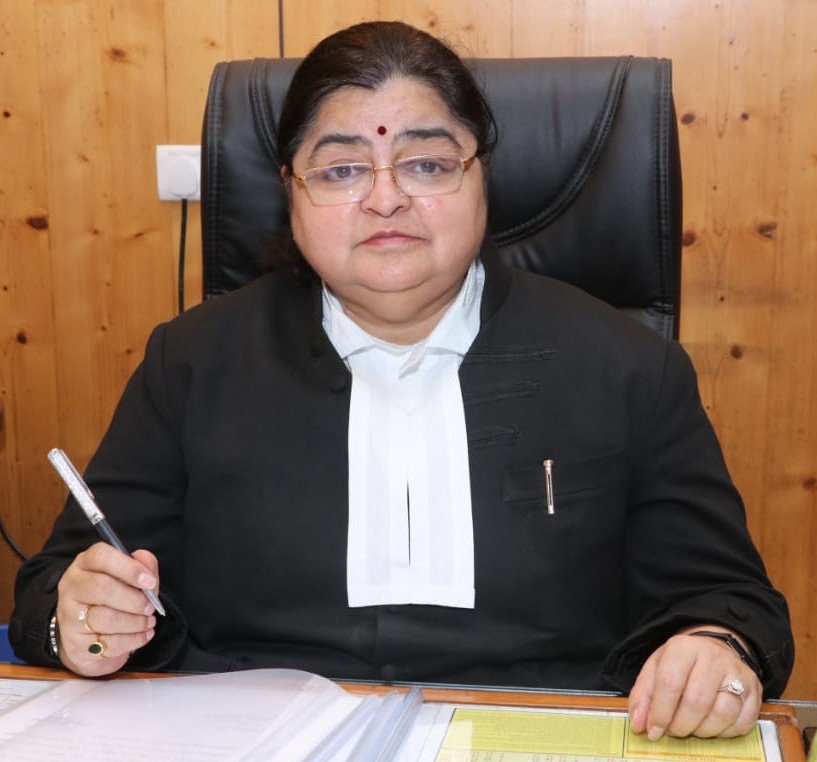

Legal Notes
Add a Note....