
As per the case facts, the appeals arose from a High Court judgment acquitting an accused of murder related to multiple deaths from burn injuries, including his wife and daughters. ...
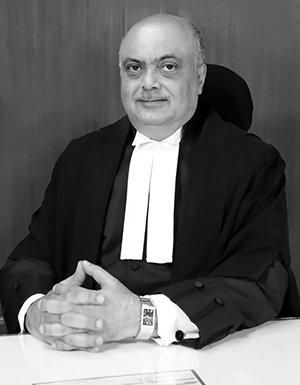
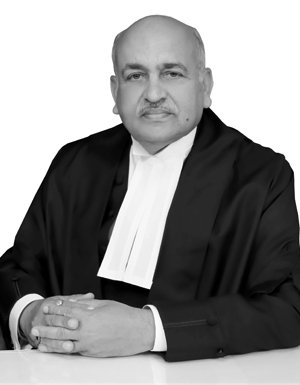

2025 INSC 529 Criminal Appeal No. 2142 of 2017, etc. Page 1 of 26
Reportable
IN THE SUPREME COURT OF INDIA
CRIMINAL APPELLATE JURISDICTION
CRIMINAL APPEAL NO. 2142 OF 2017
Aejaz Ahmad Sheikh … Appellant
versus
State of Uttar Pradesh & Anr. … Respondents
with
CRIMINAL APPEAL NOS. 2143-2144 OF 2017
J U D G M E N T
ABHAY S. OKA, J.
FACTUAL ASPECTS
1. These appeals arise from the same impugned
judgment of the High Court by which one Hasim Sheikh
(the accused) was acquitted of the offence punishable
under Section 302 of the Indian Penal Code (for short ‘the
IPC’). The incident is very gruesome. It is the death of
Amina (wife of the accused) and her three daughters,
namely, Najma, Fatima and Salma, due to burn injuries.
Criminal Appeal No. 2142 of 2017, etc. Page 2 of 26
Even Aslam (cousin of the accused) died due to the burn
injuries sustained in the same incident.
2. The accused and Amina had three daughters Najma,
Fatima and Salma and two sons Kamar Hasim and
Kadam. The complainant is PW-1 Aejaz Ahmad Sheikh.
He is the real brother of the deceased Amina. As the
accused used to abuse and beat his deceased wife and
deceased daughters, PW-1 visited the house of the accused
on 26
th December 2008. He made an attempt to resolve
the issue. He was not successful. He was told to leave the
house. While he was leaving the house, the deceased
Amina told him not to go as the accused and his family
members were intending to kill her. A few hours after PW-
1 reached his home, he received a call that the accused,
out of anger, along with his cousin Aslam, poured kerosene
on Amina and the three daughters and set them on fire.
Daughter Najma died on the spot, and the other three were
admitted to the District Hospital. PW-1 rushed to the
hospital and met his sister Amina, who disclosed that after
Criminal Appeal No. 2142 of 2017, etc. Page 3 of 26
his departure, the accused, along with Aslam, poured
kerosene on her and three daughters and set them on fire.
On the very same day, Aslam was also admitted to the
hospital due to burn injuries. On 26
th December 2008, the
dying declaration of daughter Fatima was recorded by
Tahsildar, Deoria, Harish Chandra Singh (PW-11). Fatima
stated that her father and the village people poured
kerosene oil and set it on fire. She blamed her paternal
grandparents for being the root cause of the burning. On
the same day, a dying declaration of the wife, Amina, was
recorded by PW-11, in which she stated that the accused
locked her and her three daughters and poured kerosene
on her and her daughters and set them on fire. She stated
that Najma died, and she, along with her two daughters,
sustained burn injuries.
3. On 26
th December 2008, on the complaint of PW-1, a
first information report was registered for the offences
punishable under Sections 302,307 and 120B of the IPC.
On the next day, the recovery of burnt clothes and a plastic
Criminal Appeal No. 2142 of 2017, etc. Page 4 of 26
can containing 100 gms. of kerosene was recovered from
the site of the incident. On 1
st January 2009, Salma died.
On 2
nd January 2009, co-accused Aslam died. On the
same day, Fatima succumbed to burn injuries. On 6
th
January 2009, Amina died. All of them died due to burn
injuries. A charge sheet was filed against the accused for
the offences punishable under Section 302 of the IPC.
4. The learned Addl. District and Sessions Judge, by
judgment dated 19th April 2014, convicted the accused.
The learned Judge accepted the testimony of PW-5 Kamar
Hasim, the minor son of the accused. The learned Judge
also accepted the dying declarations of Amina and Fatima
recorded by PW-11, Tahsildar. He held the accused guilty
of the offence punishable under Section 302 of the IPC.
The learned Judge held that this case was falling under
the category of rarest of the rare cases and proceeded to
award capital punishment.
Criminal Appeal No. 2142 of 2017, etc. Page 5 of 26
5. By the impugned judgment, the High Court not only
declined to confirm the capital punishment but proceeded
to acquit the accused.
6. Criminal Appeal nos.2143-44 of 2017 has been
preferred by the State, and Criminal Appeal no.2142 of
2017 has been preferred by PW-1 complainant. As no one
represented PW-1, this Court appointed learned counsel
Shri Shubhranshu Padhi as Amicus to espouse the cause
of PW-1. He and the counsel for the State made detailed
submissions.
SUBMISSIONS
7. Learned counsel appointed as amicus curiae to
espouse the cause of the PW-1 (Appellant in Criminal
Appeal No.2142 of 2017) has taken us through the
depositions of the material prosecution witnesses and
dying declarations. He submitted that the dying
declarations of Amina and Fatima were properly recorded
by PW-11, Tahsildar, after obtaining a fitness certificate
from PW-14, Dr. KC Rai. He submitted that the evidence
Criminal Appeal No. 2142 of 2017, etc. Page 6 of 26
of both witnesses has not been shaken in the cross-
examination. He submitted that the dying declarations
were substantive pieces of evidence based on which the
conviction of the accused could be based. He submitted
that the dying declarations inspire confidence. He
submitted that PW-1 complainant, PW-2 Rayajul Haq, PW-
3 Sadaqat Ali and PW-4 Sajjad Ahmad have deposed that
deceased Amina was in a condition to speak and point out
the role of the accused. He invited our attention to the
testimony of the PW-5, a child witness. He submitted that
there are bound to be some minor omissions and
contradictions in the evidence of a 15 years old boy who
had seen his mother and three sisters being burnt by his
father. His evidence cannot be discarded for that reason.
Moreover, in the examination-in-chief, he deposed that he
was threatened not to make any statement before the
police authorities. He pointed out that though the High
Court had held that there was no explanation for the
severe burn injuries sustained by Aslam, PW-5 deposed
that he was holding the victims at the time of the incident,
Criminal Appeal No. 2142 of 2017, etc. Page 7 of 26
which caused the burn injuries to him. Learned counsel
submitted that the High Court had misread the medical
evidence and came to the erroneous conclusion that Najma
committed suicide and others were injured in the process
of saving her. He would, therefore, submit that the guilt
of the accused was proved beyond a reasonable doubt and,
on reappreciation of the evidence, any court will come to a
conclusion that the only possible finding was that the guilt
of the accused was proved beyond a reasonable doubt.
8. Learned counsel appearing for the first informant
relied upon the following decisions:
i. Raju Devade v. State of Maharashtra
1;
ii. J. Ramulu & Anr. v. State of Andhra Pradesh
2;
and
iii. Balbir Singh & Anr. v. State of Punjab
3
He also relied upon a decision of this Court in the case of
Baleshwar Mahto and Anr. v. State of Bihar and Anr.
4.
Relying upon the decision, he submitted that primacy
1
(2016) 11 SCC 673
2
(2009) 16 SCC 432
3
(2006) 12 SCC 283
4
(2017) 3 SCC 152
Criminal Appeal No. 2142 of 2017, etc. Page 8 of 26
must always be given to the ocular evidence and not to
medical evidence.
9. Learned counsel appearing for the accused pointed
out that the evidence of dying declarations was not put to
the accused in his statement recorded under Section 313
of the CrPC. He relied upon a decision of this Court in the
case of Raj Kumar v. State (NCT of Delhi)
5.
CONSIDERATION OF SUBMISSIONS
10. We will deal with evidence of eye-witness PW-5
Kamar Hasim, who was 15 years old at the time of
recording his evidence. It is well settled that a minor is also
a competent witness. This Court in the case of P.Ramesh
v. State
6 has dealt with this issue. Under Section 118 of
the Indian Evidence Act, 1872 (the ‘Evidence Act’), a minor
is a competent witness. In paragraph 16 of the said
decision in the case of P. Ramesh, this Court held thus:
“16. In order to determine the
competency of a child witness, the
Judge has to form her or his opinion.
5
(2023) 17 SCC 95
6
(2019) 20 SCC 593
Criminal Appeal No. 2142 of 2017, etc. Page 9 of 26
The Judge is at liberty to test the
capacity of a child witness and no
precise rule can be laid down regarding
the degree of intelligence and
knowledge which will render the child
a competent witness. The competency
of a child witness can be ascertained by
questioning her/him to find out the
capability to understand the
occurrence witnessed and to speak the
truth before the court. In criminal
proceedings, a person of any age is
competent to give evidence if she/he is
able to (i) understand questions put as
a witness; and (ii) give such answers to
the questions that can be understood.
A child of tender age can be allowed to
testify if she/he has the intellectual
capacity to understand questions and
give rational answers thereto.
[Ratansinh Dalsukhbhai
Nayak v. State of Gujarat, (2004) 1
SCC 64 : 2004 SCC (Cri) 7] A child
becomes incompetent only in case the
court considers that the child was unable
to understand the questions and answer
them in a coherent and comprehensible
manner. [ Sarkar, Law of Evidence, 19th
Edn., Vol. 2, Lexis Nexis, p. 2678
citing Director of Public Prosecutions v. M,
1998 QB 913 : (1998) 2 WLR 604 : (1997)
2 All ER 749 (QBD)] If the child
understands the questions put to
her/him and gives rational answers to
those questions, it can be taken that
she/he is a competent witness to be
examined.”
(emphasis added)
Criminal Appeal No. 2142 of 2017, etc. Page 10 of 26
In the case of Pradeep v. State of Haryana
7 in
paragraphs 9 and 10, this Court held thus:
“9. It is a well settled principle that
corroboration of the testimony of a child
witness is not a rule but a measure of
caution and prudence. A child witness of
tender age is easily susceptible to
tutoring. However, that by itself is no
ground to reject the evidence of a child
witness. The Court must make careful
scrutiny of the evidence of a child witness.
The Court must apply its mind to the
question whether there is a possibility of
the child witness being tutored.
Therefore, scrutiny of the evidence of a
child witness is required to be made by
the Court with care and caution.
10. Before recording evidence of a
minor, it is the duty of a Judicial
Officer to ask preliminary questions to
him with a view to ascertain whether
the minor can understand the
questions put to him and is in a
position to give rational answers. The
Judge must be satisfied that the minor
is able to understand the questions and
respond to them and understands the
importance of speaking the truth.
Therefore, the role of the Judge who
records the evidence is very crucial. He
has to make a proper preliminary
examination of the minor by putting
appropriate questions to ascertain
whether the minor is capable of
7
(2023) SCC Online SC 777
Criminal Appeal No. 2142 of 2017, etc. Page 11 of 26
understanding the questions put to
him and is able to give rational
answers. It is advisable to record the
preliminary questions and answers so
that the Appellate Court can go into
the correctness of the opinion of the
Trial Court.”
(emphasis added)
11. We may note here that before administering oath to
PW-5, even preliminary questions were not put to him by
the learned Trial Judge for ascertaining whether he is able
to understand the questions put to him and is in a position
to answer the same. The learned Judge should have asked
preliminary questions to him to ascertain whether he
understood the importance of the oath. The learned Judge
ought to have recorded satisfaction that the minor was
competent to depose. However, this was not done by the
learned Judge. He straightaway administered oath to the
minor witness. In the deposition, it is not even mentioned
that certain preliminary questions were put to the
witnesses. Thus, it is apparent that the learned Trial
Judge administered oath to PW -5 and recorded his
deposition without satisfying himself about the
Criminal Appeal No. 2142 of 2017, etc. Page 12 of 26
competence of the minor to depose. This raises a question
mark on the testimony of PW-5 especially when a minor
witness can be easily tutored.
12. PW-5 deposed that PW-1 came around 4 o’clock to
their house on the day of the incident. One Sajjad Jaif and
one more uncle had come with him. All of them arrived in
a jeep. Before he arrived, the accused Aslam and other
family members were verbally abusing his mother, three
sisters and his younger brother. The witness further
deposed that the accused (his father) had assaulted him.
When PW-1 arrived, the accused, Aslam and family
members started verbally abusing him. His father held
PW-1’s collar and Aslam and Saiyyad were threatening to
slap him. PW-1 told his mother that he would come on the
next day with his maternal grandfather. He described the
main incident as under:
“……Suddenly after that, Hasim, Saiyyad,
Hamid, Aslam, Ayesha, Sahdun, Shama
Parvez aka Gudiya, all of them came and
started dragging my mother and three
sisters towards the kitchen. After that I
Criminal Appeal No. 2142 of 2017, etc. Page 13 of 26
and my younger brother Kadim started
pulling our mother and sisters towards
us. Sahidun and Shama Parvez pushed
me and my brother away. After that my
younger brother sat and started crying in
the doorway of the outside room but I
continued trying to pull them towards
myself. Then I saw Hasim, Saiyyad,
Hamid, Aslam, Ayesha, Sahidun, Shama
Parvez aka Gudiya, they started pushing
my mother and sisters, and after that
Saiyyad, Hasim, took a huge gallon and
started pouring kerosene oil on them. And
Aslam was holding my mother and
sisters. After Saiyyad took a match and
gave it to Hasim and told him to set them
on fire and get rid of the trouble. As soon
as Hasim lit the match and threw it on my
mother and sisters, the fire went out of
control. I got very scared after seeing all
this. After that I thought of saving my own
life. When I went out from the kitchen, I
came across my younger brother sitting
and crying. I opened the door and I and
my younger brother Kadim ran out.”
The witness further deposed that after he ran out of the
house, he met Imran and requested Imran to save
everyone. In the cross-examination, PW-5 stated that he
was 12 years old when the incident happened and he was
in 5
th class.
Criminal Appeal No. 2142 of 2017, etc. Page 14 of 26
13. We find that material contradictions have been
brought on record in the evidence of PW-5 which have been
proved through evidence of investigating officer PW-10,
Shri Rajiv Singh. PW-5 was confronted with the following
statements made by him in his statement recorded under
Section 161 of CrPC:
a. On seeing the smoke during the argument and fight
inside, Aslam (co-accused), Shah Alam and other
people went in to save his sisters Najma, Fatima and
Salma and his mother who were burning;
b. While trying to put out the fire, Aslam also caught
on fire and Sayyed and Shah Alam also suffered
some burns. His father’s hand and body were also
burnt; and
c. He did not know how the fire started.
In the evidence of PW-10, the prior statements by which
PW-5 was confronted, have been duly proved. These are
major contradictions brought on record. These
Criminal Appeal No. 2142 of 2017, etc. Page 15 of 26
contradictions, apart from the fact that the learned Trial
Judge did not satisfy himself about the capacity of PW-5
to understand and answer questions, make the testimony
of PW-5 vulnerable.
14. In the cross-examination, PW-5 stated that after the
incident, the village Pradhan took him to police station.
When the inspector asked him, he stated that he did not
know anything. He admitted that he did not tell anything
about the incident to his paternal grandparents. In the
cross-examination, he stated that the Inspector did not
take his statement. He stated that he was giving testimony
about the incident for the first time three years after the
incident. In view of what we have discussed above, it is
unsafe to rely upon his evidence.
15. Now, we come to the dying declarations of deceased
Fatima and Amina allegedly recorded by PW-11, who was
the Tahsildar on duty. PW-11 in the cross-examination
has accepted that after recording the statements of both
the victims, he did not read over the same to the victims.
Criminal Appeal No. 2142 of 2017, etc. Page 16 of 26
He admitted that there is no such endorsement made on
the statements. He also accepted that the doctor ha d
simply mentioned on the dying declarations that both of
them were “fit” and had not stated that they were in a
condition to make a statement.
16. The most unfortunate part is that the evidence of PW-
11 about the dying declarations made by these two victims
has not been put to the accused in his examination under
Section 313 of CrPC. Not only that what is stated in the
evidence by PW-11 is not put to the accused in his
statement under Section 313 of CrPC, but even the fact
that the dying declarations were made by Fatima and
Amina to PW-11 was not put to the accused.
17. According to the prosecution, the deceased Amina
made a dying declaration even to PW -1. Even the
testimony of PW-1 to that effect has not been put to the
accused in his statement under Section 313 of CrPC.
Criminal Appeal No. 2142 of 2017, etc. Page 17 of 26
18. The case of the prosecution is that Amina also made
a dying declaration before PW-2. He stated in his
deposition that “we found Amina Khatun in the hospital
and she told us everything in relation to the incident.” He
has not deposed what exactly deceased Amina told him.
Therefore, it cannot be said that Amina made a dying
declaration before PW-2 implicating the accused.
19. Now, coming to the evidence of PW-3, he stated that
in hospital Amina told PW-1 that the accused and Aslam
poured kerosene oil and set her and her daughters on fire.
In the cross-examination, he admitted that he gave a
statement to the investigating officer according to whatever
PW-1 told him. When he was confronted with his
statement under Section 161 of CrPC, he admitted that his
statement regarding the accused pouring kerosene and
setting the deceased and her daughters on fire was made
by him as per the narration of PW-1. Therefore, it is very
difficult to believe the testimony of PW-3.
Criminal Appeal No. 2142 of 2017, etc. Page 18 of 26
20. Now, we come to the testimony of PW-4. He deposed
that while he was in hospital, Amina informed PW-1 that
the accused and Aslam dragged her and her daughters
towards the room, sprinkled kerosene on them and set
them on fire. It is pertinent to note that even this part of
the testimony regarding dying declaration of Amina has
not been put to the accused in the statement under
Section 313 of the CrPC. In the cross-examination, he
stated that he visited the hospital regularly from the time
Amina and her two daughters were admitted to the
hospital. He admitted that though he attempted to talk to
Amina in the hospital, she was not able to talk, and she
just asked for water.
21. Thus, the evidence of prosecution regarding the
dying declaration was not put to the accused in his
statement under Section 313 of CrPC. The law on this
aspect is well-settled. In the case of Raj Kumar v. State
(NCT of Delhi)
5, this Court has summarised the law on his
aspect. Paragraph 22 of the said decision reads thus:
Criminal Appeal No. 2142 of 2017, etc. Page 19 of 26
“22. The law consistently laid down by
this Court can be summarised as under:
22.1. It is the duty of the trial court to
put each material circumstance
appearing in the evidence against the
accused specifically, distinctively and
separately. The material circumstance
means the circumstance or the
material on the basis of which the
prosecution is seeking his conviction.
22.2. The object of examination of the
accused under Section 313 is to enable
the accused to explain any
circumstance appearing against him in
the evidence.
22.3. The Court must ordinarily
eschew material circumstances not put
to the accused from consideration
while dealing with the case of the
particular accused.
22.4. The failure to put material
circumstances to the accused amounts
to a serious irregularity. It will vitiate
the trial if it is shown to have
prejudiced the accused.
22.5. If any irregularity in putting the
material circumstance to the accused
does not result in failure of justice, it
becomes a curable defect. However, while
deciding whether the defect can be cured,
one of the considerations will be the
passage of time from the date of the
incident.
Criminal Appeal No. 2142 of 2017, etc. Page 20 of 26
22.6. In case such irregularity is curable,
even the appellate court can question the
accused on the material circumstance
which is not put to him.
22.7. In a given case, the case can be
remanded to the trial court from the stage
of recording the supplementary statement
of the accused concerned under Section
313CrPC.
22.8. While deciding the question
whether prejudice has been caused to the
accused because of the omission, the
delay in raising the contention is only one
of the several factors to be considered.”
(emphasis added)
22. The prosecution has heavily relied upon the dying
declarations of the two victims. As this evidence was not
put to the accused in his statement under Section 313 of
the CrPC, he was denied an opportunity to explain the
same. Hence, this omission causes prejudice to him.
Therefore, the evidence of dying declaration will have to be
kept out of consideration.
23. The incident occurred on 26
th December 2008. Even
assuming that omission in recording the statement of the
accused is curable, the question is whether, after a lapse
Criminal Appeal No. 2142 of 2017, etc. Page 21 of 26
of more than 14 years, the case can be remanded to the
Trial Court for further examination of the accused under
Section 313 of the CrPC. After such a long gap of 14 years,
it will be unjust to compel the accused to face such an
examination. The accused has undergone incarceration
for more than 6 years. From the date of the Trial Court
judgment till the date of the impugned judgment, there
was a hanging sword over him of the capital punishment.
Therefore, we are of the view that it will be unjust now at
this stage to pass an order of remand for recording further
statements under Section 313 of the CrPC. The remand at
this stage will cause prejudice to the accused. Though we
do not agree with some of the findings recorded by the High
Court, it is not possible to find fault with the ultimate
conclusion drawn by it.
24. There are two other important aspects of the case.
Co-accused Aslam, a cousin of the accused, also suffered
burn injuries in the incident. He died on 2
nd January 2009
with septicaemia. He suffered 40% burn injuries. The
Criminal Appeal No. 2142 of 2017, etc. Page 22 of 26
prosecution also suppressed the fact that the accused also
suffered superficial to deep burn injuries on the face and
both forearms to the extent of 20%. This fact was brought
to the record by the accused by examining Dr. K.C. Rai as
a defence witness.
25. According to the prosecution's case, after pouring
kerosene oil on the victims, the accused and Aslam were
standing outside the room and were not allowing anybody
to enter the room. Co-accused Aslam is himself a victim of
the fire. There is no explanation offered by the prosecution
of how the accused and Aslam suffered burn injuries. The
burn injuries to Aslam proved to be fatal. This also raises
suspicion about the prosecution's case.
26. We are dealing with an appeal against acquittal.
After reappreciation of evidence, we find that the view
taken by the High Court that the guilt of the accused was
not proved beyond a reasonable doubt is a possible view
which could have been taken on the basis of the evidence
Criminal Appeal No. 2142 of 2017, etc. Page 23 of 26
on record. Even assuming that another view is possible,
that is no ground to overturn the order of acquittal.
27. It is true that the incident is very shocking in which
a woman and her three daughters were burnt, and one of
them died on the spot, the other three died after a few days.
However, in the absence of legal evidence on record to
prove the guilt of the accused beyond a reasonable doubt,
we cannot interfere with the impugned judgment of the
High Court.
28. Before we part with this judgment, we have a
suggestion to make. There are several criminal appeals
which come to this Court where we find that vital
prosecution evidence is not put to the accused in
statement under Section 313 of the CrPC. The Court
becomes helpless, as due to the long lapse of time, the
defect cannot be cured by passing an order of remand. In
the case of Raj Kumar v. State (NCT of Delhi)
5, this Court
dealt with this issue. In paragraphs 29 and 30, this Court
held thus:
Criminal Appeal No. 2142 of 2017, etc. Page 24 of 26
“29. In many criminal trials, a large
number of witnesses are examined, and
evidence is voluminous. It is true that the
Judicial Officers have to understand the
importance of Section 313. But now the
court is empowered to take the help of the
prosecutor and the defence counsel in
preparing relevant questions. Therefore,
when the trial Judge prepares questions
to be put to the accused under Section
313, before putting the questions to the
accused, the Judge can always provide
copies of the said questions to the learned
Public Prosecutor as well as the learned
defence counsel and seek their assistance
for ensuring that every relevant material
circumstance appearing against the
accused is put to him. When the Judge
seeks the assistance of the prosecutor
and the defence lawyer, the lawyers must
act as the officers of the court and not as
mouthpieces of their respective clients.
While recording the statement under
Section 313CrPC in cases involving a
large number of prosecution witnesses,
the Judicial Officers will be well advised
to take benefit of sub-section (5) of
Section 313CrPC, which will ensure that
the chances of committing errors and
omissions are minimised.
30. In 1951, while delivering the verdict
in Tara Singh [Tara Singh v. State, 1951
SCC 903 : 1951 SCC OnLine SC 49] , this
Court lamented that in many cases, scant
attention is paid to the salutary provision
Criminal Appeal No. 2142 of 2017, etc. Page 25 of 26
of Section 342CrPC, 1898. We are sorry to
note that the situation continues to be the
same after 72 years as we see such
defaults in large number of cases. The
National and the State Judicial
Academies must take a note of this
situation. The Registry shall forward a
copy of this decision to the National and
all the State Judicial Academies.”
We want to supplement what is reproduced above. When
an appeal against conviction is preferred before the High
Court, at the earliest stage, the High Court must examine
whether there is a proper statement of the accused
recorded under Section 313 of CrPC (Section 351 of the
Bharatiya Nagarik Suraksha Sanhita, 2023). If any defect
is found, at that stage, the same can be cured either by
High Court recording further statement or by directing the
Trial Court to record. If this approach is adopted, the
argument of delay and prejudice will not be available to the
accused.
Criminal Appeal No. 2142 of 2017, etc. Page 26 of 26
29. We must record our appreciation for the very
valuable assistance rendered by Mr. Shubhranshu Padhi,
appointed as amicus curiae.
30. The appeals are, accordingly, dismissed.
…........……………… ….J.
(Abhay S Oka)
....………..……………...J.
(Pankaj Mithal)
……......………………….J.
(Ahsanuddin Amanullah)
New Delhi;
April 22, 2025.
In a significant Supreme Court Criminal Appeal decision, the apex court recently delivered a crucial acquittal judgment analysis, dismissing appeals against the High Court's acquittal in a particularly distressing case involving multiple deaths due to burn injuries. The judgment, originating from a 2008 incident, underscores fundamental principles of criminal jurisprudence, particularly concerning the examination of child witnesses and the paramount importance of Section 313 of the Code of Criminal Procedure. This ruling, now available on CaseOn, serves as a vital reference point for legal professionals navigating complex criminal trials.
The case revolves around a horrific incident on December 26, 2008, where Amina (wife of the accused, Hasim Sheikh) and her three daughters – Najma, Fatima, and Salma – suffered fatal burn injuries. Tragically, Najma died on the spot, while the others succumbed days later. Even Aslam, a cousin of the accused, also perished from burn injuries sustained in the same event. The complainant, PW-1 Aejaz Ahmad Sheikh, Amina's brother, alleged that the accused, often abusive towards his wife and daughters, along with Aslam, poured kerosene on the victims and set them on fire. This alleged act occurred hours after PW-1 had attempted to intervene in a domestic dispute.
The trial court, based on the testimony of PW-5 (Kamar Hasim, the minor son of the accused) and the dying declarations of Amina and Fatima, convicted Hasim Sheikh under Section 302 of the Indian Penal Code, deeming it a 'rarest of the rare' case and imposing capital punishment. However, the High Court, in its impugned judgment, not only refused to confirm the death penalty but proceeded to acquit the accused, leading to the present appeals by the State and PW-1.
The Supreme Court meticulously re-evaluated the evidence presented, focusing on the competency of the child witness, the validity of dying declarations, and the procedural lapses during the trial.
PW-5, the 15-year-old son of the accused, was a crucial eyewitness. While acknowledging that a minor can be a competent witness as per Section 118 of the Indian Evidence Act, the Court highlighted a critical procedural flaw: the Trial Judge failed to conduct preliminary questions to ascertain PW-5's understanding of the oath and his capacity to give rational answers, directly contravening established judicial guidelines. Furthermore, significant contradictions emerged between PW-5's in-court testimony and his prior statement under Section 161 of CrPC, as proved by the investigating officer (PW-10). These discrepancies, coupled with the lack of initial competency assessment, rendered the child's testimony 'vulnerable' and unsafe to rely upon.
The prosecution heavily relied on the dying declarations of Amina and Fatima, recorded by Tahsildar PW-11. However, the Supreme Court found serious infirmities:
The Court, citing its own precedent in Raj Kumar v. State (NCT of Delhi), reiterated that failure to put material circumstances to the accused under Section 313 CrPC is a 'serious irregularity' that can vitiate the trial if prejudice is caused. Similar omissions were noted regarding other witnesses' testimonies about Amina's alleged dying declarations to them.
An additional point of suspicion for the Court was the unexplained burn injuries suffered by both the accused (20% superficial to deep burns) and co-accused Aslam (40% fatal burns). The prosecution's narrative suggested the accused and Aslam were outside the room, preventing entry. The lack of explanation for their injuries contradicted this narrative and further weakened the prosecution's case.
Legal professionals often face the challenge of dissecting lengthy judgments to grasp their core implications. For those analyzing intricate rulings like this one, CaseOn.in's 2-minute audio briefs offer a powerful solution, condensing essential arguments and outcomes into easily digestible formats, thereby assisting legal experts in quickly comprehending the nuances of such specific rulings without wading through extensive text.
Given the significant procedural flaws and the vulnerability of key evidence, the Supreme Court affirmed that the High Court's decision to acquit was a 'possible view' based on the record. Even if another view were plausible, it was not grounds to overturn an acquittal. The Court also declined to remand the case for a fresh Section 313 CrPC examination, citing the lapse of over 14 years and the prejudice it would cause to the accused, who had already endured over six years of incarceration and the specter of capital punishment.
Before concluding, the Supreme Court issued a significant suggestion regarding Section 313 CrPC examinations. Acknowledging that many criminal appeals suffer from omissions in putting vital prosecution evidence to the accused, the Court advised that High Courts, when hearing appeals against conviction, should at the earliest stage examine the Section 313 statement. If defects are found, the High Court could either record further statements itself or direct the Trial Court to do so. This proactive approach, the Court noted, would cure defects promptly and avoid arguments of delay and prejudice at later stages, ensuring fairer trials.
This Supreme Court judgment serves as a critical reminder of several fundamental principles in criminal law:
In summation, the Supreme Court's dismissal of the appeals reinforces the principle that convictions must be founded on evidence that is not only compelling but also adduced through strict adherence to procedural fairness. The vulnerability of the child witness's testimony, coupled with critical omissions in the Section 313 CrPC examination regarding the dying declarations, ultimately led to the affirmation of the accused's acquittal. The judgment serves as a significant directive for trial courts and appellate authorities to ensure meticulous compliance with criminal procedural norms.
All information provided in this article is for informational purposes only and does not constitute legal advice. Readers should consult with a qualified legal professional for advice regarding specific legal issues.

Legal Notes
Add a Note....