
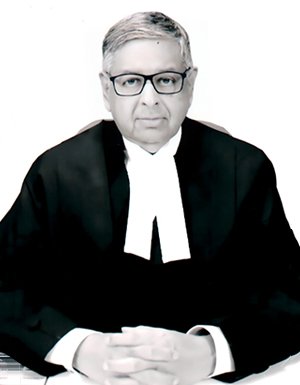
As per the case facts, two Delhi Judicial Service officers sought modification of existing Supreme Court orders related to judicial service conditions and recruitment. The reason for the appeal to ...

No Acts & Articles mentioned in this case
REPORTABLE
IN THE SUPREME COURT OF INDIA
CIVIL APPELLATE JURISDICTION
I.A. NO. 89454 OF 2021
IN
WRIT PETITION (C) NO. 1022 OF 1989
ALL INDIA JUDGES ASSOCIATION
AND OTHERS ...PETITIONER(S)
VERSUS
UNION OF INDIA AND OTHERS ...RESPONDENT(S)
AND
IN THE MATTER OF
MS. SHEETAL CHAUDHARY PRADHAN
AND ANOTHER …APPLICANT(S)
WITH
I.A. NO. 89450 OF 2021
I.A. NO. 88976 OF 2021
I.A. No. 249 of 2009
I.A. NO. 44132 OF 2022 IN I.A. NO. 89450 OF 2021
IN
WRIT PETITION (C) NO. 1022 OF 1989
O R D E R
B.R. GAVAI, J.
1.I.A. No. 89454 of 2021 has been filed by two judicial
officers in the cadre of Delhi Judicial Service (hereinafter
1
referred to as “DJS”) namely Ms. Sheetal Chaudhary Pradhan
and Dr. Shirish Aggarwal, for modification of the orders
dated 21
st
March 2002
1
and 20
th
April 2010
2
passed by this
Court in the present writ petition. I.A. No. 89450 of 2021
has been filed by the same judicial officers seeking
permission to participate in the Limited Departmental
Competitive Examination (hereinafter referred to as “LDCE”)
initiated by the High Court of Delhi through its letter No. 38
49/Exam.Cell/DHJSCL Exam/2021 dated 15
th
July 2021,
for promotion to the Delhi Higher Judicial Service
(hereinafter referred to as “DHJS”) District Judge Cadre and
to consider the candidature of the judicial officersapplicants
on merits, subject to the outcome of the application for
modification. I.A. No. 44132 of 2022 in I.A. No.89450 of
2021 has been filed by the same judicial officers praying for a
direction to the High Court of Delhi to identify two seats of
LDCE quota of DHJS from the roster under Rule 7(2) of the
Delhi Higher Judicial Service Rules, 1970 (hereinafter
referred to as the “said Rules”) and to reserve them for the
judicial officersapplicants. I.A. No.88976 of 2021 has also
1 (2002) 4 SCC 247
2 (2010) 15 SCC 170
2
been filed by the same judicial officers praying for their
impleadment as copetitioners in the present writ petition.
2.I.A. No.249 of 2009 has been filed by the High Court of
Delhi praying for reducing the minimum qualifying service to
7 years from 10 years for promotion to the DHJS under 25%
quota of LDCE.
3.We have heard Shri P.S. Patwalia, learned Senior
Counsel appearing on behalf of the judicial officers
applicants, Shri A.D.N. Rao, learned Senior Counsel
appearing on behalf of the High Court of Delhi and Shri
Siddharth Bhatnagar, learned Senior Counsel appearing as
amicus curiae.
4.The present writ petition pertains to the working
conditions of the members of subordinate judiciary
throughout the country. This Court has issued various
directions from time to time. Pursuant to the directions
issued by this Court, the then Ministry of Law, Justice and
Company Affairs (Department of Justice), Government of
India constituted the First National Judicial Pay Commission
(also known as “Shetty Commission”) under the
3
Chairmanship of Mr. Justice K.J. Shetty vide Resolution
dated 21
st
March 1996. The Shetty Commission, after due
deliberation, submitted its report on 11
th
November 1991.
The recommendations of the Shetty Commission came to be
considered by this Court in its order dated 21
st
March 2002,
passed in the present writ petition. It will be apposite to refer
to the observations made by this Court in paragraph (27) of
the said order, which read thus:
“27. Another question which falls for consideration
is the method of recruitment to the posts in the
cadre of Higher Judicial Service i.e. District Judges
and Additional District Judges. At the present
moment, there are two sources for recruitment to
the Higher Judicial Service, namely, by promotion
from amongst the members of the Subordinate
Judicial Service and by direct recruitment. The
subordinate judiciary is the foundation of the edifice
of the judicial system. It is, therefore, imperative,
like any other foundation, that it should become as
strong as possible. The weight on the judicial
system essentially rests on the subordinate
judiciary. While we have accepted the
recommendation of the Shetty Commission which
will result in the increase in the pay scales of the
subordinate judiciary, it is at the same time
necessary that the judicial officers, hardworking as
they are, become more efficient. It is imperative that
they keep abreast of knowledge of law and the latest
pronouncements, and it is for this reason that the
Shetty Commission has recommended the
establishment of a Judicial Academy, which is very
necessary. At the same time, we are of the opinion
that there has to be certain minimum standard,
4
objectively adjudged, for officers who are to enter
the Higher Judicial Service as Additional District
Judges and District Judges. While we agree with the
Shetty Commission that the recruitment to the
Higher Judicial Service i.e. the District Judge cadre
from amongst the advocates should be 25 per cent
and the process of recruitment is to be by a
competitive examination, both written and viva
voce, we are of the opinion that there should be an
objective method of testing the suitability of the
subordinate judicial officers for promotion to the
Higher Judicial Service. Furthermore, there should
also be an incentive amongst the relatively junior
and other officers to improve and to compete with
each other so as to excel and get quicker promotion.
In this way, we expect that the calibre of the
members of the Higher Judicial Service will further
improve. In order to achieve this, while the ratio of
75 per cent appointment by promotion and 25 per
cent by direct recruitment to the Higher Judicial
Service is maintained, we are, however, of the
opinion that there should be two methods as far as
appointment by promotion is concerned : 50 per
cent of the total posts in the Higher Judicial Service
must be filled by promotion on the basis of principle
of meritcumseniority. For this purpose, the High
Courts should devise and evolve a test in order to
ascertain and examine the legal knowledge of those
candidates and to assess their continued efficiency
with adequate knowledge of caselaw. The
remaining 25 per cent of the posts in the service
shall be filled by promotion strictly on the basis of
merit through the limited departmental competitive
examination for which the qualifying service as a
Civil Judge (Senior Division) should be not less than
five years. The High Courts will have to frame a rule
in this regard.”
5
5.A perusal thereof would reveal that this Court has
observed that there should also be an incentive amongst the
relatively junior and other officers to improve and to compete
with each other so as to excel and get quicker promotion.
This Court was of the view that in this way, the calibre of the
members of the Higher Judicial Service will further improve.
This Court, therefore, observed that to achieve the same,
while the ratio of 75% appointment by promotion and 25% by
direct recruitment to the Higher Judicial Service is
maintained, there should be two methods for appointment by
promotion. 50% of the total posts in the Higher Judicial
Service must be filled by promotion on the basis of principle
of meritcumseniority and the remaining 25% of posts in the
service should be filled by promotion strictly on the basis of
merit through LDCE for which the qualifying service as a
Civil Judge (Senior Division) should be not less than 5 years.
This Court, accordingly, issued the following directions:
“28. As a result of the aforesaid, to recapitulate, we
direct that recruitment to the Higher Judicial
Service i.e. the cadre of District Judges will be:
(1)(a) 50 per cent by promotion from
amongst the Civil Judges (Senior
Division) on the basis of principle of
6
meritcumseniority and passing a
suitability test;
(b) 25 per cent by promotion strictly on
the basis of merit through limited
competitive examination of Civil Judges
(Senior Division) having not less than five
years' qualifying service; and
(c) 25 per cent of the posts shall be filled
by direct recruitment from amongst the
eligible advocates on the basis of the
written and viva voce test conducted by
respective High Courts.
(2) Appropriate rules shall be framed as
above by the High Courts as early as
possible.”
6.In pursuance of the directions of this Court, the High
Court of Delhi amended Rule 7 of the said Rules vide Delhi
Higher Judicial Service (Amendment) Rules, 2008 dated 22
nd
October 2008, which reads thus:
“7. Regular recruitment. (1) Recruitment to the
posts in the cadre of District Judge at Entry Level
shall be as under:
(a) 50 percent by promotion from amongst the Civil
Judges (Senior Division), having a minimum ten
years service in the cadre of Delhi Judicial Service,
on the basis of principle of meritcumseniority and
passing a suitability test;
(b) 25 percent by promotion strictly on the basis of
merit through limited competitive examination of
Civil Judges (Senior Division) having not less than
five years qualifying service; and
(c) 25 percent of the posts shall be filled by direct
recruitment from amongst the persons eligible as
7
per rule 7C on the basis of the written and viva voce
test, conducted by the High Court.
(2) The first and second posts will go to category (a)
(by promotion on the basis of senioritycum
suitability), the third post will go to category (c)
(direct recruitment from the Bar), and the fourth
post will go to category (b) (by limited competitive
examination) under this rule, and so on.
7A. ……
7B. Selection for promotion by holding limited
competitive examination: The High Court shall hold
a limited written competitive examination for
promotion of member of the Delhi Judicial Service
as per clause (b) of subrule (1) of rule 7 in the
following manner:
(i)Written Examination 600 marks
(ii)Assessment of Record 150 marks
(iii)Viva voce 250 marks
Provided that the High Court may, in addition to the
above competitive examination, take into
consideration any of the materials as prescribed in
rule 7A above.
Provided further that any officer having grading as
'C' (Integrity doubtful) in any year, shall not be
eligible to appear in the limited competitive
examination.
7C. ……..”
7.In the meantime, the issue with regard to eligibility
requirement for recruitment to the posts in DHJS under 25%
quota by promotion on the basis of merit through LDCE
8
came up for discussion before the Full Court of the High
Court of Delhi in its meeting dated 5
th
September 2008. In
the said meeting, it was considered that a Civil Judge (Junior
Division) is not eligible to become Civil Judge (Senior
Division) until he completes 5 years qualifying service. It was
further discussed that under the said Rules, a Civil Judge
(Junior Division) would be required to have a minimum of 10
years qualifying service to be considered even for the 25%
quota through LDCE. The Full Court of the High Court of
Delhi was of the view that in order to make the quota of
LDCE an effective scheme of promotion for meritorious
officers, it was appropriate that the eligibility requirement of
10 years be reduced to 7 years [(5 years as Civil Judge
(Junior Division) and 2 years as Civil Judge (Senior Division)
under the 25% quota]. The High Court of Delhi was of the
view that the same would also be in conformity with Article
233 (2) of the Constitution of India and the eligibility
conditions for direct recruitment from the Bar. In this
background, I.A. No. 249 of 2009 came to be filed by the
High Court of Delhi.
9
8.Various I.As. were filed in the present writ petition.
Some of the I.As. came to be decided by this Court vide order
dated 20
th
April 2010. It will be apposite to refer to the
following paragraphs of the said order:
“5. In some of the States sufficient number of
candidates are not available for being promoted
under this particular category as a Civil Judge
(Senior Division) in the normal course gets
promotion before the completion of period of 5
years. As 25% quota is prescribed, a large number
of vacancies remained unfilled and that is not good
for the judicial administration in that State.
6. Having regard to various strategies available, we
are of the considered view that suitable amendment
is to be made for this 25% quota of limited
departmental competitive examination. We are also
of the view, with the past experience, that it is
desirable that 25% quota be reduced to 10%. We
feel so as the required result, which was sought to
be achieved by this process could not be achieved,
thus it calls for modification.
7. Thus, we direct that henceforth only 10% of the
cadre strength of District Judges be filled up by
limited departmental competitive examination with
those candidates who have qualified service of five
years as Civil Judge (Senior Division). Every year
vacancies are to be ascertained and the process of
selection shall be taken care of by the High Courts.
If any of the post is not filled up under 10% quota,
the same shall be filled up by regular promotion. In
some of the High Courts, process of selection of
these 25% quota by holding limited departmental
competitive examination is in progress, such
10
process can be continued and the unfilled seats, if
meritorious candidates are available, should be
filled up. But if for some reason the seats are not
filled up, they may be filled up by regular promotion
and apply the usual mode of promotion process.
Thus we pass the following order.
8. Hereinafter, there shall be 25% of seats for direct
recruitment from the Bar, 65% of seats are to be
filled up by regular promotion of Civil Judge (Senior
Division) and 10% seats are to be filled up by
limited departmental competitive examination. If
candidates are not available for 10% seats, or are
not able to qualify in the examination then vacant
posts are to be filled up by regular promotion in
accordance with the Service Rules applicable.
9. All the High Courts are hereby directed to take
steps to see that existing Service Rules be amended
positively with effect from 112011. If the Rules are
not suitably amended, this order shall prevail and
further recruitment from 112011 shall be
continued accordingly as directed by us. The time
schedule prescribed in the order dated 412007
(in Malik Mazhar Sultan case [Malik Mazhar Sultan
(3) v. U.P. Public Service Commission, (2008) 17 SCC
703 : (2010) 1 SCC (L&S) 942] ) shall be strictly
adhered to for the purpose of selection. All the
vacancies are to be filled up in that particular year
and there shall not be any carry forward of the
unfilled posts.”
9.It could thus be seen that this Court found that it was
difficult to find candidates for LDCE for the 25% posts
reserved for the said category and in many High Courts, the
11
said posts remained unfilled. This Court, therefore, reduced
the said 25% quota to 10%.
10.I.A. No. 249 of 2009 filed by the High Court of Delhi has
been pending for more than a decade. In the meantime, two
judicial officersapplicants herein have filed the aforesaid
I.As. The first one being for modification of the orders of this
Court dated 21
st
March 2002 and 20
th
April 2010.
11.It is not in dispute that in the High Court of Delhi, the
nature of work to be performed by the Civil Judge (Junior
Division) and Civil Judge (Senior Division) is the same. This
is a peculiar situation prevailing in the High Court of Delhi
where except for the difference in Pay Scale, there is no
difference with regard to the powers to be exercised and the
duties to be discharged by the said judges. It is also not in
dispute that the present ratio of Civil Judge (Junior Division)
to Civil Judge (Senior Division) is 80 : 20. The High Court of
Delhi has already moved the Principal Secretary (LJ & LA),
Government of NCT of Delhi for increase of quota of Civil
Judge (Senior Division) to 25% from 20% i.e. an increase
12
from 96 Civil Judges (Senior Division) to 121 Civil Judges
(Senior Division), out of a total strength of 482.
12.It is the grievance of the said two judicial officers
applicants that on account of this peculiar situation, for 10%
quota under the LDCE, there are no candidates available for
promotion through merit. It is their further grievance that in
ordinary course, a person would get promoted even to DHJS
in 10 years. In this premise, the judicial officersapplicants
pray for modification of the orders dated 21
st
March 2002
and 20
th
April 2010 passed by this Court in the present writ
petition so as to do away with the requirement of 5 years
qualifying service as Civil Judge (Senior Division) and modify
the same with the requirement of 10 years total qualifying
service as Civil Judge.
13.This position is not disputed by the High Court of Delhi.
On the contrary, it is the prayer made by the High Court of
Delhi that the order be modified and the requirement of 10
years minimum qualifying service be reduced to 7 years
minimum qualifying service [(5 years as Civil Judge (Junior
13
Division) and 2 years as Civil Judge (Senior Division) under
the 25% quota].
14.The very purpose for providing the channel of promotion
through LDCE was to provide an incentive to the officers
amongst the relatively junior officers to improve and to
compete with each other so as to excel and get quicker
promotion. In the peculiar situation prevailing in the High
Court of Delhi, the very purpose is frustrated. We are,
therefore, of the considered view that in the peculiar facts
and circumstances, both I.A. No.249 of 2009 and I.A.
No.89454 of 2021 deserve to be allowed.
15.Shri Rao, learned Senior Counsel appearing on behalf of
the High Court of Delhi has fairly stated that the High Court
of Delhi, on its own, has reserved two seats for the present
judicial officersapplicants so that their claims are not
defeated by passage of time or by delay in holding of the
examination.
16.In view of the submission made by Shri Rao, no orders
are necessary to be passed in I.A. No. 89450 of 2021, I.A.
14
No.44132 of 2022 in I.A. No. 89450 of 2021 and I.A. No.88976
of 2021.
17.In the result, I.A. No. 89454 of 2021 filed by the judicial
officersapplicants and I.A. No. 249 of 2009 filed by the High
Court of Delhi are allowed in the following terms:
(i)Paragraph 28 (1) (b) of the order dated 21
st
March
2002 passed by this Court, is modified and
substituted as under:
“25% by promotion strictly on the basis of
merit through LDCE of Civil Judges having
7 years qualifying service [(5 years as
Civil Judge (Junior Division) and 2 years
as Civil Judge (Senior Division) or 10
years qualifying service as Civil Judge
(Junior Division).”
(ii)Similarly, in the order dated 20
th
April 2010 passed
by this Court, the direction in paragraph (7), i.e.,
“Thus, we direct that henceforth only 10% of the
cadre strength of District Judges be filled up by
limited departmental competitive examination with
those candidates who have qualified service of five
15
years as Civil Judge (Senior Division)”, is modified
and substituted as under:
“Thus, we direct that henceforth only 10%
of the cadre strength of District Judges be
filled up by Limited Departmental
Competitive Examination with those
candidates who have qualified service of
7 years [(5 years as Civil Judge (Junior
Division) and 2 years as Civil Judge
(Senior Division) or 10 years qualifying
service as Civil Judge(Junior Division).”
18.It is needless to state that since the aforesaid
modifications are being directed in the peculiar facts and
circumstances pertaining to the DHJS, the said modifications
shall apply only insofar as the DHJS is concerned.
……..….......................J.
[L. NAGESWARA RAO]
…….........................J.
[B.R. GAVAI]
……..….......................J.
[ANIRUDDHA BOSE]
NEW DELHI;
APRIL 19, 2022.
16

 Login with google
Legal Notes
Add a Note....