
As per case facts, this appeal challenged a 2009 Motor Accident Claims Tribunal award, seeking enhanced compensation for the death of Baldev Singh in a 2006 motor accident. Appellants argued ...
FAO-3232-2009 (O&M) -1-
IN THE HIGH COURT OF PUNJAB & HARYANA
AT CHANDIGARH
FAO-3232-2009 (O&M)
AMARJIT KAUR & ORS.
......Appellants
vs.
BHUPINDER SINGH & ORS.
......Respondents
Reserved on:- 04.02.2025
Pronounced on:- 09.02.2026
Uploaded on :- 09.02.2026
Whether only the operative part of the judgment is pronounced? NO
Whether full judgment is pronounced? YES
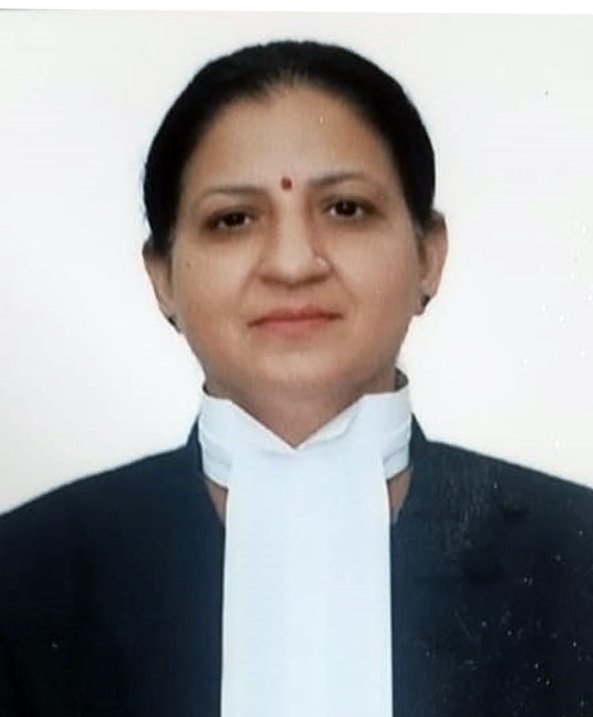
CORAM: HON'BLE MRS. JUSTICE SUDEEPTI SHARMA
Present: Mr. Manish Kumar Singla, Advocate
for the appellants.
Mr. Ravinder Arora, Advocate
for respondent No.3-Insurance Company.
****
SUDEEPTI SHARMA J.
1. The present appeal has been preferred against the award dated
12.03.2009 passed by the learned Motor Accident Claims Tribunal, Patiala in
the claim petition filed under Section 166 of the Motor Vehicles Act, 1988
(for short, 'the Tribunal’) for enhancement of compensation granted to the
claimants to the tune of Rs.6,51,000/- along with interest @ 7.5% per annum,
on account of death of Baldev Singh in a Motor Vehicular Accident, occurred
on 13.11.2006.
2. As sole issue for determination in the present appeal is confined
to quantum of compensation awarded by the learned Tribunal, a detailed
narration of the facts of the case is not required to be reproduced here for the
sake of brevity.
FAO-3232-2009 (O&M) -2-
SUBMISSIONS OF LEARNED COUNSEL FOR THE PARTIES
3. The learned counsel for the claimants-appellants contends that
the amount assessed by the learned Tribunal is on the lower side and deserves
to be enhanced. Therefore, he prays that the present appeal be allowed and
amount of compensation be enhanced as per latest law.
4. Per contra, learned counsel for respondent No.3, however,
vehemently argues that the award has rightly been passed and the amount of
compensation, as assessed by the learned Tribunal has rightly been granted.
Therefore, they pray for dismissal of the appeal.
5. I have heard learned counsel for the parties and perused the
whole record of this case with their able assistance.
SETTLED LAW ON COMPENSATION
6. Hon’ble Supreme Court in the case of Sarla Verma Vs. Delhi
Transport Corporation and Another [(2009) 6 Supreme Court Cases 121],
laid down the law on assessment of compensation and the relevant paras of
the same are as under:-
“30. Though in some cases the deduction to be made
towards personal and living expenses is calculated on the
basis of units indicated in Trilok Chandra, the general
practice is to apply standardised deductions. Having a
considered several subsequent decisions of this Court, we
are of the view that where the deceased was married, the
deduction towards personal and living expenses of the
deceased, should be one-third (1/3rd) where the number of
dependent family members is 2 to 3, one-fourth (1/4th)
where the number of dependent family members is 4 to 6,
FAO-3232-2009 (O&M) -3-
and one-fifth (1/5th) where the number of dependent family
members exceeds six.
31. Where the deceased was a bachelor and the claimants
are the parents, the deduction follows a different principle.
In regard to bachelors, normally, 50% is deducted as
personal and living expenses, because it is assumed that a
bachelor would tend to spend more on himself. Even
otherwise, there is also the possibility of his getting
married in a short time, in which event the contribution to
the parent(s) and siblings is likely to be cut drastically.
Further, subject to evidence to the contrary, the father is
likely to have his own income and will not be considered
as a dependant and the mother alone will be considered as
a dependant. In the absence of evidence to the contrary,
brothers and sisters will not be considered as dependants,
because they will either be independent and earning, or
married, or be dependent on the father.
32. Thus even if the deceased is survived by parents and
siblings, only d the mother would be considered to be a
dependant, and 50% would be treated as the personal and
living expenses of the bachelor and 50% as the
contribution to the family. However, where the family of
the bachelor is large and dependent on the income of the
deceased, as in a case where he has a widowed mother
and large number of younger non-earning sisters or
brothers, his personal and living expenses may be
FAO-3232-2009 (O&M) -4-
restricted to one-third and contribution to the family will
be taken as two-third.
* * * * * *
42. We therefore hold that the multiplier to be used should
be as mentioned in Column (4) of the table above
(prepared by applying Susamma Thomas³, Trilok Chandra
and Charlie), which starts with an operative multiplier of
18 (for the age groups of 15 to 20 and 21 to 25 years),
reduced by one unit for every five years, that is M-17 for
26 to 30 years, M-16 for 31 to 35 years, M-15 for 36 to 40
years, M-14 for 41 to 45 years, and M-13 for 46 to 50
years, then reduced by two units for every five years, that
is, M-11 for 51 to 55 years, M-9 for 56 to 60 years, M-7
for 61 to 65 years and M-5 for 66 to 70 years.
7. Hon’ble Supreme Court in the case of National Insurance
Company Ltd. Vs. Pranay Sethi & Ors. [(2017) 16 SCC 680] has clarified the
law under Sections 166, 163-A and 168 of the Motor Vehicles Act, 1988, on
the following aspects:-
(A) Deduction of personal and living expenses to
determine multiplicand;
(B) Selection of multiplier depending on age of
deceased;
(C) Age of deceased on basis for applying multiplier;
(D) Reasonable figures on conventional heads, namely,
loss of estate, loss of consortium and funeral expenses,
with escalation;
FAO-3232-2009 (O&M) -5-
(E) Future prospects for all categories of persons and for
different ages: with permanent job; self-employed or fixed
salary.
The relevant portion of the judgment is reproduced as under:-
“52. As far as the conventional heads are concerned, we
find it difficult to agree with the view expressed in Rajesh².
It has granted Rs.25,000 towards funeral expenses, Rs
1,00,000 towards loss of consortium and Rs 1,00,000
towards loss of care and guidance for minor children. The
head relating to loss of care and minor children does not
exist. Though Rajesh refers to Santosh Devi, it does not
seem to follow the same. The conventional and traditional
heads, needless to say, cannot be determined on
percentage basis because that would not be an acceptable
criterion. Unlike determination of income, the said heads
have to be quantified. Any quantification must have a
reasonable foundation. There can be no dispute over the
fact that price index, fall in bank interest, escalation of
rates in many a field have to be noticed. The court cannot
remain oblivious to the same. There has been a thumb rule
in this aspect. Otherwise, there will be extreme difficulty in
determination of the same and unless the thumb rule is
applied, there will be immense variation lacking any kind
of consistency as a consequence of which, the orders
passed by the tribunals and courts are likely to be
unguided. Therefore, we think it seemly to fix reasonable
FAO-3232-2009 (O&M) -6-
sums. It seems to us that reasonable figures on
conventional heads, namely, loss of estate, loss of
consortium and funeral expenses should be Rs.15,000,
Rs.40,000 and Rs.15,000 respectively. The principle of
revisiting the said heads is an acceptable principle. But
the revisit should not be fact-centric or quantum-centric.
We think that it would be condign that the amount that we
have quantified should be enhanced on percentage basis in
every three years and the enhancement should be at the
rate of 10% in a span of three years. We are disposed to
hold so because that will bring in consistency in respect of
those heads.
* * * * *
59.3. While determining the income, an addition of 50%
of actual salary to the income of the deceased towards
future prospects, where the deceased had a permanent job
and was below the age of 40 years, should be made. The
addition should be 30%, if the age of the deceased was
between 40 to 50 years. In case the deceased was between
the age of 50 to 60 years, the addition should be 15%.
Actual salary should be read as actual salary less tax.
59.4. In case the deceased was self-employed (or) on a
fixed salary, an addition of 40% of the established income
should be the warrant where the deceased was below the
age of 40 years. An addition of 25% where the deceased
was between the age of 40 to 50 years and 10% where the
FAO-3232-2009 (O&M) -7-
deceased was between the age of 50 to 60 years should be
regarded as the necessary method of computation. The
established income means the income minus the tax
component.
59.5. For determination of the multiplicand, the deduction
for personal and living expenses, the tribunals and the
courts shall be guided by paras 30 to 32 of Sarla Verma⁴
which we have reproduced hereinbefore.
59.6. The selection of multiplier shall be as indicated in
the Table in Sarla Verma¹ read with para 42 of that
judgment.
59.7. The age of the deceased should be the basis for
applying the multiplier.
59.8. Reasonable figures on conventional heads, namely,
loss of estate, loss of consortium and funeral expenses
should be Rs 15,000, Rs 40,000 and Rs 15,000
respectively. The aforesaid amounts should be enhanced at
the rate of 10% in every three years.”
8. Hon’ble Supreme Court in the case of Magma General
Insurance Company Limited Vs. Nanu Ram alias Chuhru Ram & Others
[2018(18) SCC 130]after considering Sarla Verma (supra)and Pranay Sethi
(Supra) has settled the law regarding consortium. Relevant paras of the same
are reproduced as under:-
“21. A Constitution Bench of this Court in Pranay Sethi²
dealt with the various heads under which compensation is
to be awarded in a death case. One of these heads is loss
FAO-3232-2009 (O&M) -8-
of consortium. In legal parlance, "consortium" is a
compendious term which encompasses "spousal
consortium", "parental consortium", and "filial
consortium". The right to consortium would include the
company, care, help, comfort, guidance, solace and
affection of the deceased, which is a loss to his family.
With respect to a spouse, it would include sexual relations
with the deceased spouse.
21.1. Spousal consortium is generally defined as rights
pertaining to the relationship of a husband-wife which
allows compensation to the surviving spouse for loss of
"company, society, cooperation, affection, and aid of the
other in every conjugal relation".
21.2. Parental consortium is granted to the child upon the
premature death of a parent, for loss of "parental aid,
protection, affection, society, discipline, guidance and
training".
21.3. Filial consortium is the right of the parents to
compensation in the case of an accidental death of a
child. An accident leading to the death of a child causes
great shock and agony to the parents and family of the
deceased. The greatest agony for a parent is to lose their
child during their lifetime. Children are valued for their
love, affection, companionship and their role in the family
unit.
FAO-3232-2009 (O&M) -9-
22. Consortium is a special prism reflecting changing
norms about the status and worth of actual relationships.
Modern jurisdictions world-over have recognised that the
value of a child's consortium far exceeds the economic
value of the compensation awarded in the case of the
death of a child. Most jurisdictions therefore permit
parents to be awarded compensation under loss of
consortium on the death of a child. The amount awarded
to the parents is a compensation for loss of the love,
affection, care and companionship of the deceased child.
23. The Motor Vehicles Act is a beneficial legislation
aimed at providing relief to the victims or their families,
in cases of genuine claims. In case where a parent has
lost their minor child, or unmarried son or daughter, the
parents are entitled to be awarded loss of consortium
under the head of filial consortium. Parental consortium
is awarded to children who lose their parents in motor
vehicle accidents under the Act. A few High Courts have
awarded compensation on this count. However, there was
no clarity with respect to the principles on which
compensation could be awarded on loss of filial
consortium.
24. The amount of compensation to be awarded as
consortium will be governed by the principles of awarding
compensation under "loss of consortium" as laid down in
Pranay Sethi². In the present case, we deem it appropriate
FAO-3232-2009 (O&M) -10-
to award the father and the sister of the deceased, an
amount of Rs 40,000 each for loss of filial consortium.
9. A perusal of the impugned award reveals that the deceased was
stated to be 35 years of age at the time of the accident, which fact stands duly
proved from the MLR Ex.C8 of the deceased, however, the learned tribunal
erred in calculating the age of the deceased as 36 years.
10. It is settled proposition of law as held by Hon’ble the Supreme
Court in Sunita Vs. Vinod Singh 2025 INSC 366 wherein the Hon’ble Apex
Court held that in absence of material indicating to the contrary, there is no
inhibition to accept the age of deceased as per post mortem report. The
relevant extract of the same is reproduced as under:-
“11. The amount arrived at by the High Court of the
monthly income being Rs.5,819/- (Rupees Five Thousand
Eight Hundred and Nineteen) as against the claim of
Rs.10,000/- (Rupees Ten Thousand) appears to be on the
lower side as the total earning of the deceased from family
pension itself ought to have been considered which itself
would come to Rs.5,137/- (Rupees Five Thousand One
Hundred and Thirty-Seven) to which the notional wages as
a home maker had to be added, which we find is
reasonable as has been taken by the High Court at
Rs.2,500/- (Rupees Two Thousand Five Hundred). Thus,
the monthly income would come to Rs.7,637/- (Rupees
Seven Thousand Six Hundred and Thirty-Seven), which we
are inclined to round off at Rs.7,000/- (Rupees Seven
Thousand) Coming to the multiplier factor which is
dependent on the age, there is sufficient indication that the
deceased was aged about 45 years as per the Post-Mortem
Report which is a scientific assessment of the age of the
deceased. The purported discrepancy in the age with
regard to that of the claimant and the deceased is
FAO-3232-2009 (O&M) -11-
erroneous for the reason that when the claim was filed,
appellant no.1 was aged about 30 years and a difference of
15 years between the daughter-in-law and the mother-in-
law cannot be said to be totally devoid of reality given the
contextual and prevalent societal norms in vogue at the
time of marriage of the deceased which could have been at
least 25 to 30 years prior to her death i.e., in or about the
1970s. Moreover, in the absence of material indicating to
the contrary, there is no inhibition to accept the age of
the deceased as per the Post-Mortem Report. Thus, we are
inclined to grant her the benefit of multiplier of 14 taking
her age as 45 years. With regard to the loss of love and
affection, Pranay Sethi (supra) grants Rs.40,000/- (Rupees
Forty Thousand) per head with escalation of 10% every
three years for loss of consortium which has been
interpreted in Magma General Insurance Co. Ltd. v Nanu
Ram, (2018) 18 SCC 130 to include spousal, parental, and
filial consortium. Thus, there being five claimants the
amount shall be [Rs.48,000/- x 5] which comes to
Rs.2,40,000/- (Rupees Two Lakhs and Forty Thousand)
payable under the head of loss of love and affection.”
11. In view of the above, referred to judgment, the age of deceased
Baldev Singh is ascertained as 35 years at the time of accident.
12. Further perusal of the award shows that the appellants/claimants
had deposed before the learned Tribunal that the deceased was a by
profession running the business of Milk dairy under the name of Punjab Milk
Dairy in Tripuri town Patiala and was earning Rs 15,000 per month. However,
no documentary evidence was produced to substantiate the said income. In
the absence of such proof, the learned Tribunal assessed the monthly income
₹of the deceased at 4,000 per month.
FAO-3232-2009 (O&M) -12-
13. It is pertinent to note that the Hon’ble Supreme Court in
Kubrabibi and others Vs. Oriental Insurance Company Ltd. and others,
2023 LiveLaw (SC) 697, has held that in cases where compensation is sought
and there is no definite proof of income, particularly when the deceased
belongs to the unorganised sector, the social status, nature of work, and
overall circumstances of the case must be taken into consideration. Strict
proof of income is not mandatory in such circumstances, and a reasonable
notional income is required to be assessed.
14. The relevant paras of Kubrabibi’s case (supra) are extracted as
under:-
“It is unfortunate that in a case of the present nature, the
High Court while assessing the evidence available on
record, has sought to seek strict evidence with regard to
the income of the deceased. When the wife and children of
the deceased were before the Court, they would not be in a
position to secure all evidence when the deceased earning
member was not in secure job. Despite the same we note
that in the instant case, a perusal of the judgment and
award passed by the MACT, would indicate that an effort
was made to examine the owner of the two wheeler repair
shop where the deceased was said to be working. The High
Court has discarded the same on the ground that no
documents, to 2 indicate that he is the owner of the shop
and he had employed three persons, has been produced.
In a matter of the present nature where the
compensation is sought and even in the absence of definite
proof of the income, the social status of the deceased is to
be kept in perspective where such persons are employed in
unorganized sector and the notional income in any event is
required to be taken into consideration. The fact that the
deceased had three dependents to be cared for and had
FAO-3232-2009 (O&M) -13-
claimed that he was working as a mechanic, the amount
payable to an unskilled labour, cannot be the basis and in
that circumstance when he was a skilled person, the daily
income at Rs.200/- per day in any event could have been
taken even if the income from jeep transport business was
discarded for want of documents. More so in a
circumstance, where the MACT had referred to the
evidence available on record and then arrived at its
conclusion, the re-appreciation of evidence by the High
Court is without being sensitive to nature of lis before it.”
15. In the present case, the deceased was 35 years old , stated to be
running the business of milk dairy and had 5 dependents to support.
Considering the nature of employment, age, social background, and
prevailing wages at the relevant time, this Court is of the view that the learned
Tribunal erred in assessing the monthly income of the deceased at Rs 4000,
which is on the lower side. In view of the overall circumstances, the monthly
₹income of the deceased is reasonably assessed at 9000/- per month.
16. The learned Tribunal has correctly awarded Rs.1,24,000/- and
further awarded Rs.3100/- as spent upon medical test by pursuing Ex.C3 to
Ex.C23, therefore, not require the interference of the Court.
17. A further perusal of the award reveals that the learned Tribunal
committed an error in deducting 1/3rd towards personal and living expenses,
whereas, considering the age of the deceased and the number of dependents.
Deduction of 1/4 should have been made in accordance with the settled
principles of law.
18. Additionally, the learned Tribunal has failed to grant any amount
towards future prospects, which is contrary to the law laid down by the
Hon’ble Supreme Court in Pranay Sethi’s case (supra), and subsequent
FAO-3232-2009 (O&M) -14-
judgments. The claimants are therefore entitled to addition towards future
prospects.
19. Moreover, no amount was awarded under the conventional heads
of loss of estate and loss of consortium and also meager amount awarded
under the heads of Funeral Expenses. Therefore, award require indulgence of
this Court.
CONCLUSION
20. In view of the law laid down by the Hon’ble Supreme Court in
the above referred to judgments, the present appeal is allowed. The award
dated 12.03.2009 is modified accordingly. The appellants-claimants are
entitled to enhanced compensation as per the calculations made hereunder:-
Sr. No. Heads Compensation Awarded
1 Monthly Income Rs.9,000/-
2 Future prospects @ 40% Rs.3,600/- (40% of 9000)
3 Deduction towards personal
expenditure 1/4
Rs.3,150/- (12600 X 1/4)
4 Total Income Rs.9,450/- (12600-3150)
5 Multiplier 16
6 Annual Dependency Rs.18,14,400/- (9450 X 12 X 16)
7 Loss of Estate Rs.15,000/-
8 Funeral Expenses Rs.15,000/-
9 Loss of Consortium
Parental : 2 x 40,000
Spousal : 1 x 40,000
Filial : 2 x 40,000
Rs.2,00,000/-
10 Motorcycle repair Rs.5,000/-
11 Medical expenses Rs.1,27,100/-
12Total Rs.21,76,500/-
13Deduction
Amount Awarded by the Tribunal
Rs.6,51,000/-
14Enhanced amount Rs.15,25,500/- (21,76,500- 6,51,000)
FAO-3232-2009 (O&M) -15-
21. So far as the interest part is concerned, as held by Hon’ble
Supreme Court in Dara Singh @ Dhara Banjara Vs. Shyam Singh Varma
2019 ACJ 3176 and R.Valli and Others VS. Tamil Nandu State Transport
Corporation (2022) 5 Supreme Court Cases 107, the appellants-claimants are
granted the interest @ 9% per annum on the enhanced amount from the date
of filing of claim petition till the date of its realization.
22. The respondent No.3-Insurance Company is directed to deposit
the enhanced amount along with interest at the rate of 9% with the Tribunal
within a period of two months from the date of receipt of copy of this
judgment. The Tribunal is directed to disburse the same to the appellants-
claimants in their bank account as per ratio settled in award dated 12.03.2009.
The appellants-claimants are directed to furnish their bank account details to
the Tribunal.
23. Pending application (s), if any, also stand disposed of.
09.02.2026 (SUDEEPTI SHARMA)
Ayub/Saahil JUDGE
Whether speaking/non-speaking : Yes/No
Whether reportable : Yes

 Login with google
Legal Notes
Add a Note....