
As per case facts, the complainant's wife's salary was withheld for six months, leading the complainant to approach appellant No. 2, who allegedly demanded gratification on behalf of appellant No. ...
No Acts & Articles mentioned in this case
1
2026:CGHC:25610
AFR
HIGH COURT OF CHHATTISGARH AT BILASPUR
The date when
the judgment is
reserved
The date when
the judgment is
pronounced
The date when the
judgment is uploaded on
the website
Operative Full
25.04.2026 23.06.2026. -- 23.06.2026
CRA No. 1423 of 2017
1 - Anil Markende S/o Shri Sadaram Markande, aged about 33 years,
Occupation Assistant Director, Education, District Bemetara and additional
charge of Block Education Officer, Nawagarh, District Durg (C.G.).
2 - Ramesh Kumar Chouhan, Clerk (Original Post Shikshakarmi), Office of
Block Education Officer, Nawagarh, District Durg (C.G.)
... Appellants
Versus
State of Chhattisgarh, through Police Station Anti Corruption Bureau, Raipur,
District Raipur (C.G.)
... Respondent
For Appellants : Ms. Sharmila Singhai, Sr. Advocate along with
Mr. Shashwat Rai, Advocate.
For Respondent/State: Mr. Jitendra Shrivastava, G.A.
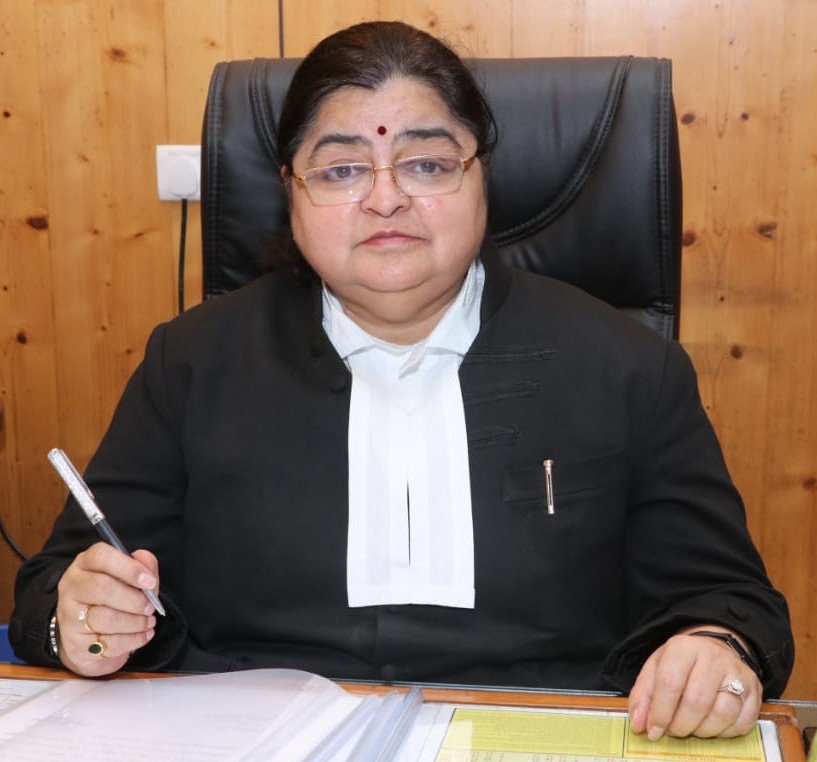
Hon'ble Smt. Justice Rajani Dubey
C.A.V. Judgement
2
1. This appeal has arisen out of the impugned judgment of conviction
and order of sentence dated 08.09.2017 passed by the learned Special
Judge (Prevention of Corruption Act) Bemetara, District-Bemetara (C.G.) in
Special Case No. 09/2013. The trial court has convicted and sentenced the
appellants as under :-
Conviction Sentence
Under Section 7 of
the Prevention of
Corruption Act,
1988.
R.I. for 03 years and fine
amount of Rs. 1,000/- and
in default of payment of
fine, to undergo additional
R.I. for 03 months to each
appellants.
Under Section 13(1)
(D) read with
Section 13(2) of
Prevention of
Corruption Act,
1988.
R.I. for 03 years and fine
amount of Rs. 1,000/- and
in default of payment of fine
to undergo additional R.I.
for 03 months to each of
the appellants.
(All the substantive sentences are directed to run concurrently.)
2.The prosecution case as unfolded from the impugned judgment and
records is that the complainant, Shyam Kumar Tiwari, approached the
Superintendent of Police, Anti-Corruption Bureau (ACB), alleging that
his wife, employed as a Shiksha Karmi (Class-III) “Education Worker” at
Government Primary School, Amlideeha, Block Nawagarh, District
Durg, had her salary withheld for six months by the Block Education
Officer (BEO). To resolve the matter, the complainant contacted
appellant No. 2-Ramesh Kumar Chouhan, who allegedly demanded an
illegal gratification of Rs. 5,000 for facilitating the release of the withheld
salary. The demand was purportedly made on behalf of appellant No.1-
Anil Markende, the Block Education Officer. Acting on the complaint,
the ACB Inspector, Lochan Pandey (PW-12), instructed the complainant
to record the conversation with the appellants using a tape recorder.
3
The complainant recorded the conversation and informed the ACB that
the appellants had called him on 12.10.2010 to collect the bribe
amount. On 12.10.2010, the ACB team conducted a trap at the office of
the BEO. After the complainant handed over Rs. 5,000, Appellant No. 1
was asked to wash his hands in a Sodium Carbonate solution, which
changed color, indicating the presence of the tainted currency.
3.During the subsequent course of investigation, relevant evidence,
including the bribe money was recovered from the left pocket of the
appellant No. 1’s pant. The trap team prepared a Panchnama (Ex.
P/13) documenting the recovery. The complainant’s written complaints
were marked as Ex. P/03 and Ex. P/05, and the transcriptions of the
recorded conversations were marked as Ex. P/06 and Ex. P/11.
4.After completion of the usual investigation, on the basis of the material
contained in the charge sheet, learned trial Court framed charges
against the accused/appellants for the offence punishable under
Section 7, Section 13(1)(d) read with Section 13(2) of the Prevention of
Corruption Act, 1988, establishing that the accused, in his official
capacity, demanded and accepted a bribe.
5.To substantiate its case, the prosecution has examined as many as 12
witnesses. Statement of the accused/appellants were also recorded
under Section 313 of Cr.P.C. in which they denied all the charges
leveled against them and pleaded their innocence and false implication
in the case. However, in their defence, the appellants have adduced no
witness.
4
6.Learned trial Court after appreciating the oral and documentary on
record, convicted the appellants and sentenced him as mentioned in
the opening paragraph of this judgment. Hence, the present appeal
filed by the appellants.
7.Assailing the correctness and validity of the impugned judgment,
learned counsel for the appellants submits that the impugned judgment
dated 08.09.2017 is perverse, contrary to law, facts and circumstances
of the case, therefore, liable to be set aside. Learned trial Court
completely failed to appreciate that the first complaint was made by the
complainant on 04.10.2010 whereas the second complaint was
submitted on 11.10.2010 wherein he has not mentioned that he has
earlier made one complaint on 04.10.2010 and there is no allegation
made against the appellants for demand of illegal gratification. Learned
trial Court further completely failed to appreciate that on 08.10.2010 the
wife of the complainant Smt. Alka Tiwari made a complaint in which
also it was not mentioned that earlier her husband made a complaint on
04.10.2010. In such circumstances, the prosecution has completely
failed to prove its case beyond reasonable doubt. Learned trial Court
did not appreciate this fact that the evidence of Shyam Kumar Tiwari
(PW-03) in which in examination-in-chief he has specifically stated that
he had given letter to the appellant No. 1 who told him to meet with the
appellant No. 2, thereafter he met with the appellant No. 2, but this fact
has neither narrated in the complaint dated 04.10.2010 nor statement
under Section 161 of the CrPC. He has further stated in his
examination-in-chief that he has received the cheque of Rs. 39,158/- on
05.10.2010, therefore, no question for demand of illegal gratification
5
arises. The prosecution sanction is also against the settled principles of
law. Learned trial Court has completely overlooked the fact that the
prosecution has neither produced any FSL report nor examined any
witness to prove the voice of the appellants which was recorded by the
prosecution for proving the demand of illegal gratification. From perusal
of Ex. P/02, it is clear that while making a report for demand of illegal
gratification against the appellants, the wife of the complainant has not
made any allegation against the present appellants that who has
demanded the illegal gratification from her for releasing the salary.
Learned trial Court has gravely erred in punishing the appellant No. 2
because Shyam Kumar Tiwari (PW-03) has specifically stated that the
cheque of Rs. 39,158/- was given to him on 05.10.2010 by the
appellant No. 2 without taking any money, therefore, it is palpably false
that the appellant No. 1 demanded illegal gratification through appellant
No. 2. It is clear from the second complaint dated 11.10.10 that the
complainant has not mentioned that on 05.10.2010 he met with the
appellant No. 2 for receiving the cheque. Therefore, it is clear that the
complainant has not filed the complaint with clean hands. The
prosecution has completely failed to prove its case beyond reasonable
doubt as no independent witness has been examined to prove the
demand which is sine qua non for punishing the accused under the
Prevention of Corruption Act, 1988. The complainant Shyam Kumar
Tiwari (PW-03) in his cross-examination has specifically stated that till
receiving the cheque of Rs. 39,158/- there was no demand of illegal
gratification. Therefore, the conviction is illegal and deserves to be set
aside. PW-03 Shyam Kumar Tiwari has specifically stated that the
prosecution has recorded his statement under Section 161 CrPC on
6
11.10.2010, whereas the trap proceeding was conducted on
12.10.2010. In such circumstances, the prosecution case itself creates
suspicion and becomes doubtful. There is a major contradiction
between the court statement and the police statement of the Panch
witnesses who have not supported the case of the prosecution and
declared hostile. PW-11 U.K. Chandranvanshi Investigating Officer has
clearly stated that he has not obtained any expert’s opinion regarding
the voice of the appellants recorded in the tape recorder for demand of
illegal gratification. Therefore, the impugned judgment of conviction and
order of sentence is liable to be set aside, and the appellants deserves
to be acquitted of all charges.
8.Reliance has been placed on the decisions of the Hon'ble Supreme
Court in the matters of P. Somaraju v. State of Andhra Pradesh
reported in 2025 SCC OnLine SC 2291, State of Lokayuktha Police,
Davanagere [State By Lokayuktha Police] v. C B Nagaraj reported
in 2025 SCC OnLine SC 1175, on the decision of Hon’ble High Court of
Delhi in the matter of Romesh Sharma v. The State delivered on
29.01.2026 reported in CrL. Rev.P. 646/2004, on the decision of
Hon’ble High Court of Delhi in the matter of Ashish Kumar Dubey v.
State Thr. C.B.I. delivered on 04.04.2014 and in this Court’s decision in
the matter of Arun Kumar Vishwakarma v. State of Chhattisgarh
reported in CRA No. 89 of 2008.
9.Per contra, learned State counsel strongly opposed the arguments of
the learned counsel for the appellants and by supporting the
impugned judgment submits that learned trial Court minutely
7
appreciated the oral and documentary evidence. So, learned trial
Court rightly convicted the appellants. Hence, this appeal is well
merited and no interference is called for.
10.Reliance has been placed on the decision of the Hon'ble Supreme
Court in the matter of A. Karunanithi v. The State Represented by
Inspector of Police delivered on 12.08.2025 delivered in Criminal
Appeal arising out of SLP (Crl.) No. 9964 of 2019 and in this Court’s
decision in the matter of State of Chhattisgarh v. Tobius Xaxa
reported in ACQA No. 260 of 2019 delivered on 16.02.2026.
11.I have heard learned counsel for the parties and perused the material
available on record including the impugned judgment with utmost
circumspection.
12.It is clear from record of learned trial Court that it framed charges
against the accused/appellants under Sections 7, 13(1)(d) read with
Section 13 (2) of Prevention of Corruption Act, 1988 and after
appreciation of oral and documentary evidence the learned trial Court
convicted the accused/appellants for the said offence.
13.It is not disputed that at relevant time, the appellant No. 1 Anil
Markande was posted as an Assistant Director, Education, District
Bemetara whereas the appellant No. 2 was posted as a Clerk (Original
Post Shikshakarmi), Office of Block Education Officer, Nawagarh, then
District Durg (C.G.) i.e., both the accused were public servants.
14.PW-03 Shyam Kumar Tiwari, the complainant, has deposed that his
8
wife, Smt. Alka Tiwari, who is serving as Shikshakarmi Grade-III, was
deprived of her salary for the period from 26.08.2009 to February 2010,
as the same was withheld during the said period. He further deposed
that, in connection with the release of his wife's withheld salary, he
visited the office of the Block Education Officer, Navagarh, and met the
accused persons. The complainant further deposed that, upon meeting
the accused, Ramesh Chauhan, he was informed that an amount of Rs.
39,158/- had been sanctioned towards his wife's salary and that
payment would be required for securing its release. He stated that he
expressed his inability to pay on account of his poor financial condition.
He further testified that, as the other accused Anil Markande was not
present in the office on that day, he requested Ramesh Chauhan to
provide Anil Markande's contact number so that he could speak with
him directly. Thereafter, Ramesh Chauhan demanded a sum of Rs.
5,000/- as illegal gratification and represented that the said amount was
required to be paid to Anil Markande for release of the salary amount.
In paragraph 4 of his deposition, the complainant stated that he spoke
with the accused, Ramesh Chauhan, on 05.10.2010, who informed him
that a cheque had already been prepared in the name of his wife, Smt.
Alka Tiwari. He further stated that he had met the accused on earlier
occasions as well, during which the accused, Ramesh Chauhan, had
demanded illegal gratification from him. The complainant further
testified that when he informed his wife about the said demand, she
refused to pay any amount, stating that it was her hard-earned money.
He further deposed that, prior to receiving the cheque, he had lodged a
written complaint before the Anti-Corruption Bureau on 04.10.2010 vide
Ex. P/03 in which he admitted his signatures on A to A part. In
9
paragraph 05 of his examination-in-chief, he stated that on 04.10.2010
itself, he was provided with a digital voice recorder fitted with a new
battery, and the method of operating and switching it on and off was
explained to him. As per the preliminary proceedings, Ex. P/04, he
recorded the entire conversation held between himself and the
accused, Ramesh Chauhan, on 05.10.2010. Thereafter, the
complainant deposed that on the evening of 06.10.2010, he visited the
office of the Anti-Corruption Bureau, where the officials directed him to
record the conversation of the main accused, Anil Markande, as well. In
compliance thereof, he proceeded to Temri on 07.10.2010, where a
public grievance redressal camp “Jan Samasya Nivaran Shivir” was
being held, and recorded his conversation with the said accused, in
which, according to him, the accused demanded an illegal gratification
of Rs. 5,000/-. On 11.10.2010, the complainant filed second complaint
vide Ex. P/05 against the accused with consent of his wife Smt. Alka
Tiwari in which he admitted his signatures on A to A part. On the same
day, he produced five currency notes of Rs. 1,000/- denomination each,
totalling Rs. 5,000/-, before the Anti-Corruption Bureau, stated to be the
alleged bribe amount. The tape recorder produced by the complainant
was received by the ACB officials, and upon playback of the recorded
conversation, a transcript thereof was prepared vide Ex. P/06
consisting of four pages. The said tape recorder was thereafter seized
vide seizure memo Ex. P/07, and a compact disc (CD) was also
prepared. The preliminary proceedings in this regard are exhibited as
Ex. P/08 consisting of 03 pages. The complainant was called to the
Simga Rest House on 12.10.2010, and he reached there at about 07:00
a.m. on the same day. The Anti-Corruption Bureau officials also
10
reached the said place shortly thereafter. The complainant was
reintroduced to the panch witness and the members of the trap team,
and thereafter his personal search was conducted by the ACB officials.
The personal search memo (Jama Talashi) has been marked as Ex.
P/09. Thereafter, the ACB officers applied phenolphthalein powder to
the tainted currency notes and handed over the said notes to the
complainant, instructing him as to the manner in which the same were
to be handed over to the accused. Subsequently, on the same day, i.e.,
12.10.2010, the complainant proceeded to Nawagarh along with the
trap team and upon reaching there, he entered the Block Education
Office, where the B.E.O was not present at that time. After some time,
the said officer arrived at the office. Thereafter, the complainant stated
that he had brought Rs. 5,000/- to be given to the accused, Anil
Markande. The accused, Anil Markande, then took him to the office hall,
where the complainant handed over the said bribe amount to him. The
accused, Anil Markande, kept the said amount in the left pocket of his
pant. The complainant thereafter came outside and gave the pre-
arranged signal to the trap team by scratching his head, whereupon the
trap team entered the office and initiated the trap proceedings and
recoverd the said tainted currency notes and thereafter the hands of the
complainant and accused Anil Markande were washed and the colour
of the solution turned pink. He further deposed that the accused,
Ramesh Chauhan, was also summoned to the spot by the trap team.
However, he stated that he does not recollect whether the hands of the
accused, Ramesh Chauhan, were subjected to a hand-wash test by the
trap team. He further deposed that the tainted currency notes were
seized by the trap team and the requisite seizure proceedings were
11
carried out. During the course of the proceedings, the currency notes
were subjected to a chemical test, whereupon the solution in contact
with the notes turned pink in colour. He further stated that the voice
recording produced by the complainant and handed over to the ACB
officials was played on a laptop; however, owing to excessive
background noise and disturbance, the conversation recorded therein
was not clearly audible. The transcription memorandum is Ex. P/11,
seizure memo of C.D. is Ex. P/12 and the proceeding memo is Ex.
P/13. In paragraph 14 of his cross-examination, he admitted that he
had not lodged any complaint regarding the non-payment of his wife's
salary for the period from January to May. In paragraph 15 of his cross-
examination, he admitted that he had no knowledge of the news report
shown to him, published in the “Dainik Bhaskar”, Balod–Bemetara
edition dated 22.02.2014, wherein it was stated that arrears had not
been released owing to non-allocation of funds, that the Shikshakarmis
had expressed dissatisfaction over the delay, and that nearly 800
teachers were awaiting disbursement of their salaries. The original copy
of the said newspaper was presented by the defence vide Ex. D/01. He
further admitted in paragraph 20 of his cross-examination that, prior to
lodging the complaint before the Anti-Corruption Bureau, he had never
interacted with nor held any conversation with the accused, Anil
Markande. He also admitted that the application submitted to the Block
Education Officer, Navgarh, was in his handwriting. In para 31 of his
cross-examination, he admitted that the trap team entered the office
hall only after he gave the pre-arranged signal, and that witness Konher
recovered the tainted currency notes from the left pocket of accused
Anil Markande. He further stated that he is unable to recollect the pant
12
colour of the accused as he did not note the same thing in his diary. He
denied by saying that the witness Konher after recovering the said
tainted currency notes put them back into the accused’s pocket. He
further denied the suggestion that, when the Block Education Officer
noticed him while he was placing the currency notes, he had caught
hold of the Officer's hand from behind the wrist. In para 34 of his cross-
examination, he admitted that apart from his wife, Smt. Alka Tiwari, a
cheque for Rs. 2,797/- had also been issued in respect of co- teacher
Dushyant Sahu. It is further admitted that the salary of Dushyant Sahu
was being drawn through the Temri Branch of the Bank.
He further admitted in paras 37 and 38 of his cross-examination
which are reproduced herein for ready reference as under:-
“ 37. 39,158/-रु.
का चेक मुझेदिनांक
05.10.10
को प्राप्त हुआ था वह मेरे
पत्नी का नाम का था।दिनांक
05.10.10
को मेरी पत्नी अलकातिवारी वेतन
संबंधितचेक लेने केलिये नहीं गई थी। उक्त चेकदिनांक
04.10.10
को बन
गया थाजिसकी सूचना मुझे नहीं था रमेश चौहान ने चेक बन गया है कहकर
सुचना नहींदिया था
I
रमेश चौहान से वेतन संबंधितबातकरने केलियेकिस
दिनांक को गया था वहदिनांक आजमुझे यादनहीं है। रमेश चौहान नेदिनांक
05.10.10
के पूर्वमुझे बताया थाकिसाहब को पैसादेना पड़ेगा लेकिन वह
दिनांक मुझे यादनहीं है। मैं उसदिनांक का उल्लेख प्रपी
-03
में नहींकिया। वाईस
रिकार्डर एसीबी कार्यालय सेदिनांक
04-10-10
को शाम को हीमिल गया था।
यह सही हैकिउक्त वाईसरिकार्डखाली था
I
38. ……..
यह कहना सही हैकिरमेश चौहान के अलावा कार्यालय में और
लोग भी थे।दिनांक
05.10.10
से वाईसरिकार्डरदिनांक
10.10.10 त
क
वाईसरिकार्डमेरे पास था। उक्त वाईसरिकार्डर को अपने घर में रखा था। यह
कहना सही हैकिरमेश चौहान को मैंने कोई रकम नहींदिया था। यह कहना सही
हैकिरमेश चौहान ने अपनेलिए पैसे की कोई मांग नहीं की थी।
"
13
15.PW-02 Smt. Alka Tiwari wife of the complainant has stated in para 2 of
her examination-in-chief which is reproduced for ready reference as
under:-
“ 02. ……...
मेरे पतिकई बार आरोपीगण के कार्यालय में गए और उन्होने
आवेदन लगायातो मेरे पतिको आरोपी चौहान नेतनख्वाहनिकालने के
लिए कुछ पैसे लगेंगे बोले
,
कितना पैसा पूछने पर
5000/-
रूपए लगेगा
बोले। इस बातको मेरे पतिने मुझे बताया था। मैने अपने पतिको एसीबी
रायपुर मेशिकायतकरने केलिए सहमतिअधिकार पत्रलिखकरदी थी।
उस समय मेरीडिलवरी हो चुकी थी
,
इसी कारण मैं एसीबी रायपुर मे
शिकायतकरने नहींजा पाई और अपने पतिकोशिकायतकरने केलिए
कही थी। मैंने अपनी रूकी हुई वेतन को प्राप्त करने हेतुविकास खण्डशिक्षा
अधिकारी नवागढ़ को वेतन प्राप्त करने एवंनियमितकरने हेतु पत्रलिखी थी
और उसकी एक प्रतिअपने पतिकोदी थी। उक्त पत्र की छायाप्रतिएवं मेरे
बैंक पास बुक की छायाप्रतिप्रकरण में संलग्न है।
"
In para 04 of her cross-examination, she admitted that she signed Ex.
P/02 at the instance of her husband, the complainant Shyam Kumar
Tiwari and she also admitted that no demand for a bribe amount of Rs.
5,000/- was made in her presence. In para 05 of her cross-examination,
she admitted that Ex. P/02 does not bear any date beneath her
signature. In para 07 of her cross-examination, she stated that she was
not aware whether her salary cheque for Rs. 39,158/-, drawn on the
Temri Branch of the State Bank, had been signed on 04.10.2010 and
delivered to her husband on 05.10.2010. She further stated that she
could not say when the said cheque was encashed or withdrawn.
In para 09 of her cross-examination she admitted as under:-
“9. …...
यह कहना सही हैकिचेक प्राप्त होतेतकदिनांक
05-10-10
तक कोईरिश्वतकी रकम नहींदी गई थी। साक्षी ने स्वतः कहाकिमुझे इस
14
संबंधमेंजानकारी नहीं है इस बारे मे मेरे पतिबता सकते है।
"
16.PW-04 Ashutosh Konher is panch witness. He admitted his signatures
on all the documents and stated that he had accompanied the trap
team, which was standing near the office premises. Upon receiving a
pre-arranged signal from the complainant, they proceeded to the room
of accused Anil Markande, where he was apprehended, his hand was
held, a search was conducted, and five currency notes of Rs. 1,000/-
each were recovered from his pocket. The personal search memo
(Jama Talashi) is Ex. P/16, seizure memo of bribe money is Ex. P/17,
proceeding of phenolphthalein test is Ex. P/18.
In para 16 of his cross-examination, he has stated as under:-
“16. ...
यह बातसही हैकिलिप्यांतरण प्रपी
-06
प्रार्थीश्यामतिवारी के द्वारा
वाईसरिकार्डर में आवाजको सुनकर उसके आधार परकिया गया था। आजमैं
ख्याल से नहीं बता सकता प्रपी
06
में प्रार्थीश्यामतिवारी एवं आरोपी के अतिरिक्त
किसी अन्य व्यक्तिकी आवाजथी या नहीं। आजमुझे यह भी ख्याल नहीं हैकि
प्रपी-06
केलिप्यांतरण के समय प्रार्थीश्यामतिवारी ने अभियुक्तगणों के अतिरिक्त
किसी अन्य के नाम भी उस वाईसरिकार्डर में आवाजरहा है या नहीं संबंधसे
बताया था या नहीं।
"
In para 30 of his cross-examination he has stated as thus:-
“30. ….
इस बातकीजानकारी नहीं हैकिवाईसरिकार्डकितनेदिनतक
प्रार्थीके पास था। वाईसरिकार्डकार्यालय का था या नहीं इसके संबंधमें मुझे
जानकारी नहीं है। वाईसरिकार्डमें बहुतसी बाते अस्पष्ट थी कई लोगों की
आवाजें आ रही थी। रमेश चौहान से कुछदस्तावेजजप्त हुए थेजोशिक्षाविभाग
के कार्यालय से संबंधितथे
,
वहदस्तावेजकिसके अधिकार में थे इसके संबंधमें
मुझेजानकारी नहीं है।
17. The other panch witness, PW-07 Jagdish Prasad Vaishy, supported the
15
trap proceedings and admitted his signatures on all the documents.
However, he was declared hostile on certain points by the prosecution.
Thereafter, he accepted the suggestions put forth by the prosecution
and admitted his signatures on Ex. P/15.
18.PW-08 Pawan Kumar Pathak, Head Constable, stated that he prepared
the transcript, Ex. P/06, from the voice recorder with the assistance of
the complainant. He further stated that he was a member of the trap
team and deposed regarding the entire proceedings. In his cross-
examination, he admitted that he did not witness the manner in which
the complainant allegedly handed over the money to the accused. In
paragraph 20 of his cross-examination, he stated that he was unable to
specify the company to which the CD belonged. He further admitted
that the voice recorded in the voice recorder was not subjected to
comparison with the voices of the complainant and the accused.
19.PW-11 U.K. Chandravanshi, Investigating Officer stated that
complainant Shyam Kumar Tiwari gave complaint on 04.10.2010 and
he gave tape recorder to the complainant vide Ex. P/04. He further
stated that the complainant Shyam Kumar Tiwari on 11.10.2010 has
filed second complaint vide Ex. P/05 and also consent letter vide Ex.
P/02 of his wife Smt. Alka Tiwari dated 08.10.2010. He further stated
that vide Ex. P/21, he called two panch witnesses and he stated about
preliminary proceeding and admitted his signatures on preliminary
proceeding memo Ex. P/08, search memo Ex. P/09, proceeding memo
Ex. P/10, seizure memo Ex. P/15 and also admitted his signature on
seizure memo Ex. P/19, arrest memo Ex. P/20.
16
In para 27 of his cross-examination, he stated as under:-
“ 27...
यह बातसही हैकिलिप्यांतरण में क्षत्रीय नामक व्यक्तिके संबंधमें बातें
आयी होने के बादभी उसकेविरुदकार्यवाही नही की क्योकिमैंने ऐसा करना
आवश्यक नही समझा
..”
In paras 30, 31, 33 and 35 he admitted as under:-
“ 30….
यह बातसही हैकिनवागढ़जाने के बादहमें प्रार्थीके द्वारा यह बताया
गयाकिअभियुक्त अनिल मारकण्डेय कार्यालय में नहीं है। मुझे इस बातकी
जानकारी नहीं हैकिप्रार्थीनेकिससे फोन कर अभियुक्त कार्यालय में या नहीं है
पूछा
I”
31.
यह कहना सही हैकिरिश्वतदेने के पूर्वप्राथर्थीश्यामतिवारी अभियुक्त के
कार्यालय में लगभग
20
मिनट से आधा घंटा का समय लग गया उसके बाद
इशाराकिया। प्रार्थीने हमें यह नहीं बतायाकिजब वह अभियुक्त के पासरिश्वती
रकमदेने गयातो उस समय उनके कार्यालय के सुबोधहरी श्रीवास्तव एवं
हरदयाल श्रीवास वगैरह थे। अब कहाकिप्रार्थीजब वहा पहुंचातो आरोपी के
कार्यालय केतीन
-
छः व्यक्तियहा मौजूदहोना बतायातो था परंतु उनमें सेकिसी
…”
का भी नाम नहीं बताया था।
33. ...
यह बातसही हैकिप्रार्थीके द्वारादिये गयेद्वितीयशिकायतआवेदन पत्र
में
प्रार्थीने प्र
.पी.05
के स से स भाग पर यहलिखा हुआ हैकिमेरे पत्नी अल्का के
नाम का
39,158/-
रूपये का चेक प्राप्त हो चुका है
I प्र.
पी
02
अधिकार पत्र
/सहम
ति
पत्र मेंदस्तावेजकिसनेतैयारकिया है इसका उल्लेख नहीं है। यह कहना सही हैकि
दिनांक
08.10.2010
के पहले प्रार्थीनेदिनांक
04 10.2010
को प्रथमशिकायत
पत्रदिया था। यह कहना सही हैकिदिनांक
04.10.2010
को प्रार्थीके पास कोई
अधिकार पत्र नहीं था।रिकार्डदेखकर नहीं बता सकताकिप्र
.पी.30
के आदेश के
संबंधसे अति
.
पुलिस महानिर्देशक के कार्यालय से कौन कर्मचारी या अधिकारी
विधिएवंविधायी कार्यविभाग मंत्रालय लेकर गया था। उसीतरीके से अभियोजन
स्वीकृतिप्रदान करने केलिये मुख्यालय एंटी करप्शन ब्यूरो रायपुर से क्या क्या
17
दस्तावेजविधिएवंविधायी का कार्यविभाग मंत्रालय रायपुर भेजा गया था इसकी
जानकारी मुझे नहीं है।
"
35.
यह बातसही हैकिलिपियांतरण प्र
.पी.06
में ऐसा कही भी लेख नही हैकि
प्रार्थीदिनांक
12.10.2010
को अभियुक्त कोरिश्वतका रकम कोदेने केलिये
बुलाया है। यह बातसही हैकिअभियुक्तगणों वो आवाजका कोईविशेषज्ञ सेजांच
नही कराया गया है। यह बातसही हैकिअभियुक्तगणों कोगिरफतार करने के बाद
भी उनके आवाजका कोई परीक्षण नही कराया गया है
...I”
20.From a careful scrutiny of the statements of the witnesses, it is evident
that the complainant, Shyam Kumar Tiwari, lodged two complaints,
namely the first complaint dated 04.10.2010, Ex. P/03, and the second
complaint dated 11.10.2010, Ex. P/05. The complainant, PW-03 Shyam
Kumar Tiwari, as well as his wife, PW-02 Smt. Alka Tiwari, have
admitted that they received the cheque on 05.10.2010. PW-02 Smt.
Alka Tiwari stated in para 09 of her cross-examination which reads as
thus:-
“9. ...
यह कहना सही हैकिचेक प्राप्त होतेतकदिनांक
05-10-10
तक कोई
रिश्वतकी रकम नहींदी गई थी। साक्षी ने स्वतः कहाकिमुझे इस संबंधमें
जानकारी नहीं है
.
इस बारे मे मेरे पतिबता सकते है।
"
The Investigating Officer, PW-11 U.K. Chandravanshi, clearly
admitted that he had not obtained the voice samples of either the
accused or the complainant. The complainant, PW-03 Shyam Kumar
Tiwari, further admitted in paragraph 38 of his cross-examination that
the voice recorder remained in his custody at his residence from
05.10.2010 to 10.10.2010.
It is also written in transcription Ex. P/06 which is reproduced for
ready reference as under:
"
प्रार्थीएवं आरोपीगण के मध्यदिनांक
05
एवं
07.10.2010
कोरिश्वतपूर्व
18
बातचीतकालिप्यतिरण प्रार्थीश्री श्याम कुनारतिवारी के सहयोग से आरोपीगणों
की आवाजको अलग
-
अलग पहचान करकिया गया
I”
The transcript, Ex. P/06, was prepared on 11.10.2010. The
complainant, Shyam Kumar Tiwari, clearly admitted that the voice
recorder remained in his custody from 05.10.2010 to 10.10.2010. PW-
08 Pawan Kumar Pathak and PW-11 U.K. Chandravanshi, the
Investigating Officer, identified the voice of the accused at the instance
of the complainant. They further admitted that the recorded
conversation was not clear due to the presence of multiple persons. As
per the complainant, the alleged conversation was recorded on
05.10.2010 and 07.10.2010, and the tape recorder was seized on
11.10.2010. In these circumstances, the possibility of tampering with
the tape recorder cannot be ruled out. It is further evident that no
certificate under Section 65-B of the Indian Evidence Act, 1872 was
produced by the prosecution in respect of the electronic record. It is
also apparent that the entire proceedings were conducted qua accused
Anil Markande. The presence of the other accused, Ramesh Chauhan,
has not been established by the prosecution, and no recovery has been
effected from him.
21.Hon’ble Apex Court in the matter of State of Lokayuktha Police
Davanagere(supra) held in paras 25 and 27 as under:-
“25. It is pertinent to note that till 05.02.2007, when the
Respondent had conducted the physical/spot
inspection, there is not even a whisper of there being
any demand of bribe. Moreover, when the Complainant
19
went back to the Respondent’s office at 5:30 PM with
the money, the prosecution case itself as per the
deposition of its witnesses makes it clear that the
Respondent had informed the Complainant that he had
already forwarded the concerned file. Thus, if the same
is accepted, there was no occasion for the
Complainant to go ahead with paying the amount,
which he claims to be in the nature of bribe demanded
by the Respondent, after the work for which the bribe
was purportedly sought, had already been done. The
observation of the High Court to this extent is correct
that just because money changed hands, in cases like
the present, it cannot be ipso facto presumed that the
same was pursuant to a demand, for the law requires
that for conviction under the Act, an entire chain –
beginning from demand, acceptance, and recovery has
to be completed. In the case at hand, when the initial
demand itself suspicious, even if the two other
components – of payment and recovery can be held to
have been proved, the chain would not be complete. A
penal law has to be strictly construed [ Md. Rahim Ali v
State of Assam , 2024 SCC OnLine SC 1695 @
Paragraph 45 and Jay Kishan v State of U.P., 2025 SCC
OnLine SC 296 @ Paragraph 24]. While we will advert
to the presumption under Section 20 of the Act
hereinafter, there is no cavil that while a reverse onus
under specific statute can be placed on an accused,
20
even then, there cannot be a presumption which casts
an uncalled for onus on the accused. Chandrasha
(supra) would not apply as demand has not been
proven. In Paritala Sudhakar v State of Telangana ,
2025 SCC OnLine SC 1072, it was stated thus:
‘21. As far as the submission of the State is that
the presumption under Section 20 of the Act, as
it then was, would operate against the Appellant
is concerned, our analysis supra would indicate
that the factum of demand , in the backdrop of
an element of animus between the Appellant and
complainant, is not proved. In such
circumstances, the presumption under Section
20 of the Act would not militate against the
Appellant, in terms of the pronouncement in Om
Parkash v. State of Haryana , (2006) 2 SCC 250:
22. In view of the aforementioned discrepancies
in the prosecution case, we are of the opinion
that the defence story set up by the appellant
cannot be said to be wholly improbable.
Furthermore, it is not a case where the burden of
proof was on the accused in terms of Section 20
of the Act. Even otherwise, where demand has
not been proved, Section 20 will also have no
application. (Union of 13 of 15 India v. Purnandu
Biswas [(2005) 12 SCC 576: ( 2005) 8 Scale 246] and T.
Subramanian v. State of T.N. [(2006) 1 SCC 401:
21
(2006) 1 Scale 116])’ (emphasis supplied)’ (emphasis
in bold is original, underlining is ours)
27. Though it can be commented that the High Court
was required to give detailed factual reasoning, which
has not been done, as to why it was overturning an
order of conviction by that of acquittal, yet since the
factum of demand itself has not been proved beyond
reasonable doubt, the acquittal of the Respondent by
the Impugned Judgment cannot be termed perverse or
unwarranted, in the factual matrix of the present lis. In
Yadwinder Singh v Lakhi, 2025 SCC OnLine SC 686,
this Court opined that ‘The Trial Court could have
better worded its 14 of 15 order through clearer
reasoning.’ However, upon examination of all relevant
factors, the Court chose to restore the order of the
Trial Court therein and set aside the order impugned
therein, upon examining all factors of the matter itself.
In the instant case, needless to add, we have applied
our mind independently to all material aspects and
find ourselves ad idem with the conclusion of the High
Court.”
22.Hon’ble Apex Court in the matter P. Somaraju (supra) held in paras 21,
22 and 23 which reads as thus:-
“ 21. Needless to say, the above observations are not
tenable in law. Moreover, what we find particularly troubling
is the complainant’s conduct in directing Rajender, the
22
mediator and accompanying independent witness, to remain
outside the appellant’s office during the crucial half-hour in
which the alleged demand and acceptance occurred. This
was contrary to the explicit instructions of the DSP.
Rajender could consequently make no positive statement on
whether the appellant demanded or accepted any bribe, and
this gap is candidly admitted by the prosecution itself.
22. Both, the DSP and the Inspector of ACB, admit they did
not question the complainant on this point, and till date no
explanation has ever been offered for keeping Rajender out
of the room. They also admit that they did not question any
of the other office staff or visitors. We note that the other
mediator Balaji was not examined by the prosecution at all.
These circumstances are nowhere addressed by the High
Court. Such omissions cannot be brushed aside lightly, as
they strike at the root of the prosecution version and cast
serious doubt on whether demand and acceptance were
proved beyond reasonable doubt.
23. In contrast, the defence has consistently maintained that
the alleged demand and acceptance of bribe never took
place. According to the appellant, the complainant entered
his office alone and during the appellant’s brief absence,
placed the tainted amount in the left-drawer of the table.
Accordingly, when the trap-party entered, the appellant
immediately denied having received any money, and the
phenolphthalein test on both hands yielded negative
results.”
23.Hon’ble Delhi High Court in the matter of Romesh Sharma (supra) held
in paras 77,78,79,80,81, 82 and 83 which reads as under:-
23
“ 77. The Apex Court again, considered the conditions of admissibility
of these Telephonic conversations in Ram Singh vs. Col Ram Singh , 1986
AIR (SC) 3 while holding that "...We can see no difference in principle
between a tape-recording and a photograph. In saying this we must not
be taken as saying that such recordings are admissible whatever the
circumstances, but it does appear to this Court wrong to deny to the
law of evidence advantages to be gained by new techniques and new
devices, provided the accuracy of the recording can be proved and
the voices recorded properly identified; provided also that the
evidence is relevant and otherwise admissible, we are satisfied that
a tape- recording is admissible in evidence. Such evidence should
always be regarded with some caution and assessed in the light of
all the circumstances of each case. ... " and further proceeded to lay
down the following conditions qua the same:
"...Thus, so far as this Court is concerned the conditions for
admissibility of a tape recorded statement may be stated as follows:
1. The voice of the speaker must be duly identified by the
maker of the record or by others who recognise his voice. In
other words, it manifestly follows as a logical corollary that the
first condition for the admissibility of such a statement is to
identify the voice of the speaker. Where the voice has been
denied by the maker it will require very strict proof to determine
whether or not it was really the voice of the speaker.
2. The accuracy of the tape recorded statement has to be
proved by the maker of the record by satisfactory evidence -
direct or circumstantial.
24
3. Every possibility of tampering with or erasure of a part of
a tape recorded statement must be ruled out otherwise it may
render the said statement out of context and, therefore,
inadmissible.
4.The statement must be relevant according to the rules of
Evidence Act .
5. The recorded cassette must be carefully sealed and kept
in safe or official custody.
6.The voice of the speaker should be clearly audible and not lost
or distorted by other sounds or disturbances."
78. The first aspect of recorded cassette is the integrity of the chain
of custody of the cassettes for which it must be carefully sealed and
kept in safe or official custody. As per the charge Sheet, the
conversations were intercepted by Insp. Ishwar Singh and were heard
on parallel Line by HC Dilbagh Singh for the period between
01.10.1998 & 20.10.1998 and were recorded in the four cassettes.
One cassette pertained to this case and was handed over by HC
Dilbagh Singh to IO, Insp. Ishwar Singh and was signed by Inspr.
Ishwar Singh and HC Dilbagh Singh, only on 03.11.1998 i.e. 13 days
after the alleged period. After putting the cassette into its cover, a
parcel was prepared which was sealed with the seal of I.S. and the
cassette was seized and seizure memo thereof was prepared.
79. While alleging that conversation was recorded between 01.10.1998
& 20.10.1998, i.e. for 20 days, it is only a small snippet of conversation
relied by the prosecution, but significantly the particular date of
recording that particular conversation is conspicuously missing. A
vague assertion of it being recorded on one of the days and not
25
indicating the specific date on which the conversation was recorded,
itself indicates the unreliability and the uncertainty of this alleged
conversation.
80. Secondly, there is no explanation forthcoming as to why the
cassette was retained by HC Dilbagh Singh from 21.10.1998 till
03.11.1998 and why was it not sealed immediately, upon recording of
relevant conversation.
81.The non-securing and immediate sealing, assumes significance as
it creates a distinct possibility of tampering, erasing or doctoring of the
magnetic tape.
82. Consequently, the integrity of securing the electronic
evidence is compromised and the possibility of it being
manipulated during the period it was in the possession of HC
Dilbagh Singh or IO, Insp. Ishwar Singh, cannot be over ruled and
cannot be held reliable even at the stage of framing of a charge.
83.The next aspect for the admissibility of such a statement, is to
identify the voice of the speaker. In the case of Ram Singh, (supra) and
Nilesh Dinkar Paradkar vs. State of Maharashtra, 2011(3) JCC 1972, it was
held that the voice of the speaker must be duly identified, and the
accuracy of the recording proved by satisfactory evidence.
24.This Court in the matter of Arun Kumar Vishwakarma (supra) held in
paras 13 and 16 which reads as under:-
“13. Further in (2014) 13 SCC 55 (B. Jayaraj v. State of Andhra
Pradesh), it was held by the Supreme Court as under:
7. Insofar as the offence under Section 7 is concerned, it
26
is a settled position in law that demand of illegal
gratification is sine qua non to constitute the said offence
and mere recovery of currency notes cannot constitute
the offence under Section 7 unless it is proved beyond all
reasonable doubt that the accused voluntarily accepted
the money knowing it to be a bribe. The above position
has been succinctly laid down in several judgments of
this Court. By way of illustration reference may be made
to the decision in C.M. Sharma v. State of A.P., (2010) 15
SCC 1 and C.M. Girish Babu v. CBI, (2009) 3 SCC 779.
8. In the present case, the complainant did not support
the prosecution case insofar as demand by the accused
is concerned. The prosecution has not examined any
other witness, present at the time when the money was
allegedly handed over to the accused by the
complainant, to prove that the same was pursuant to any
demand made by the accused. When the complainant
himself had disowned what he had stated in the initial
complaint (Ext. P-11) before LW 9, and there is no other
evidence to prove that the accused had made any
demand, the evidence of PW 1 and the contents of Ext.
P-11 cannot be relied upon to come to the conclusion
that the above material furnishes proof of the demand
allegedly made by the accused. We are, therefore,
inclined to hold that the learned trial court as well as the
High Court was not correct in holding the demand
27
alleged to be made by the accused as proved. The only
other material available is the recovery of the tainted
currency notes from the possession of the accused. In
fact such possession is admitted by the accused himself.
Mere possession and recovery of the currency notes
from the accused without proof of demand will not bring
home the offence under Section 7. The above also will be
conclusive insofar as the offence under Sections 13(1)(d)
(i) and (ii) is concerned as in the absence of any proof of
demand for illegal gratification, the use of corrupt or
illegal means or abuse of position as a public servant to
obtain any valuable thing or pecuniary advantage cannot
be held to be established.
9. Insofar as the presumption permissible to be drawn
under Section 20 of the Act is concerned, such
presumption can only be in respect of the offence under
Section 7 and not the offences under Sections 13(1)(d)(i)
and (ii) of the Act. In any event, it is only on proof of
acceptance of illegal gratification that presumption can
be drawn under Section 20 of the Act that such
gratification was received for doing or forbearing to do
any official act. Proof of acceptance of illegal gratification
can follow only if there is proof of demand. As the same
is lacking in the present case the primary facts on the
basis of which the legal presumption under Section 20
can be drawn are wholly absent.
28
16. Reiterating the judgment of B. Jayaraj case (supra) and P.
Satyanarayana Murthy case (supra), again, in (2016) 3 SCC 108
(Krishan Chander v. State of Delhi), it was held by the Supreme
Court thus:
"35. It is well-settled position of law that the demand for
the bribe money is sine qua non to convict the accused
for the offences punishable under Sections 7 and 13(1)
(d) read with Section 13(2) of the PC Act. The same legal
principle has been held by this Court in B. Jayaraj v.
State of A.P., (2014) 13 SCC 55. A. Subair v. State of
Kerala, (2009) 6 SCC 587 and P Satyanarayana Murthy
v. State of A.P., (2015) 10 SCC 152 upon which reliance
is rightly placed by the learned Senior Counsel on behalf
of the appellant."
paragraph 39, it was further held by the Supreme Court thus:
"39. In view of the aforesaid reasons, the approach of
both the trial court and the High Court in the case is
erroneous as both the courts have relied upon the
evidence of the prosecution on the aspect of demand of
illegal gratification from the complainant Jai Bhagwan
(PW2) by the appellant though there is no substantive
evidence in this regard and the appellant was
erroneously convicted for the charges framed against
him. The prosecution has failed to prove the factum of
demand of bribe money made by the appellant from the
complainant Jai Bhagwan (PW2), which is the sine qua
non for convicting him for the offences punishable under
Sections 7 and 13(1)(d) read with Section 13(2) of the
PC Act. Thus, the impugned judgment and order
[Krishan Chander v. State of Delhi, 2014 SCC OnLine
Del 2312] of the High Court is not only erroneous but
also suffers from error in law and therefore, liable to be
set aside."
29
25.In light of the aforesaid judgments, it is evident that, in the present case
as well, the prosecution has utterly failed to prove the demand of bribe.
The conduct of the complainant, PW-03 Shyam Kumar Tiwari, appears
to be highly suspicious. It is also evident that the main complainant is
PW-02 Smt. Alka Tiwari, the wife of PW-03 Shyam Kumar Tiwari;
however, he lodged the first complaint on 04.10.2010 vide Ex. P/03.
Thereafter, Smt. Alka Tiwari gave her consent letter vide Ex. P/02 on
08.10.2010, and subsequently, the second complaint was lodged on
011.10.2010 vide Ex. P/05. It further appears that the complainant was
in possession of a voice recorder and allegedly recorded conversations
with the accused on 05.10.2010 and 07.10.2010, which was produced
before the ACB on 11.10.2010. On the same day, the transcript, Ex.
P/06, was prepared. It is also evident that no voice samples were
collected by the prosecution, and the voices were identified as those of
the accused and the complainant solely on the basis of the
complainant’s version. The Investigating Officer, PW-11 U.K.
Chandravanshi, has also admitted that another person, Kshatriy, was
involved in the conversation; however, the prosecution neither cited him
as a witness nor examined him before the learned Trial Court. The
complainant, PW-03 Shyam Kumar Tiwari, and his wife, PW-02 Smt.
Alka Tiwari, have admitted that they received the cheque on
05.10.2010, and thereafter the trap proceedings were conducted,
thereby rendering the prosecution story doubtful. In the absence of a
certificate under Section 65-B of the Indian Evidence Act, 1872, and in
the absence of any voice sample or FSL report, the voice recording
cannot be relied upon. However, the learned Trial Court, in my view,
failed to properly appreciate these material inconsistencies and has
30
recorded perverse findings. Accordingly, the conviction and sentence
imposed by the learned Trial Court are not sustainable in law, and the
appellants are entitled to the benefit of doubt.
26.Ex consequenti, the appeal is allowed and the impugned judgment
dated 08.9.2017 is set aside. The appellants are acquitted of all the
charges levelled against them.
27.The appellants are reported to be on bail. However, keeping in view the
provisions of section 481 of BNSS 2023, the appellants are directed to
furnish a personal bond for a sum of Rs. 25,000/- each in the like
amount before the court concerned forthwith, which shall be effective
for a period of six months along with an undertaking that in the event of
filing of Special Leave Petition against the instant judgment or for grant
of leave, the aforesaid appellant on receipt of notice thereof, shall
appear before the Hon’ble Supreme Court.
28.The trial Court record along with a copy of this judgment be sent back
immediately to the trial Court concerned for compliance and necessary
action.
Sd/-
(Rajani Dubey)
JUDGE
U.K. Raju

 Login with google
Legal Notes
Add a Note....