
As per case facts, the complainant, brother of the deceased, challenged a lower court order dismissing his application for further investigation in a murder case. He alleged faulty police investigation, ...
IN THE HIGH COURT OF HIMACHAL PRADESH, SHIMLA
Cr.MMO No.713 of 2026
Reserved on: 01.09.2026
Date of Decision: 09.09.2026
Date of uploading: 09.09.2026
_______________________________________________________
Arshad Ali
…….Petitioner
Versus
State of H.P. & Ors.
…..Respondents
_______________________________________________________
Coram:
Hon’ble Mr. Justice Sandeep Sharma, Judge.
Whether approved for reporting?
1
Yes.
For the petitioner: Mr. Sanjeev Bhushan, Senior Advocate with
Mr. Rakesh Chauhan, Advocate.
For the Respondents: Mr. Rajan Kahol & Mr. Vishal Panwar,
Additional Advocates General with Mr. Ravi
Chauhan & Mr. Anish Banshtu, Deputy
Advocates General, for the respondent-State.
Mr. Ajay Kochhar, Senior Advocate with Mr.
Anubhav Chopra and Ms. Preetika Thakur,
Advocates.
_______________________________________________________
Sandeep Sharma, Judge(oral):
Instant petition filed under Section 528 of Bharatiya
Nagarik Suraksha Sanhita, 2023, (hereinafter referred to as "the
BNSS"), lays challenge to order dated 08.06.2026 passed by the
learned Additional Sessions Judge, Paonta Sahib, District Sirmaur, in
Criminal Miscellaneous Application No. 125 of 2026, thereby
1
Whether the reporters of the local papers may be allowed to see the judgment?
2
dismissing the application filed by the petitioner, (hereinafter referred
to as "the complainant"), under Section 193(9) of BNSS, seeking
directions for further investigation in respect to FIR No. 249 of 2025,
dated 05.11.2025, registered under Sections 103(1), 109, and 61(2)
of the BNS.
2. For having bird’s eye view, facts relevant for adjudication
of the case at hand are that on 05.11.2025, FIR No. 249 was
registered against respondents No. 2 and 3 (hereinafter referred to as
"the accused") on the allegation of committing murder of the
deceased Ashraf Ali, i.e., the brother of the complainant. Police, after
having conducted the investigation, filed a charge-sheet under
Section 105 of the BNSS against the accused in the court of the
learned ACJM, Court No. 1, Paonta Sahib, on 02.02.2026, from
where it was further committed to the court of the learned Additional
Sessions Judge, Paonta Sahib, District Sirmaur, on 19.03.2026. In the
month of May 2026, the brother of the deceased Ashraf Ali, i.e.,
complainant herein, filed an application under Section 193(9) of the
BNSS (Annexure P-2), seeking therein direction to Investigating
Officer for further investigation in the FIR detailed hereinabove.
3. In a nutshell, complainant alleged in the application that
investigating officer has not conducted the investigation in accordance
with law and has arrived at a wrong conclusion that offence, if any, is
3
made out under Section 105 of BNS, not under Section 103 of BNS.
Complainant further alleged that Investigating Officer failed to send
the mobile phone of the accused to FSL Junga, in which whole
incident was recorded by the accused themselves, which is a material
piece of evidence, and they had also circulated the video to various
persons. Complainant also claimed in the application that allegations
in the FIR clearly disclose the commission of offence punishable
under Section 103 of the BNS, as the act of the accused clearly
discloses intention, manner of assault, motive and prior enmity. He
further alleged that Investigating Officer did not collect the CCTV
footage of the Behral barrier and other relevant points where the
incident took place, which may prove the fact that accused were
chasing the deceased from his house with an intention to commit
murder. Complainant further alleged that Investigating Officer
deliberately did not record the statement of a person, namely Sher
Khan, who was also present on the spot and had witnessed the whole
incident. Complainant alleged that Investigating Officer had
deliberately ignored material evidence, which prejudiced the case of
the victim, because a fair investigation was not conducted. He also
pleaded that the nature of the injuries clearly shows intention and
knowledge of the accused to commit murder. Lastly, complainant
alleged that it has come in laboratory examination results that parcel
4
P-6 containing blood sample of the deceased was having 53.35
mg/dL quantity of ethyl alcohol, whereas deceased had never
consumed alcohol. He stated that blood sample is also required to be
examined again, as on the same day one more sample was sent to
laboratory and it is quite possible that samples may have been
interchanged.
4. Since application for further investigation was filed by the
complainant in his individual capacity, court concerned, besides
issuing notice to the accused, also issued notice to prosecution.
Though no reply to the application was filed, but learned counsel
representing the accused contested the application. Learned
Additional Sessions Judge, while placing reliance upon judgment
passed by the Hon'ble Apex Court in Amrutbhai Shambhubhai Patel
v. Sumanbhai Kantibhai Patel & Others, (2017) 4 SCC 177, vide
order impugned in the instant proceedings, proceeded to dismiss the
application on two grounds:
First, application, praying therein for further investigation,
has been filed after presentation of charge sheet,
cognizance whereof was taken by the learned ACJM,
Paonta Sahib, and after presentation, accused were
produced and copies of challan along with relevant
documents were supplied to them.
5
Second, an application, seeking therein further
investigation is not maintainable if filed at the behest of
the complainant; rather, such prayer can only be made by
the Investigating Agency
5. In the aforesaid background, petitioner has approached
this court in the instant proceedings, praying therein to set aside the
aforesaid order and pass appropriate orders for further investigation in
the FIR detailed hereinabove.
6. In nutshell case of the complainant, as has been
highlighted in the grounds of the petition and further canvassed by Mr.
Sanjeev Bhushan, learned Senior Counsel duly assisted by Mr.
Rakesh Chauhan, learned counsel for the complainant, is that
Investigating agency has not conducted a fare investigation, as a
result thereof, great prejudice has been caused to the complainant as
well as other family members of the deceased, who was brutally
murdered by the accused. Mr. Bhushan submitted that the entire
incident was recorded by the accused themselves on their mobile
phones, while they were chasing the deceased. He submitted that
after the alleged incident, the accused themselves circulated the
video on social media, which clearly shows that the accused
intentionally hit the deceased. He further submitted that in the
aforesaid video, one of the accused can be seen clearly asking
6
another accused to crush the deceased (Kuchal de). Mr. Bhushan
submitted that though complainant handed over afore video clip to the
investigating officer, but still he did not take any cognizance of the
same. He submitted that once it is evident from aforesaid video that
accused deliberately hit the deceased with intention to murder him,
there was no occasion, if any, for the Investigating Agency to present
challan under Section 105 of BNS against the accused, rather, they
ought to have been charge-sheeted under Section 103(1) of BNSS.
He submitted that since mobile phones of the accused were a
material piece of evidence, they were required to be sent to the FSL,
especially when a video clip recorded on the mobile phone of the
accused was shown to the police, wherein it is clearly evident that the
accused deliberately hit the deceased twice with the intention to
murder him. Mr. Bhushan further submitted that in the case at hand,
the Investigating Officer deliberately did not collect the CCTV footage
of Behral barrier and other relevant points where the incident took
place. He submitted that had investigating officer collected the CCTV
footage of the places detailed hereinabove, he could have easily
proved that accused persons were actually chasing the deceased
from his house and they had the intention to kill him. He submitted
that Investigating Officer purposefully failed to record the statement of
one of the witnesses, Sh. Sher Khan, who, being present on the spot,
7
was an eyewitness and non-recording of his statement has actually
caused great prejudice to the complainant's family. He submitted that
deceased never consumed alcohol, but laboratory result adduced on
record along with charge sheet shows that he had consumed liquor.
He submitted that since different samples were sent on the same day,
there is a possibility that blood samples got intermingled, which
clearly vitiates the investigation. Lastly, Mr. Bhushan also submitted
that the reliance placed upon the judgment passed by the Hon'ble
Apex Court in Amrutbhai Shambhubhai Patel (supra) is wholly
misplaced for the reason that in that case, application for further
investigation was filed at the stage of final arguments, whereas in the
present case, it was filed before the framing of charges. Mr. Bhushan
further submitted that subsequent to judgment delivered in
Amrutbhai Shambhubhai Patel (supra), three-Judge Bench of
Hon'ble Apex Court passed judgment in case titled Vinubhai
Haribhai Malaviya and Others v. State of Gujarat and Others,
(2019) 17 SCC 1, wherein observations made in Amrutbhai were
overruled/disapproved. He also placed reliance upon the latest
judgment passed by the Hon'ble Apex Court in SLP (Criminal) No(s).
7968 of 2016, titled Rampal Gautam & Ors. v. The State by
Mahadevapura Police Station, Mahadevapura Bengaluru & Anr .,
to state that an application under Section 193(3) of the BNSS,
8
seeking therein further investigation can also be filed by the
complainant, provided he is able to establish on record that the
investigation is faulty and the Investigating Officer has failed to collect
a valuable piece of evidence.
7. To the contrary, Sh. Ajay Kochhar, learned Senior
Counsel, duly assisted by Mr. Anubhav Chopra, learned counsel for
the accused, while supporting the impugned order passed by the
Additional Sessions Judge, Paonta Sahib, vehemently argued that by
now it is well settled that no order for further investigation can be
passed by competent court of law on the request of the complainant,
rather, such power can be exercised by competent court of law suo
motu or on the basis of application, if any, filed by the investigating
agency. He submitted that law laid down by the Hon'ble Apex Court in
Amrutbhai Shambhubhai Patel (surpa) still holds good and has not
been interfered/ diluted in the subsequent judgments, if any, passed
by the Hon'ble Apex Court. He submitted that since in the case at
hand, cognizance of the charge sheet submitted by the police stood
taken by the court of learned ACJM on 02.02.2026 and thereafter
process was issued against the accused and they were also supplied
copies of charge sheet along with relevant documents, application
filed before the learned Additional Sessions Judge was not
maintainable, and as such, no illegality can be said to have been
9
committed by the court below, while passing the impugned order. In
support of his aforesaid contentions, he placed reliance upon the
following judgments passed in Athul Rao v. State of Karnataka and
Anr., (2018) 14 SCC 298; Randhir Singh Rana v. State, (1997) 1
SCC 361; Mary v. State of Kerala, 2017 Supreme (Online) (Ker)
49601; M. Vishwanathan v. State Represented by Inspector of
Police, 2017 Supreme (Mad) 2450; and E. Jeevan Kumar v. State,
2011 CrLJ 418.
8. I have heard learned counsel for the parties and gone
through the record.
9. Precisely, the question, which needs to be determined in
the case at hand, is “whether Magistrate / Sessions Judge can order
further investigation on an application moved / filed by the
complainant, if yes, at what stage such application can be
entertained?” In the case at hand, an application under Section 193(9)
of the BNSS, praying therein for further investigation filed at the
behest of the complainant, has been rejected by the learned
Additional Sessions Judge primarily on two grounds: first, that the
application has been filed after the presentation of the charge-sheet,
cognizance whereof stood taken by the learned ACJM. Besides
above, court has also held that request for further investigation under
Section 193(9) of BNSS has been made by the complainant/informant
10
and not by the investigating agency. While drawing aforesaid
conclusion, heavy reliance has been placed by the learned Additional
Sessions Judge in Amrutbhai Shambhubhai Patel (supra). Relevant
paras whereof are reproduced hereinbelow: 37, 38, and 47.
“37. After referring to Section 156(3) in particular and Section
190 Cr.P.C, this Court reverted to Section 173 and ruled that a
very wide power was vested in the investigating agency to
conduct further investigation after it had filed its report in terms
of sub-Section (2) thereof. It held on an elucidation of the
contents of Section 173(8) that the investigating agency was
thus competent to file a report supplementary to its primary
report and that the former was to be treated by the Court in
continuation of the latter, and that on an examination thereof
and following the application of mind, it ought to proceed to
hear the case in the manner prescribed. It was elaborated that
after taking cognizance of the offence, the next step was to
frame charge in terms of Section 228 of the Code unless the
Court found, upon consideration of the record of the case and
the documents submitted therewith, that there did exist no
sufficient ground to proceed against the accused, in which
case it would discharge him on reasons to be recorded in
terms of Section 227 of the Code. Alluding to the text of
Section 228 of the Code which is to the effect that if a Judge is
of the opinion that there is ground for presuming that the
accused had committed an offence, he could frame a charge
and try him, this Court propounded that the word “presuming”
did imply that the opinion was to be formed on the basis of the
records of the case and the documents submitted therewith
along with the plea of the defence to a limited extent, if offered
at that stage. The view of this Court in Amit Kapoor v. Ramesh
11
Chander and another, (2012) 9 SCC 460 underlining the
obligation of the Court to consider the record of the case and
the documents submitted therewith to form an opinion as to
whether there did exist or not any sufficient ground to proceed
against an accused was underlined. This aspect was dilated
upon logically to respond to the query in the contextual facts
as to whether both the reports submitted by the Special Cell of
the Delhi Police and the CBI were required to be taken note of
by the Trial Court.
38. Additionally, this Court also dwelt upon the three facets of
investigation in succession i.e. (i) initial investigation (ii) further
investigation and (iii) fresh or de novo or reinvestigation.
Whereas initial investigation was alluded to be one conducted
in furtherance of registration of an FIR leading to a final report
under Section 173(2) of the Code, further investigation was a
phenomenon where the investigating officer would obtain
further oral or documentary evidence after the final report had
already been submitted, so much so that the report on the
basis of the subsequent disclosures/discoveries by way of
such evidence would be in consolidation and in continuation of
the previous investigation and the report yielded thereby.
“Fresh investigation” “reinvestigation” “de novo investigation”,
however is an exercise, which it was held, could neither be
undertaken by the investigating agency suo motu nor could be
ordered by the Magistrate and that it was essentially within the
domain of the higher judiciary to direct the same and that too
under limited compelling circumstances warranting such probe
to ensure a just and fair investigation and trial. Adverting to
Section 173 of the Code again, this Court recalled its
observations in State of Punjab v. CBI and others, (2011) 9
SCC 182 that not only the police had the power to conduct
further investigation in terms of Section 173(8) of the Code,
12
even the Trial Court could direct further investigation in
contradistinction to fresh investigation even where the report
had been filed.
47. As adumbrated hereinabove, Chapter XIV of the Code
delineates the conditions requisite for initiation of proceedings
before a Magistrate. Section 190, which deals with cognizance
of offences by Magistrate, sets out that any Magistrate of the
first Class and any Magistrate of the second class specially
empowered, as contemplated, may take cognizance of any
offence either upon receiving a complaint of facts which
constitute such offence or upon a police report of such facts or
upon information received from any person other than the
police officer, or upon his own knowledge that such offence
had been committed. Section 156, which equips a police
officer with the power to investigate a cognizable case
mandates vide sub- section 3 thereof that any Magistrate
empowered under Section 190 may order such an
investigation. The procedure for dealing with complaints to
Magistrate is lodged under Chapter XV of the Code. Section
202 appearing therein predicates that any Magistrate on
receipt of a complaint of an offence of which he is authorized
to take cognizance or which had been made over to him under
Section 192, may, if he thinks fit and shall in a case where the
accused is residing at a place beyond the area in which he
exercises his jurisdiction, postpone the issue of process
against the accused and either enquire into the case himself
or direct an investigation to be made by a police officer or by
such other person as he thinks fit for the purpose of deciding
whether or not there is sufficient ground for proceeding. The
contents of this text of Section 202(1) of the Code
unmistakeably attest that the investigation that can be directed
by the Magistrate, to be undertaken by a police officer would
13
essentially be in the form of an enquiry for the singular
purpose of enabling him to decide whether or another there is
sufficient ground for proceeding with the complaint of an
offence, of which he is authorised to take cognizance. This
irrefutably is at the pre-cognizance stage and thus logically
before the issuance of process to the accused and his
attendance in response thereto. As adverted to hereinabove,
whereas Section 311 of the Code empowers a Court at any
stage of any inquiry, trial or other proceeding, to summon any
person as a witness, or examine any person in attendance,
though not summoned as a witness, or recall and re-examine
any person already examined, if construed to be essential to
be just decision of the case, Section 319 authorizes a Court to
proceed against any person, who though not made an
accused appears, in course of the inquiry or trial, to have
committed the same and can be tried together. These two
provisions of the Code explicitly accoutre a Court to summon a
material witness or examine a person present at any stage of
any inquiry, trial or other proceeding, if it considers it to be
essential to the just decision of the case and even proceed
against any person, though not an accused in such enquiry or
trial, if it appears from the evidence available that he had
committed an offence and that he can be tried together with
the other accused persons.
10. The very crux of the aforesaid judgment passed by the
Hon’ble Apex Court is that application for further investigation, if any,
can only be filed by the Investigating Agency, which, after discovery of
material evidence, if any, may approach court concerned for further
investigation. Besides above, it has also been held in aforesaid
14
judgment that further investigation is not permissible at the fag end of
the trial at the instance of complainant.
11. Though having carefully perused the impugned order vis-
à-vis findings/observations made in the aforesaid judgment passed in
Amrutbhai Shambhubhai Patel (supra), no illegality can be said to
have been committed by the court below, while passing the order
impugned in the instant petition, however, having carefully perused
judgment passed by the three-Judge Bench of the Hon’ble Apex
Court in Vinubhai Haribhai Malaviya (supra), which appears to have
escaped the notice of the learned Judge below, this Court is
persuaded to agree with the learned Senior Counsel for the
complainant that further investigation can be ordered at the instance
of the complainant prior to the framing of charge. In Vinubhai
Haribhai Malaviya (supra), Hon’ble Apex Court affirmed some of
observations made in Amrutbhai Shambhubhai Patel (supra) and
reiterated that after framing of charge, there should not be an order
for further investigation. However, it also overruled some of the
observations made in Amrutbhai Shambhubhai Patel (supra),
especially with regard to finding that no further investigation could be
ordered by the Magistrate in cases where, after cognizance is taken,
accused had appeared in pursuance of process being issued. In
nutshell, Hon’ble Apex Court in aforesaid judgment observed that in
15
recent judgments of this Court, no importance has been given to
Article 21 of Constitution of India and the fact that afore article
demands no less than a fair and just investigation. After observing
that power of Magistrate to order further investigation cannot be
curtailed, the Hon’ble Apex Court, on facts of the case, though
refused to continue the order for further investigation sought at the
instance of the accused, but directed the registration of a fresh FIR.
Most importantly, in aforesaid case, Hon’ble Apex Court held that
such power can be exercised suo motu by the Magistrate himself
depending upon facts of each case. Whether further investigation
should or should not be ordered is within the discretion of learned
Magistrate, who will exercise such discretion on facts of each case
and in accordance with law. Relevant paras of the afore judgment are
extracted hereinbelow:-
“38. However, having given our considered thought to the
principles stated in these judgments, we are of the view that
the Magistrate before whom a report under Section 173(2) of
the Code is filed, is empowered in law to direct “further
investigation” and require the police to submit a further or a
supplementary report. A three-Judge Bench of this Court
in Bhagwant Singh [Bhagwant Singh v. Commr. of Police,
(1985) 2 SCC 537 : 1985 SCC (Cri) 267] has, in no uncertain
terms, stated that principle, as aforenoticed.”
16
12. It is also apt to take note of recent judgment passed by
Hon’ble Apex Court in Rampal Gautam (supra), wherein it came to
be ruled that further investigation after filing of the charge sheet and
commencement of trial is permissible in law. While making aforesaid
observation, Hon’ble Apex Court, in aforesaid case, specifically made
reference to its earlier judgment passed in Hasanbhai Valibhai
Qureshi v. State of Gujarat, (2004) 5 SCC 347. Relevant paras of
the afore judgment are extracted hereinbelow:-
“12. Sub-section (8) of Section 173 of the Code permits further
investigation, and even dehors any direction from the Court as
such, it is open to the police to conduct proper investigation,
even after the Court took cognizance of any offence on the
strength of a police report earlier submitted. All the more so, if
as in this case, the Head of the Police Department also was
not satisfied of the propriety or the manner and nature of
investigation already conducted.
13. In Ram Lal Narang v State (Delhi Admn.) (AIR 1979 SC
1791), it was observed by this Court that further investigation
is not altogether ruled out merely because cognizance has
been taken by the Court. When defective investigation comes
to light during course of trial, it may be cured by further
investigation if circumstances so permitted. It would ordinarily
be desirable and all the more so in this case, that police
should inform the Court and seek formal permission to make
further investigation when fresh facts come to light instead of
being silent over the matter keeping in view only the need for
an early trial since an effective trial for real or actual offences
found during course of proper investigation is as much
17
relevant, desirable and necessary as an expeditious disposal
of the mater by the Courts. In view of the aforesaid position in
law if there is necessity for further investigation the same can
certainly be done as prescribed by law. The mere fact that
there may be further delay in concluding the trial should not
stand on the way of further investigation if that would help the
Court in arriving at the truth and do real and substantial as
well as effective justice. We make it clear that we have not
expressed any final opinion on the merits of the case.”
13. In afore case, Hon’ble Apex Court held that the mere fact
that there may be further delay in concluding the trial should not stand
in the way of further investigation if that would help the court in
arriving at the truth and doing real, substantial, and effective justice.
Hon’ble Apex Court further held that when a defective investigation
comes to light during the course of a trial, it may be cured by further
investigation if circumstances so permit. It is desirable that the police
should inform the court and seek formal permission to conduct further
investigation when fresh facts come to light, instead of remaining
silent over the matter by merely keeping in view the need for an early
trial.
14. At this stage, this Court also finds it necessary to take
note of the judgments pressed into service by the learned Senior
Counsel representing the accused i.e. Athul Rao v. State of
Karnataka and Anr., (2018) 14 SCC 298; Randhir Singh Rana v.
18
State, (1997) 1 SCC 361; Mary v. State of Kerala, 2017 Supreme
(Online) (Ker) 49601; M. Vishwanathan v. State Represented by
Inspector of Police, 2017 Supreme (Mad) 2450; and E. Jeevan
Kumar v. State, 2011 CrLJ 418. If the afore judgments are read in
entirety, same are based upon the analogy as has been drawn by
Hon’ble Apex Court in Amrutbhai Shambhubhai Patel (supra).
15. In case titled Athul Rao (supra), Hon’ble Apex Court,
taking note of its earlier judgment passed in Amrutbhai
Shambhubhai Patel (supra), held that neither the Magistrate suo
motu nor on an application filed by the complainant can order further
investigation, rather, further investigation in a given case may be
ordered only on the request of the investigating agency, and that too
in circumstances warranting further investigation on the discovery of
material evidence, only to secure fair investigation and trial.
16. Similarly, in Criminal Appeal No. 248 of 1989, titled as
Randhir Singh Rana Vs. The State Being the Delhi
Administration, Hon’ble Apex Court held that Magistrate on his own
cannot order for further investigation, rather same can only be
ordered on an application, if any, filed by the Investigating Agency.
High Court of Kerala in Mary (supra) again placed reliance upon
Amrutbhai Shambhubhai Patel (supra) to conclude that after taking
19
cognizance, no court can direct further investigation on the application
of any person except the investigating officer.
17. Similarly, High Court of Madras in M. Vishwanathan
(supra) held that further investigation can only be sought by the
police/prosecution based on additional material or evidence and not
by the aggrieved party after the charge sheet has been filed.
18. At this stage, it is also apt to take note of the judgment
passed by the High Court of Bombay in Criminal Application No.
573/2019, titled Shri Dinesh Kumar Gokuldas Kalantri v. State of
Maharashtra, wherein the aforesaid Court, taking note of all the
judgments passed by the Hon’ble Apex Court as well as various High
Courts referenced hereinabove, held that a complainant's application
under Section 173(8) of the Cr.P.C. [now Section 193(9) of the BNSS]
is maintainable even after the framing of charges, however, the
question of whether to allow such an application depends on the facts
and circumstances of each case. If it is at the fag end of the trial, the
trial court should be reluctant to allow it. Careful perusal of various
judgments passed by the Hon’ble Apex Court, as have been taken
note hereinabove, reveals the following settled legal principles:
In Amrutbhai Shambhubhai Patel (supra): Further
investigation is not permissible at the fag end of the trial
at the instance of the complainant.
20
In Vinubhai Haribhai Malaviya (supra): After cognizance
is taken, Magistrate can order further investigation at the
instance of the complainant; however, on the specific
facts of that case, the prayer for further investigation was
sought at the instance of the accused and was declined.
In Rampal Gautam (supra): Though on the facts of the
case, further investigation was disallowed after the
complainant had concluded the evidence, but the Hon’ble
Apex Court held that the filing of an application by the
complainant for further investigation is permissible to
arrive at the truth and to do real and substantial justice.
19. True it is that in Amrutbhai Shambhubhai Patel (supra),
a view was taken by the Hon’ble Apex Court that application, if any,
for further investigation is not maintainable at the behest of the
complainant, rather same can only be filed by the investigating
agency, however, aforesaid finding rendered by the Hon’ble Apex
Court in Amrutbhai Shambhubhai Patel (supra) came to be
overruled by the Hon’ble Apex Court in the subsequent judgment
passed in Vinubhai Haribhai Malaviya (supra), wherein it was held
that even after cognizance is taken, the Magistrate can order further
investigation at the instance of the complainant.
21
20. Though subsequently in Rampal Gautam (supra), which
was also delivered by a three-Judge Bench of the Hon’ble Apex
Court, reference was not made to its earlier judgment in Vinubhai
Haribhai Malaviya (surpa), but Hon’ble Apex Court, taking note of its
observations made in Hasanbhai Valibhai Qureshi (surpa),
categorically held that direction to conduct further investigation, even
after the submission of the charge-sheet and commencement of trial,
is permissible in law, because the prime consideration for directing
further investigation is to arrive at the truth and achieve real and
substantial justice.
21. At this stage, it would be apt to take note of Section
193(9) of BNSS, which reads as under:
(9) Nothing in this section shall be deemed to preclude further
investigation in respect of an offence after a report under sub-
section (3) has been forwarded to the Magistrate and, where
upon such investigation, the officer in charge of the police
station obtains further evidence, oral or documentary, he shall
forward to the Magistrate a further report or reports regarding
such evidence in the form as the State Government may, by
rules, provide; and the provisions of sub-sections (3) to (8)
shall, as far as may be, apply in relation to such report or
reports as they apply in relation to a report forwarded under
sub-section (3):
Provided that further investigation during the trial may be
conducted with the permission of the Court trying the case
and the same shall be completed within a period of ninety
22
days which may be extended with the permission of the
Court.”
22. Careful perusal of aforesaid provision of law clearly
reveals that it is in two parts. Part I provides that "nothing in this
section shall be deemed to preclude further investigation in respect of
an offence after a report under sub-section (2) has been forwarded to
Magistrate". Aforesaid provision of law implies that when charge-
sheet is filed, it does not prevent further investigation. It nowhere
specifies by whom such an investigation can be initiated, that is to
say, whether by the police, by the complainant, or by the Magistrate
suo motu. The key questions that arise are “whether it can be initiated
suo motu by the Magistrate or at the instance of the complainant, and
if so, at what stage?” In the case at hand, court is concerned, with the
fact that whether "investigation can be initiated at the instance of
complainant and that too at the stage after framing of charge?"
23. Part II provides that "where upon such investigation, the
officer in charge of the police station obtains further evidence, oral or
documentary, he shall forward to the Magistrate a further report or
reports regarding such evidence in the form prescribed; and the
provisions of sub-sections (2) to (6) shall, as far as may be, apply in
relation to such report or reports as they apply in relation to a report
forwarded under sub-section (2)".
23
24. The aforesaid part clearly provides that the investigation
is always to be conducted by the police, irrespective of whether such
prayer is made by the police or by someone else. Though sub-section
(8) of Section 173 Cr.P.C (corresponding to Section 193(9) of BNSS)
does not use the word "Magistrate", but yet such power can be
exercised by Magistrate. Part II of the aforesaid provision of law
provides that in case the officer in charge of a police station, upon
further investigation, obtains further evidence, oral or documentary,
he shall forward to the Magistrate a further report or reports regarding
such evidence in the form prescribed; whereupon the Magistrate,
taking note of the relevance of such further information or evidence
collected on record vis-à-vis the facts of the case, may order further
investigation. On many occasions, there may be a grievance against
the police, either due to oversight or faulty investigation on account of
some pressure and if complainant comes to know about defective
investigation and he raises a grievance before the Magistrate seized
of the case, such prayer cannot be rejected. Sub-section (8) of
Section 173 (corresponding to Section 193(9) of BNSS) is worded in a
negative way. Instead of saying what is permissible, legislature has
specified what is not prohibited. There is no prohibition contained
therein, and when a Magistrate is seized of the matter, the
complainant is fully justified in approaching the Court of the
24
Magistrate at the first instance. Moreover, there are different stages in
a criminal trial. There is a stage for considering and deciding an
application for discharge and a stage for evaluating the material to
satisfy whether a case is made out for the framing of charges;
however, there is no formal mechanism or stage where the Magistrate
is required to independently evaluate whether there are lacunas in the
material collected during the investigation. It is not expected from the
accused to point out any lacuna in the investigation. Similarly, public
prosecutor also proceeds on the basis of papers. It is only police,
which, in the event of getting some additional material, can report to
Magistrate and seek further investigation. The key stakeholder who
remains is the complainant/first informant. In recent criminal
jurisprudence, the victim or complainant is well-recognized and
afforded a right of audience at various stages. Merely because charge
has been framed, it does not mean that the Magistrate must shut his
eyes to glaring lacunas, if any, pointed out by the complainant in the
investigation. It is the duty of the police to ensure a fair investigation
and to rectify any lacunae. Though under relevant provision of law, it
is police, which has every right, but in case police itself is at fault, it is
only complainant, who can approach Magistrate or court concerned.
25. Moreover, under Section 239 of BNSS, court has power
to alter the charge at any stage prior to the pronouncement of
25
judgment. There are various provisions embedded in the Code that
are specifically incorporated to secure a fair trial for both the accused
and the complainant. Hence, it cannot be said that complainant's
application under Section 193 (9) of BNSS seeking further
investigation is not maintainable, rather, this court is of the view that it
is not only maintainable, but can also be filed after framing of charge.
However, it is the domain of court concerned to allow such application
or not, because that would depend upon the facts and circumstances
of each case. However, as per law laid down by the Hon’ble Apex
court, as has been discussed hereinabove, application for further
investigation, if any, filed at the fag end of the trial, should not be
entertained.
26. In the instant case, precise grouse of the complainant,
who happens to be the brother of the deceased, is that though there
is overwhelming material available on record, suggestive of the fact
that accused persons named in the FIR murdered the deceased by
crushing him under the tires of their vehicle, but yet police proceeded
to present challan under Section 105 of BNSS. Though record reveals
that during jama talashi of the accused persons, police took into
possession mobile phones of the accused persons, but yet failed to
send the same to FSL Junga. As per complainant, whole incident was
recorded by the accused themselves on their mobile phones, which
26
was material piece of evidence, and they also circulated said video to
various persons, but yet no steps, if any, were taken by the police to
send the mobile phones of the accused persons to FSL, Junga, for
expert analysis.
27. At this stage, this court finds it necessary to take note of
the fact that during proceedings of the case at hand, video allegedly
recorded by the accused of the incident was played in the court.
Though authenticity of aforesaid video is yet to be established on
record, but certainly after having seen video played before this Court,
this Court is of the view that had Investigating Agency probed the
matter further by sending mobile phones of the accused persons for
forensic investigation, it would have resulted in fair investigation.
28. Though it has also been alleged that Investigating Officer
did not collect CCTV footage from the Behral barrier and other
relevant points, but having carefully perused charge sheet filed under
Section 193 of BNSS, this Court is not persuaded to agree with
aforesaid allegation of the complainant. Though footage of CCTV at
Behral barrier was taken, but since nothing was visible, same was not
found to be of any help for the case of the prosecution.
29. Similarly, this Court is of the view that no prejudice, if
any, would have been caused to the case of prosecution in case it
had recorded the statement of Sh. Sher Khan, who was alleged to be
27
present at the spot of incident. “Whether such person was present on
the spot at relevant time or he had seen the alleged incident with his
eyes?” is a question to be decided by the learned trial Court in totality
of evidence led on record by parties to the dispute.
30. No doubt, in the case at hand, application for further
investigation came to be filed after committal of case to the Court of
learned Additional Sessions Judge, but at the relevant time, charges
were not framed, which came to be framed after passing order
impugned in the instant proceedings.
31. Having taken note of judgments passed by Hon’ble Apex
Court in Vinubhai Haribhai Malaviya (surpa), whereby certain
observations made in Amrutbhai Shambhubhai Patel (supra) came
to be overruled, and judgment passed by the Hon'ble Apex Court in
Rampal Gautam (surpa), this Court is persuaded to conclude that for
ascertaining the truth and doing complete justice, prayer, if any, made
by the complainant for further investigation can be considered even at
the post-trial stage. Fair criminal trial is possible only when it is
preceded by a fair investigation. Fair investigation implies granting
sufficient opportunity to the investigating agency to conduct a
thorough investigation. It also implies extending an opportunity to the
complainant to point out any grave flaw or lapse in the investigation.
However, pointing out faults does not mean that complainant can
28
challenge the investigation unless there is a justifiable ground,
thereby doubting the investigation.
32. In the instant case, omission on the part of the police to
send the mobile phones of the accused persons to FSL, wherein
allegedly entire incident has been recorded, certainly creates a doubt
with regard to fair investigation, if any, conducted by the Investigating
Agency. Hence, prayer made on behalf of the complainant for further
investigation ought to have been allowed by the learned trial Court.
33. By now it is well established that High Court, in exercising
its extraordinary powers under Section 482 of Cr.P.C (corresponding
to Section 528 of BNSS), may pass orders to prevent the abuse of the
process of the Court or to secure the ends of justice. These inherent
powers are neither controlled nor limited by any other statutory
provision, but yet High Court is required to exercise such powers
sparingly. The conditions for invoking such powers are embedded
within Section 482 of Cr.P.C (corresponding to Section 528 of BNSS)
itself, allowing the High Court to act only in cases of clear abuse of
process of the Court or where intervention is essential to uphold the
ends of justice.
34. SEE: Ajay Malik v. State of Uttarakhand, 2025 SCC
OnLine SC 185; State of Karnataka v. L. Muniswamy and others,
1977 (2) SCC 699; State of Haryana and others v. Bhajan Lal and
29
others, 1992 Supp (1) SCC 335; Prashant Bharti v. State (NCT of
Delhi); Anand Kumar Mohatta and Anr. v. State (Government of
NCT of Delhi) Department of Home and Anr, AIR 2019 SC 210;
and B.N. John v. State of U.P., 2025 SCC OnLine SC 7.
35. Consequently, in view of detailed discussion made
hereinabove as well as law taken into consideration, this Court, in the
given facts and circumstances, is persuaded to exercise its inherent
power under Section 528 of BNSS to quash and set aside the
impugned order dated 08.06.2024 passed by the learned Additional
Sessions Judge. Ordered accordingly. As a consequence of quashing
of the impugned order detailed hereinabove, the application filed
under Section 193(9) of the BNSS by the complainant is also allowed.
Investigating Agency, i.e. (Officer of Police Station Paonta Sahib), is
directed to conduct further investigation, especially on points raised
by the complainant in the application. Needless to say, further
investigation shall be completed by the Investigating Agency within a
period of 90 days, which can be further extended with the permission
of the Court, if required.
The petition stands disposed of in the aforesaid terms,
along with all pending applications.
(Sandeep Sharma),
Judge
September 09, 2026
(sunil)

 Login with google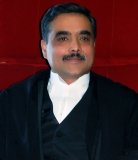
Legal Notes
Add a Note....