
The Banaras Hindu University (BHU) issued an advertisement on March 25, 1995, to fill a vacant lecturer position in Tridosa Vigyan, under the Department of Basic Principles. The advertisement emphasized ...
No Acts & Articles mentioned in this case
http://JUDIS.NIC.IN SUPREME COURT OF INDIA Page 1 of 11
CASE NO.:
Appeal (civil) 4761 of 2006
PETITIONER:
Ashok Kumar Sonkar
RESPONDENT:
Union of India & Others
DATE OF JUDGMENT: 23/02/2007
BENCH:
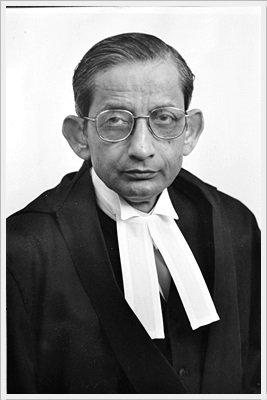
S.B. Sinha & Markandey Katju
JUDGMENT:
J U D G M E N T
S.B.SINHA, J :
Banaras Hindu University (for short, 'the University) issued an
advertisement on 25.03.1995, iner alia, for filling up a vacant post of
lecturer in Tridosa Vigyan in the Department of Basic Principles. Relevant
clauses of the said advertisement are as under :
"Those who have applied earlier are required to
apply again on the prescribed format for the post,
otherwise their candidature will not be considered. They
will, however, be exempted from any payment against
the application. Their cases will be considered according
to the up-dated qualification."
Essential qualifications prescribed for the said post are :
"70. Lecturer in Tridosa Vigyan (One) [Department of Basic
Principles]
Qualifications :
Essential 1. ABMS or equivalent examination
from any recognized institution.
2. M.D. in Sharir-Kriya
Desirable 1. Standard publication in the filed of
Neurophysiology, Neurochemistry,
related to Tridosa Vigyan.
2. Knowledge of Modern Medical
Science and Sanskrit."
Appellant applied for the said post on 30.05.1995. As on that day, he
had not completed his M.D. in Sharir Kriya, with his application he enclosed
a certificate issued by Professor and Head of the Department of Basic
Principles, Institute of Medical Sciences, Banaras Hindu University, which
reads as under :
"This is to certify that Dr. Ashok Kumar Sonkar
son of Dr. K.P. Sonkar, is a bona fide student of the
Department of Basic Principles. He was admitted for the
Degree of M.D. (Ay.) Basic Principles (Sharir-Kriya) on
1st August, 1992 and his final examination will be held in
http://JUDIS.NIC.IN SUPREME COURT OF INDIA Page 2 of 11
October, 1995. His thesis entitled "Clinical evaluation of
therapeutic potential of certain indigenous drugs in
seizure disorders" will be submitted in the month of June,
1995.
He is sincere, hard working young man, zealous
and outwitted scholar and sound character of this
department. He is fit to be entrusted for clinical,
research, teaching and administrative responsibilities.
I wish him all success in future life."
He passed the said examination only on 30.10.1995. He was allowed
to appear before the Selection Committee, despite the fact that he did not
hold the requisite qualification till the date of filing of such application. He,
however, was selected and offered an appointment. He joined the said post.
In the meanwhile, Respondent No. 4 filed a writ petition before the
Allahabad High Court, which was marked as Writ Petition No. 20883 of
1997. The High Court by reason of an order dated 17.02.1998 dismissed
the said writ petition on the premise that he had an alternative remedy.
Respondent No.4 thereafter moved the President of India in his capacity of
the 'Visitor' of the said University. The 'Visitor' was of the opinion that the
selection process was illegal. The selection proceeding, therefore, was set
aside. However, before the said order was passed, the comments of the
University were called for. The University offered its comments. The order
of the Visitor was communicated by the Desk Officer, Ministry of Human
Resource Development (Department of Secondary Education and Higher
Education), Government of India, by a letter dated 18.10.2000, intimating
the Registrar of the University that the President of India in his capacity as
the Visitor of the University had annulled the appointment of the appellant
in exercise of the power conferred upon him under Section 5(7) of the
Banaras Hindu University Act, 1915 (for short, 'the Act'), the relevant
portion of the said letter is as under :
"Kindly refer to your letter No.AA/VI-SC/1460
dated the 15 July, 2000 forwarding therewith 1460 a
reply of the University to the show cause Notice issued in
exercise of the powers conferred upon the President of
India in his capacity as the Visitor of the University
under Section 5(7) of the Banaras Hindu University Act,
1915. The Visitor, after considering the reply of the
University, pleased to annul the appointment of Dr.
Ashok Kumar Sonkar as Lecturer in Tridosh Vigyan
IMS, Banaras Hindu University with immediate effect.
This issue on the basis of communication received
from President's secretariat vide their No. 28(2)(xiii) 98-
CA (II), dated 21.03.2000. The University may take
further necessary action immediately after intimation to
this Department."
A writ petition was filed by the appellant before the Allahabad High
Court. By reason of the impugned judgment dated 26.05.2006, the said writ
petition has been dismissed.
Mr. V. Shekhar, the learned counsel appearing on behalf of the
appellant, in support of this appeal, would submit :
1) In absence of any cut-off date having been specified in the
advertisement and in view of the fact that the statute or statutory rules
in this behalf are also silent in regard to the question as to whether the
Selection Committee could allow the appellant to take part in the
selection process as he had completed his M.D. before he was
http://JUDIS.NIC.IN SUPREME COURT OF INDIA Page 3 of 11
considered therefor, the High Court committed a manifest error in
arriving at the finding.
2) In view of the fact that the appellant was confirmed in the post of
lecturer, it was obligatory on the part of the Visitor to give an
opportunity of hearing to the appellant.
3) The University having taken a definite stand before the High Court in
the earlier writ petition that the appellant was selected in terms of the
prevailing practice, the impugned judgment is unsustainable.
4) The jurisdiction of the Visitor being limited under sub-section (2) of
Section 5 of the Act, new appointment could not have formed subject-
matter of his decision.
5) Respondent No. 4 being himself ineligible, he did not have any locus
standi to maintain the writ petition or make a representation before the
Visitor of the University.
6) In any event, keeping in view the facts and circumstances of the case,
it was obligatory on the part of the High Court in equity to refuse to
exercise its discretionary jurisdiction.
Mr. G.E. Vahanvati, the learned Solicitor General and Dr. Rajeev
Dhawan, the learned Senior Counsel, appearing on behalf of the
respondents, however, supported the impugned judgment.
Section 5 of the Act provides that the President of India shall be the
Visitor of the University. Sub-section (7) of Section 5 of the Act, however,
confers power upon the Visitor of the University, without prejudice to the
other provisions contained in the said Section, by order in writing, to annul
any proceeding of the University which is not in conformity with the said
Act, the Statutes or the Ordinances. Proviso appended thereto, however,
mandates the Visitor to call upon the University to show cause why such an
order should not be made and if any cause is shown within a reasonable time
shall consider the same, before making any such order.
Indisputably, the recruitment of the academic staff of the University is
governed by the provisions of the said Act and the Statutes and Ordinances
framed thereunder.
The question as to what should be the cut-off date in absence of any
date specified in this behalf either in the advertisement or in the reference is
no longer res integra. It would be last date for filing application as would
appear from the discussions made hereinafter.
The question came up for consideration, inter alia, before a 3-Judge
Bench of this Court in Ashok Kumar Sharma and Another etc. v. Chander
Shekher and Another etc. [(1993) Supp. (2) SCC 611], wherein Thommen, J.
speaking for himself and Ramaswami, J. opined :
"13. It is true Rule 37 is in terms applicable only to
Public Service Commission candidates and due notice of
provisional entertainment of their application, subject to
their passing examination before the date of interview, is
a requirement peculiar to Rule 37 and is not applicable to
the present case.
14. If the principle of Rule 37 is by analogy applicable,
the fact that notice of provisional entertainment of
applications, subject to passing of the examination before
the date of interview, is a requirement in the interests of
candidates who fell within that category. The appellants
are by analogy persons of that category, but they have no
complaint on any such ground.
15. The fact is that the appellants did pass the
examination and were fully qualified for being selected
prior to the date of interview. By allowing the appellants
to sit for the interview and by their selection on the basis
of their comparative merits, the recruiting authority was
able to get the best talents available. It was certainly in
http://JUDIS.NIC.IN SUPREME COURT OF INDIA Page 4 of 11
the public interest that the interview was made as broad
based as was possible on the basis of qualification. The
reasoning of the learned Single Judge was thus based on
sound principle with reference to comparatively superior
merits. It was in the public interest that better candidates
who were fully qualified on the dates of selection were
not rejected, notwithstanding that the results of the
examination in which they had appeared had been
delayed for no fault of theirs. The appellants were fully
qualified on the dates of the interview and taking into
account the generally followed principle of Rule 37 in the
State of Jammu & Kashmir, we are of opinion that the
technical view adopted by the learned Judges of the
Division Bench was incorrect and the view expressed by
the learned Single Judge was, on the facts of this case,
the correct view. Accordingly, we set aside the impugned
judgment of the Division Bench and restore that of the
learned Single Judge. In the result, we uphold the results
announced by the recruiting authority. The appeal is
allowed in the above terms. However, we make no order
as to costs."
Sahai, J., however, gave a dissenting note, stating :
"\005The notification, therefore, provided not, only, the
conditions which a candidate was required to possess
when applying for the post mentioned in the notification
but he was also required to support it with authenticated
certificate and if he failed to do so then the application
was not liable to be entertained. In legal terminology
where something is required to be done and the
consequences of failure to do so are also provided then it
is known as mandatory. The mandatory character of
possessing the requirements as provided in the first part
of the notification stands further strengthened from the
third and last part of the notification which prohibited the
candidates from applying if they did not possess the
requisite qualifications. In view of these clear and
specific conditions laid down in the advertisement those
candidates who were not possessed of the B.E.
qualifications were not eligible for applying nor their
applications were liable to be entertained nor could they
be called for interview. Eligibility for the post mentioned
in the notification depended on possessing the
qualification noted against each post. The expression,
shall be possessed of such qualifications, is indicative of
both the mandatory character of the requirement and its
operation in praesenti. That is a candidate must not only
have been qualified but he should have been possessed of
it on the date the application was made. The construction
suggested by the learned counsel for the appellant that
the relevant date for purposes of eligibility was the date
of interview and not the date of application or July 15,
1982 the last date for submission of forms is not made
out from the language of the notification. Acceptance of
such construction would result in altering the first part of
the advertisement prescribing eligibility on the date of
applying for the post as being extended to the date of
interview. If it is read in the manner suggested then the
requirement that incomplete applications and those not
accompanied by the requisite certificates shall not be
entertained, shall become meaningless. Purpose of filing
certificate along with application was to prove that the
conditions required were satisfied. Non-filing of any of
the certificates could have resulted in not entertaining the
http://JUDIS.NIC.IN SUPREME COURT OF INDIA Page 5 of 11
application as the requirements as specified would have
been presumed to be non-existent. Fulfilment of
conditions was mandatory and its proof could be
directory. The former could not be waived or deferred
whereas the defect in latter could be cured even
subsequently. That is proof could be furnished till date of
interview but not the eligibility to apply for the post. Any
other construction would further be contrary to the last
part of the notification."
A review application was filed which was admitted. The matter was
again placed before a 3-Judge Bench of this Court in Ashok Kumar Sharma
and Others v. Chander Shekhar and Another [(1997) 4 SCC 18]. One of the
issues which fell for consideration of the Bench being Issue No. 1 reads as
under :
"(1) Whether the view taken by the majority
(Honble Dr Thommen and V. Ramaswami, JJ.) that it is
enough for a candidate to be qualified by the date of
interview even if he was not qualified by the last date
prescribed for receiving the applications, is correct in law
and whether the majority was right in extending the
principle of Rule 37 of the Public Service Commission
Rules to the present case by analogy?"
It was held :
"\005So far as the first issue referred to in our Order dated
1-9-1995 is concerned, we are of the respectful opinion
that majority judgment (rendered by Dr T.K. Thommen
and V. Ramaswami, JJ.) is unsustainable in law. The
proposition that where applications are called for
prescribing a particular date as the last date for filing the
applications, the eligibility of the candidates shall have to
be judged with reference to that date and that date alone,
is a well-established one. A person who acquires the
prescribed qualification subsequent to such prescribed
date cannot be considered at all. An advertisement or
notification issued/published calling for applications
constitutes a representation to the public and the
authority issuing it is bound by such representation. It
cannot act contrary to it. One reason behind this
proposition is that if it were known that persons who
obtained the qualifications after the prescribed date but
before the date of interview would be allowed to appear
for the interview, other similarly placed persons could
also have applied. Just because some of the persons had
applied notwithstanding that they had not acquired the
prescribed qualifications by the prescribed date, they
could not have been treated on a preferential basis. Their
applications ought to have been rejected at the inception
itself. This proposition is indisputable and in fact was not
doubted or disputed in the majority judgment. This is
also the proposition affirmed in Rekha Chaturvedi v.
University of Rajasthan. The reasoning in the majority
opinion that by allowing the 33 respondents to appear for
the interview, the recruiting authority was able to get the
best talent available and that such course was in
furtherance of public interest is, with respect, an
impermissible justification. It is, in our considered
opinion, a clear error of law and an error apparent on the
face of the record. In our opinion, R.M. Sahai, J. (and the
Division Bench of the High Court) was right in holding
that the 33 respondents could not have been allowed to
appear for the interview.
http://JUDIS.NIC.IN SUPREME COURT OF INDIA Page 6 of 11
The said decision is, therefore, an authority for the proposition that in
absence of any cut-off date specified in the advertisement or in the rules, the
last date for filing of an application shall be considered as such.
Indisputably, the appellant herein did not hold the requisite
qualification as on the said cut-off date. He was, therefore, not eligible
therefor.
In Bhupinderpal Singh & Others v. State of Punjab & Others [(2000)
5 SCC 262], this Court moreover disapproved the prevailing practice in the
State of Punjab to determine the eligibility with reference to the date of
interview, inter alia, stating :
"13. Placing reliance on the decisions of this Court in
Ashok Kumar Sharma v. Chander Shekhar, A.P. Public
Service Commission v. B. Sarat Chandra, District
Collector and Chairman, Vizianagaram Social Welfare
Residential School Society v. M. Tripura Sundari Devi,
Rekha Chaturvedi v. University of Rajasthan, M.V. Nair
(Dr) v. Union of India and U.P. Public Service
Commission U.P., Allahabad v. Alpana the High Court
has held (i) that the cut-off date by reference to which the
eligibility requirement must be satisfied by the candidate
seeking a public employment is the date appointed by the
relevant service rules and if there be no cut-off date
appointed by the rules then such date as may be
appointed for the purpose in the advertisement calling for
applications; (ii) that if there be no such date appointed
then the eligibility criteria shall be applied by reference
to the last date appointed by which the applications have
to be received by the competent authority. The view
taken by the High Court is supported by several decisions
of this Court and is therefore well settled and hence
cannot be found fault with. However, there are certain
special features of this case which need to be taken care
of and justice be done by invoking the jurisdiction under
Article 142 of the Constitution vested in this Court so as
to advance the cause of justice."
[See Jasbir Rani and Others v. State of Punjab & Another [JT 2001 (9) SC
351 : (2002) 1 SCC 124].
Yet again in Shankar K. Mandal and Others v. State of Bihar and
Others [(2003) 9 SCC 519], this Court held that the following principles
could be culled out from the aforementioned decisions :
" (1) The cut-off date by reference to which the eligibility
requirement must be satisfied by the candidate seeking a
public employment is the date appointed by the relevant
service rules.
(2) If there is no cut-off date appointed by the rules then
such date shall be as appointed for the purpose in the
advertisement calling for applications.
(3) If there is no such date appointed then the eligibility
criteria shall be applied by reference to the last date
appointed by which the applications were to be received by
the competent authority."
In M.A. Murthy v. State of Karnataka & Others [(2003) 7 SCC 517], a
contention was made that Ashok Kumar-II (supra) was to operative
prospectively or not. The said contention was rejected, stating :
"\005It is for this Court to indicate as to whether the decision
in question will operate prospectively. In other words,
there shall be no prospective overruling, unless it is so
indicated in the particular decision. It is not open to be held
that the decision in a particular case will be prospective in
its application by application of the doctrine of prospective
http://JUDIS.NIC.IN SUPREME COURT OF INDIA Page 7 of 11
overruling. The doctrine of binding precedent helps in
promoting certainty and consistency in judicial decisions
and enables an organic development of the law besides
providing assurance to the individual as to the
consequences of transactions forming part of the daily
affairs. That being the position, the High Court was in
error by holding that the judgment which operated on the
date of selection was operative and not the review
judgment in Ashok Kumar Sharma case No. II. All the
more so when the subsequent judgment is by way of
review of the first judgment in which case there are no
judgments at all and the subsequent judgment rendered on
review petitions is the one and only judgment rendered,
effectively and for all purposes, the earlier decision having
been erased by countenancing the review applications. The
impugned judgments of the High Court are, therefore, set
aside."
Possession of requisite educational qualification is mandatory. The
same should not be uncertain. If an uncertainty is allowed to prevail, the
employer would be flooded with applications of ineligible candidates. A
cut-off date for the purpose of determining the eligibility of the candidates
concerned must, therefore, be fixed. In absence of any rule or any specific
date having been fixed in the advertisement, the law, therefore, as held by
this Court would be the last date for filing the application.
Recently, this Court in Kendriya Vidyalaya Sangathan and Others v.
Sajal Kumar Roy and Others [(2006) 8 SCC 671], opined that the conditions
laid down for exercising the power of relaxation must be scrupulously
followed, stating :
"\005The appointing authorities are required to apply their
mind while exercising their discretionary jurisdiction to
relax the age limits. Discretion of the authorities is
required to be exercised only for deserving candidates
and upon recommendations of the Appointing
Committee/Selection Committee. The requirements to
comply with the rules, it is trite, were required to be
complied with fairly and reasonably. They were bound
by the rules. The discretionary jurisdiction could be
exercised for relaxation of age provided for in the rules
and within the four corners thereof. ..."
Therein, this Court noticed the decision in Food Corporation of India
and Ors. v. Bhanu Lodh and Ors. [(2005) 3 SCC 618], wherein, inter alia, it
was held :
"\005The power of relaxation is intended to be used in
marginal cases where exceptionally qualified candidates
are available. We do not think that they are intended as
an "open sesame" for all and sundry. The wholesale go-
by given to the Regulations, and the manner in which the
recruitment process was being done, was very much
reviewable as a policy directive, in exercise of the power
of the Central Government under Section 6(2) of the
Act\005"
We, therefore, see no infirmity in the judgment of the High Court, in
this behalf.
The power of the Visitor is not only confined under sub-section (2) of
Section 5, but also under sub-section (7) of Section 5 of the Act. Even
otherwise sub-section (2) of Section 5 cannot be construed narrowly. The
power of the Visitor to cause an inquiry to be made is in respect of any
matter connected with the University. Sub-section (7) of Section 5 provides
http://JUDIS.NIC.IN SUPREME COURT OF INDIA Page 8 of 11
for a power in the Visitor without prejudice to the provision contained in
sub-sections (2) to (6) of Section 5 of the Act. An express power, thus, has
been conferred upon the Visitor to annul any proceeding of the University.
The only condition attached thereto is that the same should found to be not
in conformity with the statutes or ordinances. The selection process carried
out by the Selection Committee would indisputably be a proceeding under
the Act. Section 17 provides for a statute making power, including clause
(l), which reads as under :
"(l) the classification and the manner of appointment
of teachers in the University and the colleges;"
Submission of Mr. Shekhar that the Visitor committed an error in
passing the impugned judgment as 'any irregularity in the procedure by any
authority shall not render the same invalid, unless the same affects the merits
of the case' is stated to be rejected. Appointment of a teacher must conform
to the constitutional scheme as adumbrated under Articles 14 and 16 of the
Constitution of India and the terms of the Act or the statute or ordinances
governing the field. Any violation of the provisions thereof would entitle
the Visitor to exercise his jurisdiction under sub-section (7) of Section 6. It
is also beyond any cavil that in exercising the said power, the statutory
provisions interpreted by this Court must be followed.
This bring us to the question as to whether the principles of natural
justice were required to be complied with. There cannot be any doubt
whatsoever that the audi alteram partem is one of the basic pillar of natural
justice which means no one should be condemned unheard. However,
whenever possible the principle of natural justice should be followed.
Ordinarily in a case of this nature the same should be complied with. Visitor
may in a given situation issue notice to the employee who would be effected
by the ultimate order that may be passed. He may not be given an oral
hearing, but may be allowed to make a representation in writing.
It is also, however, well-settled that it cannot be put any straight
jacket formula. It may not be in a given case applied unless a prejudice is
shown. It is not necessary where it would be a futile exercise.
A court of law does not insist on compliance of useless formality. It
will not issue any such direction where the result would remain the same, in
view of the fact situation prevailing or in terms of the legal consequences.
Furthermore in this case, the selection of the appellant was illegal. He was
not qualified on the cut off date. Being ineligible to be considered for
appointment, it would have been a futile exercise to give him an opportunity
of being heard.
In Aligarh Muslim University and Others v. Mansoor Ali Khan
[(2000) 7 SCC 529], the law is stated in the following terms :
"25. The useless formality theory, it must be noted, is an
exception. Apart from the class of cases of admitted or
indisputable facts leading only to one conclusion referred
to above, there has been considerable debate on the
application of that theory in other cases. The divergent
views expressed in regard to this theory have been
elaborately considered by this Court in M.C. Mehta
referred to above. This Court surveyed the views
expressed in various judgments in England by Lord Reid,
Lord Wilberforce, Lord Woolf, Lord Bingham, Megarry,
J. and Straughton, L.J. etc. in various cases and also
views expressed by leading writers like Profs. Garner,
Craig, de Smith, Wade, D.H. Clark etc. Some of them
have said that orders passed in violation must always be
quashed for otherwise the court will be prejudging the
issue. Some others have said that there is no such
absolute rule and prejudice must be shown. Yet, some
http://JUDIS.NIC.IN SUPREME COURT OF INDIA Page 9 of 11
others have applied via media rules. We do not think it
necessary in this case to go deeper into these issues. In
the ultimate analysis, it may depend on the facts of a
particular case.
In Karnataka State Road Transport Corporation and Another v. S.G.
Kotturappa and Another [(2005) 3 SCC 409], this Court held :
"\005The question as to what extent, principles of natural
justice are required to be complied with would depend
upon the fact situation obtaining in each case. The
principles of natural justice cannot be applied in vacuum.
They cannot be put in any straitjacket formula. The
principles of natural justice are furthermore not required
to be complied with when it will lead to an empty
formality. What is needed for the employer in a case of
this nature is to apply the objective criteria for arriving at
the subjective satisfaction. If the criteria required for
arriving at an objective satisfaction stands fulfilled, the
principles of natural justice may not have to be complied
with, in view of the fact that the same stood complied
with before imposing punishments upon the respondents
on each occasion and, thus, the respondents, therefore,
could not have improved their stand even if a further
opportunity was given\005"
In Punjab National Bank and Others v. Manjeet Singh and Another
[(2006) 8 SCC 647], this Court opined :
"\005The principles of natural justice were also not
required to be complied with as the same would have
been an empty formality. The court will not insist on
compliance with the principles of natural justice in view
of the binding nature of the award. Their application
would be limited to a situation where the factual position
or legal implication arising thereunder is disputed and not
where it is not in dispute or cannot be disputed. If only
one conclusion is possible, a writ would not issue only
because there was a violation of the principle of natural
justice."
In P.D. Agrawal v. State Bank of India and Others [(2006) 8
SCC 776], this Court observed :
"The Principles of natural justice cannot be put in
a straight jacket formula. It must be seen in
circumstantial flexibility. It has separate facets. It has in
recent time also undergone a sea change."
It was further observed :
"Decision of this Court in S.L. Kapoor vs.
Jagmohan & Ors. [(1980) 4 SCC 379], whereupon Mr.
Rao placed strong reliance to contend that non-
observance of principle of natural justice itself causes
prejudice or the same should not be read "as it causes
difficulty of prejudice", cannot be said to be applicable in
the instant case. The principles of natural justice, as
noticed hereinbefore, has undergone a sea change. In
view of the decision of this Court in State Bank of
Patiala & Ors. vs. S.K. Sharma [(1996) 3 SCC 364]
and Rajendra Singh vs. State of M.P. [(1996) 5 SCC
460], the principle of law is that some real prejudice must
have been caused to the complainant. The Court has
shifted from its earlier concept that even a small violation
shall result in the order being rendered a nullity. To the
principal doctrine of audi alterem partem, a clear
http://JUDIS.NIC.IN SUPREME COURT OF INDIA Page 10 of 11
distinction has been laid down between the cases where
there was no hearing at all and the cases where there was
mere technical infringement of the principal. The Court
applies the principles of natural justice having regard to
the fact situation obtaining in each case. It is not applied
in a vacuum without reference to the relevant facts and
circumstances of the case. It is no unruly horse. It
cannot be put in a straightjacket formula. [See Viveka
Nand Sethi vs. Chairman, J. & K. Bank Ltd. & Ots.
(2005) 5 SCC 337 and State of U.P. vs. Neeraj Awasthi
& Ors. JT 2006 (1) SC 19. See also Mohd. Sartaj vs.
State of U.P. (2006) 1 SCALE 265.]"
The principles of equity in a case of this nature, in our opinion, will
have no role to play. Sympathy, as is well-known, should not be misplaced.
In Maruti Udyog Ltd. v. Ram Lal & Others. [(2005) 2 SCC 638], a
Division Bench of this Court, wherein one of us was a member, noticing
some decisions, observed :
"44. While construing a statute, sympathy has no role to
play. This Court cannot interpret the provisions of the said
Act ignoring the binding decisions of the Constitution
Bench of this Court only by way of sympathy to the
workmen concerned.
45. In A. Umarani v. Registrar, Coop. Societies this Court
rejected a similar contention upon noticing the following
judgments: (SCC pp. 131-32, paras 68-70)
68. In a case of this nature this Court should not even
exercise its jurisdiction under Article 142 of the
Constitution of India on misplaced sympathy.
69. In Teri Oat Estates (P) Ltd. v. U.T., Chandigarh it is
stated: (SCC p. 144, paras 36-37)
36. We have no doubt in our mind that sympathy or
sentiment by itself cannot be a ground for passing an order
in relation whereto the appellants miserably fail to
establish a legal right. It is further trite that despite an
extraordinary constitutional jurisdiction contained in
Article 142 of the Constitution of India, this Court
ordinarily would not pass an order which would be in
contravention of a statutory provision.
37. As early as in 1911, Farewell, L.J. in Latham v.
Richard Johnson & Nephew Ltd. observed: (All ER p. 123
E)
We must be very careful not to allow our sympathy with
the infant plaintiff to affect our judgment. Sentiment is a
dangerous will o the wisp to take as a guide in the search
for legal principles.
70. Yet again, recently in Ramakrishna Kamat v. State of
Karnataka this Court rejected a similar plea for
regularisation of services stating: (SCC pp. 377-78, para 7)
We repeatedly asked the learned counsel for the appellants
on what basis or foundation in law the appellants made
their claim for regularisation and under what rules their
recruitment was made so as to govern their service
conditions. They were not in a position to answer except
saying that the appellants have been working for quite
some time in various schools started pursuant to
resolutions passed by Zila Parishads in view of the
government orders and that their cases need to be
considered sympathetically. It is clear from the order of the
learned Single Judge and looking to the very directions
given, a very sympathetic view was taken. We do not find
it either just or proper to show any further sympathy in the
given facts and circumstances of the case. While being
sympathetic to the persons who come before the court the
http://JUDIS.NIC.IN SUPREME COURT OF INDIA Page 11 of 11
courts cannot at the same time be unsympathetic to the
large number of eligible persons waiting for a long time in
a long queue seeking employment."
It is not a case where appointment was irregular. If an appointment is
irregular, the same can be regularized. The court may not take serious note
of an irregularity within the meaning of the provisions of the Act. But if an
appointment is illegal, it is non est in the eye of law, which renders the
appointment to be a nullity.
We have noticed hereinbefore that in making appointment of the
appellant, the provisions of Articles 14 and 16 of the Constitution and
statutory rules were not complied with. The appointment, therefore, was
illegal and in that view of the matter, it would be wholly improper for us to
invoke our equity jurisdiction.
Mr. Shekhar is also not correct in contending that the University had
supported the case of the appellant. It was categorically stated by the
University in its counter affidavit that the writ petition being devoid of any
merit should be dismissed. In any event, we have ourselves taken into
consideration the merit of the matter and in that view of the matter the stand
of the University either before the Visitor or in the writ proceedings initiated
by Respondent No. 4 is wholly irrelevant.
For the reasons aforementioned, we do not find any merit in this
appeal, which is dismissed. However, in the facts and circumstances of the
case, there shall be no order as to costs.

 Login with google
Legal Notes
Add a Note....