
As per case facts, the appellant, Balesh Kumar Kuraiti, was accused of aggravated penetrative sexual assault on a three-year-old minor girl. The Trial Court convicted him under IPC and POCSO ...
2026 INSC 850 SLP (Crl.) No.7030 of 2026 Page 1 of 18
REPORTABLE
IN THE SUPREME COURT OF INDIA
CRIMINAL APPELLATE JURISDICTION
CRIMINAL APPEAL NO. OF 2026
@ SPECIAL LEAVE PETITION (CRIMINAL) NO.7030 OF 2026
BALESH KUMAR KURAITI … APPELLANT(S)
VERSUS
STATE OF CHHATTISGARH … RESPONDENT (S)
J U D G M E N T
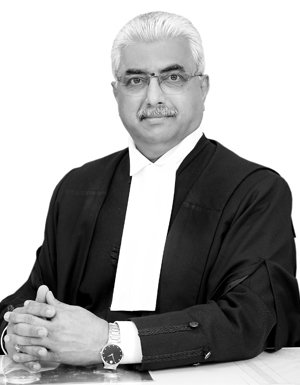
ARAVIND KUMAR, J.
“It’s not worth the tears of that one tortured child who beat
itself on the breast with its little fist and rayed in its
stinking outhouse, with its unexpiated tears to ‘dear, kind
God’! It’s not worth it, because those tears are unatoned
for. They must be atoned for, or there can be no harmony.
But how?”
1. Heard. Leave Granted.
2. Ivan Karamazov, in Dostoevsky's The Brothers Karamazov,
rejects harmony at the cost of a child’s tears. Indeed, a child
SLP (Crl.) No.7030 of 2026 Page 2 of 18
which is tormented reaches out to the kind God for answers,
for it does not understand the agony or the harrowing
experience it had and simply wants to understand why. Those
innocent painful tears have to be atoned for. We cannot restore
the childhood or the beautiful dreams that the child carried but
we can soothe the child with the powers bestowed on us, to
show the child that there is someone to dry its tears.
3. Before us stands Balesh Kumar Kuraiti, the Appellant who is
accused of committing aggravated penetrative sexual assault
on a victim minor girl aged 3. The case of the prosecution
begins with the lodging of the First Information Report No.
35/2016
1
before the Police Station of Ambagarh Chowki in
Rajnandgaon District by the father of the victim, Dinesh Tope
(PW-2). He accounts that in the evening of 17.02.2016, at
about 7.00 pm, he was at the house of Bansilal Sori (PW-5)
when he heard the sound of a child crying or two cats fighting.
At that time, Tejram (PW-4), victim’s father’s uncle, came and
told Dinesh Tope (PW-2) that when he had gone to urinate in
Ashok’s Badi, he too heard the same sound and when he threw
1
Hereinafter referred to as ‘FIR’
SLP (Crl.) No.7030 of 2026 Page 3 of 18
a stone at the direction of the sound, it stopped. But while
returning back, Tejram (PW-4) heard the sound of a girl crying.
4. When the father of the victim, Dinesh Tope (PW-2), returned
to his house along with Tejram (PW-4), the mother of the
victim, Devki Bai (PW-1), told them that the victim child (PW-
6) has suffered injury marks on both her cheeks, nose, lips and
was bleeding from her private part. She also told PW-2 that the
Appellant-Accused, who was a guest at their aunt Desh Bai’s
house, was carrying the victim on his lap at about 6.30 pm and
then took her away. After some time, the victim returned back
crying and had injuries on her body. PW-1 also told PW-2 that
their child had been raped.
5. The incident was reported before the police and FIR No.
35/2016 was registered on 17.02.2016 against the Appellant-
Accused for offences under sections 376(2)(i) of the Indian
Penal Code, 1860
2
and sections 4 and 8 of the Protection of
Children from Sexual Offences Act, 2012.
3
The investigation
was conducted by R. K. Singh Rana (PW-19), who seized the
victim's pajamas and undergarments at Ashok’s Badi. Pending
2
Hereinafter referred to as the ‘IPC’
3
Hereinafter referred to as the ‘POCSO Act’
SLP (Crl.) No.7030 of 2026 Page 4 of 18
investigation, both the victim (PW-6) and the accused were
subjected to medical examinations following the latter's arrest.
6. Following the investigation and the arrest of the Appellant-
Accused on 18.02.2016, the case was tried by the Additional
Sessions Judge, FTC, Rajnandgaon (Chhattisgarh)
4
who had
framed charges under section 376(2)(i) of IPC and sections 6
and 8 of the POCSO Act.
7. The Learned Trial Court weighed in on the corroborative
witness testimonies of the victim (PW-6), the mother (PW-1)
and father of the victim (PW-2) along with documentary
evidence such as the Forensic Science Laboratory Report and
Medical Examination of the victim child (PW-6) and the
Appellant-Accused. The injuries found on the victim child
(PW-6) were supported by the deposition of Dr. Subhadra
Thakur (PW-21) who found abrasions on the left cheek, nose
and upper lip along with lacerated wounds on the genitalia of
the victim. The victim child was further subject to medical
examination before Dr. V.P. Khunte (PW-18) on 18.02.2016
who inferred that the victim child was subjected to forcible
sexual assault due to swollen external genitalia, cuts and
4
Hereinafter referred to as the ‘Trial Court’
SLP (Crl.) No.7030 of 2026 Page 5 of 18
bruises on the vagina which also caused pain to the victim
child.
8. The victim (PW-6), aged three in her testimony before the
Learned Trial Court categorically stated that the Appellant-
Accused had taken her on his lap and threw her on the ground.
She further deposed that the Appellant-Accused bit her cheeks
and took her to Badi where he threw her and removed her
undergarments. The Forensic Laboratory Reports also
confirmed the presence of human sperm on the vaginal slide of
the victim child. On perusal of the deposition of the child and
the medical reports, we have no doubt in observing that the
Appellant-Accused has indulged in such a criminal act, making
it difficult for us to comprehend the unimaginable trauma
endured by a child so young.
9. Upon careful appreciation of the oral and documentary
evidence, as well as the testimonies of the witnesses, the
Learned Trial Court vide Judgment dated 18.04.2017, found
the Appellant-Accused guilty of offences punishable under
Section 376(2)(i) of the IPC and Section 6 of the POCSO Act,
2012. Crucially, during the hearing on sentence, the Learned
Trial Court observed that despite this being the Appellant-
Accused’s first offence, the gravity and heinous nature of the
SLP (Crl.) No.7030 of 2026 Page 6 of 18
crime warranted no leniency. Consequently, the Court
sentenced the Appellant-Accused to imprisonment for life
along with fine of Rs. 10,000/- (Ten Thousand Rupees) and in
default for payment of fine, additional sentence of simple
imprisonment of 1 year, for both offences, i.e., under Section
376(2)(i) of the IPC and Section 6 of the POCSO Act, 2012.
The said sentences on both the offences were to run
concurrently.
10. Assailing the judgment of conviction awarded by the Learned
Trial Court, Appellant-Accused approached the High Court by
way of Criminal Appeal No. 872/2017. Although the Learned
High Court of Chhattisgarh at Bilaspur, vide Judgment dated
14.02.2024 confirmed and affirmed the conviction of the
Appellant-Accused, it modified the sentence awarded from
imprisonment for life to 20 years of rigorous imprisonment for
both offences, i.e., Section 376(2)(i) of IPC and Section 6 of
POCSO Act (Amendment Act, 2019) in view of the application
of Section 42 of the POCSO Act.
11. Dissatisfied with the concurrent conviction and sentence
imposed on the said accounts, the Appellant-Accused has
preferred the present Special Leave Petition. He has raised his
grievance on the imposition of higher minimum punishment as
SLP (Crl.) No.7030 of 2026 Page 7 of 18
per the 2019 Amendment to the POCSO Act and the approval
of his conviction. This Court vide Order dated 13.04.2026
issued notice strictly on the limited question on the quantum of
sentence. Undisputedly, the sole issue for consideration before
us is with respect to whether the sentence imposed by the High
Court is correct under law. Thus, we make no observations on
the conviction of the Appellant on the said offences and the
conviction awarded by the Trial Court as confirmed by the
High Court requires no interference. With that in mind, we
frame the following question of law -
ISSUE
Whether the High Court is justified in reducing
the substantive sentence of the Appellant-
Accused from life imprisonment to 20 years
rigorous imprisonment by taking the 2019
Amendment to the POCSO Act into
consideration?
12. We answer this question in the negative for the following
reasons and inferences drawn from the careful study of the
law on sentencing and judicial precedents -
In Re: Clarification on Section 6 as it stood before and after
the Amendment Act of 2019
SLP (Crl.) No.7030 of 2026 Page 8 of 18
13. Section 6 of the POCSO Act 2012 (before the Amendment)
stipulated –
“Section 6 Punishment for aggravated penetrative sexual
assault Whoever, commits aggravated penetrative sexual
assault, shall be punished with rigorous imprisonment for
a term which shall not be less than ten years but which may
extend to imprisonment for life and shall also be liable to
fine.”
14. From a bare reading of this provision, it is to be understood that
the minimum punishment for an offence of aggravated
penetrative sexual assault is a minimum of ten years of rigorous
imprisonment which may extend to imprisonment for life and
also fine.
15. Section 6 after enactment of Amendment Act of 2019 stated-
“Section 6 Punishment for aggravated penetrative sexual
assault. --
(1) Whoever commits aggravated penetrative sexual
assault shall be punished with rigorous imprisonment for a
term which shall not be less than twenty years, but which
may extend to imprisonment for life, which shall mean
imprisonment for the remainder of natural life of that
person and shall also be liable to fine, or with death.
(2) The fine imposed under sub-section (1) shall be just
and reasonable and paid to the victim to meet the medical
expenses and rehabilitation of such victim.]”
SLP (Crl.) No.7030 of 2026 Page 9 of 18
16. Following the Amendment in 2019, which was brought into
force with effect from 16.09.2019, the phrase “which shall
mean imprisonment for the remainder of natural life of that
person” was added after the words “imprisonment for life”. It
also enhanced the minimum sentence from rigorous
imprisonment of 10 years to rigorous imprisonment of 20
years. The backdrop of amendment as explained in the
Statement of Objects and Reasons to the Amendment Act is
primarily to take stringent action against perpetrators of child
sexual abuse, who by their repeated barbaric acts destroy not
only the childhood but also disturb the mental construct of that
child and lead to destructive social disintegration in the
generations to come. With the paramount interest of the life of
the child, the said amendment was effected to and needless to
say, it operated prospectively.
17. The expression "imprisonment for life", as it stood prior to the
amendment, signifies a sentence of imprisonment for life and
although in literal sense it means that the accused shall remain
imprisoned for the remainder of his life, it does not specifically
bar any statutory remedy available. Imprisonment for life
simpliciter entitles the convict to seek the benefit of early
release as per the statutory regime subject to the fulfilment of
SLP (Crl.) No.7030 of 2026 Page 10 of 18
the prescribed conditions therein. Such considerations,
however, have to be mandatorily fulfilled for the accused
person to avail the benefit of early release such as remission.
18. The jurisprudence on retrospective applicability of criminal
laws has been squarely laid down in a catena of rulings of this
Court. The invocation of Article 20(1) of the Constitution also
makes it clear that every person has a fundamental right only
to be convicted of an offence under the law that was in
operation at the time of commission of the criminal act. Thus,
on prima facie construction, we are of the view that the High
Court erred in applying the punishment prescribed under the
Amended Act of 2019, enhancing the minimum punishment
under Section 6 of the POCSO Act.
19. Most recently, this Court in Satauram Mandavi v. State of
Chhattisgarh & Anr.
5
has squarely observed that Court cannot
impose a sentence that was not within the statutory framework
when the criminal offence was committed. Thus, Section 6 of
the POCSO Act as it stood prior to the 2019 Amendment shall
be applicable in the case of the Appellant-Accused herein.
In Re: Punishment as under Section 376(2)(i) of IPC
5
2025 INSC 892
SLP (Crl.) No.7030 of 2026 Page 11 of 18
20. Since the Appellant-Accused is sentenced for two offences, in
order to ascertain the true meaning of the sentences imposed,
we deem it appropriate to look into Section 376(2)(i) as it stood
before its omission.
“376. Punishment for rape. — (1) Whoever, except in the
cases provided for in sub-section (2), commits rape, shall
be punished with rigorous imprisonment of either
description for a term which [shall not be less than ten
years, but which may extend to imprisonment for life, and
shall also be liable to fine].
(2) Whoever, —
(a)-(h)….
(i) commits rape on a woman when she is under sixteen
years of age; or
shall be punished with rigorous imprisonment for a term
which shall not be less than ten years, but which may
extend to imprisonment for life, which shall mean
imprisonment for the remainder of that person’s natural
life, and shall also be liable to fine.”
21. A bare reading of Section 376(2)(i) of IPC (as it stood before
its omission) indicates that any offence falling under Section
376(2)(i) would attract rigorous imprisonment for a term which
shall not be less than ten years, but which may extend to
imprisonment for life. Significantly, life imprisonment under
the said provision means “imprisonment for the remainder of
that person’s natural life”, meaning thereby that there are
SLP (Crl.) No.7030 of 2026 Page 12 of 18
almost bleak to no chances of an accused being released early
from prison.
In Re: Applicability of Section 42 of the POCSO Act in the
instant matter
We find it imperative to also discuss the position of Section 42 of
the POCSO Act as the High Court has placed reliance on the same
for modifying the sentence imposed. Section 42 for reference is
extracted below -
“42. Alternate punishment.— Where an act or omission
constitutes an offence punishable under this Act and also
under sections 166A, 354A, 354B, 354C, 354D, 370, 370A,
375, 376, [376A, 376AB, 376B, 376C, 376D, 376DA,
376DB], [376E, section 509 of the Indian Penal Code or
section 67B of the Information Technology Act, 2000 (21 of
2000)], then, notwithstanding anything contained in any
law for the time being in force, the offender found guilty of
such offence shall be liable to punishment only under this
Act or under the Indian Penal Code as provides for
punishment which is greater in degree.”
22. In essence, Section 42 entails that if an accused is convicted
under both the IPC and POCSO, the greater of the punishment
imposed amongst the two shall prevail.
23. In the instant matter, the Trial Court imposed a sentence of
imprisonment for life for both the offences under Section
376(2)(i) as well as under Section 6 of POCSO to run
SLP (Crl.) No.7030 of 2026 Page 13 of 18
concurrently. Thus, by application of Section 42, the one that
prescribes higher punishment must prevail. Pertinently, as
discussed above, Section 376(2)(i), in our opinion imposes a
higher punishment with the stipulation that imprisonment for
life shall mean imprisonment for the remainder of that person’s
natural life. However, the said clarification is absent under
Section 6 of the POCSO Act as it stood prior to the amendment.
Although, on a preliminary look, we reckon that the
punishment under Section 376(2)(i) is greater in degree due to
the express stipulation that imprisonment shall be for the
remainder of the person’s natural life, we are guided by the
principles laid down by this Court in various other instances
recounted below –
24. The case of Swamy Shraddananda v. State of Karnataka
6
which was then affirmed in the case of Union of India v. V
Sriharan alias Murugan and Ors
7
squarely sets out the
dilemma regarding sentencing and stated that the question of
fixing the number of years within the broad spectrum of
imprisonment for life is a question for the Courts to decide. For
in a case where the term imprisonment for life is stipulated to
6
(2008) 13 SCC 767
7
(2016) 7 SCC 1
SLP (Crl.) No.7030 of 2026 Page 14 of 18
mean imprisonment for the remainder for the person’s natural
life, it is for the Court to decide on the whether the accused is
to stay incarcerated for the rest of his life or has a possibility of
early release depending on other facts and circumstances.
25. The latest ruling of this Court in the case of Gyanendra Singh
@ Raja Singh v. State of Uttar Pradesh
8
dealing with offences
under Section 376(2)(i) of the IPC and Section 3/4 of the
POCSO Act has also considered the said position of law. At
paras 30 - 31, this Court observed -
“30. Keeping in view the aforesaid exposition of the law, we
thus, direct that the ends of justice would be served by
restoring the judgment of the trial Court and directing that
the sentence of life imprisonment awarded to the accused,
by the trial Court, for the offence under Sections 3/4 of the
POCSO Act shall stand revived.
31. For the offences punishable under Sections 376(2)(f)
and 376(2) (i) of IPC, the accused is sentenced to undergo
imprisonment for life, as awarded by the trial Court,
without the stipulation that the life term will enure till the
natural life of the appellant and a fine of Rs. 5,00,000/- and
in default, to further undergo imprisonment of two years.
Both the sentences shall run concurrently.”
26. Although in the case of Gyanendra, the High Court had
specified that the accused therein shall be imprisoned for life
8
2025 INSC 335
SLP (Crl.) No.7030 of 2026 Page 15 of 18
which shall mean for the remainder of his life, from the
exposition of law laid down by this Court it is clear that the
Courts have the discretion to decide the years of imprisonment
to be undergone incase the sentence is of imprisonment for life.
In Re: Failure of the High Court to record any reasons while
modifying the sentence awarded by the Trial Court.
27. The High Court has grossly erred in modifying the sentence
imposed by the Trial Court. The High Court cryptically records
that although the date of offence is prior to the enforcement of
the Amendment to Section 6 of POCSO in 2019 by which the
minimum sentence was enhanced from 10 years to 20 years
imprisonment, the High Court was of the opinion that 20 years
of rigorous imprisonment for both offences would suffice.
28. We are unable to comprehend the rationale of the sentence
imposed by the Learned High Court. On one hand, the High
Court considers the fact that the victim was a minor girl aged
3 but thereafter finds it appropriate to reduce the sentence to 20
years rigorous imprisonment for both offences, i.e., Section
376(2)(i) of IPC and Section 6 of POCSO Act (Amendment
Act, 2019) in view of the application of Section 42 of the
POCSO Act, which in our considered opinion and reasoning
above is not tenable as per Article 20(1) of the Constitution.
SLP (Crl.) No.7030 of 2026 Page 16 of 18
29. The Trial Court, after duly considering all the evidences inter
alia, documentary and oral evidence had rightly taken the view
that the maximum statutory punishment recognised has to be
imposed on the Appellant-Accused. Thus, we set aside the
judgment of the High Court and restore the judgment of the
Trial Court.
30. The Appellant-Accused is hereby sentenced to undergo
imprisonment for life with a fine of Rs. 10,000/- for offences
under Section 6 of POCSO Act, 2012 (prior to amendment) and
imprisonment for life with a fine of Rs. 10,000/- for offences
punishable under Section 376(2)(i) of IPC without the
stipulation that the imprisonment shall run till the natural life
of the Appellant-Accused. Both the sentences shall run
concurrently and the sentences shall include the term already
undergone by the Appellant.
31. Before we part with this matter, we find it necessary to make
certain observations. This is regrettably not the first case to
come before the courts involving the sexual abuse and brutal
violation of a child. What is particularly disturbing is the
increasing frequency of such offences, which, if left
unchecked, threatens the very moral and social fabric of society
in the years to come.
SLP (Crl.) No.7030 of 2026 Page 17 of 18
32. A child who ought to grow up in an atmosphere of love, trust
and security but instead learns fear, mistrust and vulnerability.
The innocence once stolen can mostly never be returned. The
trauma suffered by a child, if left unaddressed and unhealed
may influence the manner in which that child perceives
relationships, authority and society itself. It can impair
emotional well-being, education, self-worth and the ability to
lead a life of dignity. The damage extends beyond the
individual victim, affecting families, communities and
ultimately the collective conscience of the Society, which leads
to social disintegration.
33. While no sentence can erase the pain inflicted upon a child, we
hold the responsibility of holding offenders accountable,
deterring such crimes and also reaffirming society's
commitment to safeguarding its children. The obligation is also
to ensure that every child survivor receives timely
psychological care, rehabilitation, and a supportive
environment to rebuild a life that has been so cruelly disrupted.
Every act of child sexual abuse is an assault upon humanity
itself which aims at rule of law. It begins with safe homes that
lead to the safer society.
SLP (Crl.) No.7030 of 2026 Page 18 of 18
34. With greatest concern to our children, we deem it appropriate
to direct all the appropriate authorities concerned, right from
the police, to ensure that the legal process is less intimidating
and more reassuring to the children who are unfortunate
sufferers of harsh illegal acts. There has to be timely and
effective enforcement of justice and protection to the child
victims at all times.
35. The Appeal is allowed on the terms discussed above. All other
points of law, fine and victim compensation scheme as
discussed by the High Court are untouched and shall remain
good under law.
36. Pending applications(s), if any, shall stand disposed of.
...........................................................J.
[ARAVIND KUMAR ]
............................................................J.
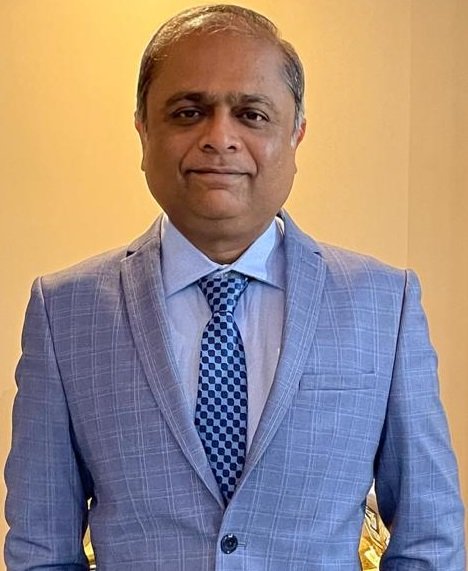
[VIPUL M. PANCHOLI]
NEW DELHI;
AUGUST 12
th
, 2026.

 Login with google
Legal Notes
Add a Note....