
Sarajumani Dasi, aged about 70, owned the property in question and allegedly executed a Will on January 15, 1982, in favor of Braja Kishore Nanda, a stranger to her family.
No Acts & Articles mentioned in this case
http://JUDIS.NIC.IN SUPREME COURT OF INDIA Page 1 of 9
CASE NO.:
Writ Petition (civil) 3467 of 2003
PETITIONER:
Benga Behera & Anr
RESPONDENT:
Braja Kishore Nanda & Ors
DATE OF JUDGMENT: 15/05/2007
BENCH:
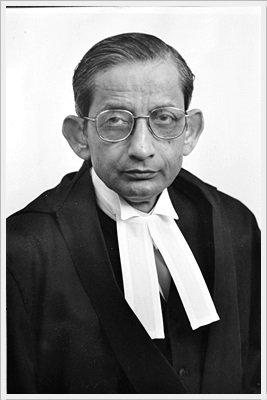
S.B. Sinha & Markandey Katju
JUDGMENT:
JUDGMENT
S.B. SINHA, J.:
1. Interpretation and application of Section 63 of the Indian Succession Act,
1925 as well as Section 68 of the Indian Evidence Act, 1872 vis-`-vis the
requirements of proof of execution of a document falls for consideration in this
appeal which arises out of the judgment dated 21.11.2002 in First
Appeal.No.397/1990 of the High Court of Orissa at Cuttack. However, before we
embark upon the said question, we may notice the facts of the matter in brief.
2. Admittedly, one Sarajumani Dasi was the owner of the property in question.
She was aged about 70 years when a Will was allegedly executed by her on or
about 15.1.1982. She expired on 5.6.1983. The beneficiary of the Will was the
first respondent herein. The testatrix was living in a math known as Bharati Math
at Puri. In the Will, she disclosed her profession to be "Singer of Bhajans and
Kirtans". It is not in dispute that the first respondent was a complete stranger to the
family. He is a businessman. His father was one of the disciples of late Taponidhi
Ramakrushna Bharati Goswamy, who had founded the Math wherein the testatrix
was living.
3. A deed of sale was also executed by the said Sarajumani Dasi in favour of
advocate Surendra Panda of Puri on the same day. The Will is said to have been
scribed by one Banabehari Upadhyaya (PW-9), an advocate's clerk. He as well as
one Chandramani Das Mohapatra who are said to be the attesting witnesses thereto
also identified the testatrix before the Registering Officer. Respondent No.1
obtained the original Will from the Office of the Registering Authority on
30.1.1982.
4. As noticed hereinbefore, Sarajumani Dasi expired on 5.6.1983. In 1986, an
application was filed by the first respondent in the court of the learned District
Judge, Puri for grant of Letters of Administration in respect of the alleged Will
with a copy of the Will annexed, in terms of Section 278 of the Indian Succession
Act. Respondent No.1 claimed that he had also been residing in the said Math. She
was assured of proper care by him and in consideration of the help and assistance
rendered to her by respondent No.1, the said Will was executed in his favour.
5. Appellants herein are the heirs and legal representatives of the testatrix.
They contested the said application, inter alia, questioning execution of the Will
alleging the same to be a forged and a sham document.
6. We may notice that the original Will was never produced by the appellant.
7. Execution of the Will was sought to be proved by producing a certified copy
thereof. A purported xeroxed copy of the said will was also filed. The registration
of the said Will was sought to be proved by calling the document in question
wherein the contents of the document registered were noted.
8. To prove execution and attestation of the Will, the respondent No.1, inter
alia, examined Banabehari Upadhyaya (P.W.9), Purnchandra Rath (P.W.4) and
Surendra Panda (P.W.7).
9. We will notice their statements before the learned District Judge for
http://JUDIS.NIC.IN SUPREME COURT OF INDIA Page 2 of 9
determining the question as to whether requirements of law had been complied
with.
10. P.W.9- Banabehari Upadhyaya who, as noticed hereinbefore, not only
scribed the Will but also stated himself to be an attesting witness and identifier of
the testatrix, in his deposition stated as under:
" \005. On 15.1.82, Sarajumani Dasi executed a Will in favour of
one Brajakishore Nanda and the same was scribed by me\005..
I do not remember anything that happened on 15.1.82 except
what I have deposed with reference to the document.
I first saw Sarajumani Dasi when she executed the sale deed. I
did not know her before that. \005\005 Surendranath Panda brought
Sarajumani Dasi to me with him. Sarajumani Dasi was with
Surendranath Panda and I was called to scribe the Will to become an
identifying witness and also an attesting witness. Surendra Panda
identified Sarajumani Dasi to me and that is how I know her. \005. I did
not make a draft of the Will but scribed it as per dictation of
Surendranath Panda. Sarajumani Dasi did not put her L.T.I. in my
presence on the Will at the time of execution of it. \005. I attested her
L.T.I. before she put her L.T.I. on the sale deed and the Will.
Sarajumani Dasi was not present when I scribed the sale deed and will
and made the endorsements attesting her L.T.I. I do not know if any
other person attested the Will and the sale deed. \005
\005 \005 \005
\005 I scribed whatever was dictated by Sri Panda without
understanding the meaning or purport. \005. I did not disclose before
the Sub-Registrar or before any body that I identified Sarjumani Dasi
without knowing her or attested her L.T.I. even though her L.T.I. were
not affixed in my presence. \005\005\005."
11. In his deposition, P.W.4-Purnachandra Rath (An Advocate) stated:
"Thereafter on 15.1.82, Sarajumani again came to the Bar
Association and met me there. Brajakishore Nanda (P.W.1 - Plaintiff)
and his father Sanmajaya Nanda (not examined) accompanied the
Mata. She expressed before me that she would execute the Will and
also the sale deed. On her instruction, I made a gist of the Will and
asked Banabehari Upadhyaya to scribe the same. \005.. The scribe read
over and explained the contents of the Will to Sarajumani and she
acknowledged the same to be true and correct. When Sarajumani
affixed her L.T.I. on the Will, myself, Banabehari Upadhyaya,
(P.W.9) advocate Sri Surendra Panda and Chandramani Das
Mohapatra and Sanmajaya Nanda were present\005..
I am attesting witness to the will. \005\005.. I endorsed a certificate
in the Will to the effect that the executant was my client and the Will
was written by my clerk in my office on my direction. \005\005"
12. In his deposition, P.W.7-Surendra Panda (An Advocate) stated thus:
"On 15.1.82, Sarajumani Dashi came to the Bar Association,
Bhubaneswar. She was accompanied by Brajakishore Nanda and
Jammajjaya Nanda at that time. That day i.e.15.1.82 Sarajumani
Dashi expressed her desire before her lawyer Purnchandra Rath
(P.W.4) to execute the Will in favour of Brajakishore Nanda. \005
Then the lawyer made a rough draft of the Will. Mr. Rath called
Benabehari Upadhyaya to scribe the Will. \005 The contents of the
document were read and explained to Sarajumani Dashi. \005..
Sarajumani Dashi acknowledged the contents of the document to
be true and correct and gave her L.T.I.. thereon. Attesting witness
http://JUDIS.NIC.IN SUPREME COURT OF INDIA Page 3 of 9
P.C. Rath, Chandramani and Banabehari Upadhaya were present
when Sarajumani Dashi affixed her L.T.I. on the Will. \005."
13. P.W.9- Banabehari Upadhyaya did not, thus, admittedly know the testatrix
from before. He had seen her for the first time on the day when the Will was
executed and because Surendra Panda had asked him to identify her, he did so. It
was stated that the same was scribed by him as per dictation of Surendra Panda,
but in the Will, it was stated that he himself did it.
14. If he had put his signature before the testatrix had put her thumb impression
on the sale deed and the Will, he does not answer the requirement of attesting
witness. He was not aware of any other person attesting the Will and the sale deed.
P.W.9, therefore, failed to prove execution or attestation of the Will. Not only he
did not take any instruction from the testatrix before the Will was scribed, but the
same was done on the dictation of P.W.7. There is nothing on record to show that
the testatrix understood the meaning, purport and contents of the Will. She had put
her thumb impression in his presence. There is nothing on record to show that the
Will was read over and explained to the testatrix and she had put her thumb
impression upon understanding the contents and purport of the Will and put her
thumb impression as admission thereof. A certificate to that effect was in ordinary
course required to be given by the scribe of the Will, particularly when the same
had been found to be given by him in the sale deed executed by her on the same
day which was marked as Ext.16.
15. P.W.4-Purnachandra Rath, as noticed hereinbefore, gave a completely
different picture of the stay. According to him on 15.1.1982 the testatrix expressed
her desire to execute a Will as also a sale deed, whereupon he made a gist of the
contents of the Will and then asked P.W.9 to scribe it. No draft of the Will was
prepared although drafts of the sale deeds were prepared. Although in his
deposition P.W.-4 contended that he had endorsed a certificate in the Will to the
effect that the Will was written by his clerk in his office on his direction, the
certified copy of the Will did not show the same. A certificate to that effect
appeared in the Xeroxed copy of the Will which was brought on record and
marked at Ext.-13/a, but such a certificate did not find place in the certified copy of
the Will, and thus, no reliance can be placed thereupon.
16. The High Court in its judgment proceeded on the basis that P.W.-4 was also
a witness to the execution of the Will by the testatrix and thus would come within
purview of the definition of the term 'attesting witness'.
17. So far as the deposition of P.W.7-Surendra Panda is concerned, he
contradicts P.W.-9 as according to him he was not present when the testatrix had
put her thumb impression and he had attested her thumb impression before she
gave her thumb impression. His evidence to the effect that the Will was read over
and explained to the testatrix does not find mention in the Will and even a
statement that three attesting witnesses signed the Will does not appear to be
correct as only the name of P.W.-7 and P.W.-9 appeared as attesting witnesses in
the Will.
18. Learned counsel appearing on behalf of the respondents, however, would
submit that as the attesting witnesses were not willing to depose, it was not
necessary to prove attestation in terms of Section 71 of the Indian Evidence Act.
Summons were issued to the attesting witnesses by the Court. One of the attesting
witnesses did not appear, P.W.9 appeared but he was declared hostile. Our
attention in this connection has also been drawn to a part of his statement in the
cross-examination where he has deposed as under:
"\005 My Moharir licence might have been cancelled due to my
misconduct and illegal activities."
19. It is not for this Court, as submitted by the learned counsel, to consider the
integrity and honesty of the said witness. According to the learned counsel, not
only P.W.4 should be treated to be an attesting witness, but must also be held to
have proved due execution of the Will.
20. We may deal with the contention of the learned counsel in respect of
application of Section 71 of the Indian Evidence Act a little later. But, in our
opinion, P.W.-4 cannot be considered to be a witness to execution of the will as he
had nothing to do therewith. He comes into the picture only because an
http://JUDIS.NIC.IN SUPREME COURT OF INDIA Page 4 of 9
endorsement was found on the Xerox copy of the Will which, in our opinion, is of
doubtful origin, keeping in view the fact that the same did not find a mention in the
certified copy thereof. His evidence, in our opinion, would, thus, not be of much
significance. This aspect of the matter was not considered by the High Court at all.
We are, therefore, unable to agree with the following finding of the High Court:
"The attesting witnesses Purna Chandra Rath(P.W.4) Chandramani Das Mohapatra
and Banahihari Upadhay (P.W.9) were present when she affixed her LTI on the
Will. All the three attesting witnesses signed the Will in presence of Sarajumani
inasmuch as no reliance, whatsoever, can be placed on the testimony of P.W.-4,
PW-4 is an advocate. He is supposed to know the importance of attestation. If he
intended to be an attesting witness, he could have done so.
21. It was also not necessary for the appellants to confront him with his
signature in the Xeroxed copy of the Will, inasmuch as the same had not appeared
in the certified copy. Execution of a Will is required to be proved in terms of
Section 63 of the Succession Act, in terms whereof a Will must be attested by two
or more witnesses. Execution of a Will, therefore, can only be proved in terms of
clause (c) of Section 63 when at least one of the two witnesses proves the
attestation. A Will is required to be attested by two or more witnesses, each of
whom has seen the testator sign or affix his mark to the Will. Section 68 of the
Evidence Act provides for the requirements for proof of execution of the Will. In
terms of said provision, at least one attesting witness has to be examined to prove
execution of a Will.
22. P.W.-9, as noticed hereinbefore in his deposition, stated that Sarajumani
Dasi did not put her thumb impression in his presence on the Will at the time of its
execution. Whether the same would amount to denial of the execution of a Will
even within the meaning of Section 71 of the Indian Evidence Act is the question.
23. Section 71 of the Evidence Act reads as under:
"71. Proof when attesting witness denies the execution.- If
the attesting witness denies or does not recollect the execution of the
document, its execution may be proved by other evidence."
24. He neither denies the execution nor has failed to recollect the execution of
the Will. According to him, the testatrix had put her LTI only after he had put his
signature.
25. Section 71 of the Act provides for one of the exceptions where it is not
possible to strictly comply with the requirements of Section 68. Sections 69, 70
and Section 71 are exceptions to Section 68. Section 69 provides for proof of a
document where no attesting witness is found. Section 70 provides for admission
of execution by party to attested document. Section 71 deals with a situation where
the attesting witness denies or does not recollect the execution of the document and
only in that eventuality, the document's execution may be proved by other
evidence.
26. As indicated hereinbefore, P.W.-9 does not deny the execution. His
statement, thus, does not satisfy the requirements of Section 63(c) of the
Succession Act. While appreciating evidence of a witness, we cannot go beyond
the same and while doing so, we cannot raise a legal fiction that he must have done
so only because the first respondent had cross-examined him on certain issues. By
cross-examining one's own witness, the effect of his statement in examination-in-
chief in a case of this nature cannot be ignored. Whether Section 71 of the
Evidence Act was applicable in the facts of the present case must be found out
upon reading his evidence in its entirety.
27. Strong reliance has been placed by learned counsel on Ittoop Varghese v.
Poulose and Others, AIR 1975 Kerala 141. The High Court in that case
proceeded on the basis that Section 71 of the Act would be attracted when a
witness deliberately and falsely denies that he had attested the Will and in a
situation of that nature, the Court would be entitled to look into the totality of the
circumstances so as to enable it to arrive at a conclusion on the question of
attestation. In Ittoop Varghese case (supra), the witnesses categorically stated
that they had not seen the testator signing and did not gather any personal
acknowledgement from the testator on his signature in the Will and further that
http://JUDIS.NIC.IN SUPREME COURT OF INDIA Page 5 of 9
they did not sign in the presence of the testator. It was a case where the statement
of the witnesses was found to be wholly false. It was found having regard to the
fact situation obtaining therein and in particular having been found that the testator
knew about the formalities for the due execution of a valid Will which was also
corroborated by the endorsement made therein. The Kerala High Court,
furthermore, reassured itself from the other evidence that the testator had expressed
his desire to execute the Will and in fact wanted to assure himself that no quarrel
should arise between his sons after his death regarding the Will or his signature
and only for that purpose he got it registered. It was furthermore noticed that the
Sub-Registrar who had registered the document, on his examination, affirmed that
the document was read over to the testator and the testator acknowledged his
signature in the Will and also signed in token of presenting the Will before the
Sub-Registrar. The Sub-Registrar had also signed it as one of the witnesses. When
a Sub-Registrar had signed the document as a witness and after that D.W. -5 had
signed as an attesting witness upon execution of the document by the testator,
according to the High Court the circumstances of the case were sufficient to come
to the conclusion that there was proof of the due compliance of the formalities
required by Section 63 of the Succession Act in that case .
28. We may notice that this Court in Janki Narayan Bhoir v. Narayan Namdeo
Kadam, [(2003) 2 SCC 91] laid down the law on interpretation and application of
Section 71 of the Act in the following terms:
"11. Section 71 of the Evidence Act is in the nature of a
safeguard to the mandatory provisions of Section 68 of the
Evidence Act, to meet a situation where it is not possible to
prove the execution of the will by calling the attesting
witnesses, though alive. This section provides that if an
attesting witness denies or does not recollect the execution of
the will, its execution may be proved by other evidence. Aid of
Section 71 can be taken only when the attesting witnesses, who
have been called, deny or fail to recollect the execution of the
document to prove it by other evidence. Section 71 has no
application to a case where one attesting witness, who alone
had been summoned, has failed to prove the execution of the
will and other attesting witnesses though are available to prove
the execution of the same, for reasons best known, have not
been summoned before the court. It is clear from the language
of Section 71 that if an attesting witness denies or does not
recollect execution of the document, its execution may be
proved by other evidence. However, in a case where an
attesting witness examined fails to prove the due execution of
will as required under clause ( c ) of Section 63 of the
Succession Act, it cannot be said that the will is proved as per
Section 68 of the Evidence Act. It cannot be said that if one
attesting witness denies or does not recollect the execution of
the document, the execution of will can be proved by other
evidence dispensing with the evidence of other attesting
witnesses though available to be examined to prove the
execution of the will\005"
(Emphasis supplied)
29. Another vital aspect of the matter cannot also be ignored. Respondent No.1
in his evidence accepted that he had obtained the registered Will from the office of
the Sub-Registrar upon presenting 'the ticket' on 30.1.1982. After receipt of the
Will, he had shown it to Sarajumani Dasi. He did not say how the Will was lost,
particularly when he had not only shown the original Will to the testatrix but also
had consulted a lawyer in relation thereto. No information was lodged about the
missing of the document before any authority. Even approximate point of time the
Will was lost, was not stated. In his cross-examination, he stated: "I cannot say
where and how the original will was lost."
30. Loss of the original Will was, thus, not satisfactorily proved.
31. A document upon which a title is based is required to be proved by primary
evidence, and secondary evidence may be given under Section 65(c) of the
http://JUDIS.NIC.IN SUPREME COURT OF INDIA Page 6 of 9
Evidence Act. The said clause of Section 65 provides as under:
"When the original has been destroyed or lost, or when the party
offering evidence of its contents cannot, for any other reason not
arising from his own default or neglect, produce it in reasonable
time."
Loss of the original, therefore, was required to be proved.
32. In a case of this nature, it was obligatory on the part of the first respondent to
establish the loss of the original Will, beyond all reasonable doubt. His testimony
in that behalf remained uncorroborated.
33. Furthermore, secondary evidence, inter alia, could be led by production of a
certified copy given in terms of the provisions of the Indian Registration Act. In
support of the proof of the Will, purported Xerox copy and a certified copy thereof
have been produced. In the Xerox copy, an endorsement has been made by an
advocate that the executant was his client and it was written by his clerk in his
office on his dictation, whereas in the certified copy there is no such endorsement
of the advocate.
34. A question has also been raised as to whether a certificate by Sub-Registrar
at the time of registration proves attestation. A Sub-Registrar in the matter of
registration of a document acts under the provisions of the Registration Act, 1908
(1908 Act). Section 52 of the 1908 Act prescribes the duty of Registering Officer
when document is presented in terms thereof. The signature of every person
presenting a document for registration is required to be endorsed on every such
document at the time of presentation. Section 58 prescribes the particulars to be
endorsed on documents admitted to registration, such as :
"(a) Signature of the person admitting the execution of the
document;
(b) Any money or delivery of goods made in presence of
Registering Officer in reference to the execution of the document shall
be endorsed by the Registering Officer in the document presented for
Registration.
Therefore this is the only duty cast on the Registering authority
to endorse on the will, i.e. to endorse only the admission or execution
by the person who presented the document for registration. The
compliance of this provision leads to the legal presumption that the
document was registered and nothing else.."
35. If an authority in performance of a statutory duty signs a document, he does
not become an attesting witness within the meaning of Section 3 of the Transfer of
Property Act and Section 63 of the Succession Act. The term `attestation' means:
"to `attest' is to bear witness to a fact. The essential conditions
of valid attestation are (i) two or more witnesses have seen the
executant sign the instrument (ii) each of them has signed the
instrument in presence of the executant.
36. "Animus attestandi" is a necessary ingredient for proving the attestation. If
a person puts his signature in a document only in discharge of his statutory duty, he
may not be treated to be an attesting witness.
37. The Registering Officer Rabindranath Mohanty was examined as P.W.8. He,
in his deposition, stated:
" \005. I asked the executant her name, the name of the person in whose
favour the Will was executed and the nature of the document. \005.. She
admitted before me that she has executed the Will after understanding
the full import of the admission of execution of the Will."
While registering the Will, the Registering Officer has endorsed: "Execution is
admitted by the above Sarajumani Dasi who is identified by Sri Banabihari
Upadhyay S/o Harihar Upadhyaya, Advocate's clerk of Bhubaneswar".
http://JUDIS.NIC.IN SUPREME COURT OF INDIA Page 7 of 9
38. In Dharam Singh v. Aso and Another [1990 (Supp) SCC 684], this Court
held:
"2. The two attesting witnesses did not support the execution of the
will. The trial court relied upon the statement of the registering
authority and on the basis of decisions of the Lahore and Punjab and
Haryana High Courts found that the will had been proved. The lower
appellate court reversed the decision by relying upon two decisions of
this Court in M.L. Abdul Jabhar Sahib v. H.V. Venkata Sastri & Sons
and Seth Beni Chand v. Kamla Kunwar.
3. We have examined the record and are satisfied that the appellate
court and the High Court were right in their conclusion that the
Registrar could not be a statutory attesting witness. Therefore, the
conclusion that the will had not been duly proved cannot be
disturbed."
39. The said witness did not know the testatrix personally. Even her parentage
was not asked for and inquired into. He was examined eight years after the
registration. It is difficult for any ordinary person after a period of eight years,
inter alia, on the basis of a certified copy to depose in regard to evidence of such
nature, particularly, in a case where a Will has been executed on the day on which
she had executed a deed of sale in favour of a complete stranger. His evidence,
therefore, does not inspire confidence. In any event he cannot be said to have
proved due execution or attestation of the Will.
40. It is now well settled that requirement of the proof of execution of a Will is
the same as in case of certain other documents, for example Gift or Mortgage. The
law requires that the proof of execution of a Will has to be attested at least by two
witnesses. At least one attesting witness has to be examined to prove execution
and attestation of the Will. Further, it is to be proved that the executant had signed
and/or given his thumb impression in presence of at least two attesting witnesses
and the attesting witnesses had put their signatures in presence of the executant.
(See Madhukar D. Shende v. Tarabai Aba Shedage, (2002) 2 SCC 85; Janki
Narayan Bhoir v. Narayan Namdeo Kadam, (2003) 2 SCC 91 and Bhagatram v.
Suresh and Others, (2003) 12 SCC 35).
41. The Court granting Letters of Administration with a copy of the Will
annexed, or probate must satisfy itself not only about the genuineness of the Will
but also satisfy itself that it is not fraught with any suspicious circumstances.
42. No independent witness has been examined to show how the testatrix came
close to the respondent No.1. Why valuable agricultural land measuring Ac 4.187
and homestead land along with a house standing thereon had been gifted in favour
of the first respondent, has not been explained. The original Will has not been
produced. Why both the Will and the sale deed should have been executed on the
same day, has not been explained.
43. The burden on the first respondent was heavy, he being a stranger to the
family. He failed to discharge the said burden. Variance, inconsistencies and
contradictions have been brought on record, particularly in the statements of P.W.-
4 and P.W.-9 and other witnesses vis-`-vis the contents of the document, which we
have noticed hereinbefore.
44. Learned trial Judge as also the High Court did not take into consideration the
effect of such contradictions and inconsistencies, particularly the
interpolation/variance in the Xerox copy of the Will vis-`-vis certified copy
thereof. Serious consideration was required to be bestowed on the contention of
the appellants that thumb impressions of the testatrix on different pages of the
Xerox copy did not tally. No effort was made to compare the thumb impression
appearing on the Xerox Copy with the thumb impression appearing on other
admitted documents. Non-production of the original Will stating that the Will got
lost, gives rise to an inference that it might have been that the Will did not contain
the thumb impression of the testatrix. The testatrix was an old and ill lady. She
had no independent adviser in the matter of the execution of the Will. On the other
hand, the plaintiff/respondent No.1 and his father being disciple of her Guru were
in a position to dominate her mental process.
45. Respondent No.1 was a student at the relevant time. His father had taken an
active part in the entire process in registering and culmination of the Will in
favour of his son. There are materials on record to show that although sufficient
http://JUDIS.NIC.IN SUPREME COURT OF INDIA Page 8 of 9
time had been granted for examination of the other attesting witnesses,
Chandramani Das Mohapatra was not summoned. No summon could be issued
only because his correct address had not been furnished.
46. Existence of suspicious circumstances itself may be held to be sufficient to
arrive at a conclusion that execution of the Will has not duly been proved.
47. In Rabindra Nath Mukherjee and Another v. Panchanan Banerjee (Dead) By
LRs. And Others [(1995) 4 SCC 459], this Court opined:
"8. If a total view is taken of the aforesaid circumstances,
which has to be the approach, we are of the opinion that
the courts below overplayed some circumstances which
they regarded as suspicious and somehow missed some
circumstances which bolstered the case of the
propounders."
48. We may, however, notice that in B. Venkatamuni v. C.J. Ayodhya Ram
Singh & Ors. [2006 (11) SCALE 148], this Court upon considering a large number
of decisions opined that proof of execution of Will must strictly satisfy the terms of
Section 63 of the Indian Succession Act. It was furthermore held:
"It is, however, well settled that compliance of
statutory requirements itself is not sufficient as would
appear from the discussions hereinafter made."
It was observed:
"Yet again Section 68 of the Indian Evidence Act
postulates the mode and manner in which proof of
execution of document required by law to be attested
stating that the execution must be proved by at least one
attesting witness, if an attesting witness is alive and
subject to the process of the Court and capable of giving
evidence."
It was emphasised that where there are suspicious circumstances, the onus
would be on the propounder to remove the suspicion by leading appropriate
evidence stating:
"However, having regard to the fact that the Will was
registered one and the propounder had discharged the
onus, it was held that in such circumstances, the onus
shifts to the contestant opposing the Will to bring
material on record meeting such prima facie case in
which event the onus shifts back on the propounder to
satisfy the court affirmatively that the testator did not
know well the contents of the Will and in sound
disposing capacity executed the same.
Each case, however, must be determined in the fact
situation obtaining therein.
The Division Bench of the High Court was, with
respect, thus, entirely wrong in proceeding on the
premise that compliance of legal formalities as regards
proof of the Will would sub-serve the purpose and the
suspicious circumstances surrounding the execution
thereof is not of much significance.
The suspicious circumstances pointed out by the
learned District Judge and the learned Single Judge of the
High Court, were glaring on the face of the records.
They could not have been ignored by the Division Bench
and in any event, the Division Bench should have been
slow in interfering with the findings of fact arrived at by
the said court. It applied a wrong legal test and thus,
http://JUDIS.NIC.IN SUPREME COURT OF INDIA Page 9 of 9
came to an erroneous decision."
49. Yet again in Niranjan Umeshchandra Joshi v. Mrudula Jyoti Rao & Ors.
[2006 (14) SCALE 186], this Court held:
"Section 63 of the Indian Evidence Act lays down
the mode and manner in which the execution of an
unprivileged Will is to be proved. Section 68 postulates
the mode and manner in which proof of execution of
document is required by law to be attested. It in
unequivocal terms states that execution of Will must be
proved at least by one attesting witness, if an attesting
witness is alive subject to the process of the court and
capable of giving evidence. A Will is to prove what is
loosely called as primary evidence, except where proof is
permitted by leading secondary evidence. Unlike other
documents, proof of execution of any other document
under the Act would not be sufficient as in terms of
Section 68 of the Indian Evidence Act, execution must be
proved at least by one of the attesting witnesses. While
making attestation, there must be an animus attestandi,
on the part of the attesting witness, meaning thereby, he
must intend to attest and extrinsic evidence on this point
is receivable.
The burden of proof that the Will has been validly
executed and is a genuine document is on the
propounder. The propounder is also required to prove
that the testator has signed the Will and that he had put
his signature out of his own free will having a sound
disposition of mind and understood the nature and effect
thereof. If sufficient evidence in this behalf is brought on
record, the onus of the propounder may be held to have
been discharged. But, the onus would be on the applicant
to remove the suspicion by leading sufficient and cogent
evidence if there exists any. In the case of proof of Will,
a signature of a testator alone would not prove the
execution thereof, if his mind may appear to be very
feeble and debilitated. However, if a defence of fraud,
coercion or undue influence is raised, the burden would
be on the caveator. [See Madhukar D. Shende v. Tarabai
Shedage (2002) 2 SCC 85 and Sridevi & Ors. v. Jayaraja
Shetty & Ors. (2005) 8 SCC 784]. Subject to above,
proof of a Will does not ordinarily differ from that of
proving any other document."
Noticing B. Venkatamuni (supra), it was observed:
"The proof a Will is required not as a ground of
reading the document but to afford the judge reasonable
assurance of it as being what it purports to be.
We may, however, hasten to add that there exists a
distinction where suspicions are well founded and the
cases where there are only suspicions alone. Existence of
suspicious circumstances alone may not be sufficient.
The court may not start with a suspicion and it should not
close its mind to find the truth. A resolute and
impenetrable incredulity is demanded from the judge
even there exist circumstances of grave suspicion. [See
Venkatachala Iyengar (supra)]"
[See also Joseph Antony Lazarus (Dead) By LRs. V. A.J. Francis, (2006) 9
SCC 515]
50. For the reasons aforementioned, the impugned judgment cannot be sustained
which is set aside. Accordingly, the appeal is allowed with costs. Counsel's fee
assessed at Rs.5,000/-.

Legal Notes
Add a Note....