
The Respondent was employed as a helper with the Appellant company. On August 26, 1983, the Respondent was found asleep during duty hours, leading to disciplinary action under Standing Order ...
No Acts & Articles mentioned in this case
http://JUDIS.NIC.IN SUPREME COURT OF INDIA Page 1 of 9
CASE NO.:
Appeal (civil) 4399 of 2002
PETITIONER:
Bharat Forge Co. Ltd.
RESPONDENT:
Uttam Manohar Nakate
DATE OF JUDGMENT: 18/01/2005
BENCH:
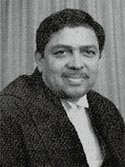
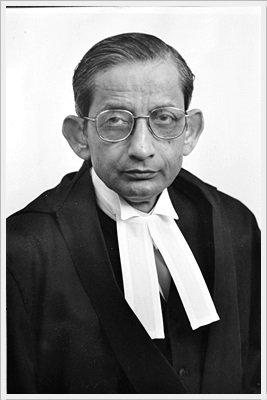
N.S. Hegde & S.B. Sinha
JUDGMENT:
J U D G M E N T
S.B. SINHA, J :
The Respondent herein at all material times was working as a helper
in the services of the Appellant. At or about 11.40 a.m., on 26.8.1983
while working in the first shift, he was found lying fast asleep on an iron
plate at his working place, whereupon a disciplinary proceeding was
initiated against him in terms of Standing Order 24(1) of the Model
Standing Order framed under the Industrial Employment (Standing Orders)
Act, 1946. In the said domestic enquiry he was found guilty whereupon by
order dated 17.1.1984 he was dismissed him from his services. It is not in
dispute that on three earlier occasions also, the Respondent was found guilty
of misconduct; but only some minor punishments had been imposed.
Questioning the said order of dismissal dated 17.1.1984, the Respondent
herein filed a complaint of unfair labour practice as specified under Item
1(a), (b), (d), (f) and (g) of Schedule IV of the Maharashtra Recognition of
Trade Unions and Prevention of Unfair Labour Practices Act, 1971 (for
short 'the Act) against the Appellant herein before the Labour Court, Pune.
In the said proceeding, two preliminary issues were framed, namely,
(i) whether the enquiry was proper; and (ii) is the finding recorded by the
enquiry officer perverse. The Labour Court by its order dated 21.5.1985
held that the domestic enquiry against the Respondent was fair and proper
and the finding recorded by the enquiry officer was not perverse. He
thereafter proceeded with the case on merits and in terms of its order dated
31.7.1985, the Labour Court held that the punishment of dismissal imposed
upon the employee was harsh and disproportionate and no reasonable
employer could impose such punishment for the proved misconduct.
Consequently, the Appellant herein was directed to reinstate the Respondent
on his original post with continuity of service with 50% of the back-wages
for the period from 23.12.1983 till his reinstatement.
Aggrieved by and dissatisfied therewith both the parties herein
preferred separate Revision Applications before the Industrial Tribunal. By
a common judgment dated 12.6.1987, the Revision Application filed by the
Appellant was allowed and that of the Respondent was dismissed. The
Respondent thereupon filed a Writ Petition before the Bombay High Court
and by reason of a judgment and order dated 9.2.1995, the said Writ Petition
was dismissed by a learned Single Judge. A Letters Patent Appeal there-
against was filed by the Respondent herein which by reason of the impugned
judgment was allowed directing :
"i) the judgment of the learned Single Judge dated 9th
February 1995 and the order of the Industrial Court
dated 12th June 1987 are quashed and set aside.
ii) The order passed by the second labour court dated
31st July 1985 is modified by directing the
http://JUDIS.NIC.IN SUPREME COURT OF INDIA Page 2 of 9
employer to pay a sum of Rs.2,50,000/- to the
employee within one month from today. In the
event of failure to pay the said amount to the
employee within one month from today, the
employer shall be liable to pay interest at the rate
of 9 per cent per annum from today till such
payment is made."
The Appellant is in Appeal before us questioning the aforementioned
judgment.
Despite service of notice, nobody has appeared on behalf of the
Respondent.
Mr. M.D. Adkar, learned counsel appearing on behalf of the
Appellant, assailing the judgment of the Division Bench of the High
Court, brought to our notice that in the domestic enquiry the Respondent
herein took several adjournments and on the sixth day of hearing he went out
of the room stating that he would come back for filing a medical certificate
in support of his plea of adjourning the matter but did not come back;
whereupon the domestic enquiry was held ex parte. The learned counsel
would contend that the Respondent has accepted his misconduct and
furthermore materials have been brought on records to prove that he had
committed misconduct earlier also and in that view of the matter, the
Division Bench of the High Court went wrong in passing the impugned
judgment. It was pointed out that as regard purported commission of unfair
labour practice, the concerned workman prevaricated his stand from court to
court inasmuch as whereas before the Industrial Court he invoked clause (g)
of Item (1) of Schedule IV of the Act; before the learned Single Judge, he
invoked clause (b) of Item (1) thereof but the Division Bench of the High
Court proceeded to pass the impugned judgment by invoking clause (a),
although no foundational fact was pleaded in support thereof. Reliance
placed by the High Court on Colour-Chem Ltd. vs. A.L. Alaspurkar and
Others [(1998) 3 SCC 192], Mr. Adkar would urge, was misplaced as the
said decision was rendered in the peculiar factual matrix obtaining therein.
The learned counsel placing reliance on Messrs Bharat Iron Works
vs. Bhagubhai Balubhai Patel and Others [(1976) 1 SCC 518] would submit
that in a case of proved misconduct, the question of victimization does not
arise.
The said Act was enacted to provide for the recognition of trade
unions for facilitating collective bargaining for certain undertakings; to state
their rights and obligations; to confer certain powers on unrecognized
unions; to provide for declaring certain strikes and lock-outs as illegal strikes
and lock-outs; to define and provide for the prevention of certain unfair
labour practices; to constitute courts (as independent machinery) for carrying
out the purposes of according recognition to trade unions and for enforcing
the provisions relating to unfair practices; and to provide for matters
connected with the purposes aforesaid. Section 26 of the Act defines
'unfair labour practices' to mean any of the practices listed in Schedules II,
III and IV appended thereto. Schedule IV of the Act specifies general unfair
labour practices on the part of the employers, the relevant clauses whereof
are as under :
"1. To discharge or dismiss employee \026
(a) by way of victimization;
(b) not in good faith, but in colourable exercise of
employer's right;
(g) for misconduct of a minor or technical
character, without having any regard to the nature
of the particular misconduct or the past record of
http://JUDIS.NIC.IN SUPREME COURT OF INDIA Page 3 of 9
service of the employee, so as to amount to a
shockingly disproportionate punishment;"
Section 27 of the Act provides that, inter alia, no employer shall
engage in any unfair labour practice. Section 28 provides for dealing with
complaints relating to unfair labour practices. The court upon receipt of a
complaint is invested with power to cause an investigation to be made and
on submissions of report by the Investigation Officer and in the event no
settlement is arrived at during investigation, the court may proceed to
consider the complaint and give its decision. Section 59 of the Act bars
proceedings under the Bombay or Central Act.
The jurisdiction of a Labour Court was, therefore, confined to make
an enquiry and pass an order thereupon as to whether the Appellant herein
had committed an act of unfair labour practice within the meaning of Section
26 read with the relevant provisions of Item 1 of Schedule IV of the Act.
Before we proceed to determine the merit of the decision rendered by
the Division Bench, it is useful to notice that the act of misconduct
committed by the Respondent was admitted by him in terms of his letter
dated 26.8.1983 stating :
"I, Uttam Manohar Nakate, No.3638, age 37, being
present give statement such as :-
I have been working with Bharat Forge Company
for 14 years. Earlier I used to work in Cranckshop for last
6 years. I have been working in Production Development
Department.
From 28.8.1983 I have been working first shift and
I have been regular in first shift. Today on 26.8.1983 I
came to work at 7:00 and as usual I was working. At
about 11:15 to 11:30 I suffered stomach ache while
pushing trolly. I told my partner Mr. A.G. Mistry that I
would take some rest and accordingly I slept on the iron
plate. At about 11:40 security officer Shri Dashputre and
Shri Kelkar woke me up. Our supervisor Mr. Narkar was
there. I did not ask permission from Mr. Narkar.
Secondly our lunch interval was about to start and
therefore, I was to work in the lunch interval therefore, I
took rest before hand.
Only because I suffered ache I took rest. Please
forgive for one time.
I read my statement and I state that it is correct."
It is also pertinent to note that the Enquiry Officer in his report
categorically stated as to how the Respondent had been conducting himself
during the domestic enquiry proceeding observing :
"On 24.9.1983 Mr. Nakate sent an application
along with Private Doctor's certificate submitting that he
was sick as well as he was mentally disturbed. On this
application I wrote the next date of enquiry as 25.9.1983.
On 25.9.1983, Mr. Nakate was present and submitted that
he was not feeling well therefore he was unable to attend
the enquiry. When I asked him he told me that he had
not come for attending the enquiry. The certificate was
in his vehicle and he had come only for asking the
http://JUDIS.NIC.IN SUPREME COURT OF INDIA Page 4 of 9
adjournment. Mr. Sagade submitted that though Mr.
Nakate is covered under ESI Scheme I have accepted the
Private Doctor's certificate at Ex. 7. Mr. Nakate should
have brought ESI Doctor's certificate for his sickness.
The company does not accept the Private Doctor's
certificate. Considering the sequence of the incidence
Mr. Sagade further stated that Mr. Nakate was
deliberately advancing some or the other reasons to
dodge the enquiry. He further stated that if Mr. Nakate
was not feeling well he could have sent ESI certificate
for his sickness on 24.9.1983 onwards. However he has
done so. I directed Mr. Nakate to go and get the
certificate which according to him was in his vehicle.
Accordingly Mr. Nakate went out of cabin. After about
10-15 minutes he came back and submitted an
application at Ex. 8 stating that as he was mentally
disturbed and he was not feeling well the enquiry be
adjourned for 8 days. I again and again questioned him
about the certificate for which he had gone. Mr. Nakate
did not give me any reply regarding the certificate. He
was again and again saying only one thing that he should
be given time. Because of this I came to the conclusion
that no certificate was kept in the vehicle of Mr. Nakate
and the reason mental disturbance advanced by Mr.
Nakate was only to avoid the enquiry. Therefore, I
rejected the application for the adjournment . Therefore,
I asked Mr. Nakate about his representative. Mr. Nakate
submitted that his representative was waiting at the Gate
No.1 of the Company. I directed Mr. Sagade to send for
Mr. Salvi who was standing at the Gate No.1. Mr.
Nakate in the meantime told me that the enquiry papers
are with Mr. Salvi. Mr. Kelkar the Security Officer
submitted his report at Ex.9 that there is no person by
name Mr. Datta Salvi at gate No.1. I once again asked
Mr. Nakate about his representative and instead of reply
he started saying that he had severe stomach-ache and
stated that he was not willing to say anything and asked
for adjournment. I rejected this request also as since
beginning of enquiry on 25.9.1983 Mr. Nakate was
deliberately advancing one after another false reasons to
get the adjournment. I specifically told Mr. Nakate that
the enquiry would be conducted ex parte if he does not
participate. Mr. Nakate left the place of enquiry without
saying anything. I therefore decided to conduct the
enquiry ex parte and directed Mr. Sagade to adduce the
evidence on behalf of the company."
The Labour Court, as noticed hereinbefore, in its order dated
21.5.1985 held that the enquiry was proper and the finding of the Enquiry
Officer was not perverse. The learned Labour Court, however, in its order
dated 31.7.1985 passed an order of reinstatement with 50% back-wages
holding :
"\005Obviously, this lapse on his part does not show
that at any point of time he indulged in gross misconduct
which affected adversely to the interest of the respondent
company. In the case at hand, the charges regarding
sleeping during duty hours, no doubt, appear to be grave
and serious nature and such sort of tendencies cannot be
appreciated and they deserve to be curbed with heavy
hands. If such misconducts are viewed with leniency, it
will have adverse effect on the peace and tranquility of
http://JUDIS.NIC.IN SUPREME COURT OF INDIA Page 5 of 9
the peaceful functioning of the company, but, in the
instant case, we cannot adopt this harsh view. It is
because the length of service of the complainant is of
longer period of 10 years and for one lapse of this nature
it is not proper to sack him from the services. I think,
therefore, by imposing lesser punishment it would be
better if one more chance is given to him to serve the
respondent company. Viewed from this angle, I think,
the punishment of removal imposed upon him by the
respondent is absolutely harsh and disproportionate and
no any reasonable employer would impose such
punishment in such circumstances."
No sufficient or cogent reason, in our opinion, was assigned by the
learned Labour Court as to why a lenient view should be taken. The
Revisional Court while allowing the Revision Application of the Appellant
and dismissing the Revision Application of the Respondent came to the
conclusion that as the misconduct has been proved and relying on the
decision of this Court in Bhagubhai Balubhai Patel (supra) where it was
opined that a proved misconduct is anti thesis of victimization in the
industrial relations; held :
"\005Therefore, in granting the relief of reduction of the
nature of punishment, the learned judge of the Labour
Court exceeded his jurisdiction and committed an error,
apparent on the face of the record.. In any event, since
the learned Labour Judge has found that the misconduct
of sleeping during duty hours, was grave and serious, and
such tendencies deserved to be curbed with heavy hands
and since he had accepted the position of the past record
of the Respondent, the length of ten years of his service,
hardly constituted any mitigating circumstances. In fact,
the Respondent had been given sufficient opportunity to
improve himself. In these circumstances, the learned
Labour Judge was wholly unjustified in interfering with
the punishment. It is material to note that he has no
where found that the punishment was shockingly
disproportionate."
The said order of the Revisional Authority was upheld by the learned
Single Judge of the High Court stating :
"\005That sleeping in duty is a serious misconduct, which
ought not to be overlooked and showing leniency in such
a matter was likely to have a deleterious effect on
discipline in the factory, are findings which the Labour
Court has itself arrived at. As to quantum of punishment,
the First Respondent-employer was required to consider
the past record and other attendant circumstances. The
past record had two aspects, its length of 10 years and it
is being dotted with previous actions for misconduct. To
over emphasis the length of the service to the detriment
of previous disciplinary action, is discounting quality as
against quantity."
The Division Bench of the High Court also found commission of
major misconduct on the part of the Respondent but proceeded to examine
the question as to whether despite such proved misconduct the punishment
awarded by the employer on him was grossly disproportionate and would
be an unfair labour practice being an instance of legal victimization under
clause (1) of Item 1 of Schedule IV of the Act. Relying on or on the basis of
http://JUDIS.NIC.IN SUPREME COURT OF INDIA Page 6 of 9
Colour-Chem Ltd. (supra), the Division Bench held :
"\005The question that arises for our consideration is
whether looking to the nature of the proved charge that
the employee was found sleeping during duty hours and
was awakened by the security officer, can it be said that
the punishment of dismissal is shockingly or grossly
disproportionate. If the answer is in affirmative
obviously, such punishment could be treated as legal
victimization and employer would be guilty of having
engaged in an unfair labour practice under clause (a) of
Item 1 of Schedule IV\005"
Upon taking into consideration the gravity of past misconduct, it was
observed :
"\005We find that looking to the nature of the charge, i.e.
the employee was found sleeping during duty hours, the
employee could not have been inflicted with the
punishment of dismissal. The past record which has been
referred to hereinabove and the misconduct proved did
not justify the punishment of dismissal as no reasonable
employer would ever impose the punishment of dismissal
in such circumstances\005"
The Division Bench, however, in stead and place of passing an order
of reinstatement upon taking into consideration the fact that he was out of
the job for about 15 years and hardly 5-6 years' job is left, directed payment
of a sum of Rs.2,50,000/- to the Respondent.
Colour-Chem Ltd. (supra) whereupon strong reliance has been placed
by the Division Bench of the High Court is an authority for the proposition
that Clause (g) of Item 1 of Schedule IV of the Act is relatable to a minor or
technical misconduct which in a given set of cases may amount to resulting
in a shockingly disproportionate punishment if they are followed by
discharge or dismissal of the delinquent. This Court therein, however,
referring to dictionary meaning observed that the term "victimization" is of
comprehensive import. It may be victimization in fact or in law. As regard
factual victimization it was observed that it may consist of diverse acts of
employers who are out to drive out and punish an employee for no real
reason and for extraneous reasons. It further proceeded to observed :
"\005There can be in addition legal victimization and it is
this type of victimization which is contemplated by the
decision of this Court in Hind Construction (1965) 2 SCR
85. It must, therefore, be held that if the punishment of
dismissal or discharge is found shockingly
disproportionate by the Court regard being had to be the
particular major misconduct and the past service record
of the delinquent or is such as no reasonable employer
could every impose in like circumstances, it would be
unfair labour practice by itself being an instance of
victimization, in law or legal victimization independent
of factual victimization, if any. Such an unfair labour
practice is covered by the present Act by enactment of
clause (a) of Item 1 of Schedule IV of the Act as it would
be an act of victimization in law as clearly ruled by this
Court in the aforesaid decision\005"
http://JUDIS.NIC.IN SUPREME COURT OF INDIA Page 7 of 9
In that case the Respondents therein were punished although ten other
mazdoors who were also found to be sleeping were let off. This Court
noticed that the Respondents therein were although assigned more
responsible duties as compared to the mazdoors but in the background of the
surrounding circumstances and especially in the light of their past service
record there was no escape from the conclusion that the punishment of
dismissal imposed on them for such misconduct was grossly and shockingly
disproportionate.
Cholour-Chem Ltd. (supra) was, thus, rendered in the fact situation
obtaining therein. It is not an authority for the proposition that in a case
where an employee is found to be sleeping during working hours, imposition
of punishment of dismissal, despite his past bad records must be held to be
disproportionate to the act of misconduct.
In the instant case although victimization has been taken to be a
ground of complaint, no factual foundation therefor was laid and it was
confined to quoting only the legal provisions. No plea of legal victimization
was also taken in the complaint petition.
A bench of this Court in U.P. State Road Transport Corporation vs.
Mohan Lal Gupta and Others [(2000) 9 SCC 521], opined :
"The learned advocate appearing in support of the
appeal mainly contended on two counts. On the first, it
has been very strenuously contended as to whether the
Labour Court can alter the punishment awarded to
Respondent 1 workman upon recording a finding that the
charges have duly been proved and secondly, it has been
contended as to whether the employee who has
admittedly misappropriated the property of the employer
Corporation can be allowed to be retained in service.
These two issues are undoubtedly of some
importance. The workman concerned during the course
of inquiry in no uncertain terms admitted his guilt though
however he has stated that the same amounted to mere
negligence and not a deliberate act. But the Labour
Court being the fact finding court came to the conclusion
that the charges stood proved and we are not in a position
to reassess the factual situation at this stage of the
proceedings under Article 136 of the Constitution. The
finding as regards the proof of charges shall have to be
taken as accepted and we do not see any perversity
therein having regard to the state of facts more so by
reason of acceptance of charge by the delinquent
employee."
Yet again in U.P. State Road Transport Corpn. Vs. Subhash Chandra
Sharma and Others [(2000) 3 SCC 324], upon noticing Colour-Chem Ltd.
(supra), this Court observed :
"The charge against the respondent was that he, in
a drunken state, along with the conductor went to the
Assistant Cashier in the cash room of the appellant and
demanded money from the Assistant Cashier. When the
Assistant Cashier refused, the respondent abused him and
threatened to assault him. It was certainly a serious
charge of misconduct against the respondent. In such
circumstances, the Labour Court was not justified in
interfering with the order of removal of the respondent
from the service when the charge against him stood
proved. Rather we find that the discretion exercised by
the Labour Court in the circumstances of the present case
http://JUDIS.NIC.IN SUPREME COURT OF INDIA Page 8 of 9
was capricious and arbitrary and certainly not justified.
It could not be said that the punishment awarded to the
respondent was in any way "shockingly
disproportionate" to the nature of the charge found
proved against him. In our opinion, the High Court
failed to exercise its jurisdiction under Article 226 of the
Constitution and did not correct the erroneous order of
the Labour Court which, if allowed to stand, would
certainly result in a miscarriage of justice."
Each case, therefore, has to be decided on its own facts.
We have noticed hereinbefore that all the courts have answered the
question as regard commission of misconduct by the Respondent in one
voice. The Labour Court evidently had taken recourse to Clause (g) of Item
1 of Schedule IV of the Act which ex facie was inapplicable. The said
provision clearly postulates two situations, namely, (i) the misconduct
should be of minor or technical character; and (ii) the punishment is a
shockingly disproportionate without having any regard to the nature of the
particular misconduct or the past record of service of the employee. The
past record of service, therefore, is a relevant factor for considering as to
whether the punishment imposed upon the delinquent employee is
shockingly disproportionate or not. As has been noticed hereinbefore,
before the learned Single Judge an attempt on the part of the Respondent to
take recourse to Clause (b) of Item (1) of Schedule IV failed. In absence of
any plea of factual victimization and furthermore in absence of any
foundational fact having been laid down for arriving at a conclusion of the
legal victimization, in our opinion, the Division Bench committed a manifest
error in invoking Clause (a) thereof.
The Division Bench, thus, was not correct in relying on Colour-Chem
Ltd. (supra) and failed to notice the distinguishing features thereof. A
decision, as is well-known, is an authority of what it decides and not what
can logically be deduced therefrom. [See Cement Corporation of India Ltd.
vs. Purya and Others [(2004) 8 SCC 270]
In Bhagubhai Balubhai Patel (supra), this Court observed :
"\005In such a case the employee, found guilty, cannot be
equated with a victim or a scapegoat and the plea of
victimization as a defence will fall flat. This is why
once, in the opinion of the tribunal a gross misconduct is
established, as required, on legal evidence either in a
fairly conducted domestic enquiry or before the tribunal
on merits, the plea of victimization will not carry the case
of the employee any further. A proved misconduct is
antithesis of victimization as understood in industrial
relations. This is not to say that the tribunal has no
jurisdiction to interfere with an order of dismissal on
proof of victimization."
It was, therefore, obligatory on the part of the Respondent to plead
and prove the acts of victimization. He failed to do so.
Furthermore, it is trite, the Labour Court or the Industrial Tribunal, as
the case may be, in terms of the provisions of the Act, must act within the
four-corner thereof. The Industrial Courts would not sit in appeal over the
decision of the employer unless there exists a statutory provision in this
behalf. Although its jurisdiction is wide but the same must be applied in
terms of the provisions of the statute and no other.
http://JUDIS.NIC.IN SUPREME COURT OF INDIA Page 9 of 9
If the punishment is harsh, albeit a lesser punishment may be
imposed, but such an order cannot be passed on an irrational or extraneous
factor and certainly not on a compassionate ground.
In Regional Manager, Rajasthan State Road Transport Corporation vs.
Sohan Lal [(2004) 8 SCC 218], it has been held that it is not the normal
jurisdiction of the superior courts to interfere with the quantum of sentence
unless it is wholly disproportionate to the misconduct proved. Such is not
the case herein. In the facts and circumstances of the case and having regard
to the past conduct of the Respondent as also his conduct during the
domestic enquiry proceeding, we cannot say that the quantum of punishment
imposed upon the Respondent was wholly disproportionate to his act of
misconduct or otherwise arbitrary.
For the reasons aforementioned, the impugned judgment cannot be
sustained, which is set aside accordingly. The Appeal is allowed. However,
there shall be no order as to costs.

 Login with google
Legal Notes
Add a Note....