
The present case has been registered by this Court on its own motion on the basis of the report of the learned Registrar General, with respect to passing of an ...
No Acts & Articles mentioned in this case
Page 1
W.P.(PIL) No.4300 of 2024
IN THE HIGH COURT OF JHARKHAND AT RANCHI
W.P.(PIL) No.4300 of 2024
--------
Court on its own motion
Versus
Registrar General, High Court of Jharkhand & Others
------
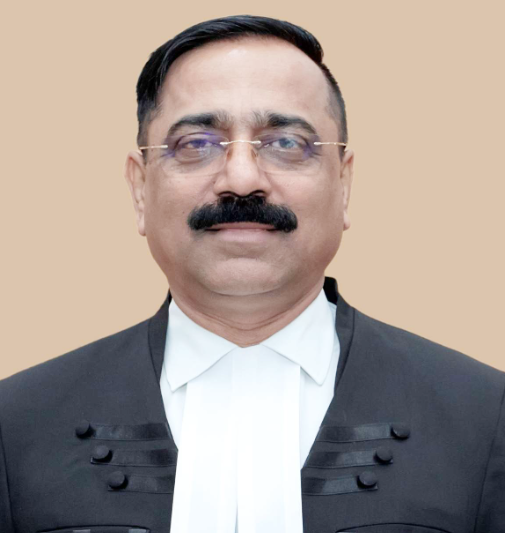
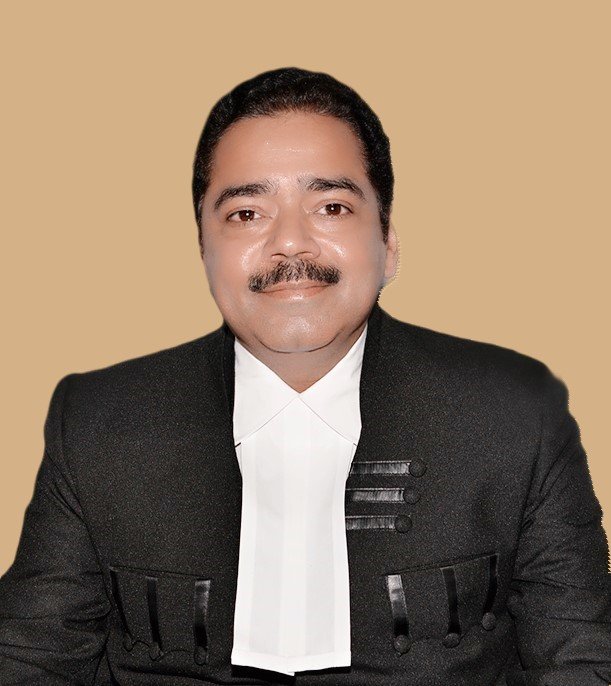
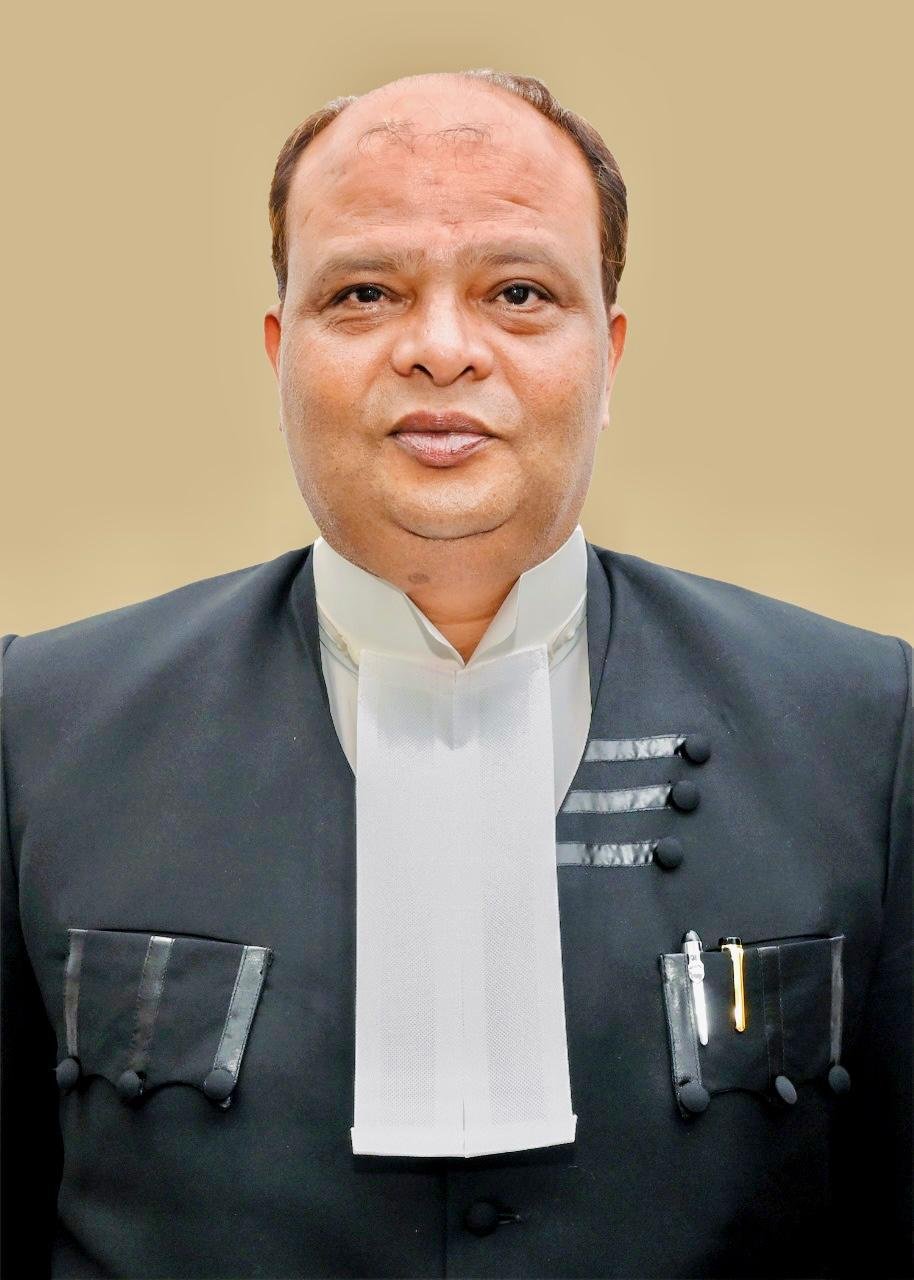
CORAM : HON’BLE THE ACTING CHIEF JUSTICE
HON’BLE MR. JUSTICE RAJESH SHANKAR
HON’BLE MR. JUSTICE ARUN KUMAR RAI
-----
For the Respondents : Mr. Rupesh Singh, Advocate
: Mr. Rajendra Krishna, Advocate
: Mrs. Ritu Kumar, Advocate
------
C.A.V. on 6
th August, 2024 Pronounced on 23/ 09/2024
1. The present case has been registered by this Court on
its own motion on the basis of the report of the learned
Registrar General, with respect to passing of an order by a
Division Bench of this Court dated 30.07.2024 in Filing No.:-
Cr.Appeal (D.B.) No.17440 of 2024, whereby the operational
system of filing brought in effect by way of Standing Order
No.9 of 2024, dated 09.07.2024, issued by the order of the
then Hon’ble the Chief Justice, has been directed to be
stayed.
2. Faced with such a situation, and after going through
the order passed by the learned Division Bench, a Full Bench
was constituted in order to deal with the prevalent situation.
3. The learned Division Bench has passed the following
order :-
“This matter has been listed today, with a
filing number. The matter is yet to be registered.
2. The matter is still defective. Office has also
raised an objection on maintainability.
Page 2
W.P.(PIL) No.4300 of 2024
3. Learned counsel for the appellant submits
that he was unaware that the matter would be
listed today. He submits that he did not even know
about the progress of the matter as it was difficult
for him to track the matter since the same was not
even registered and without being registered this
matter has been listed.
4. On query, learned counsel for the appellant
and large number of members of Bar submitted
that a Standing Order being Standing Order No.9
of 2024 dated 09.07.2024 has been issued under
the signature of the Registrar General of this Court
and on that basis this matter has been listed
without being registered. Members of the Bar in
one voice stated that because of the said Standing
Order, they are facing severe difficulty. They
submitted that even power has been given to the
learned Registrar General to dismiss a matter if
the defects are not removed. Further to remove the
defects, interlocutory application has to be filed
and if the matter is dismissed, the same cannot be
restored and a fresh application again has to be
filed. Filing and listing of case is governed by the
High Court of Jharkhand Rules and in effect
Standing Order No.9 of 2024 dated 09.07.2024
has superseded the High Court of Jharkhand
Rules without any amendment to that effect.
Learned counsel also submits that the Standing
Order has in fact over ridden the provisions and
procedure laid down by the High Court of
Jharkhand Rules so far as filing and registration
of a case is concerned without amending the said
Rules. They further submit that as per Rule 69 of
the High Court of Jharkhand Rules, ‘Designated
Officer’ does not have a power to dismiss a case. It
is contended that Rule 70 of the High Court of
Page 3
W.P.(PIL) No.4300 of 2024
Jharkhand Rules is also not applicable in this
context nor does the Rule 307 of the High Court of
Jharkhand Rules. Further, they submit that law of
limitation will also get affected by virtue of this
Standing Order. They produced a copy of the
Standing Order. The same is kept on record.
5. We have perused the Standing Order. In fact,
this Standing Order amends the High Court of
Jharkhand Rules. The very first line of the
aforesaid Standing Order states that
notwithstanding any provision contained in the
High Court of Jharkhand Rules and previous
Office Orders, this order is being issued. This
suggests that the High Court of Jharkhand Rules
which is a subordinate legislation, has been by-
passed by this Standing Order No.9 of 2024 dated
09.07.2024, which is an executive instruction.
6. The High Court of Jharkhand Rules is a
piece of subordinate legislation, which cannot be
by-passed by any executive order. There is a
procedure to amend these rules.
7. Considering this, to seek clarity in the
matter, we requested the learned Registrar
General to appear before us.
8. The learned Registrar General is present in
the Court and submits that the Rules have not
been amended and this Standing Order has been
issued and is given effect to. He also stated that
there is a proposal to amend the Rules and the
proposal has been sent to the appropriate
Committee for amending the High Court of
Jharkhand Rules in terms of the Standing Order
No.9 of 2024 dated 09.07.2024.
9. The submission of the learned Registrar
General is suggestive of the fact that the High
Court of Jharkhand Rules has not yet been
Page 4
W.P.(PIL) No.4300 of 2024
amended and this Standing Order has been given
effect which in fact has the effect of amending the
Rules. Cart has been thus put before the horse.
10. The High Court of Jharkhand Rules cannot
be amended without the concurrence of the Full
Court and admittedly, there is no concurrence of
the Full Court.
11. Further, we are of the opinion that without
getting the case first registered, we cannot decide
the issue of maintainability either way. The
instant matter needs to be registered as a case at
the first instance, ahead of being placed before the
Bench, for adjudication of any issues on merits,
including maintainability.
12. Thus, we direct the Registry to immediately
get this matter registered and be numbered as a
pending case under appropriate nomenclature.
Further, the Standing Order No.9 of 2024 dated
09.07.2024 be placed before the Full Court in the
Administrative Side immediately. Till the Full
Court takes an appropriate decision, the Standing
Order No.9 of 2024 dated 09.07.2024 will not be
given effect to.
13. Let a copy of this order be placed before the
Registrar General for needful.
14. Till the High Court of Jharkhand Rules is
amended the cases will be listed as per the
existing provisions of the High Court of Jharkhand
Rules.”
4. The context in which the learned Division Bench has
passed order, dated 30.07.2024, is that the Standing Order
No.9 of 2024, is in derogation of the Jharkhand High Court
Rules.
Page 5
W.P.(PIL) No.4300 of 2024
5. The Full Bench has been constituted to test the veracity
of the issue and further to see if it is the look out of a
Division Bench, of being critical of the administrative
decision of the Chief Justice, particularly in reference to
system of filing and listing of the cases and, further, going to
the extent of staying the order of the Chief Justice.
6. We, after going through the said order of the learned
Division Bench, have found that the reason as perceived by it
for recording a finding that the aforesaid Standing Order is
contrary to the Jharkhand High Court Rules, is that the
Standing Order being an executive instruction, cannot
override the Jharkhand High Court Rules, which intern is a
piece of subordinate legislation.
7. It has further been observed by the learned Division
Bench that serious difficulty is being faced by the learned
members of the Bar, which has been raised in the Court in
one voice. The learned Division Bench, upon this, decided to
test the validity and propriety of the Standing Order, dated
09.07.2024.
8. The specific observation has been made that Standing
Order is in the teeth of the subordinate legislation and
further that the Standing Order was not placed before the
Full Court for its concurrence, and this led the learned
Division Bench to pass an order not to give effect to the
Standing Order, dated 09.07.2024.
Page 6
W.P.(PIL) No.4300 of 2024
9. Further, the learned Division Bench has observed that
till the Jharkhand High Court Rules is amended, the cases
will be listed as per the pre-existing provisions of the
Jharkhand High Court Rules.
10. This Court, had posted the matter on 01.08.2024, for
have a hearing on the issue at hand.
11. This Court invited the learned members of the Bar,
including the senior members of the Bar to assist this Court
with respect to the aforesaid issue. The copies of the paper
book including the order, dated 30.07.2024, the Standing
Order dated 09.07.2024 and the relevant rules were supplied
to the learned President, Advocates’ Association, Jharkhand
High Court and the Chairman, State Bar Council ,
Jharkhand.
12. One of the learned senior members of the Bar, Mr. M.S.
Mittal, has submitted that the filing system, as per the
present standing order, is going on smoothly and without
hassle, but needs to be further streamlined.
13. The learned President, Advocates’ Association, ha d
placed a representation addressed to the learned Registrar
General, High Court of Jharkhand, dated 15.07.2024, for
reviewing the Standing Order No.9 of 2024, dated
09.07.2024, on some points, particularly, the conditions at
Clause Nos. 8 and 9. However, it was submitted orally by the
learned President of the Advocates’ Association that the said
Page 7
W.P.(PIL) No.4300 of 2024
issue was also mentioned before Hon’ble the then Chief
Justice and assurance was given by him, and in that view of
the matter, except for Clause Nos. 8 and 9, there is no
objection. Further she admitted that a new system has been
started and streamlining may take some time.
14. It was further submitted that the difficulties which are
being faced by the learned members of the Bar, as has been
pointed out by the learned Division Bench, in the order dated
30.07.2024, to that extent and to the best of her knowledge,
no such submission was made in course of the proceeding
before the concerned learned Division Bench.
15. It was further submitted that whatever she has orally
submitted, the same will be brought on record by way of an
affidavit.
16. The Chairman, Bar Council, who was also present, has
submitted that no difficulty is being faced in filing and
listing. He also submitted that he will also file an affidavit in
this regard.
17. This Court, on the legal validity of the Standing order,
put on doubt by the learned Division Bench, has taken note
of the provisions of Rule 69, 70, 78, 79, 306 and 307, in
order to consider the issue which led the learned Division
Bench in passing the aforesaid order. The question to be
tested here is, as to whether the Standing Order dated
09.07.2024, is in derogation of the Rules, and will have no
Page 8
W.P.(PIL) No.4300 of 2024
effect unless the same will be concurred by the Full Court.
This Court found it expedient to formulate five issues, in
order to answer the above question.
18. The learned Registrar General has been impleaded as
party. He was directed to file affidavit, in order to show the
occasion for issuance of the Standing Order No.9 of 2024,
dated 09.07.2024.
19. The State Bar Council through its Chairman and the
Advocates’ Association through its President have also been
impleaded as party with a direction upon them to file their
respective affidavits.
20. This Court, by taking note of the principles, which are
to be considered, while granting ad interim stay, i.e., prima
facie case, the irreparable loss and balance of convenience,
as also relying upon the judgment rendered by Hon’ble Apex
Court in the case of Dalpat Kumar and Another vs.
Prahlad Singh and Others , reported in AIR 1993 SC 276
and M. Gurudas & Ors. Vrs. Rasaranjan & Ors., reported
in AIR 2006 Supreme Court 3275, and further on testing
the order of the learned Division Bench, when we were
satisfied that if an immediate recourse is not taken, it will
result in irreparable loss and injury as the entire filing
system will get altered creating a mess and chaos in the
Registry and of filing system, an order of stay was passed, on
the earlier date.
Page 9
W.P.(PIL) No.4300 of 2024
21. This Court has further made an observation by giving a
finding that the element of balance of convenience is also met
in staying the order passed by the learned Division Bench as
the damage caused would not be in a position to be restored,
if such order and directions are allowed to be given effect to.
22. This Court, therefore, being satisfied on the three tests,
came to the conclusion that the order passed by the learned
Division Bench merits stay of its operation during the
pendency of the matter and accordingly, ad interim stay of
the order dated 30.07.2024 was granted by fixing the matter
for further hearing, on 06.08.2024.
23. The case was listed on 06.08.2024.
24. In pursuance of the order dated 01.08.2024, the
affidavits have been filed on behalf of learned Registrar
General, learned President of the Advocates’ Association and
the learned Chairman of the State Bar Council.
25. The learned Registrar General has filed an affidavit
stating the reason for coming out with the Standing Order
No.9 of 2024, dated 09.07.2024.
26. It has been stated in the affidavit that prior to the
issuance of the Standing Order No.9 of 2024, even the
defective petitions were requisite to be accepted by the
Registry, allotting institution registration number, leading to
rise in the number of pending defective cases.
Page 10
W.P.(PIL) No.4300 of 2024
27. It has been stated that the said defective petitions were
shown in the Case Information System (CIS), as pending
cases, without any caveat of removal of the defects.
28. It has also been stated that the Chief Justice of this
Court has the authority to make Rules, as under Rule 70 of
the Jharkhand High Court Rules, with respect to filing and
listing, as provided under Chapter-VIII.
29. The learned President, Advocates’ Association has
submitted that the Standing Order No.9 of 2024 dated
09.07.2024 is not in derogation of the Jharkhand High Court
Rules, rather, the same is to fortify the available existing rule
of filing and listing, as under Chapter-VIII.
30. The learned Chairman, State Bar Council, has also
submitted that the Standing Order cannot be said to be in
derogation, rather, it is in order to fortify the existing rules,
so as to streamline the system of filing and listing.
31. It has been contended, by referring to the provision of
Rule 69 and 78 of the Jharkhand High Court Rules, that if
the case will be defect free, as per stipulation made under
Rule 69 of the Jharkhand High Court Rules, then only such
case is to be listed in view of the provision of Rule 78 of the
aforesaid Rule.
32. This Court has heard Mr. Rupesh Singh, learned
counsel appearing for the High Court, who has submitted
that it is incorrect to say that the Standing Order No.9 of
Page 11
W.P.(PIL) No.4300 of 2024
2024 is in derogation to the provision, as contained under
Chapter-VIII, which relates to the filing and listing, rather, in
order to streamline the filing and the listing system, the
Standing Order has been issued.
33. We have heard learned counsel for the parties.
34. The following issues are required to be answered, as has
been taken note in the order dated 01.08.2024 :-
(i) Whether the stipulation made in the Standing
Order No.9 of 2024, dated 09.07.2024, can be
considered to be in supersession to the Jharkhand
High Court Rules, particularly in view of the
provisions, as contained under Rule 69 and 78
thereof?
(ii) Whether the stipulation so made in the Standing
Order is in consonance with the provision of Rule
69 and 70 and is there any requirement to send it
before the Full Court for concurrence?
(iii) Whether the reference which has been made by
the learned Division Bench for placing the
Standing Order, before the Full Court for its
concurrence is required?
(iv) Whether contrary to the condition put under Rule
15(1), where the matters to be considered by the
Full Court have been provided, can the procedure
Page 12
W.P.(PIL) No.4300 of 2024
of filing and listing be sent before the Full Court
for its concurrence?
(v) Whether it would be considered to be in conformity
with the principle of judicial discipline for a Single
or Division Bench of the High Court to interfere
with the decision taken by the Chief Justice on the
administrative side, particularly, concerning
administration of filing and daily listing of the
cases, even on judicial side?
35. Before answering the above issues, the reference of the
statutory provisions of the Jharkhand High Court Rules are
required to be made, based upon which the Standing Order,
dated 09.07.2024, has been issued. The relevant provisions
are Rule 69, 70, 78, 79, 306 and 307 which are being
referred as under :-
“69. Except interlocutory Applications (IA),
applications, petitions and memos of appeal shall
be filed only after stamp report and after the
defect, if any, pointed out by the stamp reporter
have been removed, unless the Designated Officer
be of the opinion that the stamp report regarding
the defects is not correct or that the defects can be
ignored or that they are not curable:
Provided that the Registrar General,
authorised in that behalf, may permit any
application, petition or memo of appeal to be filed
on the last day of limitation without stamp report.
70. On receipt of the document, the officer
Incharge of the filing counter shall endorse on the
document the date of receipt and enter the
Page 13
W.P.(PIL) No.4300 of 2024
particulars of the said document in the register of
daily filing and cause it to be sent to the
department concerned for examination. If, on
scrutiny the document is found in order, it shall
be duly registered and given a serial number of
registration. It shall also be entered in the
Computer as a Data. The Chief Justice may issue
instructions from time to time, with regard to the
procedure for filing, especially having regard to
computerization requirements and once issued,
those instructions shall be applicable and
enforceable as being part of this Chapter.
78. All defect free applications, petitions, memos
of appeal etc. including such applications,
petitions, memos of appeals in which the defects
have been ignored or are considered to be not
curable, shall be numbered under the respective
heads of cases.
79. Defect free applications, petitions, memos of
appeal, affidavits etc., shall immediately be sent to
the concerned Section for being listed before the
Bench.
306. No case which falls in the category of
Lawazima matter shall be listed in the Court
unless it has been dealt with by the Lawazima
Boards, as prescribed in this Order.
Explanation. —All matters relating to service
of the parties, furnishing particulars or better
particulars for the purposes of service, filing
requisites, filing applications for condonation of
delay in time-barred cases, filing additional copies
of pleadings or documents, making up of
deficiency in Court fees, or judicial stamps etc.
shall be included in the Lawazima Board. Other
matters may later on be also included in the
Lawazima Board.
Page 14
W.P.(PIL) No.4300 of 2024
307. The Chief Justice may amend the aforesaid
explanation, by way of variation, modification or
addition to the subjects/items included therein
and may also, from time to time, issue
administrative instructions for implementation of
and carrying into effect the provisions of this
Chapter. Such administrative instructions, as and
when issued, shall be deemed to be part of this
Chapter.”
36. It is evident from perusal of the provision as contained
in Rule 70 under Chapter-VIII, which deals with the issue of
filing and listing, that the Chief Justice has been conferred
with the absolute power to make rules in order to regulate
the system of filing and listing of the cases and, if such
instruction will be issued, the same will be said to be part of
Chapter-VIII.
37. The issue of filing has been stipulated under Rule 69 of
the Jharkhand High Court Rules which stipulates that
except interlocutory Applications (IA) – other applications,
petitions and memos of appeal shall be filed only after stamp
report and after the defect, if any, pointed out by the stamp
reporter have been removed, unless the Designated Officer be
of the opinion that the stamp report regarding the defects is
not correct or that the defects can be ignored or that they are
not curable.
38. The issue of listing has been dealt with under the
provision of Rule 78. The moment the case is filed, the same
will be accepted by issuance of token number or the diary
Page 15
W.P.(PIL) No.4300 of 2024
number and if the case is defect free, the same is to be listed
in view of the provision of Rule 78. However, in case the
petition is not defect free, the stamp report is required and
after removal of the defect, such cases will be listed in view of
the provision of Rule 78 of the Jharkhand High Court Rules.
39. If the provision of Rule 69 will be taken into
consideration, the filing of the case will be accepted, only if
the same is defect free. But in case, the case has been filed
defective and if the same has been pointed out by the Stamp
Reporter, then after removal of the defects, the filing is to be
accepted.
40. It is, thus, evident that the issue of listing of the cases
is very explicit and the defect free cases are only to be listed
for regular hearing of the matter.
41. However, with respect to the defective cases, the
provision has been made under Chapter XXVII of the
Jharkhand High Court Rules and the detailed procedure has
been given therein.
42. But, here we are dealing with the issue of the authority
of the Chief Justice of this Court in the light of the fact that
the learned Division Bench has considered the Standing
Order to be in derogation of the Jharkhand High Court Rules
and in such circumstances, the observation has been made
in the aforesaid order, dated 30.07.2024, that the Standing
Order needs to be concurred by the Full Court, and then only
Page 16
W.P.(PIL) No.4300 of 2024
the same will be said to have become part of the Jharkhand
High Court Rules.
43. Therefore, it is required to point out the issues which
are to be referred before the Full Court by the Chief Justice,
before taking a decision on the administrative side. The list of
the matters has been given in Rule 15(1) of the Jharkhand
High Court Rules. For ready reference, the said list in
entirety as under Rule 15(1) is being referred as under :-
“15. (1) On the following matters decision shall be
taken by the Judges at a meeting of the Full Court
:—
(i) All appointments which by law are to be made
by the High Court and which are not otherwise
expressly provided for by the rules in this Chapter;
(ii) All recommendations for the dismissal from
office of Judicial Officers;
(iii) Proposals for designating Advocates as Senior
Advocates under Section 16(2) of the Advocates
Act, 1961;
(iv) Matters relating to the service conditions,
facilities and amenities of the Judges of the Court;
(v) Constitution of Rule Committee under Section
123 of the Code and nominating Members of the
Rule Committee;
(vi) Consideration of matters relating to the Chief
Justices’ Conference;
(vii) High Court Calendar.”
44. It is evident from the aforesaid list that the matter as
provided under Chapter VIII of the Jharkhand High Court
Rules is not required to be referred before the Full Court for
concurrence of any decision with respect to filing and listing.
Page 17
W.P.(PIL) No.4300 of 2024
The same is due to the reason that if the issue of listing and
filing will require concurrence by the Full Court, then the
very power conferred to the Chief Justice under Rule 70 or
Rule 306/307 of the Jharkhand High Court Rules, will be
abrogated.
45. The question now is that when the Rule is already
there, then why the Standing Order No.9 of 2024 has been
issued.
46. This Court, for the aforesaid purpose, needs to refer
herein the affidavit filed on behalf of the learned Registrar
General of this Court. The affidavit contains the statement
showing the reason for issuance of Standing Order by the
then Hon’ble the Chief Justice. The reason is that the
defective files were being accepted and the cases were being
allowed to remain defective for years together. The reference
of the statement made by the learned Registrar General in
the affidavit needs to be referred herein which are quoted as
under :-
4. a. During the visit of the then Hon'ble Chief
Justice to different offices of this Hon'ble Court on
05.07.2024, a direction has been given pertaining to
changes in Filing Procedure, Stamp Reporting,
Defect Removal, Registration of Cases and allied
procedure in order to curb the pendency of those
cases which are not filed/made defect-free by the
litigants/Learned Lawyer.
b. Prior to issuance of the aforesaid Standing Order
dated 09.07.2024, the filing procedure was
operational as per the High Court of Jharkhand
Page 18
W.P.(PIL) No.4300 of 2024
Rule, 2001 and various Office Orders issued time to
time by this Hon'ble Court.
c. It is pertinent to submit that earlier a defective
case used to get an opportunity at Three Stages to
make the case defect free to be listed before Hon'ble
Bench as per roster i.e. First Stage, if the case is
defective, it is sent to defect removal centre where 7
days time is to be given to Learned Lawyer to make
it defect free, Second Stage, if defects are not
removed, it is listed before the Lawazima Board of
Joint Registrar (Judicial) by the concerned pending
Judicial Sections and at Third Stage, it is listed
before the Lawazima Board of Registrar General and
Finally, even if, still it remains defective, it is listed
before the Hon'ble Benches as per roster under the
heading "Orders with defects".
d. The predicament of the above situation was that
even if the case is defective, it comes within the
category of "pendency" and since many cases remain
defective even after giving three opportunities, the
cases are listed before the Hon'ble Benches under
the heading "Orders with defect" wherein directions
are issued for removal of defects which is sheer a
wastage of valuable time of the Hon'ble Court.
e. Prior to existence of aforesaid Standing Order
dated 09.07.2024 different practices were in vogue
for different nature of cases pertaining to Filing of
Cases, Allotment of Registration Number, Stamp
Reporting, Defect Removal etc. and no uniform Rule
or practice were adopted in this Hon'ble Court.
f. The aforesaid practice was going on even though
the provision in the Jharkhand High Court Rules
was to list only defect free cases as provided under
rule 78. The Rule 69 provides for filing to be
accepted if no defect but if the Stamp Reporter has
pointed out any defect, the filing is to be accepted
after removal of defect. It needs to refer herein that
no new insertion is there by the Standing Order
rather the same is only for the purpose of effective
Page 19
W.P.(PIL) No.4300 of 2024
implementation of Rule. The question of sending any
Rule to the Full Court so far as it relates to Chapter-
VIII of the Jharkhand High Court Rules, it is not
required in view of the provision as contained under
Rule 70 of Jharkhand High Court Rules.
Even the condition as contained in Para-7 & 8
of the Standing Order will also said to be under the
authority of the Chief Justice in view of the
provision as contained in Rule 70 since the same
provides that any instruction issued by the Chief
Justice will be said to be the part of Chapter-VIII.
g. Recently on 17.05.2024, it is experienced that
many cases were listed before Hon'ble Court No. 11
under the heading "Orders with defects" and on
24.06.2024, a notice was published in the Daily
Cause List in this regard which is being quoted
herein below for ready reference:-
"This is for information of Learned Members
of the Bar that sufficient number of Fresh
filing matter is not ready for listing. Therefore
the Learned Member of the Bar are requested
to remove the defects so that the matters
may be listed in the Court at the earliest."
The aforesaid notice was published on
account of the fact that sufficient number of Fresh
Filing cases were not available to be listed before
Hon'ble Benches due to large number of defective
cases awaited to be made defect free by the Learned
Advocates.
5. That it is submitted that by giving effect to this
Standing Order all the practices were brought under
ambit of this Order in order to streamline and to
bring conformity among each and every nature of
cases filed in this Hon'ble Court by way of
stipulating timeline at every stage.
6. That it is further submitted that the matter which
is to be referred to the Full Court has already been
stipulated in Rule 15(1) of the Jharkhand High
Court Rule and from its perusal the subject matter
Page 20
W.P.(PIL) No.4300 of 2024
of Chapter-VIII of the Rule is not covered under
Rule-15 of the Jharkhand High Court Rules.”
47. It is, thus, evident that even though the rule was there
but it was not given effect to in strict sense, since the
defective cases are not to be listed in view of the provision of
Rule 78 of the Jharkhand High Court Rules, however,
subject to exception that if the cases are defective then the
matter will go before the learned Lawazima Board for the
purpose of removal of defects.
48. The Standing Order, therefore, has been issued with
respect to filing and listing which is to be done strictly in
accordance with the provision as contained under Rule 78 of
the Jharkhand High Court Rules so that the pendency of the
defective cases may not overburden the docket of the High
Court.
49. The issue has been raised, as would appear from the
order passed by the learned Division Bench, that before
issuance of the Standing Order, the Chief Justice ought to
have taken concurrence of the Full Court, but as we have
already referred hereinabove, that the power of the Chief
Justice of this court in view of the provision of Rule 78 of the
Jharkhand High Court Rules so far as it relates to filing and
listing are concerned, is absolute and if on consideration, a
Standing Order has been issued, the same, according to our
considered view, cannot be said to suffer from principle of
inconsistency.
Page 21
W.P.(PIL) No.4300 of 2024
50. As per the constitutional mandate the Chief Justice
holds the apex post and is a Constitutional authority and is
charged with the administration of the judiciary in the entire
State. Apart from being the apex authority in the pyramid of
judicial administration, the Chief Justice is the ‘paterfamilias’
of the Judges of the High Court.
51. In order to appreciate and understand the status,
powers and authority of the Chief Justice, as also his
constitutional position qua other Judges of the High Court,
as has been dealt with by the Hon’ble Apex Court in several
decisions, few of them are being referred herein.
52. The Hon’ble Apex Court in case of (1) State of
Rajasthan v. Prakash Chand [(1998) 1 SCC 1), (2) High
Court of Judicature for Rajasthan v. Ramesh Chand
Paliwal [(1998) 3 SCC 72] and (3) Campaign for Judicial
Accountability and Reforms v. Union of India [(2018) 1
SCC 196] has categorically held that Chief Justice is the
administrative head of the High Court.
53. The same view has been reiterated by the Hon’ble Apex
Court in the case Asok Pande v. Supreme Court of
India [(2018) 5 SCC 341] and Shanti Bhushan v. Supreme
Court of India [(2018) 8 SCC 396).
54. In the case of State of Rajasthan v. Prakash
Chand [(1998) 1 SCC 1) the Hon’ble Apex Court has held
that administrative control of the High Court vests in the
Page 22
W.P.(PIL) No.4300 of 2024
Chief Justice alone. For ready reference the relevant
paragraphs of the aforesaid judgments are being quoted as
under:-
“59. From the preceding discussion the following
broad CONCLUSIONS merge. This, of course, is not
to be treated as a summary of our judgment and the
conclusion should be read with the text of the
judgment:
(1) That the administrative control of the High
Court vests in the Chief Justice alone. On the
judicial side, however, he is only the first
amongst the equals.
(2) ------”
55. In the case of High Court of Judicature
for Rajasthan vs. Ramesh Chand Paliwal [(1998) 3 SCC
72], the Hon’ble Apex Court was considering the correctness
of a direction given under Article 226, by a division bench of
the High Court to the Registrar to prepare a report regarding
the practicability of certain posts being manned by the
officers from the establishment of the High Court instead of
by Higher Judicial Officers, and place it before the Full
Court, through the Chief Justice for taking a decision, on
whether Judicial Officers could be relieved of such
administrative posts in the High Court.
56. The Hon’ble Apex Court after going through the
Rajasthan High Court (Conditions of Service of Staff) Rules,
1953, made by the Chief Justice in exercise of power
conferred by Article 229 has observed that the rules could be
altered, amended or rescinded only by the Chief Justice, who
Page 23
W.P.(PIL) No.4300 of 2024
alone has the rule making power and the Hon’ble Apex Court
further held that the real purport of the directions issued by
the division bench to the registrar on the judicial side was to
override not only the constitutional provisions, contained
in Article 229, but also the rules made in exercise of powers
available to the Chief Justice, under that article, and even if
the Registrar, in compliance of the impugned directions, if
placed such report before the Full Court, the Full Court
cannot give a direction to the Chief Justice not to fill up
those posts, by bringing officers on deputation, rather to fill
up those posts by promotion from amongst the High Court
staff. The Chief Justice has been vested with wide powers to
run the High Court administration independently, so as not
to brook any interference from any quarter, not even from his
brother Judges. For ready reference the relevant paragraph
of the aforesaid of the Judgment is being quoted as under:-
“30. If the impugned directions are analysed in this
background, it will be seen that the real purport of
the directions is to override not only the
constitutional provisions contained in Article 229
but also the rules made in exercise of powers
available to the Chief Justice under that article.
Even if the Registrar, in compliance of the impugned
directions, is to report that the posts on which
officers of the Rajasthan Higher Judicial Service or
Rajasthan Judicial Service are appointed on
deputation, can well be manned by the High Court
staff itself or that when the officers are brought from
the district courts to the High Court for appointment
on the aforesaid posts, some of the subordinate
Page 24
W.P.(PIL) No.4300 of 2024
courts become vacant as the Presiding Officers
having been sent on deputation to High Court are
not available to hear and dispose of cases pending in
those courts and even if such report is placed before
the Full Court, can the Full Court give a direction to
the Chief Justice not to fill up those posts by
bringing officers on deputation but to fill up those
posts by promotion from amongst the High Court
staff? The answer is an emphatic “No, it cannot be
done”. A Judge of the High Court individually or all
the Judges sitting collectively, as in the Full Court,
cannot either alter the constitutional provisions or
the rules made by the Chief Justice. They have no
jurisdiction even to suggest any constitutional
amendment or amendment in the rules made by the
Chief Justice nor can they create any avenue of
promotion for the High Court staff so as to be
appointed on posts meant for officers from the
Rajasthan Higher Judicial Service or Rajasthan
Judicial Service. The Chief Justice has been vested
with wide powers to run the High Court
administration independently so as not to brook any
interference from any quarter, not even from his
brother Judges who, however, can scrutinise his
administrative action or order on the judicial side
like the action of any other authority. It should not
be lost sight of that Registrars, under rules of
various High Courts, have also to perform some
limited judicial functions which cannot be done by
an officer other than a judicial officer in the High
Court establishment.
38. As pointed out above, under the constitutional
scheme, Chief Justice is the supreme authority and
the other Judges, so far as officers and servants of
the High Court are concerned, have no role to play
on the administrative side. Some Judges,
undoubtedly, will become Chief Justices in their
own turn one day, but it is imperative under the
constitutional discipline that they work in
Page 25
W.P.(PIL) No.4300 of 2024
tranquillity. Judges have been described as
“hermits”. They have to live and behave like
“hermits” who have no desire or aspiration, having
shed it through penance. Their mission is to supply
light and not heat. This is necessary so that their
latent desire to run the High Court administration
may not sprout before time, at least, in some cases.”
57. The Hon’ble Apex Court in the case of Jasbir Singh vs
State of Punjab (2006) 8 SCC 294 has observed that it is
not within the competence of any Single or Division Bench of
the High Court, to give any direction to the Registry, in that
behalf, which will run contrary to the directions of the Chief
Justice. For ready reference the relevant paragraph of the
aforesaid Judgment is being quoted as under:-
“19. Therefore, even if any application for bail is
received by the Inspecting Judge, the proper course
is to send the application to the court concerned to
pass appropriate orders. When the Inspecting Judge
visits the jail, it is quite likely that so many inmates
of the jail may file petitions before the Judge
concerned. It is the duty of the Judge to see whether
there is any merit in any of these petitions. If any
application for bail is received, he can very well send
it to the court concerned without making any
comments on the merits of the case. On the
contrary, if the learned Inspecting Judge passes any
order in such matter, he would only be usurping the
powers of the courts authorised to pass such orders.
It may also be remembered that normally a High
Court Judge passes orders on matters assigned by
the Chief Justice and this Court in State of
Rajasthan v. Prakash Chand [(1998) 1 SCC 1 : AIR
1998 SC 1344] deprecated the practice of the Single
Judge directing the listing of certain part-heard
cases before him without there being any orders of
Page 26
W.P.(PIL) No.4300 of 2024
the Hon'ble the Chief Justice of the High Court. It is
the prerogative of the Chief Justice to assign
business of the High Court both on judicial and
administrative sides. The Chief Justice alone has the
power to decide as to how the Benches of the High
Court are to be constituted. That necessarily means
that it is not within the competence of any Single or
Division Bench of the High Court to give any
direction to the Registry in that behalf which will
run contrary to the directions of the Chief Justice.
Therefore, in the scheme of things, judicial discipline
demands that in the event a Single Judge or a
Division Bench considers that a particular case
requires to be listed before it for valid reasons, it
should direct the Registry to obtain appropriate
orders from the Chief Justice.”
58. Further, in the case of High Court of Karnataka v.
Commr. of Customs, (2010) 15 SCC 264 Hon’ble Apex
Court has observed that function of Chief Justice on the
administrative side is his exclusive prerogative. For ready
reference the relevant paragraph is being quoted as under:-
“4. It may be pertinent to mention that, presently,
the Hon'ble Chief Justice of the High Court is not
taking up judicial matters but continues to function
as Chief Justice for all purposes on administrative
side including fixing rosters, etc., which, according
to us, is exclusively his prerogative.”
59. Further, in the case of Campaign for Judicial
Accountability and Reforms v. Union of India, (2018) 1
SCC 196, the Hon’ble Apex Court has reiterated the same by
observing as under:-
“6. There can be no doubt that the Chief Justice of
India is the first amongst the equals, but definitely, he
exercises certain administrative powers and that is
Page 27
W.P.(PIL) No.4300 of 2024
why in Prakash Chand [State of Rajasthan v. Prakash
Chand, (1998) 1 SCC 1] , it has been clearly stated that
the administrative control of the High Court vests in
the Chief Justice alone. The same principle must apply
proprio vigore as regards the power of the Chief Justice
of India. On the judicial side, he is only the first
amongst the equals. But, as far as the Roster is
concerned, as has been stated by the three-Judge
Bench in Prakash Chand [State of
Rajasthan v. Prakash Chand, (1998) 1 SCC 1] , the
Chief Justice is the Master of the Roster and he alone
has the prerogative to constitute the Benches of the
Court and allocate cases to the Benches so
constituted.
10. The rules have been framed in that regard. True,
the rules deal with reference, but the law laid down
in Prakash Chand [State of Rajasthan v. Prakash
Chand, (1998) 1 SCC 1] has to apply to the Supreme
Court so that there will be smooth functioning of the
Court and there is no chaos in the administration of
justice dispensation system. If any such order has
been passed by any Bench, that cannot hold the field
as that will be running counter to the order passed by
the Constitution Bench. Needless to say, no Judge can
take up the matter on his own, unless allocated by the
Chief Justice of India, as he is the Master of the
Roster.”
60. The Hon’ble Apex Court while referring to the judgment
rendered in the case of Campaign for Judicial
Accountability and Reforms v. Union of India (supra), has
observed in the case of Asok Pande v. Supreme Court of
India, (2018) 5 SCC 341 that an institution has to function
within certain parameters and that is why there are
Page 28
W.P.(PIL) No.4300 of 2024
precedents, rules and conventions. The relevant paragraphs
of the aforesaid Judgment are being quoted as under:-
“10. Recently, a Constitution Bench of this Court
in Campaign for Judicial Accountability and
Reforms v. Union of India [Campaign for Judicial
Accountability and Reforms v. Union of India, (2018) 1
SCC 196 : (2018) 1 SCC (Cri) 327] held that the
principle which was noticed and recognised in the
decision of this Court in Prakash Chand [State of
Rajasthan v. Prakash Chand, (1998) 1 SCC 1] in
relation to the jurisdiction and authority of the Chief
Justice of the High Court “must apply proprio vigore as
regards the power of the Chief Justice of India”. The
position of the Chief Justice was reiterated with the
following observations : (SCC pp. 199-200, paras 7 &
8)
“7. The aforesaid position though stated as regards the
High Court, we are absolutely certain that the said
principle is applicable to the Supreme Court. We are
disposed to think so. Unless such a position is clearly
stated, there will be utter confusion. Be it noted, this
has been also the convention of this Court, and the
convention has been so because of the law. We have to
make it clear without any kind of hesitation that the
convention is followed because of the principles of law
and because of judicial discipline and decorum. Once
the Chief Justice is stated to be the Master of the
Roster, he alone has the prerogative to constitute
Benches. Needless to say, neither a two-Judge Bench
nor a three-Judge Bench can allocate the matter to
themselves or direct the composition for constitution of
a Bench. To elaborate, there cannot be any direction to
the Chief Justice of India as to who shall be sitting on
the Bench or who shall take up the matter as that
touches the composition of the Bench. We reiterate
such an order cannot be passed. It is not
countenanced in law and is not permissible.
Page 29
W.P.(PIL) No.4300 of 2024
8. An institution has to function within certain
parameters and that is why there are precedents, rules
and conventions. As far as the composition of Benches
is concerned, we accept the principles stated
in Prakash Chand [State of Rajasthan v. Prakash
Chand, (1998) 1 SCC 1] , which were stated in the
context of the High Court, and clearly state that the
same shall squarely apply to the Supreme Court and
there cannot be any kind of command or order
directing the Chief Justice of India to constitute a
particular Bench.”
15. Underlying the submission that the constitution of
Benches and the allocation of cases by the Chief
Justice must be regulated by a procedure cast in iron
is the apprehension that absent such a procedure the
power will be exercised arbitrarily. In his capacity as a
Judge, the Chief Justice is primus inter pares : the
first among equals. In the discharge of his other
functions, the Chief Justice of India occupies a
position which is sui generis. Article 124(1) postulates
that the Supreme Court of India shall consist of a Chief
Justice of India and other Judges. Article 146 [
“146. Officers and servants and the expenses of the
Supreme Court.—(1) Appointments of officers and
servants of the Supreme Court shall be made by the
Chief Justice of India or such other Judge or officer of
the Court as he may direct:Provided that the President
may by rule require that in such cases as may be
specified in the rule, no person not already attached to
the Court shall be appointed to any office connected
with the Court, save after consultation with the Union
Public Service Commission.(2) Subject to the
provisions of any law made by Parliament, the
conditions of service of officers and servants of the
Supreme Court shall be such as may be prescribed by
rules made by the Chief Justice of India or by some
other Judge or officer of the Court authorised by the
Chief Justice of India to make rules for the
purpose:Provided that the rules made under this
Page 30
W.P.(PIL) No.4300 of 2024
clause shall, so far as they relate to salaries,
allowances leave or pensions, require the approval of
the President.(3) The administrative expenses of the
Supreme Court, including all salaries, allowances and
pensions payable to or in respect of the officers and
servants of the Court, shall be charged upon the
Consolidated Fund of India, and any fees or other
moneys taken by the Court shall form part of that
Fund.”] reaffirms the position of the Chief Justice of
India as the head of the institution. From an
institutional perspective the Chief Justice is placed at
the helm of the Supreme Court. In the allocation of
cases and the constitution of Benches the Chief
Justice has an exclusive prerogative. As a repository of
constitutional trust, the Chief Justice is an institution
in himself. The authority which is conferred upon the
Chief Justice, it must be remembered, is vested in a
high constitutional functionary. The authority is
entrusted to the Chief Justice because such an
entrustment of functions is necessary for the efficient
transaction of the administrative and judicial work of
the Court. The ultimate purpose behind the
entrustment of authority to the Chief Justice is to
ensure that the Supreme Court is able to fulfil and
discharge the constitutional obligations which govern
and provide the rationale for its existence. The
entrustment of functions to the Chief Justice as the
head of the institution, is with the purpose of securing
the position of the Supreme Court as an independent
safeguard for the preservation of personal liberty.
There cannot be a presumption of mistrust. The oath
of office demands nothing less.”
61. It is evident from the aforesaid proposition laid down by
Hon’ble Apex Court that the Chief Justice is having absolute
power so far as it relates to the internal affairs of the
administration of the High Court.
Page 31
W.P.(PIL) No.4300 of 2024
62. The question of interfering with the administrative
decision of the Chief Justice of a High Court by a Single or
the Division bench of the High Court does not arise even on
the judicial side, as has been held by Hon’ble Apex Court in
the judgment of Jasbir Singh vs State of Punjab (Supra).
63. The aforesaid proposition, thus, clarifies the absolute
power of the Chief Justice of the High Court, it is for the
reason that if the power of the Chief Justice in this regard
will not be made to be absolute, the entire administrative
function of the High Court will be jeopardized and that will
lead to mess and chaos of a system of the Hon’ble Apex
Court.
64. Now the issues are being dealt with hereinbelow:-
Since the Issue No.(i), (ii), (iii) and (iv) are co-related, as
such, the same are being taken up together.
65. These issues pertain to the stipulation as has been
made in the Standing Order No. 9 of 2024, dated 09.07.2024,
is it to be considered to be in supersession to the Jharkhand
High Court Rules, particularly, in view of the provision as
contained under Rule 69 and 78 thereof.
66. We have already dealt with hereinabove the statutory
provision as contained under Rules, 69, 70, 78, 79 and 15(1)
of the Jharkhand High Court Rules.
67. Rule 69 of the Jharkhand High Court Rules stipulates
that except interlocutory Applications (IA) - other
Page 32
W.P.(PIL) No.4300 of 2024
applications, petitions and memos of appeal shall be filed
only after stamp report and after the defect, if any, pointed
out by the stamp reporter have been removed, unless the
Designated Officer be of the opinion that the stamp report
regarding the defects is not correct or that the defects can be
ignored or that they are not curable.
68. Rule 70 under Chapter-VIII deals with filing and listing.
The Chief Justice has been conferred with the absolute power
to make rules in order to regulate the system of filing and
listing of the cases and if such instruction will be issued, the
same will be said to be part of Chapter-VIII.
69. Rule 78 deals with the issue of listing. The moment the
case is filed, the same will be accepted by issuance of token
number or the diary number and if the case is defect free, the
same is to be listed. However, in case the petition is not
defect free, the stamp report is required and after removal of
the defect, such cases will be listed in view of the provision of
Rule 78 of the Jharkhand High Court Rules.
70. This Court, therefore, is of the view that the authority of
the Chief Justice has been made absolute in view of the
provision as contained under Rule 70, wherein it has been
provided that any instruction which will be issued time to
time under Chapter VIII, which pertains to filing and listing,
will be treated to be part of Chapter VIII.
Page 33
W.P.(PIL) No.4300 of 2024
71. Now another question is that whether the decision
taken by the Chief Justice of the High Court in view of the
provision of Rule 70 requires concurrence of the Full Court?
72. Rule 15(1) of the Jharkhand High Court Rules has
categories of the matters that are to be placed before the Full
Court, and the issue of filing and listing, which is under
Chapter VIII, has not been referred under Rule 15(1). The
same is in consonance with the provisions of Rule 70 of the
Jharkhand High Court Rules. Otherwise, the power of the
Chief Justice in making rule with respect to filing and listing
will be abrogated due to want of concurrence by the Full
Court.
73. The question, in such circumstances, would be that the
Chief Justice, since is having absolute power on the
administrative side, to control the administration of the High
Court, through the Registry, and if the Chief Justice is of the
view that the system is to be made more streamlined and to
achieve that goal, if certain instruction is issued, as per the
conferment of power, under Rule 70, however, if the same
was to be sent to the Full Court and the Full Court would
decide to decline it, then what will happen to the sanctity of
power conferred to the Chief Justice, as under Rule 70. That
is the reason the list of matters has been earmarked as
under Rule 15(1), as to which matter is to be placed before
the Full Court for is concurrence, wherein there is no
Page 34
W.P.(PIL) No.4300 of 2024
reference of subject matter, as under Chapter VIII, which
pertains to filing and listing of cases.
74. According to the considered view of this Court, the
Standing Order has been issued to fortify the Jharkhand
High Court Rules as contained under Rule 69 and 78 thereof,
which pertain to filing and listing of cases. Also, the Standing
Order does not speak anything that is alien to what has been
provided in the Rule 69 and 78, wherein also it has been
reflected that the filing of the cases will only be accepted, if
found to be defect free and in case of any defect having been
pointed out by the Stamp Reporter, the filing will be
accepted, subject to removal of the defect.
75. Likewise, under the provision of Rule 78 of the
Jharkhand High Court Rules, the defect free cases are to be
listed. Hence, this Court is of the view that the Standing
Order cannot be said to be inconsistent or in derogation of
the Jharkhand High Court Rules, rather, it is only for the
purpose of fortifying the said Rule so that the basic object
and intent of the Rule be achieved.
76. In fact, the provisions relating to process of filing have
been clarified by issuing the present Standing Order. No time
limit for stamp reporting has been fixed in the Jharkhand
High Court Rules and it has been provided in the Standing
Order that the stamp reporting will be done on the same day
and the remaining files on the next working day. The said
Page 35
W.P.(PIL) No.4300 of 2024
stipulation will thus expedite the listing of cases before the
Bench. The provision of SMS alert to learned lawyers or
party-in-person for the defective cases will make them aware
of the defect so that the same is removed in the defect
removal section itself. Further opportunity for removing the
defect has been given before the Lawazima Board of Joint
Registrar Judicial where the party/his counsel has
opportunity to remove defect within two/three weeks. The
party has also the liberty to file interlocutory application for
ignoring the defects within the stipulated period given by the
Lawazima Board of Joint Registrar, Judicial. Thus, while
issuing Standing Order No.9 of 2024 dated 09.07.2024 a
balance has been maintained between the conveniences of
the party/lawyer vis-à-vis the smoothness in listing of cases
before the Bench.
77. The provision for filing interlocutory application by the
learned counsel/party-in-person as has been stipulated
under Clause 7 of the Standing Order is also not in
derogation of the provisions of the Jharkhand High Court
Rules, rather the same supplements to what has been
provided in the said Rules. If the party has any arguable
point for getting the defects pointed out during Stamp
Reporting ignored, he/she can raise his/her claim by filing
an interlocutory application and thereafter the matter is to be
Page 36
W.P.(PIL) No.4300 of 2024
placed before the Bench for considering the claim of the
party.
78. The Standing Order further provides that the
registration of cases will be done after removal of defects.
This provision is also not in conflict with the Jharkhand High
Court Rules, rather the same has already been provided in
rule 70 itself according to which if on scrutiny the document
is found in order, it shall be duly registered and given a serial
number of registration.
79. As regards the power given to the Designated Officer
under Clause 8 of the Standing Order to reject the case when
the defect is not cured or ignored by the Lawazima Board and
in the event no interlocutory application is filed, we are of the
view that the same is in consonance with Rule - 71 which
empowers the Registrar General/Designated Officer to
decline to receive the document if the same is filed without
satisfying the mandatory requirement of the Jharkhand High
Court Rules.
80. So far as Clause 9 of the Standing Order is concerned,
the same is in conformity with rule 77 of the Jharkhand High
Court Rules, which provides that where the Designated
Officer is of the opinion that there is bonafide arguable point
pertaining to any defect, he shall refer the matter to the
Bench for “Orders” or “Admission”.
Page 37
W.P.(PIL) No.4300 of 2024
81. We are, therefore, of the view that the present Standing
Order is not dehors the Rules rather the same supplements
the provisions already existing the Rules. Since the standing
order has been issued in exercise of the power conferred
under rule 70 and 307 of the Jharkhand High Court Rules,
2001 and thereby some provisions of the said Rules have
been given clarity whereas some supplementary provisions
have been made, which are in consonance with the Rules, it
cannot be said that the same is in consistent with the
provisions of the Jharkhand High Court Rules.
82. Accordingly, these issues are hereby answered.
83. The Issue No.(v) is as to whether it would be considered
to be in conformity with the principle of judicial discipline for
a Single or Division Bench of the High Court to interfere with
the decision taken by the Chief Justice on the administrative
side, particularly, concerning decision on filing and daily
listing of the cases, even on judicial side.
84. It is settled position of law that the Judicial discipline
and propriety are the two significant facets of administration
of justice and every court is obliged to adhere to these
principles to ensure hierarchical discipline on the one hand
and proper dispensation of justice on the other. Settled
canons of law prescribe adherence to the rule of law with due
regard to the prescribed procedures. Violation thereof may
not always result in invalidation of the judicial action, but
Page 38
W.P.(PIL) No.4300 of 2024
normally it may cast a shadow of improper exercise of
judicial discretion. Reference in this regard may be taken
from the judgment rendered by the Hon’ble Apex Court in the
case of Kishore Samrite v. State of U.P., (2013) 2 SCC
398, the relevant paragraph of the aforesaid Judgment is
being quoted as under:-
“29. Judicial discipline and propriety are the two
significant facets of administration of justice. Every
court is obliged to adhere to these principles to ensure
hierarchical discipline on the one hand and proper
dispensation of justice on the other. Settled canons of
law prescribe adherence to the rule of law with due
regard to the prescribed procedures. Violation thereof
may not always result in invalidation of the judicial
action but normally it may cast a shadow of improper
exercise of judicial discretion. Where extraordinary
jurisdiction, like the writ jurisdiction, is very vast in its
scope and magnitude, there it imposes a greater
obligation upon the courts to observe due caution
while exercising such powers. This is to ensure that
the principles of natural justice are not violated and
there is no occasion of impertinent exercise of judicial
discretion.”
85. The law in this regard is already settled that the
administrative decision taken by the Chief Justice of a High
Court is not amenable under the provision of judicial review,
otherwise the same will hit the principle of judicial discipline.
86. It further needs to refer herein that if the decision taken
by the Chief Justice on the administrative side will be
amenable to the judicial review, then what will happen to the
Page 39
W.P.(PIL) No.4300 of 2024
decision taken by the Chief Justice on the administrative
side, as under Article 229 of the Constitution of India.
87. The law is well settled in this regard that if any decision
has been taken by the Chief Justice under Article 229, the
same is not amenable under Article 226 of the Constitution
of India, under the power of judicial review. Reference in this
regard be made to the judgment rendered by Hon’ble Apex
Court in the case of High Court of Judicature
for Rajasthan vs. Ramesh Chand Paliwal (Supra) [Para 30
& 38], as quoted hereinabove.
88. Further the Hon’ble Apex Court in the case of Renu v.
District & Sessions Judge , (2014) 14 SCC 50 while
referring the article 229 has categorically observed that in
the internal administration of the High Court, no other
power, except the Chief Justice should have domain. For
ready reference the relevant paragraph is being quoted as
under:-
“22. As a safeguard, the Constitution has also
recognised that in the internal administration of the
High Court, no other power, except the Chief Justice
should have domain. In order to enable a judicial
intervention, it would require only a very strong and
convincing argument to show that this power has been
abused. If an authority has exercised his discretion in
good faith and not in violation of any law, such
exercise of discretion should not be interfered with by
the courts merely on the ground that it could have
been exercised differently or even that the courts would
have exercised it differently had the matter been
Page 40
W.P.(PIL) No.4300 of 2024
brought before it in the first instance or in that
perspective.”
89. The learned Division Bench has referred in the order
that the members of the Bar are facing great difficulties.
90. Here, it would be relevant to refer the affidavit filed on
behalf of the Advocates’ Association. The relevant paragraph
of the affidavit which has been filed by the President of the
Advocates’ Association needs to be referred herein :-
“3. That it is stated and submitted that Advocates'
Association has placed a representation addressed to
the Ld. Registrar General, High Court of Jharkhand
dated 15.07.2024 for re-viewing the standing order no.
09/2024 dated 09/07/2024, particularly, the
conditions at clause nos. 7, 8 & 9.
4. That it is stated and submitted that the issues
raised in representation dated 15.07.2024 was also
mentioned before Hon'ble the then Chief Justice and
on the assurance given by Hon'ble the then Chief
Justice, even on that count (clause no. 7,8 & 9) there
is no objection as of now since the issues has been
openly discussed during court proceedings in this
Hon'ble Court and Hon'ble Full Bench gave patient
hearing to all the issues raised by Advocates'
Association, Ld. Senior Members and Ld. Members and
assured that things will be streamlined will take some
time.”
91. It would appear from paragraph-4 that there is no
objection as of now, since the issues have been openly
discussed, during court proceeding in the Court.
92. The State Bar Council has also filed an affidavit
pursuant to the order dated 01.08.2024. The relevant
Page 41
W.P.(PIL) No.4300 of 2024
paragraphs of the aforesaid affidavit are being quoted
hereunder as :-
“4. That the Advocates in general practicing in the
Jharkhand High Court has no grievance except some
modification which has been already suggested.
Therefore, the Standing Order No. 09/2024 is much
more for getting the cases listed immediately once the
process of filing is complete and the same would also
be helpful for the litigants to get the cases decided at
the earliest
5. That the instant Public Interest Litigation was listed
on 01.08.2024 and many lawyers were present in the
Court Room while the instant Public Interest Litigation
was being heard. The Hon'ble Court had been pleased
to invite the learned Members of the Bar including the
Senior Members of the Bar to assist the court with
respect to the issues which has been cropped up due
to passing of the order dated 30.07.2024 by the
Hon'ble Division Bench in Filing No. Cr.Appeal (DB)
No. 17440/2024.
6. That the learned Senior Members of the Bar who
were present in the Court submitted that the system
evolved vide Standing Order No. 9/2024 is acceptable
and the aforesaid system is running smoothly.
Although, it needs to be further streamlined. None of
the learned Members of the Bar present on said date,
objected or opposed against implementation of the
Standing Order No. 09/2024.
7. That some suggestions were given to the Hon'ble
Court on the said date of hearing by the learned
Members of the Bar which if additionally added in the
Standing Order No. 09/2024, that will further help in
streamlining the procedure of filing as well as listing of
the cases.
8. That so far the legal issues are concerned, it is
stated that the Standing Order No. 09/2024 dated
09.07.2024 is in consonance with the Rule 70 of the
Jharkhand High Court Rules as well as to strength the
Page 42
W.P.(PIL) No.4300 of 2024
provision contained in Rule 69 & 70 of Jharkhand
High Court Rule. The aforesaid Jharkhand High Court
Rules has vested power with the Hon'ble Chief Justice
for issuing instructions from time to time with regard
to the procedure of filing specially having regard to
computerization requirement and, once issued, those
instructions shall be applicable and enforceable as
being part of this chapter. Therefore, under the Rules
the Hon'ble Chief Justice has vested with the power for
issuance of standing order in relation to the subjects
provided under Rule 70 of the Jharkhand High Court
Rules and the decision of the Hon'ble Chief Justice
does not appear to have been further required for
approval from the full Court of Hon'ble Jharkhand
High Court.
9. That the Hon'ble Chairman, Jharkhand State Bar
Council was also present in the court on 01.08.2024
and none of the learned lawyers present in the court
on 01.08.2024, was in opposition of the Standing
Order No. 09/2024 save and except some further
suggestions given which require to be taken care of for
streamlining the filing system pursuant to the
Standing Order No. 09/2024.”
93. It is evident from the aforesaid paragraphs of the
affidavit, wherein it has been stated, as under paragraph-4
that the Standing Order No.9 of 2024, is much more for
getting the cases listed immediately once the process of filing
is complete and the same would also be helpful for the
litigants to get the cases decided at the earliest.
94. It is mentioned at paragraph-5 that on 01.08.2024
many lawyers were present in the Court Room while the
instant Public Interest Litigation was being heard. The Court
has invited the learned members of the Bar including the
Page 43
W.P.(PIL) No.4300 of 2024
senior members to assist the Court with respect to the issue
which has cropped up due to passing of the order, dated
30.07.2024.
95. It has been stated at paragraph-6 that the learned
senior members of the Bar who were present in the Court
submitted that the system evolved vide Standing Order No.9
of 2024 is acceptable and the aforesaid system is running
smoothly. Although, it needs to be further streamlined.
96. At paragraph-8 it has been stated that the Standing
Order No.9 of 2024 dated 09.07.2024 is in consonance with
the Rule 70 of the Jharkhand High Court Rules as well as to
strengthen the provision contained in Rule 69 and 70 of
Jharkhand High Court Rules.
97. It has further been stated in paragraph-9 that the
Chairman, Jharkhand State Bar Council was present in the
court on 01.08.2024 and none of the learned lawyers who
were present in the court on 01.08.2024 were in opposition
of the Standing Order No.9 of 2024 save and except some
further suggestions given which require to be taken care of
for streamlining the filing system pursuant to the Standing
Order No.9 of 2024.
98. It is, thus, evident from the affidavits filed on behalf of
Advocates’ Association, as also from the order passed by the
learned Division Bench that the main stake holders, i.e.,
Advocates’ Association, has not been called upon and, as
Page 44
W.P.(PIL) No.4300 of 2024
such, the observation which has been made in the order
passed by the learned Division Bench, to the effect that the
large number of members of the Bar are facing severe
difficulty appears to be based upon no foundation since in
the affidavit filed on behalf of the State Bar Council it has
been stated at paragraphs-4, 6 and 9, that they are having
no difficulty, rather, the system is going on smoothly.
99. It needs to be referred herein that a Judge cannot
become party to a cause, in the present case the
administrative decision of the Chief Justice, so long as such
decision taken, on the administrative side, has not been
questioned by any party claiming to be aggrieved, the
position that is not evident from the order passed the learned
Division Bench, while staying the Standing Order dated
09.07.2024.
100. This Court, therefore, is of the view that the learned
members of the Bar, who are members of the Advocates’
Association, as also the Bar Council, have not raised any
objection, rather, they are concurrently in support, and
obviously they will be in support, because the Standing
Order is for the purpose of streamlining the filing system, so
as to achieve the object and intent of the Jharkhand High
Court Rules, for the purpose of getting rid of the pendency of
the defective cases, as has been brought to the notice of this
Page 45
W.P.(PIL) No.4300 of 2024
Court, in the affidavit filed by learned Registrar General of
this Court.
101. This Court, in view of the aforesaid discussions and
based upon the legal proposition, is of the view that the
Standing Order No.9 of 2024 dated 09.07.2024, is not in the
teeth of Jharkhand High Court Rules, rather, it is only to
achieve the object and intent of the Jharkhand High Court
Rules, for which the then Hon’ble the Chief Justice has
exercised the power, only to fortify the rules that are already
in existence, available for filing and listing.
102. It further needs to be to referred herein that in the
Standing Order the language which has been used in its
preamble, that notwithstanding any provision contained in
the High Court of Jharkhand Rules, 2001, the same has
wrongly been interpreted, rather, if the entire Standing Order
will be taken into consideration, regarding the condition
which is to be followed, is to achieve the object and intent of
Rule 78 of the Jharkhand High Court Rules by observing the
provision, as contained under Rule 69 thereof.
103. This Court, considering the aforesaid is of the view that
the order passed by the learned Division Bench needs
interference.
104. Accordingly, the order dated 30.07.2024 passed in
Filing No.:-Cr.Appeal (D.B.) No.17440 of 2024 is hereby
quashed and set aside.
Page 46
W.P.(PIL) No.4300 of 2024
105. The matter is consigned.
(Sujit Narayan Prasad, A.C.J.)
(Rajesh Shankar, J.)
(Arun Kumar Rai, J.)
Birendra/A.F.R.

 Login with google
Legal Notes
Add a Note....