
The Dental Council of India contested a Rajasthan High Court ruling that deemed unconstitutional an aspect of the 2006 regulations mandating new dental colleges to be affiliated with medical colleges, ...
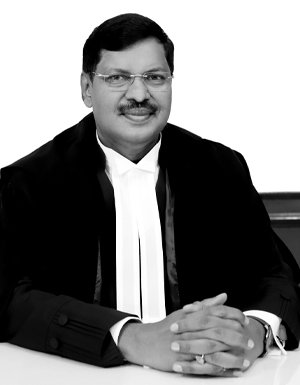

No Acts & Articles mentioned in this case
REPORTABLE
IN THE SUPREME COURT OF INDIA
CIVIL APPELLATE JURISDICTION
CIVIL APPEAL NO. 2912 OF 2022
[Arising out of Special Leave Petition (Civil) No.26855 of
2018]
DENTAL COUNCIL OF INDIA ...APPELLANT(S)
VERSUS
BIYANI SHIKSHAN SAMITI & ANR. ...RESPONDENT(S)
JUDGMENT
B.R. GAVAI, J.
1.Leave granted.
2.The present appeal challenges the judgment and order of
the Division Bench of the High Court of Judicature for
Rajasthan, Bench at Jaipur, dated 24
th
April, 2018, passed in
D.B. Civil Writ Petition No. 3260 of 2017, thereby allowing the
writ petition filed on behalf of the respondent No.1Biyani
1
Shikshan Samiti (hereinafter referred to as “the respondent
No.1”) and striking down the Notification dated 21
st
May, 2012
(hereinafter referred to as “the impugned Notification”), vide
which the appellantDental Council of India (hereinafter
referred to as “the Council”), had substituted Regulation 6(2)(h)
of the Dental Council of India (Establishment of New Dental
Colleges, Opening of New or Higher Course of Studies or
Training and Increase of Admission Capacity in Dental Colleges)
Regulations, 2006 (hereinafter referred to as “the Regulations”),
on the ground of the same being inconsistent with the
provisions of the Dentists Act, 1948 (hereinafter referred to as
“the said Act”) and also being violative of Articles 14 and 19(1)
(g) of the Constitution of India.
3.The facts in the present case are not in dispute.
4.The respondent No. 1 had submitted an application to the
Government of India for grant of permission for establishment
of dental college from academic year 20122013 on 24
th
2
September, 2011. This was after the Letter of Intent was issued
by the State Government on 23
rd
September, 2011. The
respondent No. 2 – Union of India, through Secretary, Ministry
of Health and Family Welfare (Dental Education Section)
[hereinafter referred to as “the respondent No.2”), noticed
certain deficiencies in the proposal of the respondent No.1 and
vide its letter dated 7
th
October, 2011, required the respondent
No.1 to cure the said deficiencies.
5.After exchange of certain communications, on 6
th
January,
2012, the respondent No.2, returned the application of the
respondent No.1 along with demand draft of Rs.6 lakh, on the
ground that deficiencies pointed out were not cured prior to 31
st
December, 2011, i.e., the last date for curing the deficiencies.
6.In the meantime, the Government of Rajasthan issued
Essentiality Certificate to the respondent No.1 on 11
th
January,
2012. However, on 17
th
February, 2012, the respondent No.2
declined to reconsider the application/request of the
3
respondent No.1, on the grounds stated in its earlier letter,
dated 6
th
January, 2012. As such, the request of the
respondent No.1 for reconsideration of its proposal came to be
rejected by the respondent No.2, vide its communication dated
17
th
February, 2012.
7.In the meantime, vide the impugned Notification, existing
Regulation 6(2)(h) of the Regulations was substituted by
amended Regulation 6(2)(h) on 21
st
May, 2012. Respondent
No.1 again submitted its fresh application on 28
th
September,
2012 for academic year 20132014. The same was returned by
the respondent No.2 vide its order dated 31
st
December, 2012,
on the ground that the proposal/application was not in
compliance with the amended Regulation 6(2)(h) of the
Regulations. On 23
rd
January, 2013, the respondent No.1
thereafter wrote a letter to the respondent No.2, stating therein
that since Essentiality Certificate was issued to it on 11
th
January, 2012, the impugned Notification was not applicable to
4
it and requested for reconsideration of its application under the
unamended Regulation 6(2)(h) of the Regulations. The
respondent No.2 rejected the application of the respondent No.1
vide its order dated 5
th
March, 2013.
8.The respondent No.1 challenged the order passed by the
respondent No.2 rejecting the request for reconsideration of its
application before the learned single judge of the High Court of
Judicature for Rajasthan, Bench at Jaipur, by way of S.B. Civil
Writ Petition No.15090 of 2016. The respondent No.1 further
sought a direction to reconsider the application submitted by it
on 24
th
September, 2011 for establishment of a new dental
college for academic session 20172018. The learned single
judge of the High Court, vide judgment and order dated 3
rd
November, 2016, finding no merit in the writ petition,
dismissed the same. The respondent No.1 thereafter filed a writ
petition before the Division Bench being D.B. Civil Writ Petition
No. 3260 of 2017, challenging the impugned Notification
5
amending Regulation 6(2)(h) of the Regulations. The
respondent No.1 also sought a prayer for direction to the
respondent No.2, for reconsidering its application, dated 28
th
September, 2012, for establishment of a new Dental College for
academic session 20182019 and for subsequent academic
sessions. By the impugned judgment and order dated 24
th
April,
2018, the Division Bench of the High Court allowed the said
writ petition by striking down the impugned Notification and
directed the respondent No. 2 to reconsider the case of the
respondent No.1 in the light of the observations made in the
impugned judgment and order. Being aggrieved thereby, the
present appeal has been preferred by the Council.
9.We have heard Shri Gaurav Sharma, learned counsel
appearing on behalf of the Council, Ms. Aishwarya Bhati,
learned Additional Solicitor General (“ASG” for short) appearing
on behalf of the respondent No.2 and Ms. Shobha Gupta,
learned counsel appearing on behalf of the respondent No.1.
6
10.Shri Gaurav Sharma, learned counsel, would submit that
the Division Bench of the High Court has grossly erred in
allowing the writ petition. He submits that the Council is an
expert statutory body duly constituted under the said Act. He
submits that the said Act empowers the Council to make
Regulations for various aspects concerned with Dental
Education, including prescribing requirement of minimum
standards. He submits that the Council, after examining
various aspects, had found it necessary to amend Regulation
6(2)(h) of the Regulations. He submits that this was done for
providing better teaching facilities to the students and for
improving the standards of education. He submits that the
Division Bench has grossly erred in holding that it was beyond
the powers of the Council to make delegated legislation. He
submits that, in any case, the finding of the High Court that
the impugned Notification was violative of Articles 14 and 19(1)
(g) of the Constitution of India, is totally erroneous.
7
11.Ms. Aishwarya Bhati, learned ASG also supports the
submission made on behalf of the Council. Relying on the
judgment of this Court in the case of Dental Council of India
vs. Subharti K.K.B. Charitable Trust and Another
1
, she
submits that the High Court ought not to have interfered with
the impugned Notification, since the Regulations were made by
the expert body in accordance with the provisions of the said
Act.
12.Ms. Shobha Gupta, learned counsel appearing on behalf
of the respondent No.1, on the contrary, would submit that the
High Court has rightly quashed the impugned Notification. She
submits that the impugned Notification has no nexus with the
object sought to be achieved. She submits that there is a huge
shortage of Dentists in the country and therefore, the object of
the legislation should be to encourage establishment of more
Dental Colleges rather than providing a requirement which will
1 (2001) 5 SCC 486
8
restrict the number of new Dental Colleges. On facts, she
submits that there is no medical college within the vicinity of
100 kms. from the place at which the respondent No.1 proposes
to start a new Dental College. She submits that the impugned
Notification, therefore, violates the fundamental rights of the
students to take dental education as well as the fundamental
right of the respondent No.1 to establish an educational
institution under Article 19(1)(g) of the Constitution of India.
13.For considering the rival submissions, it will be
appropriate to refer to certain provisions of the said Act.
Section 3 of the said Act requires the Central Government to
constitute a Council consisting of members named therein.
Section 10 of the said Act deals with recognition of dental
qualifications. Section 10A of the said Act deals with
permission for establishment of new dental college, new courses
of study, etc. Subsection (1) of Section 10A of the said Act
puts restriction on the establishment of an authority or
9
institution for a course of study or training which would enable
a student of such course or training to qualify himself for the
grant of recognized dental qualification; it also imposes a
restriction on opening a new or higher course of study or
training, or increase the admission capacity in any course of
study or training, including a postgraduate course of study or
training. It is provided that no person can establish an
authority or institution for dental education and that no
authority or institution can open a new or higher course of
study or training, including a postgraduate course of study or
training, or increase its admission capacity without the prior
permission of the Central Government. Subsections (2) to (4)
of Section 10A of the said Act deal with the procedure to be
followed for making an application for permission to start a new
or higher course of study or training or increase of intake
capacity in any course of study or training. Subsection (5) of
Section 10A of the said Act is a deeming provision, which
10
provides that if the Central Government fails to pass an order
on the scheme/application submitted by the applicant within a
period of one year from the date of submitting the
scheme/application, such scheme/application shall be deemed
to have been approved by the Central Government in the form
in which it was submitted. It also provides that the permission
of the Central Government required under subsection (1) shall
also be deemed to have been granted. Subsection (6) of Section
10A of the said Act provides for extension of the period provided
in subsection (5) by entitling an applicant for the extension of
the period for furnishing the particulars called for by the
Council or by the Central Government.
14.It will be apposite to reproduce subsection (7) of Section
10A of the said Act, since the same fell for consideration before
the Division Bench of the High Court while allowing the writ
petition. It reads thus:
11
“10A. Permission for establishment of
new dental college, new courses of
study, etc.—(1) …………………………
(2)………………………………………………
xxx
(7) The Council, while making its
recommendations under clause (b) of
subsection (3) and the Central
Government, while passing an order
either approving or disapproving the
scheme under subsection (4), shall have
due regard to the following factors,
namely:—
(a) whether the proposed authority
or institution for grant of
recognised dental qualification or
the existing authority or
institution seeking to open a new
or higher course of study or
training, would be in a position to
offer the minimum standards of
dental education in conformity
with the requirements referred to
in Section 16A and the
regulations made under sub
section (1) of Section 20;
(b) whether the person seeking to
establish an authority or
institution or the existing
authority or institution seeking to
open a new or higher course of
study or training or to increase
12
its admission capacity has
adequate resources;
(c) whether necessary facilities in
respect of staff, equipment,
accommodation, training and
other facilities to ensure proper
functioning of the authority or
institution or conducting the new
course of study or training or
accommodating the increased
admission capacity have been
provided or would be provided
within the timelimit specified in
the scheme;
(d) whether adequate hospital
facilities, having regard to the
number of students likely to
attend such authority or
institution or course of study or
training or as a result of the
increased admission capacity
have been provided or would be
provided within the timelimit
specified in the scheme;
(e) whether any arrangement has
been made or programme drawn
to impart proper training to
students likely to attend such
authority or institution or course
of study or training by persons
having the recognised dental
qualifications;
13
(f) the requirement of manpower in
the field of practice of dentistry;
and
(g) any other factors as may be
prescribed.”
15.It could thus be seen that the Council, while making its
recommendations and the Central Government, while passing
an order, are required to take into consideration various factors
as are enumerated in clauses (a) to (g) of subsection (7) of
Section 10A of the said Act.
16.Section 20 of the said Act empowers the Council, with the
approval of the Central Government, to make Regulations. It
will be apposite to refer to the relevant part of Section 20 of the
said Act, which reads thus:
“20.Power to make regulations.(1) The
Council may, with the approval of the
Central Government, by notification in
the Official Gazette, make regulations not
inconsistent with the provisions of this
Act to carry out the purposes of this
Chapter.
14
(2)In particular and without prejudice
to the generality of the foregoing power
such regulations may
(a)……………………………………………
(b)……………………………………………
xxxxxxxxx
(fb)prescribe any other factors under
clause (g) of subsection (7) of
section 10A”
17.It could thus be seen from the conjoint reading of clause
(g) of subsection (7) of Section 10A and clause (fb) of sub
section (2) of Section 20 of the said Act that the Council is also
empowered to take into consideration any other factors as may
be prescribed and also entitled to make Regulations for
prescribing any other factor under clause (g) of subsection (7)
of Section 10A.
18.It will also be relevant to refer to the provision of
Regulation 6(2)(h) as it existed prior to the impugned
Notification and the amended provision after the impugned
Notification was given effect to. They read thus:
15
“Regulation 6(2)(h) prior to impugned
Notification dated 21
st
May, 2012
6. Eligibility and qualifying criteria.
(1) …………………………………………..
(2) The organizations under sub
regulation (1) shall qualify to apply for
permission to establish a dental college if
the following conditions are fulfilled:
(a)…………………………………………..
(b) …………………………………………..
xxx
(h)the applicant owns and manages a
General Hospital of not less than 100
beds as per Annexure I with necessary
infrastructure facilities including
teaching preclinical, paraclinical and
allied medical sciences in the campus of
the proposed dental college,
or
the proposed dental college is located in
the proximity of a Government Medical
College or a Medical College recognised
by the Medical Council of India and an
undertaking of the said Medical College to
the effect that it would facilitate training
to the students of the proposed dental
college in the subjects of Medicine,
16
Surgery and Allied Medical Sciences has
been obtained,
or
where no Medical College is available in
the proximity of the proposed dental
college, the proposed dental college gets
itself tied up at least for 5 years with a
Government General Hospital having a
provision of at least 100 beds and located
within a radius of 10 K.M. of the
proposed dental college and the tieup is
extendable till it has its own 100 bedded
hospital in the same premises. In such
cases, the applicant shall produce
evidence that necessary infrastructure
facilities including teaching preclinical,
paraclinical and allied medical sciences
are owned by the proposed dental college
itself;
Regulation 6(2)(h) after the impugned
Notification dated 21
st
May, 2012
6. Eligibility and qualifying criteria.
(1) …………………………………………..
(2) The organizations under sub
regulation (1) shall qualify to apply for
permission to establish a dental college if
the following conditions are fulfilled:
(a)…………………………………………..
17
(b) …………………………………………..
xxx
(h) the applicant shall attach its proposed
dental college with a Government/Private
Medical College approved/recognised by
the Medical Council of India which is
located at the distance of 10 kms. by road
from the proposed dental college and
produce evidence of the said Medical
College to the effect that it would
facilitate training to the students of the
proposed dental college as per
syllabus/course curriculum prescribed in
respective undergraduate and post
graduate dental course regulations as
amended from time to time:
Provided that not more than one dental
college shall be attached with the medical
college.”
19.It could thus be seen that the change that has been
brought by the impugned Notification is that, though under the
unamended Regulation 6(2)(h), an applicant was entitled to
apply if he/she/it owned and managed a General Hospital of
not less than 100 beds; by the impugned Notification, it has
been made mandatory that the applicant has to attach its
18
proposed Dental College with the Government/Private Medical
College, approved/recognized by the Medical Council of India,
which is located at a distance of 10 kilometers by road from the
proposed Dental College. The distance of 10 kilometers has
now been increased to 30 kilometers, vide amendment dated 5
th
July, 2017.
20. The Division Bench of the High Court vide the impugned
judgment and order dated 24
th
April, 2018, has allowed the writ
petition and quashed the impugned Notification on three
grounds, viz.,
(i)that it is violative of Article 19(1)(g) of the Constitution
of India;
(ii)that it is beyond the scope of the powers of the Council
to make delegated legislation as provided under sub
section (7) of Section 10A of the said Act; and
(iii)that it is violative of Article 14 of the Constitution of
India, inasmuch as the Dental Colleges established
19
prior to impugned Notification would be permitted to
run without attachment with Medical Colleges,
whereas, the Dental Colleges established after the
impugned Notification will be compelled to have such
an attachment with the Medical Colleges.
21.We find that the learned judges of the Division Bench have
erred on all counts.
22.It will be relevant to refer to the following observations of
this Court in the case of Indian Express Newspapers
(Bombay) Private Ltd. and others vs. Union of India and
others
2
.
“75. A piece of subordinate legislation does not
carry the same degree of immunity which is
enjoyed by a statute passed by a competent
Legislature. Subordinate legislation may be
questioned on any of the grounds on which
plenary legislation is questioned. In addition it
may also be questioned on the ground that it
does not conform to the statute under which it
2 (1985) 1 SCC 641
20
is made. It may further be questioned on the
ground that it is contrary to some other
statute. That is because subordinate
legislation must yield to plenary legislation. It
may also be questioned on the ground that it
is unreasonable, unreasonable not in the
sense of not being reasonable, but in the sense
that it is manifestly arbitrary.”
23.It could thus be seen that this Court has held that the
subordinate legislation may be questioned on any of the
grounds on which plenary legislation is questioned. In
addition, it may also be questioned on the ground that it does
not conform to the statute under which it is made. It may
further be questioned on the ground that it is contrary to some
other statute. Though it may also be questioned on the ground
of unreasonableness, such unreasonableness should not be in
the sense of not being reasonable, but should be in the sense
that it is manifestly arbitrary.
24.It has further been held by this Court in the said case that
for challenging the subordinate legislation on the ground of
21
arbitrariness, it can only be done when it is found that it is not
in conformity with the statute or that it offends Article 14 of the
Constitution. It has further been held that it cannot be done
merely on the ground that it is not reasonable or that it has not
taken into account relevant circumstances which the Court
considers relevant.
25.The judgment of this Court in the case of Indian Express
Newspapers (Bombay) Private Ltd. (supra) has been followed
by a threejudge Bench of this Court in the case of Khoday
Distilleries Ltd. and others vs. State of Karnataka and
others
3
. It will be apposite to refer to the following
observations of this Court in the said case:
“13. It is next submitted before us that
the amended Rules are arbitrary,
unreasonable and cause undue hardship
and, therefore, violate Article 14 of the
Constitution. Although the protection of
Article 19(1)(g) may not be available to
the appellants, the rules must,
undoubtedly, satisfy the test of Article 14,
3 (1996) 10 SCC 304
22
which is a guarantee against arbitrary
action. However, one must bear in mind
that what is being challenged here under
Article 14 is not executive action but
delegated legislation. The tests of
arbitrary action which apply to executive
actions do not necessarily apply to
delegated legislation. In order that
delegated legislation can be struck down,
such legislation must be manifestly
arbitrary; a law which could not be
reasonably expected to emanate from an
authority delegated with the lawmaking
power. In the case of Indian Express
Newspapers (Bombay) (P) Ltd. v. Union of
India [(1985) 1 SCC 641 : 1985 SCC (Tax)
121 : (1985) 2 SCR 287] (SCR at p. 243)
this Court said that a piece of
subordinate legislation does not carry the
same degree of immunity which is
enjoyed by a statute passed by a
competent legislature. A subordinate
legislation may be questioned under
Article 14 on the ground that it is
unreasonable; “unreasonable not in the
sense of not being reasonable, but in the
sense that it is manifestly arbitrary”.
Drawing a comparison between the law in
England and in India, the Court further
observed that in England the Judges
would say, “Parliament never intended
the authority to make such Rules; they
are unreasonable and ultra vires”. In
India, arbitrariness is not a separate
23
ground since it will come within the
embargo of Article 14 of the Constitution.
But subordinate legislation must be so
arbitrary that it could not be said to be in
conformity with the statute or that it
offends Article 14 of the Constitution.”
26.In the case of State of T.N. and another vs. P.
Krishnamurthy and others
4
after considering the law laid
down by this Court earlier in the cases of Indian Express
Newspapers (Bombay) Private Ltd. (supra), Supreme Court
Employees’ Welfare Association. vs. Union of India and
another
5
, Shri Sitaram Sugar Company Limited and
another vs. Union of India and others
6
, St. Johns Teachers
Training Institute vs. Regional Director, National Council
for Teacher Education and another
7
, Rameshchandra
Kachardas Porwal and others vs. State of Maharashtra
4 (2006) 4 SCC 517
5 (1989) 4 SCC 187
6 (1990) 3 SCC 223
7 (2003) 3 SCC 321
24
and others
8
, Union of India and another vs. Cynamide
India Ltd. and another
9
and State of Haryana vs. Ram
Kishan and others
10
, this Court has laid down certain
grounds, on which the subordinate legislation can be
challenged, which are as under:
“Whether the rule is valid in its
entirety?
15. There is a presumption in favour of
constitutionality or validity of a
subordinate legislation and the burden is
upon him who attacks it to show that it is
invalid. It is also well recognised that a
subordinate legislation can be challenged
under any of the following grounds:
(a) Lack of legislative competence to
make the subordinate legislation.
(b) Violation of fundamental rights
guaranteed under the Constitution of
India.
(c) Violation of any provision of the
Constitution of India.
(d) Failure to conform to the statute
under which it is made or exceeding
the limits of authority conferred by the
enabling Act.
8 (1981) 2 SCC 722
9 (1987) 2 SCC 720
10 (1988) 3 SCC 416
25
(e) Repugnancy to the laws of the
land, that is, any enactment.
(f) Manifest arbitrariness/
unreasonableness (to an extent where
the court might well say that the
legislature never intended to give
authority to make such rules).”
27.In the light of these guiding principles, we will have to
examine the correctness of the findings of the learned judges of
the Division Bench in the impugned judgment and order.
28.One of the grounds on which the impugned Notification
has been struck down is that it is beyond the scope of powers of
the Council under Section 10A(7)(d) of the said Act. The
Division Bench of the High Court has relied on clause (d) of
subsection (7) of Section 10A of the said Act to come to a
conclusion that clause (d) refers to adequate hospital facilities,
having regard to the number of students likely to attend the
institution. It has held that a requirement of hospital was
already fulfilled in the preamended Regulation 6(2)(h) of the
Regulations. It has further held that clause (d) does not refer to
26
Medical College. It was therefore held that the impugned
Notification requiring the Dental Colleges to be attached with
the Government/Private Medical College was beyond the scope
of subsection (7) of Section 10A of the said Act and, therefore,
inconsistent with the said Act.
29.We find that the Division Bench has failed to take into
consideration clause (g) of subsection (7) of Section 10A of the
said Act. It is to be noted that whereas clauses (a) to (f) of sub
section (7) of Section 10A of the said Act deal with various
factors, clause (g) thereof, which can be said to be a residual
clause, enables the Council to take into consideration also any
other factor as may be prescribed.
30.We further find that the Division Bench of the High Court
has also failed to take into consideration clause (fb) of sub
section (2) of Section 20 of the said Act. A conjoint reading of
these provisions would reveal that the Council is also
empowered to take into consideration any other factor as may
27
be prescribed and also to make a Regulation with regard to any
other factor under clause (g) of subsection (7) of Section 10A of
the said Act. It could thus be seen that it is within the
competence of the Council to make Regulations prescribing any
other conditions, which are otherwise not found in clauses (a)
to (f) of subsection (7) of Section 10A of the said Act.
Challenge to the same would be permissible only on the ground
of manifest arbitrariness. It is also equally settled that the
presumption is always with regard to the validity of a provision.
The burden is on the party who challenges the validity of such
provision. We find that the respondent No.1 has failed to
discharge the burden to show that the impugned Notification
suffers from manifest arbitrariness.
31.Secondly, the Division Bench of the High Court found the
impugned Notification dated 21
st
May, 2012 to be violative of
Article 14 of the Constitution, on the ground that the Dental
Colleges established prior to impugned Notification would not
28
be required to be attached with the Medical Colleges, whereas,
the Dental Colleges, established after the impugned
Notification, will be compelled to be attached to such Medical
Colleges. We are of the considered view that the Colleges
established prior to the impugned Notification and the Colleges
established/to be established after the impugned Notification
would form two separate classes. The differential treatment for
different classes would not be hit by Article 14 of the
Constitution of India. The only requirement would be, as to
whether such a classification has a nexus with the object
sought to be achieved by the Act. For the reasons given
hereinafter, we find that the factors taken into consideration by
the Council, while amending Regulation 6(2)(h) of the
Regulations are relevant factors. The factors have a nexus with
the object sought to be achieved. It has been submitted on
behalf of the Council that the existing recognized Medical
College already has a facility to impart education to about 500
29
700 students. Such Medical Colleges have a fullfledged
teaching faculty. Such a faculty would enable providing a
proper education to the students of the Dental colleges on
various aspects of preclinical, paraclinical and allied
medicine, etc. The Council has also taken into consideration
the fact that the General Hospitals having bedcapacity of 100
beds or more do not have experts on fulltime basis. They
usually engage the services of consultant doctors, who visit the
Hospital for a very limited period. The Council has also taken
into consideration the fact that the private hospitals do not
have adequate clinical facilities and/or clinical material and
therefore, it is unlikely that they will be able to impart
education and training to students. It has been submitted on
behalf of the Council that the amended Regulation 6(2)(h) of the
Regulations was brought into effect so that it would facilitate
training to the students of the proposed Dental Colleges as per
the syllabus/course curriculum prescribed. It, therefore,
30
cannot be said that the Council has taken into consideration
the factors, which are not relevant or germane for the purpose
to be achieved. The object to be achieved is to provide adequate
teaching and training facilities to the students. If in the
wisdom of the expert body, this can be done by attaching a
Dental College to the already existing Medical College, it cannot
be faulted with.
32.The reason given for not permitting more than one Dental
College to be attached to the existing recognized Medical College
is that if one Dental College is permitted to be attached to a
recognized Medical College, which is already having 500750
students in different semesters of their 5year MBBS course,
the additional students of the Dental College may very well be
absorbed in the facilities that are already available in the
recognized Medical College. However, if more than one Dental
College is permitted to be attached, it will lead to overcrowding
of students in the Medical College.
31
33.We are, therefore, of the considered view that the amended
Regulation cannot be said to be one, which is manifestly
arbitrary, so as to permit the Court to interfere with it. On the
contrary, we find that the amended Regulation 6(2)(h) has a
direct nexus with the object to be achieved, i.e., providing
adequate teaching and training facilities to the students.
34.It will be apposite to refer to the following observations of
the Division Bench of the High Court in the impugned
judgment:
“We fail to understand as to how the
earlier provisions, in any manner, were
not sufficient for the object sought to be
achieved. A careful reading of the
unamended Regulation 6(2)(h) shows
requirement of attachment with General
Hospital owned and managed by the
applicant in the campus of the proposed
Dental College. It was with infrastructure
facilities including teaching preclinical,
paraclinical and allied medical sciences.
If we talk about practical training, it
would be more in the hospital, therefore,
the unamended provision of Regulation
32
6(2)(h) provided both i.e. attachment with
General Hospital or with a Medical
College with required facilities of
teaching.”
35.In this respect, we would gainfully refer to the following
observations of this Court in the case of Maharashtra State
Board of Secondary and Higher Secondary Education and
another vs. Paritosh Bhupeshkumar Sheth and others
11
:
“14. ….. whether a rule or regulation or
other type of statutory instrument — is in
excess of the power of subordinate
legislation conferred on the delegate has
to be determined with reference only to
the specific provisions contained in the
relevant statute conferring the power to
make the rule, regulation, etc. and also
the object and purpose of the Act as can
be gathered from the various provisions
of the enactment. It would be wholly
wrong for the Court to substitute its own
opinion for that of the Legislature or its
delegate as to what principle or policy
would best serve the objects and
purposes of the Act and to sit in
judgment over the wisdom and
effectiveness or otherwise of the policy
11 (1984) 4 SCC 27
33
laid down by the regulationmaking body
and declare a regulation to be ultra vires
merely on the ground that, in the view of
the Court, the impugned provisions will
not help to serve the object and purpose
of the Act. So long as the body entrusted
with the task of framing the rules or
regulations acts within the scope of the
authority conferred on it, in the sense
that the rules or regulations made by it
have a rational nexus with the object and
purpose of the statute, the court should
not concern itself with the wisdom or
efficaciousness of such rules or
regulations.”
36.This Court in unequivocal terms has held that it would be
wholly wrong for the Court to substitute its own opinion for
that of the Legislature or its delegate as to what principle or
policy would best serve the objects and purposes of the Act. It
has been held that it is not permissible for the Court to sit in
judgment over the wisdom and effectiveness or otherwise of the
policy laid down by the regulationmaking body and declare a
regulation to be ultra vires merely on the ground that, in the
34
view of the Court, the impugned provisions will not help to
serve the object and purpose of the Act.
37.We find that the observations quoted herein above of the
Division Bench of the High Court are totally contrary to the
view expressed by this Court in the case of Maharashtra
State Board of Secondary and Higher Secondary
Education and another (supra).
38.The Division Bench of the High Court has erred in
substituting its wisdom with that of the rulemaking body,
which is an expert body. In this respect, it will also be apposite
to refer to the observations of this Court in the case of All
India Council for Technical Education vs. Surinder Kumar
Dhawan and others
12
. After considering various judgments
on the issue, this Court observed thus:
“16. The courts are neither equipped nor
have the academic or technical
12 (2009) 11 SCC 726
35
background to substitute themselves in
place of statutory professional technical
bodies and take decisions in academic
matters involving standards and quality
of technical education. If the courts start
entertaining petitions from individual
institutions or students to permit courses
of their choice, either for their
convenience or to alleviate hardship or to
provide better opportunities, or because
they think that one course is equal to
another, without realising the
repercussions on the field of technical
education in general, it will lead to chaos
in education and deterioration in
standards of education.
17. The role of statutory expert bodies on
education and the role of courts are well
defined by a simple rule. If it is a
question of educational policy or an issue
involving academic matter, the courts
keep their hands off.”
39.We are, therefore, of the considered view that it was not
permissible for the Division Bench of the High Court to enter
into an area of experts and hold that the unamended provisions
ought to have been preferred over the amended provisions.
36
40.That leaves us with the finding of the Division Bench of
the High Court that the amended Regulation is violative of
Article 19(1)(g) of the Constitution. Reliance in this respect is
placed on the ElevenJudge Constitution Bench judgment of
this Court in the case of T.M.A. Pai Foundation and others
vs. State of Karnataka and others
13
. In this respect, it will
be relevant to refer to the following observations of the Eleven
Judge Constitution Bench of this Court in the said case:
“54. The right to establish an educational
institution can be regulated; but such
regulatory measures must, in general, be
to ensure the maintenance of proper
academic standards, atmosphere and
infrastructure (including qualified staff)
and the prevention of maladministration
by those in charge of management. The
fixing of a rigid fee structure, dictating
the formation and composition of a
governing body, compulsory nomination
of teachers and staff for appointment or
nominating students for admissions
would be unacceptable restrictions.”
13 (2002) 8 SCC 481
37
41.It can thus clearly be seen that the Constitution Bench
itself has held that the right to establish an educational
institution can be regulated. However, such regulatory
measures must, in general, be to ensure the maintenance of
proper academic standards, atmosphere and infrastructure and
the prevention of maladministration.
42.The impugned Notification, undoubtedly, is made in order
to ensure the maintenance of proper academic standards and
infrastructure and as such, the judgment of the Constitution
Bench of this Court in the case of T.M.A. Pai Foundation and
others (supra), rather than supporting the case of the
respondent No.1, would support the case of the Council.
43.We further find that the impugned judgment of the
Division Bench of the High Court is also not sustainable on the
ground of judicial propriety. The respondent No.1 had already
filed a writ petition being S.B. Civil Writ Petition No. 15090 of
2016, challenging the action of the Council and the respondent
38
No.2 in returning the application of the respondent No.1 for
grant of recognition to new Dental College and for a direction to
reconsider its application submitted on 24
th
September, 2011.
The said writ petition was filed in the year 2016. The said writ
petition was dismissed by the learned single judge of the High
Court by the judgment and order dated 3
rd
November, 2016.
After the said writ petition was rejected on 3
rd
November, 2016,
the respondent No.1 filed the present writ petition being D.B.
Civil Writ Petition No.3260 of 2017 before the Division Bench of
the High Court on 1
st
March, 2017. In the said writ petition,
the prayer was for challenging the validity of the impugned
Notification and for a direction to reconsider the proposal of the
respondent No.1. The impugned Notification could have very
well been challenged in the earlier writ petition, which was filed
in the year 2016 before the learned single judge of the High
Court. However, having failed in that writ petition before the
learned single judge, the respondent No.1 filed another writ
39
petition before the Division Bench of the High Court. Though
one of the prayers challenges the validity of the impugned
Notification, another prayer claims for reconsideration of its
proposal. The said prayer has been granted by the Division
Bench of the High Court by its impugned judgment and order
dated 24
th
April, 2018. It could thus be seen that the prayer for
reconsideration of the proposal submitted by the respondent
No.1, which was already rejected by the learned single judge of
the High Court vide order dated 3
rd
November, 2016 in S.B.
Civil Writ Petition No.15090 of 2016, has been renewed in the
fresh writ petition filed in the year 2017 and granted by the
Division Bench of the High Court.
44.We, therefore, find that on the ground of judicial propriety
also the Division Bench of the High Court ought not to have
entertained the writ petition for a prayer, which already stood
rejected. In that view of the matter, the impugned judgment
40
and order dated 24
th
April, 2018 passed by the Division Bench
of the High Court is not sustainable.
45.In the result, the appeal is allowed. The impugned
judgment and order dated 24
th
April, 2018 passed by the
Division Bench of the High Court is quashed and set aside. The
D.B. Civil Writ Petition No.3260 of 2017 filed by the respondent
No.1 before the Division Bench of the High Court stands
dismissed. No order as to costs.
46.Pending application(s), if any, shall stand disposed of.
…..….......................J.
[L. NAGESWARA RAO]
…….........................J.
[B.R. GAVAI]
NEW DELHI;
APRIL 12, 2022
41

 Login with google
Legal Notes
Add a Note....