
The dispute emerged when Dr. Mrs. Suman V. Jain, the appellant, attempted to rescind her prospective resignation as Principal of B.M. Ruia Girls and G.D. Birla Girls College, operated by ...

No Acts & Articles mentioned in this case
2024 INSC 127 1
REPORTABLE
IN THE SUPREME COURT OF INDIA
CIVIL APPELLATE JURISDICTION
CIVIL APPEAL NO. 1480 OF 2012
Dr. Mrs. Suman V. Jain …..Appellant
Versus
Marwadi Sammelan through its …..Respondents
Secretary and Others.
J U D G M E N T
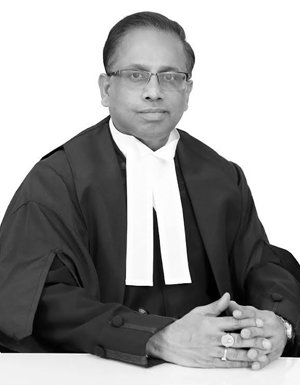
J.K. Maheshwari J.
1. The instant appeal arises out of the judgment dated
04.07.2008, passed by the Division Bench of the ‘High Court of
Judicature at Bombay’ in Appeal No. 63 of 2008, whereby the
Division Bench dismissed the appeal preferred by the appellant
and confirmed the order dated 08.08.2006 passed by learned
Single Judge in Writ Petition No. 1611 of 2004. The said writ
petition was filed by the appellant being aggrieved by an order
dated 30.04.2004 passed by the ‘Mumbai University and College
Tribunal, Mumbai’ (hereinafter referred to as “College Tribunal”)
in ‘Civil Appeal No. 51 of 2003’. Before the College Tribunal, the
appellant filed an appeal to quash the order dated 10.09.2003
passed by respondent No. 1 “Marwadi Sammelan Trust”
2
(hereinafter referred to as “Trust”) rejecting her request for
withdrawal of resignation vide letter dated 09.09.2003. As such,
this appeal is arising out of the orders passed by the three fora
before whom the challenge was made by the appellant to the
rejection of withdrawal of her prospective resignation, prior to the
effective date, and the rejection of her prayer for rejoining the
duties.
FINDINGS OF THE C OLLEGE TRIBUNAL
2. Assailing the rejection of request for withdrawal of the
prospective resignation prior to the effective date, appellant
preferred an Appeal No. 51 of 2003 before the College Tribunal.
The College Tribunal vide judgment dated 30.04.2004 was of the
opinion that since it was not an order of dismissal, removal or
termination of service, therefore, the appeal was not maintainable
under Section 59(1) of the Maharashtra Universities Act, 1994
(hereinafter referred to as “1994 Act”) and on such, the question
of limitation under Section 59(2) does not arise. The College
Tribunal having found that the appeal is not maintainable, even
delved into the question of withdrawal of the prospective
resignation before the effective date on merits. After appreciating
the facts, it was held in law that the prospective resignation can
3
be withdrawn before the expiry of the intended date. However, on
facts, it was held that there was an implied understanding between
the parties’ prohibiting withdrawal of resignation. Hence,
according to the College Tribunal, the present case fell within the
exception in the judgment of the House of Lords in the case of “The
Rev. Oswald Joseph Reichel Vs. The Right Rev. John Fielder
(1889), House of Lords, XIV, 249” , and hence, the College
Tribunal dismissed the appeal.
FINDINGS RECORDED BY THE LEARNED SINGLE JUDGE
3. The said judgment was challenged by filing a Writ Petition No.
1611 of 2004 before the Bombay High Court. Learned Single Judge
considered the question as to whether a right to withdraw the
prospective resignation can be given up or abandoned ? While
considering the same, learned Single Judge relied upon the
judgment of Rev. Oswald (supra) and after quoting the same,
observed that the right to withdraw the prospective resignation is
capable of being given up or waived off by the person who holds
that right. Later, the Court referred to the judgment on the
principle of ‘estoppel’ and ‘waiver’ and in view of the letters dated
28.03.2003, 08.04.2003 and looking to the conduct of the
appellant held that the findings recorded by the tribunal on merits
4
did not warrant any interference. Learned Single Judge failed to
appreciate the aspect about the Tribunal having once found the
appeal as not maintainable, as to how far it was justified in
confirming the findings and examining the issue on merits.
FINDINGS OF THE DIVISION BENC H OF HIGH COURT
4. On challenge, the Division Bench confirmed those findings.
In para 12 of the judgment, it was held that in normal
circumstances, it was open for the appellant to withdraw her
resignation before it came into effect, subject to a contract to the
contrary. The Division Bench then proceeded to consider the issue
as to whether the Tribunal committed any error in considering the
factual aspect of the matter. The Division Bench considered the
correspondence made from the very inception, i.e., letters dated
18.02.2003, 25.03.2003, 31.03.2003 and 11.8.2003 written by the
appellant and letters dated 25.03.2003, 28.03.2003 and
08.04.2003 written by the management and observed that the
acceptance of withdrawal of resignation was not objected for quite
some time and that it reflected an understanding that the
resignation was irrevocable, final and binding between the parties.
Relying upon the judgment rendered in the case of Rev. Oswald
(supra) and also in the case of “Century Spinning and
5
Manufacturing Company Limited and Another Vs. The
Ulhasnagar Municipal Council and Another, AIR 1971 SC
1021” and “Union of India and Others Vs. M/s. Anglo Afghan
Agencies Limited, AIR 1968 SC 718” on the issue of estoppel,
the findings recorded by the College Tribunal and the learned
Single Judge of the High Court were affirmed.
ARGUMENTS RAISED
5. Learned counsel for the appellant placed reliance upon the
judgment of “Union of India and Others Vs. Gopal Chand Misra
and Others, (1978) 2 SCC 301” to contend that the decision of
Rev. Oswald (supra) has been considered and distinguished in
the said case. It is submitted that in the absence of any contrary
provision governing the employment, prospective resignation given
by an employee can be withdrawn at any time before it becomes
effective. Reliance has further been placed on the judgments of
“Srikantha S.M. Vs. Bharath Earth Movers Limited, (2005) 8
SCC 314”; Balram Gupta Vs. Union of India and Another,
1987 (Supp) SCC 228; “Air India Express Limite d and Others
Vs. Captain Gurdarshan Kaur Sandhu, (2019) 17 SCC 129”
and “New Victoria Mills and Others Vs. Shrikant Arya, (2021)
13 SCC 771”. It is pointed out that on filing of an appeal before
6
the Tribunal, there was a stay in favour of the appellant till the
disposal of the said appeal, i.e., 30.04.2004. On disposal of the
appeal by the College Tribunal and during the pendency of the
proceedings before the High Court, she secured another job as
Principal at M.M.P. Shah College and after joining on 01.10.2007,
she worked till the age of superannuation, i.e., till 31.10.2015. It
is urged that the period from the date of acceptance of the
resignation till the joining in the new college may be directed to be
regularized on reinstatement, as otherwise, it may cause serious
prejudice to the appellant in the matter of payment of pension. It
is stated that, in the instant case, there was no written contract or
any contrary Rule governing the service of appellant, hence, it is
contended that she was entitled to withdraw the prospective
resignation. Learned Counsel contested the finding of implied
contract after referring to the correspondence between the
appellant and the management. According to the learned counsel,
the said finding was recorded without appreciating the contents of
the letter in their correct perspective. The College Tribunal, learned
Single Judge and the Division Bench, according to learned counsel
have relied upon the case of Rev. Oswald (supra) which was a
judgment based on the deed of resignation executed before the
witnesses. Therefore, the ratio of the said judgment is not
7
applicable in the facts of this case and the findings as recorded are
not in conformity with the law.
6. Per contra, learned counsel for the Trust vehemently opposed
the stand taken by the appellant and argued in support of the
reasonings and findings of the impugned judgment. It is contended
that the present case is not a case of withdrawal of resignation
from a future effective date, rather it is a case where, by mutual
understanding resignation was accepted by the management and
the controversy was put to rest. Learned counsel contends that in
fact both parties have mutually agreed and the controversy was
put at rest by accepting the resignation. Further, the doctrine of
“locus poenitentiae” or the opportunity for withdrawal of
resignation by change of mind is of no help to the appellant
because the letter dated 08.04.2003 was not objected for quite
some time. According to the learned counsel, f rom the
correspondence between the appellant and the respondent it is
clear that the management intended to initiate departmental
inquiry and to avoid that inquiry, appellant submitted her
resignation from the prospective date, which was accepted as
irrevocable, final and binding. Thus, the findings recorded by the
College Tribunal, learned Single Judge and the Division Bench
8
against the appellant according to learned counsel warrants no
interference. In support of the contentions, reliance has been
placed on “BSES Yamuna Power L imited Vs. Ghanshyam
Chand Sharma and Others, (2020) 3 SCC 346” , “B.L.
Shreedhar and Others Vs. K.N. Munireddy and Others, (2003)
2 SCC 355”, Air India Express Limited (supra), Gopal Chand
Misra (supra), Balram Gupta (supra) and The Rev. Oswald
(supra) and it has been submitted that this appeal deserves to be
dismissed.
7. Learned counsel for the Respondent Nos. 3 and 4 submits
that the College was run by the Trust affiliated by “Shreemati
Nathibhai Damodar Thackersey Women’s University” (hereinafter
referred to as “SNDT University”). As per Clause 8(3)(d) of SNDT
Women’s University Statute, the Governing Body of the
management is empowered to accept the resignation on giving six
months’ notice or payment of salary and the government has no
role to play in refusal or acceptance of the resignation. However,
in the facts of the case, once the resignation has been accepted by
the Governing Body, the findings as recorded by the Tribunal and
High Court did not warrant any interference.
9
8. In view of the findings recorded by the three fora, and the
arguments advanced by learned counsels for the parties in the
facts of this case, the following questions arise for determination
before this Court –
A. Whether in the facts of the case, withdrawal of
resignation dated 25.03.2003 submitted by the
appellant prior to the effective date, i.e.,
24.09.2003 ought to have been permitted?
B. Whether in the facts of the case, letter of the
Management dated 08.04.2003 accepting the
resignation was final, binding and irrevocable;
and the rejection of the request for withdrawal of
such resignation was in accordance with law?
C. Whether in the facts of the case, what relief could
be granted to the Appellant?
DISCUSSION ON QUESTIONS (A) AND (B)
9. For the sake of convenience and since the discussion on the
facts and legal issues are common, questions (A) and (B) are taken
up together and dealt with simultaneously. On perusal of the
findings as recorded by the three fora, it is spelt out that relying
10
upon the judgment of the House of Lords in the case of Rev.
Oswald (supra), appeal, writ petition and the further appeal to
Division Bench have been dismissed. Therefore, we first need to
analyze in detail the said judgment. In the said case, the
controversy arose from the conduct of the ‘Vicar’ who was informed
by the Bishop that he must either submit to an inquiry or cease to
hold his benefice. On such proposal being made by the Bishop, the
Vicar executed an unconditional deed of resignation before the
witnesses and sent it to the Bishop’s Secretary on which the
Bishop postponed the formal acceptance of Vicar’s resignation
until first of October. However, on tenth of June, the Vicar by
another document revoked the earlier deed of resignation and
communicated the same to the Bishop’s Secretary on sixteenth of
July. The Bishop in spite of the revocation by Vicar, signed the
document and accepted the resignation from the first of October
and declared the vicarage void. Aggrieved by the same, the Vicar
brought an action against the Bishop and others seeking a
declaration that he was a Vicar and the acceptance of the
resignation by the Bishop was void. He also sought an injunction
to restrain the defendants from treating the benefice as vacant.
The matter reached the House of Lords in appeal, which affirmed
the decision of the Court of Appeal and held that the resignation
11
was voluntary, absolute, validly executed and irrevocable. Hence,
the action brought by the Vicar was not successful.
10. The judgment of Rev. Oswald (supra) was placed before the
Constitution Bench of this Court for consideration in the case of
Gopal Chandra Misra (supra) and in para 69, it was
distinguished on facts and observed as thus –
“69. Reichal is no authority for the proposition that an
unconditional prospective resignation, without
more, normally becomes absolute and operative
the moment it is conveyed to the appropriate
authority. The special feature of the case was that
Reichal had, of his own free will, entered into a
“perfectly binding agreement” with the Bishop,
according to which, the Bishop had agreed to
abstain from commencing an inquiry into the
serious charges against Reichal if the latter
tendered his resignation. In pursuance of that
lawful agreement, Reichal tendered his resignation
and did all to complete it, and the Bishop also at
the other end, abstained from instituting
proceedings against him in the Ecclesiastical
Court. The agreement was thus not a nudum
pactum but one for good consideration and had
been acted upon and “consummated before the
supposed withdrawal of the resignation of Mr.
Reichal”, who could not, therefore, be permitted “to
upset the agreement” at his unilateral option and
withdraw the resignation “without the consent of
the Bishop”. It was in view of these exceptional
circumstances, Their Lordships held Reichal’s
resignation had become absolute and irrevocable.
No extraordinary circumstances of this nature exist
in the instant case.”
12
11. The Constitution Bench in the said case laid down the
principles with regard to prospective or potential resignation and
held that such resignation can be withdrawn at any time before it
becomes effective. The relevant paras 28, 29, and 41 are
reproduced, for ready reference, as thus –
“28. The substantive body of this letter (which has
been extracted in full in a foregoing part of this
judgment) is comprised of three sentences only.
In the first sentence, it is stated: “I beg to resign
my office as Judge, High Court of Judicature at
Allahabad.” Had this sentence stood alone, or
been the only content of this letter, it would
operate as a complete resignation in praesenti,
involving immediate relinquishment of the office
and termination of his tenure as Judge. But this
is not so. The first sentence is immediately
followed by two more, which read: “I will be on
leave till July 31, 1977. My resignation shall be
effective on August 1, 1977.” The first sentence
cannot be divorced from the context of the other
two sentences and construed in isolation. It has
to be read along with the succeeding two which
qualify it. Construed as a whole according to its
tenor, the letter dated May 7, 1977, is merely an
intimation or notice of the writer's intention to
resign his office as Judge, on a future date viz.
August 1, 1977. For the sake of convenience, we
might call this communication as a prospective
or potential resignation, but before the arrival of
the indicated future date it was certainly not a
complete and operative resignation because, by
itself, it did not and could not, sever the writer
from the office of the Judge, or terminate his
tenure as such.
29. Thus tested, sending of the letter dated May 7,
1977 by Appellant 2 to the President, did not
constitute a complete and operative resignation
13
within the contemplation of the expression
“resigns his office” used in proviso (a) to Article
217(1). Before the arrival of the indicated future
date (August 1, 1977), it was wholly inert,
inoperative and ineffective, and could not, and
in fact did not, cause any jural effect.
xxx xxx xxx xxx
41. The general principle that emerges from the
foregoing conspectus, is that in the absence of
anything to the contrary in the provisions
governing the terms and conditions of the
office/post, an intimation in writing sent to the
competent authority by the incumbent, of his
intention or proposal to resign his office/post
from a future specified date can be withdrawn
by him at any time before it becomes effective,
i.e. before it effects termination of the tenure of
the office/post or the employment. ”
12. As per the law laid down above by the Constitution Bench,
the prospective or intending resignation would be complete and
operative on arrival of the indicated future date in the absence of
anything contrary in the terms and conditions of the employment
or contract. The intimation sent in writing to the Competent
Authority by the incumbent employee of his intention or proposal
to resign from his office/post from a future specified date can be
withdrawn at any time before it becomes effective.
13. Now to appreciate the findings recorded by three fora, the
facts of the present case are required to be discussed with
precision. In the case at hand, the appellant was appointed as
14
Principal on 01.07.1992 in “B.M. Ruia Girls and G.D. Birla Girls
College” (hereinafter referred to as “College”), affiliated to SNDT
University and run by respondent No. 1 – Trust. Her appointment
was permanent, and she was discharging the duties for a decade
long period. In the month of December 1998, the management of
the Trust was changed, and the functioning of the school was
taken over by the new management. In 2001, one Mr. Biani was
appointed as Convenor and it is alleged that there was interference
in the day-to-day functions and passing of lewd and inappropriate
comments. Distressed by it, the appellant along with her
colleagues wrote a letter dated 18.02.2003 containi ng some
allegations and raised a protest. It should also be noticed that one
of the Trustees sent a letter to appellant on 05.03.2003, stating
that there are certain allegations of financial irregularities and
indiscipline against her, and she was called upon to submit her
justification. Appellant did not submit any response to the said
letter, and vide letter dated 04.03.2003, withdrew her protest
letter. On 25.03.2003, due to serious health issues, the appellant
submitted an intimation of resignation to the President of Trust
and informed that she wishes to resign from future date, i.e.,
24.09.2003. The President on the same date informed the
appellant that the Management Committee has decided to conduct
15
a detailed enquiry by a “Fact Finding Committee”. Appellant was
directed to proceed on leave for two months and hand over the
charge to one Mrs. Purvi Shah who shall work as “officiating
Principal” with immediate effect. Shortly within three days, i.e., on
28.03.2003, the President informed the appellant to submit a fresh
unconditional resignation. For ready reference, the relevant
portion of the said letter is reproduced as under –
“ xxx xxx xxx xxx
If you want to resign unconditionally of your own volition
with immediate effect and settle the controversy on this
footing, the management can perhaps consider your request
to drop the enquiry subject to affirmation of managing
committee. Your resignation with effect from 24.09.2003 is
not acceptable to the management. Six months’ notice can
be waived on both sides in view of the present situation is
not mandatory. If you are not willing to resign
unconditionally with immediate effect, it is your choice. If
you want to resign with immediate effect, the management
may perhaps be persuaded to drop the proposed enquiry in
larger interest of the institute.
If no reply is received from you within 48 hours from
receipt of this letter, the management shall take appropriate
action in the matter as deemed fit.
xxx xxx xxx xxx ”
14. The appellant did not submit a fresh resignation and
submitted her response to the said letter on 31.03.2003 and
requested the management to consider her prayer to accept
resignation from prospective date, i.e., 24.09.2003. The relevant
16
portion of the letter specifying the reasons are reproduced as under
–
“ xxx xxx xxx xxx
(1) As per Government statute, I am supposed to give a 6
months’ notice before resigning from the post of
Principal. I would like to adhere to this government rule.
(Ref. Dated )
(2) I have a total of approximately 7 months’ leave to my
credit which I would like to avail of before resigning.
Since I shall be receiving my remuneration from the
government, there will be no financial burden on the
management.
(3) Since I am already on long leave on medical advice, I
shall not be in a position to attend college till I am
medically fit to do so in view of the very serious nature
of my brain and spine problems.
In view of the above, I request you to accept my resignation
valid from 24.09.2003. I am hopeful that the management
will take a sympathetic view of my request.
xxx xxx xxx xxx ”
15. Thereafter, the management vide letter dated 08.04.2003
accepted the resignation in the following terms and replied to the
appellant. The necessary relevant portion is reproduced as thus –
“ xxx xxx xxx xxx
I acknowledge receipt of your letter dated 31.03.2003.
The management hereby accepts your unconditional
resignation with 6 months’ notice, i.e., with effect from 24
th
September 2003 as final, binding and irrevocable. You shall
be on leave till 23.09.2003. As suggested by you, the entire
leave period shall be debited to your leave account.
17
In view of the above, the allegations and averments on
either side need not be dealt with. The same are not
admitted. The unpleasant dispute and the controversy is
thus closed on the above footing.
We have already appointed officiating Principal. We shall
proceed with the appointment of a regular Principal with
effect from 24.09.2003. The process shall be started soon.
During this period, you shall not represent the college before
any authority or elsewhere.
xxx xxx xxx xxx ”
16. From the above correspondence , it appears that the
management wanted unconditional resignation from appellant and
to waive the notice period mutually, they further proposed to
consider dropping the enquiry which was not accepted by the
appellant. The appellant did not submit an y unconditional
resignation and reiterated to consider her resignation dated
25.03.2003 with effect from the future date i.e., 24.09.2003 as
prayed vide response dated 31.03.2003. The management on its
own accepted the said resignation from future date but unilaterally
mentioned as follows: – “hereby accept your unconditional
resignation with six months’ notice w.e.f. 24.09.2003 as final,
binding and irrevocable.”
17. The stand taken by the respondent that the contents of letter
dated 11.08.2003 written by appellant is a sort of an implied
understanding. Hence, the contents of the letter is required to be
18
reproduced to appreciate the findings as recorded in this regard by
the three fora which reads as thus –
“ xxx xxx xxx xxx
This is to point out to you that some office bearers of the
managing committee have on certain occasions (meetings,
functions etc.) including a program held in the college on
09.09.2003 made unsubstantiated, unproved, incorrect and
unauthentic allegations against me publicly.
This is contrary to your own letter dated 08.04.2003 in which it
has been mentioned that “The allegations and averments on
either side need not be dealt with. The same are not admitted.
The unpleasant dispute and controversy is thus closed on the
above footing.
Making false allegations publicly amounts to character
assassination and defamation.
I therefore request you to ensure that henceforth members of the
managing committee do not publicly or otherwise make false
defamatory statements against me.
xxx xxx xxx xxx ”
On perusal of the same, the reference to the letter dated
08.04.2003 made in the said letter of 11.08.2003, referring to the
contents, particularly the lines “The allegations and averments on
either side need not be dealt with. The same are not admitted. The
unpleasant dispute and controversy thus end on above footing”,
cannot be said to be an acknowledgment of unconditional
resignation. The consent must be prior to the date of accepting the
resignation. The contents of letter dated 11.08.2003 do not
indicate that it was an acceptance of the resignation w.e.f.
19
24.09.2003 as final, binding and irrevocable. On the basis of the
contents of the letter dated 11.08.2003, we cannot countenance
the findings as recorded in impugned order, maintaining the order
of rejection of her request to withdraw the potential resignation
with future date.
18. We have perused the above correspondence in detail. It does
not appear to us that the resignation was submitted by the
appellant to foreclose the commencement of any enquiry against
her. Nothing has been placed on record to demonstrate that the
resignation was submitted in lieu of the waiving of any
departmental enquiry. Any correspondence of the appellant
showing prior consent has also not been placed before us. The
College Tribunal and the High Court recorded the finding relying
on the letter dated 08.04.2003 attributing an acknowledgment by
the appellant vide letter dated 11.08.2003. The Courts below have
treated it to be an implied understanding or contract because the
letter of 08.04.2003 was not replied to for quite some time.
19. On perusal of the contents of the resignation letter dated
25.03.2003, it is clear that the appellant requested to accept her
resignation from future date w.e.f. 24.09.2003 due to medical
reasons. Vide letter dated 28.03.2003, the management demanded
20
unconditional resignation of appellant waiving the 6 months’
notice period by mutual consent, which was not agreed and a reply
was submitted on 31.03.2003 justifying the resignation from a
prospective date. Thereafter, vide letter dated 08.04.2003 the
resignation dated 25.03.2003 was accepted from a prospective
date ‘unilaterally’ using the words “final, binding and irrevocable.”
20. The judgment in Rev. Oswald (supra) was relied upon in the
impugned judgment to say that facts of the instant case are
similar. In our view, the case of Rev. Oswald (supra) was a case
in which unconditional deed of resignation was executed before the
witnesses and sent to the Bishop’s Secretary with an
understanding of postponing the formal acceptance until the
future date. The resignation deed so executed before witnesses was
unilaterally withdrawn by the Vicar, therefore, the House of Lords
held that the resignation was voluntary, absolute, validly executed
and irrevocable.
21. In the case at hand, the unconditional resignation waiving
the requirement of six months’ notice as demanded by the Trust
was not submitted by the appellant. Without prior consent, the
acceptance of resignation vide letter dated 08.04.2003 using the
words final, binding and irrevocable was unilateral. In the
21
subsequent letter dated 11.08.2003, acceptance of the words
“final, binding and irrevocable” was not expressly made. In fact, it
was in the context of the wordings of the letter dated 08.04.2003
extracted hereinabove. The averments in the letter dated
11.08.2003, which is after date of acceptance of resignation also
does not disclose any implied agreement to the contents of the
letter dated 08.04.2003. From above discussion, in our view, we
cannot accept the said line of reasonings recorded by three fora.
Therefore, in our view, the judgment of Rev. Oswald (supra) does
not apply to the facts of the present case. Thus, dismissal of the
petition of appellant on similarity of facts with the case of Rev.
Oswald (supra) is not correct and such findings by three for are
unsustainable. In our view, on the facts of this case, the ratio of
the judgment of the Constitutional Bench in the case of Gopal
Chandra Misra (supra) applies in full force.
22. Our said view is further fortified by the judgment of this Court
in Balram Gupta (supra), wherein reiterating the view taken in
“Raj Kumar Vs. Union of India, AIR 1969 SC 180” , this Court
held that till the resignation is accepted by the Competent
Authority in consonance with the rules governing the acceptance,
the employee has the ‘locus poenitentiae’, but not thereafter. On
22
the facts referred hereinabove of the present case, the withdrawal
of the resignation was made two weeks prior to the effective date,
i.e., on 09.09.2003, however, the appellant was having locus to
withdraw the resignation prior to the effective date of resignation.
23. In a later judgment of this Court in Srikantha S.M. (supra),
the principle of “vinculum juris” has been propounded, paras 26
and 27 whereof, are relevant therefore, reproduced as thus –
“26. On the basis of the above decisions, in our opinion,
the learned counsel for the appellant is right in
contending that though the respondent Company
had accepted the resignation of the appellant on 4-
1-1993 and was ordered to be relieved on that day,
by a subsequent letter, he was granted casual
leave from 5-1-1993 to 13-1-1993. Moreover, he
was informed that he would be relieved after office
hours on 15-1-1993. The vinculum juris [[Ed.:
vinculum (per OED): A bond of union, a tie. Usually
figurative, and juris (per Black's): Of Law; Of
Right]], therefore, in our considered opinion,
continued and the relationship of employer and
employee did not come to an end on 4-1-1993. The
relieving order and payment of salary also make it
abundantly clear that he was continued in service
of the Company up to 15-1-1993.
27. In the affidavit-in-reply filed by the Company, it
was stated that resignation of the appellant was
accepted immediately, and he was to be relieved
on 4-1-1993. It was because of the request of the
appellant that he was continued up to 15-1-1993.
In the affidavit-in-rejoinder, the appellant had
stated that he reported for duty on 15-1-1993 and
also worked on that day. At about 12.00 noon, a
letter was issued to him stating therein that he
would be relieved at the close of the day. A cheque
23
of Rs 13,511 was paid to him at 17.30 hrs. The
appellant had asserted that he had not received
terminal benefits such as gratuity, provident fund,
etc. It is thus proved that up to 15-1-1993, the
appellant remained in service. If it is so, in our
opinion, as per settled law, the appellant could
have withdrawn his resignation before that date.
It is an admitted fact that a letter of withdrawal of
resignation was submitted by the appellant on 8-
1-1993. It was, therefore, on the Company to give
effect to the said letter. By not doing so, the
Company has acted contrary to the law and
against the decisions of this Court and hence, the
action of the Company deserves to be quashed and
set aside. The High Court, in our opinion, was in
error in not granting relief to the appellant.
Accordingly, the action of the Company as upheld
by the High Court is hereby set aside. ”
24. In the above case, on submitting the resignation, appellant
was relieved on 04.01.1993 granting leave from 05.01.1993 till
13.01.1993. The effective date of resignation was prospective, i.e.,
15.01.1993. The appellant therein withdrew the resignation before
the effective date on 08.01.1993. The Company refused to accept
such withdrawal of resignation. In the said factual context, this
Court set-aside such an action of refusal to accept the withdrawal
of resignation and explained the principle of “vinculum juris”
holding that the relationship of employer and employee did not
come to an end on the date of sending an intimation of withdrawal
of resignation and it would continue till the actual date of
acceptance. In the said case, after quashing the action of the
24
company, this Court held that it would be unjust to deny
assignment of further work to the employee by the employer and
the employee was held entitled for salary and other consequential
benefits. In our view, the facts of the present case are broadly
similar to the said case.
25. Learned counsel for Trust has placed reliance on the
judgment of this Court in BSES Yamuna Power Limited (supra) ,
however, the facts of the said case are different. In the said case,
the resignation was treated as request for voluntary retirement
however, the High Court counting the past service of petitioner
held him entitled for pensionary benefits. The petitioner in the said
case was regularized on 22.12.1971. He submitted resignation on
07.07.1990, which was accepted. The acceptance of the said
resignation would have resulted in forfeiture of past service. The
High Court has treated it as request for voluntary retirement and
granted pensionary benefits. Dealing with the said issue, this
Court after referring the provision of Rule 26 of Central Civil
Services Pension Rules, 1972, clarified that the resignation would
have entailed forfeiture of service, and such request cannot be
treated as request for voluntary retirement. With the said
discussion, the judgment of the High Court was set-aside. In our
25
view, looking to the facts of this case, the said judgment is of no
help to the respondent.
26. The judgment of Captain Gurdarshan Kaur Sandhu
(supra) has been relied upon by the counsels for both sides,
wherein this Court in paragraph 12 reaffirmed the law laid down
in Gopal Chandra Misra (supra) and Balram Gupta (supra). The
relevant para of the said judgment is reproduced as thus –
“12. It is thus well settled that normally, until the
resignation becomes effective, it is open to an
employee to withdraw his resignation. When
would the resignation become effective may
depend upon the governing service regulations
and/or the terms and conditions of the office/post.
As stated in paras 41 and 50 in Gopal Chandra
Misra [Union of India v. Gopal Chandra Misra,
(1978) 2 SCC 301 : 1978 SCC (L&S) 303], “in the
absence of anything to the contrary in the
provisions governing the terms and conditions of
the office/post” or “in the absence of a legal
contractual or constitutional bar, a ‘prospective
resignation’ can be withdrawn at any time before
it becomes effective”. Further, as laid down in
Balram Gupta [Balram Gupta v. Union of India,
1987 Supp SCC 228 : 1988 SCC (L&S) 126], “If,
however, the administration had made
arrangements acting on his resignation or letter of
retirement to make other employee available for his
job, that would be another matter. ”
In the said case, this Court carved out an exception on the basis
of a legal, contractual or a constitutional bar for withdrawal of
prospective resignation as referred in paragraph 50 of Gopal
26
Chandra Misra (supra). This Court referring to the “Civil Aviation
Requirements, 2009” (hereinafter referred to as “CAR”) made a
distinction that the public interest would prevail over the interest
of an employee’s own interest. Interpreting Clause 3.7 of the CAR,
the Court observed that without appointment of pilots for
operating the flights, the public interest would be adversely
affected. Thus, it was said that the guiding idea of the eventuality
specified therein were the parameters required to be taken by
employer in public interest and, the interest of an employee cannot
be given prominence over the public interest. In our view, the said
judgment has no application in the facts of instant case wherein
the charge of Principal was given on the date of intimation of
resignation itself, to one Mrs. Purvi Shah who was appointed as
“officiating Principal” with immediate effect, directing the appellant
to proceed on leave.
27. In view of the foregoing discussion, we answer question (A)
and (B) in favour of appellant and hold that letter dated 25.03.2003
is an intimation of resignation from a prospective date i.e.,
24.09.2003, which could have been withdrawn by the appellant
prior to the effective date. There is no Rule or Regulation brought
to our notice which restrains such withdrawal. There was no prior
27
consent to the letter dated 08.04.2003 for accepting resignation
w.e.f. 24.09.2003 as ‘final, binding and irrevocable’ which is on
record and therefore, by using such words, the acceptance of
resignation was unilateral. As discussed, there was no implied
contract and understanding with prior consent. Therefore, the
withdrawal of such resignation by appellant prior to the effective
date is permissible as per the law laid down in the case of Gopal
Chandra Misra (supra) and Srikantha S.M. (supra). Learned
counsel for the parties have also relied on some more case law, but
there is no need to burden our judgment as the question of law as
decided in those cases is one and the same. It is further required
to be observed that in view of the findings recorded hereinabove,
we are not examining the question about how far the Tribunal was
justified in dealing with the issue on merits. In view of the above
discussion, both the questions are answered in favour of appellant.
ANALYSIS OF QUESTION (C)
28. In the absence of anything contrary in the provisions
governing the terms and conditions of the office or post and in the
absence of any legal contractual or constitutional bar, a
prospective resignation can be withdrawn at any time before it
becomes effective as discussed above. The Trust had made
28
arrangements giving officiating charge to the Principal in the place
of appellant and as such there was no prejudice to public interest.
29. In the peculiar facts of this case, it is clear that the effective
date of resignation was 24.09.2003. The College Tribunal granted
stay on 20.09.2003 which remained operative till the final
judgment was delivered by the College Tribunal on 30.04.2004. On
filing of the writ petition and appeal against the order of Writ Court,
it was decided against the appellant by the impugned judgment.
During pendency of litigation before the High Court, the appellant
got selected on the post of Principal in M.P.P. Shah College and on
joining duty on 01.10.2007 worked till attaining the age of
superannuation i.e., 31.10.2015. Thus, because of the setting-
aside of the orders impugned and due to the superannuation, she
cannot now be allowed to join the duty in the respondent No. 1
institution. Simultaneously, it would not be appropriate to give
liberty to the Trust to initiate departmental action for the
allegations as raised in the letter of Trustee dated 05.03.2003,
especially after a lapse of more than 20 years, in particular when
the appellant had already attained the age of superannuation in
2015. Therefore, while deciding the questions (A) and (B) in favour
of appellant, we deem it appropriate to direct the Trust to
29
regularize the service period of the appellant from 24.09.2003
(when they wrongly treated the appellant as having resigned) till
the date of joining the duty at the new Institution as Principal on
01.10.2007. In the facts of the case, the principle of ‘no work no
pay’ would apply and the appellant would not be entitled to back-
wages and salary for such regularized period, as she has not
worked with the Trust. Thus, it would suffice to observe that in
view of her deemed continuance and in view of our findings
hereinabove, the period from 24.09.2003 to 01.10.2007 would be
regularized by the respondent and be counted as period spent on
duty for all purposes including pension.
30. In view of the above discussion, we direct that on the
regularization of the period and treating the same as period spent
on duty, the service tenure of the appellant, both in the institution
run by Trust and in M.M.P. Shah College would be counted
without any break in service. Since she would have then completed
minimum 20 years’ service required for pension under the Rules,
she would be entitled to her pension and other retiral benefits. The
retiral and pensionary benefits should be calculated and paid
accordingly including the arrears of pension. The said exercise be
completed within a period of four months from the date of this
30
judgment. On failure to pay retiral benefits/pension and arrears
thereof within the time as specified, the appellant shall be entitled
to interest @ 7% per annum.
31. Accordingly, this appeal stands allowed in the above terms,
and the orders passed by the College Tribunal and the High Court
stand set-aside. Pending application(s), if any, shall also stand
disposed of. No order as to costs.
…………….…………J.
(J.K. MAHESHWARI)
………………………..J.
(K.V. VISWANATHAN )
New Delhi,
20.02.2024

 Login with google
Legal Notes
Add a Note....