
As per case facts, an Air Force personnel was dismissed after being accused of using criminal force against a junior officer, who later died, under the Air Force Act and ...
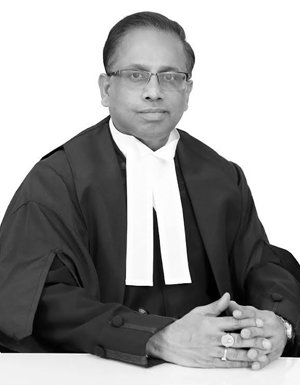

2026 INSC 366 1
REPORTABLE
IN THE SUPREME COURT OF INDIA
CIVIL APPELLATE JURISDICTION
CIVIL APPEAL N os. 6929 - 6930 OF 2009
EX. SQN. LDR. R. SOOD … APPELLANT
VS.
UNION OF INDIA & ORS. … RESPONDENT S
J U D G M E N T
DIPANKAR DATTA, J.
THE CHALLENGE
1. Appellant is a septuagenarian by now. He happened to be an Indian Air
Force
1
personnel, prior to his dismissal
2
more than three decades back
by the Central Government
3
. Power under Section 19 of the Air Force
Act, 1950
4
read with Rule 16 of the Air Force Rules, 1969
5
was exercised
by the Government owing to the appellant having used criminal force
against a junior officer and leaving him in a desolate place in the night,
from where his mortal remains were later found. A Single Judge of the
High Court of Delhi
6
set aside the dismissal
7
on the ground that the
administrative act of dismissal was barred by the three-year limitation
1
Air Force
2
vide order dated 22
nd
September, 1993
3
Government
4
AF Act
5
AF Rules
6
High Court
7
vide judgment dated 23
rd
September, 1999 in Civil Writ Petition No. 4019 of 1995
2
period, envisaged in Section 121 of the AF Act. However, while hearing
an intra-court appeal
8
preferred by the Government and its officers, vide
the impugned judgment and order dated 11
th
January, 2008
9
, a Division
Bench reversed the judgment and order of the Single Judge under
challenge holding that the bar of limitation did not apply. Also, upon
perusal of the case records, the Division Bench noted additional grounds
in support of such dismissal (to be discussed at a later part of this
judgment). Consequently, the order of dismissal was restored, giving
rise to Civil Appeal No. 6929/2009 by special leave granted on 5
th
October, 2009.
FACTUAL MATRIX
2. Facts, relevant for our decision on this appeal, are as follows:
a. Appellant was commissioned in the Air Force as Pilot Officer in the
year 1972.
b. The incident is of the year 1987, at which time the appellant was
posted as ‘Senior Operation Officer’ to 147 Squadron of the Air
Force.
c. The said squadron was posted in a remote village in the Thar desert
and stationed in a building belonging to the General Reserve
Engineer Force
10
.
d. It was alleged that an individual
11
, employed as a driver with GREF,
in an inebriated state had caused damage to the radar , an
8
LPA No. 545/1999
9
impugned order
10
GREF
11
driver
3
instrument of critical operational importance in desert conditions,
and committed certain other acts of misconduct.
e. On the night of 29
th
March, 1987, the appellant along with four
others, took the driver away from the camp in a jeep and left him
at a secluded location approximately 5 kilometres from the nearest
Border Security Force post and about 30 kilometres from the Air
Force camp. A missing report was lodged with the civil police on
31
st
March, 1987, and on 2
nd
April, 1987, the mortal remains of the
driver recovered from the same location.
f. From the records, it is discernible that the appellant acted pursuant
to the directions of his superior, a Wing Commander
12
, who had
instructed him to remove the driver from the camp on account of
his disruptive conduct under the influence of alcohol, and with a
view to preventing any untoward incident in anticipation of an
inspection by the Air Officer Commanding-in-Chief, South Western
Air Command
13
, being the highest ranking officer commanding a
major command in the Air Force, on the next day.
g. On the basis of these allegations, an FIR was lodged by GREF
personnel against the appellant and others. Simultaneously, a Court
of Inquiry was instituted. Nearly two years later, in January 1989,
“disciplinary proceedings” were initiated against the appellant;
however, in the same month, the Air Force abandoned such
12
Wg. Cmdr.
13
AOC-i-C
4
proceedings by exercising its powers under Section 124
14
of the AF
Act, opting instead to have the appellant tried by a criminal court
rather than by a Court Martial.
h. More than two weeks before the lapse of one year, i.e., on 12
th
January, 1990 to be precise, all the accused (appellant and others)
were discharged of all offences by the Sessions Court which found
that no prima facie case was made out against them and also
because sanction under Section 197 of the Code of Criminal
Procedure, 1973 had not been obtained. The said order of
discharge, having not been challenged, attained finality.
i. Thus, the criminal proceedings against the appellant stood closed.
What followed was an administrative action, which forms the crux
of the lis.
j. The three-year period from the date of the alleged offence (29
th
March, 1987) expired on 28
th
March, 1990. As per Section 121(1)
of the AF Act “no trial by court-martial of any person subject to this
Act for any offence shall be commenced after the expiration of a
period of three years from the date of such offence”. Thus, initiation
of court martial by the time the appellant was discharged by the
criminal court had become time barred.
14
124. Choice between criminal court and court -martial.—When a criminal court
and a court-martial have each jurisdiction in respect of an offence, it shall be in the
discretion of the Chief of the Air Staff, the officer commanding any group, wing or station
in which the accused prisoner is serving or such other officer as may be prescribed to
decide before which court the proceedings shall be instituted, and, if that officer decides
that they should be instituted before a court-martial, to direct that the accused person
shall be detained in Air force custody.
5
k. A day after expiry of the limitation period as aforesaid, i.e., on 30
th
October, 1990, upon invocation of Section 19
15
of the AF Act read
with Rule 16 of the AF Rules, a notice was served upon the appellant
calling upon him to show cause why he should not be
dismissed/removed from service. Rule 16(4) empowers the Chief of
Air Staff to initiate administrative action against an officer where,
upon consideration of the material on record, he forms the opinion
that trial by court-martial is inexpedient or impracticable. Rule 16,
to extent relevant, is reproduced below:
16. Dismissal or removal of officers for misconduct. —
(1) An officer may be dismissed or removed from service for
misconduct by the Central Government but before doing so and
subject to the provisions of sub-rule (2) he shall be given an
opportunity to show cause against such action.
(2) Where the dismissal or removal of an officer is proposed on
ground of misconduct which has led to his conviction by a criminal
court, or where the Central Government is satisfied that for reasons
to be recorded in writing, it is not expedient or reasonably practicable
to do so, it shall not be necessary to give an opportunity to the officer
of showing cause against his dismissal or removal.
(3) Where an officer has been convicted by a criminal court and the
Central Government, after examining the judgment of the criminal
court in his case and considering the recommendation about him of
the Chief of the Air Staff, is of opinion that further retention of such
officer in the service is undesirable that Government may dismiss or
remove such officer from the service.
(4) In any case not falling under sub-rule (3), when the Chief of the
Air Staff after considering the reports on an officer's misconduct, is
of opinion that the trial of the officer by a court-martial is inexpedient
or impracticable but the further retention of the officer in the service
is undesirable, he shall so inform the officer and subject to the
provisions of sub-rule (5) furnish to the officer all reports adverse to
him calling upon him to submit in writing within a reasonable period
to be specified, his explanation in defence and any reasons which he
may wish to put forward against his dismissal or removal.
(5) The Chief of the Air Staff may withhold from disclosure any report
adverse to an officer or any portion thereof, if in his opinion its
disclosure is not in the interests of the security of the State.
(6) ….
15
19. Termination of service by Central Government. —Subject to the provisions of
this Act and the rules and regulations made thereunder, the Central Government may
dismiss, or remove from the service any person subject to this Act.
6
(7) ….
(8) ….
l. Appellant answered the notice to show cause by his response dated
19
th
February, 1991 by, inter alia, stating that:
i. Initiation of departmental proceedings against him was
unsustainable in law, as he had already been discharged by a
competent criminal court after due consideration of all available
material. If the Air Force was aggrieved by the said discharge
order, it ought to have challenged the same in revision; however,
no such action was undertaken.
ii. There was not even an iota of evidence to establish that the body
recovered was that of a male or female, much less that of the
driver.
iii. There were serious procedural irregularities in the Court of
Inquiry proceedings, including reliance on documents such as
the FIR and Post-Mortem Report which were never formally
produced or exhibited, coercion of witnesses, and the absence
of the Inquiry Officer during substantial parts of the proceedings.
iv. The decision of the Chief of Air Staff declaring the trial by Court-
Martial as inexpedient and impracticable was taken without due
application of mind, particularly when the Air Force itself had
opted for trial before a criminal court. It was further pointed out
that the Appellant had been discharged on 12
th
January 1990,
while the limitation period of three years expired on 28th/29th
March 1990, thereby leaving sufficient time for initiation of
7
Court-Martial proceedings. Despite having over fifteen days
available, no such action was taken by the Air Force.
m. However, the answer of the appellant not having been found
satisfactory, on 22
nd
September, 1993, he was dismissed from
service.
n. It is apposite to note that while the appellant was dismissed from
service, the Commanding Officer namely, the Wg. Cmdr., on whose
order the appellant allegedly took the driver away from the camp
and left him at quite a distance, was awarded ‘severe displeasure’
of 3 years.
o. Dejected, the appellant filed a writ petition challenging his dismissal
from service. The Single Judge allowed the petition and quashed
the dismissal order after finding that the dismissal was time barred
as per Section 121 of the AF Act (which barred commencement of
court martial after three years from the date of offence). The intra-
court appeal thereagainst carried by the respondents was initially
dismissed on 18
th
September, 2000; however, on 15
th
February,
2002, the Supreme Court remitted th e matter for fresh
consideration. Upon remand, the Division Bench passed the
impugned order.
IMPUGNED ORDER
3. Upon perusal of Section 121 of the AF Act, the Division Bench observed
that the limitation period prescribed therein pertains to the
commencement of “trial by a court-martial”, whereas Rule 16 of AF Rules
8
concerns the power of the Air Force to initiate administrative action.
Placing reliance upon the decision (more particularly paragraphs 43 and
44) of this Court in Union of India v. Harjeet Singh Sandhu
16
(wherein this Court while interpreting analogous provisions of the Army
Act, 1950
17
and the Army Rules, 1954
18
held that limitation period
applicable to court-martial proceedings does not extend to
administrative action), the Division Bench concluded that Section 121 of
the AF Act does not prescribe limitation period for initiation of an
administrative action under Rule 16 of the AF Rules.
4. Further, in Harjeet Singh Sandhu (supra), this Court had also held that
if the initiation of administrative action is found to be a colourable
exercise of power, such action would be liable to be vitiated. On this
aspect, the Division Bench found no abuse of process in the initiation of
proceedings against the appellant.
5. Also, the Division Bench recorded additional reasons and found the
dismissal of the appellant to be proper. Upon examination of the case
records, the Division Bench noted the reasoning given by the authority
preceding the dismissal of the appellant and ultimately ruled in favour
of allowing the appeal of the respondents.
6. Consequently, the order of the Single Judge, which had held the
disciplinary action to be time-barred, was set aside.
7. Para 16 of the impugned order reads as follows:
16. We have also examined the original file produced by the appellant
- Indian Air Force. Reading of the notings on the said file will reveal
16
(2001) 5 SCC 593
17
Army Act
18
Army Rules
9
that order of summary dismissal was passed not merely on the
ground that disciplinary action had become time barred, but on
account of seriousness of the misconduct which it was felt was
bordering on perversity, and also keeping in mind the relationship
between the two services, viz. Indian Air Force and GREF. It was
observed that it had far-reaching ramifications. It was felt that there
is sufficient moral convincing evidence to show culpability of
the officer in the sordid episode, which eventually resulted in loss of
human life. It is in these circumstances it was held that it was
inexpedient and impracticable to proceed departmentally against the
officer but retaining him in the services was undesirable. ……
(emphasis ours)
8. “Moral convincing evidence to show culpability … ” ~ this aspect of the
impugned order caught our attention prompting us to call for the original
file of the disciplinary proceedings and the subsequent dismissal order.
ORIGINAL FILE
9. The original file having been placed before us by Ms. Archana Pathak
Dave, learned Additional Solicitor General appearing for the
respondents, we had the occasion to peruse the same.
10. We regret to record at the outset that the Division Bench omitted to
notice substantial portion of the proceeding notes. At least, this is the
impression we form upon reading the impugned order. It would,
therefore, be our endeavour to refer to all relevant proceeding notes
having a bearing on the issues which we are tasked to decide.
11. On perusal of the original file, it is observed that the Air Force, vide
proceeding note dated 5
th
June, 1992, after recording its reasons,
recommended to the Government that the appellant be dismissed from
service. This recommendation was followed by a series of
communications exchanged between the Government and the Air Force
concerning the quantum of punishment to be imposed upon the
10
appellant. Queries were also raised as to why the appellant’s
commanding officer had been visited with a comparatively less severe
punishment.
12. The Air Force, as noted, recommended on 5
th
June, 1992 that the
appellant be dismissed from service.
a. Despite the appellant having been set free (not acquitted, but
discharged) by a criminal court, what could have been the reason
for the Air Force to initiate disciplinary action against the appellant?
In this regard, we found paragraph 8 of the proceeding note dated
5
th
June, 1992 relevant, reading as follows:
8. In the meanwhile, civil police had filed a case against the Air Force
personnel involved in the sordid episode under Section 146, 365 and
304 read with Section 149 of IPC in the Sessions Court at Jaisalmer.
During the progress of the case two of the accused persons had
retired from service. Since they were also co-accused in the case, it
was not possible to take over the case and try them by a Court
Marital. Moreover, the facts and circumstances of the case dictated
that it was advisable to wait for the verdict of the Court before
deciding future course of action in the case. The sessions judge has
pronounced his judgment ‘discharging’ the accused persons on the
grounds, firstly, that the prosecution has not been able to establish
prima facie case against the accused persons on the charges
preferred against them and secondly on grounds of some technical
lapses on part of the prosecution. The net result of the accused
person having been ‘discharged’ is that in the eye of law the accused
persons have neither been acquitted nor convicted. Thus, Air Force
Authorities are free to take action against those of the accused
persons who are still serving in the AF.
(emphasis ours)
b. Further, paragraph 9 discusses as to why criminal proceedings could
not be initiated against the appellant and the convincing evidence
finding him guilty. It reads:
Although, the alleged misconduct constituted an offence under the
air force Law, it would not be possible to bring Sqn Ldr Sood to book
by resorting to disciplinary action as the offence has become time-
barred. At the same time keeping in view the seriousness of the
misconduct bordering perversity on the part of Sqn Ldr Sood, his
11
seniority and the fact that he gave an extremely poor account of
himself as an officer before his subordinates, with far reaching
ramifications, as also for the maintenance of desirable relationship
between the two services, it is felt that for what he has done, further
retention of Sqn Ldr R Sood in the IAF is not desirable. Regardless of
the fact that civil court has 'discharged' Sqn Ldr Sood on the ground
that the prosecution had not obtained prior permission of the Central
Government before instituting the criminal case against the accused.
However, there is sufficient morally convincing evidence against
him showing his culpability in the sordid episode resulting eventually
in the loss of a human life.
(emphasis ours)
c. The correctness of the reasons given by the authority (as
aforesaid), shall be examined in the next segment of this judgment.
13. In subsequent proceeding notes, we found that the appellant’s
Commanding Officer, the Wg. Cmdr., was also found guilty by the Court
of Inquiry and subsequently awarded ‘severe displeasure for 3 years’.
However, as recorded, this approach of grant of such petty punishment
to the Wg. Cmdr. was questioned by the officers themselves in various
proceeding notes.
a. In proceeding note dated 19
th
June, 1992, signed by the Under
Secretary, we found:
2. Perusal of COI proceedings of AF & GREF reveal that the CO, Wg
Cdr … has been held responsible along with Sqn Ldr Sood for the
unfortunate demise of Shri … . It is not understood as to why Wg Cdr
… has been let off by ‘SD’ for 3 years and Sqn Ldr Sood has been rec.
for dismissal from service.
3. Wg. Cdr … instead of concealing the episode should have reported
the matter to higher authorities.
4. File relating to Wg Cdr … may kindly be linked.
(emphasis ours)
b. The then Squadron Leader responded to this query of the Under
Secretary (recorded in proceeding note dated 30
th
June, 1992) by
stating that the death of the driver was directly attributable to the
appellant. The note reads:
12
4. It would thus be seen from the above that the misconduct on the
part of Wg Cdr … was of supervisory in nature which did not directly
contribute to the death of … . Whereas the misconduct of Sqn Ldr
Sood in leaving … who was totally drunk, almost naked and mentally
and physically a wreck at a far away deserted place in the middle of
night, was not only bordering on perversity but devoid of any humane
feelings. Death of … was directly attributable to his this callous action.
Because skeleton of … was found exactly at the same place where he
was left on the night of 29-30 March 87.
5. In view of the above, a more severe punishment is called for Sqn
Ldr R Sood that what has been awarded to Wg Cdr … .
(emphasis ours)
c. The Under Secretary again questioned this approach in proceedings
dated 28
th
August, 1992 and asked for an opinion of the Legal
Advisor (Defence):
15. It is not understood as to why Wg Cdr … ’s case has not been
forwarded to the Ministry for dismissal/removal for his misconduct
after the stay was vacated by the High Court of Punjab and Haryana,
Chandigarh. It may be seen from the para-wise comments given by
Air HQ vide Encl 2-A in the link file, that Wg Cdr … gave instructions
to Sqn Ldr Sood to take … to BSF Post at Miyajilar Road on 29th
March, 1987. Next morning he was informed by Sqn Ldr Sood that …
instead of being dropped at BSF Post, had been left at a place far
beyond BSF Post. Wg Cdr … reacted by telling Sqn Lar Sood that if
somebody enquired about the whereabouts of …, he should be
informed that they had let him off. Thus it is quite clear that Wg Cdr
… instructed his sub-ordinate to supress the truth regarding the
whereabouts of … .
16. Wg Cdr … is also worth blaming for not reporting this unusual
incident to higher authorities at 41 Wing AF.
17. From the above, it is quite evident that Wg Cdr … being the
commanding officer of 147 Sqn AF is equally responsible for the
unfortunate death of … of 95 RCC (GREF). It is suggested that the
file may be sent to L.A. (Defence) for seeking his considered opinion
regarding dismissal/removal in the case of both Sqn Ldr R.Sood, Adm
and Wg Car …, who has been awarded severe displeasure for three
years by CAS. This will ensure that no discriminatory approach is
followed in the case of officers who are found to have done more or
less similar misconduct.
(emphasis ours)
d. The legal advisor replied (note dated 9
th
September, 1992) by
stating that action taken against the Wg. Cmdr. cannot be reopened
due to lack of competency. The note reads:
13
The case of Wg Cdr … appears to be distinguishable for the
misconduct in question was never committed by Sq. Ldr. Sood with
the connivance and concurrence of Wg. Cdr. … . Furthermore, the
Dept is said to have awarded severe displeasure to Wg Cdr … . That
being so, the administration competency seems to have been
exhausted and the matter is closed and the same cannot be revived
for reviewing/revising by the concerned authority in the absence of
an enabling provision. Though as regards Sq. Ldr. Sood, the Dept’s
proposal seems to be in order. However, in view of the aforesaid the
matter may be personally discussed by the concerned Dept officer
with the undersigned on a prior appointment.
(emphasis ours)
e. The case, at one point, was discussed by the Joint Secretary (Air)
with the Defence Secretary, whose query and answer thereof are
traceable in proceeding note dated 18
th
February, 1993, reading as
under:
4. The next query raised by Defence Secretary is about the culpability
of the Commanding Officer especially when he had ordered his junior
to leave the deceased in an out of the way place. Defence Secretary
also desired to know what exactly was the CO’s recorded order. ……
6. Wg Cdr … , the C.O., retired on 30.11.92 on superannuation and
no further action can be taken against him, even if it is accepted that
he was equally culpable. In any case, the fact that he was punished
administratively by the Air Force authorities effectively foreclosed the
option of further action against him. This certainly was not the correct
course of action considering the fact that through this a C.O. was
being allowed to escape the responsibility for the instruction given by
him to his subordinates, and the action taken by them in pursuance
of such instructions.
7. Sq. Ldr Sood has now been proposed for dismissal from service
under Section 19 of the Air Force Act. The only question to be
considered now is whether Sqn Ldr Sood should get some benefit,
like compulsory retirement rather than dismissal, from the leniency
shown by the Air Force authorities in the case of Wg Cdr … . If
approved, CAS could be asked to personally review the case and give
his well considered views on the punishment to be given to Sqn Ldr
Sood.
(emphasis ours)
f. The case was again sent back to the Chief of Air Staff seeking his
views regarding the quantum of punishment. Vide proceeding note
dated 10
th
March, 1993, the then Air Marshal replied by stating that
14
“Central Government enjoys full powers to resort to any course of
action without the need to make any subsequent reference to the
CAS unless a new material fact has been received subsequent to
the receipt of the case by the Central Govt.”
14. This note was followed by the appellant’s dismissal from service vide
order dated 22
nd
September, 1993, reading as follows:
3. NOW THEREFORE, After considering the misconduct as stated in
the aforesaid Show Cause Notice against the said Sqn Ldr R Sood,
his defence and the recommendation of the CAS, the Central Gov in
exercise of the powers conferred by Section 19, AF Act 1950 and Rule
16. Air Force Rules, 1969 hereby order the dismissal from the service
of Sqn Ldr R Sood (12785) Adm.
ISSUES
15. Following issues arise for decision in the present case:
a. Whether the initiation of administrative action against the appellant
was proper and justified after he had been discharged by a criminal
court in respect of the same alleged offence arising out of the same
set of facts?
b. Independent of the above, whether the reasons recorded in the
proceeding note dated 5
th
June, 1992 are sustainable in law, or are
vitiated on account of perversity?
c. To what relief, if any, is the appellant entitled should the answers to
the above turn to be favourable to him?
INITIATION OF ADMINISTRATIVE ACTION – WHETHER PROPER AND JUSTIFIED?
16. Bare reading of the excerpts from the original file unmistakably reflects
deep differences in the overall approach of the officers to the issue. The
15
ongoing deliberations left the officers divided, with one side pushing for
aggressive action and the other advocating caution.
17. In the proceeding note dated 5
th
June, 1992, the authority, after taking
note of the fact that the appellant had been discharged by a criminal
court, noted that administrative action can still be initiated against the
appellant since the effect of a discharge is that the appellant was neither
“acquitted nor convicted” (see: paragraph 12). Based on this
understanding, the authority proceeded to initiate disciplinary action
against the appellant.
18. This understanding, at first glance, is fallacious. Discharge is a pre-trial
termination of proceedings for lack of evidence. As and when ordered,
discharge signifies and reinforces the position that there is no material
against the accused for him to stand trial. Whereas, acquittal is a post-
trial outcome declaring the accused either innocent due to lack of
credible material or on account of grant of the benefit of doubt.
Insufficient evidence to even frame charges for standing trial would lead
to a discharge while evidence presented not proving guilt leads to
acquittal. In that sense, an accused discharged of a criminal offence
stands on a better footing than an accused who is finally acquitted after
a full-fledged trial. It is not the law that an accused, unless he is
acquitted, must still carry the label on his forehead that he is accused of
a criminal offence. Once an accused has been discharged, he is entitled
to avail of all benefits that are otherwise available to an acquitted person
and cannot be placed in a less advantageous position. We are left
16
surprised at the understanding of the officer who prepared the
proceeding note.
19. In support of our view of discharge standing on a ‘better footing’ than
acquittal, one may profitably refer to the decision of this Court in Yuvraj
Laxmilal Kanther v. State of Maharashtra
19
. The relevant paragraph
therefrom is reproduced below:
16. Section 227 CrPC deals with discharge. What Section 227 CrPC
contemplates is that if upon consideration of the record of the case
and the documents submitted therewith and after hearing the
submissions of the accused and the prosecution in this behalf, the
judge considers that there is no sufficient grounds for proceeding
against the accused, he shall discharge the accused and record his
reasons for doing so. At the stage of consideration of discharge, the
court is not required to undertake a threadbare analysis of the
materials gathered by the 17 prosecution. All that is required to be
seen at this stage is that there are sufficient grounds to proceed
against the accused. In other words, the materials should be
sufficient to enable the court to initiate a criminal trial against the
accused. It may be so that at the end of the trial, the accused may
still be acquitted. At the stage of discharge, court is only required to
consider as to whether there are sufficient materials which can justify
launch of a criminal trial against the accused. By its very nature, a
discharge is at a higher pedestal than an acquittal. Acquittal is at the
end of the trial process, may be for a technicality or on benefit of
doubt or the prosecution could not prove the charge against the
accused; but when an accused is discharged, it means that there are
no materials to justify launch of a criminal trial against the accused.
Once he is discharged, he is no longer an accused.
(emphasis ours)
20. At this juncture, we consider it apposite to refer to the decision of the
three-Judge Bench of this Court in Harjeet Singh Sandhu (supra)
again.
21. The said decision supports the case of the armed forces, inasmuch as it
recognizes their authority to take disciplinary action even in
circumstances where the option of convening a court martial has become
19
2025 SCC OnLine SC 520
17
time-barred. In this regard, paragraphs 43 and 44 of the said decision
are relevant:
43. We are also of the opinion that Major Radha Krishan
case [(1996) 3 SCC 507 : 1996 SCC (L&S) 761] lays down
propositions too broad to be acceptable to the extent it holds that
once the period of limitation for trial by court martial is over, the
authorities cannot take action under Rule 14(2). We also do not agree
with the proposition that for the purpose of Rule 14(2),
impracticability is a concept different from impossibility (or
impermissibility, for that matter). The view of the Court in that case
should be treated as confined to the facts and circumstances of that
case alone. We agree with the submission of the learned Additional
Solicitor-General that the case of Dharam Pal Kukrety [(1985) 2 SCC
412 : 1985 SCC (Cri) 222] being a three-Judge Bench decision of this
Court, should have been placed before the two-Judge Bench which
heard and decided Major Radha Krishan case [(1996) 3 SCC 507 :
1996 SCC (L&S) 761] .
44. Reverting back to the two cases under appeal before us, we are
of the opinion that the High Court was not right in allowing the two
writ petitions filed by Harjeet Singh Sandhu and Harminder Kumar ,
respectively, by placing reliance on the decision of this Court in Major
Radha Krishan case [(1996) 3 SCC 507 : 1996 SCC (L&S) 761] and
holding that the exercise of power under Section 19 read with Rule
14 by the Chief of the Army Staff was vitiated solely on account of
the bar of limitation created by Section 122 of the Act. ……….
(emphasis ours)
22. The aforesaid paragraphs were duly considered and relied upon by the
Division Bench while passing the impugned order, on the basis of which
it was held that the disciplinary action against the appellant were not
time-barred. We quite agree with this part of the impugned order.
23. However, significantly, another crucial aspect of the very same decision
– one that squarely operates against the armed forces (emphasis ours)
– appears to have escaped the attention of the Division Bench.
24. In Harjeet Singh Sandhu (supra), while examining Sections 19 and
125 of the Army Act and Rule 14 of the Army Rules , which are pari
materia Sections 19 and 124 of the AF Act and Rule 6 of the 1969 Rules,
respectively, this Court observed that where the commanding officer ,
18
exercising discretion vested in him to choose between a trial by a
criminal court and a court-martial, opts for trial before a criminal court,
an acquittal of the accused by such court brings finality to the matter.
In such circumstances, the initiation or continuation of disciplinary action
would not be sustainable. The relevant passage from the said decision
is reproduced below for facility of appreciation:
26. It is relevant to note that when an offence is triable by a criminal
court and also by a Court Martial, each having jurisdiction in respect
of that offence, a discretion is conferred by Section 125 on the officer
commanding to decide before which court the proceedings shall be
instituted. Parliament has obviously made no such provision in the
Act for the exercise of a choice between proceeding under Section 19
or convening of a Court Martial. The element of such option, coupled
with the factors which would be determinative of the exercise of
option, is provided by Rule 14(2). When an officer, subject to the
Army Act, is alleged to have committed a misconduct, in view of
Section 125 and Section 19 read with Rule 14, the following situation
emerges. If the alleged misconduct amounts to an offence including
a civil offence, Section 125 vests discretion in the officer commanding
the Army, Army Corps Division or independent Brigade in which the
accused person is serving or such other officer as may be prescribed,
to decide before which court the proceedings shall be instituted i.e.
before a Court Martial or a criminal court. If the decision is to have
the delinquent officer tried by a criminal court and if he is acquitted
by the criminal court, then that is the end of the matter. The
pronouncement of judicial verdict would thereafter exclude any
independent disciplinary action being taken against the delinquent
officer on the same facts which constituted the misconduct
amounting to an offence for which he was charged before the criminal
court. …”
(emphasis ours)
25. Though the law laid down in Harjeet Singh Sandhu (supra) is on
consideration of the provisions of the Army Act and the Army Rules ,
there is no reason why it would not squarely apply to a case covered by
pari materia provisions of the AF Act and the AF Rules.
26. True though, as per Harjeet Singh Sandhu (supra), initiation of
administrative proceedings is barred when an accused is ‘acquitted’ ;
however, we find no reason for the ratio of the decision to not apply in
19
a case where the accused is ‘discharged’ (which stands on a better
footing than acquittal, as discussed supra). Once the appellant has been
discharged by the criminal court, that should mark the end of the matter.
27. Thus, the Air Force upon electing to have the alleged offence tried by
the criminal court
20
, it is clear (in view of the discussion above) that they
then cannot fall back on either a court martial or any disciplinary action.
Once the road is chosen, the traveller must walk it to the end.
28. Initiation of administrative proceedings for disciplinary action against the
appellant, we unhesitatingly hold, was bad in law and non-est.
29. This reason alone is sufficient to allow the present appeal. However, we
do not propose to rest our decision on this sole reason; we take the
discussion forward as to why, independent of the aforesaid discussion,
the disciplinary action is also otherwise considered by us to be flawed.
It is solely for the reason that the decision in Harjeet Singh Sandhu
(supra) is subsequent to the appellant’s dismissal from service and we
wish to test whether, even in view of the law prevailing prior thereto,
disciplinary action which had been taken was justified on facts and in
the circumstances.
REASONS GIVEN IN PROCEEDING NOTE DATED 5
TH
JUNE, 1992
30. The reasoning given in the proceeding note dated 5
th
June, 1992 has
been noted above. From the same, we find absolutely no discussion on
the merits of the case.
20
See italicized part of paragraph 8 of the proceeding note dated 5
th
June 1992 (paragraph
12 of this judgment)
20
31. What is found is that there was sufficient “morally convincing evidence”
against the appellant. Such an expression, vague and indeterminate in
nature, falls far short of the standard required for recording findings in
disciplinary proceedings. It neither discloses the material relied upon nor
indicates the process of reasoning by which the authority arrived at its
conclusion.
32. Further, as noted above at paragraph 2(l), the appellant, in his reply to
the show cause notice, had raised various contentions which required
due consideration by the competent authority. However, it is a matter of
surprise that there is a complete absence of any discussion on such
contentions, particularly concerning the lack of evidence and the
illegality of the proceedings before the Court of Inquiry. Although some
discussion was undertaken regarding the permissibility of initiating
disciplinary proceedings after the appellant’s discharge by a criminal
court, even that aspect, in our view, remains doubtful (as discussed
supra). While adverting to the appellant’s reply, the authority merely
noted their dissatisfaction in respect thereof, at paragraph 15 of the
proceeding note dated 5
th
June, 1992:
15. At the outset, it must be stated that the reply to the show cause
notice submitted by the officer was considered by us as well as the
Deptt. of JAG (Air) and it was found to be not satisfactory. In our
view, he has seriously misconducted himself, as a result of which a
human life was lost.
33. While courts ordinarily refrain from examining the sufficiency or
adequacy of evidence in disciplinary matters, such restraint operates
only where the finding of guilt is preceded by a duly conducted inquiry.
In cases such as the present, where no regular inquiry was conducted
21
and the delinquent was deprived of the opportunity to test the evidence
through cross-examination, the scope of judicial review necessarily
becomes a bit more intrusive. In such circumstances, the show cause
notice, the reply thereto and the final order assume critical importance
as the primary safeguards of natural justice. Consequently, where the
delinquent furnishes a detailed explanation which is not ex facie frivolous
or untenable, the competent/disciplinary authority is under a legal
obligation to consider the same and pass a reasoned order
demonstrating due application of mind as to why the defence raised was
perceived to be unacceptable. A cryptic or mechanical rejection,
particularly one which does not even advert to the specific contentions
raised, falls foul of the principles of natural justice and renders the
decision arbitrary and unsustainable in law.
34. In the instant case, where the appellant was not privy to the proceedings
preceding his dismissal, any irregularity in the proceedings, if at all, can
only be raised at the time of judicial proceedings. Keeping this in view,
we have examined and reproduced the relevant notes from the original
file in detail.
ARBITRARINESS IN PUNISHMENT
35. Even assuming, for the sake of argument, that the decision to take
disciplinary action was otherwise proper, we find that the punishment
imposed upon the appellant is manifestly unreasonable.
36. What the Government missed is that the appellant was caught between
the devil and the deep sea. Had he disobeyed the instruction of the Wg.
22
Cmdr. by not removing the driver from the camp, he would risk being
proceeded against for insubordination and indiscipline. On the other
hand, the appellant has been punished for relocating the driver to
desolate surroundings; this, he did while acting on the instructions of
his superior. Though there is no definite material, we would assume that
the corpse found was of the driver who, having been left to fend for
himself, did not survive the harsh climate of the Thar; but , at the same
time, there is also no definite material to suggest that such relocation
was made by the appellant with any motive of harming him. Indeed, it
is revealed from the records that to keep the driver away from the next
day’s anticipated visit of the AOC-i-C (so that the driver does not create
any ruckus) was the real object intended to be achieved. It is also
evident that the Wg. Cmdr. had given specific instructions, which later
were even viewed as encouraging his subordinates to suppress the truth.
Possibly, the appellant had no other option but to obey the orders of his
superior. Non-consideration of these circumstances in course of the
decision-making process being writ large together with the absence of
reasoning in the order punishing the appellant, renders the same
arbitrary and unsustainable in law sufficient to vitiate the entire
proceedings against the appellant.
37. Before parting, while recounting that the appellant’s superior officer was
visited with the penalty of ‘severe displeasure for three years’, whereas
the appellant has been ordered to be dismissed from service, we find it
imperative to bear in mind that queries were repeatedly raised as to the
rationale for imposing such a comparatively lenient punishment upon
23
the senior officer, while punishing the appellant with dismissal. The only
explanation forthcoming was that the superior officer had already
superannuated and, therefore, no further action could be taken against
him. This explanation does little to assuage our concern. Maintaining and
carrying forward the high traditions and the standard of discipline in the
armed forces cannot be over -emphasized. The punishment of
‘displeasure’ was imposed on the Wg. Cmdr. before he had
superannuated. It is not for us to question the Government, in course of
these proceedings, why the Wg. Cmdr. was let off leniently; however,
the question that certainly looms large is why was the appellant singled
out for a harsher punishment despite his discharge from the criminal
case? The answer is not far to seek. The understanding of the law
relating to discharge, as noted above, was fallacious. We unhesitatingly
hold that when a comparatively less penalty has been imposed upon an
officer with a more significant role, such disparity ought to have weighed
with the authorities while determining the punishment to be inflicted
upon the appellant. While we do not for a moment suggest that undue
leniency shown to one should also be shown to the other , and are
conscious that one mistake cannot justify another, this is a case where
the ratio of the decision of this Court in Sengara Singh v. State of
Punjab
21
would seem to apply. In the absence of distinguishing
features, the appellant ought to have been treated on a par with the Wg.
Cmdr. The principle of equality would be violated when a subordinate
officer is meted out the harshest punishment for complying with a
21
(1983) 4 SCC 225
24
wrongful order of his superior, while the latter who issued it gets a
lenient treatment leading to a reprieve of sorts. It could be so that to an
extent, the appellant had exceeded in what he was required to do by the
Wg. Cmdr., yet, sight cannot be lost that the order of the Wg. Cmdr.,
which was rooted in wrongdoing, was not demonstrated to be not
binding on the appellant.
RELIEF
38. Premised on the above, justice demands that the ignominy with which
the appellant had to survive the past more than three decades is
obliterated, the wrongful termination of his service be revoked and his
honour restored.
39. The order of dismissal from service dated 22
nd
September, 1993 stands
set aside. Appellant having since crossed the age of superannuation, he
cannot be reinstated in service. In law, however, he is entitled to claim
all consequential service benefits which would have accrued to him, had
he not been fastened with such illegal order of dismissal. Appellant could
not work beyond 22
nd
September, 1993 admittedly because of the illegal
order of termination and not owing to any fault on his part. Question
therefore arises, whether the principle of ‘no work, no pay’ would be
attracted? In view of the recent decisions of this Court in Ramesh
Chand v. Management of Delhi Transport Corporation
22
and
Maharashtra State Road Transport Corporation v. Mahadeo
22
(2023) 19 SCC 97
25
Krishna Naik
23
, the requirement for being entitled to 100% back wages
is a statement on affidavit that the employee concerned has not been
reemployed since illegal termination of service. Though a negative
burden, such burden has to be discharged whereupon the onus would
shift to the employer to deny/dispute such statement. Here, there is no
material on record to show that the appellant did not take up any
employment/was not employed after 22
nd
September, 1993. W e,
therefore, propose reduction of the claim to the extent of 50%.
40. Having regard to all relevant factors, we direct that the appellant shall
be entitled to the following benefits: (i) arrears of salary and allowances
to the extent of 50% from 23
rd
September, 1993 till the scheduled date
of his retirement from service; (ii) notional promotion, for which the
appellant’s case may be placed before the Review Departmental
Promotion Committee as per the governing rules for consideration; and
(iii) pensionary benefits as are admissible to him in law. The financial
benefits due and payable in terms of this order, including increased pay
subject to notional promotion being accorded, be calculated and paid to
the appellant with interest @ 9% per annum from the date of
presentation of the writ petition before the High Court (an unspecified
date of 1995, but the exact date must be gathered by the respondents
from the records) till date of payment.
41. Irrespective of service benefits, restoration of honour remains the
foremost concern of a defence personnel. We restore it with the direction
that on a date to be fixed by the Chief of Air Staff, the appellant shall be
23
(2025) 4 SCC 321
26
signed off in the normal manner he would have otherwise been entitled
to, but for the order of dismissal.
42. Directions as aforesaid be complied with, within a period of 3 months
from date of service of a copy of this judgment and order on the
respondents.
CONCLUSION
43. The impugned order appears to have been passed in “LPA No. 545/1999
and CM No. 3803/1999”. As per the record, Civil Appeal Nos. 6929/2009
and 6930/2009 arise from the final order passed in LPA No. 545/1999
and CM No. 3803/1999, respectively. However, there is no discussion in
the impugned order or in the case file regarding the disposal of CM No.
3803/1999. It could be so that the said application was not formally
disposed of by the High Court. Be that as it may, we set aside the
impugned order of the High Court; as such, the order, if any, passed in
CM No. 3803/1999 would also stand set aside. We order accordingly.
44. The appeals, thus, stand allowed.
45. Parties shall bear their own costs.
……………… …………. ……………J .
(DIPANKAR DATTA)
………… ………..……………………J .
(K.V. VISWANATHAN )
New Delhi;
April 15, 2026.

 Login with google
Legal Notes
Add a Note....