
The Appellants contest the ruling of the Kerala High Court and have submitted an appeal to the Supreme Court.

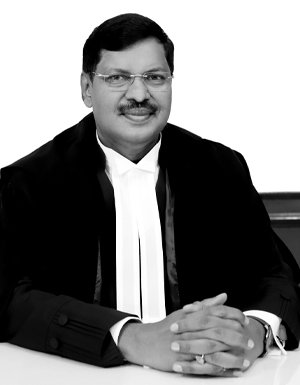
No Acts & Articles mentioned in this case
REPORTABLE
IN THE SUPREME COURT OF INDIA
CRIMINAL APPELLATE JURISDICTION
CRIMINAL APPEAL NOS. 18641865 OF 2010
GIREESAN NAIR & ORS. ETC. ...APPELLANT(S)
VERSUS
STATE OF KERALA ...RESPONDENT(S)
J U D G M E N T
PAMIDIGHANTAM SRI NARASIMHA, J.
1.These appeals are directed against the judgment of the High
Court of Kerala upholding the conviction of Accused Nos. 17, 9
12, 14, 16 and 18 under Sections 143, 147, 148 of the Indian
Penal Code, 1860
1
, and Sections 3(2)(e) of Prevention of Damages
to Public Property Act, 1984
2
, read with Section 149 of the IPC. A
sentence of four years of rigorous imprisonment and a fine of Rs.
10,000, as imposed by the Trial Court
3
,
was also upheld by the
High Court.
1 hereinafter referred to as ‘the IPC’.
2 hereinafter referred to as ‘the PDPP Act’.
3 Additional District and Sessions Judge (Fast Track1), Thiruvananthapuram in Case Nos.
302 of 2001, 1786 of 2001 and 1313 of 2002 dated 15.02.2006.
1
2.Facts: The facts of the present case can be traced back to
the year 2000 when the State of Kerala decided to delink pre
degree courses from colleges and start plustwo courses at the
school level. There were protests against the implementation of
the said policy. During one of the protests on 12.07.2000, it is
alleged that the police officials were harsh, and several
protesters, including girl students, were injured. To avenge the
police atrocity, it is alleged that Accused Nos. 12 and 2533
hatched a conspiracy to launch a protest the next day to create
fear and terror in the city.
3.In furtherance of the alleged conspiracy, on 13.07.2000,
about 1500 protestors armed with weapons proceeded towards
the Government Secretariat. When the group was met with
resistance from the police force, they became violent and caused
damage to as many as 81 buses belonging to the Kerala State
Road Transport Corporation
4
. A few protestors even went inside
the garage of KSRTC, and when the KSRTC workers repelled
them, the protestors turned even more violent, leading to the
death of one Mr. Rajesh, a bus conductor with KSRTC.
4 hereinafter referred to as ‘the KSRTC’.
2
4.In the aftermath of this event, based on the statement given
by Rajesh, an FIR was registered by PW72 (head constable)
under Sections 143, 147, 148, 307, 149 of the IPC, Section 3(2)(e)
of the PDPP Act and Sections 3 and 5 of the Explosive
Substances Act, 1908. As per the FIR, Accused Nos. 12 and 25
33 hatched a conspiracy and abetted acts of rioting. The
Appellants herein and Accused Nos. 17 and 19 being part of the
mob, formed an unlawful assembly which resulted in riots and
widescale destruction of public property. Further, Accused Nos.
17 and 19 were also alleged to have caused the death of Rajesh.
5.Investigation: Pursuant to the lodging of the FIR, PW78,
Circleinspector, Fort P.S., as the investigating officer, arrested
Accused Nos. 116 on 13.07.2000. Two days later, the
investigation was handed over to PW76. After taking over the
baton, PW76 was informed that Rajesh had succumbed to the
injuries. Immediately upon receiving that information, PW76
proceeded to the hospital to conduct an inquest. After concluding
that the death was homicidal, he approached the concerned
court, which had taken cognizance of the matter to alter the
charge under Section 307 to that of Section 302 of the IPC.
3
Considering the gravity of the subject and widescale
repercussions, the Director General of Police constituted a
Special Investigation Team headed by PW84, the then Dy. S.P.,
Narcotic and Economic Offences Cell, CBCID,
Thiruvananthapuram. After taking charge of the investigation,
PW84 arrested Accused Nos. 1718 on 01.08.2000 and Accused
Nos. 19 on 04.08.2000. It is PW84 who completed the
investigation and filed a charge sheet before the Trial Court.
However, before getting into the details of the charges levelled
and the consequent decision of the Sessions Court, it is essential
to mention the two Test Identification Parades conducted by PW
47, Judicial Magistrate First Class – IV, Thiruvananthapuram,
which have a direct bearing on the final decision in this matter.
6.1
st
Test Identification Parade: Conducting a Test
Identification Parade
5
was crucial for the prosecution as there
were more than 1500 people who were part of the mob, and only
a handful of them were arrested and chargesheeted. It is for this
reason that the IO (PW84) submitted a report before the Chief
Judicial Magistrate
6
and sought the consent of the CJM for
conducting a TIP. The CJM accepted this request and, by his
5 hereinafter referred to as ‘TIP’.
6 hereinafter referred to as ‘CJM’.
4
order dated 24.07.2000, directed PW47 (JMFC IV,
Thiruvananthapuram) to conduct a TIP. Accordingly, PW47
decided to conduct the TIP on 31.07.2000 for the identification of
Accused Nos. 116.
7.To protect the sanctity of the TIP, the Judicial Magistrate
(PW47) is said to have instructed the IO (PW84) to ensure that
the witnesses (who were later examined as PWs 1, 3, 4, 5, 6 and
7) earmarked for the TIP do not get any opportunity to see the
Accused before the TIP. For conducting the TIP, the Judicial
Magistrate (PW47) directed the IO (PW84) to arrange forty
civilians as nonsuspects. The IO (PW84) could, however,
arrange only for thirty nonsuspects being twenty police officers
and ten civilians. In addition to these thirty nonsuspects, the
Judicial Magistrate (PW47) is said to have shortlisted twentyone
undertrials to participate in the TIP. However, PW47 decided to
go ahead with only twentyone undertrials and ten civilians. It is
his version that he made an effort to fetch more undertrials for
the TIP, but to no avail. Ultimately, he conducted the TIP by
mixing the sixteen accused with the thirtyone nonsuspects.
5
8.The TIP began with the Judicial Magistrate (PW47) taking
note of the name, address, and other details of the nonsuspects.
After that, the suspects and nonsuspects were mixed, and
witnesses were asked to identify the Accused.
9.After the conclusion of the identification process for
Accused Nos. 116, the nonsuspects were asked to leave, and
when the suspects were alone, they were asked if they had any
complaints about how the TIP was conducted. It is alleged that
all of them replied in the negative. However, when questioned if
they had anything else to say, Accused No. 2, on behalf of all the
accused, stated that, when the suspects were in police custody
from 20.07.2000 to 22.07.2000, they were all photographed and
videographed and were also shown to all the six witnesses from
the cabin of the IO (PW84). All this is evident from the “Report of
the Identification Parade of the 16 Accused Persons dated
31.07.2000”.
10.1 2
nd
Test Identification Parade: In the previous TIP, six
witnesses identified accused 116. But as mentioned earlier,
Accused Nos. 1719 were arrested after the completion of the 1
st
TIP. In that view of the matter, permission to conduct the 2
nd
TIP
6
was sought from the CJM by the IO (PW84) to facilitate the
identification of the Accused in three phases – (i) In the 1
st
Phase
to identify Accused Nos. 1719 by those very witnesses who
identified Accused Nos. 116 in the 1
st
TIP (PWs 1, 3, 4, 5, 6 and
7); (ii) In the 2
nd
Phase to identify Accused Nos. 116 by PW’s 10,
11, 12 and 15; and (iii) In the 3
rd
Phase to identify Accused Nos.
119 by PW’s 8, 9 and 33. After receiving the request from the IO
(PW84), the CJM granted permission and directed the Judicial
Magistrate (PW47) to conduct the 2
nd
TIP. Accordingly, PW47
decided to conduct the 2
nd
TIP on 26.08.2000. The conduct of the
TIP in each of the phases is as under.
10.2 In the 1
st
Phase of this TIP, Accused Nos. 1719, who were
to be identified, were mixed with sixteen undertrial non
suspects. After the identification process culminated, Accused
No.19, for himself and the other two accused, stated that while
they were in police custody, they were shown to the six
witnesses, PWs 1, 3, 4, 5, 6 and 7. Further, he also stated that
they were all photographed and videographed and that they were
allowed to be seen by all the witnesses when they were taken to
court for extending their remand.
7
10.3 In the 2
nd
Phase of the TIP, Accused Nos. 116 who were to
be identified were mixed with 45 nonsuspects, with thirtyone of
them being undertrials and the remaining being civilians.
Thereafter, PWs 10, 11, 12 and 15 proceeded with the
identification.
10.4 In the 3
rd
Phase of the TIP, Accused Nos. 119 were to be
identified by PWs 8, 9 and 33. For identification, the Accused
were mixed with the preexisting 45 nonsuspects. After the end
of the identification process, Accused No. 2, on behalf of others,
stated that when Accused Nos. 119 were taken to court for
remand, and the presence of all the witnesses was arranged in
the court by the police. He reiterated that while they were in
police custody, they were photographed and videographed and
were also made to be seen by all the witnesses from the
chamber/cabin of the IO (PW84). All the Accused collectively
stated that they were wearing the very same dress, straight from
their arrest, till the date of the TIP. All this is evident from the
“Report of the Identification Parade of the 19 Accused Persons
dated 26.08.2000”.
8
11.Thus, it can be seen that from the very beginning, the
Accused had objected to how the TIP was conducted and the
events preceding it, which interalia included – (i) the Accused
being shown to the witnesses from the cabin of the IO (PW84);
(ii) the Accused being photographed and videographed while they
were in police custody; (iii) securing the presence of the witnesses
in court while the accused were produced for extension of their
remand; and (iv) the Accused wearing the same dress straight
from their arrest till the date of the TIP.
12.Upon completion of the investigation, including the TIP as
indicated above, charge sheet was filed on 23.09.2000, and the
case was committed to the Court of Additional District and
Sessions Judge (Fasttrack Court – I), Thiruvananthapuram, on
27.10.2000.
13.Sessions Court and High Court: On 26.05.2005, the Sessions
Court framed charges under Sections 120B, 143, 147, 148, 324,
427, 506, 302, 109 and 111 r/w 149 of the IPC and Sections 3(2)
(e) of the PDPP Act against Accused Nos. 133. The prosecution
examined 85 witnesses and marked 134 documents as exhibits.
Thereafter, the defence examined 3 witnesses and marked 24
9
documents as exhibits. After hearing the matter in detail, the
Sessions Court framed 12 points for consideration, which can be
broadly classified into three issues (i) conspiracy hatched by
Accused Nos. 12 and 2533; (ii) the murder of Rajesh; and (iii)
the destruction of KSRTC buses and other public properties.
14.Re: Conspiracy hatched by Accused No. 12 and 2533 : To
establish a conspiracy case against Accused Nos. 12 and 2533,
the prosecution examined PW68 and PW85. PW68, who
deposed before the court that he had overheard the conversation
between the Accused hatching the conspiracy. PW85, on the
other hand, turned hostile. Therefore, based on the deposition of
PW68, the Sessions Court convicted Accused Nos. 12 and 2533
under Sections 120B of the IPC r/w Section 3(2)(e) of the PDPP
Act, Sections 109 and 111 of the IPC, and sentenced them to four
years of imprisonment. In appeal, the High Court disbelieved PW
68 and consequently set aside the conviction of Accused Nos. 12
and 2533 under the abovementioned provisions. The decision of
the High Court on the issue of conspiracy against Accused Nos.
12 and 2533 has attained finality as the State has not preferred
an appeal.
10
15. Re: Charge of the murder of Rajesh against Accused 17 and
19: In so far as the issue relating to the charge of murder of
Rajesh against Accused Nos. 17 and 19 is concerned; the
prosecution relied upon the evidence of PWs 5, 6 and 8. These
witnesses deposed that while Accused No. 17 beat Rajesh with an
iron pipe, Accused No. 19 beat him with a wooden reaper. Based
on the deposition of PWs 5, 6 and 8, the Sessions Court convicted
Accused Nos. 17 and 19 under Sections 302 r/w 34 of the IPC for
life. The High Court, in appeal, set aside this conviction and
instead found them guilty under Section 326 r/w 34 of the IPC
and sentenced them to 7 years of rigorous imprisonment. The
finding of the High Court on this issue has also attained finality
as the State has not appealed before this Court against the
altered conviction and the reduced sentence. In fact, even
Accused Nos. 17 and 19 have not appealed since they had
already served a sentence of seven years.
16.Given the findings of the Trial and the High Court on the
issue of conspiracy and murder attaining finality, the only
question that falls for consideration is the issue relating to the
destruction of public property. In fact, this is the only question
11
that was raised and argued before us. We will now proceed to
examine this aspect in detail.
17. Re: Charge of the destruction of public property against
Accused Nos. 17, 912, 14, 16 and 18 under Sections 143, 147,
148 of the IPC and Sections 3(2)(e) of the PDPP Act r/w Section
149 of the IPC: To establish the charge of destruction of public
property, the prosecution relied upon the evidence of PWs 5, 6, 8,
31 and 33, as eyewitnesses to the crime. To prove the presence
of these witnesses, the prosecution had to necessarily rely on the
TIP proceedings. The defence questioned the TIP on various
grounds, among other things, the presence of IO (PW84) at the
time of conducting the TIP, the accused being photographed and
videographed while they were in police custody, among others.
18.The Sessions Court rejected all the objections to the legality
and credibility of the TIP by holding that (i) the IO (PW84) was
just present and did not influence the TIP in any manner; (ii) the
imbalance in the ratio between suspects and nonsuspects in the
TIP is not the Judicial Magistrate’s (PW47) or the IO’s (PW84)
fault, because they tried their best to fetch more nonsuspects;
(iii) the IO (PW84) took steps to prevent disclosure of identity of
12
accused to witnesses before the TIP by covering the side of the
vehicle in which they were brought to the court for extension of
remand, though, he also stated that he did not put a mask on
them; (iv) there is no material to show that photographs or video
graphs of the Accused were taken and shown to the witnesses
prior to the TIP; and (v) even though PW3 and PW4 admitted in
crossexamination before the Court that some of the accused
were shown to them before the TIP, during reexamination, both
of them frankly admitted that after the incident, they had seen
the miscreants for the first time during the TIP. In view of its
conclusions on the TIP, the Trial Court proceeded to convict
Accused Nos. 17, 912, 14, 1619 under Sections 143, 147, 148
IPC and 3(2)(e) of PDPP Act r/w 149 of the IPC and sentenced
them to four years of imprisonment.
19.The High Court has, while exercising criminal appellate
jurisdiction, failed to consider any of the submissions made by
the Appellants on the legality or the integrity of the TIP. The
following passage is the only discussion on this argument:
“43. ….. The Court below has made its finding
regarding the offence punishable under Ss.143, 147
and 148 IPC and S.3(2)(e) of the PDPP Act, based on the
identification of the various witnesses in court. The
matter has been dealt with elaborately by the Court
13
below. It is idle for the appellants to say that there was
no proper identification and so, it was not possible to
say, who had caused obstruction to the KSRTC buses.
Moreover, when a group of persons cause damage to
public properties, each one of that illegal group will be
held liable for the acts of the other members in the
group also.”
In view of the above, the High Court upheld the conviction of
Accused Nos. 17, 912, 14, 1619 under Sections 143, 147, 148
IPC and 3(2)(e) of PDPP Act r/w 149 of the IPC and also the
sentence of four years imprisonment imposed upon them by the
Sessions Court. Therefore, the learned counsel for the Appellants
were justified in contending that the High Court has not
considered the submissions of the Appellants on law and on fact.
The High Court, while exercising criminal appellate jurisdiction
under Section 386 of the Code of Criminal Procedure, 1973, has
to necessarily assess the evidence on record with a view to satisfy
itself that the appreciation of evidence by the Trial Court is not
vitiated by any illegality and is not palpably erroneous. The
dismissal of appeal without considering an appellant’s contention
is a serious infirmity, which will result in no legal judgment in
the eye of law
7
.
7 Sohan and Anr. v. State of Haryana and Anr. (2001) 3 SCC 620; State of Rajasthan v.
Hanuman (2001) 1 SCC 337; Badri and Ors. v. State of Rajasthan (2000) 10 SCC 246.
14
20.Submissions of the Parties: Ms. Sonia Mathur, learned
Senior Advocate appearing for Accused Nos. 17, 9, 14, 16 and
18, at the very outset, contended that the High Court has not
rendered any independent finding on the issue of destruction of
public property and has merely reiterated what the Sessions
Court had held.
21.Be that as it may, the central thrust of Ms. Mathur’s
submission was on the manner in which the TIP was conducted.
According to her, the TIP was of utmost importance, considering
that this was a case where criminal liability was fastened only
against a few protestors. She raised questions over the integrity
of the TIP by contending that (i) the ideal ratio of suspects to non
suspects as laid down by the Kerala High Court in Pradeepan v.
State of Kerala
8
, has not been followed; (ii) the presence of IO
(PW84) in the premises of central jail during both the TIPs
vitiates the TIP in its entirety; (iii) the IO (PW47) in both the TIPs
did not record physical features, age etc. of the nonsuspects.
The learned senior counsel gave an example by stating that
Accused No. 7 had a long beard, but there were no nonsuspects
having a long beard; (iv) the IO (PW84) has admitted that
8 (2005) 3 KLT 1075.
15
Accused Nos. 116 were in his custody when he questioned the
eyewitnesses in his office; (v) PW3 and PW4 have admitted that
they had seen the Accused while they were at the Police Station;
(vi) PW1, PW 812 and PW33 have admitted that they had
identified the Accused in the TIP based on the pictures they saw
in the newspaper; (vii) the Accused had complained that while
they were in police custody, they were photographed and shown
to the witnesses from the cabin of PW84; (viii) Remand Report
dated 14.07.2000 clearly stated that Accused Nos. 116 were
shown to the eyewitnesses; (ix) there has been a delay in holding
in the TIP which is fatal, in light of the decision in
Acharaparambath Pradeepan and Anr. v. State of Kerala
9
, Lal
Singh and Ors. v. State of UP
10
and Shaikh Umar Ahmed Shaikh
and Anr. v. State of Maharashtra
11
; and (x) no importance can be
given to the identification made in the TIP when the same witness
fails to identify the same accused before the court. For this
purpose, reliance was placed on the judgement of this Court in
Lalli alias Jagdeep Singh v. State of Rajasthan
12
. Independent of
her submissions on the aspect of TIP, the learned senior advocate
9 (2006) 13 SCC 643
10 (2003) 12 SCC 554
11 (1998) 5 SCC 103
12 (2003) 12 SCC 666
16
also relied upon the decision of the Delhi High Court in Capitol
Art House (P) Ltd v. Neha Datta
13
, where it was held that re
examination of witnesses should not be allowed, especially to
facilitate them to rectify their mistakes. This submission was
made in the context of PW3 and PW4s contradictory statements
made in the chief examination and the reexamination.
22.Shri Vinay Navare, learned Senior Advocate appearing for
Accused Nos. 1012 contended that the statements given by PW
5, PW6 and PW8 could not form the basis of conviction because
(i) PW5 had stated in his deposition that he was not present at
the time of the incident and that he reached the place of
occurrence only after the incident; (ii) PW6 could only identify
Accused Nos. 17 and 19 and could generally identify the other
accused as the agitators; (iii) PW8 had stated in his deposition
that he identified the Accused on the basis of the images he saw
in a newspaper.
23.Shri Navare also raised questions over how the TIP was
conducted by submitting that (i) the purpose of conducting a TIP
fails when pictures of the accused are published in newspapers.
He relied upon the decision of this Court in Ravi alias
13 (2022) SCC OnLine Del 1746
17
Ravichandran v. State represented by Inspector of Police
14
, where
this Court had held that no importance could be attached to a
TIP where the photos of the alleged suspects were making rounds
in newspapers and also when the witnesses had a chance to look
at the accused while the accused were in police custody.
Additionally, he also placed reliance on the judgement of this
Court in Shaikh Umar Ahmed Shaikh and Anr. v. State of
Maharashtra (supra) to bolster his submission on the same point;
(ii) the ratio of suspects to nonsuspects was improper in the 1
st
TIP; (iii) the IO (PW84) was present in the hall where both the
TIPs took place; (iv) there was a delay of over one month between
the date of the incident and the dates of the TIP, which facilitated
the investigation officer to acclimatise the witnesses to the way
the Accused’s look. He relied upon the decision of this Court in
Suresh Chandra Bahri v. State of Bihar
15
where it has been held
that a TIP has to be conducted at the earliest possible
opportunity; and (v) the identification made by PW5, PW6 and
PW8 are of no consequence as they are not an independent
witness.
14 (2007) 15 SCC 372
15 (1995) Supp 1 SCC 80
18
24.Shri Harshad V. Hameed, learned counsel appearing for the
State, countered the submissions made regarding the conduct of
the TIP by contending that – (i) the decision in Pradeepan v. State
of Kerala
16
, is not binding. The same were mere guidelines which
could be adjusted based on the facts and circumstances of a
case. Reliance was also placed on the decision of the Kerala High
Court in Mohanan Nair v. State of Kerala
17
, to support the same
point; (ii) a TIP can be accepted as a piece of evidence based on
the subjective satisfaction of a court, which has occurred in this
case; (iii) if there were concerns about the manner in which the
TIP was conducted, then the TIP itself should have been
challenged. In that view of the matter, it was submitted that
when it has not been challenged, then under Section 80 of the
Indian Evidence Act, 1872, a presumption arises that the TIP
Report is a valid proof of evidence; (iv) the JFMC (PW47) took
every measure within his reach to ensure smooth conduct of the
TIP; (v) the IO (PW84) took all possible measures to ensure that
the TIP is conducted at the earliest possible opportunity; (vi)
reliance was placed on the decision of this Court in the case of
16 Supra No. 8
17 (1989) Cr.L.J. 2106 (Ker)
19
Munna Kumar Upadhyay v. State of Andhra Pradesh
18
, where it
was held that if pictures of the suspects were circulated in
newspapers months before the TIP is conducted, then the
circulation would have lost its effect on the minds of the
witnesses; (vii) the Sessions Court has only convicted those
accused, who were identified both before the Court as well as in
the TIP. The testimony of these eyewitnesses never suffered from
any infirmities; and (viii) the evidence of PW5, PW6 and PW8,
which was relied upon by the Trial Court, was not biased.
25.Analysis: Heard the learned counsel for the parties and
perused the case records. We may, at the outset, note that the
eyewitnesses questioned by the prosecution did not give out the
names or identities of the Accused participating in the riot and
involved in the destruction of public property. Therefore, the IO
(PW84) had to necessarily conduct a TIP. The object of
conducting a TIP is threefold. First, to enable the witnesses to
satisfy themselves that the accused whom they suspect is really
the one who was seen by them in connection with the crime.
Second, to satisfy the investigating authorities that the suspect is
the real person whom the witnesses had seen in connection with
18 (2012) 6 SCC 174
20
the said occurrence. Third, to test the witnesses’ memory based
on first impression and enable the prosecution to decide whether
all or any of them could be cited as eyewitnesses to the crime
(Mulla and Anr. v. State of U.P.
19
).
26.TIPs belong to the stage of investigation by the police. It
assures that investigation is proceeding in the right direction. It
is a rule of prudence which is required to be followed in cases
where the accused is not known to the witness or the
complainant (Matru alias Girish Chandra v. State of U.P.
20
;
Mulla and Anr. v. State of U.P.
21
and C. Muniappan and Ors. v.
State of Tamil Nadu
22
). The evidence of a TIP is admissible under
Section 9 of the Indian Evidence Act. However, it is not a
substantive piece of evidence. Instead, it is used to corroborate
the evidence given by witnesses before a court of law at the time
of trial. Therefore, TIPs, even if held, cannot be considered in all
the cases as trustworthy evidence on which the conviction of an
accused can be sustained (State of H.P. v. Lekh Raj and Anr.
23
;
and C. Muniappan and Ors v. State of T.N.
24
).
19 (2010) 3 SCC 508 (Paras 44, 45 and 55)
20 (1971) 2 SCC 75 (Para 17)
21 Supra No.19 (Paras 41 and 43).
22 (2010) 9 SCC 567 (Para 42)
23 (2000) 1 SCC 247 (Para 3)
24 Supra No. 22 (Para 42)
21
27.It is a matter of great importance both for the investigating
agency and for the accused and a fortiori for the proper
administration of justice that a TIP is held without avoidable and
unreasonable delay after the arrest of the accused. This becomes
necessary to eliminate the possibility of the accused being shown
to the witnesses before the test identification parade. This is a
very common plea of the accused, and therefore, the prosecution
has to be cautious to ensure that there is no scope for making
such an allegation. If, however, circumstances are beyond control
and there is some delay, it cannot be said to be fatal to the
prosecution. But reasons should be given as to why there was a
delay (Mulla and Anr. v. State of U.P.
25
and Suresh Chandra Bahri
v. State of Bihar
26
).
28.In cases where the witnesses have had ample opportunity to
see the accused before the identification parade is held, it may
adversely affect the trial. It is the duty of the prosecution to
establish before the court that right from the day of arrest, the
accused was kept “baparda” to rule out the possibility of their
face being seen while in police custody. If the witnesses had the
25 Supra No.19 (Para 45)
26 Supra No.15
22
opportunity to see the accused before the TIP, be it in any form,
i.e., physically, through photographs or via media (newspapers,
television etc…), the evidence of the TIP is not admissible as a
valid piece of evidence (Lal Singh and Ors v. State of U.P.
27
and
Suryamoorthi and Anr. v. Govindaswamy and Ors.
28
).
29.If identification in the TIP has taken place after the accused
is shown to the witnesses, then not only is the evidence of TIP
inadmissible, even an identification in a court during trial is
meaningless (Shaikh Umar Ahmed Shaikh and Anr. v. State of
Maharashtra
29
). Even a TIP conducted in the presence of a police
officer is inadmissible in light of Section 162 of the Code of
Criminal Procedure, 1973 (Chunthuram v. State of Chhattisgarh
30
and Ramkishan Mithanlal Sharma v. State of Bombay
31
).
30.It is significant to maintain a healthy ratio between
suspects and nonsuspects during a TIP. If rules to that effect are
provided in Prison Manuals or if an appropriate authority has
issued guidelines regarding the ratio to be maintained, then such
rules/guidelines shall be followed. The officer conducting the TIP
27 Supra No.10
28 (1989) 3 SCC 24
29 Supra No.11
30 (2020) 10 SCC 733
31 (1955) 1 SCR 903
23
is under a compelling obligation to mandatorily maintain the
prescribed ratio. While conducting a TIP, it is a sinequanon that
the nonsuspects should be of the same agegroup and should
also have similar physical features (size, weight, color, beard,
scars, marks, bodily injuries etc.) to that of the suspects. The
concerned officer overseeing the TIP should also record such
physical features before commencing the TIP proceeding. This
gives credibility to the TIP and ensures that the TIP is not just an
empty formality (Rajesh Govind Jagesha v. State of Maharashtra
32
and Ravi v. State
33
).
31.It is for the prosecution to prove that a TIP was conducted
in a fair manner and that all necessary measures and
precautions were taken before conducting the TIP. Thus, the
burden is not on the defence. Instead, it is on the prosecution
(Rajesh Govind Jagesha v. State of Maharashtra
34
).
32.We will now consider the three major contentions raised by
the Appellants before us, being (i) the credibility of the eye
witnesses who participated in the TIP to identify the accused; (ii)
delay in conducting the TIP; and (iii) legality of the TIP and the
32 (1999) 8 SCC 428
33 Supra No.14
34 Supra No.32 (Para 4)
24
presence of the IO during the conduct of the TIP. We will now
consider each of these submissions.
33.Re: Credibility of the eyewitnesses who participated in the
TIP to identify the accused:
34.PW3, in his deposition before the Sessions Court, stated
that:
“Prior to the date of identification parade, I had
been to the Crime Branch office on different days.
(Q). Were there 1018 accused at time of first parade.
(A). So many people were there.
(Q). Were some of the accused shown to you from the
crime branch office
(A). They were shown
(Q). Were some more of the accused were shown to you
before going to the 2
nd
parade
(A). Yes”
35.PW4, in his deposition before the Sessions Court, has
stated that:
“I went to Crime Branch office for giving statement.
That was 810 days prior to the first parade.
(Q). When you went there to give your next statement
did they show you some of the accused
(A). They were there
(Q). After the first parade I have given statement to the
Crime Branch. That was before 2
nd
parade. Did they
show you the accused at that time
(A). They were there. Thus, those persons I saw or
shown to me were identified at the time of parade.”
25
36.Both these witnesses, during their reexamination, have,
however, contradicted themselves by stating that they saw the
Accused for the first time during the TIP.
37.In so far as PW5 is concerned, his presence at the scene of
the offence and seeing the Accused committing the offence is in
serious doubt. During his crossexamination, he stated that
“(Q). Did you go and see the place of incident.
(A) I went there at the place of occurrence after the
incident. Then I saw three employees. Altogether, there
were 1020 persons including who stood outside the
office and at the place of occurrence.
(Q). Did you ask them about the incident.
(A) No.
(Q). Did you reach there only after accused left the
place.
(A). Yes”
38.PW6, whose evidence has been relied upon by the
prosecution, has also stated that he had visited the crime branch
office eleven days prior to the 1
st
TIP, i.e., on 20.07.2000. This
date coincided with the date when the Accused were also taken
into police custody. On the other hand, PW8, whose evidence
has also been relied upon by the prosecution, has stated in his
deposition that he identified the Accused in the TIP based on the
pictures published in a newspaper.
26
39.PW31, an employee of KSRTC, has deposed only on the
financial loss caused to KSRTC because of the destruction. His
deposition is not helpful to fasten any liability on the Accused.
40.The last witness relied upon by the prosecution to prove the
charge of destruction of public property was PW33. However,
this witness turned hostile. Therefore, his deposition takes us
nowhere.
41.Proceeding to the deposition of the Judicial Magistrate (PW
47), he was asked, if before commencing the parade, he had
asked any of the witnesses whether they had any prior
acquaintance with the suspects or nonsuspects or whether the
suspects or nonsuspects were shown to them by the IO (PW84).
PW47 stated that he did not ask any such question to the
suspects before commencing the parade. However, he said that
he asked the suspects at the end of the parade if they had any
objection to the manner in which the TIP was conducted. It may
be recounted that Accused No. 2 had objected that they were
shown to the witnesses while they were in police custody.
27
42.This Court in Budhsen and Anr. v. State of UP
35
, had
directed that sufficient precautions have to be taken to ensure
that the witnesses who are to participate in the TIP do not have
an opportunity to see the accused before the TIP is conducted. In
Lal Singh v. State of U.P.
36
, this Court had held that a trial would
be adversely affected when the witnesses have had ample
opportunity to see the accused before the identification parade is
held. It was held that the prosecution should take precautions
and establish before the court that right from the day of his
arrest, the accused was kept “baparda” to rule out the possibility
of his face being seen while in police custody. Later, in
Lalli v. State of Rajasthan
37
and Maya Kaur Baldevsingh Sardar
and Anr. v. State of Maharashtra
38
, this Court has categorically
held that where the accused has been shown to the witness or
even his photograph has been shown by the investigating officer
prior to a TIP, holding an identification parade in such facts and
circumstances remains inconsequential. Another crucial decision
was rendered by this Court in Shaikh Umar Ahmed Shaikh and
Anr. v. State of Maharashtra
39
, where it was held:
35 (1970) 2 SCC 128
36 Supra No.10
37 Supra No.12
38 (2007) 12 SCC 654
39 Supra No.11
28
“8.…. But, the question arises: what value could be
attached to the evidence of identity of accused by the
witnesses in the Court when the accused were possibly
shown to the witnesses before the identification parade
in the police station. The Designated Court has already
recorded a finding that there was strong possibility that
the suspects were shown to the witnesses. Under such
circumstances, when the accused were already shown
to the witnesses, their identification in the Court by the
witnesses was meaningless. The statement of
witnesses in the Court identifying the accused in the
Court lost all its value and could not be made the basis
for recording conviction against the accused. The
reliance of evidence of identification of the accused in
the Court by PW 2 and PW 11 by the Designated Court,
was an erroneous way of dealing with the evidence of
identification of the accused in the Court by the two
eyewitnesses and had caused failure of justice. Since
conviction of the appellants have been recorded by the
Designated Court on wholly unreliable evidence, the
same deserves to be set aside.”
43.In so far as evidence of PW8 is concerned, who has stated
that he identified the accused in the TIP based on pictures
published in newspapers, the position of law is clear. This Court
in Suryamoorthi v. Govindaswamy
40
, has held as follows:
“10. Two identification parades were held in the course
of investigation. At the first identification parade PW 1
identified all the seven accused persons whereas PW 2
identified three of them, namely, Accused 2, 6 and 7
alone. It is, however, in evidence that before the
identification parades were held the photographs of the
accused persons had appeared in the local daily
newspapers. Besides, the accused persons were in the
lockup for a few days before the identification parades
were held and therefore the possibility of their having
been shown to the witnesses cannot be ruled out
altogether. We do not, therefore, attach much
importance to the identification made at the
identification parades.”
40 Supra No.28
29
Reiterating the same principle, this Court in Ravi v. State
41
, has
again reaffirmed the aforesaid position by holding as follows:
“17. Certain facts are not in dispute. The test
identification parade was held after ten days. It is also
not in dispute that the photographs of the accused were
taken at the police station. The investigation officer
allowed them to be published. Photographs of the
appellant and the said Udayakumar were not only
published, according to the prosecution witnesses, they
were shown to be the accused in the aforementioned
crime. Some of them admittedly were aware of the said
publication. The purported test identification parade
which was held ten days thereafter, in our opinion,
looses all significance, in the aforementioned fact
situation.
19. In a case of this nature, it was incumbent upon the
prosecution to arrange a test identification parade.
Such test identification parade was required to be held
as early as possible so as to exclude the possibility of
the accused being identified either at the police station
or at some other place by the witnesses concerned or
with reference to the photographs published in the
newspaper. A conviction should not be based on a
vague identification.”
44.Having considered the evidence of crucial eyewitnesses and
the material indicating the conduct of the TIP, we are of the
opinion that the witnesses had the opportunity of seeing the
accused before the conduct of the TIP. Not only have the
witnesses deposed that they had seen the suspects before the
TIP, even Accused No. 2, at the end of the 1
st
TIP, had raised a
grievance that the suspects were all photographed, videographed
and were shown to the witnesses from the cabin of the IO (PW
41 Supra No.14
30
84). At the end of the 2
nd
TIP, he had also stated that when
Accused Nos. 119 were taken to court for the purpose of
remand, and the presence of all the witnesses was arranged in
the court by the police. In fact, all the Accused collectively stated
that they were wearing the very same dress, straight from their
arrest, till the date of the TIP to indicate that the TIP did not
serve its purpose. We find no reason to disbelieve the
truthfulness of the statement of the Accused because they had
raised this contention right from the beginning and have
maintained it all along.
45.In view of the above, we are of the opinion that there existed
no useful purpose behind conducting the TIP. The TIP was a
mere formality, and no value could be attached to it. As the only
evidence for convicting the appellants is the evidence of the eye
witnesses in the TIP, and when the TIP is vitiated, the conviction
cannot be upheld. We will now examine the other lapses while
conducting the TIPs.
46.Re: Delay in conducting the TIP: Undue delay in conducting a
TIP has a serious bearing on the credibility of the identification
process. Though there is no fixed timeline within which the TIP
31
must be conducted and the consequence of the delay would
depend upon the facts and circumstances of the case
42
, it is
imperative to hold the TIP at the earliest. The possibility of the
TIP witnesses seeing the accused is sufficient to cast doubt about
their credibility. The following decisions of this Court on the
consequence of delay in conducting TIP have emphasised that the
possibility of witnesses seeing the accused by itself can be a
decisive factor for rejecting the TIP. In Suresh Chandra Bahri v.
State of Bihar
43
, it was held that:
“It is a matter of great importance both for the
investigating agency and for the accused and a fortiori
for the proper administration of justice that such
identification is held without avoidable and
unreasonable delay after the arrest of the accused and
that all the necessary precautions and safeguards were
effectively taken so that the investigation proceeds on
correct lines for punishing the real culprit. It is in
adopting this course alone that justice and fair play can
be assured both to the accused as well as to the
prosecution. But the position may be different when the
accused or a culprit who stands trial had been seen not
once but for quite a number of times at different point of
time and places which fact may do away with the
necessity of a TIP.”
47.In Budhsen & Anr. v. State of UP
44
, this Court set aside the
conviction imposed on the appellant therein, on the ground that
no conviction can be based by solely relying on the identification
42 Supra No.9
43 Supra No.15
44 Supra No. 35
32
made in a TIP. While holding that a 14day delay by itself in
conducting the TIP may not cause prejudice to the accused, it
observed that there is a high chance of accused being seen by the
identifying witnesses outside the jail premises. In Subash and
Shiv Shankar v. State of U.P.
45
, this Court acquitted an accused
on the ground that the TIP was held three weeks after the arrest
was made. This Court suspected that the delay in holding the TIP
could have enabled the identifying witnesses to see the accused
therein in the police lockup or in the jail premises. In State of
A.P. v. Dr M.V. Ramana Reddy and Ors.
46
, this Court acquitted
respondent nos. 2 and 3 therein on the ground that there was a
delay of 10 days in conducting the TIP, and in those 10 days,
there was a high likelihood of their photographs being shown to
the witnesses. In Rajesh Govind Jagesha v. State of
Maharashtra
47
, a delay of about one month was viewed seriously
by this Court since there was a possibility of the accused being
shown to the witnesses.
48.Returning to the facts of the present case, we have already
noted that Accused Nos. 116 were arrested on 13.07.2000.
45 (1987) 3 SCC 331
46 (1991) 4 SCC 536
47 Supra No.32
33
Instead of filing an application for conducting a TIP at the
earliest, the IO (PW84) filed a remand application, pursuant to
which the Accused were remanded to police custody. There is
strong evidence that the Accused were shown to the witnesses
during their police custody period. The fact that an application
for conducting a TIP was filed on 23.07.2000, i.e., the very next
day after the police custody period ended, leads to the inevitable
conclusion that the Accused were taken into police custody to
facilitate their easy identification during the TIP. Otherwise, we
see no reason why an application for conducting a TIP was not
filed immediately after the arrest of the Accused. In such
circumstances, we firmly believe that the delay in holding the TIP
coupled with other circumstances has cast a serious doubt on
the credibility of the TIP witnesses.
49.Re: Legality of the TIP and the presence of the IO during the
conduct of the TIP: A threejudge bench of this Court in
Chunthuram v. State of Chhattisgarh
48
, by relying on Ramkishan
Mithanlal Sharma v. State of Bombay
49
, has held that any
identification made by witnesses in a TIP in the presence of a
48 Supra No.30
49 Supra No. 31
34
police officer tantamount to statements made to the police officer
under Section 162 Cr.P.C. The Court held:
“The infirmities in the conduct of the test identification
parade would next bear scrutiny. The major flaw in the
exercise here was the presence of the police during the
exercise. When the identifications are held in police
presence, the resultant communications tantamount to
statements made by the identifiers to a police officer in
course of investigation and they fall within the ban of
Section 162 of the Code.”
50.The evidence of IO (PW84) about the conduct of the Test
Identification Parade may be noted:
“(Q). Did you make any arrangement to prevent the
witness and the accused from seeing each other inside
the jail?
(A). I did not think it as something needed.”
51.Further, when a question regarding the presence of the IO
(PW84) was put to JMFC (PW47), he stated that:
“...in the parade conducted on 31.07.2000, 31 non
suspects were selected. The civilian were produced by
the IO. On that date also Dy. SP and CI were present in
the premises of the jail……”
52.With respect to the 2
nd
TIP conducted on 26.08.2000, the
JMFC (PW47) stated that:
“On 26.08.2000 Dy. SP S.P. Joshwa was also present
in the central prison”.
53.Having considered the statement of the JMFC (PW47) and
the evidence of the IO (PW84) together, we are of the view that
35
the presence of the Investigating Officer at the time of the TIP
cannot be ruled out. The Investigating Officer has stated that he
has not taken any steps to ensure that the accused and the
witnesses do not see each other. It is rather surprising to note
that Investigating Officer thinks that such a measure is not
necessary.
54.In this very context, we may also note the first TIP report
dated 31.07.2000 made by the JMFC (PW47). The Magistrate
recorded that the Accused had raised concerns over the manner
in which the TIP was conducted. The relevant portion of the TIP
report is noted hereunder:
“21. Thereafter when the suspects alone were left in the
hall, they were asked, whether they have got any
complaints, as to the manner of the conduct of the
parade. All of them replied in the negative. When
questioned, whether they have got anything else to say,
they unanimously asked Mr. Padma Kumar (A2) to
state something. He then said that when the suspects
were in Police custody, they were all, photographed and
videographed and were also shown to all the 6 witness,
who are made to identify them in the parade, from the
cabin of the Dy. SP. Mr. Joshwa.”
55.Even the report of the second TIP dated 26.08.2000 as
recorded by the JMFC (PW47) notes as hereunder:
“22.When the accused persons along were left in the
hall, they were questioned, my whether they have got
any complaint regarding the manner of the conduct of
36
the parade. They all replied in the negative. When
queried further, whether they have got anything else to
say all of them wanted the second accused Padma
Kumar to make some comments. Thereupon, the second
accused stated that accused Nos. 1 to 16 were, before
their production in court, in police custody for three
days; that accused nos. 17 to 19 were similarly in
police custody for 6 days; that when all the 19 were
taken to the court on 24 and 25.8.2000 presence of all
the witnesses in the court were arranged by the Police,
so as to enable them to see all the accused persons;
and that while in Police custody all of them were
photographed and videographed and were also made
to be seen by all the witnesses, from the chamber of
Deputy Superintendent Of Police, the investigating
officer. All the accused had also stated that they were
wearing the very same dress, straight from their arrest
till date.”
56. In view of the evidence available on record, we are of the
opinion that the conduct of the TIP, coupled with the hovering
presence of the police during the conduct of the TIP vitiated the
entire process. The Trial Court as well as the High Court have
committed a serious error in relying on the evidence of the TIP
witnesses for convicting and sentencing the Appellants. We are
of the opinion that the conviction and sentencing are not
sustainable. In view of these lapses on the part of the
prosecution, it is not necessary for us to consider various other
grounds raised by the Appellants.
57.Conclusion: Having considered the matter in detail and
having noted the various discrepancies in the manner in which
37
both the TIPs were conducted, we believe that the prosecution
has not established its case beyond reasonable doubt. Apart from
the TIPs, we find no other evidence put forth by the prosecution
to prove the guilt of the Accused for offences under Sections 143,
147, 148 IPC and 3(2)(e) of PDPP Act r/w 149 of the IPC.
58.For the reasons stated above, and in conclusion, we:
i.Allow Criminal Appeal Nos. 18641865 of 2010 arising
out of the judgment of the High Court of Kerala in
Criminal Appeal Nos. 384 and 385 of 2006, and
ii.Set aside the conviction and sentence of the Appellants
under the judgment of the High Court of Kerala in
Criminal Appeal Nos. 384 and 385 of 2006 dated
14.01.2010 and the judgment of the Court of Additional
District and Sessions Judge (Fasttrack Court – I),
Thiruvananthapuram in Sessions Case Nos. 302 of
2001, 1786 of 2001 and 1313 of 2002 dated 15.02.2006
under Sections 143, 147, 148 IPC and 3(2)(e) of
Prevention of Damages to Public Property Act, 1984 r/w
Section149 of the IPC.
iii.The Appellants are acquitted of all the charges, and their
bail bonds, if any, stand discharged. Pending
38
interlocutory applications, if any, stand disposed of in
terms of the above order.
iv.Parties shall bear their own cost.
……………………………….J.
[B.R. GAVAI]
……………………………….J.
[PAMIDIGHANTAM SRI NARASIMHA]
NEW DELHI;
NOVEMBER 11, 2022
39

 Login with google
Legal Notes
Add a Note....